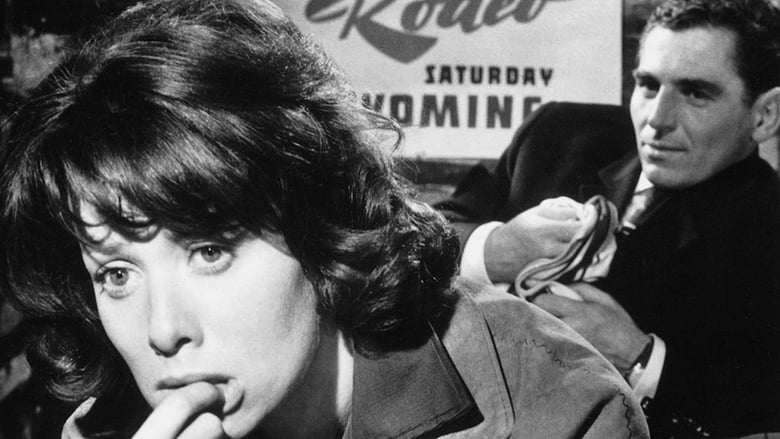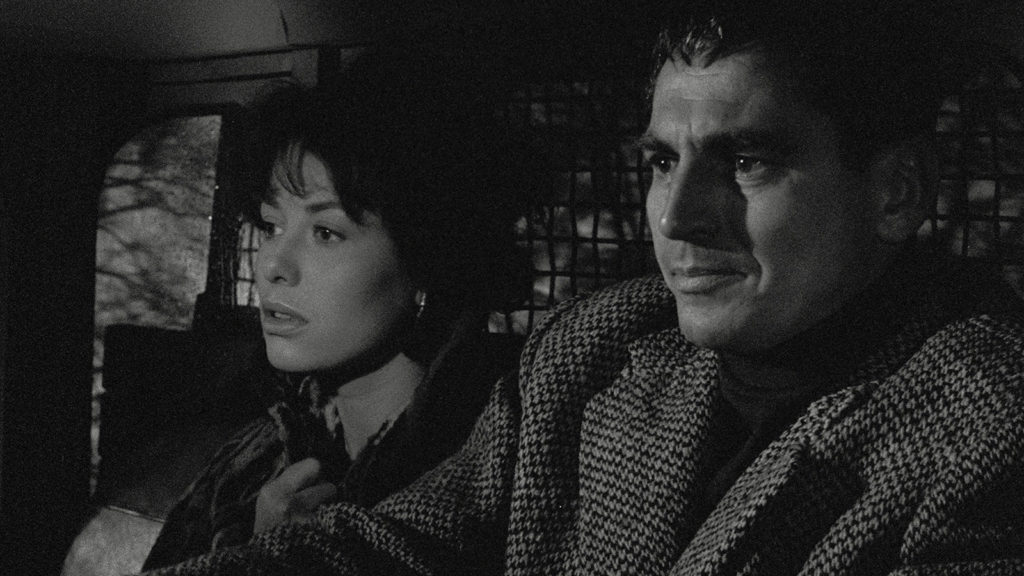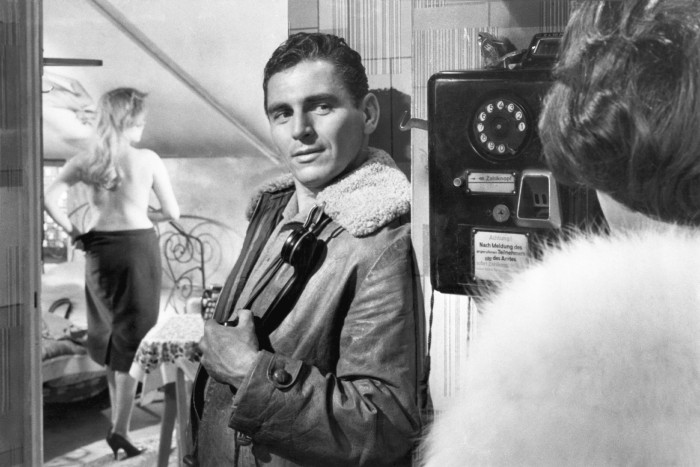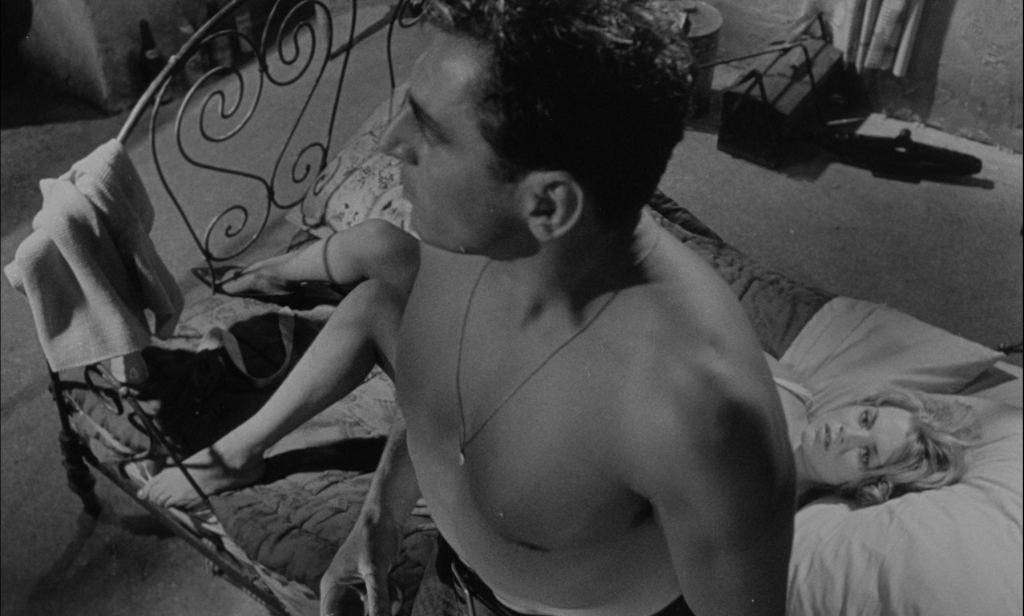
PEEPING TOM: scarier than Psycho

PEEPING TOM, coming up on Turner Classic Movies and better than PSYCHO
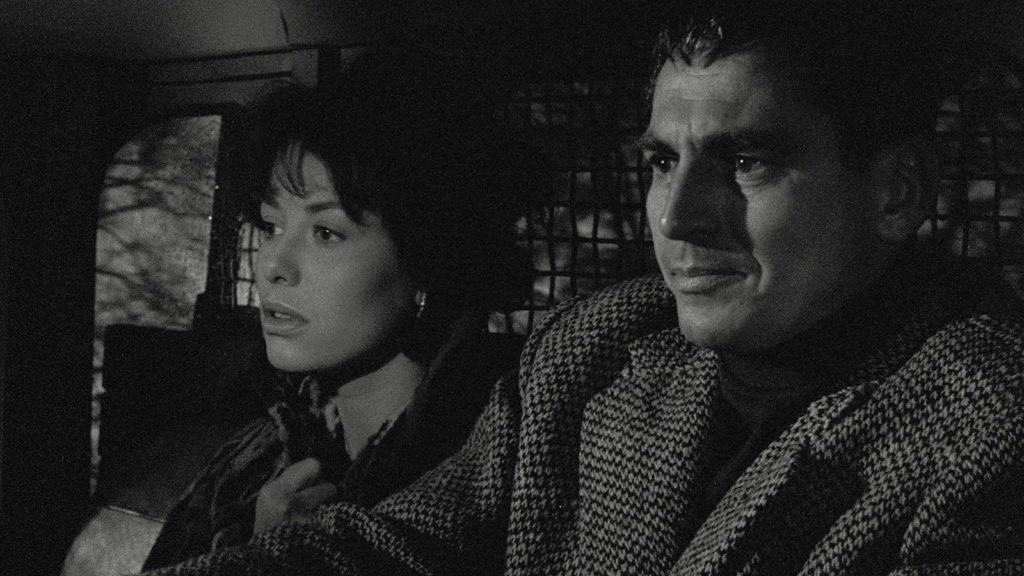
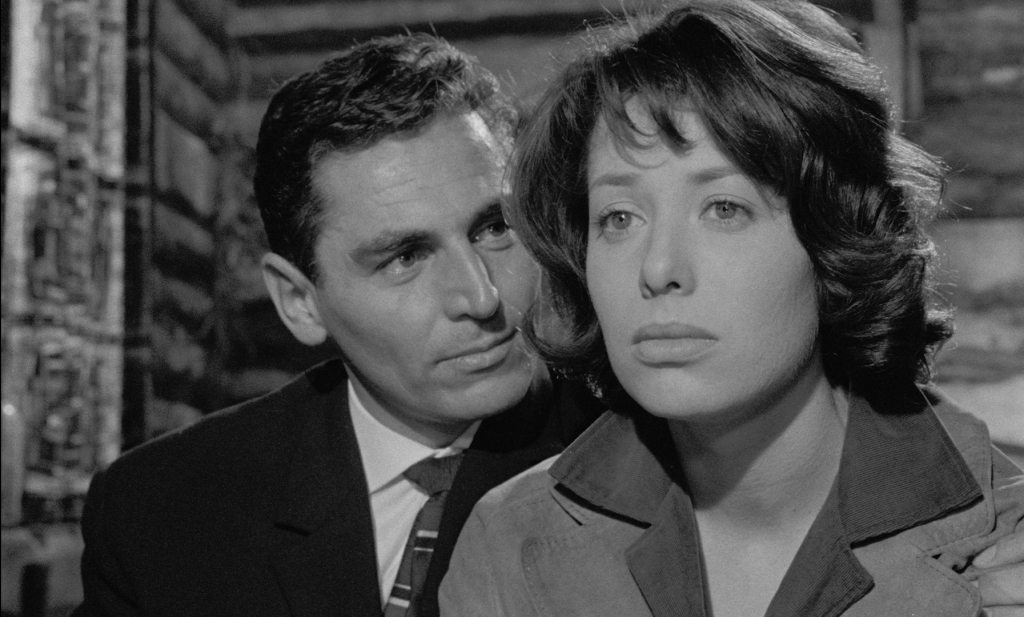
Photo caption: Anna Massey and Karlheinz Böhm in PEEPING TOM.

On October 30, Turner Classic Movies broadcasts the best-ever psycho serial killer movie. Peeping Tom was released in 1960, the same year as Psycho. The British film critics didn’t know what to make of a thriller where the protagonist was so disturbing, and they trashed Peeping Tom so badly that its great director Michael Powell (The Life and Death of Colonel Blimp, Stairway to Heaven, Black Narcissus, The Red Shoes) wasn’t able to work again in the UK. But, I think Peeping Tom is an overlooked masterpiece and is even better than its iconic counterpart Psycho.

Karlheinz Böhm plays a mild-mannered urban recluse who most people find socially awkward, but wouldn’t necessarily suspect to be a serial killer. The very innocent downstairs neighbor (Anna Massey) finds him dreamy and in need of saving – not a good choice.

Two aspects elevate Peeping Tom above the already high standards of Hitchcockian suspense. First, he’s not just a serial killer – he’s also shooting the murders as snuff films. Second, we see the killer watching home movies of his childhood – and we understand that ANYONE with his upbringing would be twisted; he’s a monster who repels us, but we understand him.

Until the last decade, Peeping Tom was unavailable, but you can find it streaming now on Amazon, AppleTV and Criterion. There’s also a superb Criterion Collection DVD with lots of extra features. 

Again, TCM airs Peeping Tom on Wednesday (conveniently right after Psycho).

Movies to See Right Now

Photo caption: Saiorse Ronan in THE OUTRUN. Courtesy of Sony Pictures Classics.

This week on The Movie Gourmet – new reviews of Saiorse Ronan’s bravura performance in The Outrun and the clever doc My Name Is Alfred Hitchcock.

CURRENT MOVIES

ON TV

Patty McCormack and Nancy Kelly in THE BAD SEED.

On October 27, Turner Classic Movies airs The Bad Seed (1956). Very bad things are happening – the chill comes from the revelation that the murderous fiend is a child with blonde pigtails. It’s gotta be tough to be cute and creepy at the same time, but child star Patty McCormack pulled it off. McCormack went on to161 screen credits, including iconic TV shows from Route 66 and Death Valley Days to Murder, She Wrote and The Sopranos. Patty is the queen of Six Degrees of Kevin Bacon, having worked with everyone from Karl Malden and Angela Lansbury to Ron Howard, Michael Douglas, Philip Seymour Hoffman and of course, Kevin Bacon himself.

MY NAME IS ALFRED HITCHCOCK: a trickster and his signatures

Photo caption: Alfred Hitchcock in MY NAME IS ALFRED HITCHCOCK. Courtesy of Cohen Media Group.

The clever documentary My Name Is Alfred Hitchcock celebrates the filmmaking genius of Alfred Hitchcock. Writer-director Mark Cousins uses the cheeky device of resurrecting Hitchcock to narrate the film himself; (Hitchcock is voiced by an uncredited Alistair McGowan).

This isn’t a paint-by-the-numbers, chronological biodoc. Instead, Cousins explores, one by one, signatures aspects of Hitchcock’s filmmaking. In clip after clip, Cousins shows us examples of Hitchcock’s camera placement, humor and manipulation of the audience. Above all, as a storyteller, Hitchcock delighted in the role of trickster, and Cousins embraces Hitchcock’s playfulness.

Although it isn’t a conventional film class survey, Cousins manages to touch on Hitchcock movies from his silents through his final film (Family Plot). We see Hitchcock’s deployment of Ivor Novello, Robert Donat, Joan Fontaine, Judith Anderson, Robert Cummings, Tallulah Bankhead, Joseph Cotten, Theresa Wright, Ingrid Berman, Claude Raines, Gregory Peck, Montgomery Clift, Janet Leigh and Paul Newman, not mention the iconic use of Doris Day, Kim Novak, Tippy Hedren, Cary Grant and Jimmy Stewart.

My Name Is Alfred Hitchcock opens in LA and NYC theaters this weekend.

THE OUTRUN: facing herself, without the bottle

Photo caption: Saiorse Ronan in THE OUTRUN. Courtesy of Sony Pictures Classics.

In the moving drama The Outrun, Rona (Saiorse Ronan) has escaped a difficult childhood in the harsh isolation of the Orkney Islands to achieve a Master’s in biology and a laboratory job in London. Like many of her twenty-something peers, she likes to party, and she’s also self-medicating from painful childhood issues, and the alcohol is controlling her. The drunken Rona thinks she’s having fun, but her friends and the audience cringe. She’s a falling-down, blackout drunk, and she loses her job, her romantic partner and her personal safety.

Rona recognizes that she must leave London for any chance at successful recovery, and returns to her parents’ sheep farm in the Orkneys. Her parents, while loving, aren’t able to provide an optimal recovery environment. Her father (Stephen Dillane) suffered a bipolar breakdown when Rona was a little girl, and now lives in a trailer on the farm, often incapacitated by depression or mania. Her mother (Saskia Reeves ), who lives in the farm’s cottage, responded by plunging into religion and sees everything through that lens. On Orkney, Rona has support from others in recovery and is safe from the temptations of nightclubs (there aren’t any), but she’s reminded of the childhood pain that she was self-medicating for. She moves to an even more isolated island in the Orkneys and faces herself.

This is a clear-eyed, unsparing look at alcoholism and recovery, of which relapse is a common element.

Reeves and Dillane are excellent, and Ronan will certainly be Oscar-nominated for an ever authentic and stunningly vivid performance.

The Outrun was directed by Nora Fingscheidt and adapted from the memoir by Amy Liptrot. The entire movie is good, but the final 20 seconds are perfect.

The dramatic weather of the Orkneys, raging from bleak to impressively violent, is another character in The Outrun; as turbulent as is Rona’s life, the weather rages even more.

Thanks to Saiorse Ronan, The Outrun is raw, moving and satisfying.

Movies to See Right Now

Photo caption: Kristine in SWEETHEART DEAL. Courtesy of Abramorama; copyright Aurora Stories LLC.

This week on The Movie Gourmet – new reviews of Sweetheart Deal and Evil Does Not Exist.

CURRENT MOVIES

ON TV

Danielle Derrieux and Vittorio De Sica in THE EARRINGS OF MADAME DE…

On October 22, Turner Classic Movies will be broadcasting one of the great movies that you have likely NOT seen, having just been released on DVD in 2009: The Earrings of Madame de… (1953). Max Ophuls directed what is perhaps the most visually evocative romance ever in black and white. It’s worth seeing for the ballroom scene alone. The shallow and privileged wife of a stick-in-the-mud general takes a lover, but the earrings she pawned reveal the affair and consequences ensue. The great Italian director Vittorio De Sica plays the impossibly handsome lover.

EVIL DOES NOT EXIST: not so mesmerizing

Photo caption: Hitoshi Omika in EVIL DOES NOT EXIST: Courtesy of Janus Films.

I was delighted when Evil Does Not Exist finally trickled on to VOD recently. I had been eager to se it because of my admiration for it’s writer-director Ryusuke Hamaguchi, whose last movie, Drive My Car, made #1 on my Best Movies of 2021. Evil Does Not Exist had also won the Silver Lion at the Venice Film Festival. Unfortunately, I didn’t like it.

This parable is set in a tiny village nestled in remote mountains (shot near Nagano, Japan), with its surrounding forest still wild and relatively untouched. Takumi (Hitoshi Omika) is the village jack-of-all-trades, and he is attuned to the natural cycles of life in the forest. A hospitality corporation has bought land outside the village and hopes to attract tourists to a newly developed glamping camp.

Takahashi (Ryûji Kosaka) is the PR guy dispatched to sell the project to the locals and preempt any political resistance from them. When Takumi raises concerns at a community meeting, Takahashi smoothly tries to deflect them. However, Takahashi privately recognizes that Takumi is right – the project’s lack of adequate septic capacity will imperil the village’s drinking water. Takahashi is the most interesting character in the fil, as he takes risks to push back internally against the company line.

In a devastating ending, Takumi, who has been stewing about the water issue, reacts to an urgent situation by taking an action that was hard for me to understand.

Evil Does Not Exist has been described as mesmerizing, and that’s how I found the extended introduction to be, but but too many scenes are way too long, especially the community meeting. I’m more patient and receptive to slow burns than most movie viewers, but, IMO, this story needed to be told more economically. Then, the ending lost me.

Now, I’m an outlier here. Besides its slew of prestigious festival awards, Evil Does Not Exist has an 83 rating on Metacritic, including raves by some of my favorite critics.

Evil Does Not Exist is streaming on Amazon, AppleTV and Criterion.

SWEETHEART DEAL: a triumph of cinéma vérité

Photo caption: Kristine in SWEETHEART DEAL Courtesy of Abramorama; copyright Aurora Stories LLC.

The engrossing documentary Sweetheart Deal follows four Seattle sex workers; none of them want to be working in prostitution, but each is a heroin addict and sees obstacles to getting sober. They are at best indifferent to the men they service and fear that some night’s customer will turn out to be a murderer.

Elliott is a man in his 60s who lives in an RV parked on the strip. He says his mission is to keep the prostitutes safe, offer them comfort and encourage them to kick their addiction. All four women drop in to Elliott’s RV for a meal or a nap. Elliot’s RV is the hub of Sweetheart Deal.

This is a remarkably empathetic film. Each woman tells her own story of addiction, and we witness the ravages of heroin addiction upon their health and the carnage in their family relationships. In the third act, there’s an an unexpected betrayal, sickening and monstrous. Not every heroin addict who works the streets is going to survive. But even the most vulnerable can sometimes find the power to find justice and save themselves – and that’s the ultimate redemption in Sweetheart Deal.

It’s harder to identify with Elliott, despite his self-proclaimed altruism. Essentially, he’s just another homeless guy who is getting a form of status and authority from his vocation with the women. He enjoys the attention of the documentary crew and reporter, so much so that he doesn’t notice that the reporter is appalled by an inappropriate boast.

Sweetheart Deal is a triumph of cinéma vérité. A project of over seven years, Sweetheart Deal is the first feature directed by Elisa Levine and the late Gabriel Miller, and it is brilliant filmmaking on several levels. The filmmakers managed to engender an amazing level of trust with their subjects, resulting in the access tht allows the audience inside their world. It’s also brilliantly constructed and edited; the very first shot of the film – a man feeding pigeons – takes on new meaning and importance by the end of the film.

I’ve reviewed fifteen documentaries this year and screened another 80 while helping to program a film festival. Sweetheart Deal is the best documentary I’ve seen this year.

Sweetheart Deal releases in LA on October 18, including at the Laemmle Royal.

Movies to See Right Now

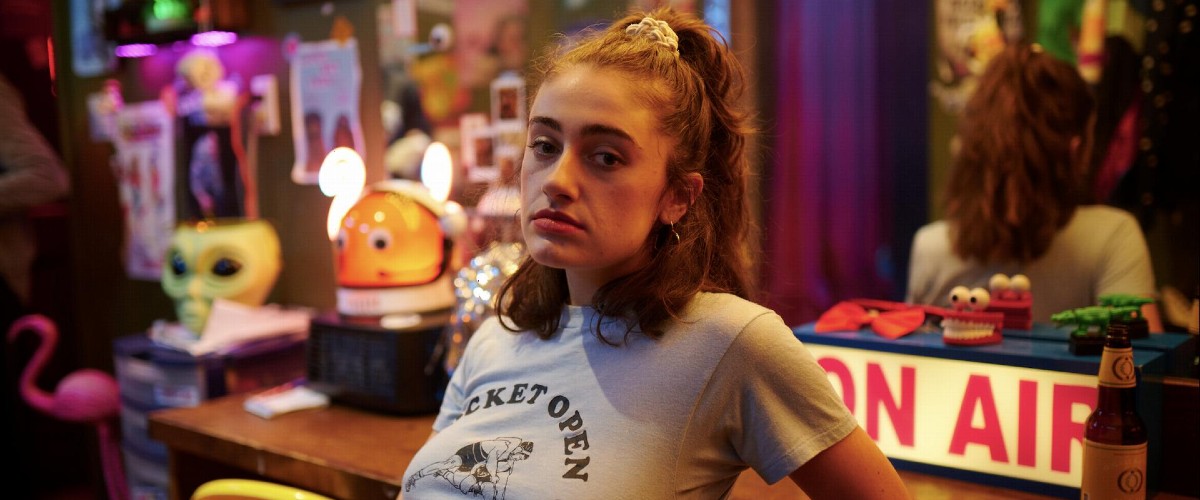
Photo caption: Mo Chara, DJ Próvai and Móglaí Bap and in KNEECAP. Courtesy of Sony Pictures Classics.

This Week on the Movie Gourmet – new reviews of Kneecap, Carville: Winning Is Everything, Stupid! and The True Story of Tamara De Lempicka & the Art of Survival.

Note: this summer’s fine coming of age film Didi and the unabashedly surreal Mother Couch are now on VOD.

CURRENT MOVIES

ON TV

Lee Marvin in POINT BLANK

On October 17, Turner Classic Movies presents the seminal 1960s neo-noir Point Blank, starring Lee Marvin. Marvin stars as Walker, a heist man who is shot and left for dead by his partner Reese (John Vernon, Animal House’s Dean Wormer), who absconded with Walker’s share of the loot and Walker’s wife. When Walker recovers, he is hellbent on revenge, aided by his sister-in-law Chris (Angie Dickinson).

It turns out that Walker needs to trace the money through a cavalcade of Mr. Bigs (Lloyd Bochner, Keenan Wynn, Carroll O’Connor). There’s a great set piece where Walker invades a highrise penthouse, despite the heavily guarded elevator being the only entrance. Point Blank ends in a thrilling nighttime finale at Fort Point.

Walker is a very uncomplicated character, all he wants is to kill Reese and reclaim his $93,000. Anyone in Walker’s situation would be pissed off, but Lee Marvin plays Walker in a constant state of cold rage. Lee Marvin’s unique charisma animates this relentless killing machine.

Marvin, just coming off The Dirty Dozen and having won an Oscar for Cat Ballou, was at the peak of his stardom. Marvin’s other contribution to the film was handpicking the then unheralded John Boorman to direct; (this was five years before Boorman’s masterpiece Deliverance). Boorman intentionally delivered a morally bleak story in the most deserted of locations: empty parking lots, the Los Angeles River channel. and San Francisco’s two icons of abandonment – Alcatraz and Fort Point.

Lee Marvin in POINT BLANK

If you’re wondering why Angie Dickinson was a movie star, Point Blank is for you. Angie was ballsy, sexy and always unashamedly very direct, and she rocked midcentury fashion. (She plays one unforgettable scene in a dress with bold horizontal stripes in the colors of Denny’s restaurants.)

Watch for James B. Sikking as the professional sniper; Sikking became well-known as the supercilious SWAT team commander Lt. Howard Hunter in Hill Street Blues. Future horror icon Sid Haig pops up as the security guard in the penthouse lobby.

Angie Dickinson and Lee Marvin in POINT BLANK

CARVILLE: WINNING IS EVERYTHING, STUPID!: rascal truth-teller

Photo caption: James Carville in CARVILLE: WINNING IS EVERYTHING, STUPID!. Courtesy of CNN Films.

The CNN documentary Carville: Winning Is Everything, Stupid! brings insight into the colorful political consultant James Carville, today’s political environment and the example of his long-surviving marriage to another strong willed professional.

Carville is known as a strategic genius and earthy communicator, but the documentaryremonds us that he was an unaccomplished Baton Rouge lawyer who hadn’t won his first major election campaign until he was age 42. Then after producing some surprise US Senate victories, at 48, he created his masterpiece – the nine lives of the oft-doomed Bill Clinton presidential campaign. Just this much is a helluva story.

But Carville, who grew up poor, watching his single mother hustle for a living, selling encyclopedias door-to-door, has always appreciated the need to get people’s attention first. That’s why he is a grinning provocateur, unafraid to offend to make his point. And you will probably be offended by something he says in Carville: Winning Is Everything, Stupid!, especially when he argues that the Democratic Party can’t be too woke to win a national election; “Screw the ARGUMENT, win the ELECTION!’. Carville was ahead of the curve in recognizing that Democratic Party needed to dump Joe Biden in 2024, and he’s comfortable in the role of truth-teller (as he sees the truth).

Carville can be dead serious about politics without taking himself seriously. Sadly, his joie de vivre has become rare in today’s toxic political environment. That’s why his rascal persona is so refreshing.

Of course, Carville is half of a celebrity marriage to Republican political strategist Mary Matalin, and she is a major part of Carville: Winning Is Everything, Stupid! Matalin, as tough as nails and intolerant of bullshit, is the perfect foil for the blustering Carville. They share the tough episode when Matalin was back working in a GOP White House during Bush’s war in Iraq, which Carville bitterly opposed. Matalin comes off as very genuine and very wise about relationships.

I watched Carville: Winning Is Everything, Stupid! in its premiere on CNN. It is now in theaters.

THE TRUE STORY OF TAMARA DE LEMPICKA & THE ART OF SURVIVAL: a daring icon revealed.

Photo caption: Tamara de Lempicka (right) in Julie Rubio’s THE TRUE STORY OF TAMARA  DE LEMPICKA & THE ART OF SURVIVAL. Courtesy of Mill Valley Film Festival.

The Mill Valley Film Festival is hosting the world premiere of The True Story of Tamara de Lempicka & the Art of Survival, a biodoc that reveals an astonishing life. The art deco artist de Lempicka was as groundbreaking in her lifestyle and self-invention as in her art.

De Lempicka painted her female subjects as confident and comfortable with their sexuality, and her highly-stylized nudes are striking. A de Lempicka has sold for over $20 million, the third-highest price ever paid for a painting by a modern female artist.

De Lempicka lived substantial parts of her life Russian-ruled Poland, France, the US and Mexico. Her adventurous personal life, dotted with rich husbands and affairs with celebrity lesbians, brazenly disregarded all the prevailing societal mores of the first half of the twentieth century. She said, “I live life in the margins of society and the rules of normal society don’t apply to those who live on the fringe.” Although de Lempicka didn’t care what anyone thought of her sexual behavior, she constructed much of her own image, sometimes embracing fiction as fact.

The True Story of Tamara de Lempicka & the Art of Survival is the third feature and first documentary from Bay Area director Julie Rubio, the producer of East Side Sushi. Rubio’s extraordinary research has uncovered that, in building her flamboyant persona, de Lempicka obscured much of her identity, including her heritage and her real name. Bringing birth and baptism certificates, 8mm home movies and the testimony of family members to light for the first time, Rubio completes a new and accurate understanding of de Lempicka.

The True Story of Tamara de Lempicka & the Art of Survival plays the Mill Valley Film Festival on October 11 at the Sequoia Cinema and October 13 at the Lark.