Writer-director Alain Giraudie uses the milieu of gay cruising to set his thriller, Stranger by the Lake (L’inconnu du lac), launched with great notoriety at Cannes. A young man frequents a secluded beach to hook up with other gays. He spots a dreamy newcomer, but he just can’t seem to meet the new guy. After a few frustrating days, he witnesses a murder by drowning – and the murderer is the guy that he’s hot for. The next day, the murderer comes on to him and our hero can’t resist…until his new boy toy suggests that they go for a swim.
Stranger by the Lake is notorious because of lots of genitals-in-your-face male nudity and LOTS of explicit gay sex acts. At least some of the sex is actual (not just simulated) sex. I saw Stranger by the Lake in an audience that must have been 80% gay male, and there were lots of knowing chuckles at the cruising behaviors (along with gasps at an episode of decidedly unsafe sex).
Stranger by the Lake does work as a thriller, and it will get a limited US release beginning January 24, 2014, (and certainly rated NC-17).
The authentic and raw French drama Suzanne starts as a family story about a single dad working as a long haul trucker and his two daughters, Maria and Suzanne. The younger daughter Suzanne makes some bad choices that impact the rest of her family. The film is not just about the title character, but about each family member and the consequences each must bear.
Francois Damiens is especially good as the dad, a guy who has sacrificed so much for his daughters, and just can’t bear anymore drama. Adele Haenel is excellent as the exuberant and responsible older sister Maria. As Suzanne, Sara Forestier manages to portray someone who is not a bit not superficial or not serious, but who is fatally impulsive. In the fluffy The Names of Love, Forestier was actually convincing as a woman so distractable that she doesn’t notice that she has left her flat and boarded the Paris Metro without wearing any clothes. It’s impressive to see the range she demonstrates playing the train-wreck of a protagonist in Suzanne.
I saw Suzanne at the San Francisco Film Society’s French Cinema Now series. I’ve read that Suzanne may get a US theatrical release starting December 13. I hope so – it’s a fine film.
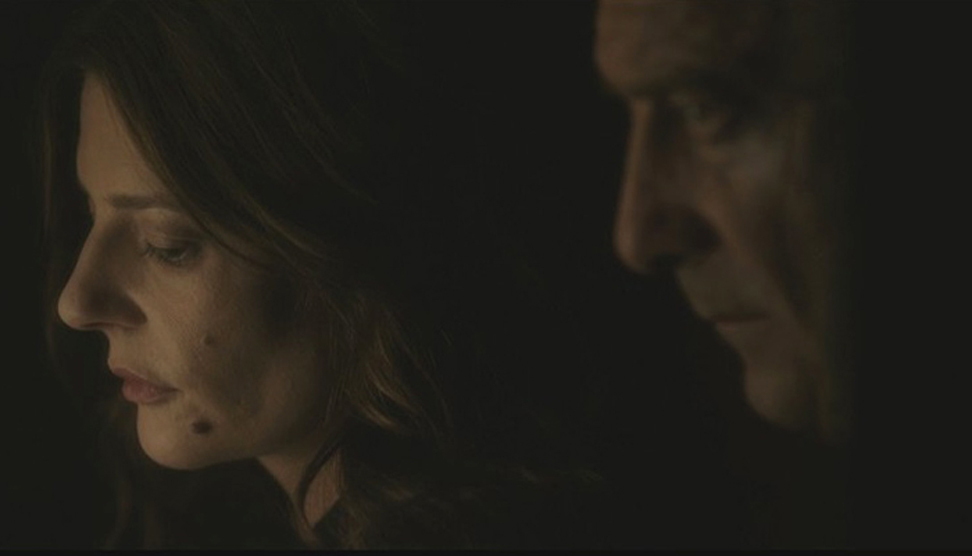
The great French actor Vincent Lindon (Mademoiselle Chambon, Augustine) leads a fine cast in the dark and unnecessarily disturbing Bastards (Les Salauds). Bastards is getting attention primarily because of its renowned director Claire Denis. I am generally NOT a fan of Denis (although I liked her 2008 film 35 Shots of Rum). There’s really nothing wrong with Bastards – it’s well-crafted and well-acted – except the story.
The tale is about Lindon’s character seeking to take revenge for a family tragedy on the rich bad guy who is responsible. Because this is a very dark movie, it doesn’t end well. Now I like dark movies and I would have been OK with the despairing ending, but Bastards needlessly exploits a human trafficking plot thread to make the bad guy worse than he needs to be. Then the final ten minutes is entirely gratuitous. I’ve seen over 15,000 movies, and I would put Bastards among the five or so most disturbing.
(The 40-year-old actress Chiara Mastroianni is pretty damn appealing as the target of Lindon’s lust; as the daughter of Marcello Mastroianni and Catherine Deneuve, she benefits from good genes.)
I saw Bastards at the San Francisco Film Society’s French Cinema Now series. It is available streaming on Amazon, Google Play and XBOX Live.
French documentarian Nicolas Philibert takes on a backstage tour of the seven channels of Radio France in House of Radio (La Maison de la Radio). Philibert’s style is entirely observational – there is no narration and I remember only one title identifying the Radio France building at beginning of film. The camera just watches the people of Radio France do their jobs – including interviews, news reports, performances, games shows and even the sports reporters on motorbikes covering the Tour de France.
As San Francisco Film Society Director of Programming Rachel Rosen noted, radio is a medium that draws much of its power from the absence of images. The editing in House of Radio seems completely random but it’s not – Philibert strings all of his nuggets together so that we never lose interest. I want to see this guy’s next movie.
I saw House of Radio at the San Francisco Film Society’s French Cinema Now series. It’s not currently available in theaters or on DVD or streaming in the US.
The French drama Blue is the Warmest Color explores first love, capturing the arc of a young woman’s first serious romance with remarkable authenticity and a stunning performance by 19-year-old actress Adèle Exarchopoulos. Exarchopoulos plays a 17-year-old (also named Adèle) who falls in love with an out lesbian five or six years her senior. The film traces the course of their relationship over the next several years as the couple are challenged by jealousies and their different temperaments and class backgrounds, and as Adèle matures.
The acting is excellent, including Léa Seydoux (Farewell My Queen, Midnight in Paris) as the lover. But Adèle Exarchopoulos is a revelation. She is perfect as a teen typically full of curiosity and devoid of confidence, outwardly raunchy but profoundly innocent. And she has an extraordinary gift to seem utterly alone in a crowd. After watching Exarchopoulos, I felt as I did after seeing Jennifer Lawrence in Winter’s Bone – I can’t wait to see this emerging major talent again.
This is the first film I’ve seen by Tunisian-born French director Abdelatif Kechiche, who has twice before won the Cesar (the French Oscar). In Blue Is the Warmest Color, Kechiche uses the closeup more than any recent director that I can recall, and he is fortunate to have Exarchopoulos, who can pull it off. It’s an excellent reason to see Blue Is the Warmest Color on the big screen.
Blue Is the Warmest Color is three-hours long, which is an indulgent length, but not too long. I am usually impatient with movies over two hours and quick to find them overlong. But Blue Is the Warmest Color kept my interest and engagement for its duration, and I really couldn’t recommend many cuts.
There is a LOT of explicit simulated sex in this movie. The main characters’ first love scene must sample the entire lesbian Kama Sutra. That scene, reputed by some to last nineteen or twenty minutes, didn’t seem that nearly long. The film proudly earns its NC-17 rating by depicting the (apparently very satisfying) sexual aspect of a romance.
But, in the end, it’s all about Adèle’s romance and Exarchopoulos’ performance. Blue Is the Warmest Color won the top prize at Cannes, and is one of the year’s best films – perhaps the very best.
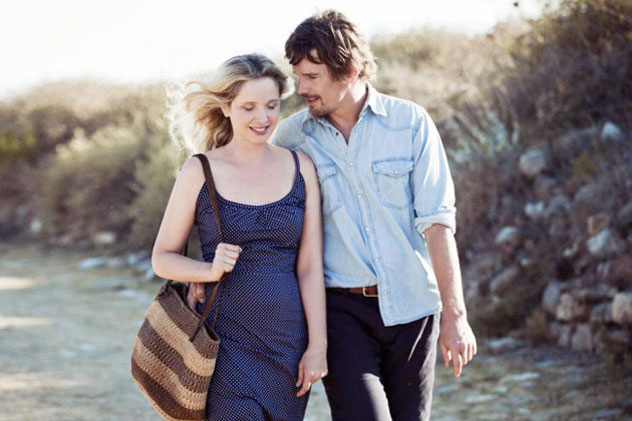
In 1995’s Before Sunrise, Jesse (Ethan Hawke) is an American writer in his early twenties who meets a French woman, Celine (Julie Delpy), on a train and talks her into walking around Vienna with him before his early morning flight back home. They banter and flirt, sparks fly and they agree to meet in six months. We find out what happened nine years later when they encounter each other again in Paris in Before Sunset. Now, in Before Midnight, it’s been another nine years and Jesse and Celine are 41. Their journeys have reached another stage, and we meet them in a Greek coastal resort.
In the first two movies, we were rooting for them to get together, but didn’t know whether it would happen. Now we know – they are a couple. The arcs of their careers have intersected, they face the roles of parent and step-parent and their attraction and feelings for each other have matured. As do all couples, they must negotiate each other’s expectations, desires, temperaments and quirks – with a combination of deliberation, accommodation, manipulation and argument.
All three movies in the series are deeply affecting because they are unusually authentic movie romances. The tension in the first two movies is what will happen when they fall in love. The tension in Before Midnight is whether – and how – they will stay in love. Jesse and Celine are perfect for each other – but is that enough?
Before Midnight is co-written by director Richard Linklater and stars Hawke and Delpy. Once again, we have a movie romance without the tired conventions of more superficial romantic comedies; in this series, there are no goofy best friends/roommates, obnoxiously intrusive parents – and no weddings. Instead, we have two attractive, intelligent and very verbal people who are very funny, and have potentially conflicting needs.
The series, which develops the same characters over eighteen years, is a very impressive work and Before Midnight is the year’s best romance (and one of the year’s best movies).
Before Midnight is available on DVD from Netflix and Redbox and streaming from Amazon, iTunes, Vudu and other VOD outlets. I recommend that you watch the prequels first. Both Before Sunrise and Before Sunset are available on DVD from Netflix and streaming on VOD from Amazon , iTunes, Vudu and other VOD outlets. Before Sunrise is free with Amazon Prime.
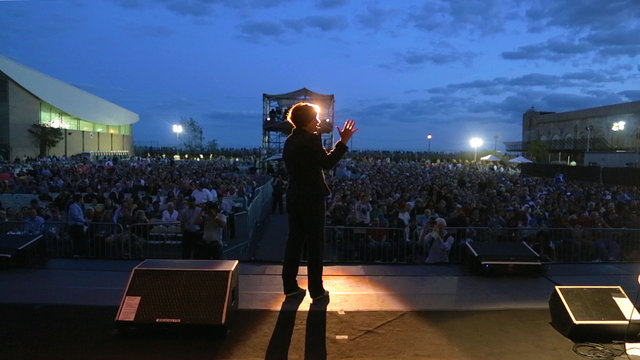
Hers to Lose: Inside Christine Quinn’s Bid for Mayor is an extraordinarily evocative political film, it’s only 30 minutes long and you can watch it for free.
It’s the story of Christine C. Quinn’s bid for New York City mayor in 2013. At the start of the race, Quinn was the heavy favorite. She was the City Council President and a dominant force in Manhattan’s Democratic establishment. She would have been the first woman and the first openly gay Mayor of New York City.
Then, as happens in politics, two things went wrong. First, she had positioned herself as the Democratic partner and heir to Republican Mayor Bloomberg, which helped her immensely in the years of Bloomberg’s popularity in New York; but by the time of the 2013 primary, Bloomberg had become very UNPOPULAR among Democratic primary voters. Then, as voters looked to an anti-Bloomberg alternative, one of Quinn’s opponents, Bill de Blasio unleashed a killer campaign commercial, featuring his teenage son Dante, that crystallized the aspirations of the electorate. Quinn sank like a rock in the polls, and de Blasio shot upward. This was one of those moments in a political campaign when there is just nothing a candidate can do to stop a popular tsunami.
As Hers to Lose opens, we see Quinn – just after her defeat – explaining that she granted access to the New York Times documentarians so they could record her victory. She is composed, but her eyes are filled with pain. Quinn had dedicated years of her life to running in this race, suffering political and personal attacks, enduring long hours and living in a fish bowl; to see this film is to appreciate how much she put into the contest and how helplessly she watched her lead slip away. At its most searing, Her to Lose chronicles the never-ending torrent of abuse hurled at Quinn by haters – especially the single issue opponents of horse-drawn carriages who hang around her building so they can revile her as she begins each day; as one might assume, this vitriol takes its toll.
You can view Hers to Lose: Inside Christine Quinn’s Bid for Mayorhere at the NYT.
Seduced and Abandoned is director James Toback’s (The Pickup Artist, Tyson) documentary about that overlooked aspect of filmmaking: the pitch. The camera follows Toback and his star Alec Baldwin through the Cannes Film Festival as they try to get funding for their new movie. The project they are pitching is Last Tango in Tikrit. One can only imagine…
Toback is shameless in his pursuit of backers: “250 years from now, the only reason anyone will know your name is when it rolls on the screen as producer of my movie”. When Toback and Baldwin learn that a young actor-wannabe has a very rich dad, they pounce and dangle a newly written role for the son. Toback is willing to dump Neve Campbell for a younger box office hottie and to change the plot from a Middle East story so he can shoot in the US. It’s all very sly.
Seduced and Abandoned is playing on HBO. Here’s the teaser.
This week’s best picks are the flawless true story thrillerCaptain Phillips and the space thriller Gravity – an amazing achievement by filmmaker Alfonso Cuarón with what may be Sandra Bullock’s finest performance. 12 Years a Slave is an unsparingly realistic depiction of the horrors of American slavery.
I haven’t yet seen the French film that won the top prize at Cannes – Blue is the Warmest Color, which opens today. Actresses Adèle Exarchopoulos and Léa Seydoux (Farewell My Queen, Midnight in Paris) are reportedly spectacular in this three-hour love story. One of the explicit sex scenes takes over twenty minutes.
The Motel Life, which also opens today, is solid character-driven drama. Joseph Gordon Levitt’s offbeat comedy Don Jon offers both guffaws and an unexpected moment of self-discovery.
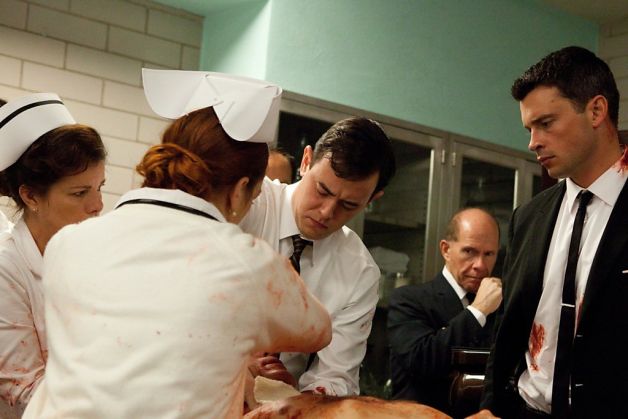
My Stream of the Week is the entirely fresh and riveting Parkland, which sharply dramatizes the events of November 22-25 in Dallas from the viewpoints of the secondary participants. Parkland is available streaming from Amazon, iTunes, Vudu and XBOX Live.
Check out my new feature VOD Roundup, where you can find my comments on over twenty current movies available on Video on Demand. There are some good ones, some bad ones and some really, really good ones (including How to Make Money Selling Drugs).
On November 11, Turner Classic Movies is playing the underrated 1949 noir The Set-up. This is one of the great film noirs and one of my 10 Best Boxing Movies. Robert Ryan plays a washed-up boxer that nobody believes can win again, not even his long-suffering wife. His manager doesn’t bother to tell him that he is committed to taking a dive in his next fight. But what if he wins? Director Robert Wise makes use of then innovative real time narrative. In this clip, watch for the verisimilitude of the bar where the deal goes down.
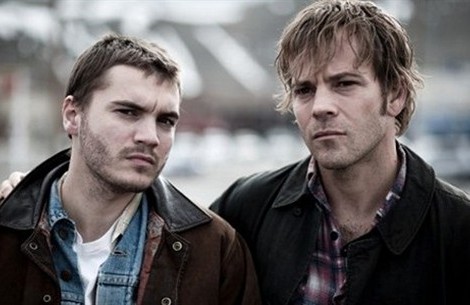
We glimpse inside the lives of two damaged brothers in the solid little drama The Motel Life. The younger brother (Stephen Dorff) lost his lower leg in a childhood accident, and is often child-like in his decision-making. The older brother (Emile Hirsch) tries to look after him, but has his own problems, including drinking so much that there’s blood in his vomit. The two are at best underemployed and living a marginal existence in seedy Reno motels. The younger brother blunders into a life-changing jam, and the older one tries to get him out-of-town. This may be Hirsch’s best performance since Into the Wild, but, in the showier role, Dorff was a little too grimace-y for my taste.
Dakota Fanning is very good as a love interest, and Kris Kristofferson has a brief role, too. There’s some creativity at work here, as in some animation that represents the younger brother’s illustration of the older brother’s storytelling. There’s a funny scene when they bet a bank wad constituting all hope for their economic survival on the Buster Douglas-Mike Tyson fight. And I liked the Reno and Elko exteriors. The Motel Life is worthwhile, but not a Must See.

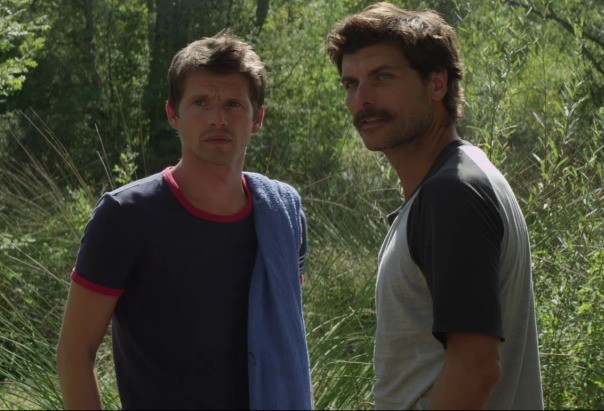 Writer-director Alain Giraudie uses the milieu of gay cruising to set his thriller, Stranger by the Lake (L’inconnu du lac), launched with great notoriety at Cannes. A young man frequents a secluded beach to hook up with other gays. He spots a dreamy newcomer, but he just can’t seem to meet the new guy. After a few frustrating days, he witnesses a murder by drowning – and the murderer is the guy that he’s hot for. The next day, the murderer comes on to him and our hero can’t resist…until his new boy toy suggests that they go for a swim.
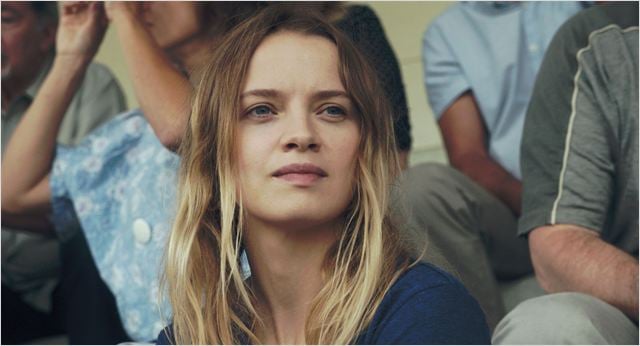 The authentic and raw French drama Suzanne starts as a family story about a single dad working as a long haul trucker and his two daughters, Maria and Suzanne. The younger daughter Suzanne makes some bad choices that impact the rest of her family. The film is not just about the title character, but about each family member and the consequences each must bear.