The Swedish comedy The 100-Year-Old Man Who Climbed Out the Window and Disappeared is a rich mixture of absurdity and broad physical humor. As a geezer escapes from his nursing home and (slowly) embarks on an adventure, he see flashbacks to his earlier Zelig-like life. As the local police launch a half-hearted (or quarter-hearted) search for him, he happens into a criminal gang’s suitcase of cash and picks up a motley crew of confederates. There are two comedies here – the series of absurd coincidences that put him in the most salient moments of 20th Century history AND the guffaw-inducing chase story. Both comedic threads are satisfying and very funny.
Robert Gustafsson is effective playing the protagonist Allan from ages 18 through 100. I loved Iwar Wiklander as Allan’s partner-in-adventure Julius.
The 100-Year-Old Man Who Climbed Out the Window and Disappeared has also edged its way into a four-way tie for 12th place on my list ofLongest Movie Titles. It’s a hoot.
The Melissa McCarthy spy spoof Spy is a very funny diversion. Far from the Madding Crowd, is a satisfying choice for those looking for a costume bodice ripper.
My DVD of the Week is Frederick Wiseman’s 2010 brilliant and mesmerizing 2010 documentary Boxing Gym. One of the few boxing movies that will appeal to most women, Boxing Gym is available on DVD from Netflix.
Don’t forget that Turner Classic Movies is filling each June and July Friday with film noir in its Summer of Darkness series, hosted by Film Noir Foundation president Eddie Muller – the Czar of Noir. The series schedule includes several favorites of my Overlooked Noir.
Speaking of which, I’m telling you NOW so you can set your DVRs. On June 19, TCM brings us an unusually rich menu of classic film noir:Cornered, Crack-up, Gilda, The Big Sleep, The Killers, Nocturne and Crossfire. The most famous – and my favorite – of these is The Big Sleep, with its iconic performance by Humphrey Bogart as the hard-boiled detective Philip Marlow and its impenetrably tangled plot. It’s also one of the most overtly sexual noirs, and Lauren Bacall at her sultriest is only the beginning. The achingly beautiful Martha Vickers plays a druggie who throws herself at anything in pants. And Dorothy Malone invites Bogie to share a back-of-the-bookstore quickie.
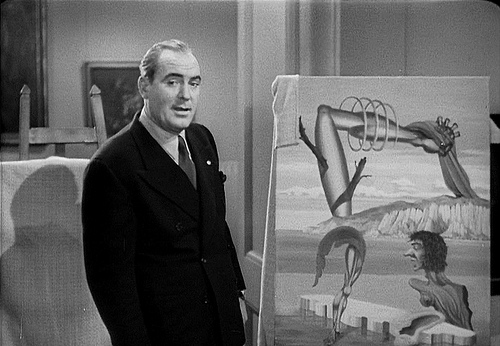
For something different, try out the early psychological thriller Crack-up, with Pat O-Brien as an art expert who is framed for a crime. As he tries to prove his own innocence, O’Brien is handicapped by a gap in his memory and repeated hallucinations of being in a head-on train collision.
There is no narration in Frederick Wiseman’s 2010 brilliant and mesmerizing 2010 documentary Boxing Gym. Nor are there on-screen titles or talking heads. All we see are the owners and patrons of a scruffy Austin, Texas, boxing gym going about their daily routines – conditioning and instruction. Except for a one- or two-second shot of the gym’s entrance, all 91 minutes is shot inside the small gym. The effect is hypnotic.
This is a gym for people of all ages, ethnicities, levels of fitness and genders. It’s unusually welcoming to women, and we see lots of women working out (and never being hassled by the men). There are kids, and even a baby who is moved from workout station to workout station in his carrier seat. Former pro boxer Richard Lord and his wife run the gym, where a membership runs only $50 per month – and that’s negotiable.
This is a sports movie without a climactic Big Fight. We don’t even see a boxing match – just lots of hitting the bags, shadow boxing, jumping rope, footwork on a giant tire and instruction. And more hitting the bags. Everyone is concentrating – getting in a self-isolated zone so they can achieve the rhythmic pattern of footwork and pat-pat-patting the speed bag. Wiseman edits his own films, and Boxing Gym is a masterpiece of editing. He lets us fall into the pace of the place and meet the characters by watching them and eavesdropping on them. He lingers on shots for a reason, skips to another vignette at precisely the right moment and the film is perfectly paced.
There is one extraordinary scene. Near the end of the movie, a man and a woman are sharing the ring as they each workout. In his half of the ring, he is practicing his footwork and throwing punches, simulating a fight. In the other half of the ring, she is doing the same. These are separate individual workouts, and the two never make eye contact. Each is in his/her own bubble of concentration. But their footsteps are rhythmic, they’re both breathing heavily, and the man grunts when he throws punches. If you listen without watching the screen, it sounds like sex. The result is a powerfully erotic scene – perhaps even more powerful because the two people are not interacting with each other at all. Unforgettable. (Wiseman may not have known what he had when he shot this sequence, but he certainly recognized it in the editing room.)
Wiseman was 80 when he made Boxing Gym, his fortieth movie. Since then, he’s directed the critically praised La Danse, At Berkeley and National Gallery. Wiseman was a law professor who made a career change at age 37. His breakout film was the pysch hospital expose Titicut Follies in 1967.
Love & Mercy, the emotionally powerful biopic of the Beach Boys’ Brian Wilson, is the true life story of an extraordinarily gifted person facing three monsters. Wilson is a musical genius, one of the great songwriting, arranging and producing talents of his century. But his art and his very survival were tested by his tormentors until unselfish love found him an escape to treatment, and, ultimately, his salvation.
In his first feature as a director, veteran producer Bill Pohlad chose to depict two phases of Wilson’s life, with Wilson played by Paul Dano and John Cusack.
The first monster is Wilson’s father Murry (Bill Camp), an abusive father whose adult sons still fear after they have fired him as their manager. What kind of father needs to belittle and sabotage his sons so he doesn’t have to acknowledge that their success surpasses his own? Brian Wilson is deaf in one ear from his father’s punches, but the psychological scars are even more deeply felt.
The second monster is Brian’s own schizoid affective disorder, a condition causing auditory hallucinations. Brilliantly, Pohlad has chosen to let the audience hear what Brian hears. This can be thrilling in moments of musical inspiration. And, of course, it is terrifying most of the time.
The third monster is charlatan psychologist Dr. Eugene Landy (Paul Giamatti), a Svengali-like manipulator, who over-medicates Brian, then confines him, while controlling and watching his every move. Landy leeches off Brian’s fortune and is ruthlessly protective of his racket.
Murry and Landy are so scary that Beach Boy Mike Love, known to be (and portrayed here as) a colossal jerk, almost seems sympathetic by comparison.
In the younger Dano segments, we see Brian at his creative peak, emotionally tortured by Murry and about to be driven into a breakdown by his condition. In the middle-aged Cusack parts, we see Brian, broken down by his illness, utterly helpless against and captive to Landy’s web of control.
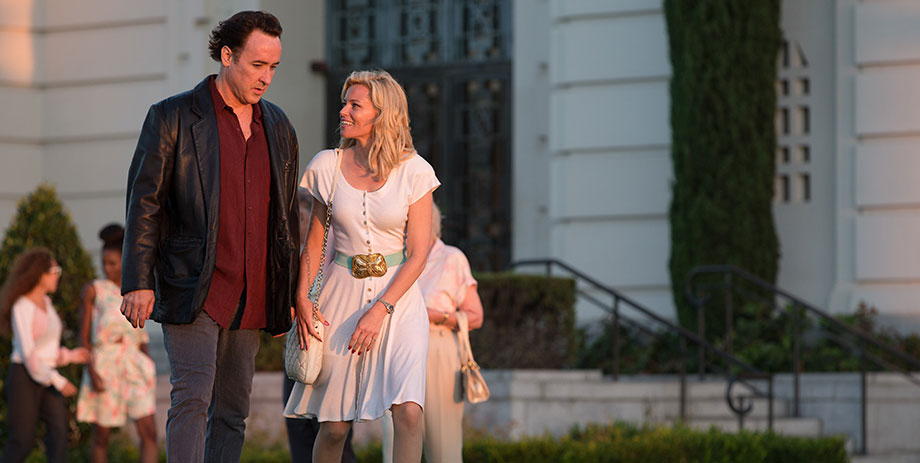
Dano shows us Brian’s vulnerable genius. Cusack shows us Brian as gentle and genuine. The story of Love & Mercy is about how he escapes being under the thumb of his monsters, chiefly from the perspective of Melinda Ledbetter (Elizabeth Banks), the woman who would become his second wife. As good as are Dano and Cusack, Banks is absolutely stellar; her character must continually react to the unpredictability of Brian’s illness and the increasing horror of Landy’s tyranny.
From the beginning, Love & Mercy sweeps us up into the highs and lows of Brian Wilson’s life – and it’s a helluva life. Love & Mercy is one of the Best Movies of 2015 – So Far. Watch the end credits all the way to the end.
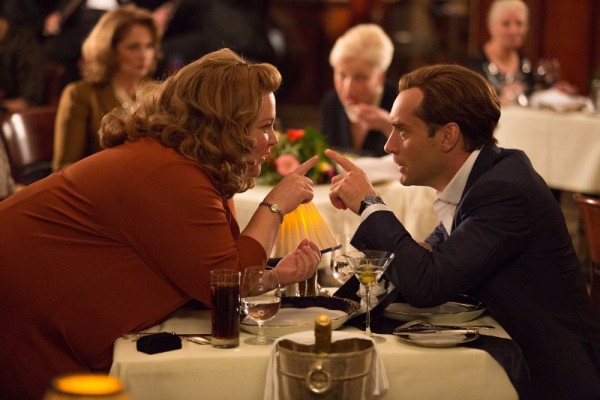
Melissa McCarthy spoofs James Bond-type spy movies in the winning comedy Spy. She plays a put-upon back-of-the-house CIA operative who supports a glamorous super spy (Jude Law). She is extremely skilled, but he gets all the credit for their successes. She is so low self-esteemed that even SHE doesn’t recognize her own competence and achievements. Then circumstances pull her out of the basement at Langley and into the field for an operation – and the joke is on everyone else.
McCarthy carries Spy with her gifts for both verbal and physical comedy. She is so damned appealing, and she represents every one of us who has felt underestimated. And NOBODY delivers a filthy insult with more comic effect.
Law is as suave as he can be. Jason Statham sends up his own scowling action hero roles by playing an agent swaggering with macho braggadocio but who really a buffoon. The villainess is played by Rose Byrne, who broke out as a first-rate movie comedienne in last year’s Neighbors; she’s at least as good in Spy. New York City-born swimsuit model Nargis Fakhri has starred in a few Bollywood movies, and she has a rockin’ action sequence here that indicates that she has a future in mainstream American films.
Spy was written and directed by Paul Feig, the creator of Freaks and Geeks who directed the hit picture that McCarthy stole, Bridesmaids , and the hilarious McCarthy vehicle The Heat. In Spy, he starts us off with a Shirley Bassyesque title song, and then parodies all the conventions of the super spy movie genre, one by one.
Spy sustains its laughs throughout. It’s maybe not quite as funny as The Heat, but it’s a an entertaining diversion, and a great chance to enjoy the unique talent of Melissa McCarthy.
Far from the Madding Crowd, is a satisfying choice for those looking for a bodice ripper. If you’re looking for a scare, try the inventive and non-gory horror gem It Follows. Don’t bother with Slow West, a failed Western that never gets into rhythm.
I really enjoyed the Argentine comedy The Film Critic, which is now available for streaming from Amazon Instant Video, iTunes, Vudu, YouTube and Google Play.
I really enjoyed the dark comedy Gemma Bovery, in which Fabrice Luchini – a treasure of comic cinema – sees a famous novel being acted out in real lie and jumps right in himself.
My Stream of the Week is the So Bad It’s Funny An American Hippie in Israel, available streaming from Amazon and Xbox Video.
Don’t forget that Turner Classic Movies is filling each Friday in June and July with film noir in its Summer of Darkness series, hosted by Film Noir Foundation president Eddie Muller – the Czar of Noir. The series schedule includes several favorites of my Overlooked Noir.
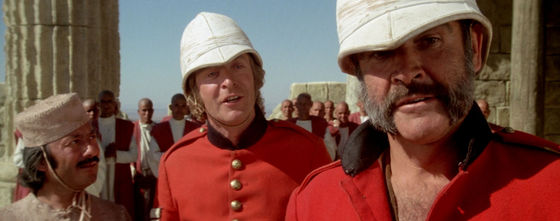
Turner Classic Movies is playing the unforgettable The Man Who Would Be King (1975) on June 6. Sean Connery and Michael Caine star as two vagabond British soldiers adventuring in colonial India when one of them is mistaken for a god by the indigenous people. They play the misunderstanding into a kingdom – until hubris, greed and lust causes them to reach a little too high. It’s a great story, well told by director John Huston. Connery and Caine are wonderful.
On June 9, TCM is playing some of the greats of early 1970s American cinema: Annie Hall, Shaft, Dog Day Afternoon and Mean Streets. Put on your flairs and tune in.
Michael Caine and Sean Connery in THE MAN WHO WOULD BE KING
Turner Classic Movies has announced a CAN’T MISS summer film noir series. The “Summer of Darkness” will be hosted by Film Noir Foundation president Eddie Muller – the Czar of Noir. Here’s the complete schedule.
TCM will be presenting 24 hours of film noir on each Friday in June and July. Every week, Eddie Muller himself will present four movies in prime time in TCM’s “Friday Night Spotlight.” Muller has penned this introductory article.
The Film Noir Foundation performs an invaluable mission: preserving and restoring classic film noir that would otherwise be lost to us and to posterity. And Muller and the Foundation host one of my absolute film festivals every winter in San Francisco – Noir City. Noir City has been expanding into other cities. Muller is a respected film historian, and his DVD commentaries are excellent. Here’s your chance to experience the Czar of Noir on television.
I’ll be calling out specific recommendations from the Summertime of Darkness in my regular Movies to See Right Now posts on Fridays, as well as writing some special posts on my favorite Overlooked Noir, including Woman on the Run and Elevator to the Gallows. Stay tuned.
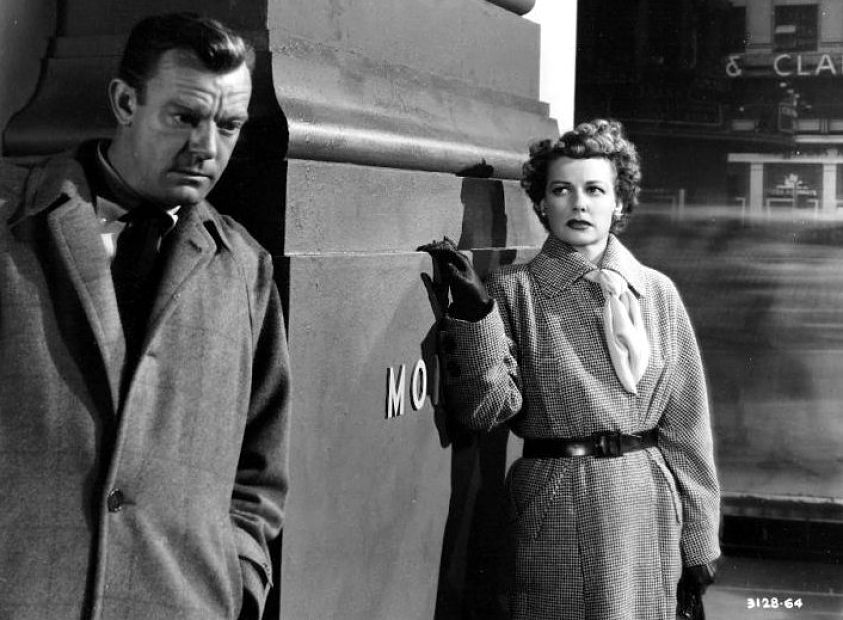
Deenis O’Keefe and Ann Sheridan in WOMAN ON THE RUN
On Friday night, June 5, Turner Classic Movies is presenting one of my Overlooked Noir, in its wonderful film noir series Summer of Darkness. The character-driven thriller Woman on the Run (1950) is notable for its San Francisco locations, making it a veritable time capsule of the post-war City By The Bay.
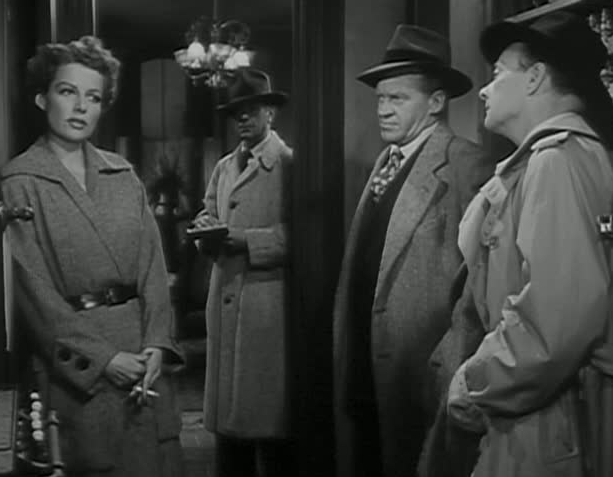
The movie opens with a murder, and the one terrified witness goes underground. When the police coming looking for him, they are surprised to find his wife (Ann Sheridan) both ignorant of his whereabouts and unconcerned. While still living in the same apartment, the couple is estranged. And the wife has a Mouth On Her, much to the dismay of the detective (Robert Keith), who keeps walking into a torrent of sass.
But soon the wife starts hunting hubbie, along with the cops, a reporter (Dennis O’Keefe) and the killer. It’s a race to see who can find him first. One character is revealed to be more dangerous than was apparent, and the audience learns this before our heroine does.
One quirky nugget – when she visits his workplace, we learn that his job is making mannikins in the basement of a large department store.
Sheridan is great in this uncharacteristically insolent role. So are O’Keefe and Keith. But the real star of Woman on the Run is San Francisco itself, from the hilly neighborhoods to the bustling streets to the dank and foreboding waterfront. Oddly, the finale is at an amusement park which seems to be Playland At the Beach (but was actually filmed at the Santa Monica Pier). (Further trivia – that Laffing Sal is the one at Santa Monica, not the one at Playland which now resides at the Santa Cruz Beach Boardwalk.) The only movie that rivals Woman on Run for its depiction of San Francisco in the 1950s is The Lineup.
The story is a taut 77 minutes of mouthy Ann Sheridan, the life-or-death manhunt and stellar period San Francisco. Woman on the Run is available on DVD from Netflix and streaming from Amazon Instant Video (free with Amazon Prime).
Ann Sheridan (far left) sasses Robert Keith (far right) in WOMAN ON THE RUN
Occasionally I see a movie SO BAD that it’s entertaining and I add it to my Bad Movie Festival. The latest is An American Hippie in Israel from 1972, which is jaw-droppingly bad and unintentionally hilarious. An American Hippie in Israel has it all – a dreadful screenplay, poor acting and shoddy production values. Fortunately, Grindhouse Releasing rescued An American Hippie in Israel in 2013 so we can add it to the canon of cult classics.
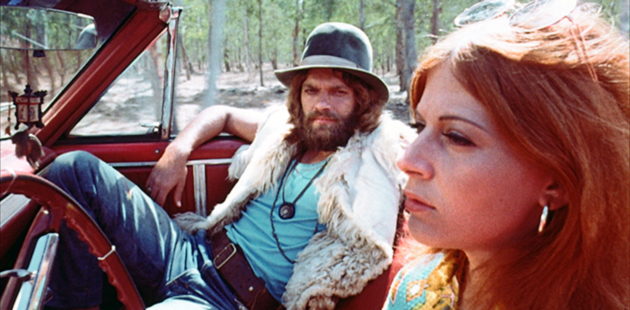
After “bumming around Europe” an American hippie named Mike (Asher Tzarfati) decides to visit Israel. He walks out of the airport and hitches a ride with a young Israeli woman Elizabeth (Lilli Avidan) who has a large convertible. She also has a pad with shag carpet, on which they have sex. The sex happens when he utters the diatribe, “You fools, stop pushing buttons! You fools…fools…fools..” and she jumps him mid-harangue. I predict that, as more people see An American Hippie in Israel, the “fools” monologue will become as popular as the “She’s tearing me apart!” from The Room and “O my God!” from Troll 2. (Part of the “fools speech” can be found at 2:47 of the trailer below.)
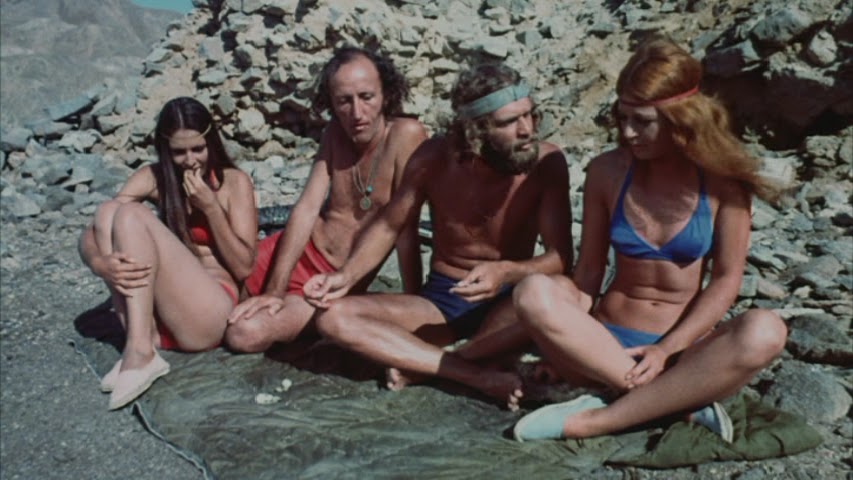
Mike and Elizabeth head out across Israel in the convertible and find local Israeli hippies with whom to smoke pot and dance awkwardly. Two more hippies join them on a road trip, the impressively homely Komo (Schmuel Wolf) and comely Françoise (Tsilla Karny). The last half of the movie is set on a rocky “island”, where the two couples, clad in swimsuits or less, camp out, have more sex and go survivalist. Alas, then they get all “Lord of Flies” and it doesn’t end well.
There’s a fair amount of nudity in An American Hippie in Israel, and its cast is noteworthy for the most severe tan lines in cinema history.
AN AMERICAN HIPPIE IN ISRAEL
The oddities include:
an opening credits sequence with a road roller that is mashing down the soil, for some never explained reason;
two murderous guys in black suits and top hats who have been following Mike around the world and pop up randomly; and
some floating objects that are supposed to pass for giant sharks.
But the perhaps An American Hippie in Israel’s moviemaking low-light is a dream sequence that is ACTED (not FILMED) in slo mo. In the dream, Mike is wielding an over-sized hammer to smash two giant computers (the early kind of mainframes with reels of tape) worn by human figures; the audience can tell that Tzarfati is running and swinging the hammer VERY slowly to ape the effects of slow motion photography.
Unsurprisingly, it was the only film credit for director and co-writer Amos Sefer. I saw American Hippie in Israel on Turner Classic Movies, but it is also available streaming from Amazon and Xbox Video. You can purchase the DVD and Blu-ray from Grindhouse Releasing.
Wow, we’ve had a great start to 2015 in the movies. I’ve already placed eight films on my running list of Best Movies of 2015 – So Far. Usually, I only have three or four at this time of year. Here’s my Best of 2015 to date:
Wild Tales (saw at Cinequest; DVD release in June)
Leviathan (available to stream from Amazon Instant Video, iTunes, Vudu, YouTube, Google Play and DirecTV)
Ex Machina (in theaters now)
Me and Earl and the Dying Girl (saw at San Francisco International Film Festival; releases June 12)
The End of the Tour (saw at San Francisco International Film Festival; releases July 30)
’71 (saw at Cinequest; DVD release in July)
The Look of Silence (saw at San Francisco International Film Festival; limited release July 16)
The Grief of Others (saw at Camera Cinema Club; release undetermined)
I’m also mulling over adding to the list I’ll See You in My Dreams (in theaters now). And I know I’ll include Corn Island, an exquisite Georgian film that I saw at Cinequest, if it gets a US release. This is a GREAT and uncharacteristic start to the year in movies!
I’m already looking forward to some especially promising films that debuted at the Cannes International Film Festival. The universally acclaimed, heartbreaking biodoc of Amy Winehouse, Amy, releases July 3. Other Cannes films that will contend for my top ten list include The Lobster, Louder Than Bombs, Mia Madre, The Measure of a Man, Sicario (releases September 18), Youth, Green Room, The Assassin and Dheepan.
Plus there will be some superb documentaries that I don’t know about yet AND the usual stream of Oscar Bait movies released in the fall by the prestige arms of the Hollywood studios. We should have a pretty good handle on 2015’s pool of excellent cinema at the time of the Toronto and Telluride film festivals in September.
2015 has been an excellent year so far and has the potential to be a great year of cinema.