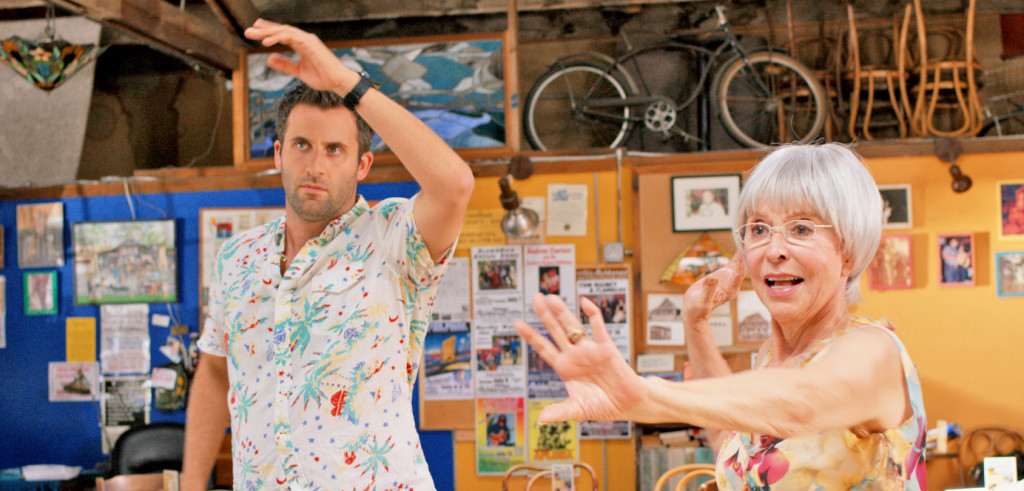
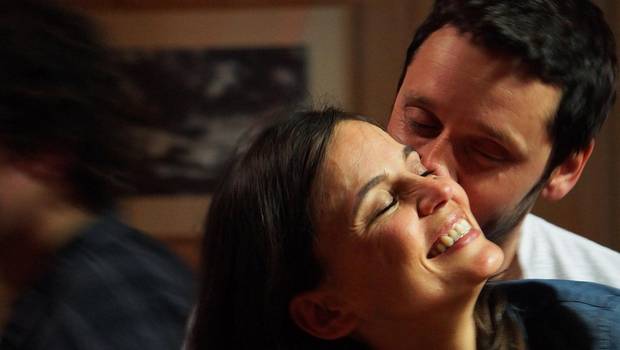
Remember Me is an odd couple comedy about two mismatched cousins who visit their grandparents just as the old man dies so they have to take grandma (the great Rita Moreno) off on a road trip to the old folks home. Remember Me is written and directed by Steve Goldbloom, who also stars as the more professionally successful and reserved cousin; Joel Kelly Dauten plays the wild man cousin, banging around between failed fantasies. Both guys are emotionally stunted in their own ways.
The dead grandpa situation is very funny, and there’s a witty joke about the Goldbloom character’s day job as a guy who reads news stories about wars in the Third World for NPR (without ever leaving the US to cover a story). But these two immature thirty-year-olds just aren’t interesting enough to carry a feature film.
Rita Moreno is very good, but this is a one of those man-child-coming-of-age movies. That subgenre is getting tiresome, as was Remember Me.
The sci-fi comedy Man Underground is centered around the entirely humorless Willem (George Basil), who is emotionally scarred by a failed relationship and an occurrence that he believes was an encounter with space aliens. Unburdened by any lack of confidence, Willem makes his way as a lecturer and Internet personality specializing in paranoid theories of government cover-ups. He decides to make his own biopic, assisted by oddball acolytes Todd (Andy Rocco) and Flossie (Pamela Fila).
Most of Man Underground fills out the portrait of the deeply troubled and absurdly misguided Willem. But, even with cringe humor, it’s hard to watch Willem when it turns out that the really interesting characters are Todd and Flossie. Todd and Flossie finally get their due, but too much of Man Underground is about Willem.
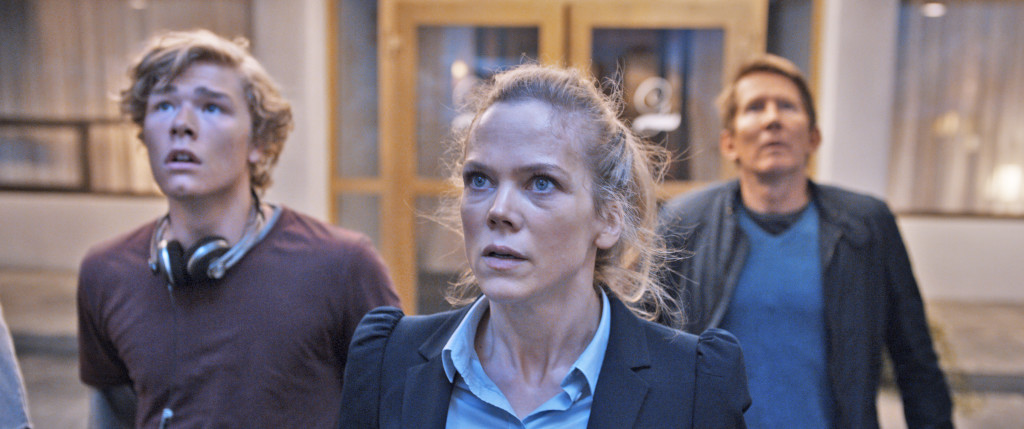
I really liked the gripping Norwegian disaster movie The Wave, with its ticking clock tension and cool disaster effects. I saw The Wave last week at Cinequest, and it opens in theaters this weekend. I also liked Cinequest’s Eye in the Sky, with Helen Mirren, and I’ll be writing about that by next week before it opens widely in the Bay Area.
I remain completely absorbed with Silicon Valley’s own film festival, Cinequest. Check out my up-to-the-moment coverage both on my Cinequest page and follow me on Twitter for the latest. I especially recommend the exquisite Chilean contemplation of grief The Memory of Water, which plays Cinequest tomorrow evening; I’ve seen 25 Cinequest movies so far, and this is the best one. Tomorrow night, I’ll be checking out two movies I haven’t seen yet: The Adderall Diarieswith James Franco, Ed Harris and Amber Heard, Christian Slater and Cynthia Nixon and February, a horror flick with Mad Men’s Kiernan Shipka.
Then there are the Oscar winners and contenders, whose theatrical runs are winding down but still out in theaters:
Spotlight – a riveting, edge-of-your-seat drama with some especially compelling performances.
The Revenant, an awesome and authentic survival tale that must be seen on the BIG SCREEN. I predict that The Revenant will be the biggest winner at the Oscars.
The Irish romantic drama Brooklyn, an audience-pleaser with a superb performance by Saoirse Ronan.
The deserved Oscar winner for Screenplay, The Big Short – a supremely entertaining thriller – both funny and anger-provoking.
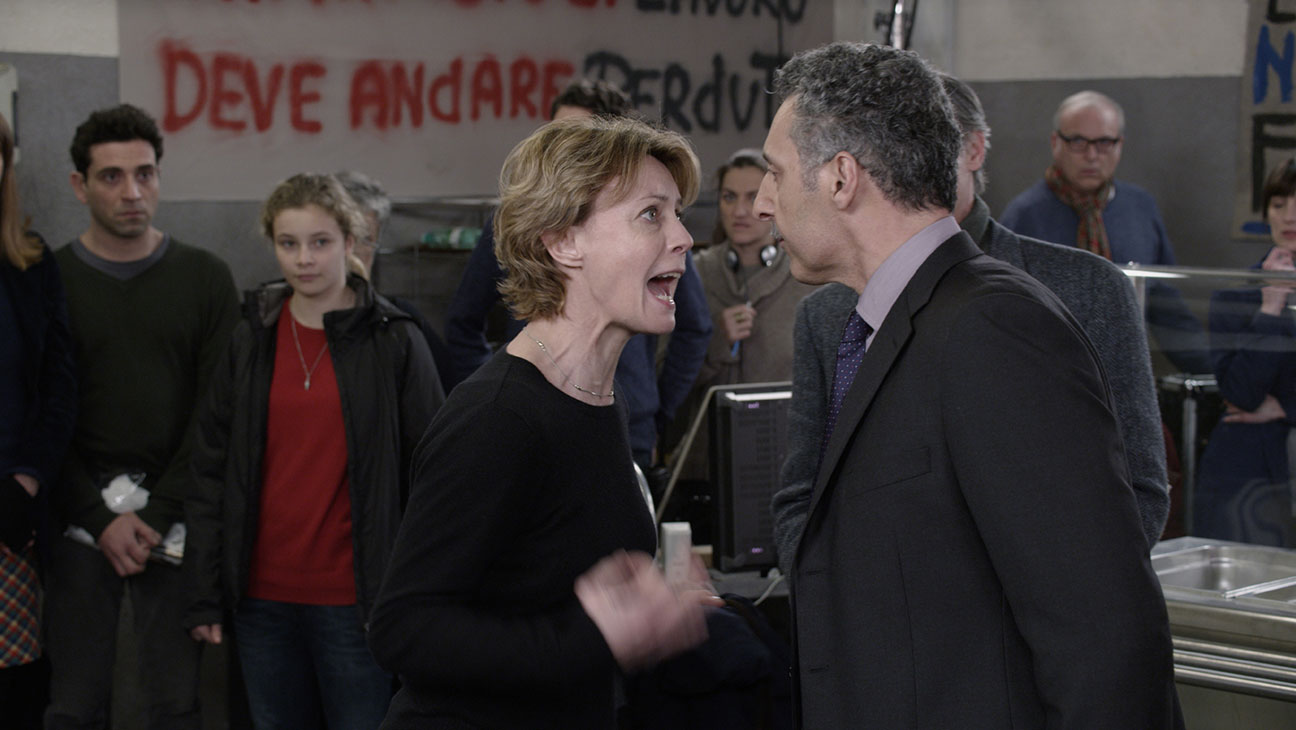
The Italian drama My Mother is a deeply personal film about loss with some comedic highlights from John Turturro. The Coen Brothers’ disappointingly empty comedy Hail, Caesar contains some cool Hollywood parodies.
In honor of Cinequest, my Stream of the Week is the delightful dark comedy Gemma Bovery from last year’s festival. Gemma Bovery is available to stream from Amazon Video (free with Amazon Prime), iTunes, Vudu, YouTube and Google Play.
This week, watch for two wonderfully fun gender-crossing comedies on Turner Classic Movies on March 13: Victor/Victoria and Tootsie. TCM is playing Blow-up on March 17. Set in the Mod London of the mid-60s, a fashion photographer (David Hemmings) is living a fun but shallow life filled with sports cars, discos and and scoring with supermodels (think Jane Birkin, Sarah Miles and Verushka). Then he discovers that his random photograph of a landscape may contain a clue in a murder and meets a mystery woman (Vanessa Redgrave). After taking us into a vivid depiction of the Mod world, director Michelangelo Antonioni brilliantly turns the story into a suspenseful story of spiraling obsession. His L’Avventura, La Notte and L’Eclisse made Antonioni an icon of cinema, but Blow-up is his most accessible and enjoyable masterwork. There’s also a cameo performance by the Jeff Beck/Jimmy Page version of the Yardbirds and a quick sighting of Michael Palin in a nightclub.
So let’s get one thing straight right up front – My Mother is NOT a dramedy. It’s an Italian drama that is leavened with bits of comedy. Writer-director Nanni Moretti has constructed a deeply personal portrait of a person in mid-career and mid-life who is losing her aged parent. There’s never a convenient moment to go through this experience, and Moretti’s protagonist, a movie director (Margherita Buy), is juggling her job and her relationships with her teen daughter, her ex-husband and her brother (played by Moretti). It’s all very complicated – just like it is in real life, and Moretti brings authenticity to the story.
All of this is pretty somber, but our heroine is making a movie, and she has cast an astonishingly pompous American star (John Turturro) who claims to speak more Italian that he really does and who can’t remember his lines. Every scene with Turturro is hilarious as he bumbles through the filmmaking with shameless bravado.
Nanni Moretti is a gifted filmmaker who has been successful in varied genres. I really enjoyed his comedy We Have a Pope, about a newly elected pope who suffers a panic attack and flees the Vatican. This is more serious stuff. The Wife, who liked it less than I did, refers to it as the “depressing Italian dying mother movie”. I found it very affecting, especially the emotionally satisfying ending.
I saw My Mother at the Mill Valley Film Festival in October 2015, but its theatrical release is now expected in March 2016.
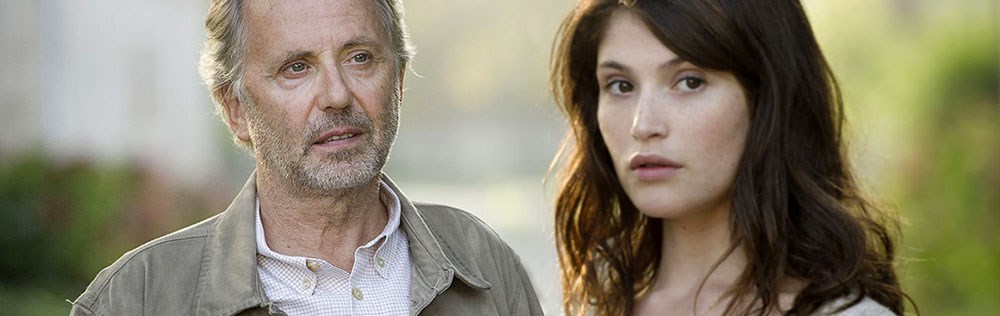
Fabrice Luchini and Gemma Arterton in GEMMA BOVERY
In honor of Cinequest, here’s a highlight from last year’s fest. In the delightful dark comedy Gemma Bovery, Fabrice Luchini plays a guy who has left his Type A job in Paris to take over his father’s bakery in a sleepy village in Normandy. He gets new neighbors when a young British couple named Bovery moves in. The young British woman (played by the delectable Gemma Arterton) is named Gemma Bovery, and only the baker notices the similarity to Emma Bovary. But, like the protagonist of Madame Bovary, the young British woman is also married to a Charles, becomes bored and restless and develops a wandering eye. The baker rapidly becomes obsessed with the Flaubert novel being re-enacted before his eyes and soon jumps into the plot himself. Gemma Bovery, which I saw at Cinequest 2015, is a French movie that is mostly in English.
Fabrice Luchini is a treasure of world cinema. No screen actor can deliver a funnier reaction than Luchini, and he’s the master of squeezing laughs out of an awkward moment. For me, his signature role is in the 2004 French Intimate Strangers, in which he plays a tax lawyer with a practice in a Parisian professional office building. A beautiful woman (Sandrine Bonnaire), mistakes Luchini’s office for that of her new shrink, plops herself down and, before he can interrupt, starts unloading her sexual issues. It quickly becomes awkward for him to tell her of the error, and he’s completely entranced with her revelations, so he keeps impersonating her shrink. As they move from appointment to appointment, their relationship takes some unusual twists. It’s a very funny movie, and a great performance.
Gemma Bovery is directed and co-written by Anne Fontaine (The Girl from Monaco, Coco Before Chanel). Fontaine has a taste for offbeat takes on female sexuality, which she aired in the very trashy Adore (Naomi Watts and Robin Wright as Australian cougars who take on each other’s sons as lovers) and the much better Nathalie (wife pays prostitute to seduce her cheating hubby and report back on the details).
Gemma Bovery isn’t as Out There as Nathalie, but it’s just as good. The absurdity of the coincidences in Gemma Bovery makes for a funny situation, which Luchini elevates into a very funny movie. Gemma Bovery is available to stream from Amazon Video (free with Amazon Prime), iTunes, Vudu, YouTube and Google Play.
We’re halfway through Cinequest 2016. What are the biggest hits and the most delightful surprises?
BIG MOVIES
Cinequest programmers hit a home run with the Opening Night rouser Eye in the Sky, the thriller-meets-thinker from Oscar-winning director Gavin Hood. The screening was preceded by Cinequest co-founder Halfdan Hussey’s interview of Hood, which was probably the best ever on-stage interview in festival history (at least that I have seen).
The Cinequest audience also loved another Spotlight Film, the Norwegian disaster movie The Wave.
INDIES
Film festivals are very important to first-time directors, and Cinequest 2016 has hosted some world premieres of two wonderful debuts:
Love Is All You Need?: The hard hitting exploration of homophobic bullying and hate crimes is the most sensational film at Cinequest. COme to think of it, “hard hitting” is an understatement.
Lost Solace: Highly original psychological thriller and a brilliant directorial debut – my personal favorite so far at this years festival.
Heaven’s Floor: Absorbing and character-driven autobiographical drama about a most complicated woman and the choices that indelibly affect several lives.
WORLD CINEMA
As usual, Cinequest is screening some real gems from other nations. The best have been:
The Memory of Water: This Chilean drama explores grief, its process and its impact and might just be most masterful filmmaking achievement at Cinequest 2016. Exquisite. Probbly the best cinematic achievement at this year’s Cinequest.
Demimonde: Sex, intrigue and murder in this operatic Hungarian period drama.
Magallanes: A Peruvian psychological drama about those wrongs that cannot be righted.
Fever at Dawn: Urgent period romance between Holocaust survivors, with an unexpected nugget at the end.
Dan and Margot: A very personal look at schizophrenia from the schizophrenic’s point of view.
The Promised Band: A group of Israeli and Palestinian women seek to fight through the cultural, legal, political, military and security barriers between them by forming a girl band.
The Brainwashing of My Dad: Personalizes the effects of right-wing media on mood and personality as well as on the political culture.
This year, Cinequest presents the world or US premieres of sixty features and sixty-nine shorts. And of these 129 premieres, 64 were directed by women! These include Love Is All You Need?, Heaven’s Floor, The Brainwashing of My Dad, Dan and Margot and The Promised Band.
STILL TO COME
I’ve only seen The Daughter so far, but these upcoming films look promising:
February(Shipka Kiernan from Mad Men, Emma Roberts) March 12; and
The Adderall Diaries (James Franco, who will be making a personal appearance) March 12;
The Little Prince (already spoken of as a contender for the 2017 Animated Feature Oscar) March 13.
The Daughter: Based on an Ibsen play, this Australian drama is Cinequest’s Closing Night film and packs a powerfully emotional punch. March 13.
Bookmark my Cinequest 2016 page, with links to all my coverage. Follow me on Twitter for the latest.
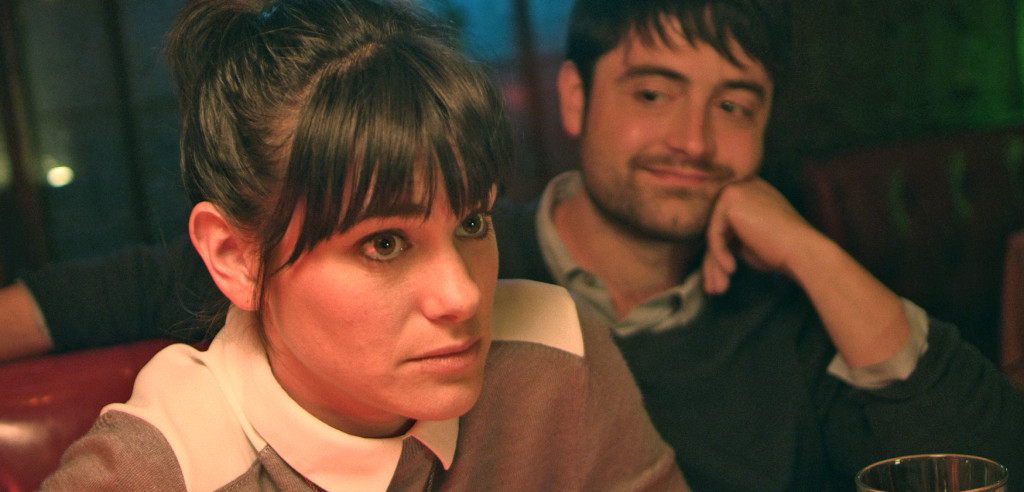
In the sex comedy Friends Effing Friends Effing Friends, several twenty-somethings start hooking up with each other in random combinations, even though some are in relationships. The sexual entanglements predictably lead to both comic situations and hurt feelings.
Happily, sometimes there is Truth in Advertising, and there is a lots of Effing in Friends Effing Friends Effing Friends. There’s so much sex that, although it has a real plot and much better acting, it wouldn’t be totally out-of-place on late night Showtime.
The cast is young, appealing and able, and Friends Effing Friends Effing Friends works as a trifle (and there’s nothing wrong with that). Its world premiere was at Cinequest.
The contemporary and topical comedy Search Enginestakes on our obsession with We see an extended family Thanksgiving – and everyone is bowing into that screen-gazing posture. All the characters are preoccupied by their smart phones as they text, video, read recipes and blog away. Suddenly, something blocks their coverage, and we see what happens when all the screens go dark.
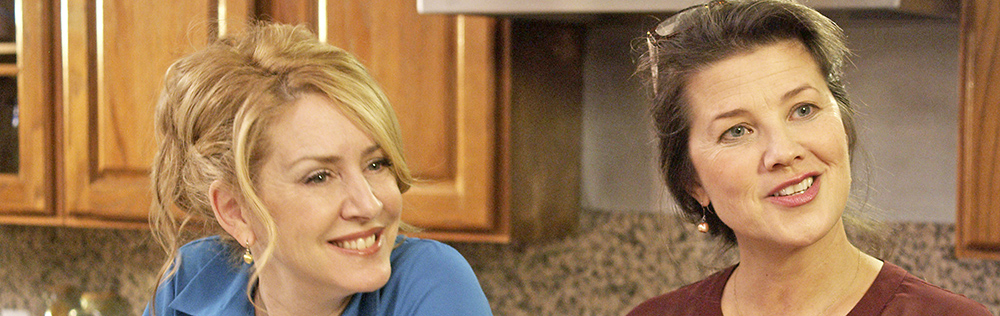
Search Engines has a promising cast (Daphne Zuniga, Joely Fisher, Natasha Gregson Wagner and even Connie Stevens!), and they all perform well. The strongest part of Search Engines is its topicality, but as mildly amusing as it is, it just ain’t a knee slapper.
Here’s an interview with the Lori Stoll, writer-director of Heaven’s Floor.
[NOTE: THIS INTERVIEW CONTAINS SPOILERS]
The Movie Gourmet: The protagonist Julia is so restless, and the restlessness seems to drive her impulsiveness. Is she just naturally restless, or is there some deficit in her satisfaction that is filled by Malaya?
Lori Stoll: Both really. Her experience with Malaya forced her to grow up. When she says she just wants to be good, she sincerely means it, even when being good required her to take responsibility for her actions and take other people into consideration. Julia’s natural state is one of restlessness, always looking for an escape – a character flaw that clearly gets her in a heap of trouble.
Having said that, Julia sees the best of herself in Malaya, but she doesn’t realize it until Malaya rejects her and is about to leave. At that point Julia also realizes that her actions created unintended consequences. Julia chooses to take responsibility for her wanderlust, terminating her gallivanting around the globe. When she promises her son she is grounded she means it.
TMG: Do you think that Julia, once more satisfied, is still impulsive?
Lori Stoll: Julia grew up through the experience of blowing up her life- perhaps she would like to continue to act on her impulsivity, but has learned to consider the who she is hurting by her decisions. However Julia’s restlessness did create her family.
TMG: So the movie starts with “Based on a true story” and ends with stills of the real Malaya and the obligatory “Any resemblance to real persons” disclaimer. How much of this story really happened this way? The arctic rescue for example?
Lori Stoll: The arctic rescue happened. The emergency shelter happened. Actually most of what was filmed in the arctic really happened and it was much more treacherous in reality, which we were unable to capture on film. For example, the rescue took place in a blizzard, and we had to slide down a frozen waterfall in the middle of the night. When we finally made it to the lodge in Pang, I was as banged up as Julia is in the film. I did lose my film on the ice and I was stuck in Pang for 10 days. I gave Malaya and her friends my candy bars and my sled. And she did ask me if she could tell her friends that I was her mother. Both Malaya’s mother and grandmother died. I did go back up for the funeral, and I did bring her back to LA with me. US Immigration did inform us that for Malaya to stay in Los Angeles she had to be legally adopted, and she was given a visa good for a one month stay in the US.
TMG: Movies are not often kind to characters who resist someone’s “following their heart”, no matter how impractical or whatever the consequences to others. Yet your depiction of the husband Ed is very sympathetic, as someone reacting with understandable resistance to impulsive, unilateral and life-changing commitments. Will you share any of the real back story on that relationship?
Lori Stoll: It’s funny, I see Ed as you do, he’s married to this crazy woman, he really loves her, and his biggest fault is being overwhelmingly practical. It’s complicated – he loves her, he wants her to be happy, he tries to understand her.
Julia feels held down by Ed, and forced into a conventional relationship. She resents his practically. If you are asking about my husband and our real backstory, clearly spontaneously adopting an almost teenage child from another culture created a lot of conflict. Having said that, I’m happy to share with you that today my husband and I are together, Malaya is 27 and the executive producer of Heaven’s Floor, and our son Zach is 20 and a sophomore at the University of Chicago.
TMG: The Arctic scenes are really impressive. How did your background in photography inform the film’s cinematography for the Arctic scenes? You are a first time director, and I see that your first time DP for the Canadian locations is a veteran camera operator. How “hands on” were you in the cinematography?
Lori Stoll: Regarding the cinematography, I was very hands on. I’ve been a photographer for 30 years, and I’m most comfortable working in a visual medium. Having said that, both George Billinger (Arctic DP) and Danny Moder (LA DP) are both so talented. For a first time director, I truly had the A team for my crew.
Heaven’s Floor’s World Premiere is tonight at Cinequest with more screenings on March 6 and 11.
Today at Cinequest DO NOT MISS these two indie world premieres:
Lost Solace: Highly original psychological thriller and a brilliant directorial debut.
Heaven’s Floor: Absorbing and character-driven autobiographical drama about a most complicated woman and the choices that indelibly affect several lives.
And there’s one of the top documentaries, Chuck Norris vs. Communism: The subversive impact of movies (ANY movies) on a culture-starved society.
Bookmark my Cinequest 2016 page, with links to all my coverage. Follow me on Twitter for the latest.