Something for everyone in theaters this week: Love & Friendship – a sharply witty adaptation of a Jane Austen story with an adept turn by Kate Beckinsale.
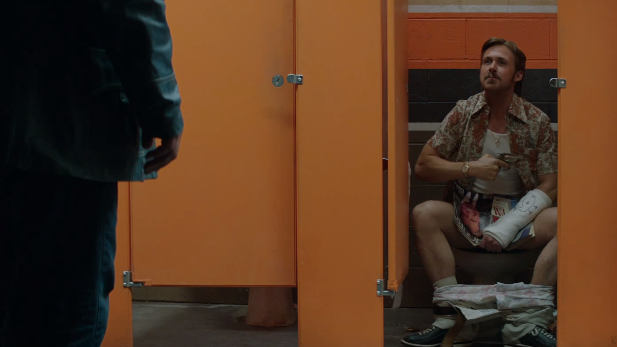
The Nice Guys – Ryan Gosling and Russell Crowe in a very funny mismatched buddy movie from the creator of the Lethal Weapon franchise.
A Bigger Splash – a sensual travelogue turned comedy turned thriller with a raucous and oft-naked performance by Ralph Fiennes.
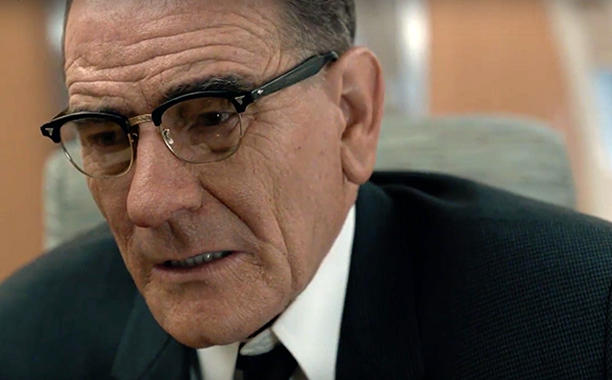
You can find the best movie out right now on HBO. It’s All the Way, the story of President Lyndon Baines Johnson, warts and all, ending official racial segregation in America with the Civil Rights Act of 1964. Bryan Cranston brings LBJ alive as no actor has before.
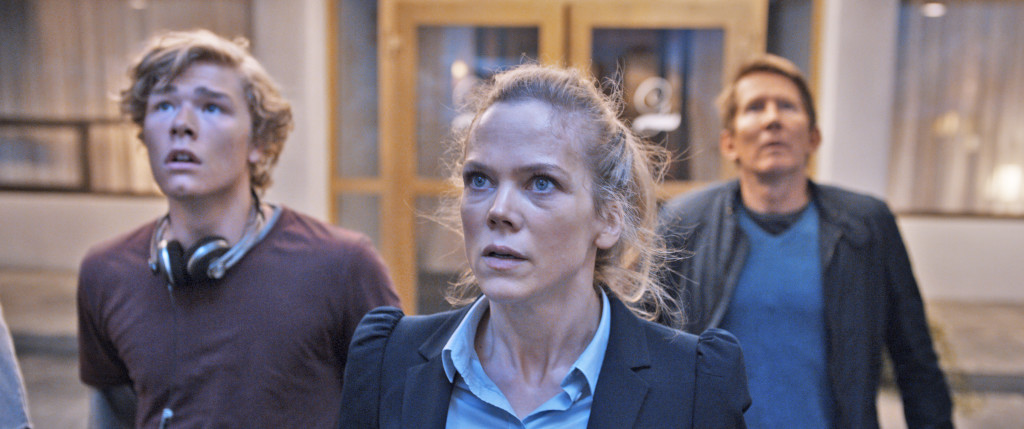
Here’s what you want in a disaster movie: 1) a really impressive disaster and 2) lots of suspense about which of the main characters will survive. My Stream of the Week, the Norwegian The Wave, successfully delivers on both counts. It’s available to stream from Amazon Video, iTunes, Vudu, YouTube, Google Play and a variety of TV PPV outlets.
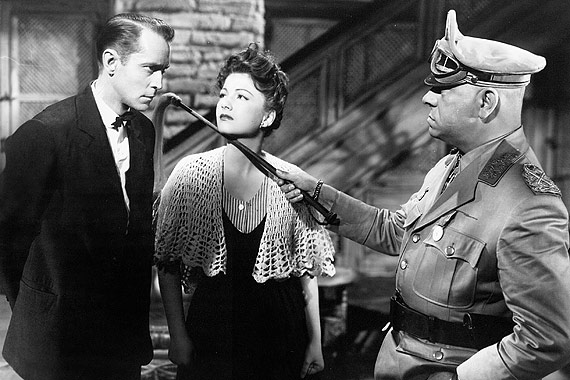
June 3 is Billy Wilder Day on Turner Classic Movies, which features some wonders from my favorite writer-director: Some Like It Hot, Double Indemnity, Days of Wine and Rosesand Five Graves to Cairo. Everyone recognizes Some Like It Hot and Double Indemnity as masterpieces, but I want to highlight Wilder’s very successful second film as a director – Five Graves to Cairo is a combo spy mystery and war film set in Nazi-overrun North Africa. Franchot Tone, Anne Baxter and Erich Von Stroheim star. The cast also includes two of my favorite character actors, Akim Tamiroff and Peter van Eyck.
Franchot Tone, Anne Baxter and Erich Von Stroheim in FIVE GRAVES TO CAIRO
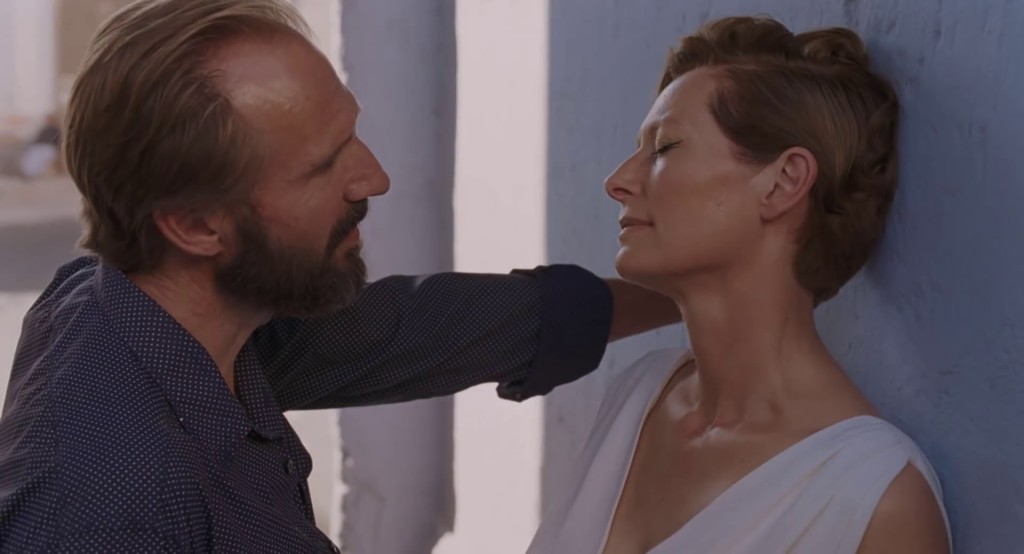
Ralph Fiennes and Tilda Swinton in A BIGGER SPLASH
Harry Hawkes (Ralph Fiennes) is the kind of guy who gives a bad name to joie de vivre. The ultimate disrupter, his gift is to seize all the attention, change any social situation into a party and take everyone else out of their comfort zones. In A Bigger Splash, he inflicts himself on his former rock star lover Marianne (Tilda Swinton), who is trying to enjoy a quiet romantic respite with her current lover Paul (Matthias Shoenaerts) on the secluded Italian island of Pantelleria. Enter Harry, exit solitude.
With only five minutes notice, Harry shows up, expecting to become a houseguest in Marianne and Paul’s borrowed villa. To make matters worse, Harry brings along his newly discovered daughter (Dakota Johnson), a highly sexual nymphet with eyes for Paul. And, and the first day, he invites two of his other friends to join them. Harry repeatedly tears off his clothes, starts everyone dancing (one of his dances is right up there in cinema history with the one in Napoleon Dynamite) and even turns a village cafe into an overflowing karaoke after-party. Because Marianne is recuperating from vocal cord surgery, she can’t talk, which makes Harry’s social intrusions even more unbearable.
Harry’s antics are very entertaining, and we watch with apprehension for the other shoe to drop – when are the others going to explode in reaction? Harry is also trying to insinuate himself back into Marianne’s bed, an intention apparent to the hunky/dreamy Paul, for whom still waters run deep.
This is Guadagnino’s first English language movie. He had a recent US art house hit with I Am Love, (also starring Swinton). I Am Love was notorious for its food porn, and there are tantalizing scenes in A Bigger Splash, too, with homemade fresh ricotta and a spectacular outdoor restaurant set amid hillside ruins.
Guadagnino’s greatest gift may be the sensuality of his films. Whether it’s food, a place or a social situation, he makes the audience feel like we’re experiencing it right along with the character. In A Bigger Splash, we start out as tourists in a hideout for the super rich, and then Guadagnino takes to us through a raucous comedy of manners to, finally, a suspense thriller.
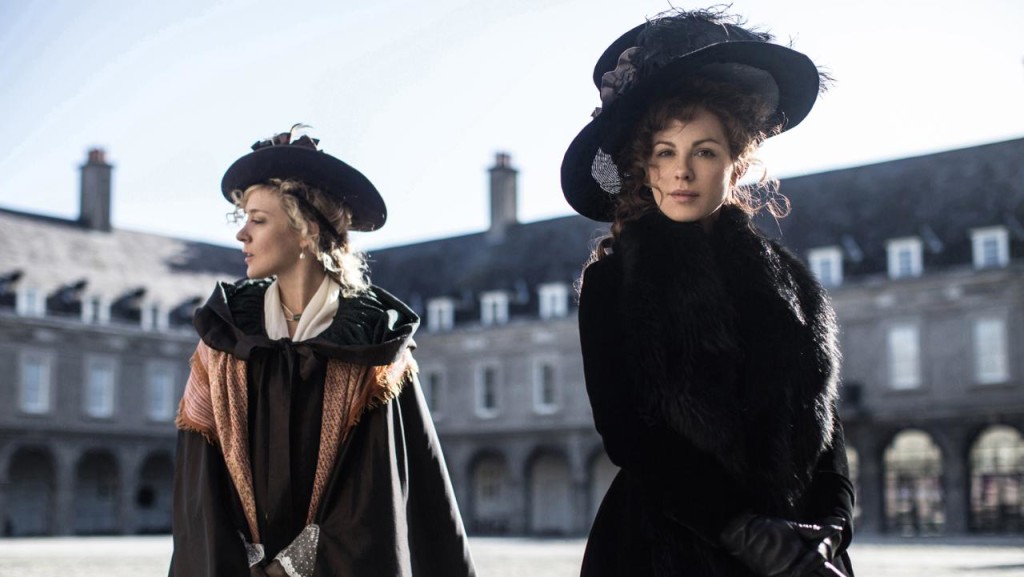
Chloe Sevigny and Kate Beckinsale in LOVE & FRIENDSHIP
Based on Jane Austen’s Lady Susan, the sharply witty Love & Friendshipcenters on the unabashedly amoral efforts by Lady Susan Vernon (Kate Beckinsale) to get exactly what she wants despite lack of resources and position.
Love & Friendship is filled with the 19th century version of “snappy dialogue” – old-fashioned wit. Mark Twain would have loved this movie. Much of the comes from Lady Susan’s clueless sense of entitlement and her unashamed and outrageous manipulation of the other characters. An unabashed moocher and deadbeat, she finds that, because her daughter’s school fees are “too high to even consider paying, it is actually an economy”.
It’s a pleasing turn from Kate Beckinsale at age 42, who has so often played ornamental movie roles. She first came to our attention at age 20 as the beauteous Hero in Kenneth Branagh’s Much Ado About Nothing, and broke through at age 23 by dominating the British indie Shooting Fish. After playing a bunch of less interesting roles, it’s great to see get a chance to really act in Love & Friendship.
Love & Friendship’s director is Whit Stillman, who debuted with two delightful indies from the world of old money Northeastern preppies. Metropolitan and Barcelona were talky and perceptive explorations of human nature, set in what usually is a less accessible and less sympathetic social set. (Unfortunately, he most recently made the dreadful Damsels in Distress with the always execrable Greta Gerwig.)
Right from the get-go, Stillman lets us know that he’s not taking this too seriously with self-mocking character introductions. In another nice touch, Stillman clads some of the male characters in noticeably ill-fitting clothes – something you never see in a movie from this period. It’s funny – and authentic, when you think about it.
In the funniest moments of the film, the enthusiastically dim Sir James Martin (Tom Bennett) takes twittery to new heights. Bennett, a British TV actor previously unknown to me, is quite a revelation. It’s always nice to see Chloe Sevigny, too, and she’s here playing Lasy Susan’s equally amoral American friend.
Although I did not see it there, Love & Friendship was the opening night feature of the 59th San Francisco Film Festival, and folks were still praising it in festival lines a week later.
Lyndon B. Johnson, one of American history’s larger-than-life characters, finally comes alive on the screen in the HBO movie All the Way. Bryan Cranston (Breaking Bad, Trumbo) is the first actor who captures LBJ in all his facets – a man who was boring and square on television but frenetic, forceful and ever-dominating in person. All the Way traces the first year in LBJ’s presidency, when he ended official racial segregation in America with the Civil Rights Act of 1964.
LBJ was obsessed with gaining and keeping political power, and he was utterly ruthless and amoral about the means to do that. His tools of persuasion included deceit, flattery, threats, promised benefits and horse-trading. He was equally comfortable in playing to someone’s ideals and better nature as well to one’s vanity or venality. In All the Way, we see one classic moment of what was called “the Johnson treatment”, when LBJ looms over Senator Everett Dirksen, and it becomes inevitable that Dirksen is going to be cajoled, intimidated or bought off and ultimately give LBJ what he wants.
LBJ was so notoriously insincere that one of the joys of All the Way is watching LBJ tell completely inconsistent stories to the both sides of the Civil Right battle. Both the Civil Rights proponents (Hubert Humphrey and Martin Luther King, Jr.) and the opponents (the Southern Senators led by Richard Russell) must determine whether LBJ is lying and to whom. Each of them must make this calculation and then bet his own cause on his perception of LBJ’s real intentions.
But LBJ amassed power for two reasons – he needed to have it and he needed to do something with it. Along with the LBJ’s unattractive personal selfishness and the political sausage-making that some may find distasteful, All the Way shows that Johnson did have two core beliefs that drove his political goals – revulsion in equal parts to discrimination and poverty. We hear references to the childhood poverty that led to the humiliation of his father, to the plight of the Mexican schoolchildren in Cotulla, Texas, that he mentored as a young man, and his outrage at the discriminatory treatment suffered by his African-American cook Zephyr.
Bryan Cranston brilliantly brings us the complete LBJ – crude, conniving, thin-skinned, intimidating and politically masterful. Besides Cranston’s, we also see superb performances by Melissa Leo as Lady Bird, Anthony Mackie as MLK, Bradley Whitford as Hubert Humphrey and Frank Langella as Richard Russell.
All the Way is remarkably historically accurate. It does capsulize some characters and events, but the overall depiction of 1964 in US history is essentially truthful. As did Selma, All the Way drills down to secondary characters like James Eastland and Bob Moses. We also see the would-be scandal involving LBJ’s chief of staff Walter Jenkins, a story that has receded from the popular culture. Vietnam is alluded to with a reference to the Gulf of Tonkin incident, which is fitting since Vietnam grew to become LBJ’s nemesis and the national obsession only after the 1964 election.
All the Way was adapted from a Broadway play for which Cranston won a Tony. I saw three movies in theaters last weekend and none of them were as good as All the Way. LBJ’s 1964 makes for a stirring story, and All the Way is a compelling film. Seek it out on HBO.
Here’s what you want in a disaster movie: 1) a really impressive disaster and 2) lots of suspense about which of the main characters will survive. The Norwegian The Wave successfully delivers on both counts.
As a non-Norwegian, I didn’t know that, every few decades, an unstable mountainside somewhere in Norway breaks loose, plunging hundreds of tons of rock into a fjord; this triggers a tsunami, which rages down the fjord, destroying everything and every one that doesn’t reach high ground. Norwegian geologists are even perched above these fjords to trigger early warning systems. A siren goes off, and everyone downstream has TEN MINUTES to climb to safety. As disasters go, this is pretty novel – not your ordinary earthquake, fire, flood, shipwreck and not even your ordinary tsunami (Hereafter, The Impossible). In The Wave, the tidal wave itself is pretty impressive, and the special effects are believable.
But the best part about The Wave is the tension produced by, not one, but TWO ticking clock scenarios. The filmmakers build the tension as we wonder just when the upcoming disaster is going to hit and whether the characters will have time to escape. And then, there’s an excruciating race-against-time to save family members from a hopeless situation.
The main characters are sympathetic, the acting is very good and the dialogue is very witty for the genre. Ane Dahl Torp plays the mom, and her character’s off-the-charts take-charge heroism and resilience is a big part of the fun. I’m not a real fan of disaster movies, but I still stayed with The Wave for its entire length.
I saw The Wave at Cinequest, where it gripped and exhausted the audience (in a good way). You probably misses its very brief theatrical release in March, but, fortunately, The Wave is available to stream from Amazon Video, iTunes, Vudu, YouTube, Google Play and a variety of TV PPV outlets.
The bloody thriller Green Room is a fresh and satisfying, well, bloody thriller. Very intense and very violent. Director Jeremy Saulnier (Blue Ruin) proves again that he’s the rising master of the genre movie.
If you like dystopian sci-fi, then the satire High-Rise is for you. Otherwise, not a Must See.
Thriller meets thinker in Eye in the Sky, a parable from modern drone warfare starring Helen Mirren and with a wonderful final performance from the late Alan Rickman. This movie has been out since March and has shown remarkable staying power.
The mismatched buddy movie Doughis light, fluffy and empty – just like a Twinkie.
My Stream of the Week is a remarkable filmmaking achievement – the entire movie Victoria the was filmed in a SINGLE SHOT (and it is a successful thriller, not just a gimmick). Make sure that you watch it in one uninterrupted sitting. Victoria is available to stream from Amazon Video, iTunes, YouTube and Google Play.
On May 21, Turner Classic Movies features one of my Overlooked Noir, Pitfall (1948), a noir thriller without either a conventional sap or femme fatale.
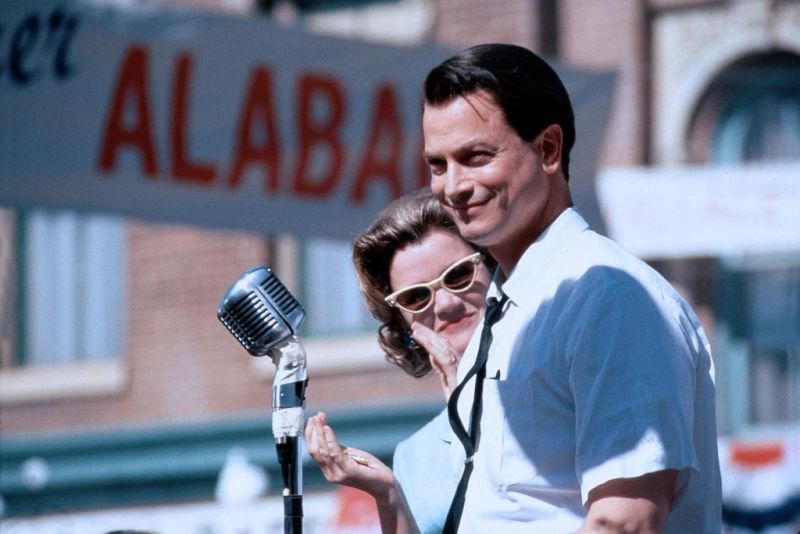
Then, on May 23 TCM airs the 1997 political biopic George Wallace with Gary Sinise as the the segregationist Alabama governor and Presidential candidate. Made for TV by master director John Frankenheimer, George Wallace won multiple Emmys, Golden Globes and SAG awards. Sinise is brilliant, and his supporting cast includes Joe Don Baker, William Sanderson, Mare Winningham, Clarence Williams III and Angelina Jolie as sexy second wife Cornelia.
Victoria is worth watching as a thriller, but it has become notorious for a pretty important aspect of its filmmaking – the entire movie was filmed in a SINGLE SHOT. Its tagline is One girl. One city. One night. One take. (Actually, the successful take was on the third try.) Rope and Birdman are famously filmed to LOOK like they are one shot. But all of Victoria really IS just one shot.
That would be noteworthy enough if Victoria were a drawing-room story like Rope, but it is amazing for a story that zips between interior and exterior locations, runs from nighttime through daybreak and includes chase scenes through the streets of Berlin. It’s a stunning achievement for director Sebastian Shipper.
After a career disappointment, young Spanish woman (Laia Costa) has moved to Germany – where she knows no one – and has taken a service job while she licks her wounds. Out for a beer after work, she meets a bunch of drunk German guys. Partying with them leads to an entanglement with one of those low-level criminal enterprises that just isn’t going to turn out well. Things get life-or-death serious, and the characters are soon on the run for their lives.
The German characters don’t speak Spanish and the Spanish girl doesn’t speak German, so they speak to each other in broken English; the only English subtitles are when the German guys are talking to each other in German about the girl in her presence.
Costa is on-screen for the entire movie, and she’s very, very good. She nails the character, somebody who is basically good but who can impulsively make the wrong choice, too. Anyone who sees her as a mere adornment underestimates her at his own risk. She is full of moxie and is damn practical.
Frederick Lau is especially good as the guy who connects most personally with the girl. Franz Rogoski is also outstanding as the guy whose troubled past catches up to him and devours his friends, too.
Anyone who has watched a film noir will find Victoria’s ending is disappointingly predictable. Otherwise, this would have been one of the top ten films of 2015.
But Victoria is still a gripping 138-minute thrill ride. Director and co-writer Shipper acted in Run, Lola, Run which had previously set the standard for movie freneticism. Make sure that you watch it in one uninterrupted sitting. Victoria is available to stream from Amazon Video, iTunes, YouTube and Google Play.
The bloody thriller Green Room is a fresh and satisfying, well, bloody thriller. Very intense and very violent. Director Jeremy Saulnier (Blue Ruin) proves again that he’s the rising master of the genre movie.
If you like dystopian sci-fi, then the satire High-Rise is for you. Otherwise, not a Must See.
Thriller meets thinker in Eye in the Sky, a parable from modern drone warfare starring Helen Mirren and with a wonderful final performance from the late Alan Rickman. This movie has been out since March and has shown remarkable staying power.
The mismatched buddy movie Doughis light, fluffy and empty – just like a Twinkie.
My Stream of the Week is the thought-provoking documentary The Brainwashing of My Dad, which explores how right-wing media impacts the mood and personality of its consumers as well as their political outlook. The Brainwashing of My Dad is available streaming on Amazon Video, Vudu, YouTube and Google Play.
On May 19, Turner Classic Movies bring us Roger Corman’s time-capsule LSD exploitation film The Trip, which is featured in my Bad Movie Festival (scroll down to No. 9). Peter Fonda buys acid from Dennis Hopper and trips at Bruce Dern’s house – but wanders away to stagger down Sunset Boulevard.
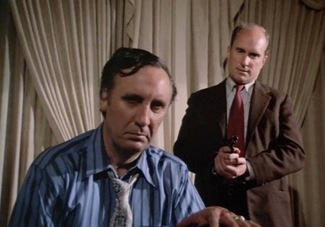
On May 20, TCM airs a time capsule from the 1970s, the crime/revenge drama The Outfit, starring Robert Duvall, Linda Black and Joe Don Baker. The supporting cast is itself an homage to 1950s film noir: Robert Ryan (mob kingpin), Timothy Carey (chief henchman), Jane Greer, Elisha Cook Jr., Marie Windsor and Richard Jaeckel. The Outfit is the masterpiece of director John Flynn, whose other work consisted of pedestrian action movies.
Robert Duvall pisses off Timothy Carey in THE OUTFIT
Tom Hiddleston in HIGH-RISE. Photo courtesy of the San Francisco Film Society.
The dystopian sci-fi satire High-Rise, adapted from a J.G. Ballard novel, makes a droll and cynical comment on our species. Taking place in the near future, the very wealthy live on the top floors of a self-contained high-rise, just above the middle class. Human greed and jealousy creates scarcity for the residents – not Third World-type scarcity, but scarcity of amenities like swimming pool access and power brownouts. Class competition erupts and a morbid descent into murderous chaos ensues. We plunge into this complacent, and then hellish, world from the perspective of a young middle class striver (Tom Hiddleston).
The designer of the complex of high-rises (Jeremy Irons) lives in a luxurious penthouse with a staggeringly pastoral garden. The character’s name is Royal, but he’s not the ruler. (We actually come to wish that he were benignly in charge.) And despite his trappings, Royal is not the omnipotent Bond-type villain. The villain turns out instead to be an oligarchy of the One Percent, along with the darkest aspects of every character’s humanness.
Tom Hiddleston is fine, and the rest of the cast is solid. The two standouts are Jeremy Irons as Royal and Sienna Miller, dressed in Carnaby Street retro, as a deliciously voracious man-hunter. The wonderful Elisabeth Moss is wasted in a role where she just doesn’t have much to do.
I saw High-Rise at the 59th San Francisco International Film Festival (SFIFF). It opens in Bay Area theaters tomorrow.
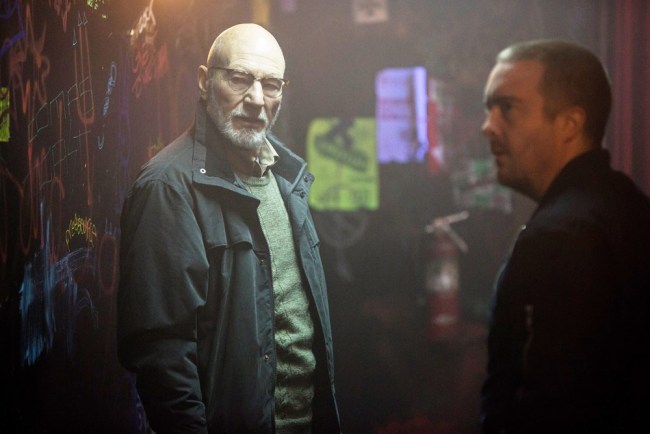
The bloody thriller Green Room is a fresh and satisfying, well, bloody thriller. A vagabond rock band (Anton Yelchin, Alia Shawkat and a couple of others) finds themselves playing a gig at a remote white nationalist compound in the woodsy Northwest. Inadvertently, they witness a murder and the chief skinhead (Patrick Stewart!) needs to eliminate all the witnesses. The band members and a local girl (Imogen Poots) are trapped in a room with just one way out, as the skinheads send in waves of machete- and shotgun-wielding thugs and vicious pit bulls. Who will survive and how?
Director Jeremy Saulnier proves again that he’s the rising master of the genre movie. Saulnier’s writing and directorial debut was 2014’s Blue Ruin, an entirely fresh take on the revenge thriller. An audience favorite on the festival circuit in 2013, Blue Ruin didn’t get a theatrical release, and I would have missed it entirely but for a suggestion from my friend Jose. In Blue Ruin, Saulnier was responsible for the wholly original lead character and the intense pace of the film, along with the meticulously economical storytelling; the exposition never relies on even one extra word of dialogue. Blue Ruin is available on DVD from Netflix and streaming from Netflix Instant, Amazon Instant, iTunes, Vudu, Google Play, YouTube and Xbox Video.
In his superb leading performance in Blue Ruin, Macon Blair was believable both as a damaged down-and-outer and as a man-on-a-mission. In Green Room, Blair plays Gabe, the put-upon middle manager of Patrick Stewart’s compound. Blair is just so interesting an actor. Here, he brings an unusual humanity to his role as a henchman.
The actor who drives the story, however, is Imogen Poots. Her character is very practical – realistic enough to see that the situation is hopeless. At first, she is numbed by the murder of her friend. But when she finally decides that she is going to survive – watch out! Since 2012, Poots has becoming a preferred indie leading lady withGreetings from Tim Buckley, A Late Quartet , The Look of Love, A Country Called Home, Green Room and her most complex role so far in the upcoming Frank & Lola. Here in Green Room, she’s a force of nature.
Once again, Saulnier delivers a very fresh and original genre movie. The total effect is very intense and very violent. If you’re okay with some gory violence, then Green Room is a thrill ride worth taking.