2025 Farewells: on the screen

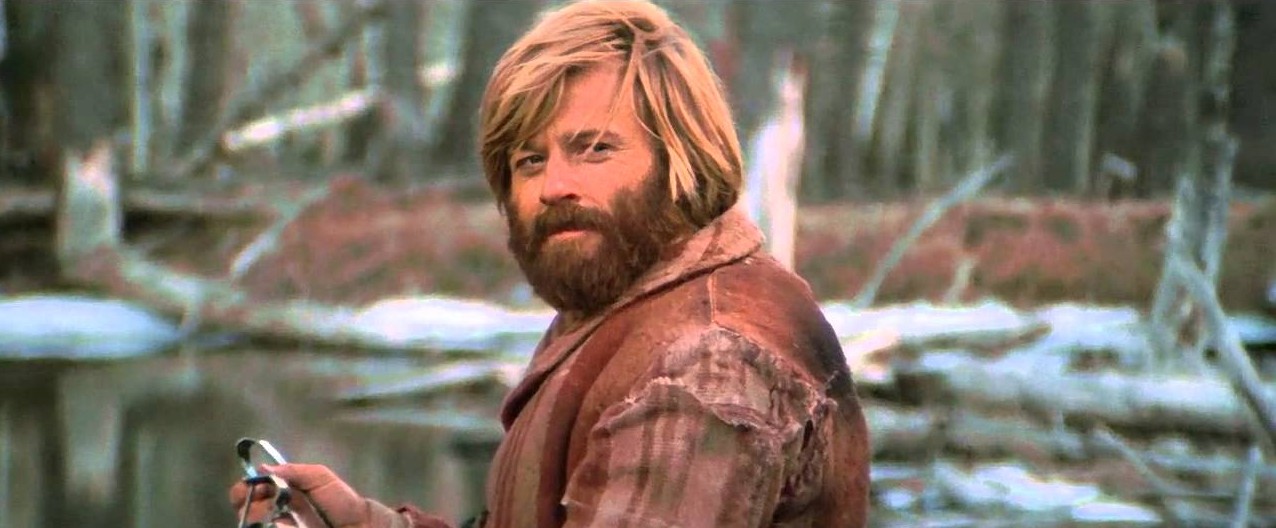
Robert Redford in JEREMIAH JOHNSON

This year we bade farewell to many famous faces, including some iconic ones.

Robert Redford was one of the very most significant filmmakers of his generation. With his stunning good looks, magnetism and wry charm, he could have “settled” for mega stardom with the acting roles that he is justifiably best remembered for, in Butch Cassidy and the Sundance Kid and The Sting, along with a slew of romance movies. But his own artistic aspirations and his flinty contempt for the phony and the superficial took him to even greater heights. Redford’s first effort at directing, Ordinary People, won the Best Picture Oscar. He directed nine more films, some of them excellent (A River Runs Through It, Quiz Show, The Horse Whisperer) and none of them bad. But Redford’s biggest contribution was his developing the Sundance Institute and the Sundance Film Festival as incubators for other people’s independent filmmaking. His NYT obit highlights Steven Soderbergh, Quentin Tarantino, Darren Aronofsky, Nicole Holofcener, David O. Russell, Ryan Coogler, Robert Rodriguez, Chloé Zhao and Ava DuVernay as directors whose careers were accelerated by Sundance. That would have constituted an indelible legacy, even if he hadn’t become an iconic movie star. My own favorite Redford acting roles were in Jeremiah Johnson, All the President’s Men and Downhill Racer.
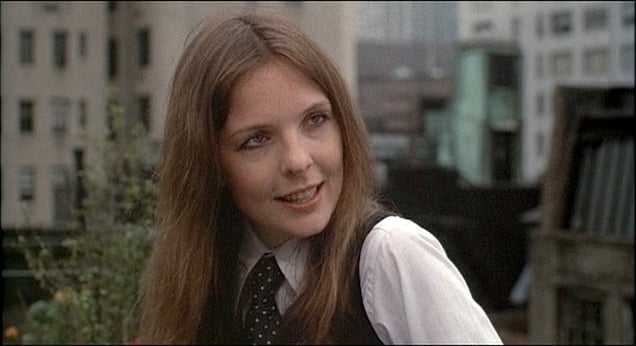
Diane Keaton in ANNIE HALL

The beloved Diane Keaton earned her status as a cinema icon with unforgettable performances in three of the 50 Greatest Movies of All Time. She won her Oscar for her completely idiosyncratic portrayal of the title character in Annie Hall, my choice as the best romantic comedy ever. In The Godfather, her Kay Adams book-ended the story of Michael Corleone, first accepting his “That’s my family, Kay, It’s not me.” and then ending the movie with the door to Michael literally closing in her face. The most searing moment in The Godfather Part II was Kay’s ferocity in telling Michael about a miscarriage that wasn’t. 72 more movies and three more Oscar nominations filled out Keaton’s 54-year screen career, but those three performances were indelible. A further note – my best pal in LA occasionally ran into Keaton around town, and she liked to dress like Annie Hall in real life.
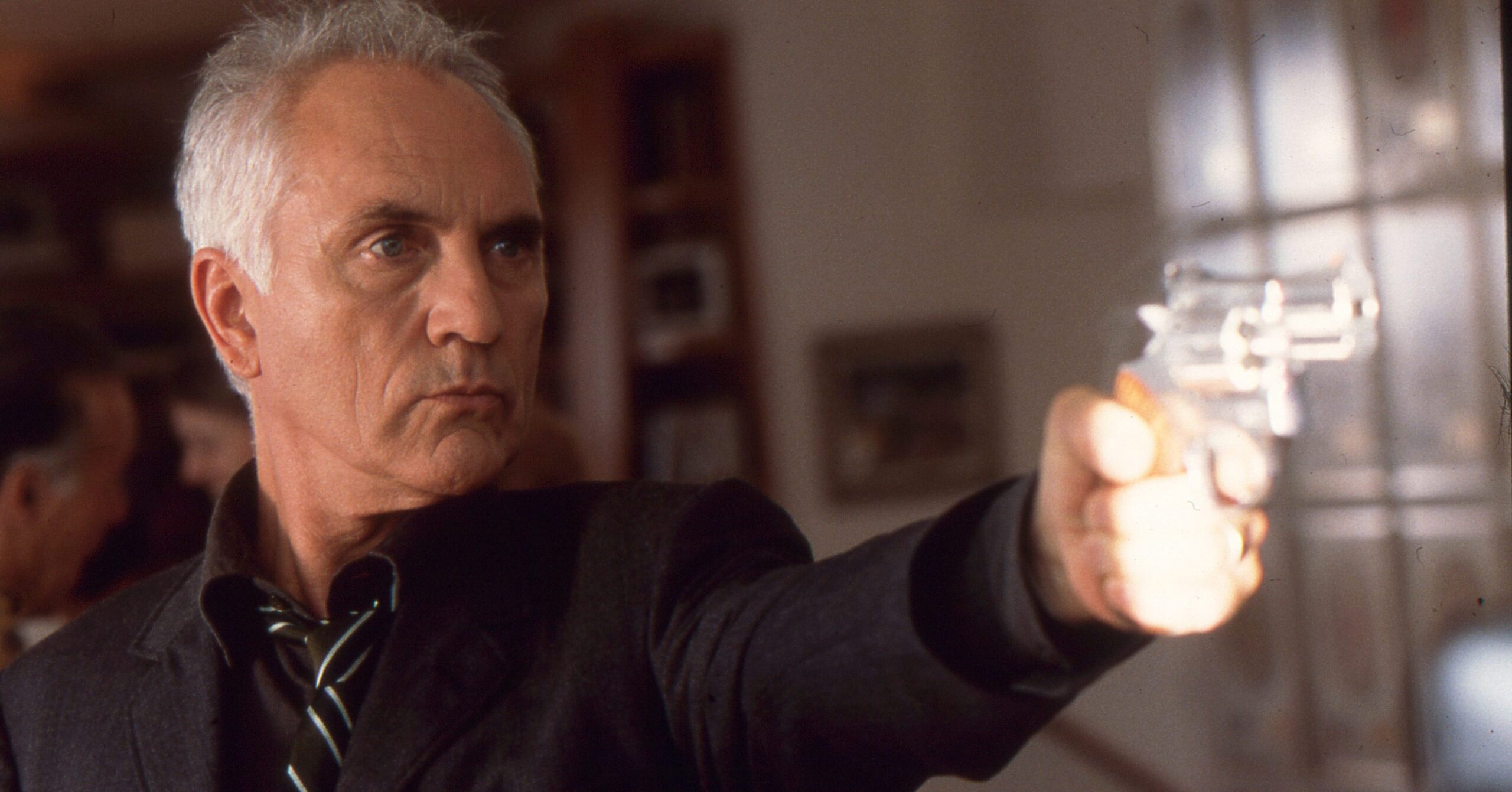
Terence Stamp in THE LIMEY.

I loved Terence Stamp. Stamp, of course was a 1960s British star as a dreamy leading man (Billy Budd, The Collector, Far from the Madding Crowd). I’ve felt that his best work was in his middle age and since: still magnetic in The Hit, The Limey, and The Adjustment Bureau. And as recently as 2021, in Last Night in Soho, with his still striking features and dead-cold eyes, he looked dangerous from at the first glimpse.

Olivia Hussey was only 15 when she began filming Franco Zeffirelli’s Romeo and Juliet. Zeffirelli had decided to tell the story of impulsive, over-dramatic teenage love with actual teenage actors, and Hussey rewarded him with a rapturous and genuine performance. She worked with Zeffirelli again in the best-ever biblical epic, Jesus of Nazareth, as Mary, mother of Jesus.

Richard Chamberlain burst into the culture as TV’s dreamy Dr. Kildare, went to the English stage to hone his acting skills and returned to dominate the genre of television miniseries with Centennial, Shogun and The Thornbirds. Chamberlain made his share of movies, and my favorite is his role as Aramis in Richard Lester’s The Three Musketeers and The Four Musketeers.
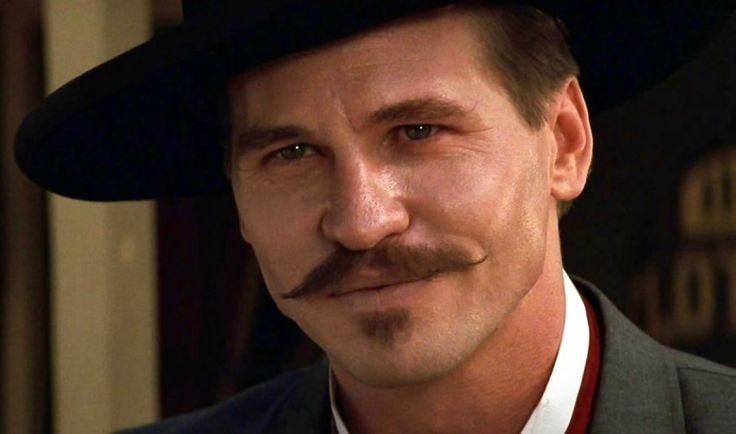
Val Kilmer in TOMBSTONE.

Val Kilmer applied his magnetism in unforgettable performances: Iceman in Top Gun, Jim Morrison in The Doors and Batman in Batman Forever. My favorite Val Kilmer turn was as an insouciant Doc Holliday in Tombstone.
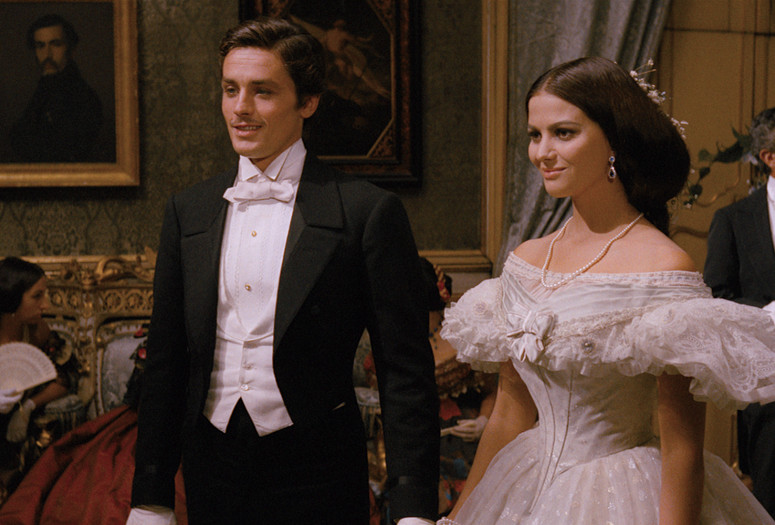
Claudia Cardinale (right) in THE LEOPARD

Claudia Cardinale was first noticed in the Italian comedy Big Deal on Madonna Street and had a key role in Fellini’s 8 1/2, one of the greatest movies ever. Popularly seen as a voluptuous bombshell in the 1960s, she worked in 128 films through 2022. The scene in which she is re-introduced to the local nobleman (Burt Lancaster) as a nubile adult in The Leopard is one of the most stunning entrances in cinema.

Three-time Oscar nominee Diane Ladd is known for Chinatown, Alice Doesn’t Live Here Anymore, Ghosts of Mississippi (she was a Mississippi native) and Primary Colors. She worked with her real life daughter Laura Dern in five movies, and in Rambling Rose, they became the first mom and daughter to be nominated for Oscars for the same movie. Early in her career, she appeared in Roger Corman’s biker exploitation film, The Wild Angels. 

Tatsuya Nakadai starred in Akira Kurosawa’s two great color epics Ran and Kagemusha, and played the foil to Toshiro Mifune’s hero in Yojimbo.

Joan Plowright was primarily a star of the English stage, but she worked in movies, too, including Tea with Mussolini and earning an Oscar nod for Enchanted April. My favorite Plowright performance was in a gentle Irish comedy, Widows Peak.

Tony Roberts had a gift or playing characters with relaxed confidence, perfect foils for Woody Allen’s trademark nervous anxiety. Roberts’ pairing with Allen began with Play, It Again, Sam, and carried through Annie Hall, Stardust Memories, A Midsummer Night’s Sex Comedy and Hannah and her Sisters. Roberts worked plenty without Allen (Serpico, The Taking of Pelham One Twi Three and Dirty Dancing), mostly on the Broadway stage, where he was nominated for multiple Tony awards.

Joe Don Baker, with his physicality and country demanor was the perfect Sheriff Buford Pusser in Walking Tall, a little indie that became a mega hit. No one would be surprised that Baker hailed from a small town near Waco, nut I didn’t know that he studied at the Actor’s Studio. His best work was in Charley Varrick, The Outfit, George Wallace and Mud.

Every time I hear Stuck in the Middle with You by the one-hit wonder Stealer’s Wheel, I think of Michael Madsen. Madsen was a fine character actor who was good in all of his work, and he amassed 344 screen credits, often as a physically imposing bad guy. But, for anyone who has seen Reservoir Dogs, Madsen’s performance – especially his torture dance to Stuck in the Middle with You – is indelible.

Dignified yet down-to-earth Canadian actor Graham Greene, a member of the Oneida First Nation, garnered almost 200 screen credits, including Dances with Wolves, Powwow Highway, The Green Mile, Longmire and Wind River.

Character actor Harris Yulin brought intensity and authenticity to characters that ranged from authoritative to kindly to venal ones. He appeared in lots of big movies (Scarface, the 24 series and the Ghostbusters, Star Trek and Rush Hour franchises)  and smaller, even better ones (Victory at Entebbe, Night Moves, St Ives, Truman, The Place Behind the Pines).

Udo Kier proved that one can have a prolific career (275 IMDb credits) as a character actor in both art and cult cult movies. He worked with directors like Werner Rainier Fassbinder, Werner Herzog, Wim Wenders and Lars Von Trier, and in Hollywood films like Johnny Mneumonic, My Own Private Idaho, Armageddon, Halloween and Ace Venture: Pet Detective. His visage, scarier as he aged, worked well in horror movies, and he did many, beginning with Jim Morrisey’s Andy Warhol’s Frankenstein and Blood for Dracula.

Belgian actress Emelie Dequenne was a force of nature in her debut, as an alienated young woman in Rosetta, the 1999 film that mad the Dardennes brothers famous auteurs. For that performance, Dequenne won the Best Actress at Cannes, and she won a Cesar in 2020.

Character actor Craig Richard Nelson’s first film role was as a snobby, fastidious preppy in The Paper Chase (1973), and he nailed a similar character in Robert Altman’s A Wedding (1978). In this period, he had small roles in Altman’s 3 Women (1977) and Tony Bill’s My Bodyguard (1980). Even though he worked in TV and film through 1998, his performances were increasingly less memorable.

George Wendt played the beloved Norm! in 269 episodes of Cheers and appeared in well over 150 titles, mostly on television. But his career began with small roles in good movies: A Wedding, Bronco Billy and The Bodyguard.

Rebekah Del Rio’s rendition of Llorando, the Spanish language version of Roy Orbison’s Crying, was one of the most transfixing scenes in Mulholland Drive.

Character actor Peter Greene excelled at playing scary villains and was the cretinous Zed in Pulp Fiction.

WE SHALL NOT BE MOVED: trauma, bitterness, catharsis

Photo caption: Luisa Huertas in WE SHALL NOT BE MOVED. Courtesy of Varios Lobos Produccions.

Pierre Saint Martin’s brilliant debut feature We Shall Not Be Moved (No nos moverán) is about a lifelong obsession and an unexpected catharsis.

The salty, grumpy Socorro is an elderly Mexico City attorney with a decidedly downscale clientele. She lives with family members in an apartment stacked with decades of case files. Her life has been defined by the traumatic loss of her brother, killed in 1968 in the police repression of student demonstrations just before the 1968 Olympic Games known as the Tlatelolco massacre. Shortly after, she secured a photo of the soldier who killed her brother, but his identification eluded her.

For over five decades, Socorro has been consumed by the thirst for unfulfilled, and apparently impossible, vengeance. Her bitterness has resulted in deeply dysfunctional relationships with her roommates – her doddering sister and her floundering middle-aged son.

Just when it looks like Socorro’s health will end her quest for revenge, she is surprised by new information. Ever resourceful, she enlists a network of shady associates to launch a man hunt. It doesn’t turn out as she, or we, would expect.

Of course, an old lady is an unlikely assassin, especially one who can barely climb the stairs to her apartment, and most of her crew is just as decrepit, so there’s an underlying absurdity to her quest. There’s plenty of humor here, stemming from Socorro’s unrepentant irascibility and clever resourcefulness, and the foibles of the quirky folks in her life.

She may be a lawyer, but Socorro navigates an informal legal system and an informal economy, where every transaction seems to be off-the-books. We Shall Overcome is filled with the cynicism with which Mexicans regard their national institutions.

We Shall Overcome is an impressive first feature for director and co-writer Pierre Saint Martin. Despite the griminess of the settings, it’s a beautiful, sometimes magical-looking, black-and-white film. Saint Martin is also able to bring uncommon depth to the supporting characters, especially Socorro’s depressed and defeated son Jorge (Pedro Hernández), her zany gofer Sidarta (Jose Antonio Patiño), her dying old colleague Candiani (Juan Carlos Colombo), and her Argentine daughter-in-law Lucia (Agustino Quinci), who finds herself way too normal for this family.

We Shall Not Be Moved won four Ariels (the Mexican Oscar) for Best First Feature, Best Actress, Best Original Screenplay, and Best Breakthrough Performance, and is Mexico’s submission for the Best International Film Oscar. We Shall Not Be Moved is rolling out in American theaters, including San Francisco’s Roxie this week.

Best Movies of 2025

Photo caption: Jacob Elordi in FRANKENSTEIN. Courtesy of Netflix.

Every year, I keep a running list of the best movies I’ve seen this year.  By the end of the year, I usually end up with a Top Ten and another 5-15 mentions. To get on my year-end list, a movie has to be one that thrills me while I’m watching it and one that I’m still thinking about a couple of days later.

I usually publish this post on December 31, but my list is already pretty much ready. The only two contenders that I still haven’t seen are No Other Choice and Marty Supreme.

Leonardo DiCaprio in ONE BATTLE AFTER ANOTHER. Courtesy of Warner Bros.

Here are my Best Movies of 2024 (topped by Anora, A Complete Unknown and The Bikeriders) and my Best Movies of 2023 (headed by Oppenheimer, Anatomy of a Fall and Past Lives) lists.

I HAVE seen 144 2025 films so far. BTW that 144 total for 2025 doesn’t include the 78 festival submissions that I’ve screened (those will be 2026 films) nor the 54 movies from earlier years that I watched this year.

Tao Zhao in CAUGHT BY THE TIDES: Photo courtesy of Janus Films.

The first thing you’ll notice on this year’s list is the four-way tie for the top spot. I’m embarrassed that I just can’t rank these films that are so, so different from each other. Here we go:

  • 1. (tie) Frankenstein: who is the real monster? Netflix.
  • 1. (tie) It Was Just an Accident: trauma, justice and complications. Amazon, AppleTV, YouTube, Fandango.
  • 1. (tie) Caught by the Tides: China evolves, she persists. Amazon, AppleTV, Fandango, Criterion.
  • 1. (tie) One Battle After Another: sometimes hilarious, sometimes thrilling, always outrageous. Amazon, AppleTV, YouTube, Fandango.
  • 5. A House of Dynamite: a master filmmaker reminds us of the terrifyingly plausible. Netflix.
  • 6. Train Dreams: quietly thinking and quietly feeling. Netflix.
  • 7. Hamnet: a grieving couple finally aligned. In theaters.
  • 8. Left-Handed Girl: a family’s path to to catharsis. Netflix
  • 9. Pee-Wee as Himself: a man hidden in his own invention. HBO Max.
  • 10. Sentimental Value: generational healing. In theaters.
  • 11. Twinless: smart, funny, satisfying. Amazon, AppleTV, YouTube, Fandango
  • 12. No Sleep Till: turbulent weather, turbulent lives. hoopla.
Mohammed Ali Elyasmehr, Majid Panahi and Hadis Pakbaten in IT WAS JUST AN ACCIDENT. Courtesy of NEON.

Movies to See Right Now

Photo caption: Jessie Buckley (center) in HAMNET. Courtesy of Focus Features.

This week on The Movie Gourmet – new reviews of Chloe Zhao’s glorious Hamnet and the insightful, thought-provoking biodoc Paddy Chayefsky: Collector of Words.

My list of Best Movies of 2025 – So Far has solidified to the point where I have taken off the So Far. I plan to see No Other Choice and probably Marty Supreme before New Year’s, but those are the only two films that could still make my year-end top ten. I’m still having a very hard time ranking the top four films: Frankenstein, It Was Just an Accident, Caught by the Tides and One Battle After Another. It may end in a four-way tie.

REMEMBRANCES

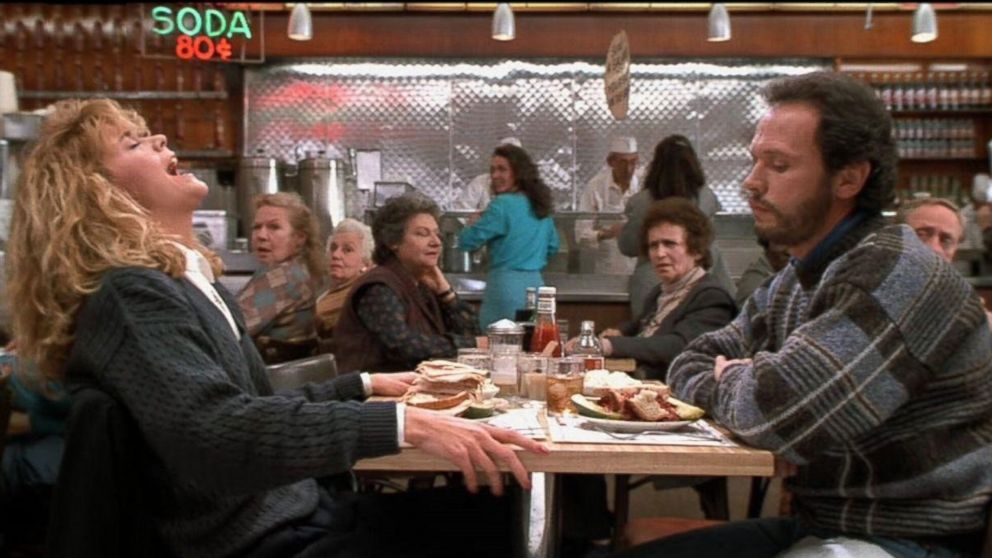
Meg Ryan and Billy Crystal in Rob Reiner’s WHEN HARRY MET SALLY.

In the period between 1984 and 1996, few directors had as impressive and as varied a body of work as did Rob Reiner: This Is Spinal Tap, When Harry Met Sally, Princess Bride, A Few Good Men, Misery and Ghosts of Mississippi.

Character actor Peter Greene excelled at playing scary villains and was the cretinous Zed in Pulp Fiction.
CURRENT MOVIES

ON TV

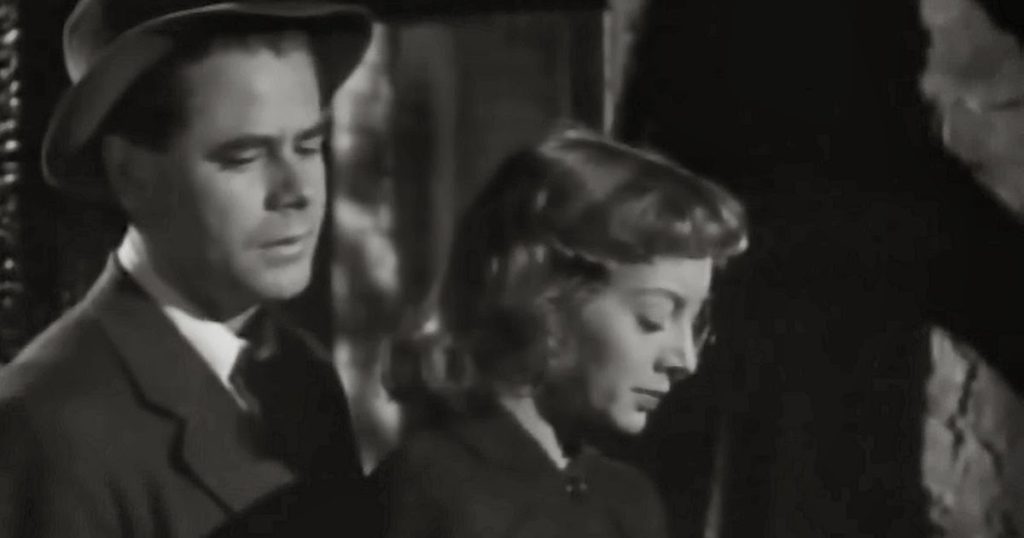
Glenn Ford and Evelyn Keyes in MR. SOFT TOUCH

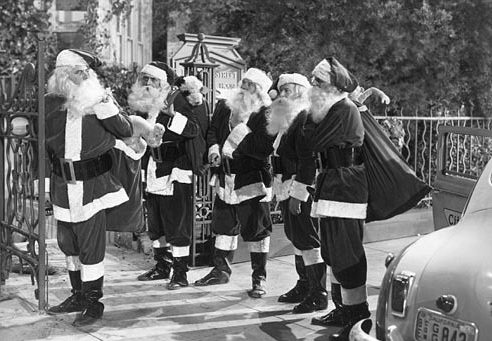
On December 23, Turner Classic Movies is airing the little-seen Mr. Soft Touch from 1949, which is undeniably Christmas film noir. The Holiday season is integral to the plot, which revolves around a Christmas tree, a Christmas party, Christmas decorations and a horde of ne’er-do-wells in Santa suits.

Nightclub owner Joe Miracle (Glenn Ford) returns from WWII to find that the mob has looted his nest egg. He’s able to rob it back, but now he’s got to hide out from the gangsters until his ship literally sails. As circumstances develop, he pretends to be a down-and-outer so he can stay in in the settlement house (isn’t that quaint?) run by social worker Jenny Jones (Evelyn Keyes).

MR. SOFT TOUCH. Photo Credit: Underwood and Underwood Corbis.

Mr. Soft Touch has many of the elements of classic film noir:

  • a cynical underworld where shady characters are robbed by even shadier types.
  • the WWII vet who has gotten screwed, and his only option to make himself whole is illegal.
  • a protagonist whose actions are driven to please a beautiful woman.
  • a hero who takes a bullet in the street.
  • a cast packed by recognizable characters of the period: John Ireland, Beulah Bondi, Percy Kilbride and Ted de Corsia.
  • gritty 1949 San Francisco locations.

That being said, Mr. Soft Touch is light comic noir and often silly. We accept the plot contrivances because the film doesn’t take itself too seriously.

Here, Evelyn Keyes isn’t a femme fatale for once; she’s a naïve do-gooder, but she’s sexy all the same, and sparks fly between Ford and Keyes as she inches him toward altruism and redemption.

Mr. Soft Touch is not available to stream. so set your DVR for a rarity.

PADDY CHAYEFSKY: COLLECTOR OF WORDS: “X-raying us all the time”

Photo caption: Paddy Chayefsky in PADDY CHAYEFSKY: COLLECTOR OF WORDS. Courtesy of HBO Max.

Paddy Chayefsky: Collector of Words brings thought-provoking insights into the life and work of the great screenwriter Paddy Chayefsky. Chayefsky is the only person to win three solo Oscars for Best Original Screenplay, for Marty, The Hospital and Network.

Those three films, along with the grievously overlooked The Americanization of Emily, the biting satire Wall Street (“Greed is good“) and the very trippy Altered States make up an essential body of work.

It’s hard to think of a film with more aching humanity than Marty. The titular character in Marty is a guy who no one notices, but Chayefsky shows us his yearnings, disappointments and inner pain in a searing and heartbreaking portrait. To bring that empathy to Marty and to spotlight the human foibles satirized in The Americanization of Emily, The Hospital, Network and Wall Street, Chayefsky had to be an uncommonly penetrating observer of human behavior. In Paddy Chayefsky: Collector of Words, one of Chayefsky’s colleagues says that he was “X-raying us all the time.”

Most folks see Network as Chayefsky’s masterpiece. Paddy Chayefsky: Collector of Words reminds that, as well as poking at the greed and cowardice of TV networks and the slide of television journalism into infotainment, Network probed the midlife crisis rocking the character played by William Holden and the impact on his wife, played by the Oscar-winning Beatrice Straight.

And, most of all, Paddy Chayefsky: Collector of Words shows us Network as a work of prophecy. The cynical executive played by Faye Dunaway directs her team to chase demographic research thusly:

Well, in a nutshell, it said: “The American people are turning sullen. They’ve been clobbered on all sides by Vietnam, Watergate, the inflation, the depression; they’ve turned off, shot up, and they’ve fucked themselves limp, and nothing helps.” So, this concept analysis report concludes, “The American people want somebody to articulate their rage for them.” I’ve been telling you people since I took this job six months ago that I want angry shows.

Guess who comes to mind? And when the exec makes a pitch to the network CEO (Robert Duvall), he responds with:

For God’s sake Diana, we’re talking about putting a manifest irresponsible man on national television.

Paddy Chayefsky: Collector of Words also brings us some nuggets: how the son of Russian Jews got and adopted the nickname Paddy, about his longstanding lunches with Bob Fosse at the Carnegie Deli, and about a mistaken line reading of one of the most iconic lines of dialogue in cinema history,

The director of Paddy Chayefsky: Collector of Words is Michael Miele, who also directed this year’s Bob Mackie: Naked Illusion. Miele lets us know in the opening titles that he agreed not to include discussion of Chayefsky’s family and personal life. No matter – it what Chayefsky put on the screen that counts.

Paddy Chayefsky: Collector of Words is streaming on HBO Max and on the HBO Max YouTube channel.

HAMNET: a grieving couple finally aligns

Photo caption: Jessie Buckley in HAMNET. Courtesy of Focus Features.

In Chloe Zhao’s glorious Hamnet, based on the Maggie O’Farrell novel, a couple must deal with the death of a child. That couple is none other than William Shakespeare (Paul Mescal) and his wife Agnes (Jessie Buckley).

Will is an aspiring writer with ambitions too big for their provinical hometown of Stratford. Agnes is just the kind of woman that we imagine would attract Shakespeare – smart, spirited, earthy and a determined non-conformist. The two fall in love and start a family, settling into an affectionate relationship and comfortable parenting partnership.

As someone who runs a London theater company, Will is necessarily away on business in London much of the time. To Agnes, who stays raising the kids in Stratford, where there is no theater, Will’s world is only theoretical. Although, he sends money for the family and even buys the biggest house in town, she just has no way of comprehending what he really does in London.

No European family in the late 1500s could hope to avoid pestilence, and tragedy strikes the Shakespeares – unfortunately while Will is away from home.

People do not experience grief the same way nor on the same timeline. Heartbroken parents may not feel like they are sharing the suffering together. Often, marriages do not survive the death of a child.

Hamnet is framed in a very 21st Century perspective – about using one’s art to process grief and express one’s feelings. In Hamnet, Will works out his grief by penning Hamlet, and Agnes can only align her grief with Will’s by experiencing his play.

Jessie Buckley’s performance as Agnes is wondrous. She perfectly captures Agnes’ freethinking independence, lusty passion and nurturing motherhood. When Agnes suffers her loss, Buckley shows her in the deepest despair and in her profound resentment of Will. Her personal catharsis makes for the most emotionally powerful movie ending of the year.

From her movie debut in the disturbing Beast, followed by acclaimed performances in Wild Rose and The Lost Daughter, Buckley has demonstrated that she is unsurpassed as a screen actor. Her work in Hamnet is a tour de force, and she will be nominated for a Best Actress Oscar.

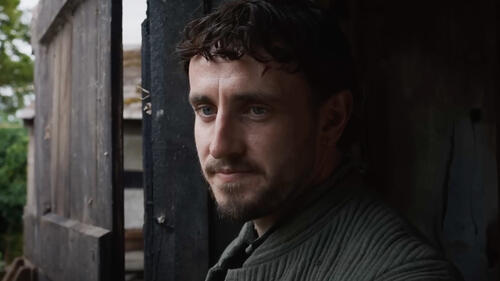
Paul Mescal in HAMNET. Courtesy of Focus Features.

This is Jessie Buckley’s movie, but Paul Mescal is very good as William Shakespeare, even if he doesn’t have as much to do in the first two acts. Mescal blossoms in the third act as Shakespeare writes, directs and then acts in Hamlet. In particular, Mescal’s Shakespeare recites the To Be. Or not to be. speech as he contemplates taking his life, and it’s never been so raw and powerful. And I have never see the King’s Ghost played as compellingly as does Mescal in the play-within-the-movie.

There are also fine supporting performances by the esteemed Emily Watson as Agnes’ mother-in-law and and Joe Alwyn as Agnes’ brother.

I loved how director Chloe Zhao presents the Globe Theater – as the site of the most spectacular entertainment that the audience would have ever seen or imagined. The crowd enters with the anticipation of a throng entering an NFL stadium on game day. When the play begins, there’s a hush as the audience is enthralled at the wonder of it all – the backdrop, the costumes, the swordplay, and even the primitive special effects.

Zhao, of course, won Best Director and Best Picture Oscars for Nomadland. That indie triumph earned her the payday of a Marvel franchise movie with big stars, The Eternals. Her early film, The Rider, with a nonprofessional actor as the protagonist, made me into a huge Chloé Zhao fan.

The play Hamlet ends with Fortinbras of Norway striding on stage amid the corpses to summarize things, and Zhao doesn’t go there. She avoids the anti-climax by following Billy Wilder’s screenwriting advice – Don’t stick around. I’m very impressed with any filmmaker who ends their film not even one second too late. After all, even Alfred Hitchcock made the mistake of ending Psycho with a psychological expert played by Simon Oakland explaining that Norman Bates’ psychological disorder really does exist and blah blah blah. So, I would say that Chloe Zhao ends Hamlet better than Shakespeare did.

Hamnet is one of the Best Movies of 2025.

Movies to See Right Now

Photo caption: Joel Edgerton and Kerry Condon in TRAIN DREAMS. Courtesy of Netflix.

It’s prime movie season and this week on The Movie Gourmet – new reviews of the superb drama Train Dreams, Kelly Reichardt’s dark comedy The Mastermind, the new biodoc Orwell: 2+2=5 and the affecting indie drama Burt, which screened at three Laemmle theaters this week.

Of my Best Movies of 2025 – So Far, you can see It Was Just an Accident and Sentimental Value in theaters now and THE REST ARE STREAMING.

Last week, I also posted notes on The American Revolution, Spinal Tap II: The End Continues and Being Eddie.

CURRENT MOVIES

ON TV

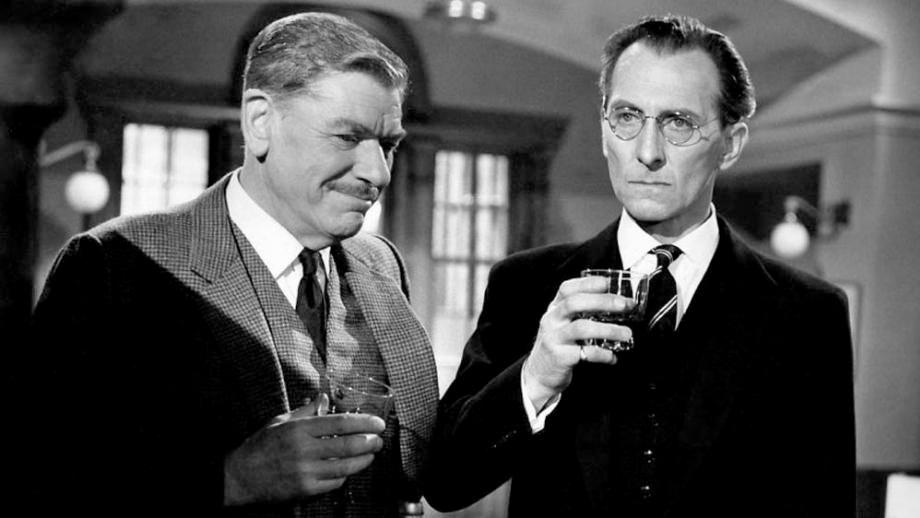
Andre Morell and Peter Cushing in CASH ON DEMAND.

Turner Classic Movies has gift-wrapped a present for us on December 13 and 14. Cash on Demand, made in 1962 by the British horror schlock studio Hammer Films, is a ticking bomb suspenser and a Perfect Crime movie. It’s also an unlikely Christmas movie, with characters that evoke Dickins’ A Christmas Carol.

The Scrooge is the manager of a bank branch (Peter Cushing) – everyone’s most despised boss. He revels in the tyranny of his miniature fiefdom and never misses a chance to make the jobs of his underlings unnecessarily onerous or humiliating. The Bob Cratchit (Richard Vernon) is the dedicated and able bank clerk, who is doing his best while under the manager’s sadistic thumb.

The manager gets his comeuppance when a posh customer (André Morell) arrives. The manager’s kowtowing and boot-licking is interrupted by the discovery that the customer is actually pulling a heist and forcing the manager – by threatening his family – to help.

The crook has apparently thought of every possibility and devised a perfect heist. Cash on Demand becomes a bank procedural as we learn about 1862 state-of-the-art vault security.

There’s a deadline – the vault needs to be emptied at a certain time or the manager’s family will come to grief. All of Cash on Demand occurs in real time and all inside the bank, under the inescapable face of the wall clock.

Andre Morell’s bank robber, while ruthless, is generally jovial – the very model of clubby affability. Cash on Demand is a study in contrast between the cool-as-a-cucumber crook and the bank manager, who looks absolutely stricken throughout the movie.

Cash on Demand will be aired on TCM’s Noir Alley, with the intro and outro by Eddie Muller.

THE MASTERMIND: when selfishness exceeds talent

Photo caption: Josh O’Connor in THE MASTERMIND. Courtesy of MUBI.

In Kelly Reichardt’s dark comedy The Mastermind, a slacker steals valuable paintings from a museum in suburban New England in 1970. But The Mastermind is less of a heist film than a character study of a man with little character.

James Blaine Mooney (Josh O’Connor) is James to his wife and parents and J.B. to his friends. His guiding value is selfishness. With a degree in the arts, he is an occasional cabinet-maker who lets his hardworking wife (Alana Haim) support his family with a real job, while he sponges off his mom (Hope Davis). Instead of working, J.B. spends his time fantasizing how to make money without working. He lands on a scheme to rob the local art museum and fence the paintings.

He is smart enough to get the paintings out of the museum and hide the loot. But then his own character flaws begin to betray him. Having watched many crime movies, we all know that any criminal conspiracy is only as strong as its weakest link. But J.B. has employed three untrustworthy low lifes as crime partners. Of course, J.B. is too unreliable himself to recognize reliability in anyone else. And then The Mastermind follows J.B. as he tries to avoid the consequences of his choices – and his flight becomes a consequence in and of itself.

What makes this a comedy? The running joke is that J.B. never makes the responsible, prudent choice throughout the movie, always taking what he sees as the easy path, regardless of morality or loyalty.

Usually, a movie audience roots for the heist to be successful. Here, we don’t sympathize with the museum, which doesn’t value its collection enough to invest in even the most basic security. But we don’t care about J.B. either, because he is a shit who only needs the money so he doesn’t have to get a job. We do care about other people in J.B.s life, and he ruins the lives of his wife and family, puts at risk his dear friends and his own sons, fleeces his mother, and surely humiliates his father.

Josh O’Connor is very good as a man who never misses a chance to think only of himself. I would recommend another film with a heist element, La Chimera, where O’Connor plays a more complex character.

Fine actors all, Davis, Haim, Bill Camp, Gaby Hoffman and John Magaro are perfect in supporting roles. Hoffman is especially strong as an old friend who recognizes how dangerous J.B.’s affable charm really is. Davis has an inspired moment when she breaks a corn cob in half – and then quickly assesses which half has moire kernels,

Writer-director Reichardt is an acclaimed indie filmmaker who usually makes languorous, observational movies and gets excellent performances out of actors like Michele Williams, Lily Gladstone and Jared Harris. Her Wendy and Lucy is a masterpiece. There is more humor (the quiet, sly kind) and much, much more plot in The Mastermind than in Reichardt’s other works. I keep waiting for Reichardt to make another Wendy and Lucy, which is probably as unfair as waiting for Orson Welles to make another Citizen Kane.

Reichardt, who was only six years old in 1970, completely nails the verisimilitude of the time and place.

The very best thing about The Mastermind is the original music by Rob Mazurek, usually a solitary jazzy cornet or drums. The Mastermind is Mazurek’s first feature film score, but his Wikipedia page details an impressive and varied career as a musical artist.

Bottom line: The Mastermind is an exceptionally well-made film about a guy who we wouldn’t like to know in real life, but who ultimately gets his just desserts.

ORWELL: 2+2=5: we didn’t get the message

Photo caption: ORWELL: 2+2=5. Courtesy of NEON.

The impassioned and innovative documentary Orwell: 2+2=5 is less a biopic of the author George Orwell than a cry of alarm, imploring us to heed Orwell’s message about resisting totalitarianism and its tools of propaganda and repressive violence. It’s a distress signal – and an urgent one.

Primarily through clips from movie versions of 1984 and Animal Farm, we are reminded of Orwell’s revulsion at those who deny objective fact and try to pervert public opinion. War is Peace. Freedom is Slavery. Ignorance is Strength. Big Brother. Thought Police. Newspeak.

Historical clips illustrate figures like Hitler, Stalin, Franco and Pinochet employing these methods. And contemporary news clips focus on the evil deeds of today’s authoritarian nationalists in Russia, China, Myanmar, Hungary, Italy, France and, notably, in the US.

Orwell: 2+2=5 takes us from Orwell’s work to instances of book burning from the Nazis through to today, including a jarring list of books banned in American libraries. Orwell found goosestepping particularly offensive, and Orwell: 2+2=5 shows us plenty of contemporary examples of that, too.

When Orwell wrote Animal Farm and 1984, he had seen Goebbels’s Big Lies in action and experienced Stalinist thought-oppression. But, although he hadn’t seen AI, election deniers or corporate hegemony of television news, Orwell: 2+2=5 makes it clear that his guiding principles still apply.

We do get just enough content about Orwell’s life to help understand what shaped him. He spent five years in his early twenties as a colonial policeman in Burma, which caused him to understand (before his peers) that European colonization was exploitation based on white supremacy and that he himself had been an instrument of repression. He fought against fascism in the Spanish Civil War, where his leftist unit was purged by communists. Physically disabled from wounds in Spain, he got another chance to fight fascism in World War II by working for the BBC, ironically, as a propagandist.

Orwell: 2+2=5 is the work of Oscar-nominated documentarian Raoul Peck. His James Baldwin biopic I Am Not Your Negro was also innovative; Peck chose to present Baldwin’s thinking through only his own words, in archival recordings or voiced from Baldwin’s writings, unadorned by talking heads. As in I Am Not Your Negro, the editing in Orwell: 2+2=5 is brisk.

Orwell: 2+2=5 is a fine film and an important piece of advocacy. It’s playing in arthouse theaters, but difficult to find.

TRAIN DREAMS: quietly thinking and quietly feeling

Photo caption: Joel Edgerton in TRAIN DREAMS. Courtesy of Netflix.

The last few years, he expected some great revelation about his life would descend upon him.  But, as of yet, none had.

The dreamy and deeply evocative Train Dreams is a portrait of a very thoughtful man. Robert Granier (Joel Edgerton) is thoughtful, but uneducated, and he doesn’t look at life with any philosophical, religious or political framework. He spends most of life in the stillness of the great primeval forests, with the absence of distractions allowing him to consider what life has given him and what life has taken away. He ponders Why?

In the early 20th century, Robert Granier had been sent, as an orphan boy, to a small town in Idaho. He grew to work as a laborer, on railroad construction projects and on logging old growth forests of Pacific Northwest. His jobs take him off for months at a time, working in ever new teams of strangers. It is always dangerous work, organized without even a casual nod to worker safety.

Granier experiences lots of drudgery, interrupted with moments of terror, sadness, confusion and soaring joy, before a tragic loss settles him into profound grief.

Joel Edgerton is magnificent as Granier, one of those stolid, reserved men of very few words, who is nonetheless very emotional. He’s not flamboyant about it, but he feels things very deeply.

Edgerton first emerged as a hunky Australian action star in the 2010 Australian crime thriller Animal Kingdom before playing the Navy Seal leader in 2012’s Zero Dark Thirty. Since then, he’s written five feature films (including The King with Timothee Chalamet) and directed two. And he has delivered wonderfully nuanced and magnetic performances in movies like Master Gardener and Loving. I especially recommend watching him in The Gift, which he also wrote and directed.

Edgerton has become a filmmaking brand. If Joel Edgerton is in the credits, it’s almost certainly an excellent and substantial film.

Joel Edgerton and Kerry Condon in TRAIN DREAMS. Courtesy of Netflix.

Train Dreams benefits from superb performances from the cast of great character actors, led by Felicity Jones, John Diehl, William H. Macy and Clifton Collins, Jr. The standout is Kerry Condon, who is compelling as an indomitable woman who has had equivalent experiences to Granier’s and has worked out her own response.

Train Dreams was directed and co-written by Clint Bentley with his usual writing partner Greg Kwedar, based on the Denis Johnson novella. The pair have also written the screenplays for Jockey (directed by Bentley), Sing Sing and Transpecos (directed by Kwedar). Clifton Collins, Jr. starred in Jockey and appeared in Transpecos.

Bentley makes very effective use of voice-over narration to establish where Granier comes from, literally and figuratively. The narration pairs perfectly with Edgerton’s performance to trace Granier’s internal journey. The fine character actor Will Patton is wonderful as the narrator.

Joel Edgerton in TRAIN DREAMS. Courtesy of Netflix.

This is a beautiful looking and sounding film. thanks to Bentley, cinematographer Adolpho Veloso and composer Bryce Dessner. The final montage is very moving .

I’ve been reading some Oscar buzz about Train Dreams, and it’s deserving. Train Dreams is one of the Best Movies of 2025, and it’s streaming on Netflix.