Stream of the Week: BRICK – hardboiled neo-noir in high school

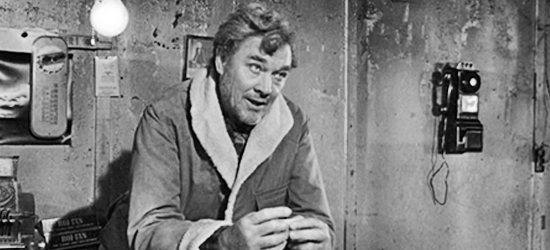
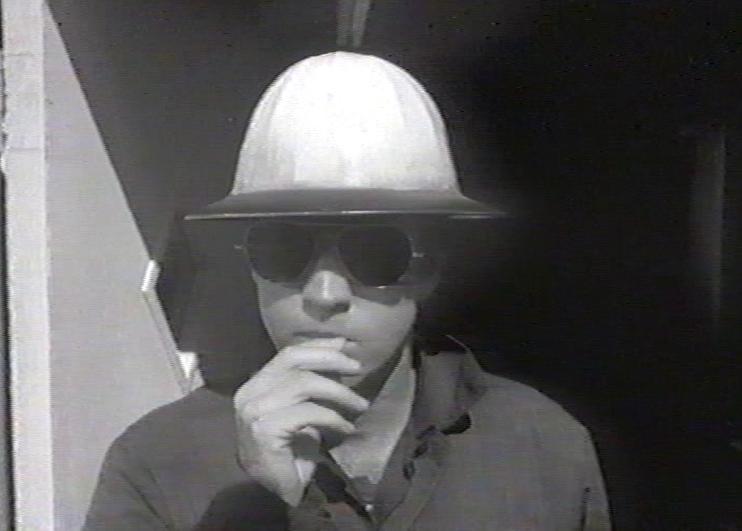
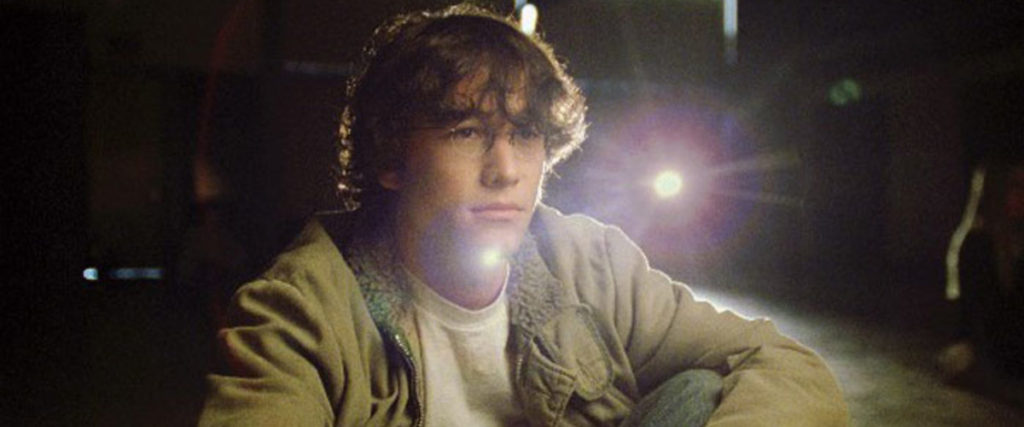
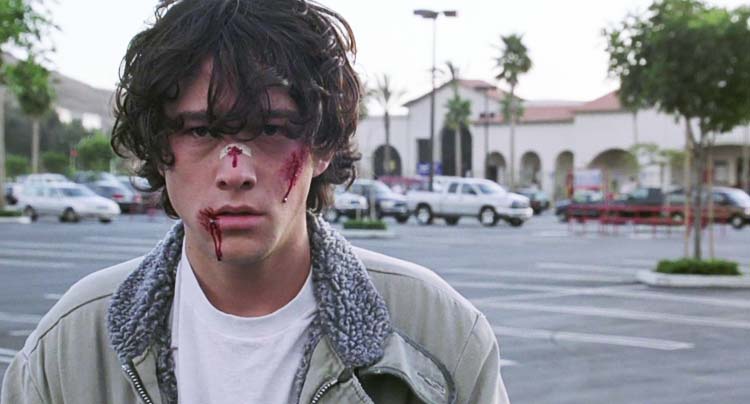
Joseph Gordon-Levitt in BRICK

Writer-director Rian Johnson’s gloriously inventive 2005 debut, Brick, was inspired by Johnson’s love of Dashiell Hammett’s novels and his own dark memories of high school.

Brick is a hard-boiled detective story, complete with a femme fatale and a plot right out of a Dick Powell classic noir like Murder, My Sweet or Cry Danger.

The genius of Brick is that it takes place in the teenage culture of 2005 San Clemente. The characters roam the isolated school corridors where the nerd eats lunch by himself, the drama room, the vice-principal’s office, the empty football field where kids can meet after school the party at the popular girl’s house. The kingpin crime lord operates out of his mother’s basement; he and his gang emerge upstairs in the kitchen where his mom supplies breakfast cereal and dispenses milk from a pitcher shaped like a chicken.

The dialogue is Hammettesque:

  • I gave you Jerr to see him eaten, not to see you fed.
  • The ape blows or I clam.
  • Bulls would gum it. They’d flash their dusty standards at the wide-eyes and probably find some yegg to pin, probably even the right one. No cops, not for a bit
  • Brad was a sap. You weren’t. You were with him, and so you were playing him. So you’re a player. With you behind me I’d have to tie one eye up watching both your hands, and I can’t spare it.

The noir patter works because Johnson and the cast play it dead seriously, with no hint of irony.

In Nate Jones’ interview in Vulture, Johnson says “One thing I don’t believe in is the notion that this is a dusty old genre and you have to find a way to flip the old tropes on their heads. The basic machinery of it, the tropes of it, are why it works.

Brick was at that point in Joseph Gordon-Levitt’s career, between Mysterious Skin (2004) and Lookout (2007), when it was becoming clear what a major talent he is.
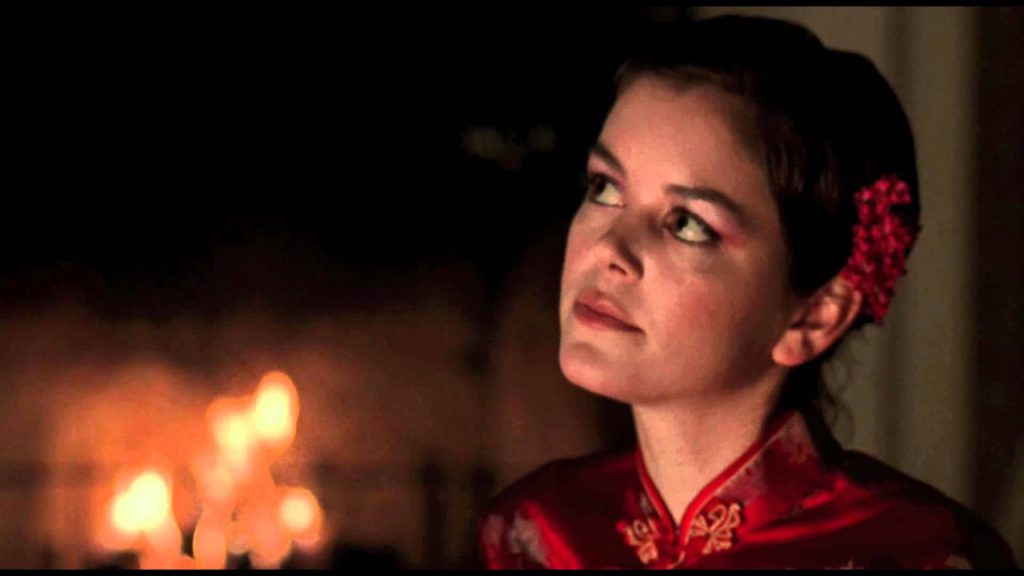
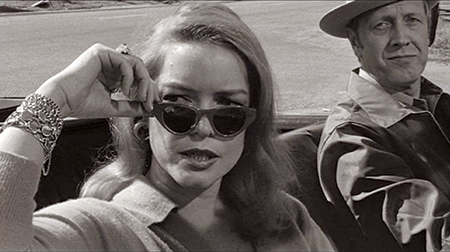
Norah Zehetner in BRICK

The femme fatale is played by Norah Zehetner in an unforgettable performance. Zehetner works a lot, and did ten episodes of Grey’s Anatomy, but Brick may be her career-topper.

Rian Johnson went on to make another original feature with Gordon-Levitt, Looper, along with the 2017 Star Wars movie. Knives Out, Johnson’s new take on the drawing room mystery, hits theaters this weekend.

Brick is available to stream on Netflix, AYouTube and Google Play.
Joseph Gordon-Levitt in BRICK

Movies to See Right Now

PARASITE. Photo courtesy of Mill Valley Film Festival (MVFF) .

Three of the best four movies of the year so far are in theaters this weekend: Parasite, Marriage Story and The Irishman.

OUT NOW

  • The masterpiece Parasite explores social inequity, first with hilarious comedy, then evolving into suspense and finally a shocking statement of the real societal stakes. This is one of the decade’s best films.
  • Adam Driver and Scarlett Johannson are brilliant in Noah Baumbach’s career-topping Marriage Story. A superb screenplay, superbly acted, Marriage Story balances tragedy and comedy with uncommon success. Marriage Story is playing in just a couple Bay Area theaters and will be streaming on Netflix on December 6. Complete review coming this weekend.
  • Martin Scorsese’s gangster epic The Irishman is tremendous, and features performances by Al Pacino and Joe Pesci that are epic, too. It’s in theaters now, and will stream on Netflix on November 27. Complete review coming this weekend.
  • Filmmaker Taika Waititi takes on hatred in his often outrageous satire Jojo Rabbit. I saw Jojo Rabbit at the Mill Valley Film Festival, where the audience ROARED with laughter.
  • In his Pain and Glory, master filmmaker Pedro Almodovar invites us into the most personal aspects of his own life, illuminated by Antonio Banderas’ career-topping performance.
  • Harriet is excellent history (and Harriet Tubman belongs on the twenty dollar bill), but it’s not great cinema.
  • The atmospheric slow burn neo-noir Motherless Brooklyn gets postwar New York City right, but it’s too long.
  • The raucous romp Zombieland Double Tap is a fun change of pace to the serious fare in theaters.
  • I liked the Isabelle Huppert drama Frankie, but the Mill Valley Film Festival audience was very indifferent at the screening; I’m guessing that folks failed to warm to an ambiguous ending that leaves some plot threads unresolved.
  • Loro, Paolo Sorrentino’s send-up of Silvio Berlusconi is much more interesting visually than it is thematically.

ON VIDEO

My Stream of the Week is All the Way, with Bryan Cranston (Breaking Bad, Trumbo) becoming the first actor to capture LBJ in all his facets – a man who was boring and square on television but frenetic, forceful and ever-dominating in person. LBJ’s 1964 makes for a stirring story, and All the Way is a compelling film. You can stream it from HBO GO, Amazon’s HBO Now,  iTunes, YouTube and Google Play.

ON TV

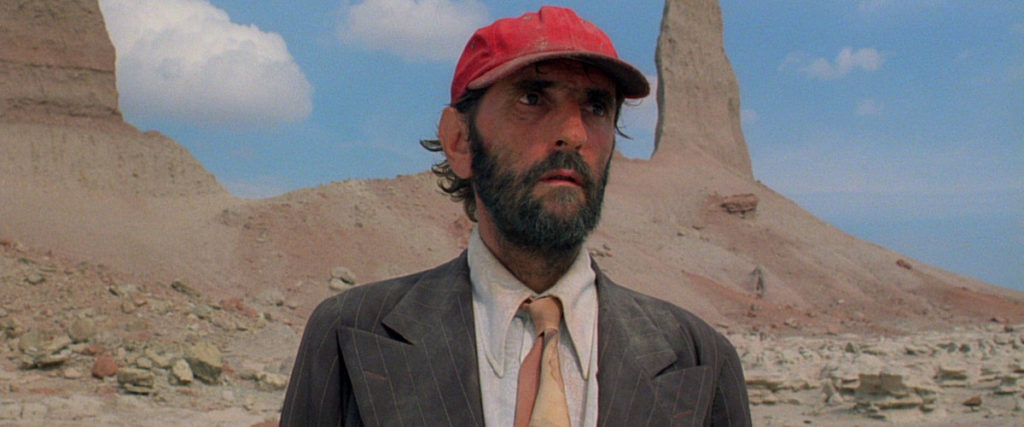
On November 27, Turner Classic Movies will air Harry Dean Stanton’s masterpiece in Wim Wenders’ Paris, Texas. In Paris Texas, Harry Dean plays Travis, a man so traumatized that he has disappeared and is found wandering across the desert and mistaken for a mute.  As he is cared for by his brother (Dean Stockwell), he evolves from feral to erratic to troubled, but with a sense of tenderness and a determination to put things right.  We see Travis as a madman who gains extraordinary lucidity about what wrong in his life and his own responsibility for it.

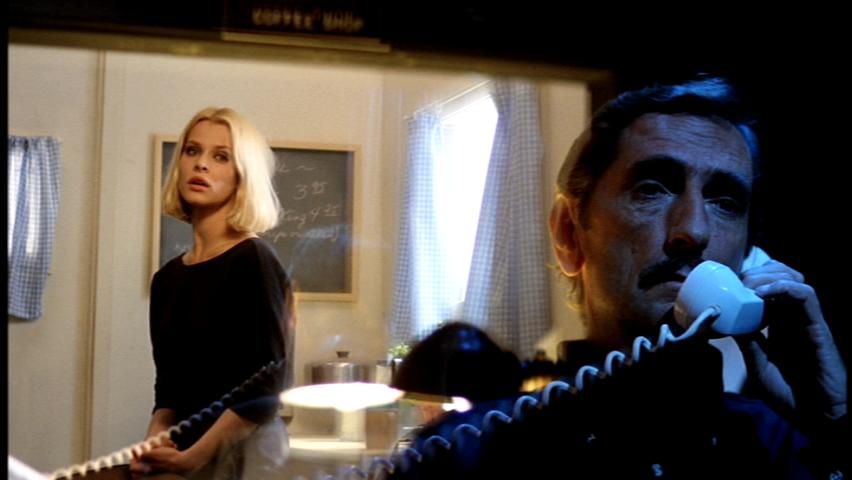
At the film’s climax, Travis speaks to Jane (Natassja Kinski) through a one-way mirror (she can’t see him).  Spinning what at first seems like parable, Travis explains what happened to him – and to her – and why it happened.  It’s a 20-minute monologue so captivating and touching that it rises to be recognized as one of the very greatest screen performances.

Harry Dean Stanton in PARIS, TEXAS
Natassja Kinski and Harry Dean Stanton in PARIS, TEXAS

Stream of the Week: ALL THE WAY – LBJ comes alive

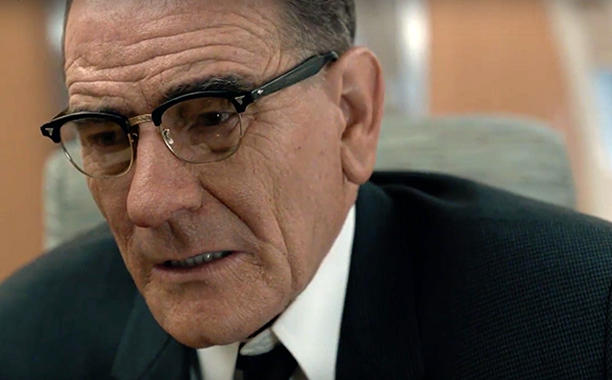
Bryan Cranston in ALL THE WAY

Lyndon B. Johnson, one of American history’s larger-than-life characters, finally comes alive on the screen in the HBO movie All the Way. Bryan Cranston (Breaking Bad, Trumbo) is the first actor who captures LBJ in all his facets – a man who was boring and square on television but frenetic, forceful and ever-dominating in person. All the Way traces the first year in LBJ’s presidency, when he ended official racial segregation in America with the Civil Rights Act of 1964.

LBJ was obsessed with gaining and keeping political power, and he was utterly ruthless and amoral about the means to do that. His tools of persuasion included deceit, flattery, threats, promised benefits and horse-trading. He was equally comfortable in playing to someone’s ideals and better nature as well to one’s vanity or venality. In All the Way, we see one classic moment of what was called “the Johnson treatment”, when LBJ looms over Senator Everett Dirksen, and it becomes inevitable that Dirksen is going to be cajoled, intimidated or bought off and ultimately give LBJ what he wants.

LBJ was so notoriously insincere that one of the joys of All the Way is watching LBJ tell completely inconsistent stories to the both sides of the Civil Right battle. Both the Civil Rights proponents (Hubert Humphrey and Martin Luther King, Jr.) and the opponents (the Southern Senators led by Richard Russell) must determine whether LBJ is lying and to whom. Each of them must make this calculation and then bet his own cause on his perception of LBJ’s real intentions.

But LBJ amassed power for two reasons – he needed to have it and he needed to do something with it. Along with the LBJ’s unattractive personal selfishness and the political sausage-making that some may find distasteful, All the Way shows that Johnson did have two core beliefs that drove his political goals – revulsion in equal parts to discrimination and poverty. We hear references to the childhood poverty that led to the humiliation of his father, to the plight of the Mexican schoolchildren in Cotulla, Texas, that he mentored as a young man, and his outrage at the discriminatory treatment suffered by his African-American cook Zephyr.

Bryan Cranston brilliantly brings us the complete LBJ – crude, conniving, thin-skinned, intimidating and politically masterful. Besides Cranston’s, we also see superb performances by Melissa Leo as Ladybird, Anthony Mackie as MLK, Bradley Whitford as Hubert Humphrey and Frank Langella as Richard Russell.

All the Way is remarkably historically accurate. It does capsulize some characters and events, but the overall depiction of 1964 in US history is essentially truthful. As did Selma, All the Way drills down to secondary characters like James Eastland and Bob Moses. We also see the would-be scandal involving LBJ’s chief of staff Walter Jenkins, a story that has receded from the popular culture. Vietnam is alluded to with a reference to the Gulf of Tonkin incident, which is fitting since Vietnam grew to become LBJ’s nemesis and the national obsession only after the 1964 election.

All the Way was adapted from a Broadway play for which Cranston won a Tony.  LBJ’s 1964 makes for a stirring story, and All the Way is a compelling film. You can stream it from HBO GO, Amazon’s HBO Now,  iTunes, YouTube and Google Play.

THE LAST PICTURE SHOW: even better now

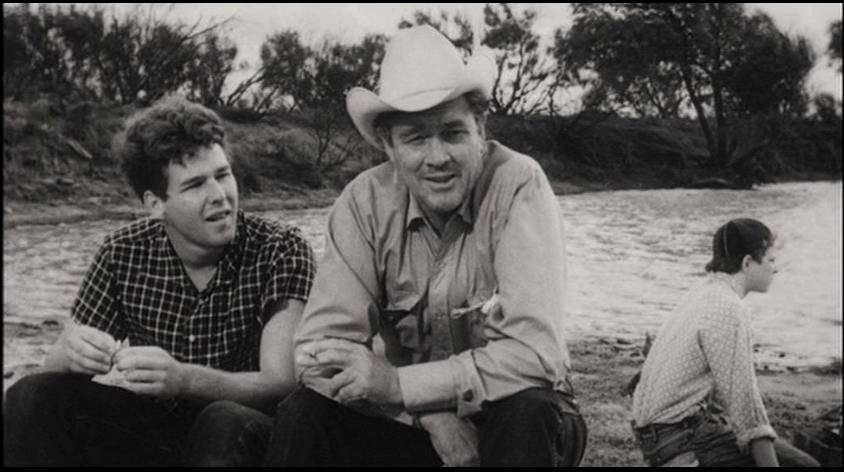
Timothy Bottoms, Ben Johnson and Sam Bottoms in THE LAST PICTURE SHOW

On November 20, Turner Classic Movies is airing Peter Bogdanovich’s 1971 masterpiece The Last Picture Show. It’s a movie about kids that is best appreciated by grown-ups, especially grown-ups with some mileage on them.

The Last Picture Show is the story of 18-year-olds in a tiny, windblown Texas town in the early 1950s, from Larry McMurtry’s novel about his own upbringing in Archer City, Texas. It’s a coming of age film about teens finishing high school: the sensitive Sonny (Timothy Bottoms), his macho best friend Duane (Jeff Bridges) and pretty, snotty Jacy (Cybill Shepherd), entitled by her looks and her family’s wealth. There’s also a sweet, intellectually disabled boy Billy (Sam Bottoms). The boys’ male role model is Sam the Lion (Ben Johnson in an Oscar-winning performance), an older bachelor cowpoke who owns the town’s cafe, movie theater and pool hall.

The film was actually shot in Archer City, which took the movie name of a Texas ghost town, Anarene. (Decades later, Archer City also showed up in a bank robbery in 2016’s Hell and High Water.)

Cybill Shepherd in THE LAST PICTURE SHOW

18-year-olds wonder how they will navigate the world of adults that they are about to enter. It turns out that, for the kids in the movie, if only they paid attention, there’s plenty to lean about life from the adults in Anarene. The other thing that 18-year-olds obsess about is their sexuality, super-fueled by hormones but piloted by immature brains.

It’s a remarkable thing to watch a coming of age story about 18-year-olds when you are 18 and then again forty years later when you know stuff.

When I saw The Last Picture Show at San Jose’s domed Century Theaters in 1971, I was the same age as the main characters, and I was especially interested in their sexual escapades. I was, however, discerning enough to appreciate that this was a great movie, and I fully experienced the heartbreak of the Cloris Leachman character and grasped that Sam the Lion’s authority came from his decency and dignity.

Peter Bogdanovich with Jesse Hawthorne Ficks at the Roxie

In September, I was privileged to attend one of the year’s most stirring experiences of Bay Area cinema culture. The Roxie Theater screened the The Last Picture Show – with the legendary Bogdanovich himself in attendance for two Q&A sessions, plus a screening of his hard-to-find Saint Jack (1979).

Ben Johnson in THE LAST PICTURE SHOW

Rewatching The Last Picture Show, I was especially struck by the subtle yet emotionally powerful performances by Ben Johnson, Clu Gulager and Ellen Burstyn

The plot is about the kids, but Ben Johnson’s character is the center of the film. Johnson underplays the part, and Bogdanovich says that Johnson didn’t even like to say lines at all. But Johnson nailed two unforgettable speeches. In the first, his eyes flash as he spits out his disgust at bullying. In the other, he recalls a love affair; as a clueless kid the first time around, I failed to connect the dots as who the woman was. Ben Johnson’s Oscar acceptance speech (you can find it on YouTube) is still my all-time favorite.

Clu Gulager in THE LAST PICTURE SHOW

Clu Gulager plays an oil rig foreman who is the illicit squeeze of his boss’ wife (Burstyn) . Gulager did scores of TV Westerns in the 1960s, including 105 appearances as the sheriff on The Virginian. The Last Picture Show is probably his best-ever screen performance. The Director’s Cut also adds some sizzle to his sex scene with Jacy in the pool hall. This guy is trapped in a job he will never improve upon and an affair he will never control; Gulager perfectly conveys his bitter dissatisfaction.

Unlike Gulager, Burstyn was already a prestige actress. Here, she brings both searing and withering looks at the men and wise and comforting, if cynical, advice to her daughter.

This is a great film, and it’s just as timeless today as it was in 1971.

Ellen Burstyn in THE LAST PICTURE SHOW

Movies to See Right Now

PARASITE. Photo courtesy of Mill Valley Film Festival (MVFF) .

Parasite is the best movie in theaters right now, and I’ve got twelve, count ’em TWELVE, more recommendations this week. Tonight, The Wife and I have a date: The Irishman and dinner.

OUT NOW

  • The masterpiece Parasite explores social inequity, first with hilarious comedy, then evolving into suspense and finally a shocking statement of the real societal stakes. This is one of the decade’s best films.
  • Filmmaker Taika Waititi takes on hatred in his often outrageous satire Jojo Rabbit. I saw Jojo Rabbit at the Mill Valley Film Festival, where the audience ROARED with laughter.
  • In his Pain and Glory, master filmmaker Pedro Almodovar invites us into the most personal aspects of his own life, illuminated by Antonio Banderas’ career-topping performance.
  • The indie gem Light from Light ingeniously embeds three portraits of personal awakening into what looks like a familiar haunted house movie. It’s playing in Silicon Valley for only one more week.
  • Harriet is excellent history (and Harriet Tubman belongs on the twenty dollar bill), but it’s not great cinema.
  • The atmospheric slow burn neo-noir Motherless Brooklyn gets postwar New York City right, but it’s too long.
  • The raucous romp Zombieland Double Tap is a fun change of pace to the serious fare in theaters.
  • I liked the Isabelle Huppert drama Frankie, but the Mill Valley Film Festival audience was very indifferent at the screening; I’m guessing that folks failed to warm to an ambiguous ending that leaves some plot threads unresolved.
  • Where’s My Roy Cohn? is Matt Tyrnauer’s superb biodoc of Roy Cohn – and was there a more despicable public figure in America’s 20th Century than Cohn?
  • Loro, Paolo Sorrentino’s send-up of Silvio Berlusconi is much more interesting visually than it is thematically.
  • It’s tough to imagine anyone who wouldn’t enjoy the biodoc Linda Ronstadt: The Sound of My Voice, about the first female mega rock star. 
  • Watching The Lighthouse is such an ordeal it could drive you crazy before Robert Pattinson goes mad on screen.
  • Skip Netflix’s The Laundromat and watch The Big Short again instead.

ON VIDEO

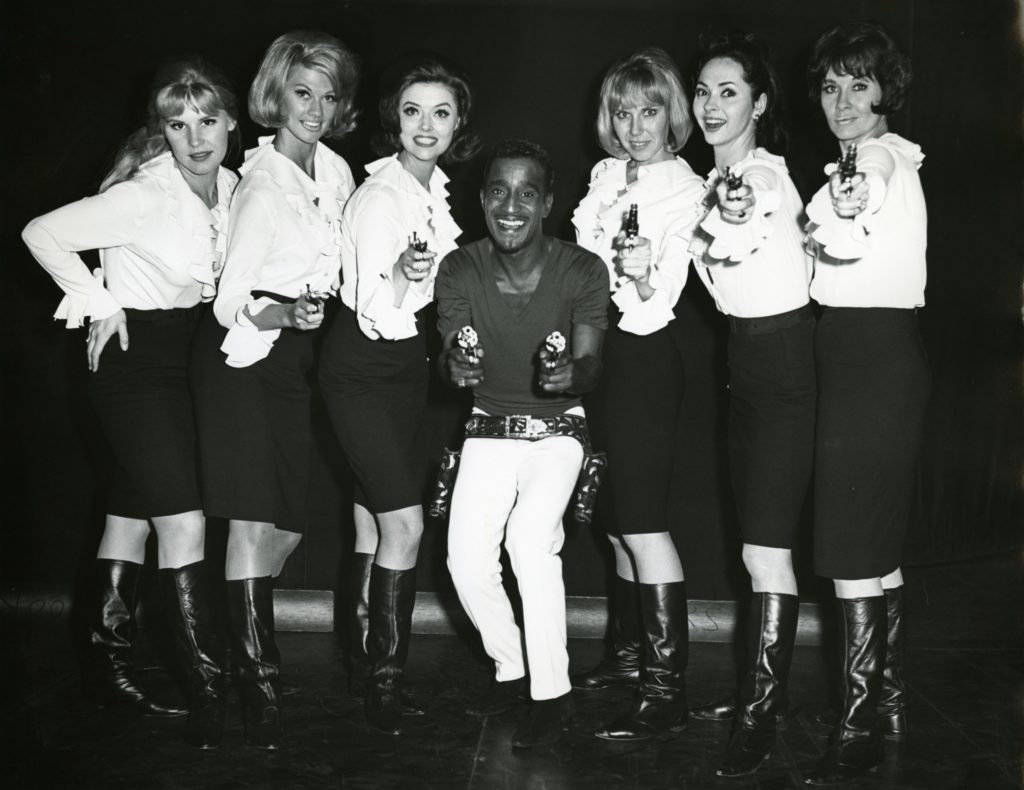
My Stream of the Week is Sammy Davis Jr.: I’ve Gotta Be Me , the portrait of a needy talent through complicated times. This fine and insightful film can streamed on Amazon (included with Prime), iTunes, Vudu, YouTube and Google Play.
ON TV

Turner Classic Movies is airing the Peter Bogdanovich classic The Last Picture Show on November 20. I’ll be writing about it on November 19.

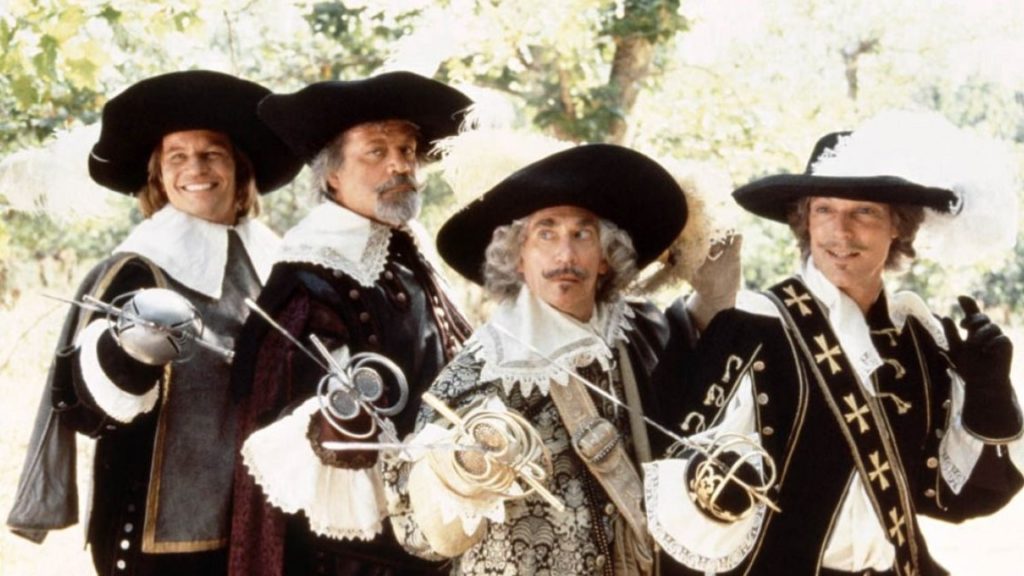
Turner Classic Movies is devoting Monday evening, November 18, to swashbucklers, and my favorite is Richard Lester’s boisterous The Three Musketeers from 1973. Watch Oliver Reed, Richard Chamberlain, Michael York and Frank Finlay swashbuckle away against Bad Guys Christopher Lee, Faye Dunaway and Charlton Heston. Geraldine Chaplin and Raquel Welch adorn the action. [If you like it, you can stream the second volume, The Four Musketeers, from Criterion Collection, Amazon, YouTube and Google Play; it was filmed in the same shoot and released the next year.]

Michael York, Oliver Reed, Frank Finlay and Richard Chamberlain in THE THREE MUSKETEERS

MOTHERLESS BROOKLYN: atmospheric slow burn

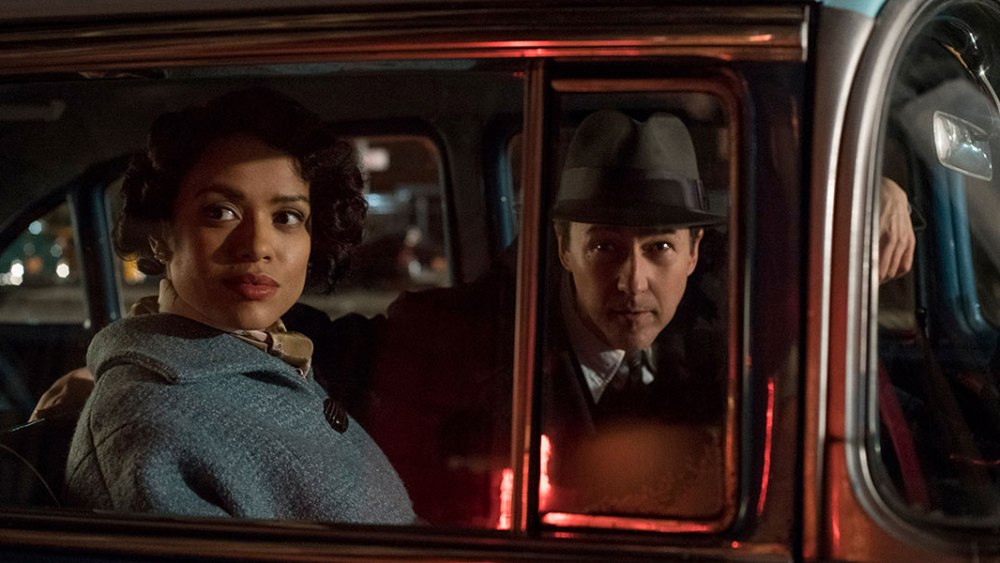
Gugu Mbatha-Raw and Edward Norton in MOTHERLESS BROOKLYN

Edward Norton adapted the screenplay for, directed and stars in the atmospheric mystery Motherless Brooklyn. A detective’s partner is killed, and his search for the killers plunges him into a web of intrigue. It’s a slow burn paranoid thriller, along the lines of Chinatown, although not nearly as good and set in the New York City of the early 1950s and not nearly as good.

Norton gets the postwar NYC pretty much perfect. If you love the automobiles of the period, especially the Plymouths and Chevrolets, you’ll be in heaven.

The paranoia comes from the omnipotence of master urban redeveloper Robert Moses (under a different name in Motherless Brooklyn). It’s actually pretty accurate history, if a bit esoteric for popular entertainment.

Norton plays novelist Jonathan Lethem’s private detective Lionel Essrog, who has Tourette’s syndrome. Tourette’s was even less understood in the America of the early 1950s, so that creates some fodder, along with the fact that detectives who have to sneak around are not well-served by involuntary outbursts. Norton is always good, but it’s hard not to see this as a gimmick performance.

I really liked Bruce Willis as a more seasoned detective. Gugu Mbatha-Raw plays the woman who must be saved, and we all want her saved. Alec Baldwin twirls virtual mustaches as the villainous Moses character, Willem Dafoe is very good as a haunted character; he is wearing his beard from The Lighthouse, but happily not the Long John Silver accent.

Motherless Brooklyn was a labor of love for Norton, and he loves it too much to edit it. The story could be told better in a movie 30 minutes shorter, One nightclub scene in particular goes on for too, too long. If you have two-and-a-half hours on a cold winter’s night, you could do worse than to stream it.

Stream of the Week: SAMMY DAVIS, JR.: I’VE GOTTA BE ME – a needy talent through complicated times

Still from SAMMY DAVIS JR.: I’VE GOTTA BE ME. Photo courtesy JFI.

Sammy Davis Jr.: I’ve Gotta Be Me is now available to stream (and free on Amazon Prime).  As a Baby Boomer who had dismissed Sammy Davis Jr. from the moment he publicly hugged Richard Nixon, I found this to be the most surprising doc (and my favorite) at last year’s San Francisco Jewish Film Festival. I learned that Sammy’s 61-year career as a professional entertainer began at age three (with his first movie credit at age 7), a working childhood that  left emotional needs  It turns out that Sammy was a very, very talented but needy artist,, an uncomplicated man navigating several very complicated times.

Sammy’s life of entertainment began at 3.  We get to see a clip of him in the 1933 Rufus Jones for President.  All that professional work took away his childhood and engraved upon him a need to please.  That and his generation produced the 50s showbiz style that seemed so insincere to us Baby Boomers.  And, of course that embrace of Nixon seemed to be the ultimate sell-out moment.

Sammy Davis Jr.: I’ve Gotta Be Me also poses whether he was demeaned by Rat Pack humor? Were Frank and Dino laughing at Sammy, or with him?

But this was  an immensely talented man, a masterful dancer with a remarkable crooner’s voice and a gift for mimicry.  He was the first American entertainer of color to do impersonations of white celebrities.   BTW there is some unbelievable dancing in Sammy Davis Jr.: I’ve Gotta Be Me.  We get to see Sammy’s 60th anniversary in showbiz celebrated among a host of celebrities – he still had his dancing chops.

Sammy Davis Jr.: I’ve Gotta Be Me is the story of a man whose success condemned him to a career that spanned generations – none of which fit him comfortably.  It’s a fine and insightful film. It can streamed on Amazon (included with Prime, iTunes, Vudu, YouTube and Google Play.

[Random note: This film title may contain the most different punctuation marks of any movie title: a comma, a period, a colon and an apostrophe.]

HARRIET: story great, movie only okay


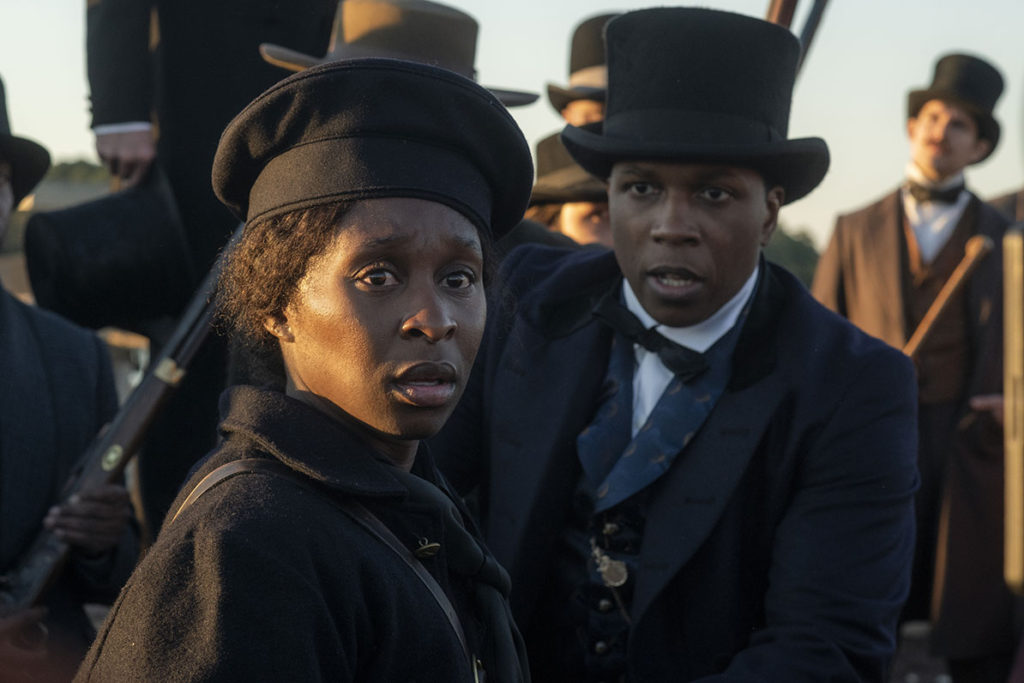
Cynthia Erivo in HARRIET. Photo courtesy of Focus Features.

I first watched the trailer for Harriet askance because the Harriet Tubman action figure I saw on-screen didn’t resemble the tiny, revered Tubman in the sepia photos. But that is because of my own skepticism of Hollywood history and my own woeful ignorance of the historic Tubman. The ancient lady in her photos and the historic Tubman are explained in this fine NYT piece Harriet Tubman Facts and Myths: How the Movie Tried to Get it Right. As Harriet’s director Kasi Lemmons says in this NYT article, “You don’t have an image of what she was like when she was actually doing this work in her late 20s, when she was this young superheroine, this completely badass woman.”

Harriet is good history. The problem is that Lemmons doesn’t trust us to appreciate Tubman’s heroism when we see it – a 100-mile solo escape from slavery, guiding 75 escaped slaves to freedom with the Underground Railroad, leading troops into battle to free 700 more in the Civil War, and becoming a thought leader in the abolitionist and suffragist movements. So we have this swelling music every time Tubman does something inspirational. The constant, obvious beatification is distracting.

Tubman is played with convincing intensity by Cynthia Erivo. Erivo was absolutely the best thing about the Steve McQueen film Widows; since Erivo’s character teamed with those played by Viola Davis, Michelle Rodriguez and Elizabeth Debicki, the fact that she stole the movie is impressive. Erivo is a Broadway musical actress/singer, and Harriet uses her singing talent as well.

If you’re not expecting great cinema, you’ll appreciate this important and compelling history. Harriet makes it clear why Tubman belongs on the twenty dollar bill.

PARASITE: social inequity – what’s really at stake

PARASITE

The masterpiece Parasite explores social inequity, with master filmmaker Bong Joo Ho taking us through a series of genres. Parasite opens as a hilarious comedy, then evolves halfway through into a suspense thriller and ends with a shocker and a moment of contemplative heartbreak. This is one of the decade’s best films.

The Kim family lives in a grubby basement apartment, so much on the margins of society that they cadge the neighbors’s wi-fi and even the municipal fumigation. They can’t live on the dad’s sporadic employment in low-end jobs, so the family is always on the hustle. It helps that the Kims, especially the college-age kids, are gifted scoundrels.

The Park family lives in an icon of modern architecture. The dad is a CEO with his own driver, and the mom and two kids are pampered by their live-in housekeeper. They have never had to hustle themselves, and they don’t recognize a hustle when they see it.

The Kim son falls into a job tutoring one of the Park kids. After a series of riotously funny cons, the Kim family positions itself to take advantage of the Parks. The Kims are soon living off the fatted calf, but they must contend with one uncomfortable fact – their newfound fortune is extremely fragile because it all comes at the whims of the rich.

PARASITE. Photo courtesy of Mill Valley Film Festival (MVFF) .

The biggest disconnect between the rich and the rest of us is the understanding of capitalism as a meritocracy – or not. Despite capitalist mythology, working hard and taking risks is often not rewarded with wealth. Conversely, just being wealthy is not an indicator of talent or accomplishment, however entitled the rich feel they are.

Mr. and Mrs. Kim are wily, but uneducated. The Kim kids are trapped by the Korean economy economy; they have no realistic pathway to social mobility, no matter how industrious they are. The kids’ college-educated peers are all under- or unemployed.

Mr. Park is successful in business, but he is a drive-by family man and thinks he can identify the working class by their smell. His wife is a neurotic adornment, his daughter is spoiled and his son is a mess.

Why does Bong shock us with some horror? The stakes of social inequity – impacting generations – are very high and as high as life and death. Bong is reminding us of those stakes after reeling us in with all the fun.

Along with comedy, thriller and horror, Bong even gives a couple minutes of the disaster genre. The Kim’s poor neighborhood is afflicted by a pestilence of biblical scale that would be unthinkable for any affluent community. Let’s just say that the poor live in crap.

Song Kang-Ho in PARASITE

Parasite is superbly acted. The poor family’s dad is played masterfully by Song Kang-Ho. It’s his kids who are directing the scam, but it’s the dad whose slow burn resentment finally explodes.

Bong Joo Ho (Memories of Murder, Mother, Snowpiercer and Okja) makes movies so original that it’s been said that he is his own genre. His Memories of Murder, also starring Song Kang-Ho, is, for my money, the very best serial killer movie. Snowpiercer and Okja, like Parasite, also take on the issues of class and corporate greed.

Martin Scorsese recently said that people watch cinema, as opposed to “worldwide audiovisual entertainment”, to be surprised. Indeed, to view the work of Bong Joo Ho is to be surprised every single time.

Bong Joo Ho himself says, “My goal is to have the audience captivated for two hours by subverting their expectations.” Captivation, check. Subversion of expectations, check.

This is a masterwork. Parasite won the Palme d’Or, the top prize at the Cannes Film Festival, and currently has a meteoric Metacritic score of 95. Parasite will win the Best Foreign Language Oscar and is arguably the best movie of 2019.

LORO: just eye candy

Kasia Smutniak and Toni Servillo in LORO

Loro is director Paolo Sorrentino’s take on the career end of the despicable Italian media mogul and former prime minister Silvio Berlusconi. The Berlusconi character has a different name, but there’s no mistake that it is the hair-dyed, ever-grinning Berlusconi.

The movie Loro is actually the combination of two television programs. In the first, we see Berlusconi’s corruption through the POV of another amoral grasper, Sergio (Ricardo Scarmacia). Sergio seeks his fortune by collecting a brigade of cocaine-fueled escorts to sexually entertain Berlusconi. In the second half, we follow Berlusconi himself as, out of power, he is unable to climb back into power, he loses his wife and he is sexually humiliated by a 20-year-old aspiring actress. Sorrentino gets his licks in by making Berlusconi, finally, pathetic.

Loro stars Sorrentino’s frequent collaborator Toni Servillo, who is able to play the Berlusconi character as a figure powerful to get all he desires…and then not.

I had high expectations of Loro because I loved Sorrentino’s The Great Beauty and Youth. Sorrentino is a master of the eye candy and those movies are especially beautiful, but also tell stories compelingly. Ultimately, Loro is much more interesting visually than it is thematically.

Loro, which got a screening at the San Francisco international Film Festival, has just concluded a wisp of a theatrical release in the Bay Area. It can be streamed from Amazon, iTunes, Vudu, YouTube and Google Play.