THE 11TH GREEN: a thinking person’s conspiracy

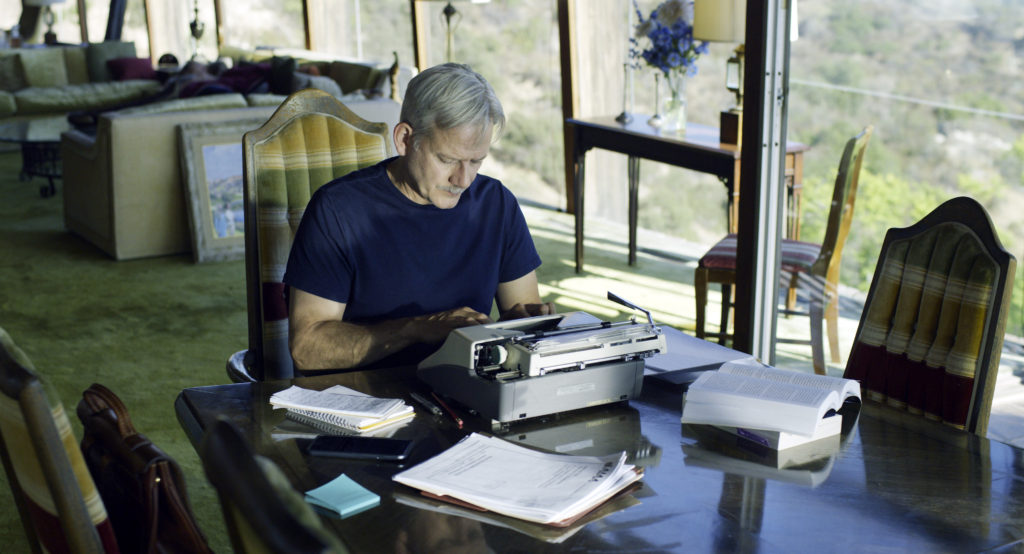
Campbell Scott in THE 11TH GREEN

Writer-director Christopher Munch notes that it’s difficult to have a serious discussion of extra-terrestrial visitors to Earth; he notes that talk of UFOs brings giggles and that “gatekeepers in the media” avoid the subject, fearing that they won’t seem smart anymore. That’s the territory he plumbs in The 11th Green. There are no lovable ETs or terrifying space monsters or flying saucers in The 11th Green, just a life-and-death conspiracy of secrets.

Suppose there is intelligent life elsewhere in the universe. Now it’s not much of a leap that such intelligent life would have visited Earth. If THAT has happened, then maybe humans have noticed the visitors – or maybe even humans have been contacted by the visitors.

The 11th Green starts with the premise that extraterrestrials visited and made contact in the 1950s, but the leadership of that American generation, having experienced Orson Welles’ War of the Worlds, has suppressed the news until the public can be prepared not to panic. The conspiracy of secrecy has survived to this day.

Our protagonist, Jeremy Rudd (Campbell Scott), is a DC-based science journalist. He has been estranged from his father, an Air Force General retired from the national security elite. When his father dies, Jeremy travels to his father’s home in Palm Desert, California, to handle the estate. There, he goes through his father’s stuff and meets his father’s peers, including a fascist general, an oleaginous spook and his dad’s nubile assistant.

As Jeremy unpeels the onion of his father’s career, he uncovers the story of the Millennium. And here’s where Munch launches his trademark Magical Realism. Weird shit starts happening – but all with its own internally consistent logic.

Ike and Mamie Eisenhower show up as characters in The 11th Green, along with a retired President Barack Obama and post-war Defense Secretary James Forrestal. (Jeremy’s father had been living in the former winter retirement home of President Eisenhower on the 11th green). You need to suspend disbelief here – do it.

I loved Christopher Munch’s previous film, Letters from the Big Man, a work of uncommon beauty. Munch’s magical realism worked there because he presented it absolutely straight, as if having a lovelorn Sasquatch in the forest setting was as normal as a squirrel. Sadly, Letters from the Big Man is currently difficult to find.

The cerebral and reserved Campbell Scott is perfectly cast as the offbeat, but always contained, brainiac Jeremy. Religiously scientific, Jeremy always follows the data, even when the data takes him to what others would find unbelievable. More than a little OCD, he makes the emergency trip from DC to Palm Desert – on a train!

I am resistant to science fiction generally, But I went with the story, and found The 11th Green to be absorbing and satisfying – and another completely original work from Christopher Munch. You can buy a virtual ticket for The 11th Green – and support the Roxie Theater – at Theatrical-At-Home.
INMATE #1: THE RISE OF DANNY TREJO – redemption never gets old

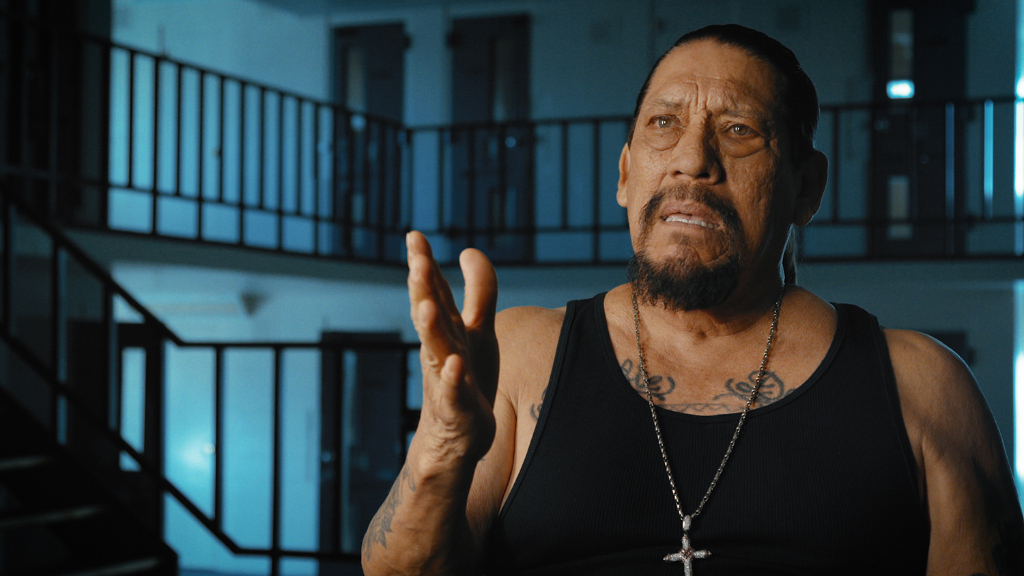
Danny Trejo in INMATE #1: THE RISE OF DANNY TREJO

Inmate #1: The Rise of Danny Trejo is a satisfying documentary on an extraordinarily redemptive life. A vicious criminal addicted to heroin like his gangster uncle, Danny Trejo got one lucky break in San Quentin and used the opportunity to go into recovery. Working as a drug counselor, he happened on to a movie set, and, what do you know, Danny’s got over 300 screen credits and 50 years of recovery,

There’s plenty of Danny and his friends and family in Inmate #1: The Rise of Danny Trejo, and there’s remarkable detail about his journey from the tough streets of Pacoima to, well, to Pacoima. Emphasizing an essential point of 12-step programs, Danny points out that every good thing that has happened to him has come when he has been in service to others.

Yeah, this is a feel-good story, but I didn’t find it corny. We really can’t have too much redemption these days.

Inmate #1: The Rise of Danny Trejo can be streamed from Amazon, Vudu, TouTube and Google Play.

tonight on PBS – RECORDER: THE MARION STOKES PROJECT: it seemed crazy at the time…

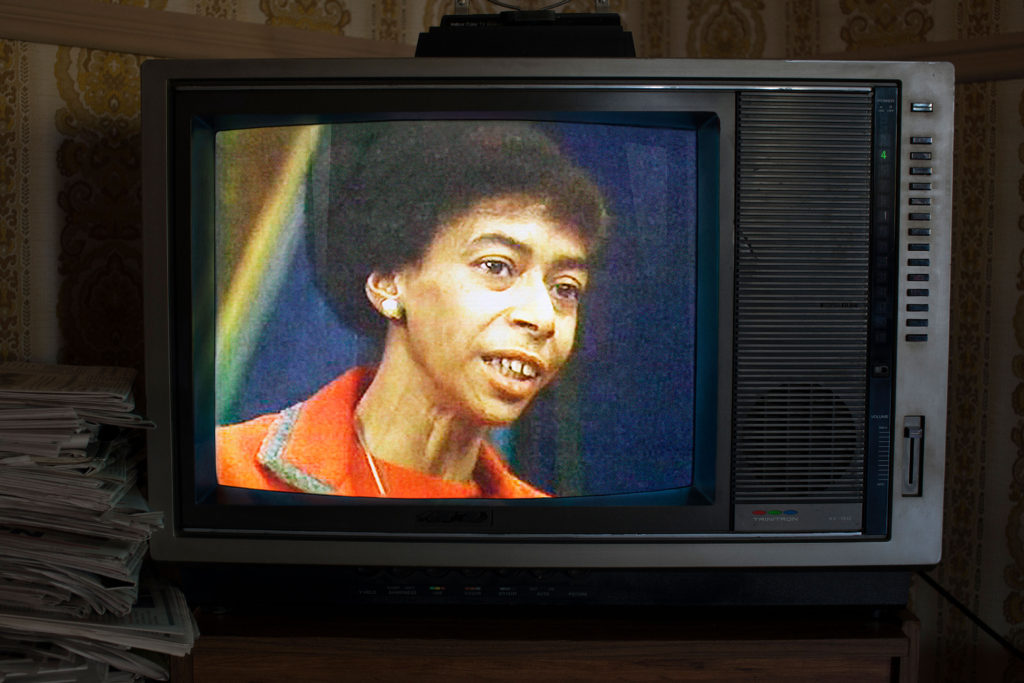
Marion Stokes in RECORDER: THE MARION STOKES PROJECT, directed by Matt Wolf. Photo credit: Eileen Emond and courtesy of Zeitgeist Films.

Tonight, the excellent documentary Recorder: The Marion Stokes Project will air on PBS Independent Lens. It will be available to stream for free from PBS through July 14 here. I also recommend this PBS interview with Director Matt Wolf.

If you miss it on PBS, you can pay to stream it on Amazon, iTunes, Vudu, YouTube and Google Play.

Hang ten this summer

RIDING GIANTS

Let’s go surfin’ now

Everybody’s learning how

Come on and safari with me

It’s a great time to get stoked with the two most bitchin’ surfing movies, the documentaries Step Into Liquid and Riding Giants.

In Step Into Liquid (2003), we see the world’s best pro surfers in the most extreme locations.  We also see devoted amateurs in the tiny ripples of Lake Michigan and surfing evangelists teaching Irish school children.  The cinematography is remarkable – critic Elvis Mitchell called the film “insanely gorgeous”.  The filmmaker is Dana Brown, son of Bruce Brown, who invented the surf doc genre with The Endless Summer (1966) and The Endless Summer II (1994).

Riding Giants (2004) focuses on the obsessive search for the best wave by some of the greatest surfers in history. We see “the biggest wave ever ridden” and then a monster that could be bigger.  The movie traces the discovery of the Half Moon Bay surf spot Mavericks.  And more and more, all wonderfully shot.

The filmmaker is Stacy Peralta, a surfer and one the pioneers of modern skateboading, (and a founder of the Powell Peralta skateboard product company).  Peralta also made Dogtown and Z-boys (2001), the great documentary about the roots of skateboarding, and wrote the 2005 Lords of Dogtown.

Both Step into Liquid and Riding Giants can be streamed from Amazon, iTunes, Vudu, YouTube and Google Play.

Movies to See Right Now (at home)

Catherine Deneuve and Juliette Binoche in THE TRUTH. Photo courtesy if IFC Films.

This week: an insightful, wry showcase for two of France’s most iconic actresses and a tribute to movie composer Ennio Morricone.

From earlier this week, here’s my remembrance of Ennio Morricone.

ON VIDEO

The Truth: Writer-director Hirozaki Koreeda’s latest wry and authentic exploration of human behavior is a showcase for Catherine Deneuve and Juliette Binoche.

John Lewis: Good Trouble: A revealing documentary on the Civil Rights icon.

The most eclectic watch-at-home recommendations you’ll find ANYWHERE:

ON TV

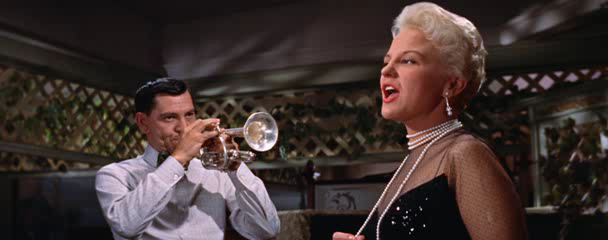
Jack “Dragnet” Webb and Peggy Lee in PETE KELLY’S BLUES

On July 14, TCM brings us something COMPLETELY different, the 1955 Pete Kelly’s Blues, directed by and starring Jack Webb, who we all know from TV’s Dragnet.   Made at the downturn of the Big Band Era, Pete Kelly’s Blues is set at during Prohibition in the infancy of Big Bands.

It’s a fairly routine drama about a small time bandleader on the outs with a dangerous crime boss, but Jack Webb loved jazz and worked hard to get the music in the movie right, resulting in quite the period document.  Peggy Lee received a Supporting Actress Oscar nomination for portraying an alcoholic vocalist.  There’s an unforgettable cameo performance by Ella Fitzgerald at the top of her game.  The house band includes many real-life musicians who played with Benny Goodman, Bing Crosby and the like, including  Matty Matlock, Eddie Miller and Jud De Naut.

Webb never had much range as an actor, but the rest of the cast is excellent: Janet Leigh, Edmond O’Brien,  Lee Marvin, Andy Devine, Jayne Mansfield and Harry Morgan.  Not a great flick, but worth a look for the music.

JOHN LEWIS: GOOD TROUBLE – an icon continues

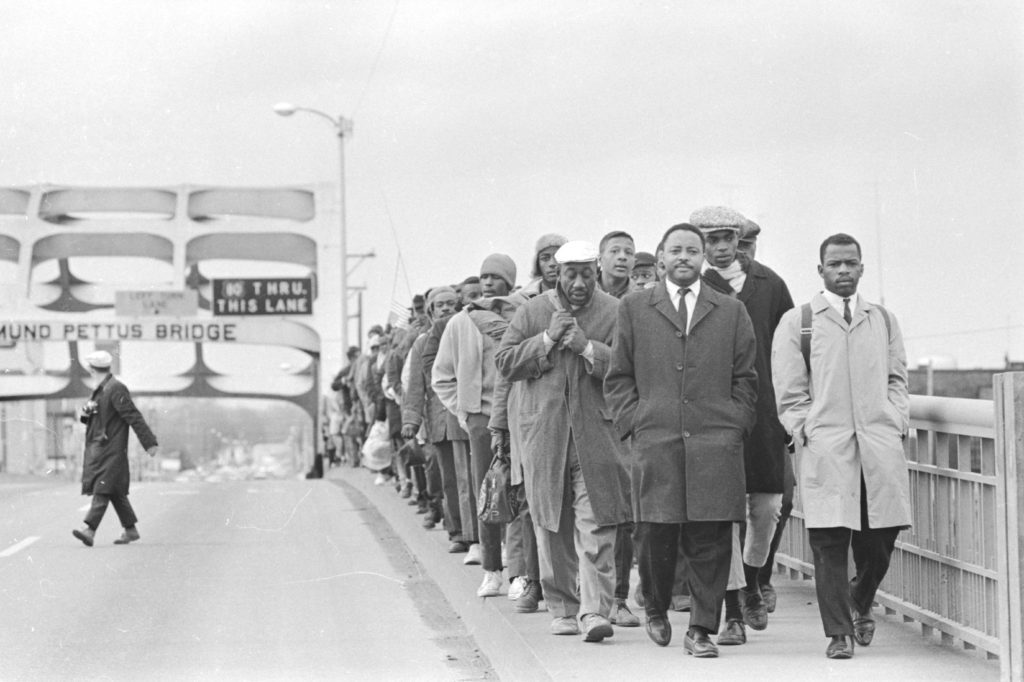
John Lewis (on far right) in JOHN LEWIS: GOOD TROUBLE. Courtesy of Magnolia Pictures.

The documentary John Lewis: Good Trouble traces the life of civil rights icon, US Representative John Lewis.  I usually don’t buy reverential biodocs, but when the subject is a freaking saint, I guess you have to go with it.  The rest of the title comes from Lewis’ mantra – if you see injustice, make good trouble, necessary trouble

John Lewis, of course, is a real American hero.  As a very young man in 1965, he had been leading efforts to register Blacks to vote in Selma, Alabama, including a peaceful march to the State Capitol in Montgomery.  On March 7, 1965, the march got as far as the Edmund Pettus Bridge on the outskirts of Selma when they were attached by local law enforcement and Ku Klux Klan members under the command of Sheriff Jim Clark.  Lewis was in the very first rank and was beaten, shedding his own blood on “Bloody Sunday”.  Two subsequent marches on the bridge and the LBJ speech that followed led directly to the Voting Rights Act of 1964, the most important civil rights legislation since 1867. 

In John Lewis: Good Trouble, we see footage from the Edmund Pettus Bridge.  We see a young John Lewis being beaten in 1965, and we see an elderly Lewis in an anniversary march with President Barack Obama and former Presidents Bill Clinton and George W. Bush.

John Lewis: Good Trouble is well-sourced by director Dawn Porter, even though only a few of Lewis’ contemporaries survive.  When the first Black president was elected, Lewis says he wept for JFK, RFK, Dr. King and the others who hadn’t lived to see it.  Fortunately, Lewis has sisters sill alive who participate in the documentary.

We get an inside glimpse at Lewis’ childhood.  We get to see Lewis watching footage of himself at a pivotal Nashville sit-in that he had “never seen”.  And, this intimate portrait shows us some dry Lewis humor and some impressive octogenarian dance moves.

How did Lewis get to Congress?  John Lewis: Good Trouble shows us the race against his longtime friend and fellow Civil Rights icon Julian Bond. My day job is in politics, and I understand that, to win, you have to do what you have to do to win; others may find this episode bracing and unsettling. 

 John Lewis: Good Trouble is an insightful view of a man and of a critical point in American history.  You can stream it on Amazon, iTunes, Vudu, YouTube and Google Play.

THE TRUTH: reconciling your truth with another’s

Catherine Denueve in THE TRUTH. Photo courtesy of IFC Films.

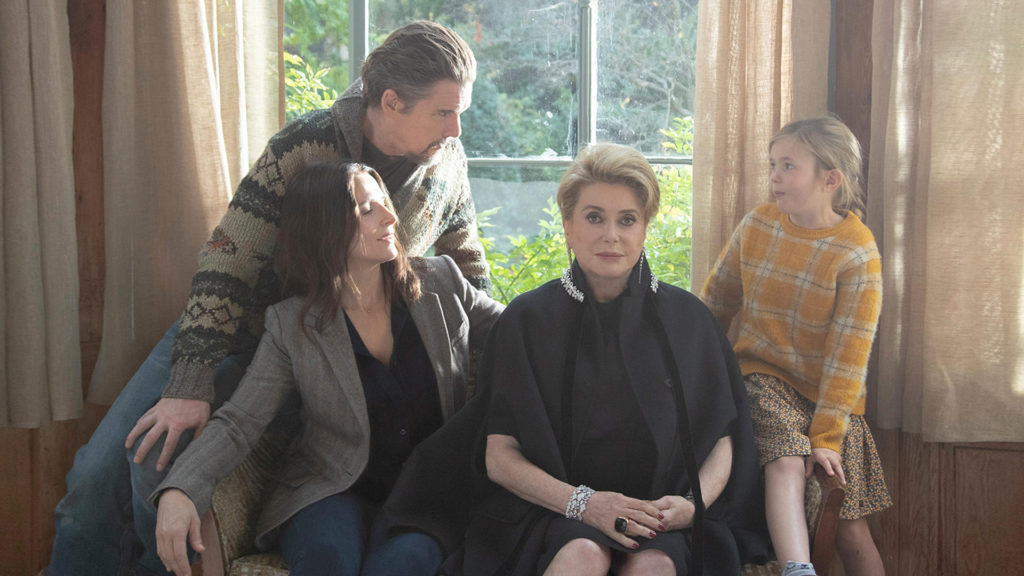
In The Truth, writer-director Hirozaki Koreeda’s latest wry and authentic exploration of human behavior, Catherine Deneuve plays Fabienne, one of France’s most iconic living actresses. Her daughter Lumir (Juliette Binoche), a screenwriter living in New York, brings her family to Paris for a visit to celebrate the publication of Fabienne’s memoir.

As the film opens, an imperious Fabienne is being interviewed by a journalist so mediocre that he’s not ashamed of plagiarizing his questions – and Fabienne doesn’t suffer fools.

Fabienne is a diva who demands to be doted upon, and she is a Real Piece of Work. Fabienne has been so career-focused that she sacrificed an emotional attachment to Lumir, who received maternal nurturing from Sarah, a now-deceased peer of Fabienne’s who Fabienne had screwed out of a career-making role.

Her self-worshipful memoir is ridiculously also entitled The Truth. The book falsely paints Fabienne as an attentive, model mother, doesn’t even mention her longtime assistant and inaccurately claims that Lumir’s father is dead.

Lumir’s resentments quickly bubble to the surface, the two probe and spar throughout he movie. Each sees her own experience as a “truth”. The Truth is about their journeys to accept the other’s point of view and on what terms. It’s very funny, and, thanks to Hirokeeda’s touch, remarkably genuine.

Juliette Binoche, Ethan Hawke, Catherine Deneuve and Clémentine Grenier in THE TRUTH. Photo courtesy of IFC Films.

Fabienne is now shooting a movie where she plays the mother of a much younger French film star (Manon Clavel), and the ever-competitive Fabienne has manufactured a one-sided rivalry with her, as she had with Sarah. (The film-within-a-film is a sci fi exploration of mother-daughter angst which I think I would hate if it were a real movie).

I’ve seen four of Koreeda’s movies and they’re all brilliant: Still Walking, Our Little Sister, The Third Murder and The Shoplifters. I rated The Shoplifters among the four best movies of 2018. The Truth is Koreeda’s first film made outside Japan and in languages (French and English) other than Japanese.

Deneuve and Binoche are superb. All of the cast is excellent, including Ethan Hawke, who is a good enough sport to play Lumir’s tag-along husband, a good-hearted but modestly talented American TV actor. The firecracker child actress Clémentine Grenier, in her first film, soars as Lumir and Hank’s daughter Charlotte; Charlotte wants to become an actress like her grandma, and Clémentine just might attain that herself.

The Truth also benefits from the beautiful work of cinematographer Eric Gautier (Ash Is Purest White, The Motorcycle Diaries, Summer Hours).

The Truth may not be Koreeda’s very best, but it’s plenty good. Hirokeeda, such an insightful observer of behavior, can cut to the core his characters’ profound humanity. The Truth is streaming on Amazon, Vudu, YouTube and Google Play.

Ennio Morricone

Ennio Morricone, one of the greatest movie music composers (and perhaps the most iconic) has died. Among his 519 composing credits, he is most known for his groundbreaking scores in the Sergio Leone/Clint Eastwood Spaghetti Western trilogy: A Fistful of Dollars, For a Few Dollars More and The Good, the Bad and the Ugly.

He won an Oscar for The Hateful 8 in 2015. Although his score was excellent, it referred to his earlier, entirely original work, and this was probably a well-deserved “career achievement” award.

Morricone’s work was ever aspirational, seemingly seeking to become iconic. It takes fearlessness to incorporate whistling, gunshots, chanting men’s choirs, the Jew’s Harp, and what the New York Times calls the “bizarre, wailing “ah-ee-ah-ee-ah,” played on a sweet potato-shaped wind instrument called an ocarina“. Morricone didn’t believe in understatement.

Leone earned his first credit in 1960 and wrote the startlingly original Fistful in 1964 at age 36. His music defined the genre of Spaghetti Western as much as did Sergio Leone’s grotesques and closeups. Along with Leone’s great The Man with No Name trilogy, Leona composed for Once Upon a Time in the West and 2 Mules for Sister Sara. His trademark music elevated well over ten Spaghetti Westerns, including the lesser Seven Guns for theMacGregors, Navajo Joe, The Great Silence, My Name Is Nobody, and Duck You Sucker (and I’ve seem ’em all).

Besides the spaghetti westerns, Morricone composed the scores of The Battle of Algiers, 1900 Once Upon a Time in America, La Cage aux Folles and Cinema Paradiso. He was still working in 2020 at age 91.

I particularly admire his score for the 1986 historical drama The Mission. In the video below, Morricone himself conducts a symphony orchestra playing the theme from The Mission. In the story, an 18th Century Jesuit (Robert DeNiro) tries to Christianize an indigenous tribe in Paraguay (and it doesn’t end well). At 3:15, a flute reflects the indigenous culture and, at 5:30, a massive choir brings in the gravitas.

Movies to See Right Now (at home)

Laverne Cox in DISCLOSURE. Photo courtesy of NETFLIX.

This week: four new 2020 films – The Traitor, Shooting the Mafia, Mae West: Dirty Blonde, The Ghost of Peter Sellers. Last week: five new 2020 films – Da 5 Bloods, Disclosure, Yourself and Yours, Ella Fitzgerald: Just One of Those Things and You Don’t Nomi. As a tribute to Carl Reiner, it’s time to revisit The Russians Are Coming! The Russians Are Coming! Plus a great classic Western on TV.

ON VIDEO

The Traitor: A true life epic spanning four decades and three continents, The Traitor introduces us to the first and most important Sicilian Cosa Nostra informer. The Traitor can be rented from all the major streaming services.

Shooting the Mafia: Another movie about the Sicilian Mafia, this is the biodoc of Letizia Battaglia, whose photojournalistic specialty became photographing murder victims and also documented the grief, trauma and outrage of the Sicilian population. Shooting the Mafia can be streamed on iTunes, YouTube and Google Play.

Disclosure: This insightful (and even revelatory) documentary about the depiction of trans people on screen is moving and thought-provoking. Disclosure is streaming on Netflix.

Mae West: Dirty Blonde: I learned a lot from this excellent biopic: Mae West was more than a drop-in risque caricature – starting a movie career after age 40, she was an uncredited writer and producer of her films. And she did it in a prudish era when women’s aspirations were not encouraged (intentional understatement). Available on demand from PBS stations. Trailer.

The Ghost of Peter Sellers: This documentary tells the story of an uncompleted early 1970s pirate movie parody, Ghost in the Noonday Sun, sabotaged by its star, Peter Sellers. The doc is from the fraught perspective of the director, Peter Medak, whose career was harmed by the fiasco. The 2002 documentary Lost in La Mancha (Amazon, iTunes) which chronicles Terry Gilliam’s disastrous attempt to film Don Quixote, is a much better and more entertaining movie than this one.

The Russians Are Coming! The Russians Are Coming!: Appreciate Carl Reiner, the best Straight Man in American comedy, in this goodhearted and very, very funny Cold War parody.

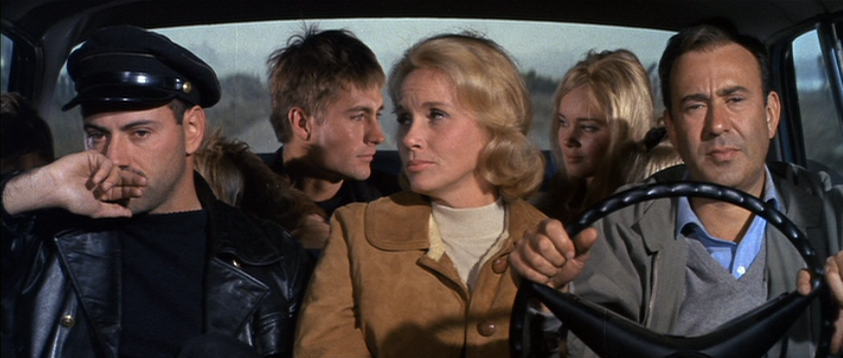
Alan Arkin, Eva Marie Saint and Carl Reiner in THE RUSSIANS ARE COMING! THE RUSSIANS ARE COMING!

The most eclectic watch-at-home recommendations you’ll find ANYWHERE:

ON TV

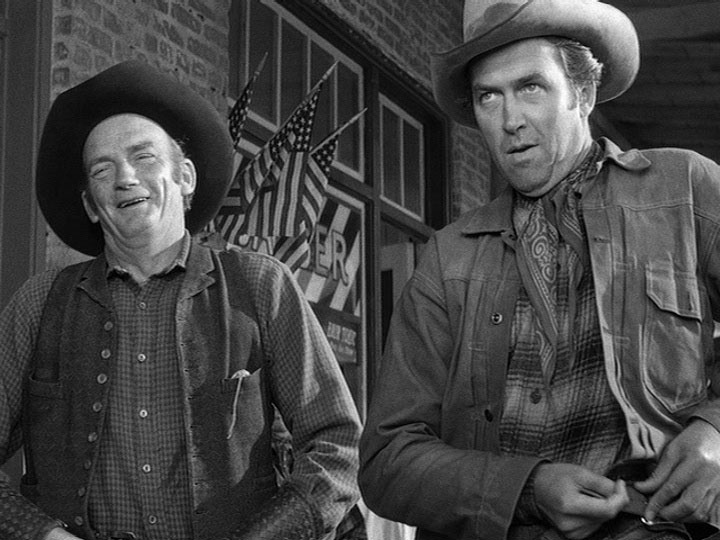
Millard Mitchell and James Stewart in WINCHESTER ’73

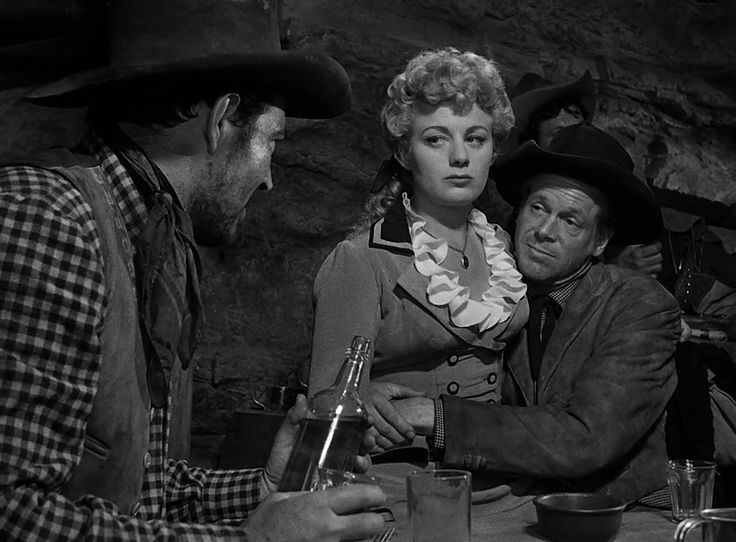
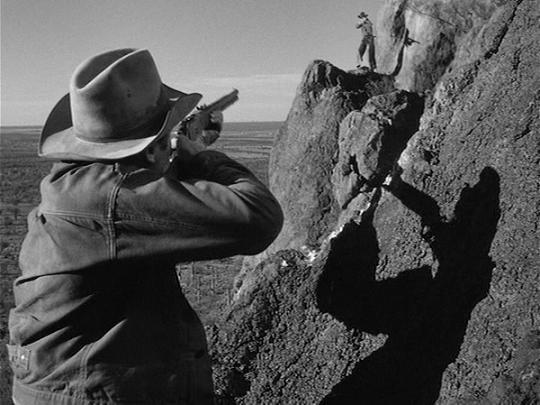
On July 6, Turner Classic Movies presents what is perhaps the best of director Anthony Mann’s “psychological Westerns”, Winchester ’73 (1950) with James Stewart. Winchester ’73 taps the quest and revenge genres, and it has the Western’s requisite Indian battle and climactic shootout.  Westerns were oft about Good versus Bad, but Mann makes Jimmy Stewart’s character in Winchester ’73 much more complex and morally ambiguous – and he has what we now call “unresolved issues”.  The bad guys are Dan Duryea at his oiliest and Stephen McNally at his most brutish.  The 29-year-old Shelly Winters finds herself as the object of several characters’ desires.  Millard Mitchell is perfect as Jimmy’s sidekick. One of my favorite character actors, Jay C. Flippen, shows up as a cavalry sergeant.

Stephen McNally, Shelly Winters and Dan Duryea in WINCHESTER ’73
WINCHESTER ’73

REMEMBRANCES

Carl Reiner, from earlier this week.

Director Joel Schumacher had been a department store window dresser when he broke into movies as a set designer. Then he wrote the screenplay for the wonderful guilty pleasure Car Wash, which led to directing the similar DC Cab. His career took off when he launched the Brat Pack with St Elmo’s Fire, and followed that with Batman and Robin. My favorite Schumacher film is the 2002 thriller Phone Booth, in which an Everyman – or is he? – (Colin Farrell) is trapped in a phone booth by a sniper villain (Kiefer Sutherland); Phone Booth can be streamed from all the usual sources.

a tribute to Carl Reiner: THE RUSSIANS ARE COMING! THE RUSSIANS ARE COMING!

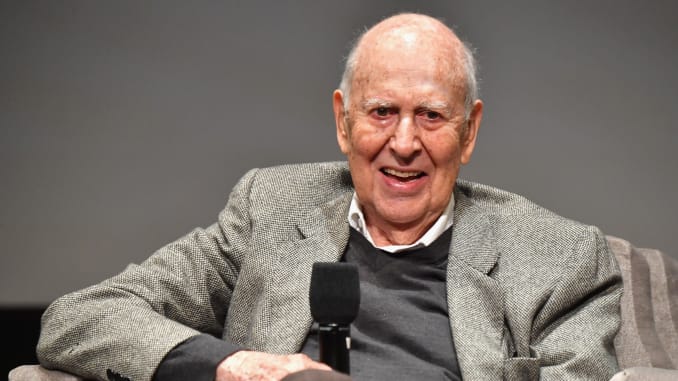
comedy legend Carl Reiner

No one has been more important in the evolution of American comedy than Carl Reiner, who has died at age 98. Reiner was a writer and performer on Sid Caesar’s seminal Your Show of Shows. He created one of the greatest and most influential TV sitcoms, The Dick Van Dyke Show. Reiner was the comedy partner who helped Mel Brooks form his work. And he directed four Steve Martin comedies. Reiner was the third person awarded the Mark Twain Prize for American Humor.

Active to the end, Reiner was playing Saul Bloom in the Ocean’s 11 franchise into his late eighties and voiced Carl Reineroceros in last year’s Toy Story 4. In recent years, he also Tweeted some pointed and wickedly funny anti-Trump video commentaries.

Alan Arkin, Eva Marie Saint and Carl Reiner in THE RUSSIANS ARE COMING! THE RUSSIANS ARE COMING!

Reiner starred in one of my favorite movie comedies – the still timely satire on the Duck and Cover Era, the 1966 The Russians Are Coming! The Russians Are Coming!.  At the height of the Cold War, a Soviet nuclear submarine runs aground and is trapped just off a tiny New England coastal village, and the crew sends a party ashore to heist a boat. The landing party encounters a vacationing American family and the two groups must work together to find a solution to help the sub escape without igniting World War III.

The superb cast includes Carl Reiner, Eva Marie Saint, Jonathan Winters and Alan Arkin in his breakthrough performance. Although it primarily satirizes the paranoia of the Cold War, there are plenty of laughs sparked by small town New England, family dynamics, teen love and the recurring joke of the town drunk with his reluctant horse.

The message that demonizing “Others” leads to no good, especially resonates in this moment of American and human history.

I rewatch The Russians Are Coming! every other year or so, and it still holds up.  Besides showing regularly on Turner Classic Movies, The Russians Are Coming! The Russians Are Coming! is also available streaming from Amazon and Vudu (and on DVD from Netflix).