Movies to See Right Now (at home)

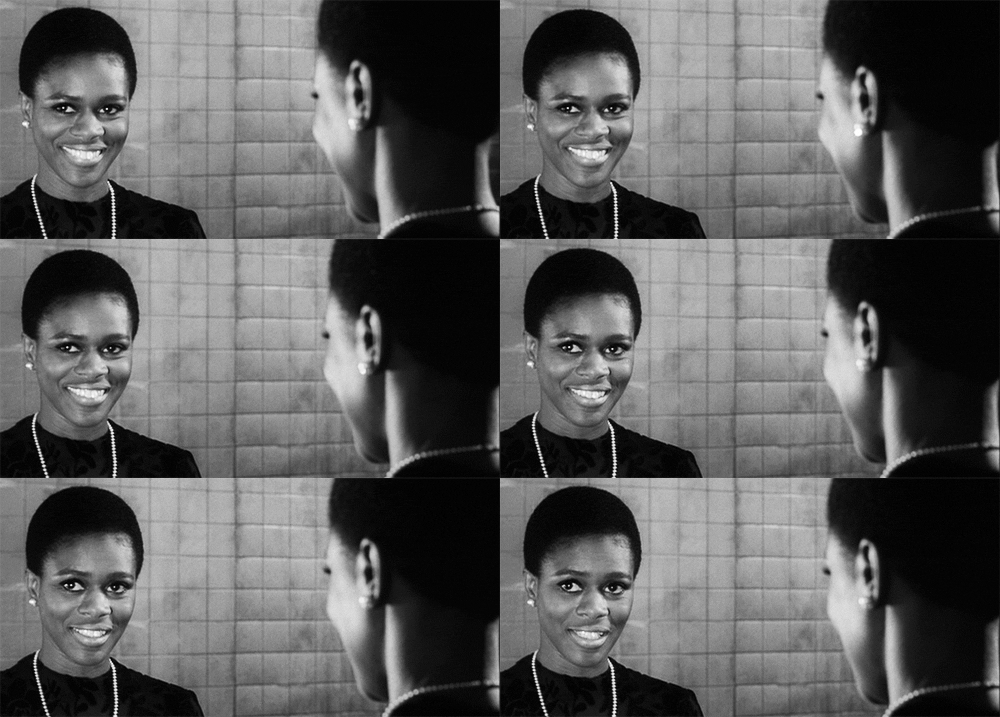
Cicely Tyson in A MAN CALLED ADAM

Cicely Tyson, who has just died at age 96, received her first big screen credit in the film I wrote about yesterday. More on that below, along with an engrossing documentary that is one the year’s best films.

ON VIDEO

MAYOR

Mayor: The camera shadows the intrepid mayor of the Palestinian city of Ramallah as he goes about his daily adventures.  Director David Osit, in just his third feature, has created a masterpiece of cinéma vérité that informs us about human foibles and aspirations, nestled within the Palestinian-Israeli conflict. One of the Best Movies of 2020.  Streaming on Virtual Cinema, including at Laemmle.

And some more current films:

Gil Carrillo in NIGHT STALKER: THE HUNT FOR A SERIAL KILLER

ON TV

On January 31, Turner Classic Movies presents the hard-to-find film A Man Called Adam, which I wrote about in depth yesterday.

Sammy Davis Jr. plays Adam, a self-destructive jazz star. Cicely Tyson, in her first credited movie role, is radiant. A Man Called Adam features an unflinching look at race in America, some excellent jazz and early-career glimpses of Ossie Davis, Lola Falana and Morgan Freeman.
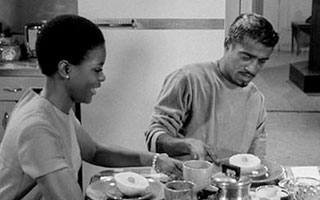
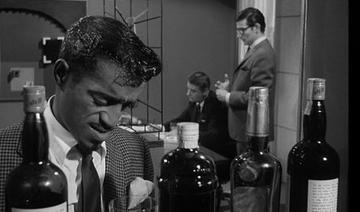
Cicely Tyson and Sammy Davis Jr., in A MAN CALLED ADAM

A MAN CALLED ADAM: all that jazz

Sammy Davis, Jr. in A MAN CALLED ADAM

In the underappreciated 1966 drama, A Man Called Adam, Sammy Davis Jr. plays Adam, a self-destructive jazz star. Adam draws people in with his talent and charisma, and, racked by guilt, pushes away those closest to him with selfish and cruel behavior. You can catch A Man Called Adam on Turner Classic Movies on January 31.

Claudia (Cicely Tyson) is drawn to Adam and tries to save him, anchoring herself in the roller coaster of his life. Remember that, after all the ups and downs, a roller coaster always ends up at the bottom.

Cicely Tyson in A MAN CALLED ADAM

Cicely Tyson, in her first credited movie role, is radiant. Two great speeches, in which she absolutely commands the screen, showcase her talent; you can tell that this is going to be a movie star.

While no Cicely Tyson, Sammy Davis, Jr., is excellent as the protagonist. This shouldn’t be so surprising, given that Sammy was an artistic savant, a dancing genius also known for his crooning. (And Sammy’s Rat Pack pals Frank Sinatra and Dean Martin were good movie actors, too, when they wanted to be.)

I also strongly recommend the insightful documentary Sammy Davis, Jr.: I’ve Gotta Be Me, which reveals Sammy’s struggle to fit into each of the six decades of his entertainment career; it can streamed on Amazon (included with Prime), iTunes, Vudu, YouTube and Google Play.

American race relations figure large in A Man Called Adam. Adam faces hostile racist thugs in the South and experiences “vacationing while black” in the North. This is one of the few films that depicts tension between Northern and Southern Black Americans. We also get to here Adam use the racial slur ofay, a word I had seen in print but never heard anyone use in a spoken sentence.

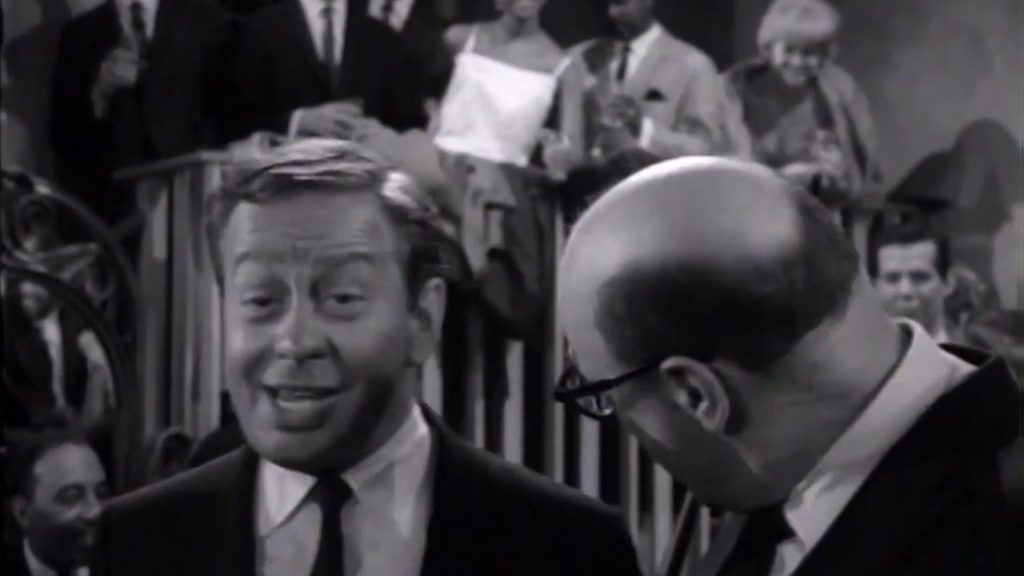
Mel Torme in A MAN CALLED ADAM

The jazz in the movie s good and Sammy looks credible as a musical prodigy. In real life, Sammy was a multi-instrumentalist who did perform with the trumpet. The best musical performance in A Man Called Adam is by Mel Torme, playing himself at an after-hours musicians party.

Rat Packer Peter Lawson plays a powerful gatekeeper of a booking agent; this role, a bitter, simmering guy who is ever ready to explode into a rage, seems written for Rod Steiger, and Lawson is no Steiger. Come to think of it, this is a rare role where Lawford is not asked to be debonair. (And where are those “debonair” roles today for actors like Lawford, David Niven, Charles Boyer or Roger Moore?)

Louis Armstrong plays an old time musician, and he’s really, really good as an actor. Frank Sinatra, Jr., is OK as Adam’s goofy protege. The great Ossie Davis plays the guy who tries to warn Claudia off Adam. Lola Falana appears in her screen debut. An uncredited Morgan Freeman is a party guest – right after the Mel Torme song and before Mel tries to get Adam to play, look for a guy with a cigarette, in conversation along the back wall.

A Man Called Adam was directed by prolific television director Leon Penn in his only big screen credit. Penn (father of actors Sean Penn and Chris Penn) deploys especially inventive camera placements and makes excellent us of use of closeups. From its setting in the jazz world to the portrait of Adam’s relationship carnage, A Man Called Adam is always realistic.

Penn’s direction really elevates this movie, as does Tyson’s performance. I saw A Man Called Adam, a bit of a lost film, on Turner Classic Movies. It’s not streamable, but you can find the DVD on Amazon and eBay.

Cicely Tyson in A MAN CALLED ADAM

MAYOR: potholes and tear gas, all in a day’s work

Musa Hadid in MAYOR

In the engrossing documentary Mayor, the camera shadows a mayor as he goes about his daily duties – and he’s the mayor of the Palestinian city Ramallah.  Director David Osit, in just his third feature, has created a masterpiece of cinéma vérité that informs us about human foibles and aspirations, nestled within the Palestinian-Israeli conflict.

Boy, I enjoyed this movie.  For the last forty years, my day jobs have been in politics and government, especially local government.  Just like every local American elected official, Ramallah Mayor Musa Hadid goes gladhanding among his constituents and hears face-to-face gripes about the equivalent of potholes.

So much of Mayor Hadid’s daily adventures are universal, especially dealing with his own bureaucrats.  He endures a tableful of public servants dithering about whether to name the new fountain at city hall.  He cajoles a hapless staffer to just get him a radio so he can listen to the news. He reams out a manager who ignores a sewage overflow. And, of course, between ribbon cuttings, he is beset by shady contractors.

Ramallah, however, brings its own unique challenges.  Not many mayors have to utter a sentence like “the soldiers are up there shooting at the kids.” At one point, the mayor is tear gassed in his own city hall, as the Israeli army rolls right up to the front windows.

The city has no sewage treatment plant (but there’s a Popeyes).   Palestinian rage simmers just under the surface, as some well-meaning German diplomats find out.  Mayor Hadid respectfully counters a politically correct politico who wants to spurn a visit by Prince William because Britain issued the Balfour Declaration in 1917.

Musa Hadid is a level-headed pragmatist whose calm demeanor can work to belie his strong fundamental principles.  He stiffens to state that you don’t negotiate unless there’s dignity.  Most of the time, however, he is refusing to overreact. 

The situation? It’s happening whether we freak out or not.

Mayor is being described as a dark comedy, which day-to-day local politics anywhere may well be. At one point, Mayor Hadid faces a LITERAL dumpster fire, which is, of course, also metaphorical.

Hadid and his high school- and college-age kids share am appreciation of irony and a robust sense of humor.   After each day filled with indignity, frustration and provocation, they relax with mutual teasing,  Even at city hall, there’s some amusing banter about Ivanka Trump.

Mayor is one of the Best Movies of 2020.  I watched Mayor on Virtual Cinema at Laemmle.

Movies to See Right Now (at home)

This week: a handful of excellent new documentaries explore American history, true crime and pop music.

I also recommend this wonderful NYT interview with Mads Mikkelsen, who really used to be professional dancer (who knew?) and touches on his exhilarating dance scene in Another Round.

ON VIDEO

MLK/FBI: Sam Pollard, the master of the civil rights documentary (Eyes on the Prize), takes on the FBI’s quest to discredit and even destroy Martin Luther King, Jr. MLK/FBI is gripping history, with much to say about American then and America now. Amazon, AppleTV, Vudu, YouTube and Google Play.

Night Stalker: The Hunt for a Serial Killer: This limited series about a roller coaster of a whodunit and a man hunt is elevated by the intoxicating storytelling of a genuinely good guy. Netflix.

The Bee Gees: How Can You Mend a Broken Heart: This very well-sourced showbiz doc tells the story of a band and that of a family, especially from the perspective of the affable Barry Gibb. We see some very young kids with what seems like ridiculously audacious ambition becoming an Aussie version of a British Invasion success. As pop music evolves, they keep reinventing themselves until the Saturday Night Fever soundtrack takes them to unsurpassed heights. Then, when the Disco Sucks movement caught fire, the brothers again reinvented themselves as songwriters for other pop, rock, soul and country stars. It’s a bit reverential, but not fatally so. HBO.

Mads Mikkelsen in ANOTHER ROUND

And some more current films:

ON TV

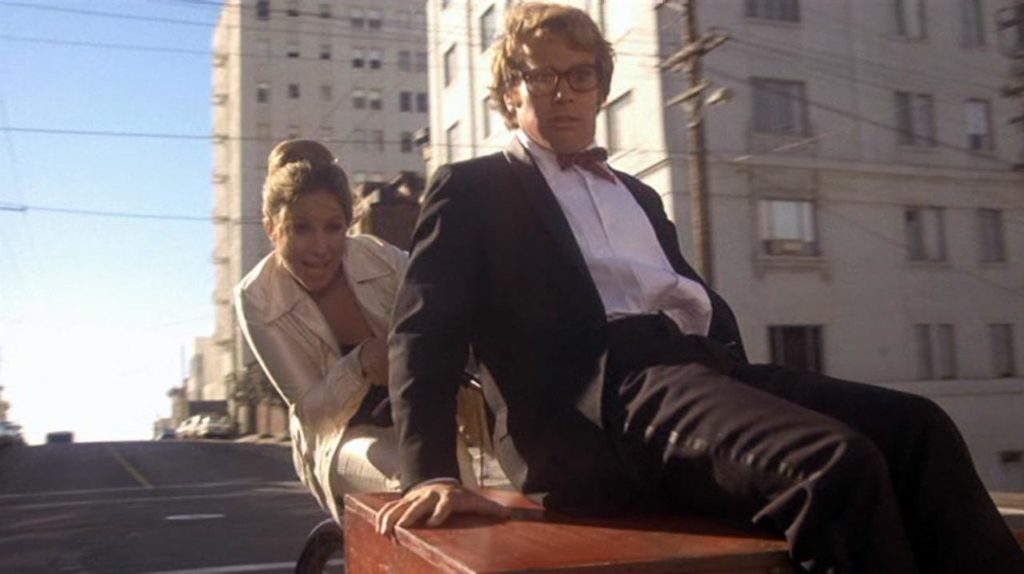
On January 24, Turner Classic Movies will offer the delightful Peter Bogdanovich screwball comedy What’s Up, Doc? The nerdy academic Howard (Ryan O’Neal) and his continually aggrieved fiance Eunice (Madeline Kahn) travel to San Francisco to compete for a career-launching grant. The luggage with Howard’s great discovery (musical rocks) is mixed up with two identical suitcases, one containing valuable jewelry, the other with spy secrets, and soon we have juggling MacGuffins.

That’s all funny enough, but Howard bumps into Judy (Barbra Streisand), the kookiest serial college dropout in America, who determines that she must have him and utterly disrupts his life. Our hero’s ruthless rival for the grant is hilariously played by Kenneth Mars (the Nazi playwright in The Producers). Austin Pendleton is wonderful as the would-be benefactor.

The EXTENDED closing chase scene is among the very funniest in movie history – right up there with the best of Buster Keaton; Streisand and O’Neal lead an ever-growing cavalcade of pursuers through the hills of San Francisco, at one point crashing the Chinese New Year’s Day parade. I love What’s Up, Doc? and own the DVD, and I watch every time I stumble across it on TV. Bogdanovich’s hero Howard Hawks, the master of the screwball comedy, would have been proud.

WHAT’S UP, DOC?

NIGHT STALKER: THE HUNT FOR SERIAL KILLER: a good man tracks down evil

Gil Carrillo in NIGHT STALKER: THE HUNT FOR A SERIAL KILLER

The true crime limited series Night Stalker: The Hunt for a Serial Killer tells a story of a public justifiably terrorized by profound evil, but it is elevated by one genuinely good guy.

In a five-and-a-half month 1985 crime spree, the serial killer nicknamed the Night Stalker inflicted unspeakable atrocities, mostly in a swath of Los Angeles. There were at least 14 murders, along with rapes and child rapes, brutal beatings and mutilations – enough carnage to ultimately to earn him 19 death sentences. And, to make it all even more sensational, he embraced Satanist symbology.

This was not a serial killer case to be solved by a profiler. The victims were of different ages, genders and races; his weapons of choice and his horrific acts all varied. There was no pattern to the crimes except that they were all nighttime home invasions.

Instead, it was a case for two dogged detectives, armed only with a single shoe print, trying to piece together more physical evidence. Frank Salerno, was the seasoned star detective of the LA Sheriff’s department, a local celebrity for cracking the notorious Hillside Strangler case. His partner was a fresh young cop who had just made detective, Gil Carrillo, underestimated by everyone except Salerno.

The whodunit and the man hunt make for a great story. It’s a roller coaster, with at least two breathtakingly squandered opportunities and a huge gaffe by, of all people, Dianne Feinstein,

Night Stalker: The Hunt for a Serial Killer is graced by the the testimony of survivors, victims, journalists and witnesses who encountered the Night Stalker face-to-face.

But the man reason I recommend Night Stalker: The Hunt for a Serial Killer is Gil Carrillo, who is an intoxicating story teller. As professional detectives can be, Carrillo is a disciplined observer who has the gift of narrative, whether in a bar or in a courtroom. He also wears his salt-of-the-earthness on his sleeve. I’m sure that Carrillo can be as terse as any cop on the street, but he lowers his guard here, and lets his humanity flow. The good guy, Carrillo, not the evil guy, is the real star of this movie.

And now a creepy possible connection with The Movie Gourmet. Many of my acquaintances have heard my “rats in the toilet” story from 1983-84, an episode that culminated when a city crew eradicated a colony of sewer rats from the sewer main under South 16th Street in San Jose. I later learned that, at the time, the Night Stalker himself was working as a San Jose sewer worker.

Night Stalker: The Hunt for a Serial Killer is streaming on Netflix.

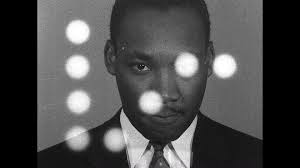
MLK/FBI: about America then and about America today

MLK/FBI. Photo courtesy of IFC Films.

In MLK/FBI, Sam Pollard, the master of the civil rights documentary (Eyes on the Prize), takes on the FBI’s quest to discredit and even destroy Martin Luther King, Jr. Over many years, J. Edgar Hoover’s FBI targeted King with wiretaps, bugs, surveillance and informers. The FBI built a trove of audio tapes of King having extramarital sex; these tapes are now in the National Archives and will be released publicly in 2027. The tapes themselves are not included in MLK/FBI, but the film reveals the many secret FBI memos that discuss them.

Pollard bookends MLK/FBI with historians considering the questions of how we should process the behavior on the tapes and how we should face the actual tapes when they are released six years from now.

MLK/FBI documents the moment that Hoover and his top lieutenant William Sullivan became obsessed with King – and the moment they tried to force him into suicide. From their perspective, if King’s movement wanted to upend the racial inequities that included legal segregation, then of COURSE he must be an anti-American subversives. They started by red-baiting King for associating with communists, and then moved to focus on sexual behavior.

MLK/FBI reminds us who we were back in the 1960s. King had not yet been martyred and many in the mainstream shared Hoover’s discomfort with racial progress and his driving fear of communism. When MLK and Hoover had a public spat, the polling documented 50% of the American public siding with Hoover and under 20% with King.

While today, a male public figure would likely not be ruined by consensual heterosexual sex outside of marriage, that was not the case in the 1960s. Then it was still controversial about whether a divorced person – or even someone married to a previously divorced person – should be elected to high office.

And MLK/FBI says a lot about our society today. Although this salacious material was leaked to many journalists in the 1960s, none actually made it public. I find this particularly sobering, because today there is no way that the temptation to generate clicks, likes retweets and ratings would have been resisted – it would have gone viral, as we now say, probably with history-changing consequences.

MLK/FBI can be streamed from Amazon, AppleTV, Vudu, YouTube and Google Play.

Movies to See Right Now (at home)

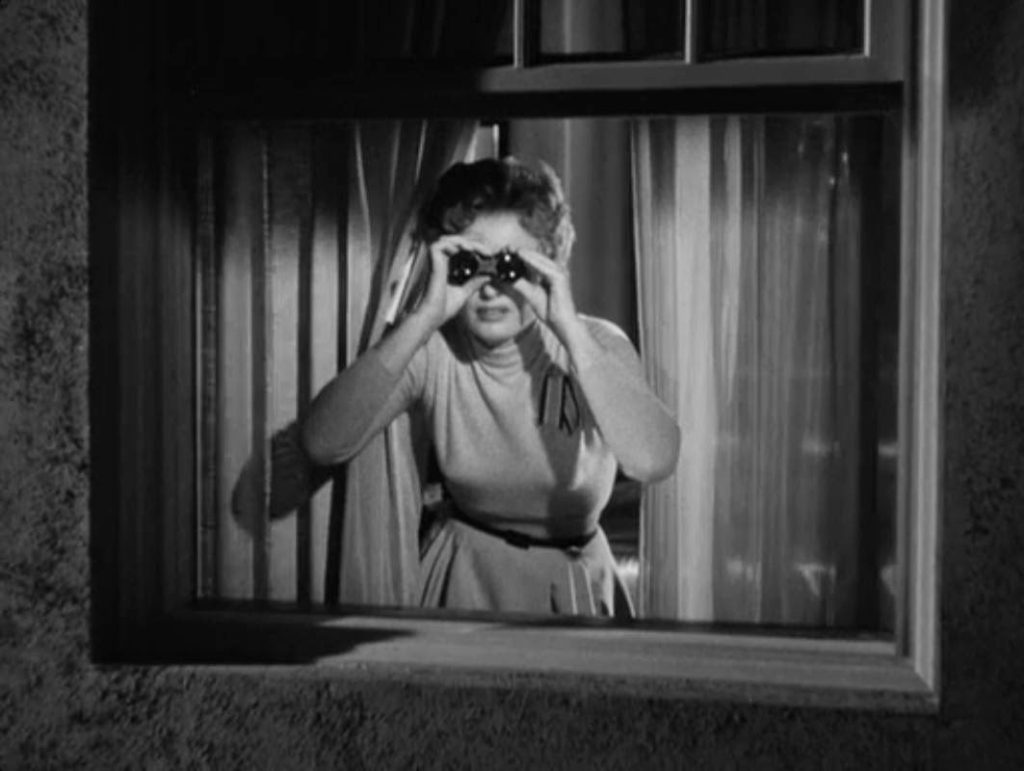
Barbara Stanwyck in WITNESS TO MURDER

This week: a hard-to-find suspense classic on TV and a disappointing romcom.

Here’s my remembrance of the late director Michael Apted, whose 9 Seven Up movies constitute the greatest documentary series in the history of cinema. Got to see him in person at the 2019 Mill Valley Film Festival.

ON VIDEO

I was disappointed in Sofia Coppola’s inoffensive but tired romantic comedy On the Rocks, a waste of Coppola’s talent and Bill Murray’s. I’ve often said that I could watch Bill Murray read the phone book, but this IS like Bill Murray reading the phone book. AppleTV.

And some more current films:

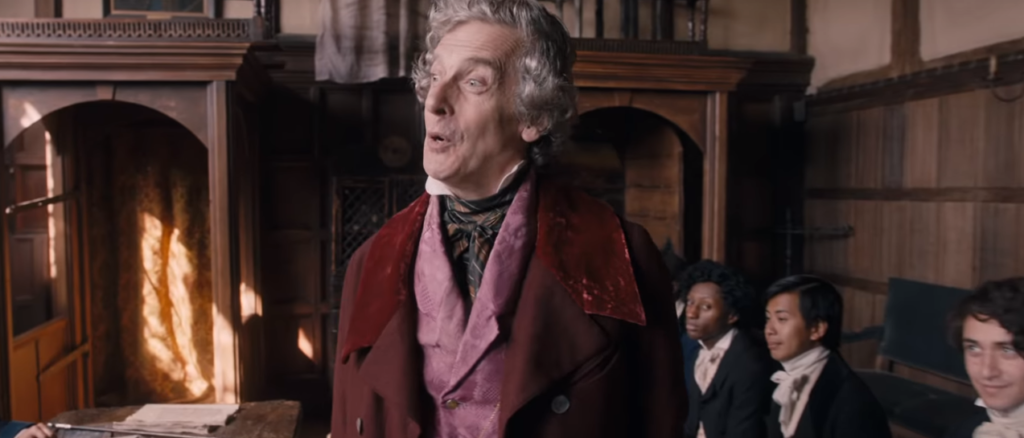
Peter Capaldi in THE PERSONAL HISTORY OF DAVID COPPERFIELD

ON TV

Don’t miss the gripping and hard-to-find Witness to Murder, which I wrote about in depth yesterday, on Turner Classic Movies tomorrow night and Sunday morning.

And on January 18, TCM airs Pedro Almodovar’s 1988 Women on the Verge of a Nervous Breakdown, eighty-eight minutes of non-stop hilarity. Women on the Verge is not as profound as Almodovar’s later work, but it is a masterpiece of madcap comedy.

Carmen Maura plays Pepa, a voice-over actress who has been dumped by her voice-over actor boyfriend, Ivan.  Pepa has a gal pal who has discovered that her new squeeze is a Shiite terrorist.   Ivan has a lunatic wife (who is armed and bewigged), a bespectacled son (a very young Antonio Banderas) and a new feminist attorney girlfriend.   Everyone converges in Pepa’s apartment, on the streets of Madrid and on the way to a flight to Stockholm.  Along the way, there is a mambo-loving Mad Hatter of a cabbie and some barbiturate-spiked gazpacho.  Comic mayhem ensues.

Almodovar had made several outrageously raucous movies before, but Women on the Verge was the art house hit that first brought him to the attention of American audiences.  Today he is one of our very best film makers.  His Talk To Her (2002), Bad Education (2004) and Broken Embraces (2009) each made the top four on my lists of the years’ best films.

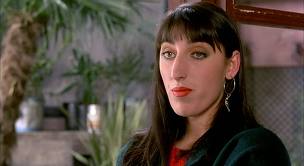
Actress Rossy de Palma, a very good sport in a key supporting role, sports one of the greatest noses in cinema.

Rossy De Palma in WOMEN ON THE VERGE OF A NERVOUS BREAKDOWN

coming on TV: WITNESS TO MURDER

Barbara Stanwyck in WITNESS TO MURDER

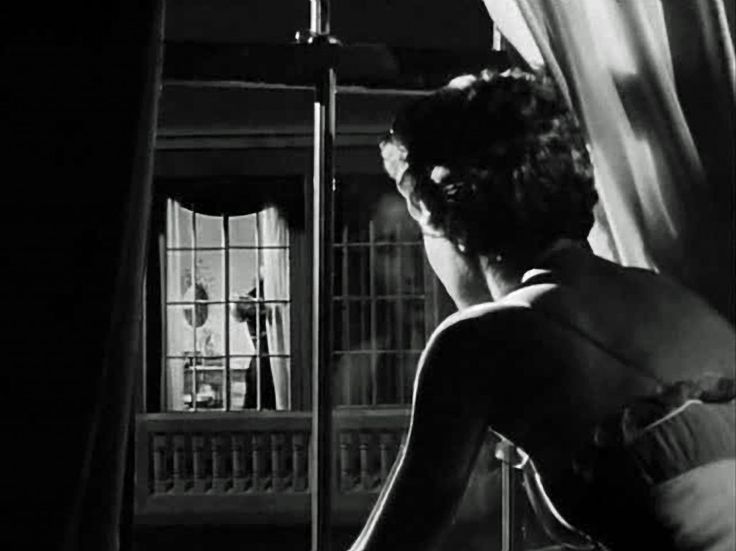
On January 16 and 17, Turner Classic Movies is airing the gripping and hard-to-find Witness to Murder. Richter (George Sanders) and Cheryl (Barbara Stanwyck) live in neighboring apartments. Cheryl believes she has seen Richter murder someone, but Richter’s clever and ruthless duplicity makes it appear that Cheryl is just crazy. Will Police Lt. Larry Mathews (Gary Merrill) believe her before Richter can make Cheryl his second victim?

What a wowzer first scene! Witness to Murder opens with a gripping scene that economically sets up the plot. “Operator, get me the police! Hurry!” We know immediately and certainly that Richter really committed the murder and that Cheryl really saw it. Throughout the movie, the audience knows this and Richter knows this, but no one else does, and neither does Cheryl herself during segments of the story.

Cheryl reports the murder and the police (Larry Mathews and sidekick) respond. However, Richter has concealed the crime so well that cops can’t find any evidence that a crime occurred. Could Cheryl have been mistaken? Or dreamed it? or made it up? or hallucinated? Is she neurotic and mildly hysteric or is she psychotic and delusional?

Larry develops an immediate attraction to Cheryl, and, despite her apparent emotional instability, begins a courtship.

Richter (malevolently) and Larry (paternalistically) begin gaslighting Cheryl, trying to convince her that she really only imagined what she saw – trying to convince her that what seemed so real, was not. Cheryl starts doubting herself.

Of course, Richter knows that he committed the murder, and he knows that Cheryl knows. To get her out of the way, he schemes to have her seen as crazed stalker. His scheme drives her to an outburst that serves as a pretext for locking her up in a psychiatric facility (with an interview by an oddly brusque shrink). Richter’s attempts to murder Cheryl continue right into Witness to Murder’s Perils-of-Pauline ending.

See my complete post on Witness to Murder, for more on the filmmakers and supporting cast. It’s one of my Overlooked Noir.

On this weekend’s TCM broadcast of Witness to Murder, film historian Eddie Muller – the Czar of Noir – will provide his always insightful intro and outro. Witness to Murder is not available to stream; I own the DVD. Be sure to DVR it when it airs on Turner Classic Movies.

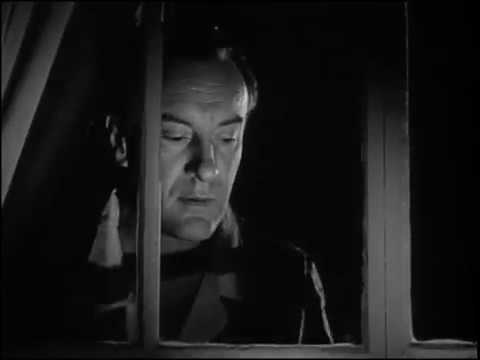
George Sanders in WITNESS TO MURDER

ON THE ROCKS: waste of talent

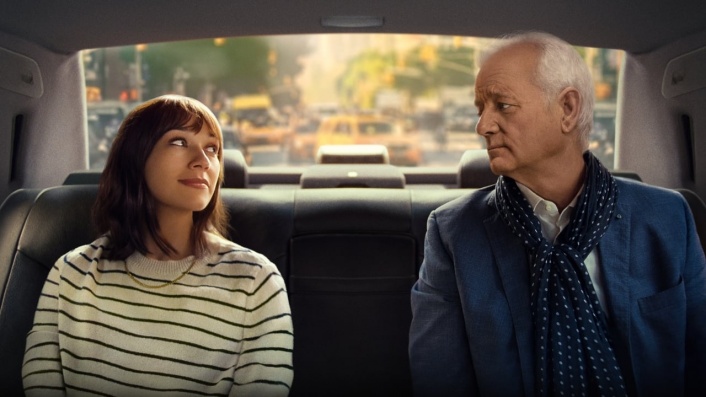
Rashida Jones and Bill Murray in ON THE ROCKS

The inoffensive but unsatisfying On the Rocks, which can technically be described as a romantic comedy, wastes of the talents of Sofia Coppola, Bill Murry and Rashida Jones.

Laura (Rashida Jones) suspects that her husband Dean (Marlon Wayans), the striving CEO of a startup, is cheating on her. Her father Felix (Bill Murray), a worldly art dealer and serial womanizer, encourages her to stalk Dean, and propels them into increasingly crazy dad-daughter escapades.

The problem is that the suspicious wife plot is so tired that not even the considerable talents of Murray and Jones can make it sparkle. From Shakespeare through Howard Hawks to I Love Lucy, we’ve seen comedies based on mistaken perceptions, so we should expect SOME new element or nuance. This is, after all, from the writer-director of The Virgin Suicides and Lost in Translation. The dad-daughter issues in On the Rocks just aren’t enough.

I did enjoy the character of Felix, for whom wordly is a gross understatement. Completely at home with the billionaire class, he also knows every cop, concierge and maître d’, and glides smoothly among all of them with charm and craftiness. He also can’t resist hitting on anybody without a visible Adam’s apple.

Murray is winning as Felix, but he can’t elevate the predictable screenplay. As we watched On the Rocks, I said to The Wife, “I’ve always said that I could watch Blil Murray reading the phone book, but this IS Bill Murray reading the phone book.

On the Rocks is streaming on AppleTV.

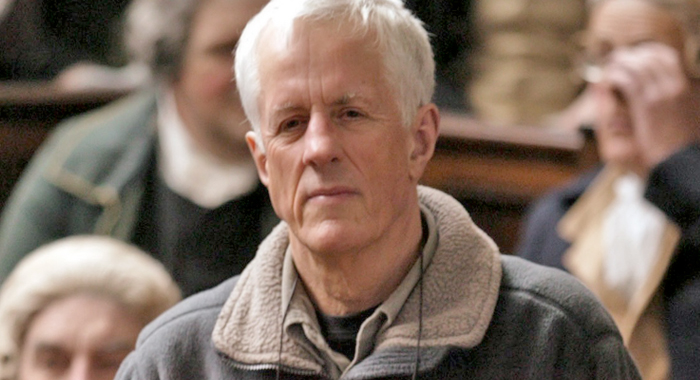
Michael Apted: pioneering the exposure of privilege

Michael Apted. Photo credit: First Run Features courtesy Everett Collection.

The director Michel Apted has died at age 79, leaving us with one of the most significant documentary series in cinema history (and on my list of Greatest Movies of All Time). Apted’s 7 Up series explicitly documented the impacts of societal privilege and evolved into a holistic observation of humanity.

Each of the nine films followed the same fourteen British children, filming snapshots of their lives at ages 7, 14, 21, 28, 35, 42, 49, 56 and 63. Choosing kids from different backgrounds, the series started as a critique of the British class system, but has since moved into a broader exploration of what factors can lead to success and happiness at different stages of human life.

Apted was the hands-on researcher, not the director, on Seven Up! and then directed the next eight films in the series. Apted was a big time movie director (Coal Miner’s Daughter, Gorillas in the Mist).  It is remarkable that he returned so faithfully to his subjects in the Up series. 

Because Apted included clips from earlier films to set the stage for each character, you don’t need to watch all nine movies.  The earlier films are difficult, perhaps impossible, to find streaming, but the entire series (Seven Up!, Seven Plus Seven, 21 Up, 28 Up, 35 Up, 42 Up, 49 Up, 56 Up) has been available on Netflix DVDs (for anyone that still subscribes). 42 Up, one the most powerful films in the series, is available to stream from Amazon, AppleTV, Vudu, YouTube and Google Play. 56 Up can be streamed from AppleTV, Hoopla and kanopy.

I saw 63 Up in 2019 at the Mill Valley Film Festival, with Apted in attendance. Apted was then 78, and hoped to direct 70 Up if he still had mental acuity. Apted acknowledged that his biggest mistake was not including enough girls at the outset (four girls out of fourteen kids); he tried to address this in the later films by expanding the roles of several female partners of the male subjects.

To give you a feel for Michael Apted’s body of work, here’s the trailer for 63 Up.