RADIO DREAMS – stranger in a strange and funny land

RADIO DREAMS

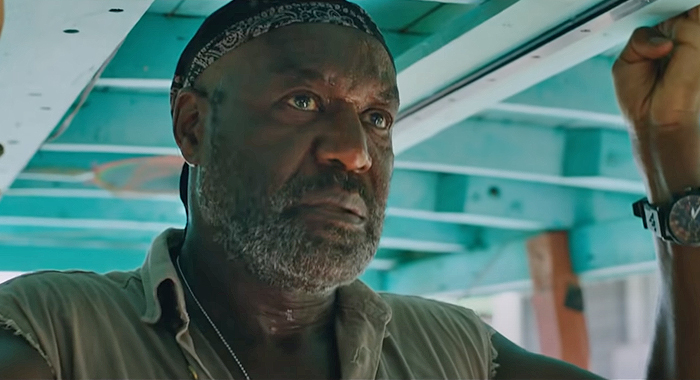
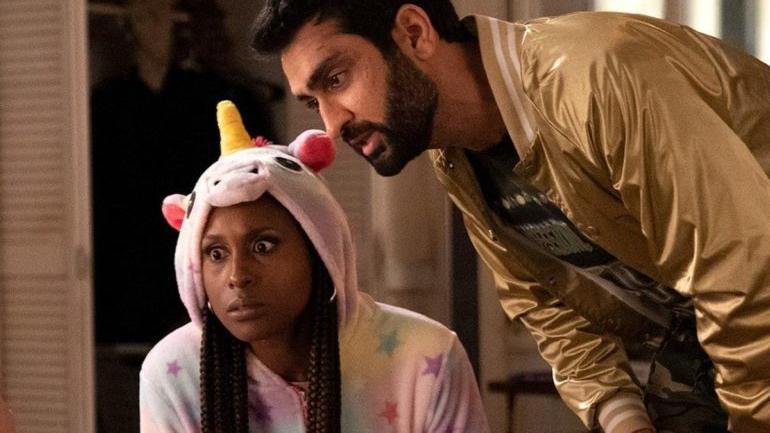
The droll dark comedy Radio Dreams explores the ambivalence of the immigrant experience through the portrait of a flamboyant misfit, a man who rides the roller coaster of megalomania and despair. That misfit is Hamid Royani (Mohsen Namjoo), the director of programming at an Iranian radio station in the San Francisco Bay Area.

Hamid, an author in Iran, is a man of great certainty, with an unwavering sense of intellectual superiority He assumes that everyone should – and will – buy in to his idiosyncratic taste. This results in extremely random radio programming, and Hamid tries to sabotage everything that he finds vulgar (which is everything that might bring more listeners and revenue to the station.)

With his wild mane and indulgent programming, we first think that Hamid is simply batty. But immigrants to the US generally forge new identities, and we come to understand that Hamid has not, perhaps will not, forge that new identity. His despair is real but it’s hard to empathize with – he might be a legitimate literary figure in Iran, but he’s probably a pompous ass over there, too.

The highlight of Radio Dreams is Hamid’s reaction when he is surprised that Miss Iran USA, whom he has dismissed as a bimbo, might have literary chops that rivaling his.

Hamid has concocted a plan to have Afghanistan’s first rock band visit with the members of Metallica on air, and that’s the movie’s MacGuffin. As we wait to see if Metallica will really show up, the foibles of the radio station crew dot Radio Dreams with moments of absurdity. There are the cheesy commercials about unwanted body hair, Hamid’s obsession with hand sanitizer, a radio jungle played live on keyboards EVERY time, a new employee orientation that focuses on international time zones, along with a station intern compelled to take wrestling lessons.

Writer-director Babak Jalali is an adept storyteller. As the movie opens, we are wondering, why do these guys have musical instruments? Why are they talking about Metallica? What’s with the ON AIR sign? Much of the movie unfolds before Hamid Royani emerges as the centerpiece character.

Hamid is played by the well-known Iranian singer-songwriter Mohsen Namjoo, “Iran’s Bob Dylan”. This is only Namjoo’s second feature film as an actor. He’s a compelling figure, and this is a very fine performance.

Except for Namjoo, the cast is made up of Bay Area actors. Masters of the implacable and the stone face, all of the actors do deadpan really, really well.

As befits the mix of reality and absurdism, here’s a podcast by the characters in Radio Dreams. I saw Radio Dreams at the Cinema Club Silicon Valley, and Babak Jalali took Q&A after the screening by phone from Belgium. Radio Dreams is available to stream from Amazon, iTunes and kanopy.

THE DARK HORSE: cynical politics from 88 years ago

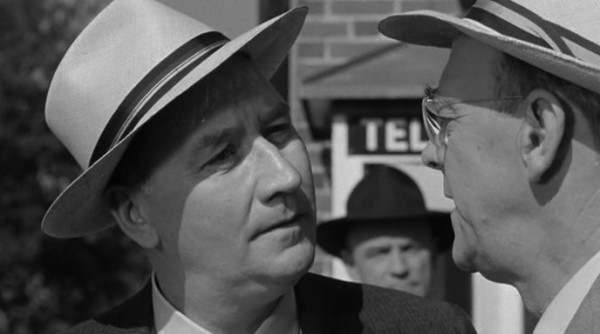
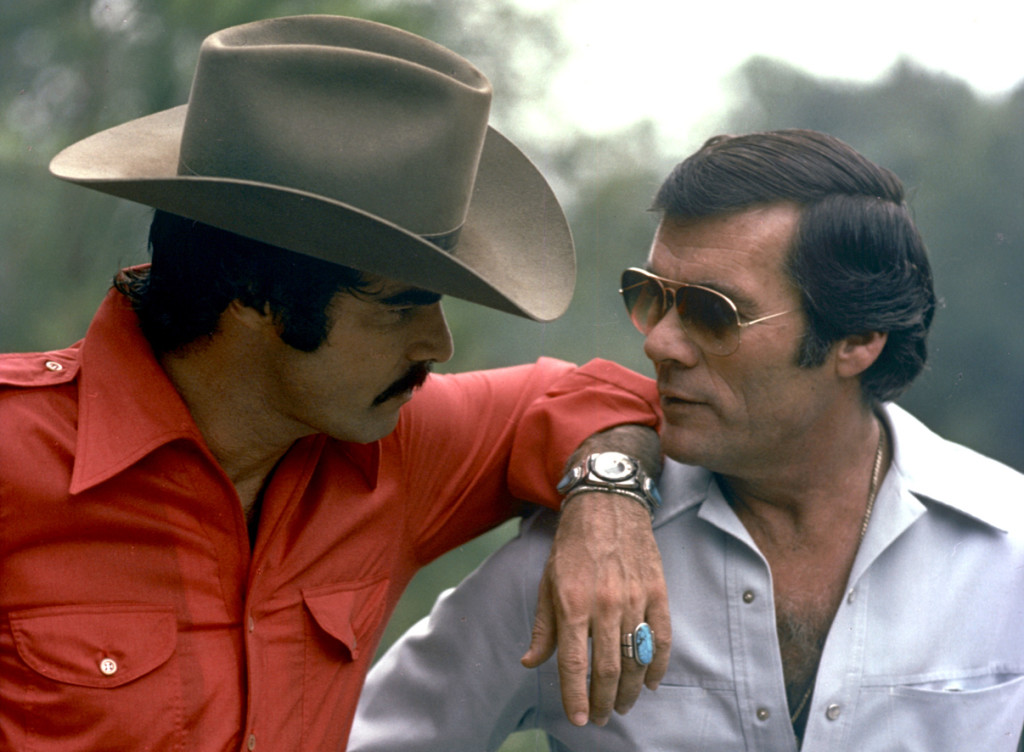
Guy Kibbee and Warren William in THE DARK HORSE

On April 23, Turner Classic Movies plays the great political comedy The Dark Horse (1932).  If you think that political handlers, dumb candidates, spin and sex scandals are creations of contemporary politics, you need to see this gem from 88 years ago.  A political party resolves its convention stalemate by nominating an obscure party regular (the gleefully dim Guy Kibbee) as its gubernatorial candidate.  It happens that the dark horse is not merely a cipher, but is a vacuous buffoon who is challenged by the task of removing his own shoes.  His own campaign manager describes him thus:

He’s the dumbest human being I ever saw. Every time he opens his mouth he subtracts from the sum total of human knowledge.

That equally ruthless and amoral campaign manager, brilliantly played by Warren William (the “King of Pre-Code”), presages modern political handlers with his skill, cynicism and shameless insincerity. He teaches his dimwitted candidate to answer every question with “Yes…and, then again, no.”  William’s campaign manager is such a scoundrel that he must first get sprung from jail (by Bette Davis in one of her very first movie roles).  There’s spin, staged photo opportunities and even crisis management, when the candidate is about to blunder into a potentially campaign killer of a sex scandal.  And it’s still very, very funny today.

Here’s a sample:

Movies to Watch Right Now (at home)

THE WHISTLERS

Yet more movies to watch at home, still topped by the excellent crime thriller The Whistlers.

ON VIDEO

In the absorbing crime thriller The Whistlers, a shady cop and a mysterious woman are walking a tightrope of treachery. The Whistlers was a hit at last year’s Cannes Film Festival, but COVID-19 impaired its 2020 theatrical release in the US. You can stream it from Amazon, Vudu, YouTube and Google Play.

Because the San Francisco International Film Festival (SFFILM) was supposed to be underway now (it’s been cancelled for the COVID-19 emergency), here’s a film from SFFILM’s 2017 program: The Lost City of Z revives the genre of the historical adventure epic, with all the spectacle of a swashbuckler, while braiding in modern sensitivities and a psychological portrait. This is a beautiful and thoughtful film. The Lost City of Z is available on DVD from Netflix and Redbox and to stream from Amazon, iTunes, Vudu, YouTube and Google Play.

Other recent streaming recommendations:

ON TV

Burt Lancaster and Kirk Douglas in Seven Days in May

I’m suggesting Mr President, there’s a military plot to take over the Government of these United States, next Sunday…

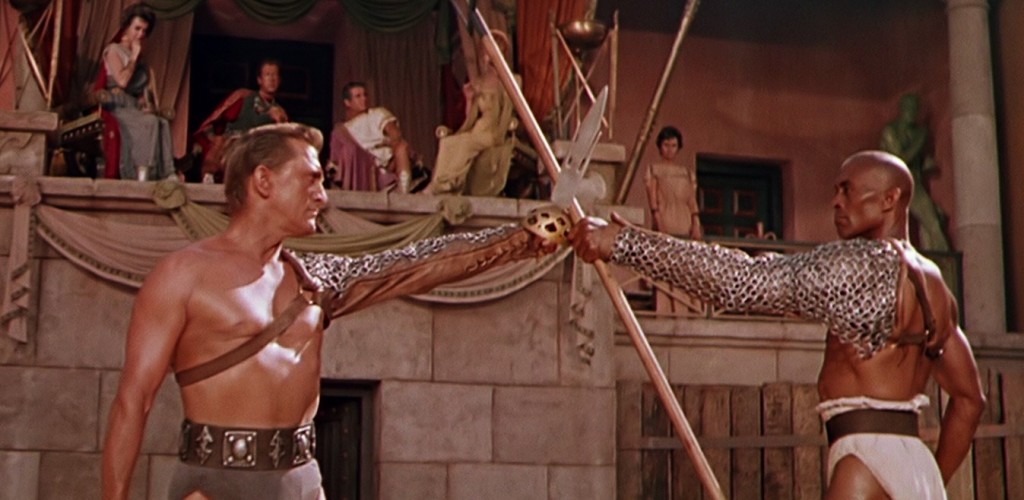
John Frankenheimer (The Manchurian Candidate) is a master of the thriller, and his 1964 Seven Days in May is a masterpiece of the paranoid political thriller subgenre.  Edmond O’Brien’s performance is best among outstanding turns by Kirk Douglas, Burt Lancaster, Frederic March and Whit Bissell.  Douglas showed his range by playing a profoundly decent man, for whom “patriotic” meant “devoted, dutiful and loyal to the nation’s principles”, not “jingoistic”. April 23 on Turner Classic Movie.

Kirk Douglas in SEVEN DAYS IN MAY

From SFFILM: THE LOST CITY OF Z – the historical adventure epic revived

Charlie Hunnam in THE LOST CITY OF Z photo courtesy of SFFILM

Because the San Francisco International Film Festival (SFFILM) was supposed to be underway now (it’s been cancelled for the COVID-19 emergency), here’s a film from SFFILM’s 2017 program. In auteur James Gray’s sweeping turn of the 20th Century epic The Lost City of Z, a stiff-upper-lip type British military officer becomes the first European to probe into the deepest heart of unmapped Amazonia. Finding his way through the lush jungles, braving encounters with sometimes cannibalistic indigenous warriors, he becomes obsessed with finding the lost city of an ancient civilization. I know this sounds like Indiana Jones, but it’s based on the real life of Percy Fawcett as chronicled in the recent book Lost City of Z by David Grann.

The Lost City of Z begins with an Edwardian stag hunt through the verdant Irish countryside, complete with horses spilling riders. This scene is gorgeous, but its point is to introduce the young British military officer Percy Fawcett (Charlie Hunnam) as a man of unusual resourcefulness, talent and, above all, drive. Despite his abilities, he has been chaffing at the unattractive assignments that have precluded his career advancement. In the snobby Edwardian military, he has been in disfavor because his dissolute father had stained the family name. One of Fawcett’s commanders says, “He’s been rather unfortunate in his choice of ancestors”.

That yearning to earn the recognition that he believes he merits – and to attain the accomplishments of a Great Man – is the core of this character-driven movie. Fawcett resists yet another assignment away from the career-making action, a mapping expedition designed to have a minor diplomatic payoff. But it takes him on a spectacular Amazon exploration that brings him celebrity – and backing for more high-profile expeditions. Fawcett was surfing the zeitgeist in the age of his contemporaries Roald Amundsen (South Pole), Robert Peary (North Pole) and Howard Carter (King Tut).

In that first expedition, Fawcett becomes convinced that he can find the magnificent city of a lost civilization deep in the Amazon, a city he calls Z (which is pronounced as the British “Zed”). The Lost City of Z takes us through two more Amazonian expeditions, sandwiched around Fawcett’s WW I service in the hellish Battle of the Somme. That final expedition ends mysteriously – and not well.

No one knows for sure what happened to Fawcett. In The Lost City of Z, Gray leads us toward the most likely conclusion, the one embraced by Grann’s book. If you’re interested in the decades of speculation about Fawcett’s fate, there’s a good outline on Percy Fawcett’s Wikipedia page.

Fawcett comes with his own Victorian upper class prejudices, but he has the capacity to set those aside for a post-Darwin open-mindedness. Gray made it a point that the indigenous peoples in the movie are independent of Fawcett; Gray shows them living their lives in a world that Fawcett has found, not just advancing the plot points in Fawcett’s quest. Four real tribes – and their cultures – are shown in the film.

As Percy Fawcett, with his oft-manic obsession and fame-seeking that color his scientific curiosity and his old-fashioned Dudley Do-Right values, Charlie Hunnam gives a tremendous, perhaps carer breakthrough, performance. He’s been a promising actor in Sons of Anarchy and the overlooked thriller Deadfall) (and such a good actor that I never dreamed that he’s really British). Hunnam will next star as the title character in the King Arthur movie franchise.

Robert Pattinson is unexpectedly perfect as Fawcett’s travel buddy Henry Costin. With his Twilight dreaminess hidden behind a Smith Brothers beard, Pattinson projects a lean manliness. It’s probably his best performance.

Sienna Miller shines as Fawcett’s proto-feminist wife Nina. I first noticed Miller (and Daniel Craig) in the underrated neo-noir thriller 2004 Layer Cake. Now Miller is still only 35 years old and has delivered other fine recent performances in Foxcatcher, American Sniper and (in an especially delicious role) High-Rise.

Director James Gray (The Yard, Two Lovers, The Immigrant) is a favorite of cinephiles and of other filmmakers, but regular audiences don’t turn out for his movies. That may change with The Lost City of Z, a remarkably beautiful film that Gray shot, bucking the trend to digital, in 35 mm. The jungle scenes were filmed in a national park in Columbia. The cinemeatographer is the Oscar-nominated Darius Khondji. Khondji shot The Immigrant for Gray and has been the DP of choice for David Fincher (Se7en) Alan Parker (Evita), Michael Haneke (Amour), and Woody Allen (Midnight in Paris). Along with the stag hunt and the voyages up and down the jungle rivers, there is also a breathtakingly beautiful ballroom scene and a gaspingly surreal nighttime discovery of a rubber plantation’s opera house deep in the jungle.

There have been other Lost Expedition movies, most famously Werner Herzog’s Aquirre, the Wrath of God and Fitzcarraldo. The Lost City of Z shares an obsession, a quest and a mysterious tragic end with those films, but it stands apart with its exploration of the motivation of a real life character and the authenticity of Gray’s depiction of the indigenous people.

Movie studios used to make an entire genre of very fun movies from Gunga Din and The Four Feathers through Lawrence of Arabia and Zulu that featured white Europeans getting their thrills in exotic third world playgrounds. We often cringe at the racist premises and the treatment of “the natives” those movies today. Since the 1960s, the best examples of the genre, like Raiders of the Lost Ark, have had an ironic tinge. With The Lost City of Z, James Gray loses both the racism and the irony, and brings us brings a straight-ahead exploration tale.

The Lost City of Z revives the genre of the historical adventure epic, with all the spectacle of a swashbuckler, while braiding in modern sensitivities and a psychological portrait. This is a beautiful and thoughtful film. The Lost City of Z is available on DVD from Netflix and Redbox and to stream from Amazon, iTunes, Vudu, YouTube and Google Play.

Also see my notes from the director James Gray’s Q & A at the San Francisco International Film Festival. [And here are some completely random tidbits. There’s a cameo by Spaghetti Western star Franco Nero. And the closing credits recognize the “data wrangler”.]

Movies to See Right Now (at home)

Catrinel Marlon and Vlad Ivanov in THE WHISTLERS

More movies to watch at home: I’ve amped up my streaming recommendations as we shelter in place. And we start with a new film, The Whistlers.

ON VIDEO

In the absorbing crime thriller The Whistlers, a shady cop and a mysterious woman are walking a tightrope of treachery. The Whistlers, was a hit at last year’s Cannes Film Festival, but COVID-19 impaired its 2020 theatrical release in the US. You can stream it from Amazon, Vudu, YouTube and Google Play.

My tribute to the San Francisco International Film Festival (SFFILM), which would have been underway but for COVID-19, is Rojo. Set just before Argentina’s bloody coup in the 1970s, this moody, atmospheric film works as a slow-burn thriller. Rojo made my list of 10 Overlooked Movies of 2019. Stream it from Amazon, iTunes and Vudu.

Be Natural: The Untold Story of Alice Guy-Blache is a biodoc of a female cinema pioneer – one of the first directors, producers and studio heads – in both France and the US. You don’t know the whole story of the beginnings of cinema if you don’t know about Alice Guy. It’s currently free on WATCH TCM and can be streamed from Amazon, iTunes, Vudu, YouTube and Google Play. You can watch Guy’s comic 1906 critique of male behavior, The Consequences of Feminism, on my blog post.

Evelyn Keyes in THE KILLER THAT STALKED NEW YORK

And is it too soon for Pandemic Noir? My post highlights Panic in the Streets and The Killer that Stalked New York. The Killer That Stalked New York has played on Turner Classic Movies; it’s not currently available to stream, but the DVD is available to purchase. The better movie, Panic in the Streets, plays frequently on Turner Classic Movies and can be streamed from iTunes, Vudu, YouTube and Google Play.

Other recent streaming recommendations:

ON TV

On April 11 and 12, Turner Classic Movies brings us Beyond a Reasonable Doubt, another film noir from the great Fritz Lang. Seeking to discredit capital punishment, a novelist (Dana Andrews) gets himself charged with and CONVICTED of a murder – but then the evidence of his innocence suddenly disappears! Crackerjack (and deeply noir) surprise ending. Film noir historian Eddie Muller will introduce the film.

Dana Andrews and Joan Fontaine in BEYOND A REASONABLE DOUBT

REMEMBRANCE

Character actor Allen Garfield contributed to many fine films, especially in the 1970s heyday of American auteurs, including The Candidate, The Brink’s Job, Nashville and The Stunt Man. My favorite Garfield performance was as the sleazy Bernie in the 1974 masterpiece The Conversation.

Allen Garfield in THE CONVERSATION

From SFFILM: ROJO – bobbing in a sea of moral relativism

Benjamin Naishtat’s ROJO. Courtesy of SFFILM.

The San Francisco International Film Festival (SFFILM) was set to open tomorrow before it was cancelled for the COVID-19 emergency, so in tribute, here’s a film from SFFILM’s 2019 program.

Rojo is Argentine writer-director Benjamín Naishtat’s slow burn drama.  Rojo is set just before the 1970s coup that some characters expect – but no one is anticipating how long and bloody the coup will be.  Several vignettes are woven together into a tapestry of pre-coup moral malaise.

A prominent provincial lawyer Claudio (Darío Grandinetti) is invited to participate in a scam. There’s a scary encounter of lethal restaurant rage. It looks like Claudio, bobbing on a sea of moral relativism, may well remained unscathed, but the arrival of crack detective becomes a grave threat.

As Claudio weaves through his life, his society shows signs of crumbling. There’s a failed teen seduction, an emotional breakdown at a formal reception and a natural metaphor – a solar eclipse.

It’s funny when the audience finally connects the dots and understands who the character nicknamed “the Hippie” is. And Naishtat and Grandinetti get the most out of the scene where Claudio finally dons a toupee.

We know something that the characters don’t know – or at least fully grasp – how bloody the coup will be. Watch for the several references to desaparecido, a foreboding of the coup. Argentina’s coup was known for the desaparecidos – the disappeared – thousands of the regime’s political opponents went missing without a trace, having been executed by death squads. In Rojo, a very inconvenient madman dies and his body is hidden, there’s a disappearing act in a magic show, and a would-be boyfriend vanishes.

This is a moody, atmospheric film that works as a slow-burn thriller. I saw Rojo earlier a year agoat the San Francisco International Film Festival (SFFILM). Rojo made my list of 10 Overlooked Movies of 2019. Stream from Amazon, iTunes and Vudu.

Movies to See Right Now (at home)

THE WILD GOOSE LAKE

Here are more Shelter In Place movie recommendations – you can watch them all at home.

ON VIDEO

More of an art movie than a neo-noir crime thriller, The Wild Goose Lake is a beautifully shot fable from China’s underworld. You can support San Francisco’s Roxie Theater by buying a ticket to stream The Wild Goose Lake from the Roxie Virtual Cinema.

The intriguing documentary Recorder: The Marion Stokes Project tells how and why a woman’s obsession turned into an essential and irreplaceable video archive of 30 years worth of American broadcasting and society. Recorder: The Marion Stokes Project is streamable on Amazon, iTunes, Vudu, YouTube and Google Play.

Buck is a documentary about real-life horse whisperer Buck Brannaman, an exceedingly grounded and gentle man who knows everything about horse behavior.  But the movie is more about human behavior, about the disturbing crucible that formed Buck, and about what we can learn about people from their handling of horses. You can rent Buck from Amazon, YouTube and Google Play or buy it from iTunes.

Other recent streaming recommendations:

ON TV

On April 7, Turner Classic Movies airs the innovative film noir He Walked By Night, completed by an uncredited Anthony Mann.  Inspired by a true life story, the LAPD goes on a man hunt for a highly skilled wacko played by Richard Basehart, with his bland good looks (but maniacal eyes).  It’s a police procedural elevated by the great cinematography of John Alton, especially the sewer escape chase (right up there with the one in The Third Man). Look for film noir veteran Whit Bissell is perhaps his shadiest role. As a bonus, Jack Webb of Dragnet fame plays a CSI with a decidedly unsafe but cool way to confirm that a substance is really nitroglycerine.

HE WALKED BY NIGHT

BUCK: the man inside the horseman

Buck Brannaman in BUCK

Buck is a documentary about real-life horse whisperer Buck Brannaman, an exceedingly grounded and gentle man who knows everything about horse behavior.  But the movie is more about human behavior, about the disturbing crucible that formed Buck, and about what we can learn about people from their handling of horses.

Fortunately, Director Cindy Meehl realized that she had a great story and got out of the way.  The understated guitar-based score never becomes melodramatic.  And Meehl never lets the admiring talking heads elevate Buck to more than what he is, which is remarkable enough.  This movie could have easily been painfully corny or pretentious and is neither.  I’d happily view it again today.

Buck’s own background is so nasty that it would totally unremarkable for him to have emerged mean or emotionally crippled – and he is the farthest from either.  With some help from loving people, Buck has chosen to become something different from his apparent fate.  In this way, Buck could be a companion piece to Mike Leigh’s Another Year.

Buck was shortlisted for the Best Documentary Oscar. You can rent Buck from Amazon, YouTube and Google Play or buy it from iTunes.

Movies to See Right Now

Fred Rogers in WON’T YOU BE MY NEIGHBOR?

Here’s a new set of shelter-in-place recommendations to stream or watch on TV.

ON VIDEO

The surprising fierceness underlying Mr. Rogers’ gentle affect is the subject of the emotionally satisfying fictional narrative A Beautiful Day in the Neighborhood and the even better biodoc Won’t You Be My Neighbor? Streaming Won’t You Be My Neighbor? is included with subscriptions to HBO and DirecTV, and the stream can be purchased for $14.99 from all major streaming platforms. A Beautiful Day in the Neighborhood is available to stream from all the usual outlets; I paid Amazon $2.99. Have a box of Kleenex handy.

Rosamund Pike in GONE GIRL

2014’s best Hollywood movie was the marvelously entertaining Gone Girl, Rosamund Pike shines in David Fincher’s gripping study of psychopathy. It’s now available to stream on Amazon, iTunes, Vudu, YouTube, Google Play and Redbox.

ON TV

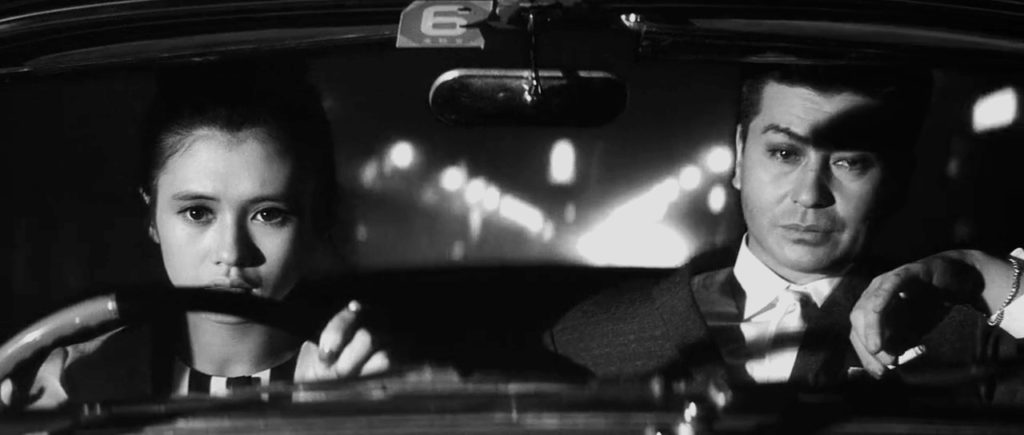
On April 1, Turner Classic Movies will present a host of films from the great Akira Kurosawa. Since we tend to think first of Kurusawa’s historic samurai classics, I am recommending his noir-stained contemporary crime films Drunken Angel, Stray Dog and High and Low. TCM is presenting them with seven other Kurosawa films. Kurosawa and actor Toshiro Mifune team up in all three of these decidedly non-samurai stories.

  • Drunken Angel (1948) was Kurusawa’s first major film and his first with Mifune, two years before their first samurai masterpiece Rashomon. Mifune plays a young Yazuka hood, who works with some very bad people, so there are some double crosses and a suitable dark ending.
  • In the police procedural Stray Dog (1949), Mifune plays a detective tracking down a gun that was used in a crime. The trail leads through Tokyo’s gritty underworld during a heat wave and even into a sold-out pro baseball game.
  • My favorite of these three is the 1963 neo-noir pressure cooker High and Low, with Mifune as the CEO of a major shoe manufacturer. In an attempt to kidnap his son, the crooks accidentally grab his chauffeur’s son. The CEO still wants to ransom the kid, but the price is ruinous, and all of this is happening as the CEO is being targeted himself for corporate backstabbing.
Toshiro Mifune (center) in HIGH AND LOW

REMEMBRANCE

The prolific actor Stuart Whitman has died. Strikingly manly and relatable, Whitman also had the gift of imbuing strong-and-silent characters with emotional texture. Indeed, he was nominated for the Best Actor Oscar for a 1961 film that I haven’t seen – The Mark, in which he played a guy seeking a normal life after being imprisoned for attempted child molestation. I remember Whitman for his performances in The Longest Day and the offbeat Convicts 4. He would not wish to be remembered for the giant carnivorous rabbit chiller Night of the Lepus.

Stuart Whitman

GONE GIRL: 2014’s best Hollywood movie

Rosamund Pike in GONE GIRL

In the marvelously entertaining Gone Girl, Ben Affleck plays Nick, a good-looking lug who can turn a phrase. At a party one night, he’s on his A game, and he snags the beautiful Amy (Rosamund Pike). She’s smarter, a good rung on the ladder more attractive than he is, has parents with some money and is a second-hand celebrity to boot. Not particularly gifted and certainly not a striver, he knows he’s the Lucky One. He has married above himself, but he doesn’t have a clue HOW MUCH above until she suddenly disappears.

Based on the enormously popular novel by Gillian Flynn (who also wrote the screenplay), Gone Girl is the mystery of what has happened to Amy and what is Nick’s role in the disappearance. Plot twists abound, but you won’t get any spoilers from The Movie Gourmet.

This is Rosamund Pike’s movie.  Her appearance is so elegant – she looks like a crystal champagne flute with blonde hair – that pulling her out of the Victorian period romances that she was known for and into this thriller was inspired. And Pike responds with the performance of her career. She’s just brilliant as she makes us realize that there’s something behind her eyes that we hadn’t anticipated, and then keeps us watching what she is thinking throughout the story.

Gone Girl is directed by the contemporary master David Fincher (Fight Club, Se7en, Zodiac, The Social Network, The Girl with the Dragon Tattoo). Here, Fincher has successfully chosen to rely on Flynn’s page turner of a story and the compelling characters, so Gone Girl is the least flashy of his films, but one of the most accessible. I’ll say this for Fincher – I can’t remember a more perfectly cast movie.

Kim Dickens (Treme, Deadwood) is superb as the investigating detective – this time almost unrecognizable as a brunette. Tyler Perry is wonderfully fun as a crafty celebrity attorney. The previously unheralded Carrie Coon is excellent as Nick’s twin sister (she’s gone on to cash in on the Avengers franchise). Missi Pyle does such a good job as a despicable cable TV personality that I thought I was actually watching a despicable cable TV personality. And David Clennon and (especially) Lisa Banes positively gleam as Amy’s parents. (Carefully observe every behavior by the parents in this movie.)

Just like the thug in The Guard who forgets whether he had been diagnosed in prison as a sociopath or a psychopath, I had the ask The Wife, who turned me on to this passage from Psychology Today. It’s useful to read this because, although you don’t realize it for forty-five minutes or so, Gone Girl is also a study of psychopathy.

Psychopaths … are unable to form emotional attachments or feel real empathy with others, although they often have disarming or even charming personalities. Psychopaths are very manipulative and can easily gain people’s trust. They learn to mimic emotions, despite their inability to actually feel them, and will appear normal to unsuspecting people. Psychopaths are often well educated and hold steady jobs. Some are so good at manipulation and mimicry that they have families and other long-term relationships without those around them ever suspecting their true nature.

When committing crimes, psychopaths carefully plan out every detail in advance and often have contingency plans in place. Unlike their sociopathic counterparts, psychopathic criminals are cool, calm, and meticulous. Their crimes, whether violent or non-violent, will be highly organized and generally offer few clues for authorities to pursue. Intelligent psychopaths make excellent white-collar criminals and “con artists” due to their calm and charismatic natures.

Gillian Flynn changed the story’s ending for the movie. The Wife, who is a big fan of the novel, didn’t mind. Gone Girl is recommended for both those who have and have not read the book. I understand that there’s more humor in the movie, as we occasionally laugh at the extremity of the behavior of one of the characters.

It all adds up into a remarkably fun movie and one that I was still mulling over days later. Gone Girl was the best big Hollywood studio movie of 2014 (not counting releases from the prestige distribution arms of the major studios). It’s now available to stream on Amazon, iTunes, Vudu, YouTube, Google Play and Redbox.