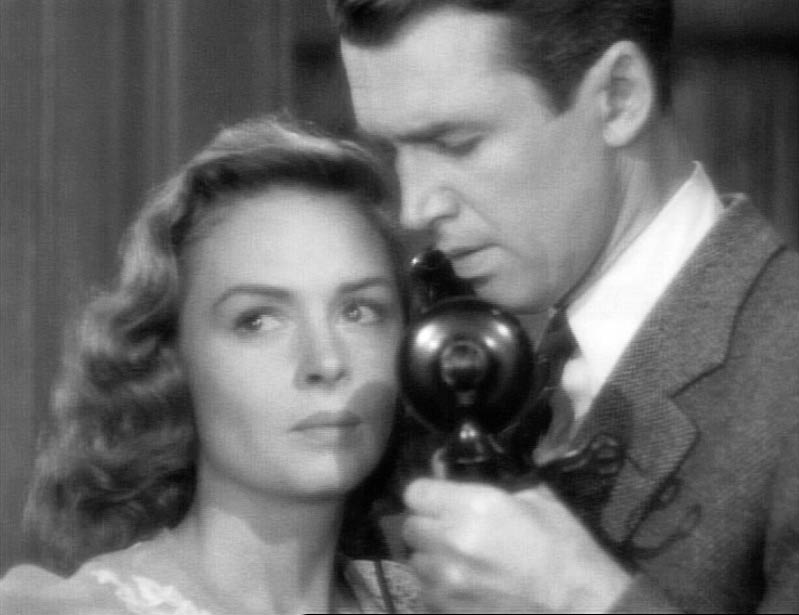
Photo caption: Donna Reed in IT’S A WONDERFUL LIFE – the second best wife ever
Happy 24th Anniversary to The Wife, also known as Lisa, The Love of My Life!
We started out the year by binge-watching The Crown (season 6) and Shetland (season 6), and ended, as is our beloved Holiday tradition, watching It’s a Wonderful Lifeon the big screen
I really enjoyed introducing her to Anatomy of a Fall in January. Together, we discovered Ghostlight and The Bikeriders in July and Conclave, A Real Pain, A Complete Unknown and Queer to close out the year.
After a year-long streak of stinkers, she revived her own movie-picking credibility with Wicked Little Letters andKneecap.
Once again, she tolerated my spending huge chunks of time covering Noir City and the San Luis Obispo International Film Festival in person and Cinequest, Slamdance, Frameline, San Francisco International Film Festival (SFFILM), Nashville Film Festival and San Francisco Jewish Film Festival virtually. She was also OK with my helping out Cinequest by screening over 100 film submissions. I’m getting ready now to cover Noir City in person and Slamdance virtually again in January.
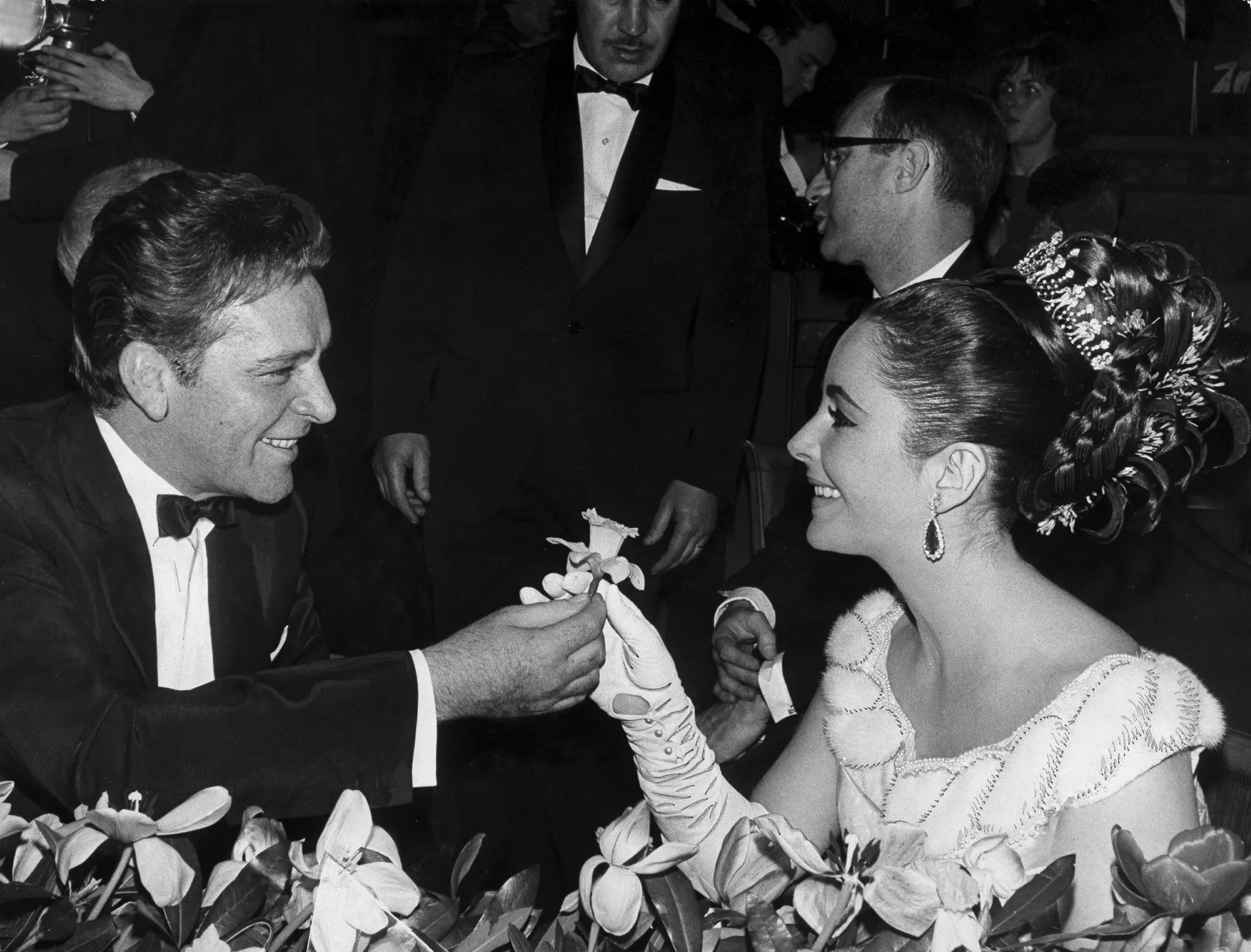
She joined me on my bucket list pilgrimage to the 105-year-old Hollywood restaurant Musso & Frank Grill. We sat at the bar where William Faulkner, Ernest Hemingway, F. Scott Fitzgerald and Dashiell Hammett imbibed (and where Hammett wrote). We dined at Elizabeth Taylor and Richard Burton’s regular booth and passed by Charlie Chaplin’s regular table by the front window. Unforgettable.
She’s the biggest fan and supporter of this blog DURING ALL OF ITS FOURTEEN YEARS, and I appreciate her and love her. Happy Anniversary, Honey!
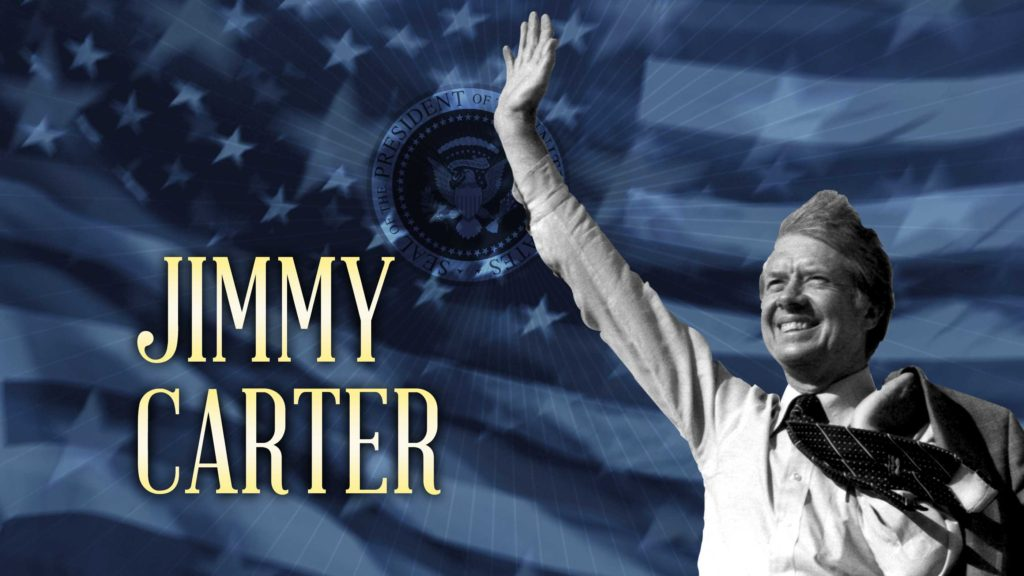
In PBS’ American Experience documentary Jimmy Carter, The New Yorker writer and former Carter speechwriter Henrik Hertzberg says:
Jimmy Carter was what the American people always SAY they want – above politics, determined to do the right thing regardless of political consequences, a simple person who doesn’t lie, a modest man, not someone with a lot of imperial pretenses. That’s what people say they want. And that’s what they got with Jimmy Carter.
And herein lies the rub.
In 1976, Americans were reacting to Watergate and wanted a President the LEAST like Richard Nixon. We got him, in the form of Jimmy Carter; it turned out that Carter could deliver non-Nixonian decency, but not the leadership that the era required.
In Jimmy Carter, we hear from those who know Carter best – including his wife Rosalynn Carter, his vice-president Walter Mondale, and right-from-the-start Carter insiders Jody Powell, Pat Caddell and Bert Lance. How the times made this man, then propelled him to such improbable electoral success and then finally doomed his Administration, is a great and cautionary story.
Jimmy Carter is in two parts, which combine for two hours and 39 minutes. It’s available to stream from Amazon and AppleTV (I can find it on my app, but not on the website).
Photo caption: Craig Wasson and Jodi Thelen in FOUR FRIENDS
I see over 300 movies each year, and every time, I am hoping for an especially rewarding experience. Here are my favorite movie-going experiences of 2024.
A special screening of Four Friends at the Cambria Film Festival with stars Craig Wasson, Reed Birney and Jim Metzler. Critics loved this 1981 Arthur Penn film, and I loved it, and almost nobody else saw it. A film about an aspirational blue-collar young man in the turbulent Vietnam Era (like me), this film deeply resonated with me in 1981 and continues to do so. Grievously underrated, Four Friends isn’t available to stream and is very hard to find. It was wonderful to see it agaon, this time with an audience and the filmmakers.
Noir City: In recent years, Eddie Muller and team have been introducing me to international film noir. This year, they came through with the French Symphony for a Massacre and the British Across the Bridge. I attended Noir City in-person in Oakland, and I’ll be returning in January 2025.
Slamdance: This blog loves directorial debuts and world premieres – and that’s what Slamdance is all about. This year, the best two films were Italian: The Complex Forms and The Accident.
Cinequest: The film festival that launched this blog was once again rich with world premieres. The best were The Invisibles, Pain and Peace, and The Island Between the Tides, and the North American premiere of Human Resources. presented the remarkable In the Summers.
Nashville Film Festival: NashFilm has become one of my favorite film fests, and this year introduced me to In the Summers, which made my year-end top ten.
SFFILM: This time, SFFILM delivered two surprises of surrealism and absurdism: Mother Couch and The Practice.
San Luis Obispo International Film Festival: This year, the SLO Film Fest soared with its unique and very deep surf/skate program, and two indie charmers, Tokyo Cowboy and Chasing, Chasing Amy.
Frameline: San Francisco’s major LGBTQ fest brought us Gondola, another charming, dialogue-free comedy from German writer-director Veit Helmer, this one set in Georgia.
San Francisco Jewish Film Festival: The SFJFF is a major Jewish cultural event held against the backdrop of current events in Israel and Gaza, and the SFJFF leaned right into what would otherwise be the elephant in the room. I’ve been covering the SFJFF since 2016, I’m not Jewish and I can attest that this attitude is nothing new. I’ve seen SFJFF films with Palestinian voices, by Palestinian and Israeli Arab filmmakers, and about the Israeli-Palestinian conflict.
Not for the first time: I re-experienced Man on a Train, The Day of the Jackal, The Valley of Elah and Before the Devil Knows You’re Dead.
Palm Theater: My hometown arthouse delivered The Taste of Things, La Chimera, Wicked Little Letters, Ghostlight, How to Come Alive, Didi, The Outrun, Anora, A Real Pain, Queer and A Complete Unknown.
Sweetheart Deal: I’ve reviewed fifteen documentaries this year and screened another 80 while helping to program a film festival. Sweetheart Deal is the best documentary I’ve seen this year.
The Bikeriders: Jeff Nichols has written and directed six films, and I have loved all five that I have seen, including this latest one with Jodie Comer’s fine performance.
Netflix: I expected Richard Linklater’s Hit Man to be good (and it was), but I was totally surprised by The Remarkable Life of Ibelin.
TO TOP EVERYTHING ELSE
This is not technically movie-GOING, but it topped my movie-RELATED experiences of 2024. The Wife and I were joined by our friends Keith, Cynthia and Nisan on a bucket list pilgrimage to the 105-year-old Hollywood restaurant Musso & Frank Grill. The Wife and I sat at the bar where William Faulkner, Ernest Hemingway, F. Scott Fitzgerald and Dashiell Hammett imbibed (and where Hammett wrote). We dined at Elizabeth Taylor and Richard Burton’s regular booth and passed by Charlie Chaplin’s regular table by the front window. (The old-school martini and the sweetbreads were the best I’ve had.)
THE WORST
I usually don’t have a “ten worst movie” list because I only choose to watch movies that I hope will be exceptionally good. After all, I don’t have an editor assigning me to review soulless franchise movies, predictable rom coms and cheesy horror flicks. And, I generally just choose NOT to write about a bad indie – indie filmmakers have invested years of their lives in their films, and they just don’t need snark from somebody like me. But EVERY ONCE IN A WHILE, some film crosses the line.
This year, that film was a world premiere at Slamdance, the Japanese high school coming of age film House of Se, where one of the main characters is a menstruophile who swipes all the used sanitary napkins in the school. Anyone who makes a film this transgressive really must deliver a movie with some minimal production values and a coherent story, which House of Se fails to do. Of the 300+ movies that I watched in 2024, House of Se is unquestionably the very worst.
I did despise Kinds of Kindness and The Dead Don’t Hurt, but at least they were competently made.
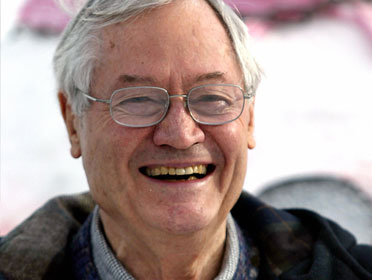
The prolific low-budget producer Roger Corman has died at 98, leaving behind a legacy far greater than the 491 titles that he produced. Corman’s great gift to us all is his mentorship of young and talented filmmakers. Filmmakers who got their first assignment from Corman (called “the Corman Film School”) include Oscar winning directors James Cameron, Francis Ford Coppola, Jonathan Demme, Curtis Hanson, Ron Howard and Martin Scorsese. Not to mention cult directors Paul Bartels and Monte Hellman. And Chinatown screenwriter Robert Townsend. And movie star Jack Nicholson In the 70s, Corman combined making lowbrow American movies with distributing highbrow foreign films, including Bergman’s Cries and Whispers, Fellini’s Amarcord, Kurosawa’s Dersu Uzawa and Schlondorff’s The Tin Drum. In one decade, he distributed more Best Foreign Film Oscar winners than all the Hollywood studios combined.
Robert Towne is best known, justifiably, for his Oscar-winning screenplay for Chinatown, one of my Greatest Movies of All Time; but director Roman Polanski perfected the script by changing the ending over Towne’s objections. However, Chinatown was only one of a string of brilliant screenplays penned by Towne between 1973 and 1982 – The Last Detail, The Yakuza, Shampoo and Personal Best. Starting in 1967, Towne was also the uncredited script doctor who polished Bonnie and Clyde, McCabe and Mrs. Miller, The Godfather and Heaven Can Wait.
Casting director and producer Fred Roos enhanced the films of Francis Ford Coppola and George Lucas by advocating for then unknown actors like Al Pacino, Harrison Ford, Tom Cruise, Carrie Fisher, Richard Dreyfuss, Rob Lowe, Cindy Williams, Patrick Swayze, Matt Dillon and Mackenzie Phillips.
In his second act, Marshall Brickman co-wrote Woody Allen’s two masterpieces: Annie Hall and Manhattan. Brickman had success before (creating Johnny Carson’s Carnac the Magnificent and co-writing The Muppets) and after (creating the Broadway shows Jersey Boys and The Addams Family).
Documentarian Morgan Spurlock broke through with his McDonalds exposé Super Size Me.
Eleanor Coppola was the wife of director Francis Ford Coppola and the mother of director Sophia Coppola. Eleanor Coppola herself directed perhaps the best ever documentary film about the making of a movie, Hearts of Darkness: A Filmmaker’s Apocalypse.
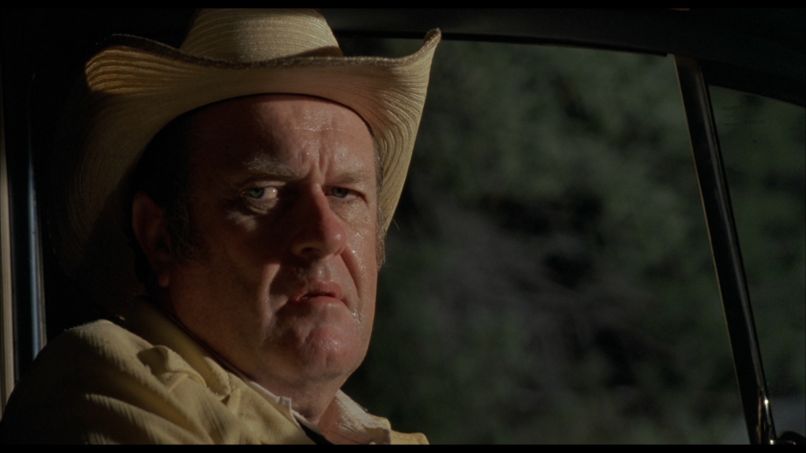
M. Emmet Walsh was one of cinema’s most stories, prolific (233 screen credits) and welcome character actors. Walsh was unforgettable as the murderous private detective Loren Visser in Blood Simple, a scary (and funny) concoction of amorality, sleaze and tenacity. He also elevated Midnight Cowboy, Little Big Man, What’s Up Doc?, Serpico, Blade Runner, Ordinary People, Slap Shot, Straight Time, Reds, Cavalry and Knives Out. There was only one T in Emmet, and the M stood for Michael.
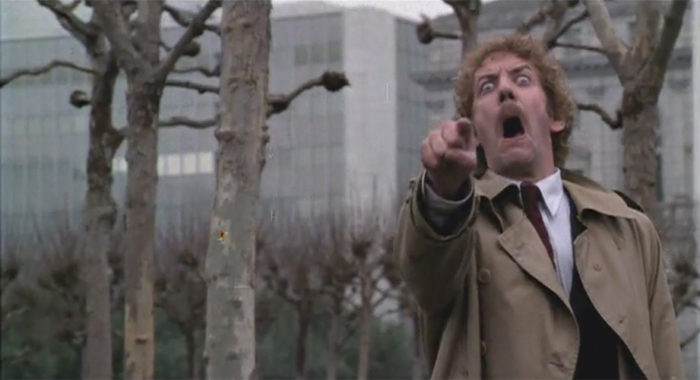
Donald Sutherland in INVASION OF THE BODY SNATCHERS
Donald Sutherland became a famous character actor playing quirky misfits in The Dirty Dozen and Kelly’s Heroes, and became a star as an iconic subversive in M*A*S*H*. His performances in Klute and Invasion of the Body Snatchers are indelible. Sutherland finished with 199 IMDb credits, including the Hunger Games franchise, and had three films released in 2023.
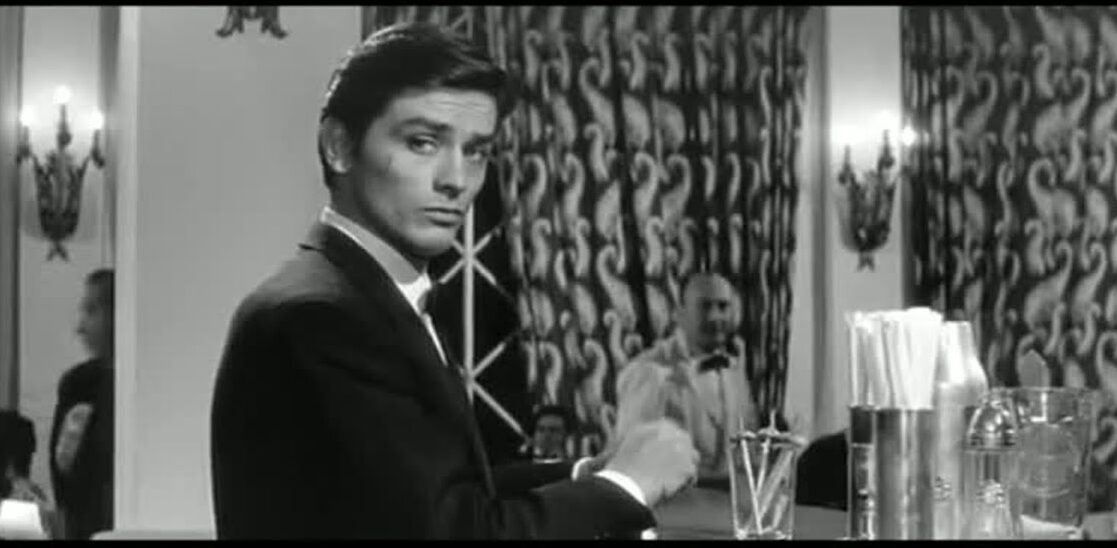
Alain Delon in ANY NUMBER CAN WIN
Impossibly handsome and dashing, no one ever removed their sunglasses with more of a flourish than iconic French leading man Alain Delon. Delon had eyes that can switch off any glimmer of empathy – perfect for playing sociopaths. Accordingly, he broke through internationally playing Patricia Highsmith’s Tom Ripley in Purple Noon (1960). Delon is best known for being a favorite of top European directors, starring in Visconti’s Rocco and His Brothers and The Leopard, Antonioni’s L’Eclisse, and Melville’s Le Samouri and Le Cercle Rouge. I also like Delon in the less famous caper movies Any Number Can Win and The Sicilian Clan. Mr. Klein, in which Delon played a sleazy French art dealer who took advantage of Nazi persecution of Jews, was a Lost Film, only becoming available again in the past five years. Sheila O’Malley has written most insightful essays on Delon and has posted the most playful photo of him.
Tom Wilkinson won an Oscar for Michael Clayton, but I best remember his searing performance in In the Bedroom and his delightful turn in The Full Monty.
James Earl Jones’ expressive face, imposing bearing and authoritative voice won him an Oscar for THE GREAT WHITE HOPE. The voice was enough by itself to dominate the STAR WARS franchise as Darth Vader.
Maggie Smith’s career began in the 1950s, and she was accomplished enough by the mid-1960s to play Desdemona to Laurence Olivier’s Othello. She won Oscars in the 70s for The Prime of Miss Jean Brodie and California Suite. Her popularity soared in the 2000s with Gosford Park, the Harry Potter franchise and her unforgettably withering Lady Violet Crawley in Downton Abbey.
Anouk Aimée starred in some of the most iconic European art films of the 1960s: Fellini’s 8 1/2 and La Dolce Vita and Lelouch’s A Man and a Woman.
Shelley Duvall will be best remembered for playing the wife of Jack Nicholson’s decompensating writer in The Shining. It’s hard to discuss American cinema of the 1970s without mentioning Duvall because six of her first seven movies were Robert Altman films (Brewster McCloud, McCabe and Mrs. Miller, Thieves Like Us, Nashville, Buffalo Bill etc., and 3 Women; the seventh was Annie Hall, in a hilarious turn as an Alvy Singer sex partner. She also played the waitress who prods Steve Martin’s Cyrano character into wooing Daryl Hannah’s Roxanne in Roxanne.
Gena Rowlands, Oscar-nominated as best actress for Gloria and A Woman Under the Influence, had a gift for authentic and wrenching performances. I also liked her in lighter fare like Minnie and Moskowitz and Night on Earth. She was the director John Cassavetes’ wife, muse and leading lady.
Beginning as a teen in 1960, Marisa Paredes presided over Spanish cinema with 120 acting performances through this year. American art house audiences knew her from Pedro Almodovar‘s High Heels, All About My Mother, The Flower of My Secret and The Skin I Live In.
Earl Holliman had the confidence, in one of his first movies, to put a unique spin on the role of a mob henchman in 1955’s The Big Combo. He continued to play character roles in big movies: Giant, Gunfight at the O.K. Corral and The Sons of Katie Elder. He went on to amass almost 100 credit in television, most popularly as Angie Dickinson’s boss in Policewoman/ most of his TV work was forgettable, but he did star in the first ever episode of The Twilight Zone.
British actor Timothy West became recognized in the US for his titular performance in the imported mini-series Edward the King, as the son of Queen Victoria, who simmered for decades, waiting for his chance to become King Edward VII. I loved him one of my favorite movies, Day of the Jackal. West’s 151 screen credits included three portrayals of Winston Churchill. As prolific as he was in television and the movies, he had even more of an impact on stage. He was a member of the Royal Shakespeare Company and the Prospect Theater Company, served as artistic director of the Old Vic Theater, and, at age 81, played the role of King Lear for the fourth time.
Louis Gossett, Jr., won an Oscar for his drill sergeant in An Officer and a Gentleman. He also played Fiddler in Roots, amid 198 other screen appearances.
I was surprised that Teri Garr had 44 screen credits (many as a dancer, including Viva Las Vegas) BEFORE her breakthrough role as Inga in Young Frankenstein. Then she played the mom in Close Encounters of the Third Kind, earned an Oscar nod for her most memorable role in Tootsie and went on to work in 200 more movies and shows.
Dabney Coleman, a versatile and prolific character actor, perfected the clueless, boorish boss characters in 9 to 5 and Tootsie. As gifted as he was in those comedic roles, he also worked in a wide range of fine movies: Downhill Racer, Cinderella Liberty, Midway, Go Tell the Spartans, North Dallas Forty and Melvin and Howard. Coleman topped off his career with roles in Boardwalk Empire, Ray Donovan and, as John Dutton, Sr., in Yellowstone.
Tony Lo Bianco first made his name in a perverse movie that became a cult film, The Honeymoon Killers. He went on to act in the 1970s classics The French Connection, The Seven Ups, Jesus of Nazareth, and lots and lots of TV work. I especially admire his performance in John Sayles’ City of Hope.
Carl Weathers retired from pro football at 26, played a football player in Semi-tough, and then the unforgettable Apollo Creed in the Rocky franchise. He recently starred in The Mandalorian and directed some of it. Personal note: his film Action Jackson was playing theaters in Santiago, Chile, when I visited in 1984.
You’ve seen David Harris in Brubaker, A Soldier’s Story, and NYPD Blue, but his most memorable role was early on, in Walter Hill’s indie cult classic The Warriors.
I didn’t remember the name of actor Jonathan Haze, who worked in a score of Roger Corman’s low budget exploitation films. His most memorable starring role was in Little Shop of Horrors, where his character cultivated a flesh-eating houseplant and pulled a tooth from a masochistic dental patient (Jack Nicholson).
The prolific low-budget producer Roger Corman has died at 98, leaving behind a legacy far greater than the 491 titles that he produced. Corman’s great gift to us all is his mentorship of young and talented filmmakers. Filmmakers who got their first assignment from Corman (called “the Corman Film School”) include Oscar winning directors James Cameron, Francis Ford Coppola, Jonathan Demme, Curtis Hanson, Ron Howard and Martin Scorsese. Not to mention cult directors Paul Bartels and Monte Hellman. And Chinatown screenwriter Robert Townsend.
Jack Nicholson first got some attention playing the masochistic dental patient in Corman’s 1960 Little Shop of Horrors. Nicholson showed up again in Corman’s 1967 The Wild Angels (biker gangs), 1967 The Shooting (trippy Western) and 1967’s LSD flick The Trip (psychedelics), all before Easy Rider sparked his stardom in 1969..
Corman’s formula was to make lots of cheap exploitation films for the teenage audience. Low cost meant low risk, and low risk attracted financing.. In one four-year period, he produced The Student Nurses, Private Duty Nurses, Night Call Nurses and Candy Stripe Nurses – and 21 other movies! The signatures of Corman’s mostly shameless and delicious exploitation movies are that 1) they don’t have fancy production values; 2) they are fast-paced and not too long; and 3) they’re a kick.
As a teen myself, I remember seeing Corman’s Boxcar Bertha, a tale of a Depression Era labor organizer, at a drive-in, chiefly motivated by the urge to see Barbara Hershey’s breasts (nudity was then unusual in American movies). With Boxcar Bertha as his calling card, its young director (Martin Scorsese) had the cred to make his breakthrough film Mean Streets and to follow it with Taxi Driver, New York, New York, The Last Waltz and Raging Bull.
Probably the best movie that Corman has produced was Saint Jack (1976), directed by Peter Bogdanovich. Corman had given Bogdanovich his start, and in the intervening twelve years Bogdanovich’s star had risen (The Last Picture Show, What’s Up, Doc?, Paper Moon) and fallen (Daisy Miller). Ben Gazzara and Denholm Elliott delivered great performances in this story of a hustling American expat running a GI brothel in Singapore during the Vietnam War.
In the 70s, Corman combined making lowbrow American movies with distributing highbrow foreign films, including Bergman’s Cries and Whispers, Fellini’s Amarcord, Kurosawa’s Dersu Uzawa and Schlondorff’s The Tin Drum. In one decade, he distributed more Best Foreign Film Oscar winners than all the Hollywood studios combined.
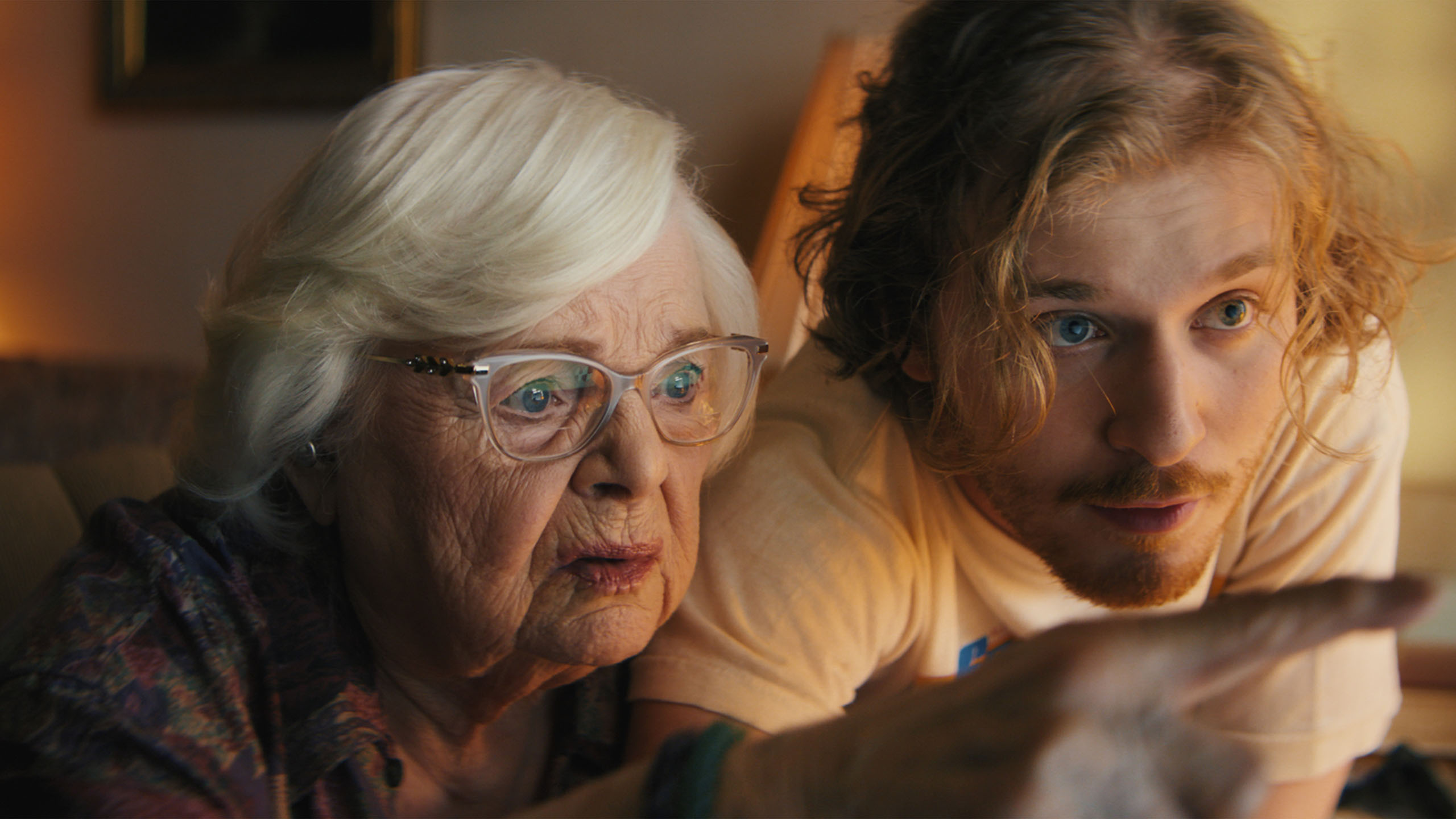
June Squibb and Fred Hechinger appear in THELMA by Josh Margolin. Courtesy of Sundance Institute | photo by David Bolen.
The 2024 SLO Film Fest has opened. I’ve screened over a dozen of the features, and here are four that you shouldn’t miss:
Thelma: The closing night film is a hoot, starring 93-year-old June Squibb (Oscar-nominated for Nebraska) in an action picture. Squibb plays a scammed senior who goes on a quest to recover her money from the scammers. Thelma is a lot more than a broad geezer comedy, and the relationship between Thelma and her foundering, Gen X grandson (Fred Hechinger) is very heartfelt. Squibb and Hechinger are both great, and Thelma also features indie favorite Parker Posey and the sweet final performance of Richard Roundtree (Shaft). It’s a surefire audience-pleaser, and I predict that Thelma will become a word-of-mouth hit when released in late June. See it first at the SLO Film Fest.
Chasing Chasing Amy: In this irresistible documentary, filmmaker Sav Rodgers tells his own highly personal story of finding sanctuary in a romantic comedy that ultimately spurs a both a filmmaking career and his transition to trans man. Rodgers weaves in parallel tracks, the origin story of the 1997 movie Chasing Amy, and thoughtful discussion of how that film, after 25 years of cultural evolution, has aged. We learn that Kevin Smith modeled the novelty of a straight man and a lesbian as inseparable soulmates after his real life friends; the core of Chasing Amy is a love affair sabotaged by the guy’s insecurities, mirroring Smith’s own less-than-two-year relationship with Joey Lauren Adams, who plays the titular character. Rodgers meets Smith himself, who becomes a mentor, and we get current on-camera interviews with Smith, Adams and other principals. Along the way, Rodgers matures from a gushing fan girl to a grownup who recognizes the personal flaws that complicate other people’s relationships. Chasing Chasing Amy seamlessly braids together the fictional love story in Chasing Amy with the stories of real life relationships, including his own.
Tokyo Cowboy: This charming dramedy centers on a Japanese corporate turnaround artist, Hideki (Arata Iura). Confident that he has the secret sauce to recharge any stagnant brand, he’s got a slick pitch deck (with a snapshot from his own childhood), and he’s engaged to the corporate vice-president he reports to. His company is about to liquidate a money-hemorrhaging cattle ranch in Montana, when he parachutes in for a quick fix. His Japanese beef consultant goes hilariously native, and Hideki, a smart guy, immediately sees that his idea for a quick fix was mistaken. Now unsettled and off the grid in an alien culture, Hideki recalibrates his values and his life goals. It’s the first narrative feature for director Marc Marriott, who, with cinematographer Oscar Ignacio Jiménez, creates a Big Sky setting that could reset any of us in need of self-discovery.
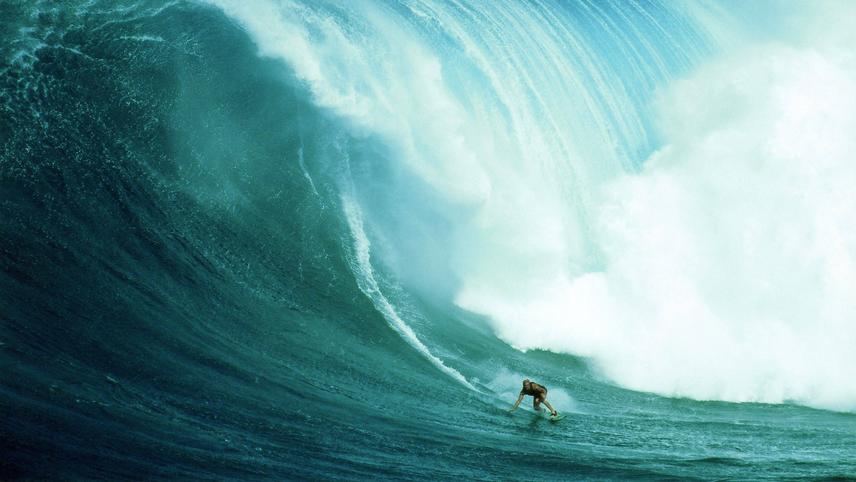
Riding Giants: Monday, April 29: The movie at the SLO Film Fest’s very first Surf Nite was this 2004 surf doc. Riding Giants focuses on the obsessive search for the best wave by some of the greatest surfers in history. We see “the biggest wave ever ridden” and then a monster that could be bigger. The movie traces the discovery of the Half Moon Bay surf spot Mavericks. And more and more, all wonderfully shot. IMO, Riding Giants ranks with Dana Brown’s Step into Liquid as the greatest surf documentary ever. Riding Giants was directed by Stacy Peralta, a surfer, a pioneer of modern skateboarding, and a founder of the Powell Peralta skateboard product company. Peralta, who also directed Dogtown and Z-boys, will attend the screening. Fittingly, Riding Giants screens at the Bay in Morro Bay – only one mile from the surf lanes at Morro Rock.
This year’s San Luis Obispo International Film Festival, opening April 23, presents the richest Skate/Surf program that I’ve ever seen at a mainstream film festival. Here are the highlights.
Friday, April 26: The always popular Surf Night featuring Trilogy: New Wave. Expect the Fremont to be packed again with surfers enjoying drinks in the lobby and the Riff Tide surf band before the screening. The documentary Trilogy: New Wave profiles three emerging pro stars on the world tour as they travel together to some of the world’s top surf destinations. The young guys are engaging and the audience will be stoked by the cinematography.
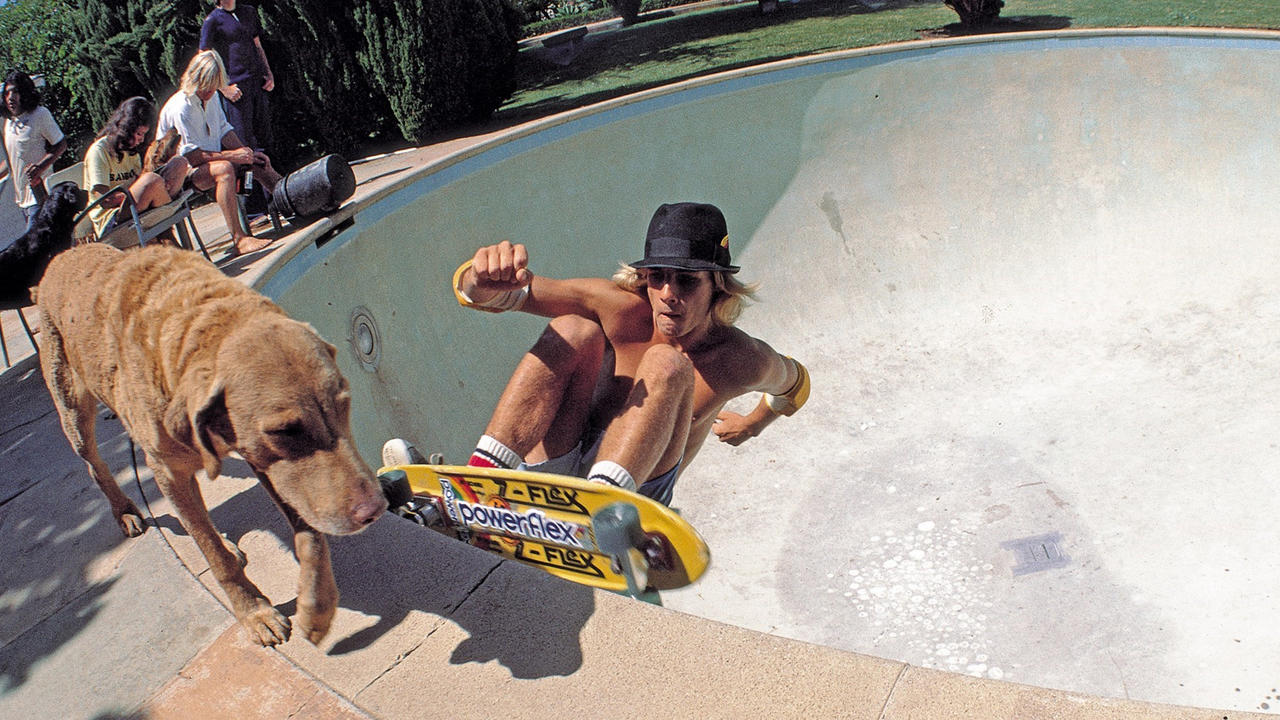
Sunday, April 28: The award-winning 2001 skateboard documentary Dogtown and Z-boys with the 2023 short 4DWN. The director of Dogtown and Z-boys, filmmaker and skateboard icon Stacy Peralta will attend; a surfer and one of the pioneers of modern skateboarding, and a founder of the Powell Peralta skateboard product company, Peralta also wrote the 2005 Lords of Dogtown. Beforehand, the audience can enjoy custom skateboard designs, with live-screen printing of these custom designs by the San Luis Obispo High School Advanced Graphic Design class.
Monday, April 29: The movie at the SLO Film Fest’s very first Surf Nite was the 2004 surf doc Riding Giants, also directed by Stacy Peralta. Riding Giants focuses on the obsessive search for the best wave by some of the greatest surfers in history. We see “the biggest wave ever ridden” and then a monster that could be bigger. The movie traces the discovery of the Half Moon Bay surf spot Mavericks. And more and more, all wonderfully shot. Fittingly, Riding Giants screens at the Bay in Morro Bay – only one mile from the surf lanes at Morro Rock. IMO, Riding Giants ranks with Dana Brown’s Step into Liquid as the greatest surf documentary ever.
RIDING GIANTS
Other skate/surf films include:
the seminal 1978 skateboard film Skateboard.
the 2024 documentary Art and Life: The Story of Jim Phillips, chronicling the most important figure ever in skateboard art (most famously the Screaming Hand and the Santa Cruz Red Dot). Phillips is a very sympathetic guy with an interesting personal journey. It’s well-sourced deep dive into skateboard art, skateboard manufacturing, surfing art and rock poster art, and almost everything happens just up the coast in Santa Cruz.
The entire surf and skate program at SLO Film Fest shreds. Here’s a clip from for Riding Giants:
June Squibb and Fred Hechinger appear in THELMA by Josh Margolin. Courtesy of Sundance Institute | photo by David Bolen.
The 2024 SLO Film Fest opens on April 25 and celebrates its 30th festival, bringing its characteristic mix of aspirational cinema and sheer fun to California’s Central Coast. This year’s program will be presented at the Fremont, Palm and Downtown Centre in San Luis Obispo, and the Bay in Morro Bay. An encore week will play at at Paso Robles’ Park Cinemas May 1-5. There will also be a Virtual Encore for selected titles, also May 1-5.
Here are festival highlights:
The closing night film is a hoot – Thelma, starring 93-year-old June Squibb (Oscar-nominated for Nebraska) in an action picture. Squibb plays a scammed senior who goes on a quest to recover her money from the scammers. . I’ve seen it, and it’s a surefire audience-pleaser. Thelma also features indie favorite Parker Posey and the sweet final performance of Richard Roundtree (Shaft).
The opening night film is the family dramedy Ghostlight, also a Sundance hit, with the filmmakers in attendance.
The always popular Surf Night featuring Trilogy: New Wave. Expect the Fremont to be packed again with surfers enjoying drinks in the lobby and the Riff Tide surf band before the screening. The documentary Trilogy: New Wave profiles three emerging pro stars on the world tour as they travel together to some of the world’s top surf destinations. The young guys are engaging, and the audience will be stoked by the cinematography.
Surf night is only one part of the richest Skate/Surf program that I’ve ever seen at a mainstream film festival (and I’ll be writing more about it this week). Filmmaker and skateboard icon Stacy Peralta will attend the SLO Film Fest, which features two of his films, Dogtown and Z-boys and Riding Giants.
Actress/director Heather Graham will appear to receive an award, and present her new film Chosen Family.
A screening of Camera, filmed in Morro Bay, with appearances by star Beau Bridges and director Jay Silverman,
A 45th anniversary screening of the zombie classic Dawn of the Dead.
Audience favorites that reflect the 30 years of SLO Film Fest, including Double Indemnity, Big Night, Muriel’s Wedding, and Priscilla, Queen of the Desert.
I haven’t seen this Canadian horror comedy, but it has my favorite title in the fest: Humanist Vampire Seeking Consenting Suicidal Person.
There’s plenty more, with features, workshops and six programs of shorts. I’m screening my way through the program, and will post my MUST SEE recommendations before the fest opens. Peruse the program and get your tickets at SLO Film Fest.
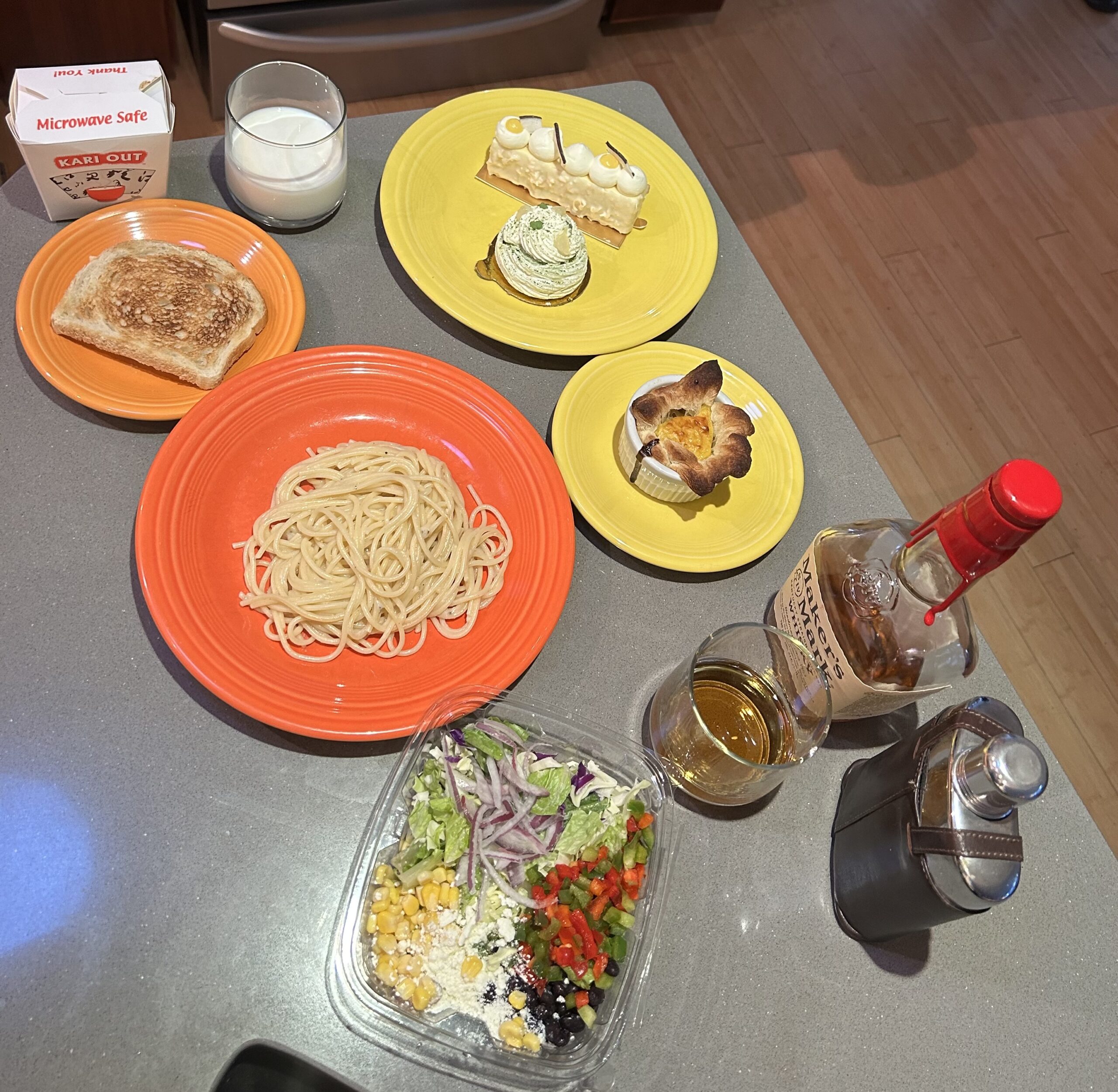
Killers of the Flower Moon: Whiskey just keeps showing up, from King (Robert De Niro) greeting Ernest (Leonardo DiCaprio) with a glass to Mollie (Lily Gladstone) bringing out the good stuff to entertain Ernest.
The Holdovers: In The Holdovers, Paul is a bourbonaholic, who usually drinks Jim Beam, and he buys a pint in the Boston liquor store. (I’m a fan of The Holdovers, but not Jim Beam).
Past Lives: The film is bookended a scene in a New York City bar with the three main characters; Arthut (John Maguro) is drinking an Old Fashioned.
Oppenheimer: The flask keeps showing up – and in the 1940s US, it’s gotta contain whiskey.
Pasta:
Anatomy of a Fall: Defense attorney Vincent fixes spaghetti when first visiting Sandra (Sandra Huller) after her husband falls to his death. It’s a simple, light colored pasta like cacio a pepe or alla Gricia, and that’s what I’ll be preparing.
Past Lives: Given the choice of any cuisine available in New York City, Hae Sung requests pasta, so Nora and Arthur take him to an Italian restaurant where there have pasta with a red sauce.
American Fiction: Monk (Jeffrey Wright) and Coraline (Erika Alexander) are preparing a pasta dinner at her place, when their relationship takes a turn.
To go salad in a deli clamshell from American Fiction: Monk is at a hotel conference center to serve on a panel judging books for a literary prize. At the lunch break, he grabs a clamshell salad instead of a wrapped sandwich, which just perfectly fits the character.
Toast and milk from Barbie: Barbie (Margot Robbie) holds a piece of toast and a cup of milk (but doesn’t actually CONSUME them because she’s made of plastic, after all).
Chinese takeout from Maestro: Lenny (Bradley Cooper) and Felicia (Carey Mulligan) enjoy this Manhattan staple in their Upper West Side apartment with their artsy, intellectual friends.
Pasteis de nata from Poor Things: Belle (Emma Stone) gets addicted to these delectable Portuguese egg custards as she matures into having really good taste. The best pasteis de nata in the Western Hemisphere are from Adega in San Jose, but we had to make our own poor substitute.
German pastry from Zone of Interest: This is from the scene when Hedwig (Sandra Huller) is impressing her mother with the lifestyle perks of Hedwig’s marriage to the big boss.