Tomorrow, I’ll be writing about Woody Allen’s latest, Café Society. I put aside the creep factor when I watch Woody Allen’s movies. What’s important to me is what’s up on the screen. A movie can be a masterpiece (or crap) even if it’s made by someone to which you don’t relate, someone you find detestable or even to be a monster. For example, I admire most of Roman Polanski’s movies, even though he committed a despicable and criminal act in the 1970s.
I know that other folks have other sensibilities and approaches that are completely justified. For example, The Wife will not watch movies that feature certain actors with domestic violence histories. Unlike me, she doesn’t compartmentalize, and she knows that she would be thinking about the real-life domestic violence during the movie. I respect her principle and her self-awareness.
Of course, I do not live under a rock, so I am aware of the distasteful 1992 episode when Mia Farrow booted Woody upon learning about his relationship with her then 21-year-old daughter Soon-yi. (Soon-yi and Woody have been together ever since and married in 1996.) And, much more disturbingly, Woody’s own daughter Dylan Farrow recently accused him of molesting her when she was little, an accusation which he denies.
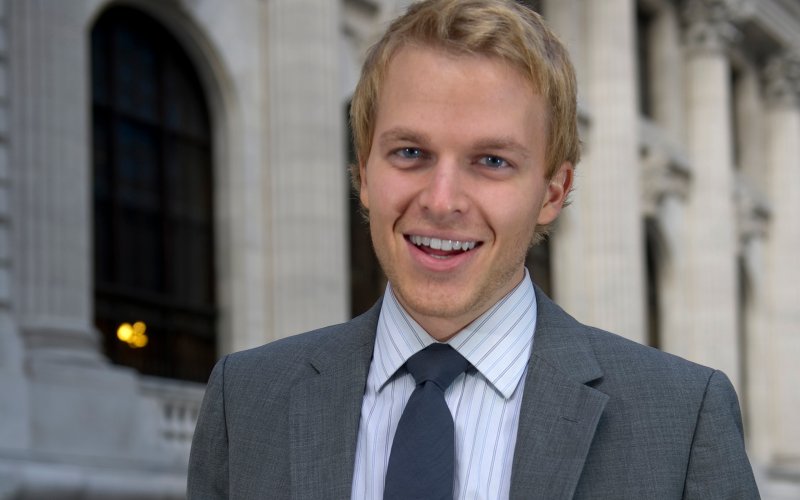
Ronan Farrow is Woody Allen’s son and Dylan’s brother. He is also a serious and accomplished journalist. Recently, he wrote a guest column in The Hollywood Reporter entitled My Father, Woody Allen, and the Danger of Questions Unasked. In it, he shares his perspective on the Dylan Farrow/Woody Allen situation.
Ronan Farrow also makes a broader critique of the media, how it treats both accusers and the celebrity accused. He focuses on the relative power of the accuser and the accused, and it’s an especially thought-provoking and valuable essay. (His column was written before the recent Roger Ailes sexual harassment scandal but I found it to be relevant and instructive in absorbing that story as well.)
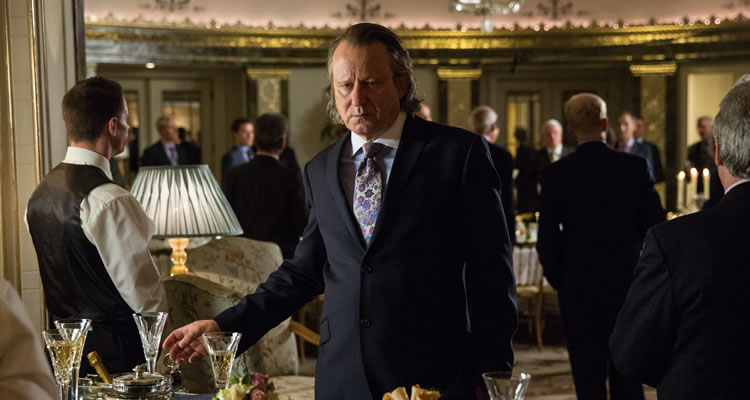
Stellan Skarsgård stars as the chief money-launderer for the Russia Mob in Our Kind of Traitor, and Skarsgård completely dominates the movie with his always robust and often hilarious performance. Who knew that the familiar Skarsgård could be so funny? After all, he usually plays a character that is brooding or menacing.
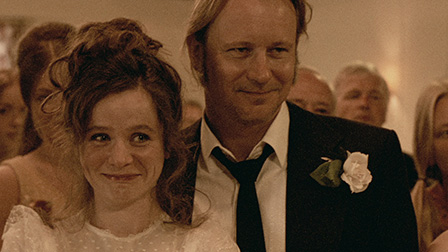
Skarsgård had already amassed over 50 screen credits at age 35 when the American art house audience really noticed him in Breaking the Waves (1996), He played an amiable and lusty seafarer who transforms the mousy Emily Watson with his joie de vivre, before he becomes a heartbreakingly suicidal paraplegic.
Emily Watson and Skarsgård in BREAKING THE WAVES
Although I hadn’t remembered him, earlier, Skarsgård appeared in The Unbearable Lightness of Being(1988), where he played The Engineer who had a one-night stand with Juliette Binoche’s Tereza. Then, in 1990, he played the Russian sub captain in The Hunt for Red October.
After Breaking the Waves came Insomnia, Good Will Hunting, The Girl with the Dragon Tattoo, and lots of really bad Hollywood movies where he’s the best thing in them – primarily dramas, thrillers and action films where he’s the intensely stolid or sinister presence.
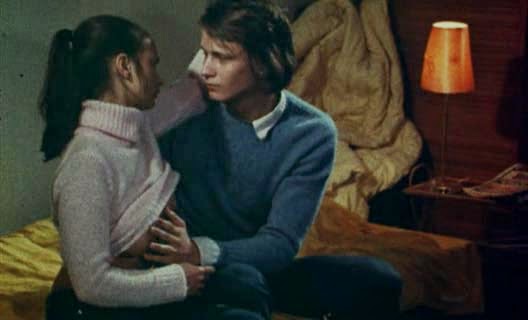
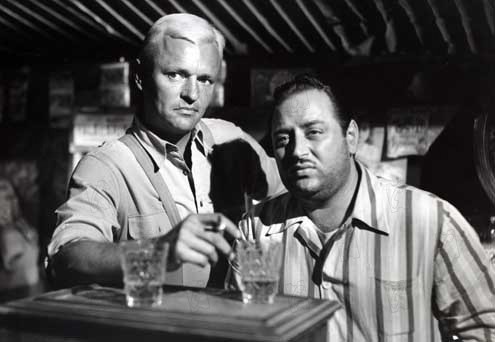
Now, everybody’s got to start somewhere, and in 1973, Stellan Skarsgård’s second year making feature films, he starred in a cult Guilty Pleasure – Anita: Swedish Nymphet. As the title suggests, the story is about a 16-year-old girl (played by a 23-year-old actress) with psychological issues which compel her to have sex in random and unhealthy encounters. It’s completely trashy, but, of course, the appeal of Anita: Swedish Nymphet to US (male) audiences was lots of nudity and sex – still uncommon in American movies.
Skarsgård plays Anita’s counselor, who eventually cures her by making her his girlfriend.
But now’s the time to enjoy Skarsgård in Our Kind of Traitor, It’s not a great movie, but Skarsgård makes it damn entertaining. By himself, he’s worth the price of a ticket.
Skarsgård counseling a troubled girl in ANITA: SWEDISH NYMPHET
During World War II, Hollywood looked for cruel-visaged actors to play Nazi characters that were cruel-looking and who could accomplish evil with chilling efficiency. With his Aryan poster boy looks and German accent, Peter van Eyck became Hollywood’s favorite on-screen Nazi. The irony is that, in real life, the German-born van Eyck was a fervent anti-fascist who had fled just before Hitler took power.
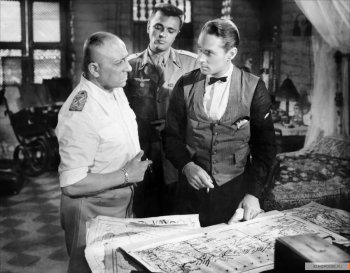
Van Eyck bobbed around the world doing odd jobs until he landed in New York and befriended Aaron Copland, Irving Berlin and, finally, Billy Wilder. Van Eyck’s first attention-grabbing performance was in Wilder’s Five Graves to Cairo, which airs tomorrow night on Turner Classic Movies.
His role as Lt. Schwegler in Five Graves to Cairo is embedded in a sequence of nine straight German soldier movie roles during 1943-44. Sometimes his roles didn’t even have names – “German officer”, “SS Captain”, “Gestapo”.
Back to real life – van Eyck served as a film officer in the US Army’s occupation of post-Germany. Returning to Hollywood, his roles diversified to the point that he was only playing a German officer about half the time. He ended up with 94 screen credits on IMDb, including high-ranking Wehrmacht officers in The Longest Day (1962) and The Bridge at Remagen (his final film in 1969). One of Van Eyck’s most notable roles is as one of the drivers in Henri-Georges Clouzot’s hyper-suspenseful The Wages of Fear.
It is said that acting is pretending. Typecast by looks and accent, van Eyck was a refugee who happened into a prolific acting career – playing exactly what he wasn’t.
the young Peter van Eyck (center rear) in FIVE GRAVES TO CAIROa more mature van Eyck in THE LONGEST DAY
IFFNOHO is showcasing the LA premiere of Gazelle: The Love IssueLA premiere as the festival’s opening night film on Thursday, April 28, and it’s a sure-fire crowd-pleaser.
The Cross of the Moment helps us understand the bleakness of the “or else” if we fail to stall or reverse climate change. The IFFNOHO screening is the world premiere of this absorbing and important film.
Peter Miller’s documentary Projections of America reveals the story of American-made World War II propaganda films, designed to reassure the soon-to-be-occupied Europeans. “Propaganda” is a sinister word, and the surprise in Projections of America is how indirect, subtle and superficially benign these slice-of-American-life movies were.
The most popular of the propaganda films in the Projections of America series, Autobiography of a Jeep, has its own separate screening at IFFNOHO.
Athina Rachel Tsangari, director of CHEVALIER. Photo courtesy of San Francisco Film Society
This year’s San Francisco International Film Festival (SFIFF) includes movies from 50 women directors. Some are high-profile (by indie standards):
Academy Award-winning documentarian Barbara Kopple (Harlan County U.S.A.) brings Miss Sharon Jones!. Sure to be a festival crowd-pleaser, this doc chronicles the salty Dap Kings frontwoman and her fight against cancer.
Oscar-nominated Chris Hegedus (The War Room), with her directing partner D.A. Pennebaker, has the animal welfare doc Unlocking the Cage; and
Elyse Steinberg’s Weinerwas the top documentary hit at the most recent Sundance.
Among the foreign choices, the Must See is one of the funniest movies at the fest, the Greek comedy Chevalier from director Athina Rachel Tsangari. Obviously a keen observer of male behavior, Tsangari delivers a sly and pointed exploration of male competitiveness, with the moments of drollness and absurdity that we expect in the best of contemporary Greek cinema. This is Tsangari’s second visit to SFIFF – in 2011, she brought her hilariously offbeat Attenberg.
Other strong choices from women directors include:
NUTS! from director Penny Lane – a persistently hilarious (and finally poignant) documentary about the rise and fall of a medical and radio empire – all built on goat testicle “implantation” surgery in gullible humans.
Suite Armorcaine, the character-driven drama from French director Pascale Breton;
Five Nights in Maine, a showcase for David Oyelowo, Dianne Wiest and Rosie Perez from writer-director Maris Curran.
Here’s the complete list of women directors with entries at the 2016 San Francisco International Film Festival:
As I Open My Eyes, Leyla Bouzid, Tunisia/France/Belgium Audrie & Daisy, Bonni Cohen, Jon Shenk, USA Ayiti Mon Amour, Guetty Felin, Haiti/USA Between Us: Experimental Shorts (Rock, Clay, Sand, Straw, Wood, Something Between Us, Starfish Aorta, Winter Trees) Cameraperson, Kirsten Johnson, USA Check It, Dana Flor, Toby Oppenheimer, USA Chevalier, Athina Rachel Tsangari, Greece The Fits, Anna Rose Holmer, USA Five Nights in Maine, Maris Curran, USA Granny’s Dancing on the Table, Hanna Sköld, Sweden/Denmark haveababy, Amanda Micheli, USA The Innocents, Anne Fontaine, France/Poland Irving M. Levin Directing Award: An Afternoon with Mira Nair: Monsoon Wedding Maggie’s Plan, Rebecca Miller, USA Miss Sharon Jones!, Barbara Kopple, USA Mountain, Yaelle Kayam, Israel/Denmark National Bird, Sonia Kennebeck, USA No Home Movie, Chantal Akerman, Belgium/France NUTS!, Penny Lane, USA Operator, Logan Kibens, USA Our Kind of Traitor, Susanna White, UK The Return, Kelly Duane de la Vega, Katie Galloway, USA Shorts 1 (In Attla’s Tracks, Seide) Shorts 2 (Partners, The Send-Off) Shorts 3: Animation (Edmond, Glove) Shorts 4: New Visions (My Aleppo, False Start, Sept. – Oct. 2015, Cizre) Shorts 5: Family Films (Bunny New Girl, The Casebook of Nips & Porkington, Mother, Welcome to My Life) Shorts 6: Youth Works (Child for Sale, From My Head To Hers, I Don’t Belong Here Run, Run Away) Sonita, Rokhsareh Ghaem Maghami, Germany/Switzerland/Iran Suite Armoricaine, Pascale Breton, France Thirst, Svetla Tsotsorkova, Bulgaria Under the Gun, Stephanie Soechtig, USA Unlocking the Cage, Chris Hegedus, D.A. Pennebaker, USA The Watermelon Woman, Cheryl Dunye, USA Weiner, Josh Kriegman, Elyse Steinberg, USA Wild, Nicolette Krebitz, German
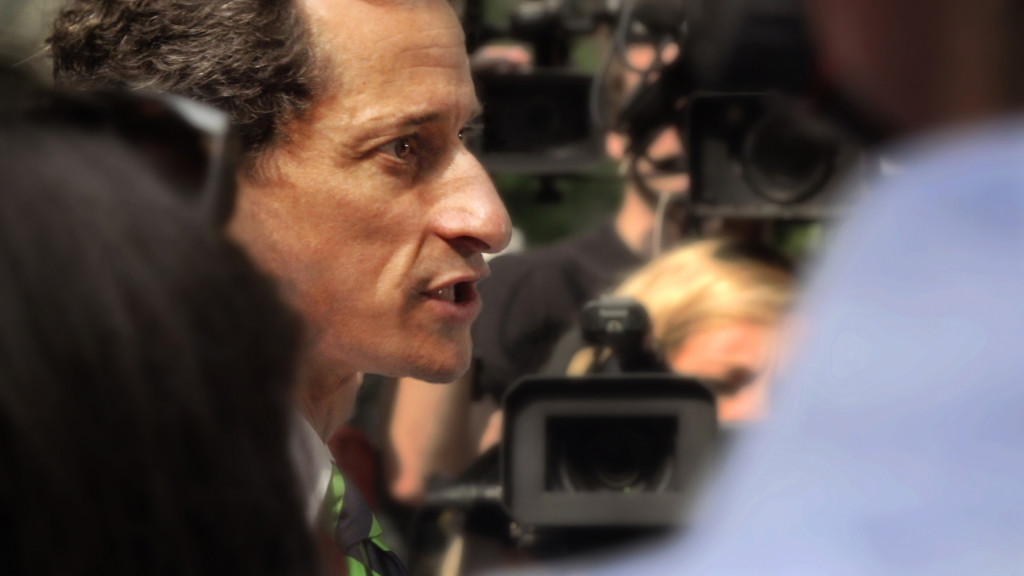
Weiner – This hit from the Sundance and New Directors film festivals is an inside look at Anthony Weiner’s cringeworthy, self-immolating campaign for New York City Mayor;
Miss Sharon Jones! – Sure to be a festival crowd-pleaser, this doc chronicles the salty Dap Kings frontwoman and her fight against cancer. From Academy Award-winning documentarian Barbara Kopple (Harlan County U.S.A.);
Unlocking the Cage– an animal welfare doc from storied filmmakers Chris Hegedus (The War Room) and D.A. Pennebaker (Monterey Pop and The War Room); and
The Bandit, in the coveted slot as the festivals’ Closing Night film, documents the real life bromance between Burt Reynolds and iconic stuntman Hal Needham that led to Needham’s Smokey and the Bandit movies.
But some of the best docs in the fest are less well-known nuggets:
NUTS! – a persistently hilarious (and finally poignant) documentary about the rise and fall of a medical and radio empire – all built on goat testicle “implantation” surgery in gullible humans.
Dead Slow Ahead– a visually stunning and an often hypnotic film, shot on a massive freighter on its voyage across vast ocean expanses with its all-Filipino crew.
Under the Sun – a searing insight into totalitarian North Korean society, all from government-approved footage that tells a different story than the wackadoodle dictatorship intended.
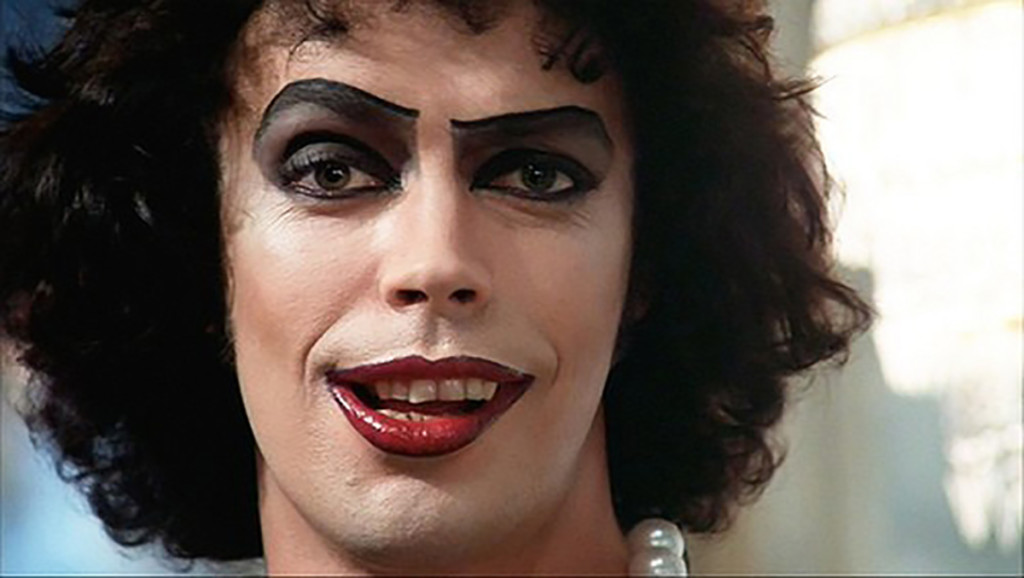
Tim Curry turns 70 today – forever Dr. Frank N. Furter from The Rocky Horror Picture Show, the original Sweet Transvestite from Transsexual Transylvania.
The Movie Gourmet asked the folks who pick the movies at Cinequest about this year’s program.
MIKE RABEHL is Cinequest’s Director of Programming/Associate Director.
What are your predictions for the biggest audience pleasers? Something like THE SAPPHIRES/THE GRAND SEDUCTION/WILD TALES from past festivals?
Rabehl: As the programming director, I simply do not pick favorites. But, I really think audiences are going to find complete enjoyment in films like REMEMBER ME, HELLO, MY NAME IS DORIS, BUDDY SOLITAIRE, THE COMEDY CLUB, CHUCK NORRIS VS. COMMUNISM, I LOVE YOU BOTH, and any of the BARCO ESCAPE screenings.
What might be the festival’s biggest surprise hit?
Rabehl: I think two films that are REALLY going to affect people are LOVE IS ALL YOU NEED? and UNTIL 20.
Is there any remarkable new filmmaking talent (like last year’s The Center)?
Rabehl: So much to answer here. You look at Simon Stone’s debut with THE DAUGHTER, or Michael Boroweic and Sam Marine’s MAN UNDERGROUND, and you have to be in awe of what they make you feel. Yet, I really think women director’s shine this year. You look at the French influence of Estelle Artus’ ACCORDING TO HER, the vibrancy of Alicia Slimmer’s CREEDMORIA, the purity of Jane Gull’s MY FERAL HEART, or the timeliness and importance of Kim Rocco Shields’ LOVE IS ALL YOU NEED?…It’s really tough to pick just one, So many great voices, and every single one I have mentioned is unique and, in the case of several, quite groundbreaking.
Is there anything that we haven’t seen before in a movie?
Rabehl: I think LOVE IS ALL YOU NEED? pushes the boundaries in a big way and takes of somewhere we haven’t gone before—into a world where homosexuality is the norm and heterosexuality is ridiculed. And, I think people are really going to be wowed by Chris Brown’s THE OTHER KIDS—a hybrid of fiction and non-fiction that really shines a light on the newest generation of youth. And, I have NEVER seen a film like PARABELLUM in all my years of watching cinema. Just something totally different and leaves you breathless at the end.
Last year there were some great single screenings – ’71 and Gemma Bovery kind of under the radar and Three Hearts at the California. Any Can’t Miss single screenings this year?
Rabehl: OPENING and CLOSING nights, definitely. And, I think people will be very sorry if they miss seeing THE WAVE, MA MA, and SUNSET SONG on the big screen. We have also ADDED a new film to the line-up on March 13th, with Paramount’s THE LITTLE PRINCE. I saw it in December, and it is going to be a strong contender for Best Animated Feature at the Oscars next year.
You have a good nose for films from Belgium and Norway. Any Must Sees this year from those national film programs?
Rabehl: I’ve already mentioned THE WAVE—which is from Norway. But, two more films from Norway: STAYING ALIVE and WOMEN IN OVERSIZED MEN’S SHIRTS are definites. And, from Belgium, BROTHER and PROBLEMSKI HOTEL would be my picks. Also, from Russia, don’t miss ORLEANS
Demimonde really looks like my kind of movie (noirish), and Charlie Cockey says that you liked it a lot. Anything you want to tell me about it?
Rabehl: Oh, this one is going to really going to be a sleeper. Hungarian cinema has always been one of our favorites. We have two features this year (the other is FEVER AT DAWN), but in DEMIMONDE, you have this sweeping, Gothic story that feels like a noir. It’s a combination of visual set pieces, costumes, and this incredible musical score that makes me wish to see it on the big screen, rather than the small one I saw it on.
DEMIMONDE
CHARLIE COCKEY is Cinequest’s International Film Programmer.
Some of Cinequest’s highlights always come from international cinema – IDA, of course, and THE HUNT, HEAVENLY SHIFT, IN THE SHADOW and last year’s exquisite CORN ISLAND. What should we be looking for at Cinequest 2016?
Cockey: Please don’t miss THE MEMORY OF WATER – it’s rough, emotionally, but it’s incredible filmmaking. Did you see the absolutely remarkable film THE LIFE OF FISH by Matias Bize? Same director – same quality.
My other picks are LOST IN MUNICH, MAGALLANES, PARABELLUM, SONG OF SONGS, WHY ME? and FEVER AT DAWN.
THE MEMORY OF WATER
SANDY WOLF is Cinequest Documentary Programmer.
Last year’s doc program was very strong, especially ASPIE SEEKS LOVE, MEET THE HITLERS, THERE WILL BE NO STAY and SWEDEN’S COOLEST NATIONAL TEAM. What do you see as the strongest 2-3 documentary features this year? What do you predict will be the biggest audience pleasing documentary?
Wolf: My favorite doc is CHUCK NORRIS VS. COMMUNISM, which I know you have seen. After that, my next two favorites are TRANSFIXED (which is about a transsexual trying to undergo a sex change, who also has Asperger’s) and UNDER 20 (sad but inspirational about a kid who has cancer but keeps on with his high achieving life) – I could see that being an audience favorite, too.
Three others which I favored more so than some of the others are COMEDY CLUB, DAN AND MARGO and GORDON GETTY: THERE WILL BE MUSIC.
Is there any remarkable new documentary filmmaking talent (first feature, etc.)?
Wolf: TRANSFIXED is a first feature.
Bookmark my Cinequest 2016 page, with links to all my coverage. Follow me on Twitter for the latest.
I’ve already seen over twenty offerings from Cinequest 2016, and here are my initial recommendations.
MUST SEE
The Memory of Water: This Chilean drama explores grief, its process and its impact and might just be most masterful filmmaking achievement at Cinequest 2016. Exquisite. March 2, 10, 11.
WORLD PREMIERES
Lost Solace: Highly original psychological thriller and a brilliant directorial debut. World Premiere March 4, 6, 10.
Heaven’s Floor: Absorbing and character-driven autobiographical drama about a most complicated woman and the choices that indelibly affect several lives.World Premiere March 4, 6, 11.
Cinequest hosts the world premiere of LOST SOLACE
DRAMA
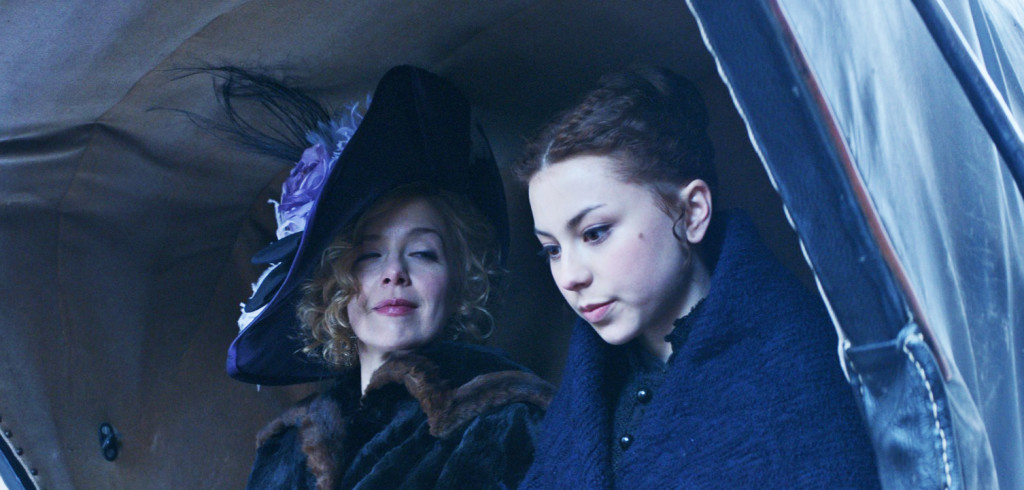
Demimonde: Sex, intrigue and murder in this operatic Hungarian period drama. U.S. Premiere March 2, 3, 9, 10.
The Daughter: Based on an Ibsen play, this Australian drama is Cinequest’s Closing Night film and packs a powerfully emotional punch. March 13.
ROMANCE
Fever at Dawn: Urgent period romance between Holocaust survivors, with an unexpected nugget at the end.
DOCUMENTARIES
Chuck Norris vs. Communism: The subversive impact of movies (ANY movies) on a culture-starved society. March 4, 6 and 12
Dan and Margot: A very personal look at schizophrenia from the schizophrenic’s point of view. U.S. Premiere March 6, 7, 8.
The Promised Band: A group of Israeli and Palestinian women seek to fight through the cultural, legal, political, military and security barriers between them by forming a girl band. World Premiere March 4, 6, 10.
The Brainwashing of My Dad: Personalizes the effects of right-wing media on mood and personality as well as on the political culture. US Premiere March 5, 6, 9.
Gordon Getty: There Will Be Music: Insights into the quiet passion and creative process of a most unusual classical composer. March 6, 11, 12.
SOMETHING YOU HAVEN’T SEEN BEFORE
Parabellum: This absurdist and trippy Argentine drama is set in a pre-apocalyptic near future; clearly everyone should be panicking, but no one is. March 2. 10, 12.
COMEDY
A Beginner’s Guide to Snuff: Broad, dark and shamelessly low brow comedy with a sparkling performance by an actress as an actress. World Premiere March 4, 6, 11.
WOMEN FILMMAKERS
This year, Cinequest presents the world or US premieres of sixty features and sixty-nine shorts. And of these 129 debut films, 64 were directed by women! These include Heaven’s Floor, The Brainwashing of My Dad, Dan and Margot and The Promised Band.
HEAVEN’S FLOOR
PREVIEWS
Several Cinequest films already have U.S. distributors and are planned for theatrical release later this year. I haven’t seen them yet, but you can see them first at Cinequest:
The Helen Mirren thriller Eye in the Sky on Opening Night, March 1;
The Wave (Borgen) March 2;
Ma Ma (Penelope Cruz) March 6;
Colonia (Emma Watson) March 10;
February(Shipka Kiernan from Mad Men, Emma Roberts) March 12; and
The Adderall Diaries (James Franco, who will be making a personal appearance) March 12;
The Little Prince (already spoken of as a contender for the 2017 Animated Feature Oscar) March 13.
Take a look at the entire program, the schedule and the passes and tickets. (If you want to support Silicon Valley’s most important cinema event while skipping the lines, the tax-deductible $100 donation for Express Line Access is an awesome deal.)
As usual, I’ll be covering Cinequest rigorously with features and movie recommendations. I usually screen (and write about) over thirty films from around the world. Bookmark my Cinequest 2016 page, with links to all my coverage. Follow me on Twitter for the latest.
Tomorrow: Cinequest insiders look at the 2016 festival
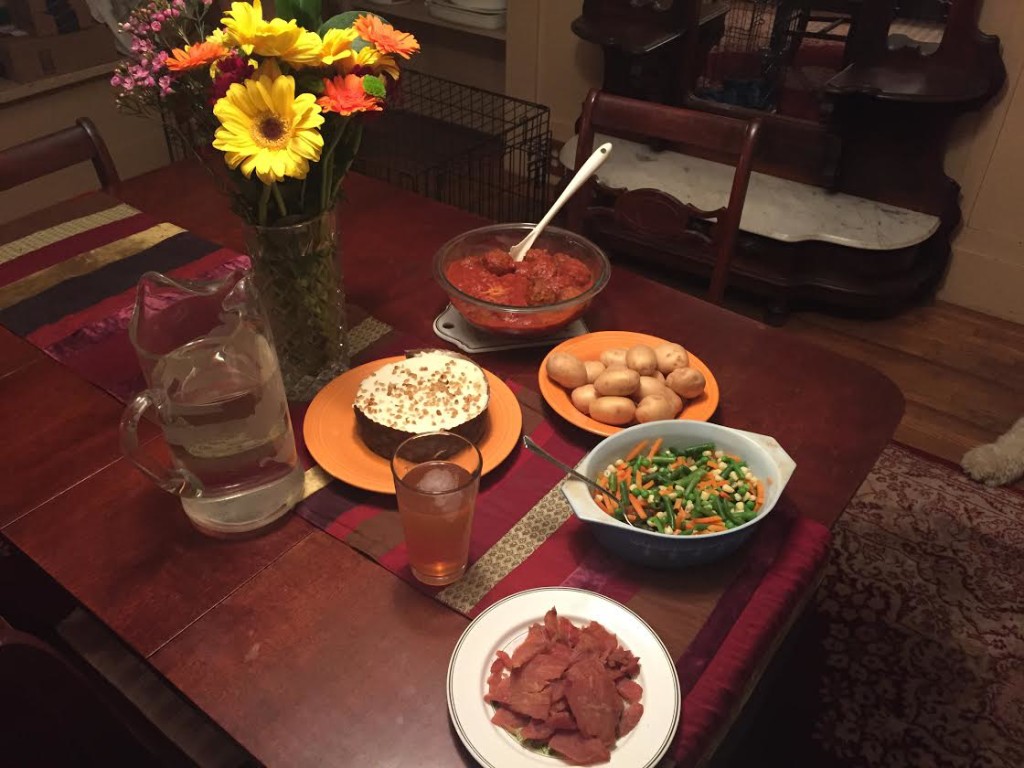
OK, so I just posted that we would skip our annual Oscar Dinner because we were returning from an away weekend, but The Wife insisted on meeting the challenge of catering it from Trader Joes. So here we are:
Water, rushing so extravagantly from Immortan Joe’s cliff-side fortress in Mad Max: Fury Road;
Pint of Ale from one of the Boston bars in Spotlight;
Bison Jerky from The Revenant (no raw bison liver available at TJs);
Spaghetti, which Ellis mastered eating, after much practice, in Brooklyn;
Peas and carrots from the Donovan family dinner in Bridge of Spies (served in vintage Corning ware – also on the Donovans’ table);
Potatoes (but not cultivated in our own waste) from The Martian; and
Cake as an homage both to Jake’s birthday cake (sans candles) in Room and to the Las Vegas convention dessert that Mark Baum disgustedly consumes in The Big Short.