DVD/Stream of the Week: THE FIREMEN’S BALL

THE FIREMEN’S BALL

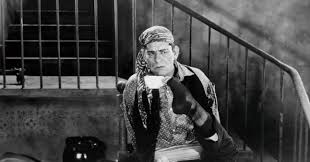
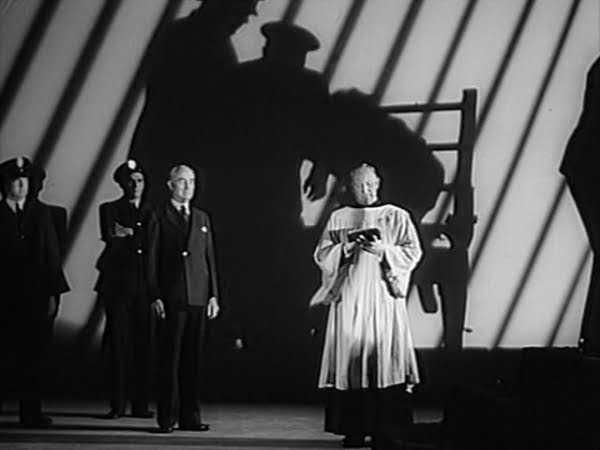
As a tribute to the great director Miloš Forman, who just died at age 86, this week’s video pick is Forman’s 1967 Czech comedy The Firemen’s Ball.  Forman came of age in Communist Czechoslovakia, and the prevalent thread in his films was the challenging, even mocking, of authority.  That’s what The Firemen’s Ball is all about.

It’s a comedy of errors set during the annual ball of a small town fire brigade. It’s an obligatory occasion, and everyone is just going through the motions. No one is willing or able to do what they are supposed to be doing, whether it is protecting the raffle prizes or even putting out fires. The film eviscerated the moral bankruptcy of the Communist society.

The bumbling old farts on the ball committee try to put on a beauty contest, and they shanghai a bunch of young women in attendance and parade them around the committee room to prep them for the pageant.  The Wife was offended by the sexism of the scene, but she didn’t stick around to see the committee get their comeuppance when the contestants themselves blow up the Big Announcement and turn the committee members into objects of ridicule.  Stick with it – the whole movie is only 73 minutes long.

In his youth, Forman lived through the Nazis, who he described as evil, and the Communists, who he described as absurd.  Indeed, the Czech ruling Politburo did recognizer themselves in The Firemen’s Ball’s bumbling firemen’s ball committee, and they concocted a pretext to ban the film in Czechoslovakia.

The Firemen’s Ball (which is also sometimes listed as The Fireman’s Ball) can be streamed from Amazon Prime and rented on DVD from Netflix. It’s only one hour, thirteen minutes long, and it’s a hoot.

THE FIREMEN’S BALL

GODARD, MON AMOUR: squandering artistic genius with political dilletantism

Louis Garrel in a scene from Michel Hazanavicious’s GODARD, MON AMOUR, playing at the 2018 San Francisco International Film Festival, April 4 – 17, 2018. Courtesy of SFFILM.

Godard, Mon Amour is a bitingly funny portrait of flawed genius. Michel Hazanavicius (The Artist) pays tribute to the genius of filmmaker Jean-Luc Godard’s early career while satirizing Godard’s personal excesses.

Godard, Mon Amour traces the three pivotal years after Godard married Anne Wiazemsky, the 19-year-old star of his La Chinoise. Godard (Louis Garrel) is age 37. In the preceding seven years he has helped revolutionize cinema as a leader of the French New Wave. He has made three masterpieces: Breathless, Contempt and Band of Outsiders. This is the Godard of “All you need to make a movie is a girl and a gun.”

But now Godard has become a doctrinaire Maoist and rejects his past work. He sees himself as a thought leader of revolutionary politics – but that is a delusion. He’s just a political amateur, a poseur, a tourist.

Stacy Martin (center) in a scene from Michel Hazanavicious’s GODARD, MON AMOUR, playing at the 2018 San Francisco International Film Festival, April 4 – 17, 2018. Courtesy of SFFILM.

“Godard is dead”, Godard declaims. But young Anne (Stacy Martin) has hitched her star to the old Godard, the master of cinematic innovation and rock star, not this new dogmatic Godard.

This is also a snapshot of 1967, when many on the French Left believed that revolution in France was around the corner.  By 1969, it was apparent to virtually everyone that this had been a mirage, that revolution was not going to happen.  To everyone but Godard, who stubbornly stuck with his dogma.

Louis Garrel, his dreamboat looks glammed down with Godard’s bald spot, is often very funny as he deadpans his way through Godard’s pretensions.  In Godard, Mon Amour, Godard’s thinking has become so devoid of humor, nuance, texture and ambiguity that his art has become one-dimensional and boring.  Indeed, I have found all of the Godard films since 1967’s Weekend to range from disappointing to completely unwatchable.  Godard is alive at age 87 and still making movies today – and they all suck.

In his very biting send-up of Godard’s personal failings, Michel Hazanavicius pays tribute to Godard’s groundbreaking cinematic techniques.  We see jump cuts, breaking the fourth wall, shifting between color and negative imagery, subtitling the characters’ interior thoughts over their spoken dialogue and references to earlier movies.  It’s all very witty.

There’s even a motif of repeatedly broken spectacles as an homage to Woody Allen’s Take the Money and Run.  In one of the more obvious jokes, Godard and Anne debate whether either would choose to appear nude in a movie while they walk around their room in complete, full-frontal nudity.

The more of Godard’s films you have seen, the more enjoyable you will find Godard, Mon Amour. If you don’t get the allusions to Godard’s filmmaking, you may find the protagonist of Godard, Mon Amour to be miserably tedious.  I saw Godard, Mon Amour at the 2018 San Francisco International Film Festival (SFFILM). It opens this Friday in the Bay Area.

A QUIET PLACE: satisfyingly scary

Emily Blunt (left) in A QUIET PLACE

It’s been a while since I’ve seen a more satisfyingly scary movie than A Quiet Place.  Director John Krasinski proves an economical story-teller – with essentially no dialogue, he helps us learn the set-up in  few minutes.  The earth has been overrun by man-eating monsters, who are blind but have a super-acute sense of hearing.  Anyone who makes noise is immediately eaten by a monster.  There aren’t many human survivors, but one family is holding out on their remote farm – a dad (Krasinski), a mom (Krasinski’s real life wife Emily Blunt), a daughter who is eleven or twelve and a son who is a year younger.

They walk only barefoot, speak only in sign language, and have devised ways to do every possible task silently.  However, the mom is pregnant; childbirth and babies tend to be noisy, so there’s a ticking time bomb element to the story.

In fact, the characters (and we) are in a state of intensely heightened alertness during the entire movie – except for when a monster shows up and plunges us into outright terror.  Mercifully, the gore and splatter happen off-screen, but the monster is plenty scary, and it hunts the family members at the closest of quarters and when they are at their most vulnerable.  I saw A Quiet Place in a theater, and the audience stayed in a state of tense silence – like we were all afraid to make any noise by gasping or shrieking.

Each family member blames himself or herself for the loss of the third and youngest child, so there’s also an element of family drama in A Quiet Place.  Krasinski and Blunt are excellent, and the kid actors (Millicent Simmonds and Noah Jupe) are, too.

I’m not a big horror movie fan, but I enjoyed and admired A Quiet Place.

John Krasinski (right) in A QUIET PLACE

THE STRANGLER: momma’s boy hunts down women, then fondles dolls

Victor Buono in THE STRANGLER

This Friday night, Turner Classic Movies will air the 1964 serial killer movie The Strangler, the masterpiece of director Burt Topper, who specialized in low-budget exploitation movies.  It’s on my list of Overlooked Noir.

First, we see that lonely lab tech Otto Kroll (Victor Buono) is twisted enough to murder random women and then return to his lair to fondle his doll collection. Then we learn his motivation – he dutifully visits his hateful mother (Ellen Corby – later to play Grandma Walton) in her room at the convalescent home; she heaps abuse on him in every interaction. Pretty soon, even the audience wants to kill Mrs. Kroll, but Otto sneaks around taking out his hatred for his mom by strangling other women.

Because Otto is outwardly genial to a fault, it takes a loooong time to fall under the suspicion of the cops.  The character of Otto and Buono’s especially brilliant and eccentric performance elevate The Strangler above its budget and launches it into the top rank of serial killer movies.

Victor Buono and Ellen Corby in THE STRANGLER

The Strangler, which plays occasionally on Turner Classic Movies, is NOT available for rent from Netflix or streaming providers. You can buy the DVD from Amazon or find a VHS on eBay.

Victor Buono in THE STRANGLER

THOROUGHBREDS: which of these girls is the most sociopathic?

THOROUGHBREDS

The psychological thriller Thoroughbreds is a witty and novel exploration of sociopathy.  The story is about two teen daughters of the Connecticut super-rich:  Amanda (Olivia Cooke – so good in Me and Earl and the Dying Girl) and Lily (Anya Taylor-Joy).   Although the girls have known each other since early childhood, it turns out that Amanda’s mom, at her wit’s end, has paid for a “play date” with Lily.  This seems like a mismatch, but the two bond and then scheme to murder Lily’s odious step-father, Mark.

Amanda admits that she doesn’t feel emotions. That being said, she is very perceptive and self-aware about her lack of feelings.  Although she has an Asberger’s affect, she has learned to mimic emotional behavior.   Amanda has shocked the community with a disturbing act and has been socially ostracized.

Lily, on the other hand, is at first glance a normal teen – normal for the over-privileged, that is.  It turns out that she has her issues, too.  In the film’s biggest understatement, one girl says to the other, “empathy not your strong suit”.

Thoroughbreds is the writing and directing feature debut for Cory Finley.   Although it has its obvious similarities to psychological thrillers in the vein of Strangers on a Train, this film is not so much about the plot as an exploration of these two personalities   Finley has taken two types of sociopaths and combined them into a very original match-up.  For example, one of the girls is definitely a very high-functioning borderline personality – but she’s not the one who has been diagnosed as such.

As we are immersed in the story, we focus less about whether they’re going to kill Mark and more on which girl is more disturbed.

Both Cooke and Taylor-Joy deliver fine performances.  The late Anton Yechin appears in a very funny role as the Connecticut suburbs’ bumbling bottom-feeder.

Paul Sparks is excellent as the repellent step-dad Mark.  In Mark, Finley has crafted a character who excels in business and his many hobbies (riding, tennis, kendo), each of which he pursues obsessively.  He is the only character who has a very clear and accurate analysis of Lily’s personality.  Mark is the guy who outsiders would see as a high-achiever in many fields, even though he’s gone beyond the pale with his mega-rowing machine and monthly juice purges.  But once we see his domination and control of Lily’s mom and the creepy sexual undertones of his relationship with Lily, we want him to go.

I had been eager to see Thoroughbreds since I first watched this deliciously noirish trailer.  It was worth the wait.  Thoroughbreds is a very promising calling card by Cory Finley.


THE DEATH OF STALIN: gallows humor from the highest of scaffolds

Jason Isaacs and Steve Buscemi in THE DEATH OF STALIN

One might not expect the death of Josef Stalin and the subsequent maneuvering of his cronies to make for a savagely funny movie, but that is exactly what writer-director Armando Ianucci has accomplished in in The Death of Stalin.  In his Veep and In the Loop, Ianucci has proved himself an expert in mocking the ambition, venality and flattery of those reaching for power.  In The Death of Stalin, he adds terror to his quiver of motivations, and the result is darkly hilarious.

Serving Stalin was a high-wire act.  By the end of Stalin’s Great Terror, everyone still standing in the Soviet leadership had survived by flattering Stalin and by loyally carrying out every Stalin command, no matter how misguided and/or murderous.  Given that the slightest misstep – or even a wholly imagined fragment of Stalin’s paranoia – could lead to a summary bullet-in-the-head, this was no small achievement.  These may have been the most powerful men at the very top of a superpower, but they have all been traumatized into extreme caution by years of fear.

For example, when Stalin suffers a cerebral hemorrhage and falls to the floor, his guards are afraid to burst into his room.  When Stalin is discovered on the floor by his housekeeper, the regime’s top leaders gather around him and decide on next steps.  The first question is whether to call a doctor, because they fear that if Stalin wakes up and finds that someone else has made a decision, he will have them executed.  (Once they get past that, they must work around the fact that Stalin has already killed or exiled all the competent doctors in Moscow.)

Of course, it would be absurd for Stalin’s inner circle to refrain from calling a doctor for hours and hours.  But it really happened.  So did all of the other key occurrences in the movie, although the events were compressed from the real six months into a three-day movie plot.

This cast is brilliant.  Steve Buscemi is cast as Nikita Kruschev and proves to be an inspired choice.  Jason Isaacs, with a ridiculously broad (but historically accurate) chest full of medals, is especially delightful as Field Marshal Zhukov.   Michael Palin, as Molotov, has one of the best bits as he deadpans political correctness while figuring out whether he can admit that the sudden release of his imprisoned wife is really good news.  Each one of the actors – Simon Russell Beale, Olga Kuryenko, Paddy Considine, Jeffrey Tambor, Andrea Riseborough – gets to shine with Ianucci’s dialogue.

This is gallows humor from the highest of scaffolds.  The Death of Stalin is an insightful exploration of terror – and hilarious, too.

Cinequest: BROTHERS IN ARMS

BROTHERS IN ARMS

Brothers in Arms is a documentary on the making of Platoon, directed by Paul Sanchez, who played Doc.  Platoon, of course, won the Best Picture Oscar and launched the careers of many actors in its young cast.   Except for Tom Berenger, this was the first movie job for most of them. including Charlie Sheen, Johnny Depp and Willem Dafoe.

Director Oliver Stone, a Vietnam vet himself, assembled the cast two weeks before filming and put them through basic military training in the Philippine jungle under real military trainers.  The cast developed an usual bond during that process, as well as in coping with the mercurial Stone.

In Brothers in Arms, we get to hear from the actors (except for Dafoe, who was making a movie in South Africa) and the military advisers (but not from Oliver Stone).  There plenty of entertaining anecdotes and some insights into the filmmaking.

Cinequest: BERLIN FALLING

Tom Wlaschiha and Ken Duken in BERLIN FALLING

In the intense German thriller Berlin Falling, Frank (Ken Duken) is a troubled vet hoping to reunite at Christmas with his estranged wife and kid.  But he picks up the hitchhiker Andreas (Tom Wlaschiha of Game of Thrones), who turns out to be any contemporary European’s worst nightmare (exactly what kind of nightmare is revealed at the end).  Andreas subdues Frank with a highly personalized threat and forces him him to engage in a horrific terrorist attack, complete with its own chilling Isis video.  It looks like there is no way out for Frank, and Berlin Falling ticks on like a time bomb to its uncompromising and violent conclusion.

With its comments on terrorism, immigration and xenophobia, Berlin Falling covers much of the same ground as this year’s German Oscar submission, In the Fade, but with a huge plot twist.  It’s the writing-directing feature debut for actor Ken Duken, who plays Frank.  It all works as a nail-biter, but it’s a bit exhausting.  I saw Berlin Falling at Cinequest.

Cinequest: SKULL

SKULL

Skull, an absolutely bizarre film, is intended to be Indonesia’s first sci-fi film. Opening with a beautiful drone shot, Skull lurches forward with bits of mystery, romance, chases and shootouts until its “science unleashes the end of the world” finish.

The discovery of a giant skull threatens the underpinnings of many scientific theories and results in an international secret research project and a coverup by the Indonesian government.   Ani ( Eka Nusa Pertiwi), a young woman at the research project is about to become a victim of the coverup when her killer-to-be is whacked by Yos (played by writer-director Yusran Fuadi), and the two escape on a motorcycle roadtrip through the Indonesian hinterlands, ending up with Yos’ mentor in a watchtower high above the jungle.

The frenetic pacing screeches to an abrupt halt while the three banter in front of a static camera for maybe ten minutes – it’s not at all a bad scene, just jarringly different than the pace of the rest of the film.   The mentor gets in a couple sniffs of Ani’s hand, then rest of the assassins arrive and there’s a shootout.  Afterwards, there’s a visit to a philosopher who might have the key to the mystery.

Along the way, we have a SWAT team wearing skull masks, an exercise in mass voting by text (but is it hacked?) and a character exclaiming, “Dried Shit!”.  This paranoid thriller finally concludes with a Pandora’s box ending with odd, but very effective special effects.  Skull is also notable for its vivid colors and terrible translation in the English subtitles.

I saw Skull at a Cinequest screening with the cast and crew.  Yusran Fuadi made the film in 128 days of shooting over more than three years on 40 different locations in Java.  Each time he could save up $180 from his paycheck as a lecturer, he would gather the crew and shoot some more of the movie.  He said his major direction to leading lady Eka Nusa Pertiwi was a plea not to get pregnant in the next three years.

Cinequest: WHAT THEY HAD

WHAT THEY HAD
Blythe Danner and Hilary Swank star as Ruth and Bridget Keller in WHAT THEY HAD, a Bleecker Street release.  Photo courtesy of Bleecker Street

In the family drama What They Had, two siblings (Hilary Swank and Michael Shannon) face their mom (Blythe Danner) sinking into Alzheimer’s, and their father (Robert Forster) refusing to take action.  To heighten the pressure, the out-of-town daughter wants to give the old folks more slack than does the local son.  He’s been dealing with this situation up close, and he’s fed up.  The dad is used to always being in charge, and he doesn’t cope well with needing help.

Despite the subject, What They Had is not a depressing movie, mostly because of the sunniness of Danner’s character.  This is a character-driven story that benefits from this stellar cast.  This is the first feature for writer/director Elizabeth Chomko, and she delivers an authentic and well-crafted story.

I saw What They Had at Cinequest.  An October 18, 2018 release is planned.  Here’s a clip.