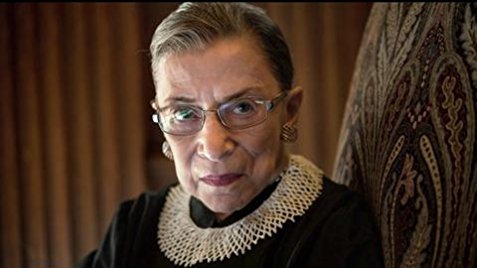
RBGis the affectionate and enlightening biodoc about US Supreme Court Justice Ruth Bader Ginsburg. The challenge, of course, is in making such a famously stonefaced 84-year-old subject relatable. RBG pulls that off by hearing from Ginsburg’s family and childhood friends, and by showing her reaction to the “Notorious RPG” meme and to her portrayals on SNL.
Most importantly, RBG traces her longtime marriage to her late husband Marty, an affable extrovert with a zany sense of humor. He was a highly accomplished lawyer in his own right but, unusual for his generation, was also a man who embraced his wife’s career goals surpassing his own.
This is an exciting movie for a legal geek (like me). RBG documents Ginsburg’s role as the leading legal strategist for women’s rights, carefully picking the factual bases and the sequence of cases heading to the Supreme Court. It appears that Ginsburg really has only Thurgood Marshall as a peer in orchestrating the progress of a major civil rights movement.
Unfortunately that makes Ginsburg’s dissents in the regressive decisions of Roberts Court (Bush v Gore, Hobby Lobby, Shelby) all the more sobering.
That being said, what is impressive (and reassuring) is that RBG shows Ginsburg working out at the gym – she can hold a plank longer than I can hold mug of beer.
I must note that RBG is outright reverential – but why not? Ginsburg deserves it.
In the 60s, 70s and 80s, we in Northern California suffered more than our share of serial killers, to the point that I couldn’t even remember the Golden State Killer, recently snagged by a much ballyhooed foray into ancestry DNA. But the list topper has to be the Zodiac Killer, a random thrill killer who used the news media to taunt the police and terrify the Bay Area.
Officially, this case has never been solved. But there’s a pretty convincing theory about the killer’s identity advanced in David Fincher’s 2007 Zodiac.
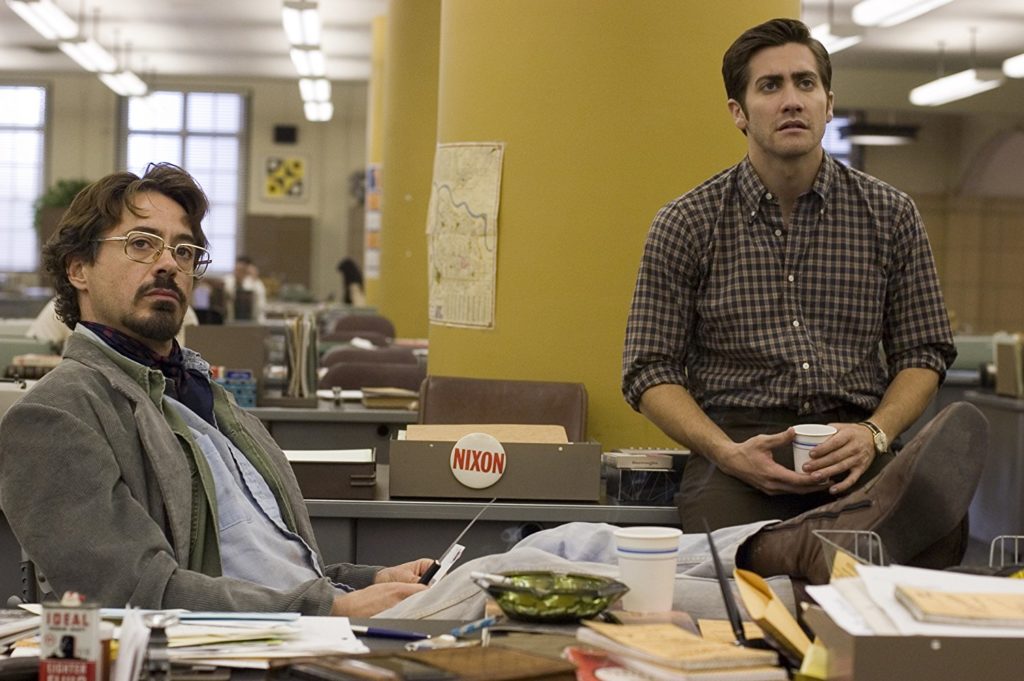
Fincher spins his story through the separate obsessions of three Zodiac-hunters. There’s the dogged homicide detective (Mark Ruffalo) and the renegade newspaper reporter (Robert Downey, Jr.). Then there’s the oddball, a newspaper cartoonist (Jake Gyllenhaal); unlike the other two, it’s not his job to track down the killer. He’s a puzzle hobbyist who takes on the killer’s cryptogram and then plunges down the rabbit holes of matching handwriting and the availability of various suspects.
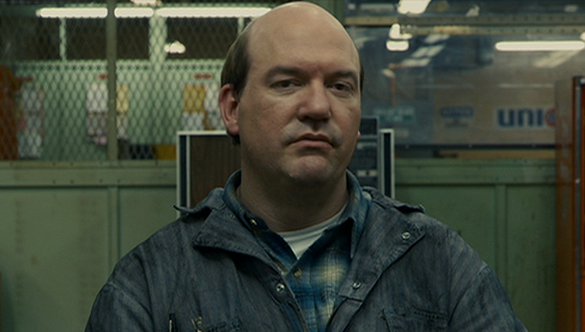
Ruffalo, Gyllenhaal and Downey are all superb. And John Carroll Lynch takes the creep-o-meter off the scale as the prime suspect.
The supporting cast is brilliant and unusually deep, including Chloe Sevigne, Elias Koteas, Clea DuVall, Donal Logue, Philip Baker Hall, James Le Gros and an unrecognizable Candy Clark. Brian Cox nails the bluster and wit of that prototypical celebrity attorney, Melvin Belli.
John Carroll Lynch in ZODIAC
Fincher, of course, is the master of the serial killer movie. Before Zodiac, he made what is probably still the most thrilling serial killer movie, Se7en. He followed Zodiac with the top-notch The Girl with the Dragon Tattoo and Gone Girl. In Zodiac, Fincher builds the tension, occasionally giving the audience relief with some laughs, especially when Gyllenhaal’s amateur sleuth finds himself in a situation that he thinks is much more dangerous than it really is.
The film is also a dead-on time capsule of the 70s in the San Francisco Bay Area, from the opening shot, a drive through a Vallejo neighborhood on the 4th of July. The fashions and the music of the period are perfect, especially the Donovan and Santana songs. This was before law enforcement had DNA to work with – and, in the case of two of the investigating police departments, even a newfangled fax machine. As the 70s approach the 80s, we even see an early Pong video game. One thing that I did not personally remember from the era, but have verified really did exist, is the Aqua Velva cocktail.
This is a wonderfully entertaining movie. Zodiac can be streamed from Amazon (included with Prime), iTunes, Vudu, YouTube and Google Play.
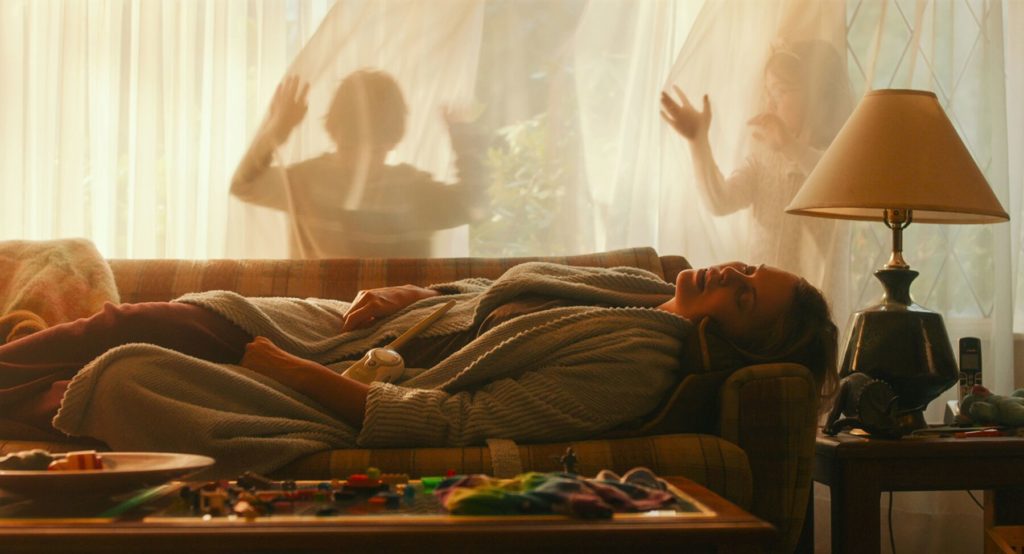
Charlize Theron stars in Jason Reitman’s TULLY. Courtesy of SFFILM.
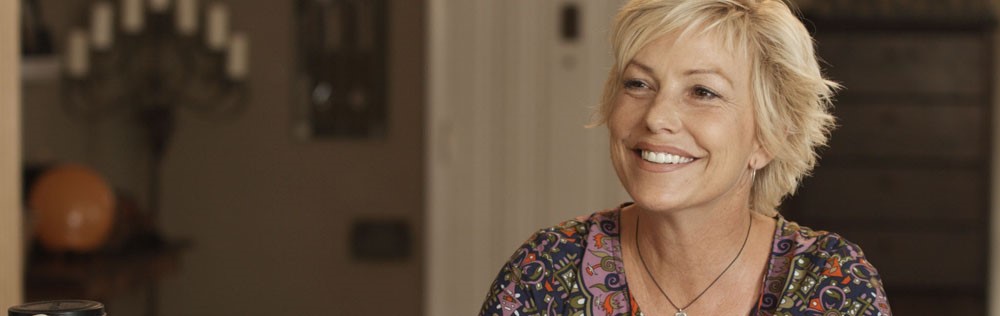
The compelling dark comedy Tully stars Charlize Theron, is written by Diablo Cody and directed by Jason Reitman. Those three combined on the underrated game-changing comedy Young Adult, and Tully is another very singular film.
Theron plays Marlo, a mom who has just given birth to her third child. Her oldest kid has intense special needs and a newborn brings another level of obligation. Marlo develops a serious case of depression. To ease the burden, she gets a night nurse named Tully; Tully has an otherworldly quality which brings relief and respite to Marlo. And then there’s a major plot twist…
Theron is a fearless actress – not afraid to glam down, She gained fifty pounds for this role (not as big a glam down as for Monster). In Young Adult, she was game to play a thoroughly dislikable character. Here she plays a real Mom, not a Perfect Mom. In real life, caregiving can take its toll, and that’s what we see here.
Mackenzie Davis brings a magical quality to the character of Tully. Ron Livingston is very good as a loving but clueless husband; ill-equipped to recognize, let alone deal with Marlo’s depression.
Tully was featured at the San Francisco International Film Festival (SFFILM) (although I missed it because I was at the Leave No Trace screening); Theron and Reitman attended the SFFILM screening, and, from all reports, Theron wowed the crowd.
Tully is an excellent and insightful film. It’s a dark comedy and NOT A LIGHT MOVIE – after all, with all its laughs, it’s about postpartum depression.
The remarkably successful dramedy Quality Problems plunges us into a contemporary world that most of us in the sandwich generation recognize – a life so busy that the relative importance of our stress-inducers can blur. Something like the cake for your kid’s birthday party can seem as important as paying the bills or dealing with an aging parent. Until cancer reshuffles the deck. Quality Problems‘ insights in navigating modern life are accessible because it’s so damn funny.
Bailey (Brooke Purdy) and Drew (Doug Purdy) are a couple in their early forties with two school-age kids. Each is comfortable taking on one child-rearing or domestic task while handing off a competing responsibility to their partner. Each knows – and accepts – what the partner is – or is NOT – good at. Both have wicked senses of humor, and they are affectionate and even playful. Their relationship has weathered the usual financial and parental challenges, along with an episode where Bailey beat back breast cancer.
Brooke Purdy wrote the screenplay and also co-directed with Doug Purdy. The breezy banter between characters is often flat-out hilarious. This is not sitcom-grade humor, it’s much closer to a Hawksian screwball comedy. The characters deal with cancer and parental dementia with a dark humor that is realistic and funny.
Bailey’s single neighbor and bestie Paula (Jenica Bergere) is an essential member of the family’s support structure, but Paula and Drew loathe each other. Chained together because of their attachment to Bailey and the kids, every interaction sparks a new round of insults. This isn’t good-natured teasing – the jibes, in particular about his job and her reproductive health, are aimed to hurt. The Paula-Drew relationship adds some edginess to the mix and contributes to the film’s authenticity.
Watch for an uncredited cameo by the prolific and versatile character actor Alfred Molina (Raiders of the Lost Ark, Love Is Strange). Veteran Chris Mulkey is excellent as Bailey’s dad, who is sinking into dementia.
Quality Problems is the directing debut for Brooke and Doug Purdy, and I attended its world premiere at Cinequest. Quality Problems can now be streamed from Amazon Prime, iTunes, Vudu, YouTube and Google Play.
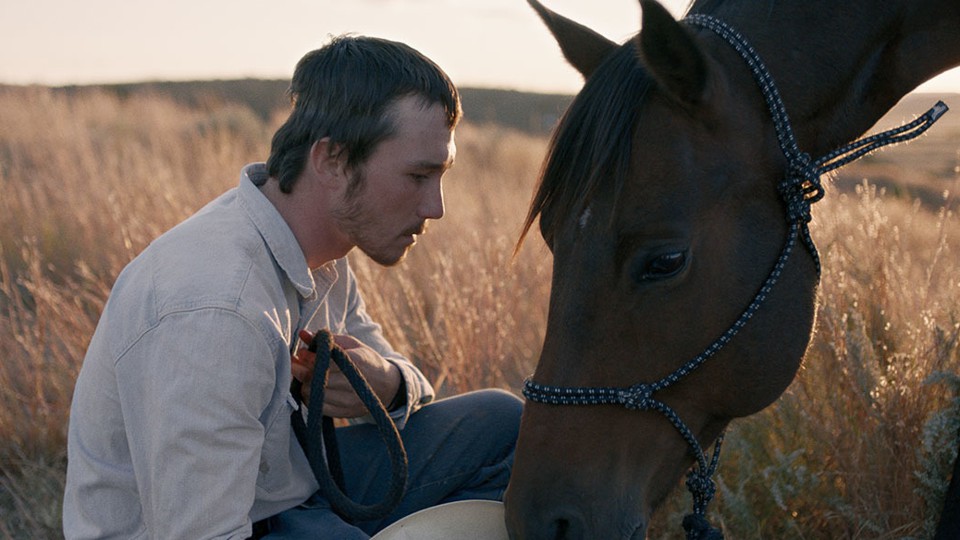
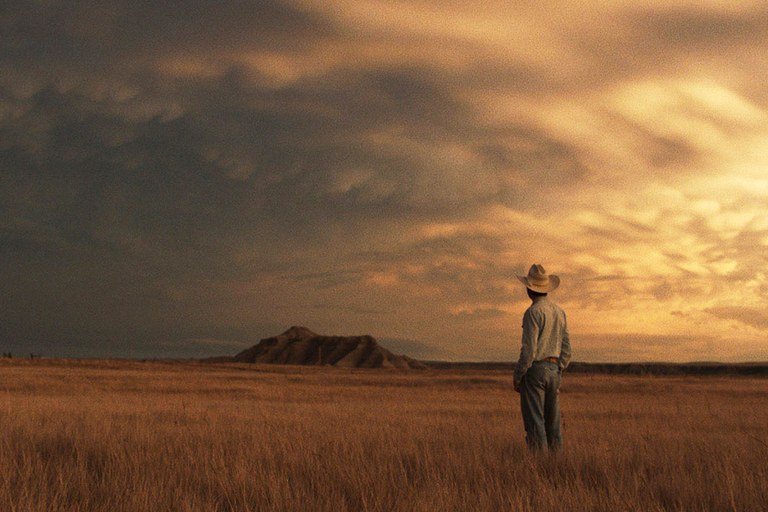
In her contemporary Western The Rider, director Chloé Zhao has made a beautiful and emotionally powerful film and announced herself as an American filmmaker of significance. In The Rider, 20-year-old Brady is a rodeo rider and horse trainer who lives on the least romantic ranch on the windblown South Dakota prairie. Brady lives with his 15-year-old sister, who has a cognitive disability somewhere on the autism spectrum, and his non-touchy feely dad. The mom has died a few years before. The family lives in a trailer on a hardscrabble working ranch.
Brady’s soaring career as a rodeo star has been ended by a bronco’s hoof; Brady now has a metal plate in his skull and seizures in his hand. His rodeo career – and his only shot at fame and fortune – is over. But Brady is also a gifted horse trainer – and he may not even be able to ride horses without risk to his health and life. What makes that risk not at all theoretical is that Brady’s rodeo friend Dane is in even worse shape and lives in a rehab facility. So Brady’s story is one of confronting loss and figuring out how to negotiate the rest of his life without access to his passions.
Brady’s story is emotionally powerful and devoid of cheap sentiment. The Rider is not even the least bit corny.
I went to see The Rider knowing almost nothing about it. When the end credits rolled, I was stunned to see that the actors playing Brady, his sister and his dad are a real family. Indeed, ALL of the cast are non-professional actors.
Director Chloé Zhao met The Rider’s star, Brady Jandreau, when he wrangled horses on her first film Songs My Father Taught Me, also shot on South Dakota’s Pine Ridge Reservation. After the making of that film, she reached out to Brady after he suffered a serious real life rodeo injury. When he told her that he would risk his life to continue training horses, she determined to make Brady’s story into this movie.
THE RIDER
Zhao’s partner, the Brit cinematographer Joshua James Richards, shot both of her films. The cinematography, in The Rider is exceptional, especially the weather in the Big Sky above the prairie. There’s a cowboy campfire scene which may be the most beautifully shot scene in movies this year. The Jandreaus live on a scruffy working ranch, neither romantic or picturesque.
I’m not fascinated by horses, but I found the horse training scenes in The Rider to be riveting.
It’s clear that Zhao and Richards are major artists. The Rider is a significant movie and one of the year’s best.
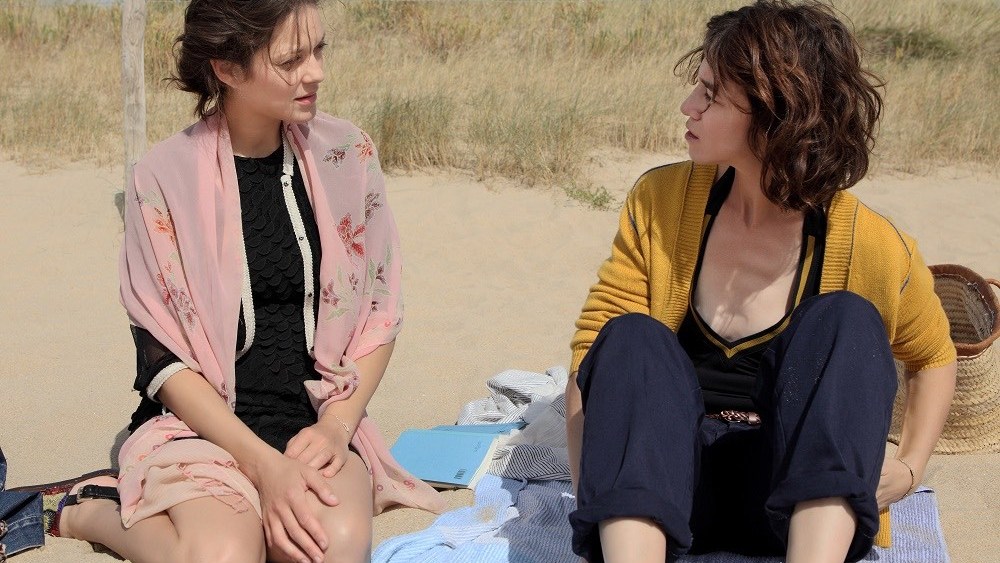
Marion Cotillard and Charlotte Gainsbourg in ISMAEL’S GHOSTS
Suppose that you’re in mid-life, mid-career and mid-relationship, and your ex-spouse – whom you have thought dead for a decade – suddenly shows up. In Arnaud Desplechin’s Ismael’s Ghosts, that is exactly what happens to a filmmaker (Mathieu Amalric) when his long-disappeared ex (Marion Cotillard) pops in. So far, so good. But then Ismael’s Ghosts begins to slide off the rails.
The filmmaker accompanies his ex-father-in-law, who is being honored in Israel, but then the story becomes unhinged and, finally, impossible to follow. It’s just one indecipherable mess.
I was actually looking forward to this movie. I loved Desplechin’s My Golden Days, and I admire Cotillard and Charlotte Gainsbourg (who plays the filmmaker’s current partner). But Ismael’s Ghosts is just a waste of their talent and my time. I saw Ismael’s Ghosts at Cinequest before its US theatrical release.
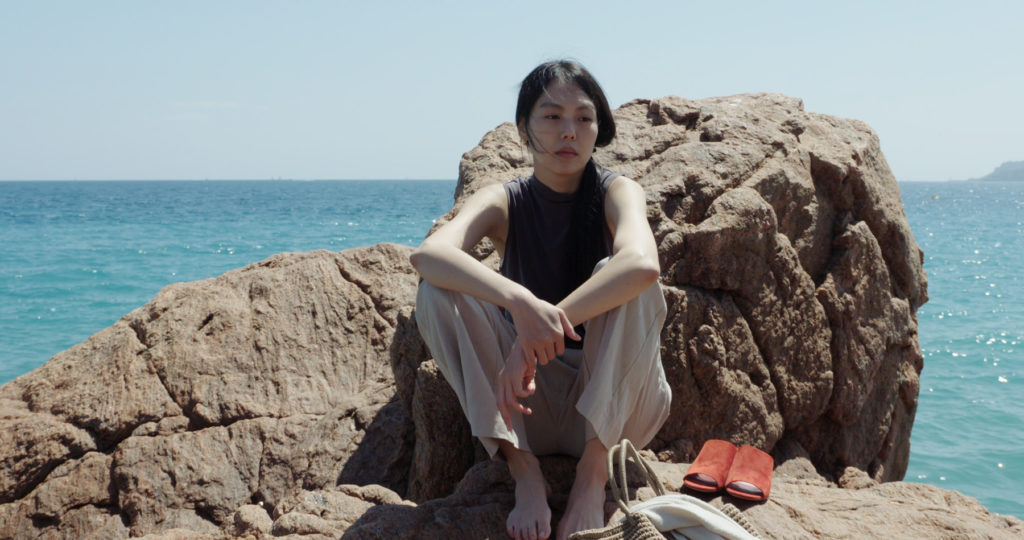
Min-hee Kim in a scene from Hong Sang-soo’s CLAIRE’S CAMERA, playing at the 2018 San Francisco International Film Festival, April 4 – 17, 2018. Courtesy of SFFILM.
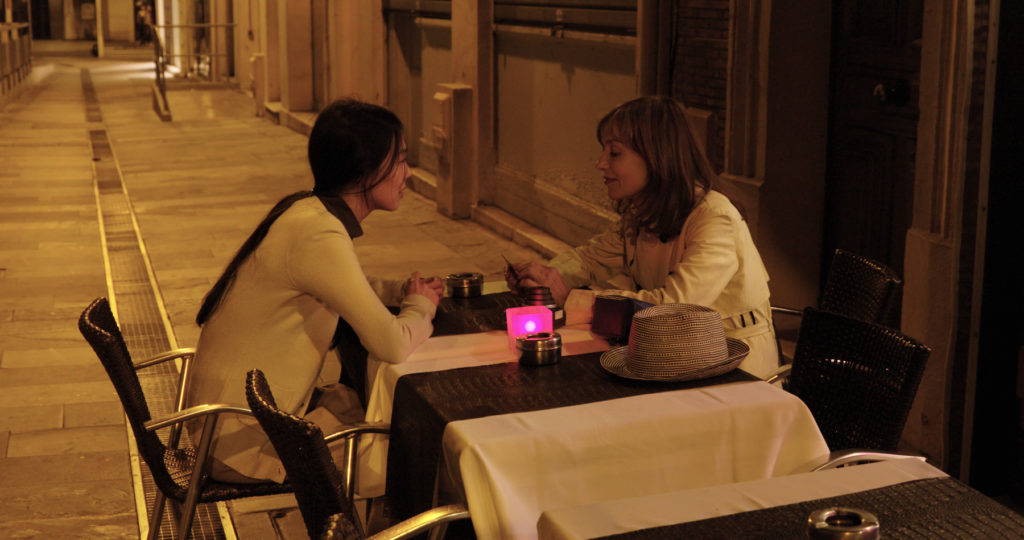
Claire’s Camerais the latest nugget from writer-director Hong Sang-soo, that great observer of awkward situations and hard-drinking. Jeon (Min-hee Kim of The Handmaiden) is a film company assistant who ia traveled to the Cannes Film Festival for the premiere of a Korean film. It turns out that the film company executive has had a long-term relationship with the movie’s director, and she immediately fires Jeon when she learns of Jeon’s fling with the director. With several days sill to go before her return flight, Jeon wanders around Cannes. Jeon meets the French schoolteacher and amateur photographer Claire (Isabelle Huppert) and they hang out. Coincidentally, Claire also meets the director. Most of the dialogue is in English, the common language of the French and Korean characters – and the earnestly imperfect English-speaking supplies some of the film’s humor.
Not only does Claire have a camera, she IS the camera through which we observe the foibles of the other characters. Jeon is breathtakingly clueless (or in denial) about the reason for her dismissal. The director, as many Hong Sang-soo characters, has an enthusiastic relationship with alcohol. It’s all dryly funny, although the director and the executive redefine their relationship in a powerfully realistic scene.
This is an especially fine performance by Min-hee Kim. She pulled off some deadpan humor in The Handmaiden, a film more thought of for its eroticism and mystery. Here, she’s often just wandering around in reflection and making small talk. But Kim is just so watchable, she keeps the audience’s interest keen.
Claire’s Camera is not as surreal as last year’s Hong Sang-soo entry, Yourself and Yours, but just as observational and droll. I saw Claire’s Camera at the San Francisco International Film Festival (SFFILM), where Hong Sang-soo has a cult following and always appreciative audiences. It’s now playing at the 4 Star in San Francisco.
Min-hee Kim and Isabelle Huppert in a scene from Hong Sang-soo’s CLAIRE’S CAMERA, playing at the 2018 San Francisco International Film Festival, April 4 – 17, 2018. Courtesy of SFFILM.
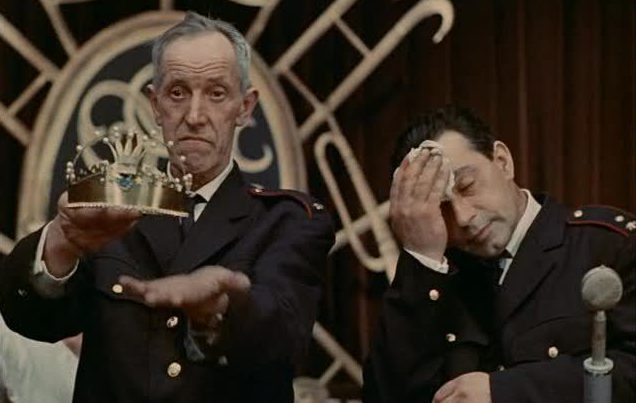
As a tribute to the great director Miloš Forman, who just died at age 86, this week’s video pick is Forman’s 1967 Czech comedy The Firemen’s Ball. Forman came of age in Communist Czechoslovakia, and the prevalent thread in his films was the challenging, even mocking, of authority. That’s what The Firemen’s Ball is all about.
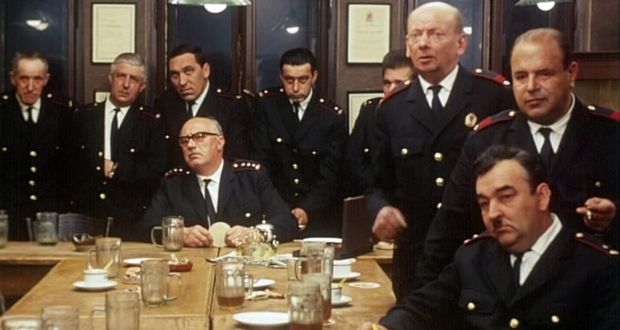
It’s a comedy of errors set during the annual ball of a small town fire brigade. It’s an obligatory occasion, and everyone is just going through the motions. No one is willing or able to do what they are supposed to be doing, whether it is protecting the raffle prizes or even putting out fires. The film eviscerated the moral bankruptcy of the Communist society.
The bumbling old farts on the ball committee try to put on a beauty contest, and they shanghai a bunch of young women in attendance and parade them around the committee room to prep them for the pageant. The Wife was offended by the sexism of the scene, but she didn’t stick around to see the committee get their comeuppance when the contestants themselves blow up the Big Announcement and turn the committee members into objects of ridicule. Stick with it – the whole movie is only 73 minutes long.
In his youth, Forman lived through the Nazis, who he described as evil, and the Communists, who he described as absurd. Indeed, the Czech ruling Politburo did recognizer themselves in The Firemen’s Ball’s bumbling firemen’s ball committee, and they concocted a pretext to ban the film in Czechoslovakia.
The Firemen’s Ball (which is also sometimes listed as The Fireman’s Ball) can be streamed from Amazon Prime and rented on DVD from Netflix. It’s only one hour, thirteen minutes long, and it’s a hoot.
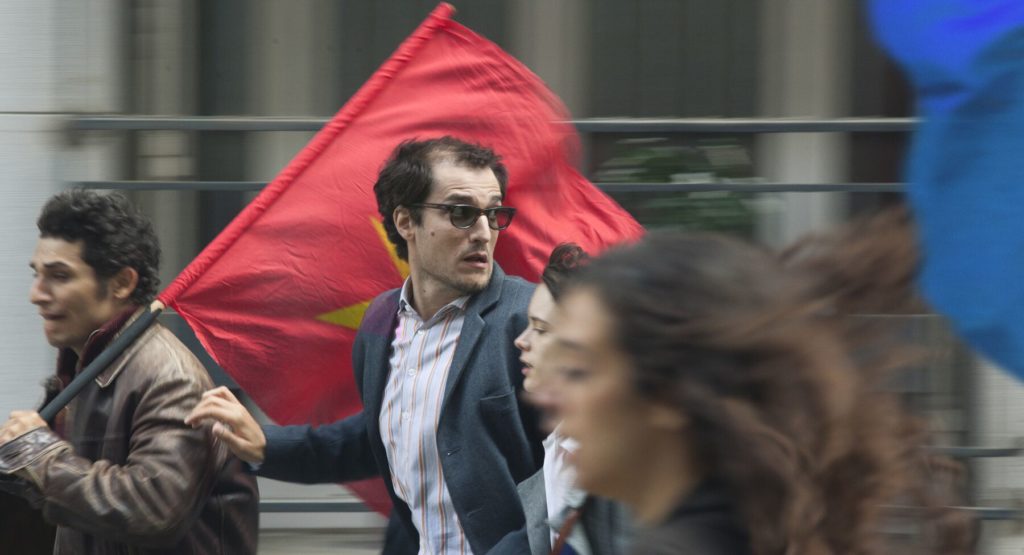
Louis Garrel in a scene from Michel Hazanavicious’s GODARD, MON AMOUR, playing at the 2018 San Francisco International Film Festival, April 4 – 17, 2018. Courtesy of SFFILM.
Godard, Mon Amouris a bitingly funny portrait of flawed genius. Michel Hazanavicius (The Artist) pays tribute to the genius of filmmaker Jean-Luc Godard’s early career while satirizing Godard’s personal excesses.
Godard, Mon Amour traces the three pivotal years after Godard married Anne Wiazemsky, the 19-year-old star of his La Chinoise. Godard (Louis Garrel) is age 37. In the preceding seven years he has helped revolutionize cinema as a leader of the French New Wave. He has made three masterpieces: Breathless, Contempt and Band of Outsiders. This is the Godard of “All you need to make a movie is a girl and a gun.”
But now Godard has become a doctrinaire Maoist and rejects his past work. He sees himself as a thought leader of revolutionary politics – but that is a delusion. He’s just a political amateur, a poseur, a tourist.
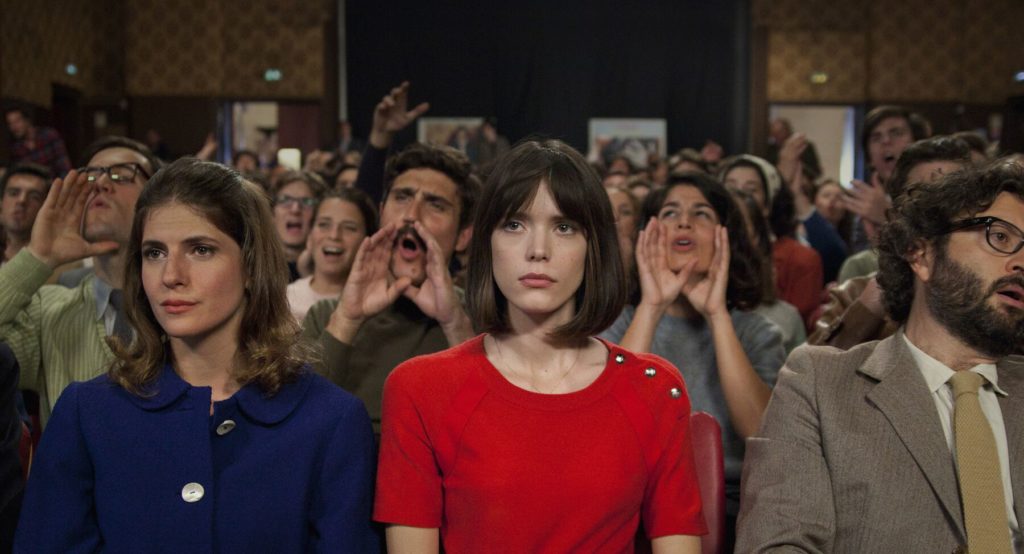
Stacy Martin (center) in a scene from Michel Hazanavicious’s GODARD, MON AMOUR, playing at the 2018 San Francisco International Film Festival, April 4 – 17, 2018. Courtesy of SFFILM.
“Godard is dead”, Godard declaims. But young Anne (Stacy Martin) has hitched her star to the old Godard, the master of cinematic innovation and rock star, not this new dogmatic Godard.
This is also a snapshot of 1967, when many on the French Left believed that revolution in France was around the corner. By 1969, it was apparent to virtually everyone that this had been a mirage, that revolution was not going to happen. To everyone but Godard, who stubbornly stuck with his dogma.
Louis Garrel, his dreamboat looks glammed down with Godard’s bald spot, is often very funny as he deadpans his way through Godard’s pretensions. In Godard, Mon Amour, Godard’s thinking has become so devoid of humor, nuance, texture and ambiguity that his art has become one-dimensional and boring. Indeed, I have found all of the Godard films since 1967’s Weekend to range from disappointing to completely unwatchable. Godard is alive at age 87 and still making movies today – and they all suck.
In his very biting send-up of Godard’s personal failings, Michel Hazanavicius pays tribute to Godard’s groundbreaking cinematic techniques. We see jump cuts, breaking the fourth wall, shifting between color and negative imagery, subtitling the characters’ interior thoughts over their spoken dialogue and references to earlier movies. It’s all very witty.
There’s even a motif of repeatedly broken spectacles as an homage to Woody Allen’s Take the Money and Run. In one of the more obvious jokes, Godard and Anne debate whether either would choose to appear nude in a movie while they walk around their room in complete, full-frontal nudity.
The more of Godard’s films you have seen, the more enjoyable you will find Godard, Mon Amour. If you don’t get the allusions to Godard’s filmmaking, you may find the protagonist of Godard, Mon Amour to be miserably tedious. I saw Godard, Mon Amour at the 2018 San Francisco International Film Festival (SFFILM). It opens this Friday in the Bay Area.
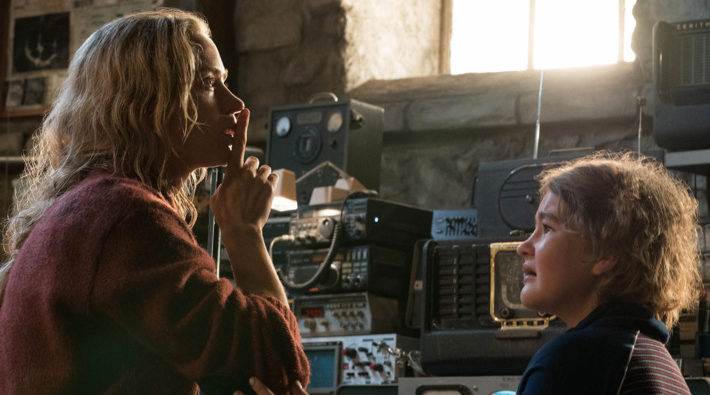
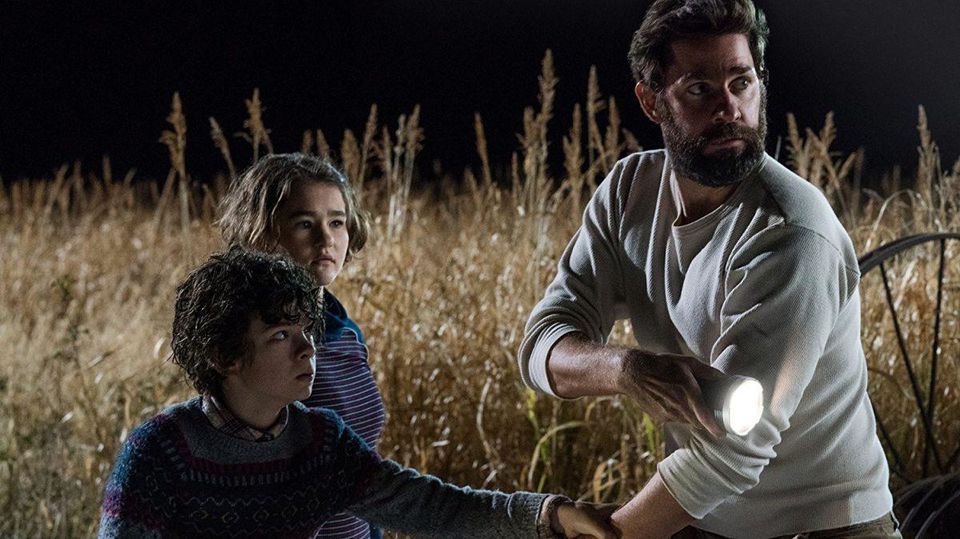
It’s been a while since I’ve seen a more satisfyingly scary movie than A Quiet Place. Director John Krasinski proves an economical story-teller – with essentially no dialogue, he helps us learn the set-up in few minutes. The earth has been overrun by man-eating monsters, who are blind but have a super-acute sense of hearing. Anyone who makes noise is immediately eaten by a monster. There aren’t many human survivors, but one family is holding out on their remote farm – a dad (Krasinski), a mom (Krasinski’s real life wife Emily Blunt), a daughter who is eleven or twelve and a son who is a year younger.
They walk only barefoot, speak only in sign language, and have devised ways to do every possible task silently. However, the mom is pregnant; childbirth and babies tend to be noisy, so there’s a ticking time bomb element to the story.
In fact, the characters (and we) are in a state of intensely heightened alertness during the entire movie – except for when a monster shows up and plunges us into outright terror. Mercifully, the gore and splatter happen off-screen, but the monster is plenty scary, and it hunts the family members at the closest of quarters and when they are at their most vulnerable. I saw A Quiet Place in a theater, and the audience stayed in a state of tense silence – like we were all afraid to make any noise by gasping or shrieking.
Each family member blames himself or herself for the loss of the third and youngest child, so there’s also an element of family drama in A Quiet Place. Krasinski and Blunt are excellent, and the kid actors (Millicent Simmonds and Noah Jupe) are, too.
I’m not a big horror movie fan, but I enjoyed and admired A Quiet Place.