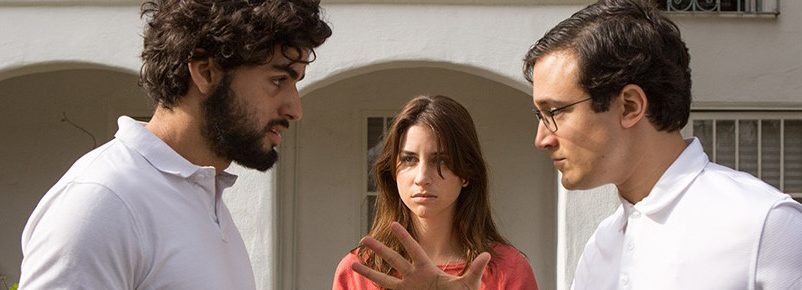
Adam Driver and Jonathan Pryce in THE MAN WHO KILLED DON QUIXOTE
The Man Who Killed Don Quixote is director Terry Gilliam’s final conquest of the iconic Miguel Cervantes novel. Gilliam has been trying to make this movie for decades, and the 2002 documentary Lost in La Mancha, which chronicles one disastrous attempt, is a more entertaining movie than this one. Lost in La Mancha can be streamed on Amazon and iTunes.
Adam Driver plays Toby, a film director, in demand for his commercials, who had failed at a Don Quixote film as a young indie director. Now Toby returns to Spain, and tries again with more resources. He finds that the older local man (Jonathan Pryce) in the first film shoot has become deluded that he really is Don Quixote. He also finds that his earlier venture changed the life of a young girl from the village (Joana Ribeiro).
Terry Gilliam is nothing if not imaginative, as demonstrated by his earlier films Brazil, The Adventures of Baron Munchausen, The Imaginarium of Doctor Parnassus, The Zero Theorem). Here he creates thread after thread of deluded quests and braids them together. He captures the combination of absurdity and futile earnestness in the source material.
The Man Who Killed Don Quixote is witty and well-made, but neither Gilliam’s nor Cervantes’ stories make the film engrossing. I saw The Man Who Killed Don Quixote at the 2019 Cinequest, where it was the closing night film.
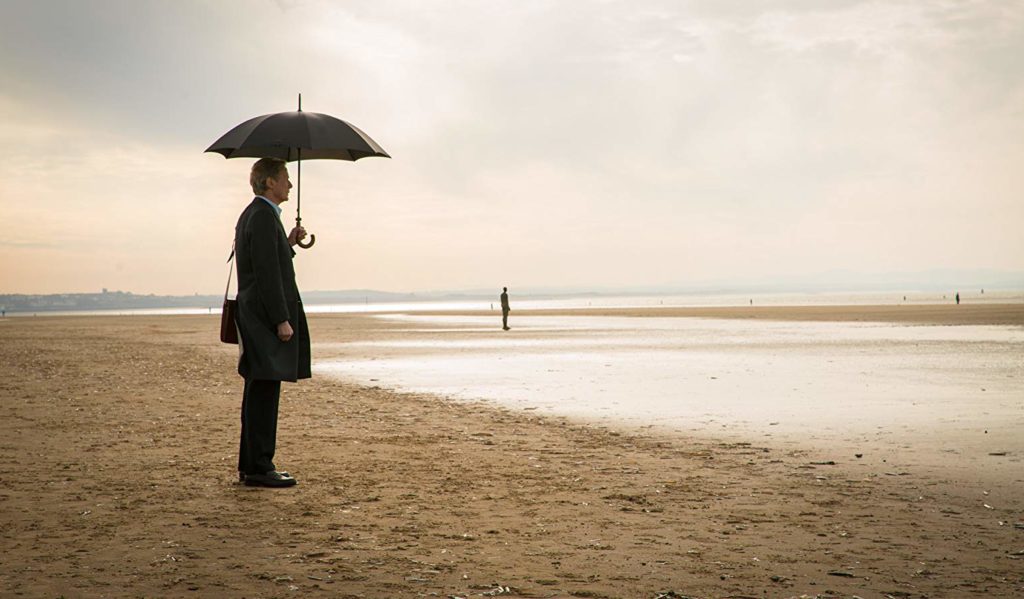
In the wry and deadpan Bill Nighy vehicle Sometimes Always Never, a father and son make an unwelcome road trip – a pilgrimage to identify a corpse, possibly that of their long-missing son/brother. This often sweet and more often funny film poses a serious question – how does one resolve the unresolvable – a tragedy in the past that is still unexplained? And, in searching obsessively for the Prodigal Son, what about the Other Son?
Writer Frank Cottrell Boyce and director Carl Hunter combine to flesh out Nighy’s character with a lot of singular touches. Nighy’s proper-looking father is an enthusiastic and ruthless Scrabble hustler (who knew THAT was a thing?). And, from some combination of a grief reaction and OCD, he tries to impose order upon his universe with a Label Maker.
The most compelling reason to watch Sometime Always Never is that Bill Nighy is always such a pleasure to watch. Here, he is delightful when he is devious at Scrabble and when he benevolently unblocks his grandson’s courtship. Perhaps one day. iPhones will learn not to autocorrect his name to “Night”.
Hunter’s pacing is most decidedly not frenetic and his color palette is Mid-Century Modern in a contemporary story.
And here’s a random note: I enjoyed seeing the actress Jenny Agutter again, 43 years after she captivated me in Logan’s Run
I saw Sometimes Always Never at Cinequest, where the affable and mischievous Bill Nighy made a personal appearance at the screening.
The Paraguayan sex comedy Original Sin (Pecado Original) is primarily a social satire, sending up the stiffness of Paraguay’s upper class. A young married couple is trapped by the roles expected of them, and the wife chafes at her life devoid of anything except daytime TV and day-drinking. The husband is a prig, and has a particular repression that no male audience member will be able to relate to. The wife MAY have purchased a painting at a charity auction, and the impossibly handsome artist show up to deliver the painting. Raucous, and fairly predictable, humor ensues. A duel-by-badminton is pretty funny.
Cinequest hosted the North American premiere of Original Sin.
In the charming Azerbaijani-German comedy The Bra, train tracks run through the narrow main street of a remote Azerbaijani village. The villagers set up cafe tables and hang their laundry across the tracks. When the daily train arrives, a 10-year-old boy runs up the tracks sounding the alarm, and the villagers scramble to clear the tracks. Occasionally, the train snags an object or a piece of laundry, which is rescued by the train’s mournful engineer Nurian (Serbian actor Predrag ‘Miki’ Manojlovic). Nurian then hikes from his even more remote home back to the village to return the item.
One day, the train ends up with a blue brassiere. Nurian goes door-to-door, holding up the bra to each woman in the village, hoping to find its owner. Along with many doors slammed in his face, he gets a variety of responses from village women. Of course all this is absurd, and The Bra is a triumph of absurdist humor.
One day, the train ends up with a blue brassiere. Nurian goes door-to-door, holding up the bra to each woman in the village, hoping to find its owner. Along with many doors slammed in his face, he gets a variety of responses from village women. Of course all this is absurd, and The Bra is a triumph of absurdist humor
Subtitles are unnecessary in The Bra because there is no discernible dialogue. It’s not a silent film – we hear the ambient noises and the human characters mutter and yell, but we can’t distinguish what they are saying. Like a silent film, the actors convey their feelings by what is essentially pantomime. And it’s all more naturalistic than it may seem on paper.
The Bra is the work of German director and co-writer Veit Helmer, who has been making films in Central Asisn nations for a decade. The cast is Central Asian and Pan-European, with some recognizable faces like Denis Lavant from France and Paz Vega from Spain. The performance by Manojlovic, so filled with humanity, is very special.
The little boy who runs up the tracks is a homeless orphan, cruelly treated by the villagers. The relationship that Nurian builds with the boy is a touching counterpoint to the film’s many comic situations.
Now I need to say that The Wife hated this movie and found it offensive to women; I think this was an aberration caused by her physical discomfort during the screening. I heard women laughing heartily throughout the film and other women told me how much they liked the film, which was, after all, a festival favorite among all genders.
Cinequest hosted the US premiere of The Bra, and was one of the hits of the festival. The Bra won the jury prize for Best Narrative Feature (Comedy) and, when a prime time screening needed to be filled, programmers called on The Bra. Yes, this is an Azerbaijani comedy without any dialogue, but it’s a Must See if you get the chance
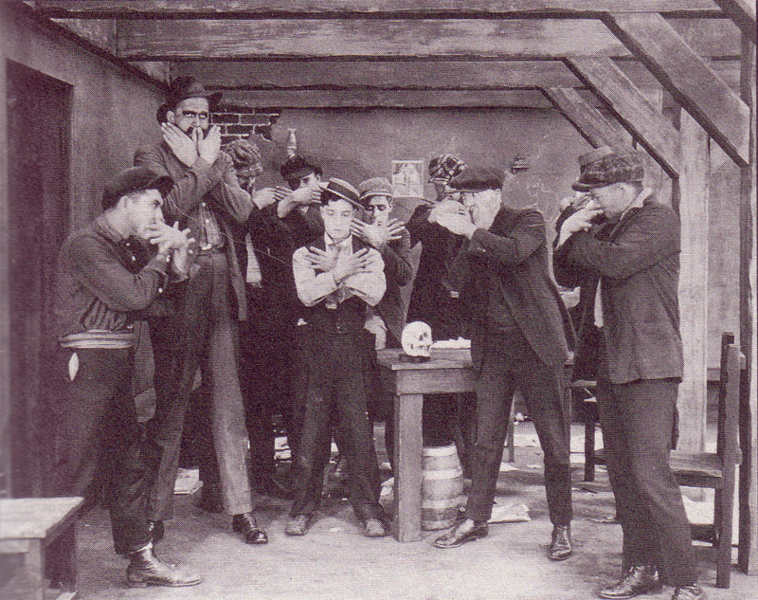
THE HIGH SIGN: Buster Keaton and the Blinking Buzzards flashing the gang sign
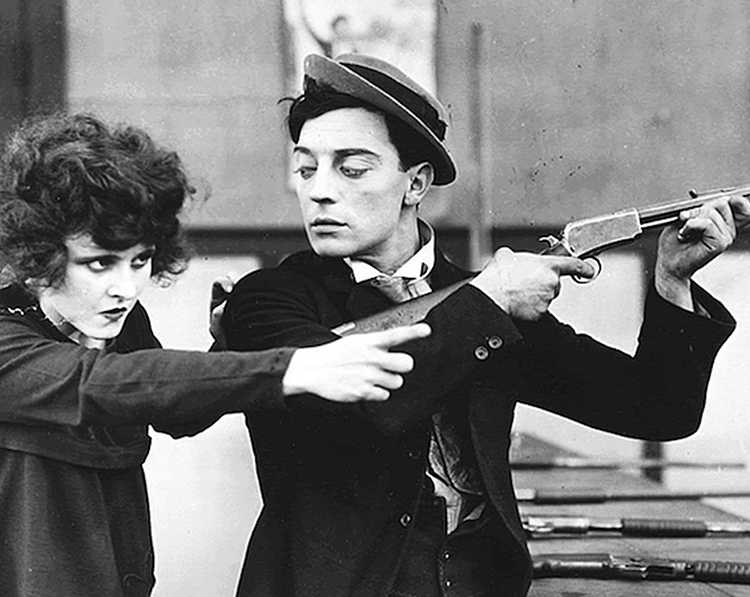
The High Sign is 20-minutes of Buster Keaton’s rapid-fire comedy from 1921. Buster plays a young man who cons his way into a job managing an amusement park shooting gallery and inadvertently becomes entangled with a murderous gang of thugs. The plot exists to set up two exquisite comic set pieces. In the first, Keaton sets up an elaborate Rube Goldberg device to trick the boss into believing that Keaton is a master marksman. And the second is a triumph of Keaton’s ingenuity, as the gang members chase him through a cutaway two-story house, complete with trap doors and secret passageways.
Of course the gang itself, the Blinking Buzzards, is ridiculous, especially when they flash their secret gang sign. There’s also humor in the contrast between the towering gang leader (6′ 3″ Joe Roberts) and the diminutive (5′ 5″) Keaton.
The High Sign is a two-reeler, a 20-minute short film. The conventional wisdom among early movie studio heads was that a comedy could only be sustain audience interest for 20 minutes. Keaton, Charlie Chaplin and Harold Lloyd would soon dispel that myth.
In fact, The High Sign came just before Keaton unleashed his string of comic masterpiece features: Sherlock, Jr. (1924), The Navigator (1924), Seven Chances (1925), The General (1926), Steamboat Bill, Jr. (1928) and The Cameraman (1928). After The Cameraman, Keaton’s new studio took away his creative control, and his career (and personal life) crashed.
I saw The High Sign at Cinequest, accompanied by world-renowned Dennis James on the Mighty Wurlitzer organ, before Steamboat Bill Jr. I recommend Sal Pizarro’s excellent profile of Dennis James in the Mercury News.
Also known as The “High Sign”, the film plays occasionally on Turner Classic Movies and possibly bootleg versions can be streamed on YouTube and Vimeo.
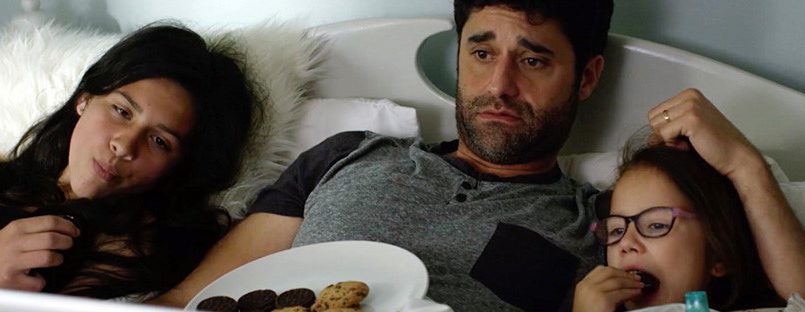
In the indie drama Bring Me an Avocado, an Oakland mom goes into a coma, and her husband and two daughters must spend several months going on with their lives, not knowing whether the mom will wake up. The mom’s sister and her BFF step up to support the family by helping out with cooking and childcare. Of course, there’s a lot of pressure on this extended family, and the relationships between the three adults evolve and get complicated.
[MINOR SPOILER] After months, the mom wakes up. Things are not the same as before, and she decides, in an emotional catharsis, how the family will move forward.
Bring Me an Avocado is the first feature for writer-director Maria Mealla. Anyone who writes a coma movie has to decide how the character gets in the coma without making it an obvious contrivance; Mealla’s solution rings authentic, an event that is horrific and absolutely plausible.
Sarah Burkhalter plays the mom, and her performance takes over the final ten minutes of the movie; her character pieces together what happened while she was comatose, processes it and acts on the future of her family.; Burkhalter makes the ending very powerful. The child actors playing the daughters, California Poppy Sanchez and Michaela Robles, are superb.
I really wanted to like this Bay Area indie more than I did. It runs 104 minutes, and would have been better film at 90 minutes – and without the musical interludes. Not all of the cast is as strong as are Burkhalter and the kids. And [MINOR SPOILER] , it’s distracting when the mom spends months in a coma without any wasting, waking up looking pretty hearty, with just a bandage on her back.
Cinequest hosted the world premiere of Bring Me an Avocado.
Many will cringe at the promise of this episode of the Belgian reality show Taboo: humorist Philippe Geubels spends time with four dying people and then hosts an entire audience full of terminally ill people for his stand-up comedy show – about their situation. It’s surprisingly empathetic and touching.
OK, so if ever there was a Rorschach test of a television show, it’s Taboo. Each week, Geubels meets a series of folks with conditions and disabilities that put them outside the mainstream – amputees, the obese, little people, ethnic minorities, etc. Then he invites them to constitute the live audience of a comedy show in which he tells jokes about them. They love it.
Geubels is clearly running right through the taboo of making fun of the disabled and minorities. But is he laughing with them or at them? Is he showing them more empathy than those who are too uncomfortable to ever acknowledge their conditions? Is Geubels almost alone in making us look at these folks for who they are? Does it matter that Geubels’ humor is delivered face-to-face to his subjects?
Uneasy about how to discuss the disabled in this day and age? Consult the National Center on Disability and Journalism’s Disability Language Style Guide.
I’m sure that some, perhaps many, audience members will be offended by Taboo. The politically correct will be offended without even watching the show. Others will embrace Geubels for his wit and intended empathy. For sure, there will be plenty of LOLs at the screening.
This Belgian TV show is mostly in the English language. Cinequest hosts the North American premiere of Taboo in the television section of the fest.
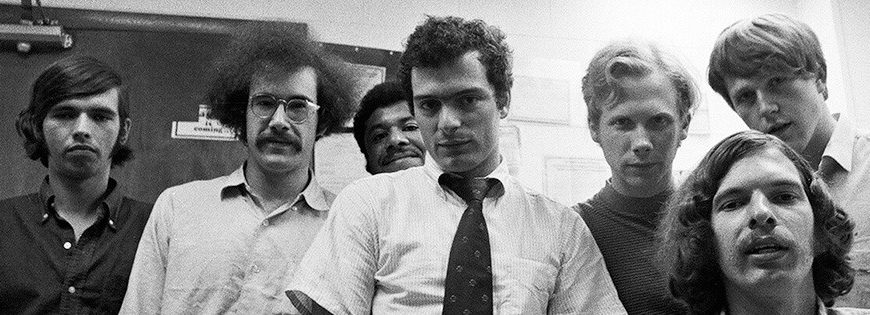
There was a time before FM radio was a big deal, and a time when someone had to imagine it. A fairly conventional-appearing lawyer named Ray Rieman did just that in Boston, and started by assembling a team of colorful misfits. Mirroring the counter-culture, these guys invented just about every aspect of the album-oriented FM radio that became ubiquitous in American cities within just a few years.The documentary WBCN and the American Revolution tells this story.
Rieman was an iconoclastic genius who faced new challenges daily. For example, what happens if you run a radio station and your news director learns from the new wire that he has just been indicted for terrorism?
One of the less remembered aspects to hippie culture was that it was pretty sexist. That’s how WBCN started out, but these guys were very open to change, especially after local women listeners delivered a pointed gift of live baby chicks to the station.
We see WBCN’s impressive set of firsts – the first alternative radio news show, the first female rock DJs, the first gay radio show, and the first time that Bruce Springsteen was live on the radio, along with Patti Smith’s obscenity-laced poetry.
Of course, WBCN and the American Revolution is a time capsule, rekindling vivid memories for Baby Boomer and serving as an excellent cultural history for those younger,
Cinequest is hosting the world premiere of WBCN and the American Revolution.
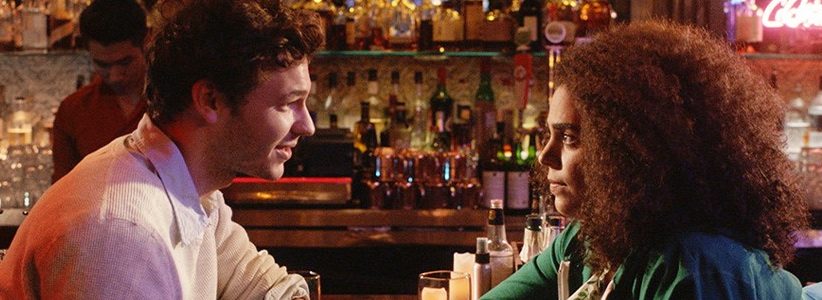
In the amiable comedy The Way You Look Tonight, Peter meets a woman through a dating app, but can’t find her again despite their connection and a torrid one-nighter. Still yearning for his mystery flame, he dates a series of women, but remains unfulfilled. Now, it’s hard to write about this movie without spoiling the hook, but let’s just say that he discovers that a group of people exist with a startling fictional condition.
Indeed, the two funniest sequences are when Peter finds out that he is the last human to find out about this condition and when he attends the support group for the afflicted (of COURSE they have one).
Nick Fink is appealing as Peter and the rest of the cast is uniformly excellent, especially the horde of actresses who play his dates.
Can someone get past appearance – age, race, body type – to connect with a soul mate? The Way You Look Tonight is actually a parable cloaked in a romantic comedy. This is the first feature for writer-director John Cerrito.
Cinequest hosts the world premiere of The Way You Look Tonight
In the winning comedy Vanilla, Elliot (Will Dennis) is stuck in a regimented life of coding software, emerging from his apartment only for gym workouts and food. Kimmie (Kelsea Bauman-Murphy) is a kookie free spirit, but she’s stuck, too, unable to fulfill her aspiration to become a stand-up comic. Events conspire to lead the two into a three-day road trip from New York to New Orleans. Kimmie pitches it to Elliot as a date. But Elliot really sees the chance to reconnect in New Orleans with his ex-girlfriend Samantha, for whom he still pining. What could go wrong?
We have an odd couple on the road, so funny stuff happens – and this is a funny movie. Naturally, the audience is waiting for the two to jump into bed together. But Vanilla is fundamentally a portrait of these two people, both comfortable in their ruts. Elliot is posing as an entrepreneur, and Kimmie is posing as a comedian-in-the-making; something is going to have to shake up these two so each can grow. Kimmie seems utterly intrepid, but we learn that she can be paralyzed by self-consciousness, just like Elliot.
Vanilla is written and directed by its star, Will Dennis, in his first feature film. It’s an impressive debut, rich in character-driven humor.
Dennis understands not to linger on a gag; (Yorgos Lanthimos should pay close attention to this). Dennis has Elliot try to eat a beignet in a bayou tour boat; it only works because it’s the briefest of gags. There’s a montage of bad would-be comics at an open mic night that is brilliant in its understanding of why they think they’re funny and why they’re not. Dennis also works in a random encounter with America’s most earnest fish store guy (Lowell Landes). And “Anyone ever tell you that you have a Natalie Portman thing going on?” becomes a very funny come-on line.
Dennis is very good as Elliot, subtly capturing his unease, judginess and pathetic obsession with Samantha. Bauman-Murphy makes Kimmie’s kookiness, which could easily be annoying, lovable.
Jo Firestone is perfect as Elliot’s ex Samantha. Firestone shows us a glimpse of why Elliot would fall for her, and then a massive dose of why she’s bad for him. Let’s just say that I recognized Samantha (as a friend’s ex-girlfriend, not mine).
The satisfying ending of Vanilla is authentic, true to the characters and NOT what would be expected from a run-of-the-mill rom com.
Cinequest hosts the world premiere of Vanilla, where Silicon Valley audiences will appreciate Elliot’s delusion that his clunky app will go viral – if only users would spend enough time learning it.