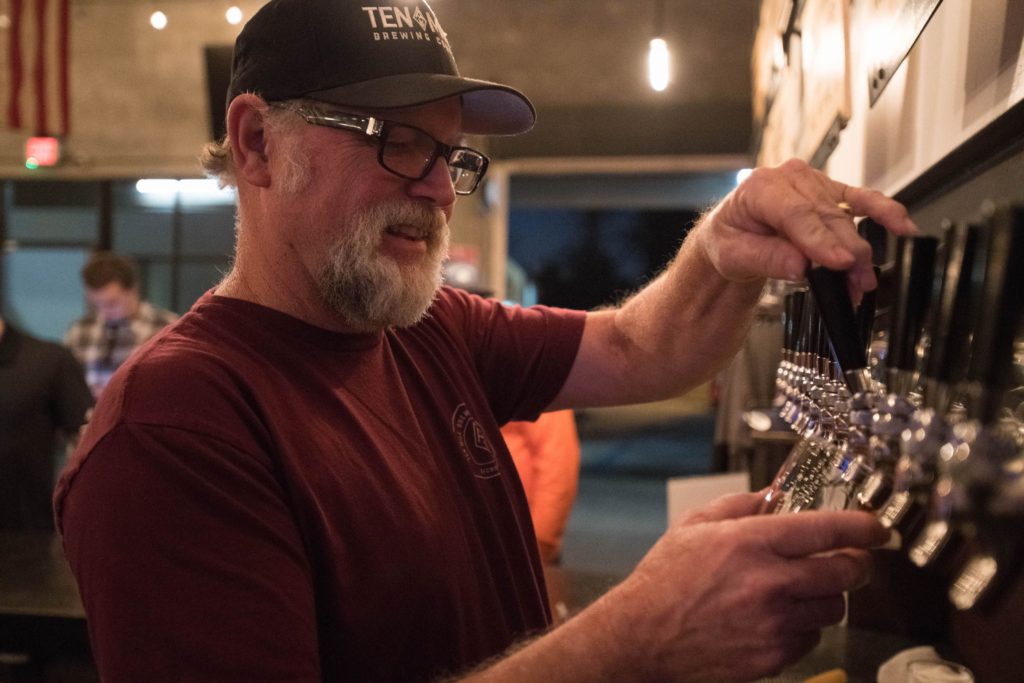
BREWMANCE: barley, hops, yeast and underdogs

Photo caption: Dan Sundstrom (Ten Mile Brewing) in Christo Brock’s BREWMANCE. Photo Credit:BROCKLAMATION FILMS

The appealing documentary Brewmance traces the evolution of the American craft beer phenomenon – and it’s quite a story.

The United States may have been the richest and most powerful country in the world, but before bottled Anchor Steam came out in the early 1970s, you couldn’t find a good beer in America. The passions of individual home brewers morphed into the first tiny craft breweries. We meet the undisputed father of the movement, Fritz Maytag of Anchor Steam, along with the founders of once-microbrewers Sierra Nevada and Boston Beer Company (Samuel Adams).

It’s interesting that craft brewers initially had to teach people to drink good beer. A populace conditioned to bland lagers like Budweiser, Coors, Miller’s High Life, Pabst Blue Ribbon and Schlitz was slow to embrace beers with strong flavors and aromas (and more alcohol). But, eventually, just as the American market began to appreciate good bread, good cheese and good wine in the late 1970s and 1980s, an acceptance of good beer followed. Indeed, we’re not surprised to see that the craft brewers we meet in Brewmance are also foodies.

Because The Movie Gourmet’s own taste has settled in India Pale Ales, I particularly appreciated Brewmance’s chronicle of the explosion of IPAs once brewers were able to source more varieties of hops and to deploy them more imaginatively. (Here’s a tip from The Movie Gourmet – if you can find an IPA brewed with New Zealand’s Nelson Sauvin hops – buy it.) And, yes, I will think less of you if you order a Bud Light, a Coors Light, a PBR or a Corona.

Here’s why Brewmance is so watchable, given that a 5-10 minute explanation of how beer is made is kinda geeky and that the history of any movement is, well, history. Director Christo Brock seamlessly braids these topics together with the stories of two startup craft breweries.

Underdog stories are irresistible, and every craft brewery starts out as an underdog. Brewmance features two very different sets of home brewers as they launch their own commercial craft breweries in Southern California.

Brewmance is a Must See for beer lovers and foodies, and a 102 minute delight for anyone. Brewmance is streaming on AppleTV, Vudu, YouTube and Google Play and is coming to Amazon (included with Prime) on June 1.
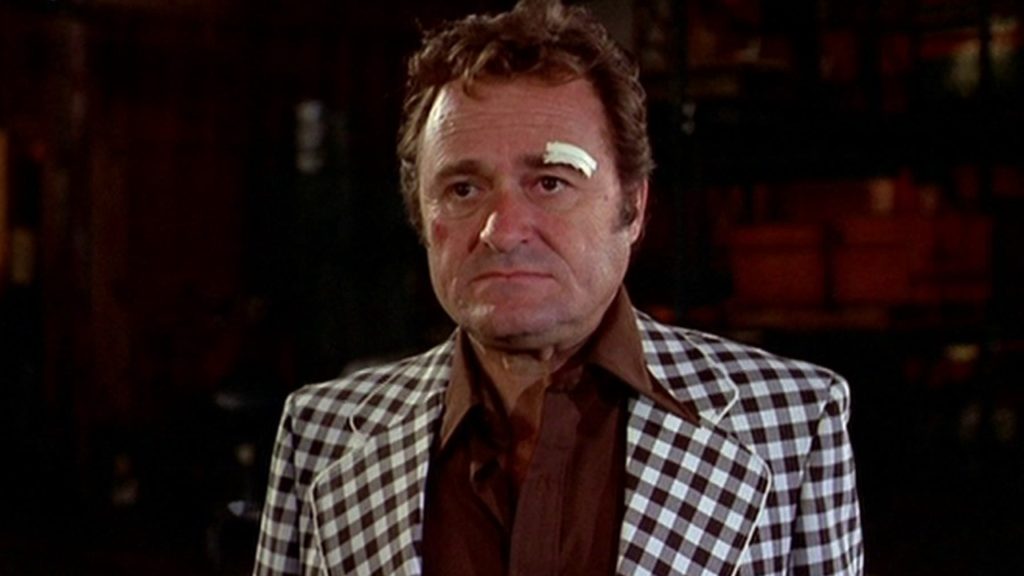
THAT GUY DICK MILLER: putting the “character” in “character actor”

Photo caption: THAT GUY DICK MILLER

The entertaining documentary That Guy Dick Miller is about an actor whose name you may not place, but that you’ve seen. It’s a straight-ahead documentary about a delightfully offbeat guy.

Dick Miller amassed 184 screen credits as a protégé of legendary independent filmmaker and schlockmeister Roger Corman.  Along the way, he rubbed shoulders with indie film icons Jack Nicholson, Paul Bartel and Mary Woronov, John Sayles, Martin Scorsese and Quentin Tarantino.

Miller’s career started in 1955 as an Indian in the Roger Corman-directed Western Apache Woman and then Corman’s The Little Shop of Horrors, The Terror, The Wild Angels and The Trip. Continuing as the king of the low budget movies, Miller went on to work for a second generation of Corman acolyte directors and then plunged full throttle into horror films.  Miller was the unfortunate Murray Futterman in Gremlins and Uncle Willie in Tales from the Crypt: Demon Knight.

On the screen and off, Dick Miller was glib and Bronx-accented, the quintessential wiseacre. In That Guy Dick Miller, we get to meet Miller and his wife Lainey; it’s clear the the two of them were lots of fun to be around. Irresistibly a card, Miller is even bawdy when he recalls his appearance in Night Call Nurses, a 1972 sexploitation film (that I actually saw in a drive-in 1972). 

On screen, Miller always swung for the fences, no matter how small the part.  Lots of actors play the ticket-taker or the security guard, but it’s Dick Miller that you remember for those minuscule roles.

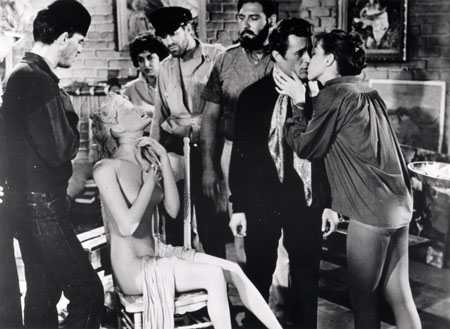
Dick Miller as Walter Paisley, getting smooched in A BUCKET OF BLOOD

Miller is most well known for the lead character, Walter Paisley, in the beatnik-flavored cult film A Bucket of Blood. Miller appeared over ten more times as different characters named with some version of Walter Paisley. In fact, his final role was as Rabbi Walter Paisley in Hannukah, which opened after his death in 2019.

That Guy Dick Miller was recommended to me by Sandy Wolf, who had screened it as a Cinequest submission. However, That Guy Dick Miller premiered at SXSW instead of at Cinequest.

That Guy Dick Miller can be streamed from Amazon (included with Prime).

Movies to See Right Now (at home)

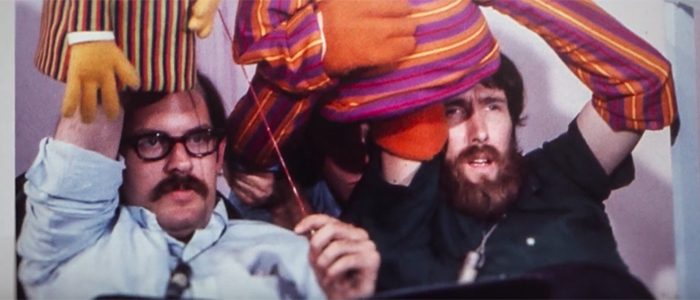
Caption: STREET GANG: HOW WE GOT TO SESAME STREET

This week, Sesame Street’s origin story and a handful of overlooked films from the past decade. And don’t forget today;s Turner Classic Movies presentation of the consensus choice for Worst Movie of All Time – Plan 9 from Outer Space.

REMEMBRANCE

Actress Olympia Dukakis died last week at 89. A stage actress of renown, she was 56 when she got a screen role in her sweet spot (Moonstruck) and knocked it for an Oscar. She was perfect as the only-in-San-Francisco Anna Madrigal in the miniseries Tales of the City in 1993, 1998 and 2019. For a completely unrestrained Olympia Dukakis performance, try the little 2011 Canadian dramedy Cloudburst (Amazon – included with Prime, AppleTV).

ON VIDEO

Street Gang: How We Got to Sesame Street: This documentary is almost as charming as the beloved children’s television show whose origin story it chronicles. On VOD this week.

The Face of Love: Is a widow (Annette Bening) in love with her new boyfriend (Ed Harris ) – or still in love with her late husband? Amazon.

Other choices:

  • Augustine: obsession, passion and the birth of a science. Amazon (included with Prime), AppleTV, Vudu, YouTube and Google Play.
  • The Brainwashing of My Dad: some insight into our national madness. Amazon, AppleTV, Vudu, YouTube and Google Play.

ON TV

TAB HUNTER CONFIDENTIAL

On May 11, Turner Classic Movies presents the recent documentary Tab Hunter Confidential. Tab Hunter was Hollywood’s dreamboat of the 1950’s – and he was a closeted gay man. That meant that he was walking a tightrope in an era when one scandal sheet revelation could erase his career. He hear Tab’s story from Tab himself – he’s still very good-looking and seems like a helluva decent guy. Also available to stream on Amazon,

STREET GANG: HOW WE GOT TO SESAME STREET: the origin story of an institution

Caption: A scene from Marilyn Agrelo’s film STREET GANG: HOW WE GOT TO SESAME STREET. Courtesy of SFFILM

There’s a lot to like about Street Gang: How We Got to Sesame Street, a documentary as charming as the beloved TV series. As groundbreaking as it was, Sesame Street is now a 51-year-old institution, and its origin saga has not been well-known. Most of the key players survive, allowing director Marilyn Agrelo to present the first-hand back story.

We take the concept for granted today, based on the recognition that kids voraciously learn from commercial television – they learn to consume commercially marketed products. Sesame Street’s founders aimed to find out what kids like to watch and what is good for them to watch and put the two together.

Refreshingly. the pioneering producer Joan Ganz Cooney, the visionary Lloyd Morrisette of the Carnegie Foundation and the inventive director/head writer Jon Stone, each gives the credit to the others. If you add Mister Rogers to these folks, you have the Mount Rushmore of children’s television.

Everything in Sesame Street was intentional – like the street setting itself. Noting that most kid shows had fantasy settings, the creators chose a gritty urban neighborhood street to be relatable to disadvantaged urban kids. The same is true for the integrated cast.

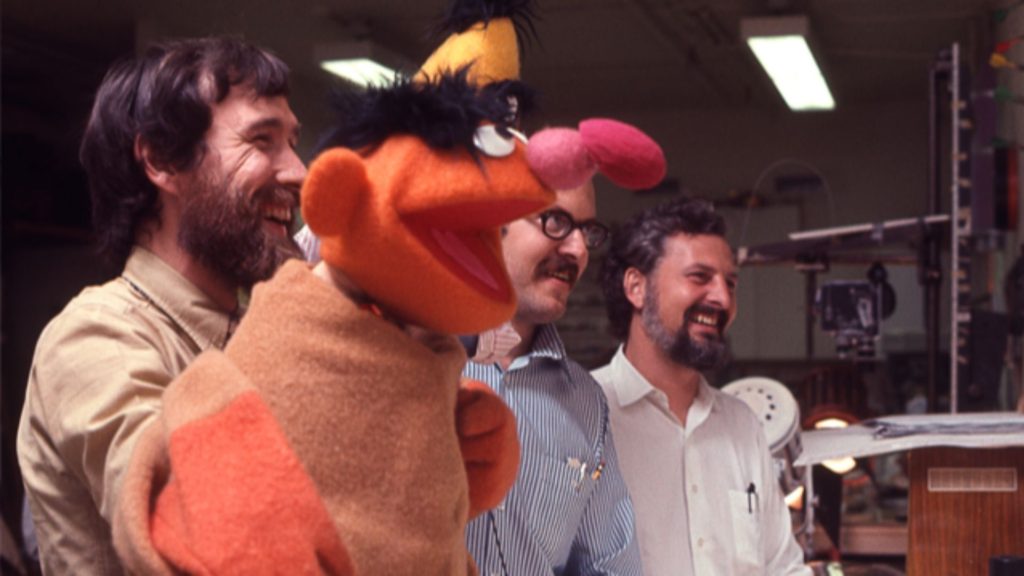
Of course, Street Gang highlights the role of the Muppets. At first, the Muppets had their own set, but the creators learned that kids were so entertained by the Muppets that they found the street boring. So, they pivoted and brought the Muppets on to the street.

Jim Henson founded the Muppets as a late night satirical act and brought that adult sensibility to Sesame Street. The jokes embedded for adults encouraged parents to watch Sesame Street with their kids (which the educators thought was important).

There is also the astounding story of Sesame Street in Mississippi, where state government-controlled public television refused to air a show with an integrated cast. Those stations had to reverse themselves when private Mississippi stations put the show on the air.

This had not occurred to me, but Sesame Street requires creation of original music for 100 episodes per year – an enormous body of work. Street Gang takes us into the songwriting craft, with witty gems like Letter B (from Let It Be).

I screened Street Gang: How We Got to Sesame Street at SFFILM in April. It is widely available to stream today.

Coming up on TV: the all-time worst

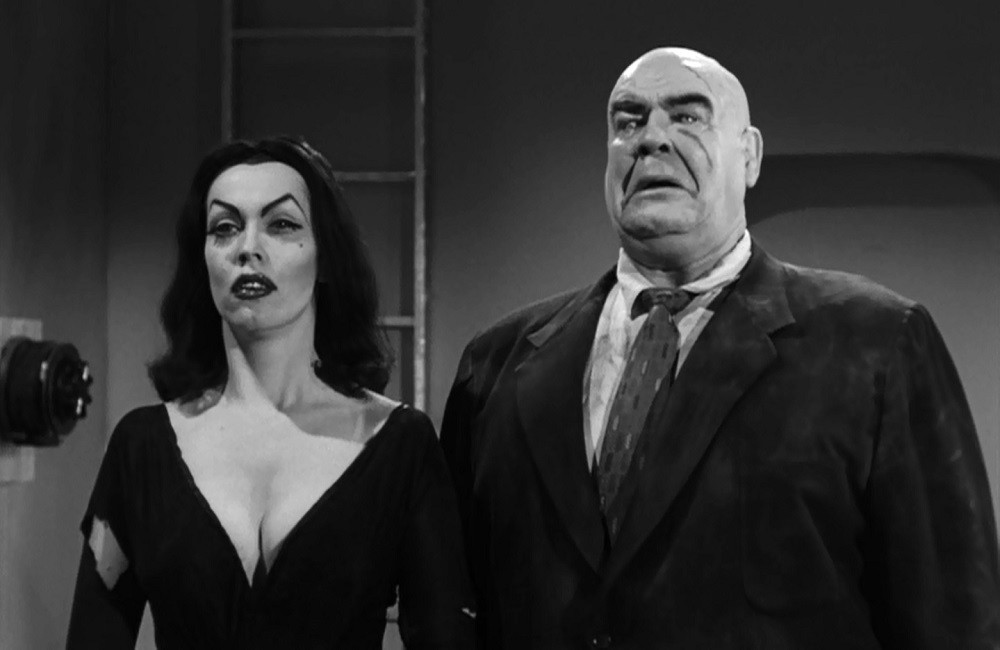
Caption: Vampira and Tor Johnson in Ed Wood’s PLAN 9 FROM OUTER SPACE

On Friday, May 7, Turner Classic Movies presents Plan 9 From Outer Space (1959), often ranked as the worst movie of all time and #1 in my Bad Movie Festival.

This movie is so bad that Tim Burton made a Johnny Depp movie about it – “Ed Wood”, named for its zealously persistent, but pathetic, creator.  Ed Wood throws everything at the screen, hoping that something interesting will stick:  dying vampire star Bela Lugosi, the TV fortune teller Criswell, the horror movie hostess Vampira, zombie-look-alike pro wrestler Tor Johnson and stock footage of a nuclear explosion.  None of it is tied together with any coherence, and it’s all unintentionally funny.  This one’s good for the whole family.

Plan 9 from Outer Space can also be streamed from Amazon, AppleTV, Vudu, YouTube and Google Play.

Lugosi died while making this film and was replaced by a taller, non-speaking “double” who stalks about covering his face with his cloak.  The double shows up in the trailer.

STREET GANG: HOW WE GOT TO SESAME STREET: the origin story of an institution

Caption: A scene from Marilyn Agrelo’s film STREET GANG: HOW WE GOT TO SESAME STREET. Courtesy of SFFILM

There’s a lot to like about Street Gang: How We Got to Sesame Street, a documentary as charming as the beloved TV series. As groundbreaking as it was, Sesame Street is now a 51-year-old institution, and its origin saga has not been well-known. Most of the key players survive, allowing director Marilyn Agrelo to present the first-hand back story.

We take the concept for granted today, based on the recognition that kids voraciously learn from commercial television – they learn to consume commercially marketed products. Sesame Street’s founders aimed to find out what kids like to watch and what is good for them to watch and put the two together.

Refreshingly. the pioneering producer Joan Ganz Cooney, the visionary Lloyd Morrisette of the Carnegie Foundation and the inventive director/head writer Jon Stone, each gives the credit to the others. If you add Mister Rogers to these folks, you have the Mount Rushmore of children’s television.

Everything in Sesame Street was intentional – like the street setting itself. Noting that most kid shows had fantasy settings, the creators chose a gritty urban neighborhood street to be relatable to disadvantaged urban kids. The same is true for the integrated cast.

Of course, Street Gang highlights the role of the Muppets. At first, the Muppets had their own set, but the creators learned that kids were so entertained by the Muppets that they found the street boring. So, they pivoted and brought the Muppets on to the street.

Jim Henson founded the Muppets as a late night satirical act and brought that adult sensibility to Sesame Street. The jokes embedded for adults encouraged parents to watch Sesame Street with their kids (which the educators thought was important).

There is also the astounding story of Sesame Street in Mississippi, where state government-controlled public television refused to air a show with an integrated cast. Those stations had to reverse themselves when private Mississippi stations put the show on the air.

This had not occurred to me, but Sesame Street requires creation of original music for 100 episodes per year – an enormous body of work. Street Gang takes us into the songwriting craft, with witty gems like Letter B (from Let It Be).

I screened Street Gang: How We Got to Sesame Street at SFFILM. It opens today in select San Francisco theaters and will release on VOD on May 6.

SFFILM: three indie gems

Kelley Kali in a scene from Kelley Kali’s and Angelique Molina’s film I’M FINE (THANKS FOR ASKING), playing at the 2021 San Francisco International Film Festival, April 9 -18, 2021. Courtesy of SFFILM

The San Francisco International Film Festival (SFFILM) is always an important showcase for independent cinema. Here are three indie gems in this year’s SFFILM program.

In the winning indie I’m Fine (Thanks for Asking), a recently widowed mom has lost her housing and goes on a one-woman crusade to get herself and her daughter back into an apartment. With a one-day deadline to earn the last $200 for a rental deposit, she races the clock through a series of misadventures – both comic and tragic – roller skating around Pacoima, braiding hair and making app-based food deliveries. And she’s putting on the best face, hiding her homelessness (and even convincing her 8-year-old that they’re “camping”). I’m Fine (Thanks for Asking) makes powerful statements about housing security and the gig economy in a oft funny, always accessible movie. It’s the first feature for the female, BIPOC filmmakers – shot on a low budget during a pandemic.

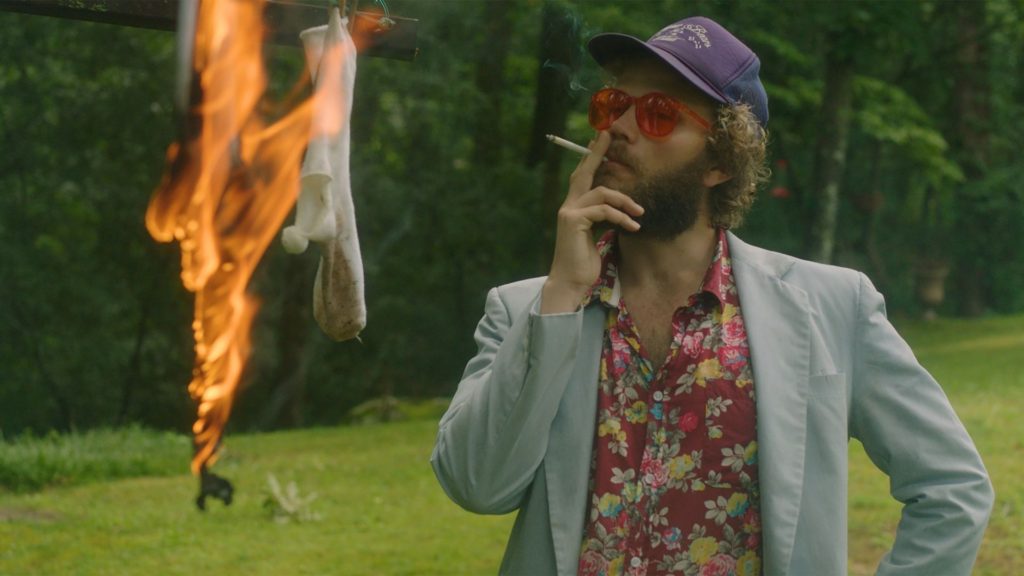
A scene from Bo Maguire’s film SOCKS ON FIRE, playing at the 2021 San Francisco International Film Festival, April 9 -18, 2021. Courtesy of SFFILM

Socks on Fire is Bo McGuire’s tale of his own family’s inheritance battle over a Hokes Bluff, Alabama, bungalow. The family of church-going Bama football fans – and one drag queen – is jarred and wounded by the mean behavior of one aunt. Enriched by old home movies and re-enactments, this ain’t your conventional talking head documentary. Socks on Fire swings between funny and operatic, and there’s a sweet remembrance of a grandmother in here, too. Won Best Documentary at the Tribeca Film Festival.

A scene from Kentucker Audley’s and Albert Birney’s film STRAWBERRY MANSION, playing at the 2021 San Francisco International Film Festival, April 9 -18, 2021. Courtesy of SFFILM

The very trippy and ultimately sweet fable Strawberry Mansion is set in a future where people’s dreams are taxed. An Everyman tax auditor (co-writer and co-director Kentucker Audley) is assigned to the dreams of an elderly artist and is plunged into an Alice in Wonderland experience with her dreams, and his dreams, and a romance, to boot. Strawberry Mansion is also a sharp and funny critique of insidious commercialism.

Socks on Fire had its North American theatrical premiere at a drive-in event – complete with live drag queen performances – as SFFILM’s centerpiece event. I’m Fine (Thanks for Asking) and Strawberry Mansion can be streamed at home through April 18. Tickets are available at SFFILM.

STRAWBERRY MANSION: a trippy and sweet fable

A scene from Kentucker Audley’s and Albert Birney’s film STRAWBERRY MANSION, playing at the 2021 San Francisco International Film Festival, April 9 -18, 2021. Courtesy of SFFILM

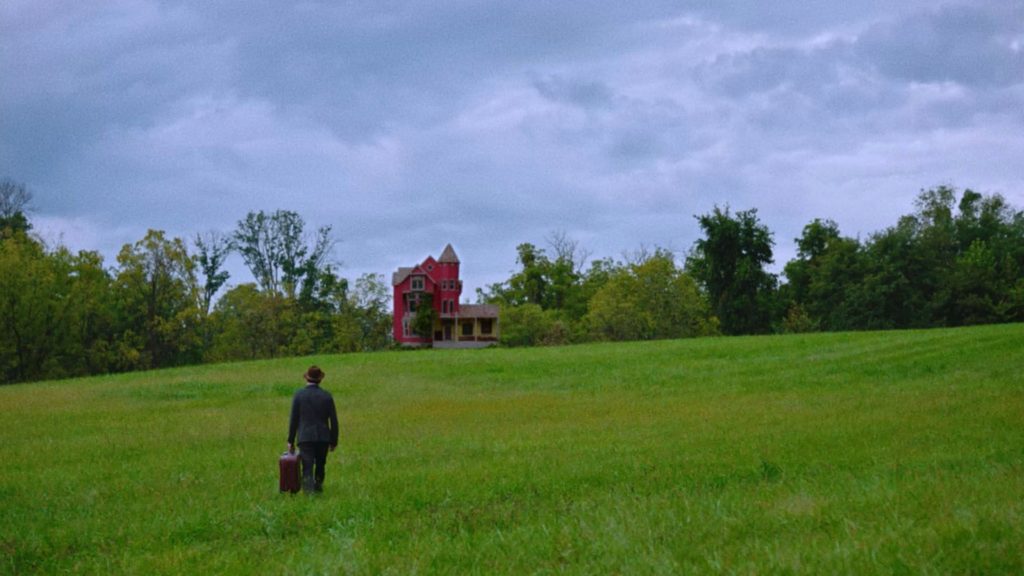
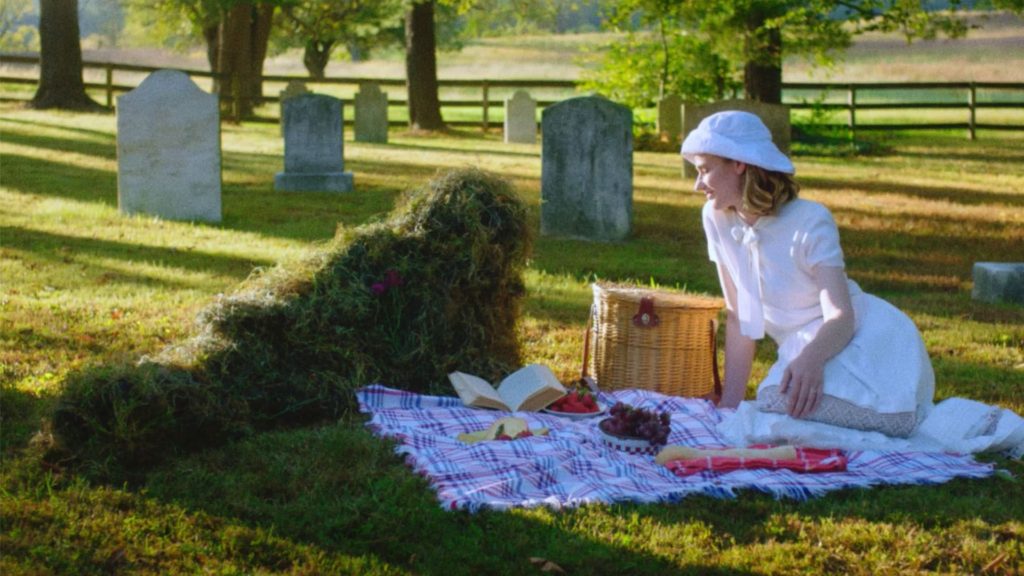
The very trippy and ultimately sweet fable Strawberry Mansion is set in a future where people’s dreams are taxed. Preble (Kentucker Audley), a workaday tax auditor, is assigned to audit the dreams of an elderly artist, Bella (Penny Fuller). Preble is soon plunged into an Alice in Wonderland experience with her dreams, and his dreams, and a romance to boot.

Preble puts on a gizmo to watch the dreams pf others (and comes across an even cooler gizmo that filters dreams). He even encounters Bella’s younger self (Grace Glowicki).

Strawberry Mansion is also a sharp and funny critique of insidious commercialism. A fictional brand of fried chicken keeps showing up in the story. Hilariously, Preble becomes entangled in an endless loop of upselling at a fast food drive-thru. And Preble is constantly prodded to consume by his own diabolical dream buddy (Linas Phillips). A sinister marketing plot is revealed.

A scene from Kentucker Audley’s and Albert Birney’s film STRAWBERRY MANSION, playing at the 2021 San Francisco International Film Festival, April 9 -18, 2021. Courtesy of SFFILM

Kentucker Audley is very good as Preble, who starts out the movie mildly annoyed and evolves into various degrees of bewilderment. Audley is one of those actors who keeps showing up in something interesting (and offbeat) like Amy Seimetz’s She Dies Tomorrow and Sun Don’t Shine, or in smaller parts in especially fine films like Her Smell and Ain’t Them Bodies Saints.

As Bella, Penny Fuller radiates a contentment that ranges from ditzy to sage. Reed Birney is especially good as Bella’s sinister son.

Audley co-wrote and co-directed Strawberry Mansion with Albert Birney. They make the most of the surreal settings within dreams, and use different color palettes for each dream; the palette for Preble’s real-life bachelor apartment is pretty surreal, too.

Strawberry Mansion played at the Sundance Film Festival and can be streamed through April 18 at SFFILM.

A LEAVE: the workplace evolves…unkindly

A scene from Ran-hee Lee’s film A LEAVE. Courtesy of SFFILM

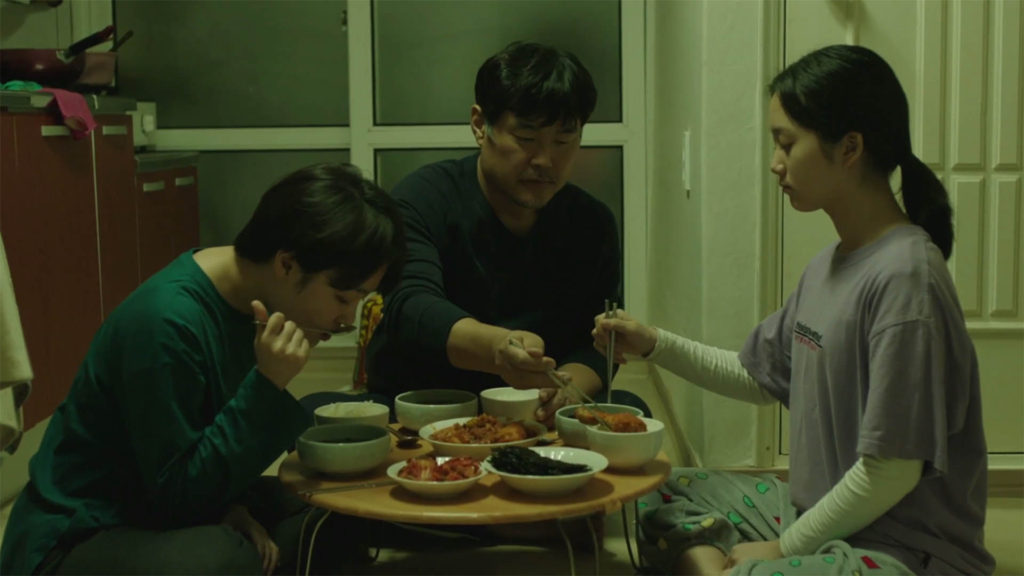
Ran-hee Lee’s unpretentious A Leave is a surprisingly insightful slice-of-life into the modern global workplace. It opens on Day 1893 of a labor sit-in, as laid-off workers hold out to get reinstated in their longtime jobs. They have obviously lost this struggle a long while ago, although not everyone is ready to internalize that fact and move on. Middle-aged Jaebok, one of the sit-in;s remaining leaders, decides to take a leave from organizing that he characterizes as “like taking a leave from work”.

With some distance from the day-to-day campaign, he’s back in his apartment, and back to clogged drains and surly teenagers. He realizes that, without a paycheck, he cannot give his kids what they need (and his bright, promising older daughter needs college tuition). So, Jaebok finds a job in the new economy.

A scene from Ran-hee Lee’s film A LEAVE. Courtesy of SFFILM

It turns that his new job is as a temp contract worker in a sweat shop that supplies a big company like the one that laid him off. His new boss sells the opportunity with, “the company is disaster-free” – a low bar if ever there were one.

Jaebok, used to a decades-long career path with a single employer is puzzled by the revolving door of fellow workers. Only one young guy stays for more than a couple days, and many of the others must be undocumented immigrants working illegally.

The younger worker is not used to any continuity of co-workers – and not used to having relationships with his co-workers, something that Jaebok thinks is normal. The kid believes that asking for an eight hour shift is quaint.

A Leave is the first feature for writer-director Ran-hee Lee. She knows how to tell a little story in a little movie, which is not faint praise at all. Sometimes a little story is the best way to unmask great truth.

Lee uses non-actors in the film Her leading man is a 49-year-old guy who was laid off in real life and then picked up a temp job as a low wage contractor with undocumented, very green co-workers.

I screened A Leave for the SFFILM, where it won a jury mention.

A scene from Ran-hee Lee’s film A LEAVE. Courtesy of SFFILM

NUDO MIXTECO: three women, three dramas

A scene from Angeles Cruz’s NUDO MEXTECO. Photo courtesy of SFFILM

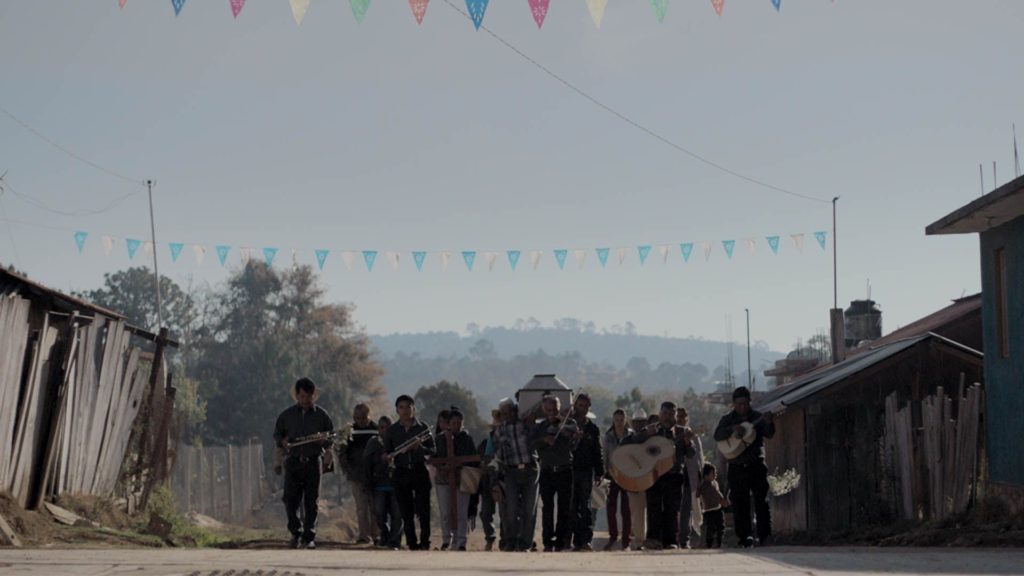
In Nudo Mixteco, we visit an indigenous Mixtec village in Southern Mexico and get three dramas for the price of one. It’s the annual festival, and three long-absent locals return home. One is there for her mom’s funeral. another to intervene in her daughter’s welfare and the third has just decided that’s time to come back home.

Nudo is Spanish for “knot”, and the three stories form a loose braid. As in Kieślowski’s Blue/Red/White, the characters in each plot thread can be spotted in the others.

In each story, the women face constraints of patriarchy and traditional culture. An out lesbian has built a life in the city, but her father in the village cannot accept her sexuality, and even blames it for her mother’s death. Another woman also works in the city, and has left her daughter to be cared for by her sister in the village; reports of the daughter’s behavior trigger concern stemming from the mom’s own childhood sexual abuse.

In the third story, a village man has been working in the US. He had promised his wife that he would be gone six months, but it’s been three years. He expects that he can resume their lives as before, but his wife has moved on. Each feels betrayed by the other, and the village is convened to reach a community decision on a just outcome.

Nudo Mixteco is the debut feature for writer-director Angeles Cruz, who has won Ariels (Mexico’s Oscars) for her short films. Cruz is an accomplished actress, who was nominated for a best actress Ariel in 2018.

I screened Nudo Mixteco at SFFILM, where it won a jury award.

A scene from Angeles Cruz’s NUDO MEXTECO. Photo courtesy of SFFILM