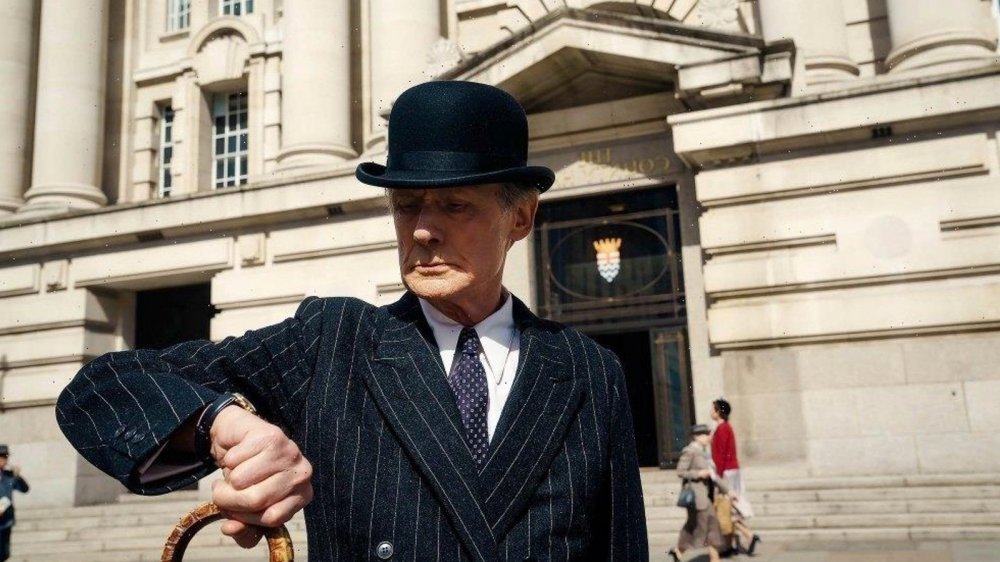
LIVING: what is it to live?

Photo caption: Bill Nighy in LIVING. Courtesy of Sony Pictures Classics.

In Living, Bill Nighy plays Williams, a humorless prisoner of his own routine and of his place in a stultifying culture. Nighy’s performance is as dazzling in its artistry as is his character devoid of any sparkle.

It’s just after World War II, and Williams commands a platoon of clerks and their pod of desks and inboxes in the London government’s bureaucracy. The one thing everyone works hard at is finding an excuse not to actually accomplish anything, as they industriously push paper back and forth. The unifying ethos is conformity, and no one wants to be the nail that sticks up. It’s an environment that makes everyone comfortable with despair.

Williams gets some very bad news from his doctor. Although he lives with his son and daughter-in-law, he has no family or friends close enough to share his situation with. At first, Williams seeks out the traditional outlet of those with a short horizon – hedonism. He remains unsatisfied until he catches a spark from a much younger former co-worker and follows her example about how to live more fully. If you haven’t seen the film Ikiru (of which this is a remake), you will be surprised by the twists and turns in Williams journey, so I won’t spoil them with further detail.

Director Oliver Hermanus and screenwriter Kazuo Ishiguro adapted (and CLOSELY adapted) the screenplay from Ikiru, directed and co-written by Akira Kurosawa. The Wife noted the wisdom of the choice to set Living in postwar, rather than contemporary, London. The distance in time helps us appreciate Living as an allegory.

Kurosawa and his co-writers made an interesting choice in the original Ikiru – to make the protagonist’s soul-crushing career that of a bureaucrat instead of something else. It’s a great choice because the studied inaction of the bureaucrats affects themselves and outsiders, too – it’s really perfect for this story about the ripples in the pond when just one individual decides to fully LIVE.
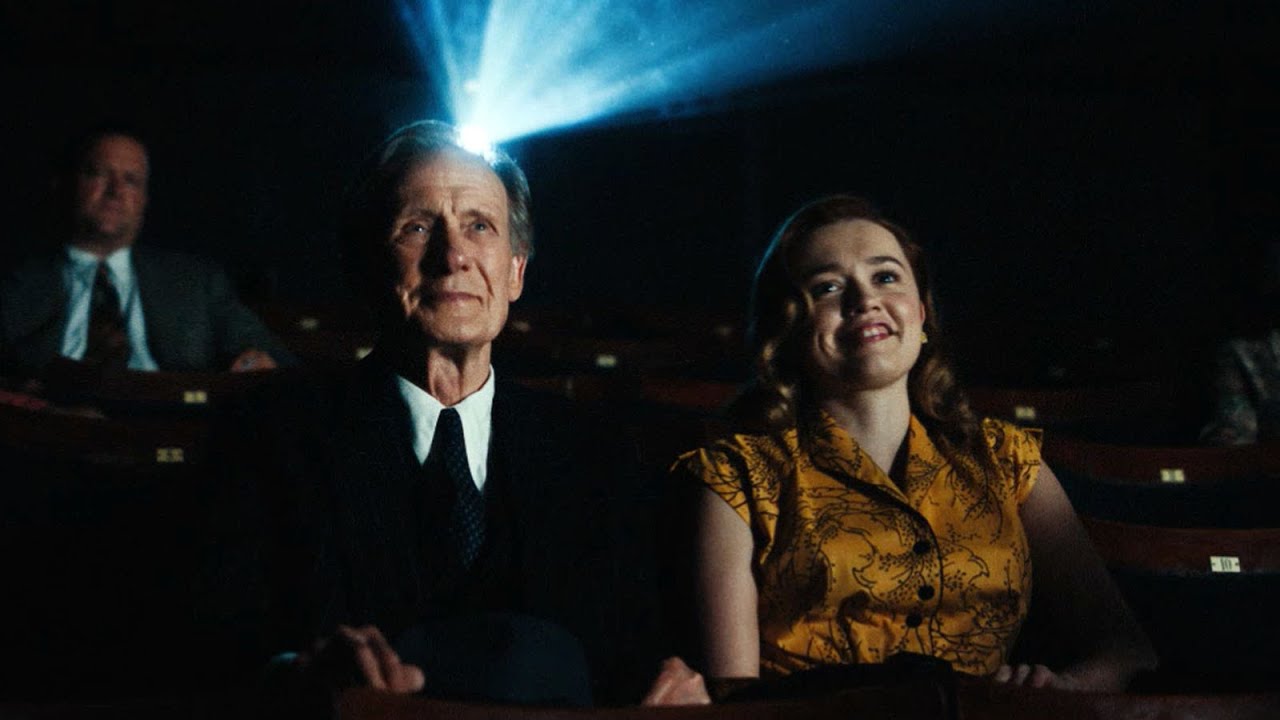
Bill Nighy and Aimee Lou Woods in LIVING. Courtesy of Sony Pictures Classics.

I left the theater thinking that Aimee Lou Woods, who plays Miss Harris, the key to Williams metamorphosis, was adequate. But the more I thought about it, I realized that she is essentially working face-to-face with another actor who is giving an Oscar-worthy, career-topping performance; her performance stands up to his and is perfectly modulated. So, it’s more than adequate.

Williams’ louche tour guide through depravity is wonderfully played by Tom Burke, the-boyfriend-who-is-nothing-like-he-seems in The Souvenir.

Living is a very, very good movie with a great, great performance by Bill Nighy.

BROKER: in the margins, finding a profound humanity

Photo caption: Dong-wong Gang, Ji-eun Le and Song Kang-Ho in BROKER. Courtesy of NEON.

As Broker, the latest masterpiece from writer-director Hirozawa Koreeda, opens, two amiable but shady guys, Sang-hyeon (Song Kang-Ho) and Dong-soo (Dong-wong Gang), are in a church, being surveilled by the cops. A young woman leaves a baby in the “abandoned baby box”, and the two guys sneak over and take the baby! It turns out that they are baby sellers, which sounds repellent, but they place the babies in stable, loving families, whereas the baby would otherwise grow up in an orphanage. A cop (Bae Doona) is on to their scam and is taking out the church; she sees the whole thing and starts tailing the guys, planning to catch them in the act of selling the baby.

The mother, So-young (Ji-eun Lee), returns to the church the next day for the baby and discovers it is gone, but is able to find the guys and the baby. Now she wants a cut of the profits and the three take the baby on the road to another city to complete an arranged transaction; but that deal blows up, and the road trip continues, with a stop at the orphanage where Dong-soo, himself an abandoned baby, grew up. Dong-soo was the most spirited kid at the orphanage, and an eight-year-old boy, Hae-jin (Seung-soo Im), just like Dong-soo, often runs away. When Sang-hyeon, Dong-soo and So-young leave with the baby, they find a stowaway – Hae-jin has hidden himself in the van, and now it’s a party of five.

Off from one Korean city to another, hiding in plain sight in Sang-hyeon’s dry cleaning clean, they are still seeking a buyer for the baby. The cops are still in pursuit, and now some gangsters are, too. It turns out that So-young is not an innocent, which will restrict their options going forward.

Initially, Sang-hyeon and Dong-soo see the baby as a chunk of change, and So-young sees the baby as a problem to be rid of. But as they share infant care in close quarters, they begin to bond with the baby – and with each other. Each has failed in a family relationship or been denied one.

The dogged, humorless cop appears to be a relentless Javert who seems very judgy. It turns out that rigid adherence to order may not be what motivates her.

We grow to care deeply about each of these characters. Hirozawa Koreeda, in Broker and his other films, imbues his characters, however flawed, with profound humanity.

Dong-wong Gang, Ji-eun Le, Seung-soo Im and Song Kang-Ho in BROKER. Courtesy of NEON.

Koreeda has been focusing his work on marginalized people and chosen families. Broker is not his only triumph. His Shoplifters won the Palm d’Or, the top award at the 2018 Cannes Film Festival. Koreeda is also known for the 1995 art house hit Maborosi, one of the best movies of 2008, Still Walking and the 2018 The Third Murder

Broker could not work without the shambling likeability of Song Kang-Ho (Parasite, Memories of Murder). The audience has to relate to a major character who is doing something transgressive.

This should be a star-making performance for Ji-eun Lee. Her So-young is believable as she cycles through character evolution that is not apparent to the other characters. Is she a victim or a femme fatale? It’s complicated.

This is the debut film for the kid actor, Seung-soo Im, and where did they find this kid? He’s just great.

I cannot imagine why Broker was not nominated for the International Cinema Oscar. Howard Hawks says a great movie is “three great scenes and no bad scenes. There are no bad scenes in Broker, and more than three great ones. This is a magnificent film, one of the very best of 2022.

EMPIRE OF LIGHT: a woman, revealed

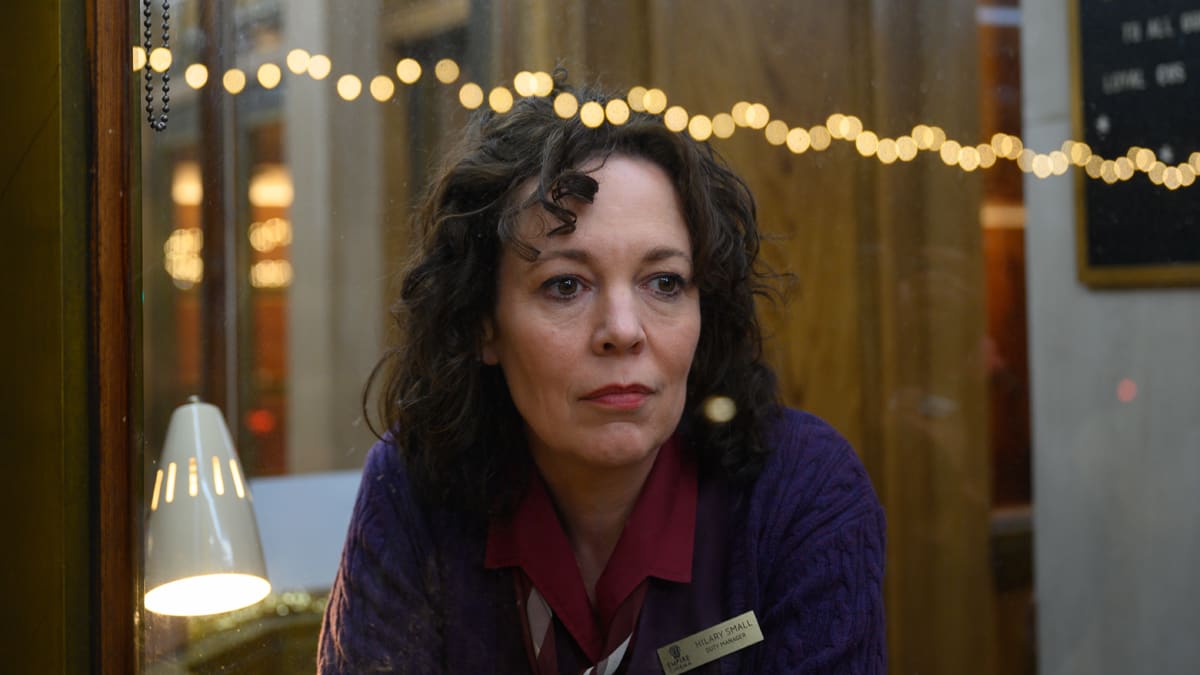
Olivia Colman in EMPIRE OF LIGHT. Courtesy of Searchlight Pictures.

The marvelous Empire of Light is a lot of things, but primarily a showcase for the genius of Olivia Colman. Colman plays Hilary, who lives in a British seaside resort town and works in an ornate British movie palace that is, in 1979, showing its age. She’s not the theater manager (who is male, of course), but she’s the person who runs the staff and makes everything operate.

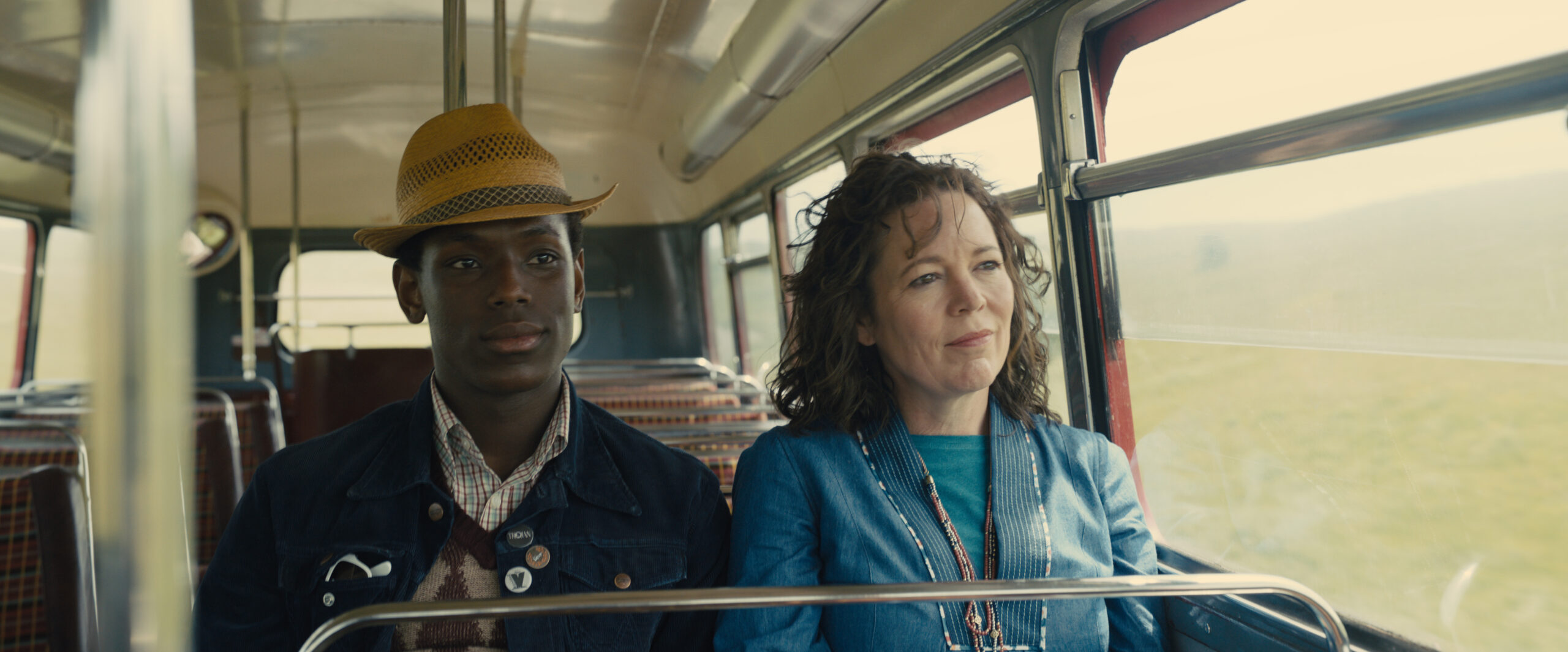
Hilary seems to live a solitary life outside the theater, but she’s socially confident enough to dine alone in restaurants and to enjoy a social dance class. A young man, of African ancestry, takes an entry level job at the theater, and Hilary is drawn to his sensitivity, intellect and aspirations. The two connect, but their journey together faces difficulties.

There is Hilary’s mental health, for starters. Although, she is the solid presence that holds the theater together, it develops that she is on the rebound from a breakdown. She is taking lithium, for what would have been known in 1980 as a manic depressive disorder. She has been prescribed lithium for a reason – and when she feels good enough to stop taking it, there are consequences. It is later revealed that she, deep down, rages against her mistreatment by male authority figures in her life.

So, in Empire of Light, we have a middle-aged woman and a young man, the topics of mental illness and race relations in the UK during the skinhead revival and ascendency of Thatcherism. And it’s all set in a cinema, which allows director Mendes and cinematographer Roger Deakins and the audience to revel in their and our love of cinema. I loved the cinema’s marquee, which both marks the timeframe and celebrates the wonderful movies of the era: All That Jazz, The Blues Brothers, Gregory’s Girl, Raging Bull, Chariots of Fire, Being There.

As much as I loved and admired Empire of Light, the critical reception has been mixed (ranging between love and loathe), resulting in a middling Metacritic score of 54. Some critics whom I respect panned Empire of Light as a scattered misfire (although uniformly praising Colman). However, I see the multiplicity of topics as reflecting the complexity of life, not a lack of focus.

Sam Mendes has directed a slew of excellent films since winning an Oscar for American Beauty. This is his only second screenplay (the other was 1917). Here, his writing is a strength. The Wife appreciated the subtle signs of Hilary’s decompensation (lipstick on her teeth, an incompletely buttoned dress). We’re cringing, waiting for Hilary to melt down at the most public moment, but Mendes saves the real explosion for later, protecting her from total humiliation. The movie’s ending is sentimental without a hint of corniness.

Micheal Ward and Olivia Colman in EMPIRE OF LIGHT. Courtesy of Searchlight Pictures. © 2022 20th Century Studios All Rights Reserved.

We live in an age of great screen screen actresses, but I can’t see anyone other than Olivia Colman or Michelle Williams play this role with as much authenticity and emotional power. Colamn, with the greatest subtlety, takes Hilary through moments of tenderness, apprehension, joy, being degraded, exuding dignity, all ranging between command and decompensation. A scene where there is banging at her apartment door is especially heartbreaking. Somehow, Colman was not nominated for an Academy Award for this performance, surely among the five best in 2022.

Toby Jones has a scene, sitting on exterior stairs with Olivia Colman, that is extraordinary – a moment of regret when he stuns himself by reflecting on the cause of a relationship breach.

Micheal Ward is solid and credible as Stephen, and the rest of the cast is excellent, too. Colin Firth is a clump of humorless and pompous entitlement, an exile from the Mad Men era. Tom Brookes is especially memorable as theater worker Neil, whom we initially see for his lively and offbeat humor. Then we pick up that Neil doesn’t miss anything, and Neil’s uncommon decency and sensitivity is finally revealed.

Cinematographer Roger Deakins, having been nominated for fourteen Oscars and won twice, makes the most of the aging, once grand cinema and the sunsets and fireworks of the Margate coast. He’s earned another Oscar nod for Empire of Light.

Life is complicated, and sometimes art is complicated, too. Empire of Light is one of the best movies of 2022.

WAITING FOR THE LIGHT TO CHANGE: friendship tested

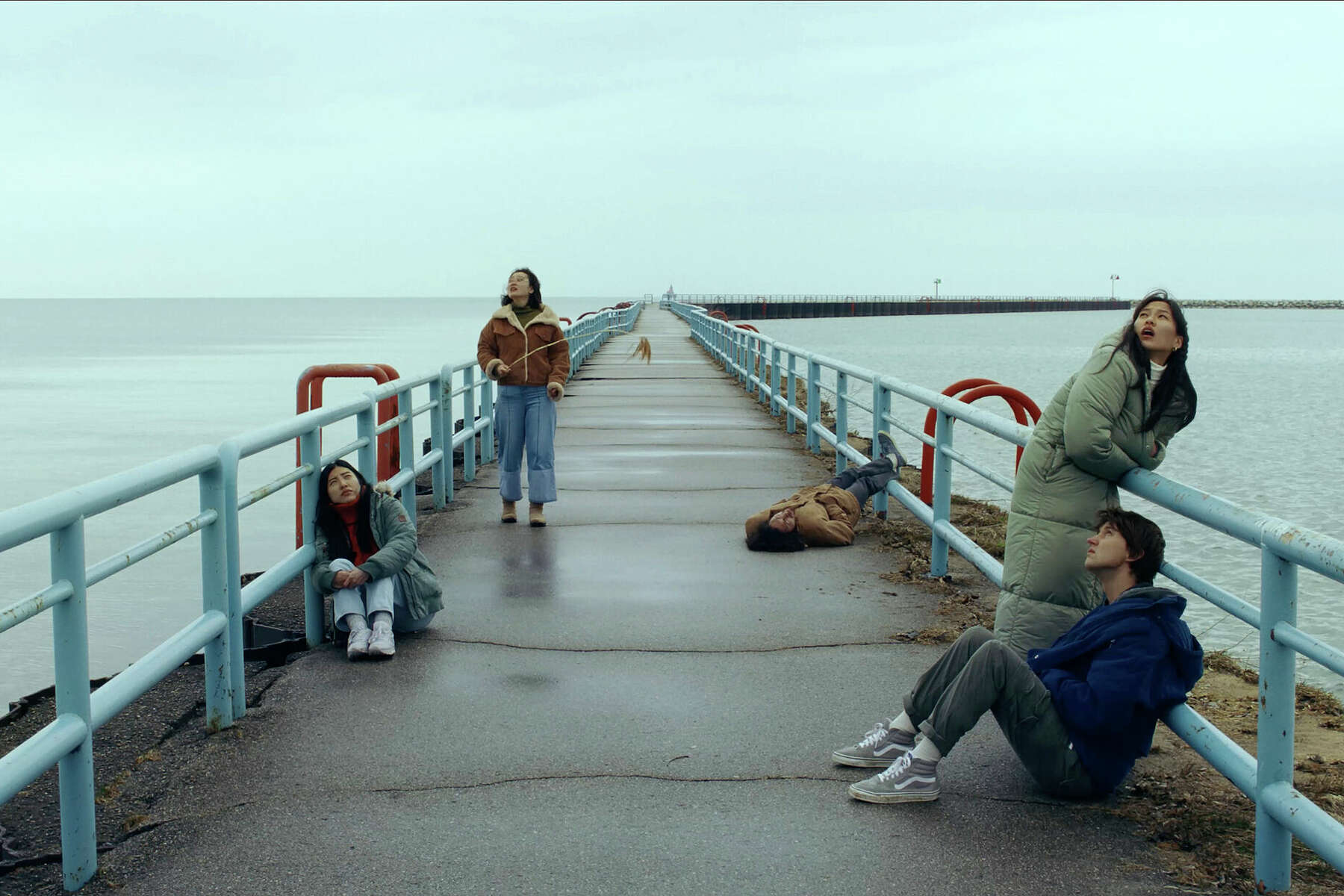
WAITING FOR THE LIGHT TO CHANGE. Courtesy of Slamdance.

In the reflective and contemplative indie drama Waiting for the Light to Change, five twenty-somethings meet for a long weekend at a secluded lakeside vacation rental – decidedly off-season. Two of the women, Amy (Jin Park) and Kim (Joyce Ma), were originally very close friends, but their lives (jobs in different cities and Kim’s new boyfriend) have moved them apart in recent years.

The three other friends (Sam Straley, Erik Barrientos, Qun Chi) impact the story, but mainly to reflect what is going on between Amy and Kim. I very much appreciated this fresh dynamic in the screenplay – Amy has recently lost a lot of weight and consequently is now much more attractive to men that she has previously been during her friendship with Kim.

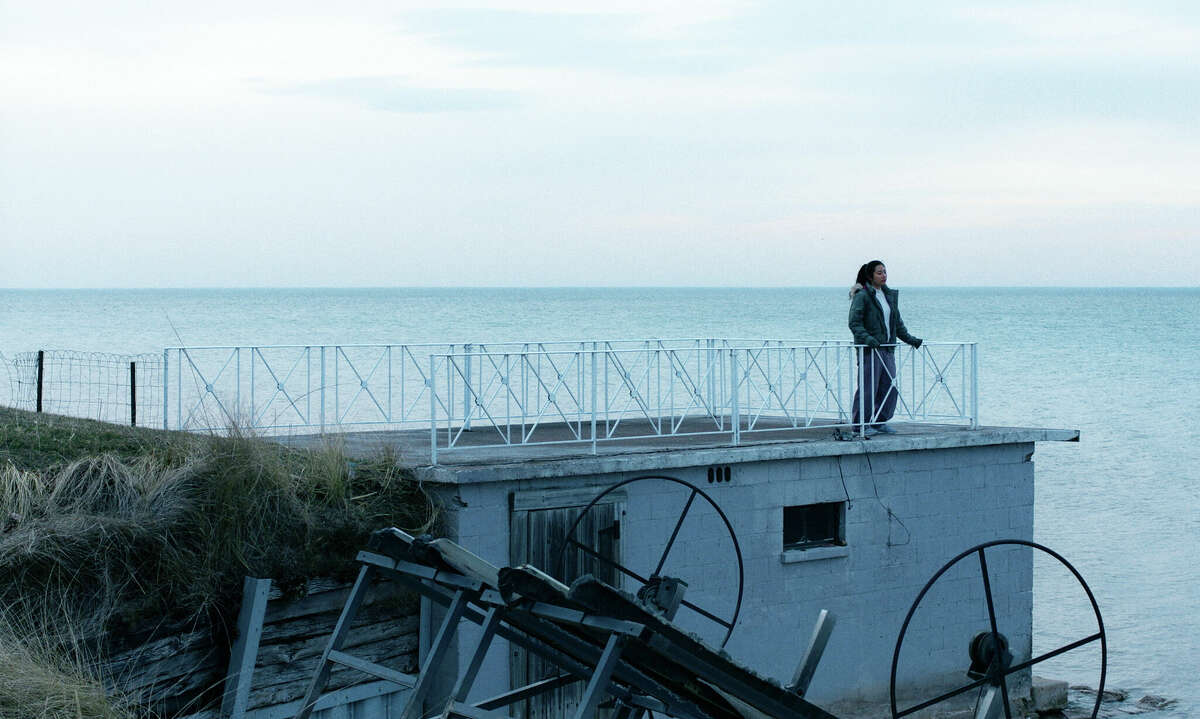
The film was shot near Port Austin where Michigan’s Thumb juts into Lake Huron. There’s a boathouse, a dock, some woods to hike in and not much to do when the weather is bleak and chilly. The five, mostly in combinations of two, take measure of their lives, and they already have a lot of regrets for people so young. Waiting for the Light to Change has been pitched as an Asian-American The Big Chill, but the talky tone is more like Whit Stilman’s early films (albeit not about preppy slackers with inherited wealth).

As Amy and Kim probe and spar, and we wait to see how and whether their relationship will survive, Waiting for the Light to Change is a slow, slow burn. So slow that, twice, I thought that I had accidently paused the screener.

Waiting for the Light to Change is the directing debut for Linh Tran, who also co-wrote the screenplay. Tran shows a gift for framing shots, and the audience can’t tell that the film was made for just $20,000.

Waiting for the Light to Change won Slamdance’s Narrative Feature Grand Jury prize.

WAITING FOR THE LIGHT TO CHANGE. Courtesy of Slamdance.

MOTEL DRIVE: where you don’t want children to be

A scene in Brendan Geraghty’s MOTEL DRIVE. Courtesy of Slamdance.

The searing documentary Motel Drive is set in a place none of us would want to be – a clump of three downtrodden motels on a single block in Fresno. The motels have become de facto brothels, emporiums of drug sales and housing-of-last-resort for the otherwise homeless. Registered sex offenders, who are barred from living elsewhere, have been placed in one of the motels. Early in Motel Drive, we learn that over 150 children live there, too, with their mostly meth-addicted parents.

Documentarian Brendan Geraghty has spent seven years following the area’s residents, especially focusing on the Shaw family and their son Justin. The Shaws’ journey is a compelling story, a roller coaster ride of poverty, recovery and relapse with a major stroke of good luck and a shocking consequence to relapse. Addiction is a family disease, and we get a closeup look at the impact on Justin of his parents’ addiction and persistent homelessness.

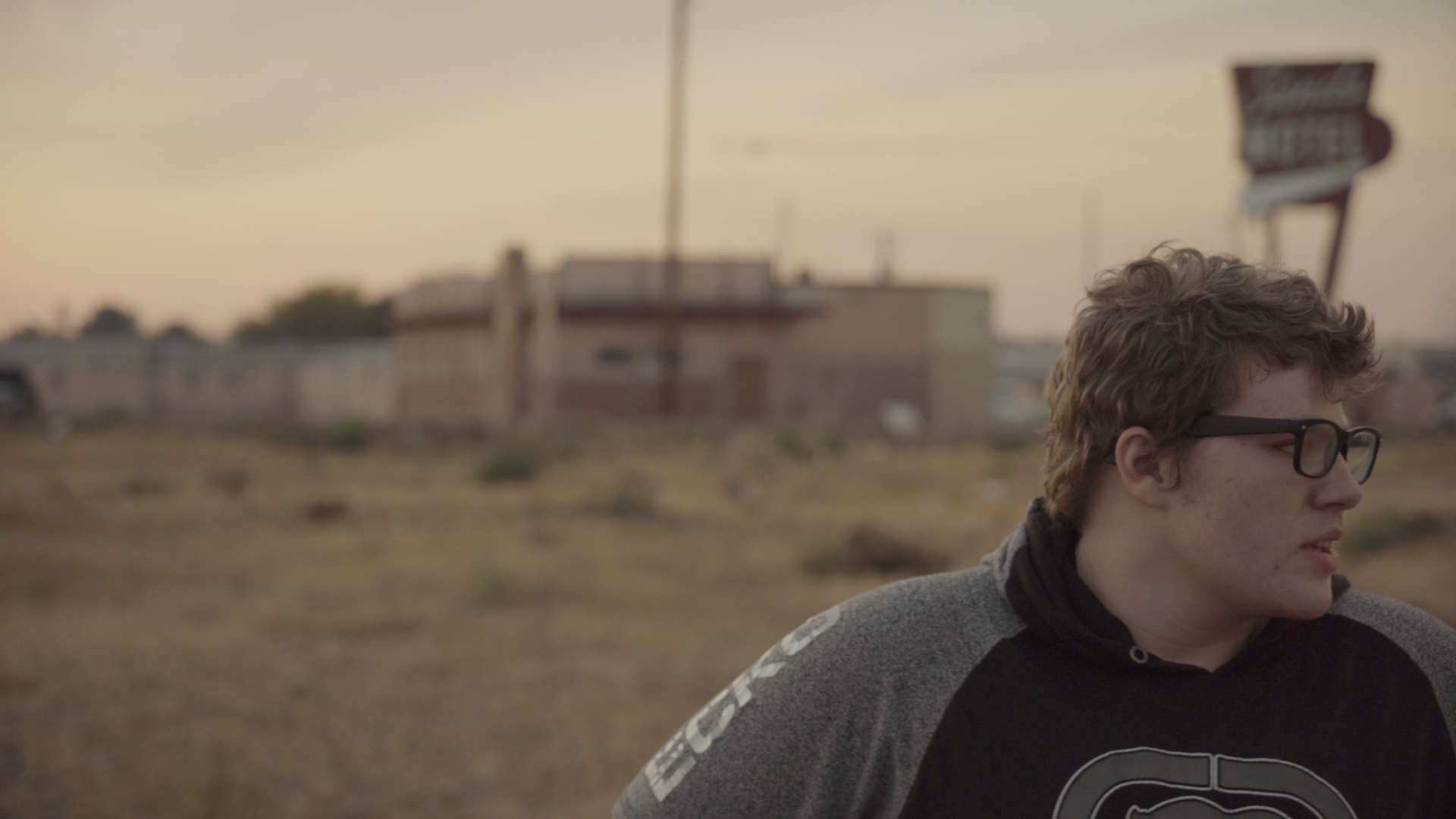
Justin Shaw in MOTEL DRIVE. Courtesy of Slamdance.

The neighborhood itself is another character in the film, with its own arc driven by neglect and underinvestment, the California High Speed Rail project and changes in government programs on homelessness. We meet saintly do-gooders along with the prostitutes, druggies and the impoverished human flotsam.

Motel Drive is Geraghty’s first feature as a director, and it’s a promising debut; he’s clearly mastered cinéma vérité. Slamdance hosts Motel Drive’s world premiere. As I said in my festival preview, Slamdance: discovering new filmmakers, Justin Shaw was slated to appear on the Slamdance red carpet for Motel Drive’s world premiere, and I couldn’t be happier that this young man could have this experience.

https://vimeo.com/569971235/33229b677c

STARRING JERRY AS HIMSELF: more than an exposé

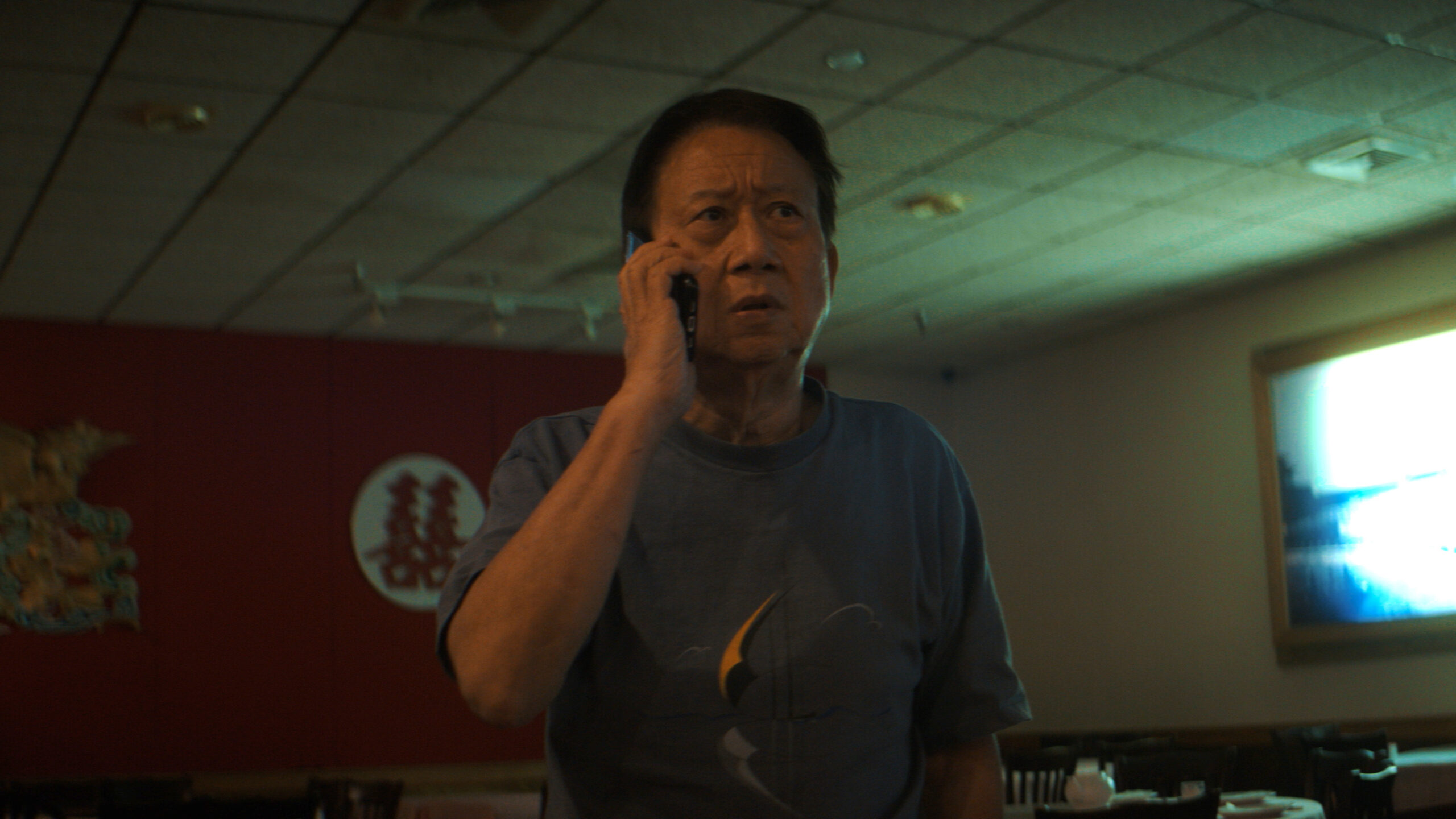
In the documentary Starring Jerry as Himself, a Florida senior sees himself recruited as an operative by Chinese police. The story is told in a re-enactment with the subject playing himself. We later learn why the filmmakers chose re-enactment, and what could have been a conventional true crime exposé or a weeper, is illuminated by the subject family’s humanity.

Starring Jerry as Himself is the first feature for director Law Chen, who also edited, co-produced and shot some of the footage. Law Chen and his co-producer and subject Jonathan Hsu were responsible for the decision on how to structure the film. That decision turned what could have been a heartbreaking downer into an engaging and satisfying family story, albeit a cautionary one.

I highlighted Starring Jerry as Himself as a MUST SEE in my Slamdance: discovering new filmmakers, and it won Slamdance’s Documentary Feature Grand Jury Prize. 

SEXUAL HEALING: gentle naughtiness and sensitivity

SEXUAL HEALING. Courtesy of Slamdance.

The Dutch documentary Sexual Healing traces the experience of Evelien, a 53-year-old woman, afflicted from birth with spasticity, who needs substantial assistance to live independently. Evelien has never enjoyed sexual fulfillment, and now she’s curious. Sexual Healing follows her quest with sensitivity, gentle naughty humor and taste.

Evelien has supportive friends and the good fortune to live in the Netherlands, where there’s an agency established to fill this need for the disabled, essentially a therapeutic escort service. If you’re like me, you’ll be surprised at the age of Evelien’s sex therapist.

Sexual Healing is the second 50+ minute feature for writer-director Elsbeth Fraanje.

[Note: I advisedly used the word ”spasticity” to describe the subject’s disability, to avoid the term that the film uses, “spastic”; in researching the appropriate language, I got no useful guidance from the various sources wagging their fingers at the use of “spastic” but offering no alternatives more specific than “disabled” or “differently abled”.]

Slamdance hosted its US premiere, which I highlighted as a MUST SEE in my Slamdance: discovering new filmmakers. Sexual Healing was programmed in Slamdance’s Unstoppable category, a “showcase of films made by filmmakers with visible and non-visible disabilities”.

WHERE THE ROAD LEADS: gotta get out

Jana Bjelica in WHERE THE ROAD LEADS. Courtesy of Slamdance.

The Serbian feature Where the Road Leads opens with a single shot of very long duration – the protagonist Jana (Jana Bjelica) is running, in and out and all around a remote Serbian village.  Is she running away from something or toward something? It turns out that she is racing to prevent something, but this is a film about escape. 

The village is so secluded and devoid of commerce and culture, that there is no reaon to visit it – or to live there, which is Jana’s conclusion, too. Whenever an outsider drifts through, it is a major occasion – and, for some, an occasion for suspicion. In Where the Road Leads, when a stranger wanders through, everyone calls him “the new guy”, but Jana fixates on whether he can become her ticket out of town.

Technically, the story is a tragedy, but Ognjanović lightens its telling with wry deadpan humor, showing why Jana finds village life so stifling. There are bickering old marrieds, two determinedly stupid drunks, and the one veteran government official who is weary of dealing with the villagers’ foibles. 

Jana Bjelica in WHERE THE ROAD LEADS. Courtesy of Slamdance.

What makes Where the Road Leads powerful is its construction, with the pivotal beginning of the story placed at the end of the film. Ognjanović explains, “From the start, I knew I wanted the film to end with that scene – even though, chronologically, it is the beginning of the story. It is the one moment in our protagonist’s story where she could have changed the course of the events that followed.”

The opening shot of Jana running and running and running ain’t Touch of Evil or Goodfellas, but it’s impressive filmmaking, especially for a film of this budget.

Where the Road Leads is a promising debut feature for writer-director Nina Ognjanović. World premiere on January 22. Slamdance narrative feature competition.

UPDATE: Where the Roads Leads won an Honorable Mention (essentially second place) for Narrative Feature Grand Jury Prize at Slamdance.

ALL THE BEAUTY AND THE BLOODSHED: justice by erasure

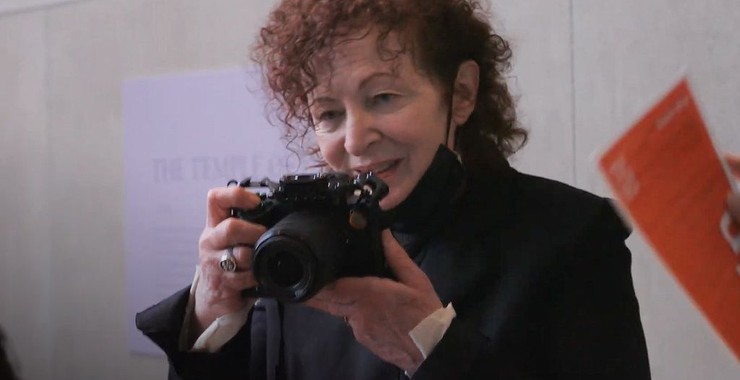
Photo caption: Nan Goldin in ALL THE BEAUTY AND THE BLOODSHED. Courtesy of NEON.

All the Beauty and the Bloodshed is a profile of photographer Nan Goldin and her leadership of Prescription Addiction Intervention Now (PAIN), the advocacy group seeking to punish the Sackler family for profiting on the addiction and overdose carnage from oxycontin. Purdue Pharma, a privately held company owned by the Sacklers, intentionally oversold oxycontin to doctors and misled the public on its addictive qualities. The saga ended up in bankruptcy court because the Sacklers drained the profits from Purdue Pharma before it could be forced to reimburse its victims.

It’s unusual to have a public controversy so without nuance – the Sacklers are clearly bad people who acted badly and irreparably injured thousands of others. As a result, we aren’t bothered when Nan Goldin, an addict in recovery herself, evenly says, “It’s personal. I hate these people.”

Up against a malevolent, heavily-resourced corporation, PAIN inflicted pain on the Sackler family by turning their own philanthropy against them, shaming major art museums into refusing gifts from the Sacklers and even removing the Sackler name from the buildings and galleries they had sponsored. The museums were the institutions with the very highest profiles: the Guggenheim, Metropolitan Museum of Art, [British] National Portrait Gallery and even the Louvre. To make things even more uncomfortable for the museums, Goldin’s own work is in the permanent collections of some of these museums.

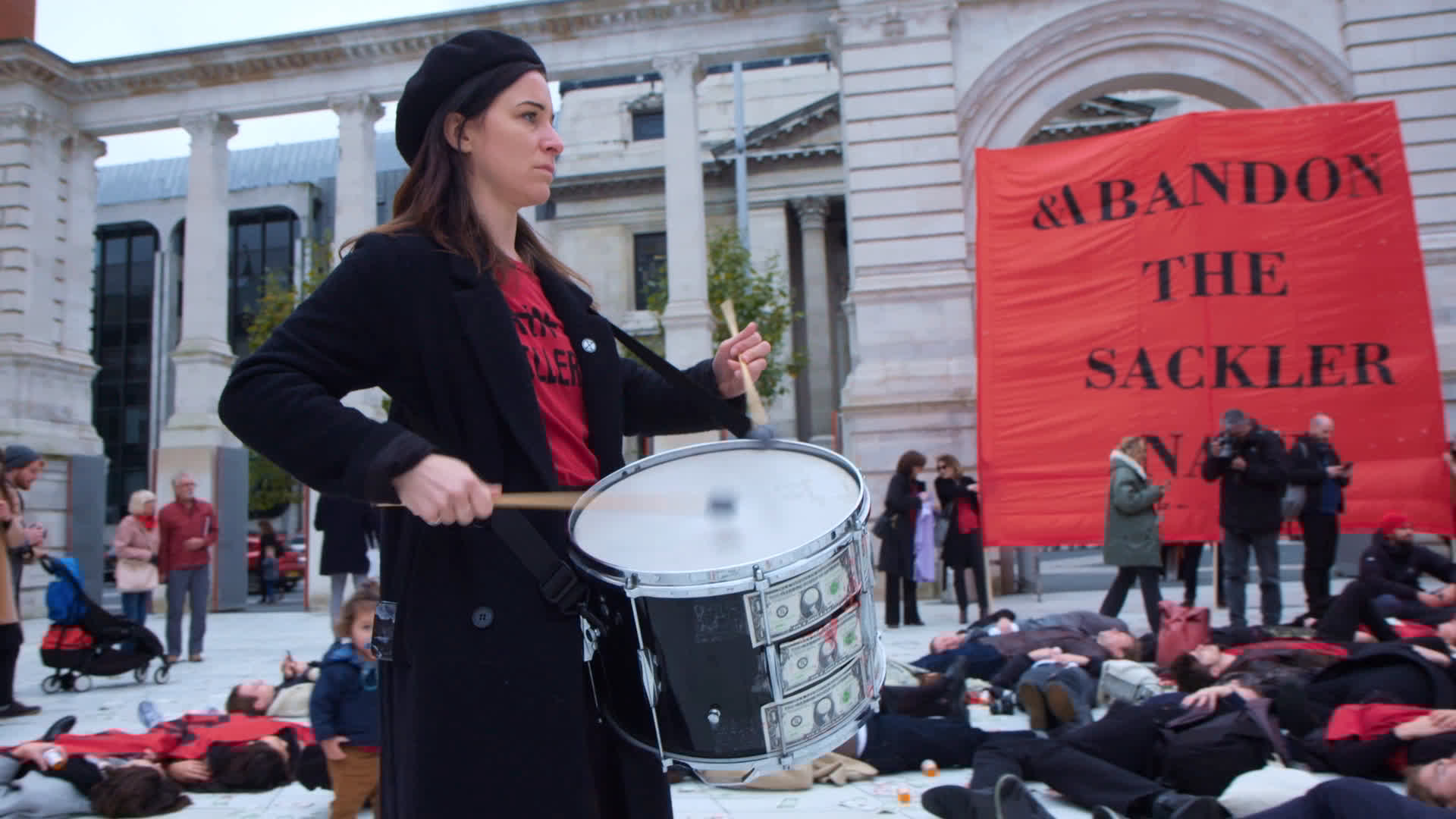
A PAIN action in ALL THE BEAUTY AND THE BLOODSHED. Courtesy of NEON.

PAIN’s actions were themselves works of performance art, often involving PAIN members feigning death en masse, surrounded by prescription bottle. To reflect Richard Sackler’s self-damning email that greedily rejoiced at the “blizzard of prescriptions”, PAIN members created a confetti blizzard of prescription slips in a major museum atrium.

The beginning and end of All the Beauty and the Bloodshed, about a third of the film, follows Goldin and PAIN’s campaign against the Sacklers. The rest of the film is the self-narrated life story of Nan Goldin, much of it illustrated by slide shows of her photos. Goldin became a key figure of the New York avant garde of the 70s, 80s and 90s, and she has led a colorful and oft turbulent life. There’s a major focus on the story of her older sister Barbara, and how the two reacted to their family by rebelling against conformity.

The bottom line is that I found the shaming of the Sacklers much more engaging that the Nan and Barbara Goldin story.

In the highlight of All the Beauty and the Bloodshed, the Sacklers on Purdue Pharma’s corporate board must themselves sit for two hours and listen via Zoom to the testimony of their victims, including one harrowing 911 call.

All the Beauty and the Bloodshed was directed by noted documentarian Laura Poitras, Oscar winner for Citizenfour. The film has been included in various critics’ top ten lists and is a contender for the Best Documentary Oscar. It’s good, but I’ve seen better docs this year.

MADOFF: THE MONSTER OF WALL STREET: adding some jawdroppers to a familiar story

Photo caption: Bernie Madoff in MADOFF: THE MONSTER OF WALL STREET. Courtesy of Netflix.

Netflix’s documentary Madoff: The Monster of Wall Street is a pretty good watch. Most folks, like me, thought they understood the now 15-year-old story of Madoff’s house of cards collapsing at the same time as the 2008 mortgage meltdown, ruining hundred of investors, including pensioners and non-profits. But Madoff: The Monster of Wall Street contributes a comprehensive perspective and some jaw-dropping nuggets, to wit:

  • How the SEC whiffed MULTIPLE TIMES, even when the case was giftwrapped for them by a credible Wall Street expert;
  • The moment when the SEC and FBI learned that the fraud was not in the millions, but in the TENS OF BILLIONS;
  • How Bernie Madoff banned his own sons from the separate office in which the fraud was committed;
  • How Madoff concealed the fraud in plain sight with brazenness alone;
  • The one zillionaire investor who must have known about the Ponzi scheme and kept bailing Madoff out; and
  • What happened to the main characters in the saga, including Madoff’s family and confidantes – it is operatic.

We benefit from Madoff: The Monster of Wall Street‘s comprehensive look at the scandal because our knowledge of it come from the news coverage at time of his arrest, which focused on the plight of Madoff’s victims. That’s a key part of the story, but it helps to (in my case) learn that Madoff’s stature was earned by his building two entirely legitimate Wall Street businesses, co-founding the NASDAQ and becoming a sage adviser to the SEC. It also helps to revisit the scale of his fraud (the largest Ponzi scheme in world history) and how it differed from other Ponzi schemes – NONE of his victims’ money was ever invested.

One of the key themes is the contrast between the two suites of Madoff offices – with only Madoff himself having access to both. His sleek 19th floor suite housed the two legitimate businesses, was immaculately decorated in black and silver, and primarily staffed with well-educated Jews. The 17th floor, which housed the fraud, was staffed by high-school-educated Italian-Americans, and was a messy warren of cardboard boxes and a DOT MATRIX PRINTER.

Madoff: The Monster of Wall Street is well-sourced with the federal agents who arrested Madoff, his personal secretary and employees of both his legitimate and his fraudulent businesses, and clips of Bernie himself in prison garb, ‘fessing up, We also meet the guy who proved as early as 2000 that Madoff had to running a Ponzi scheme, only to be rebuffed by the SEC five times between 20000 and 2008.

Madoff: The Monster of Wall Street was directed by Joe Berlinger, who has directed some of the 21st century’s very best documentaries – the Paradise Lost series and Metallica: Some Kind of Monster. This time, I did not care for his odd technique of using look-alike “actors” in “re-creations”, obviously to fill in for a scarcity of file footage, but it ultimately did not detract from telling a great story. Anyway, hopefully, Netflix will keep hiring Berlinger to make films, which is a great thing.

Madoff: The Monster of Wall Street is streaming on Netflix.