DRIFT: escaping the horrors, but not yet the trauma

Cynthia Erivo in DRIFT. Courtesy of Utopia.

The indie drama Drift is set on a Greek isle, a glorious, carefree tourist destination. Jacqueline (Cynthia Erivo) is Liberian, and living rough, sleeping in hidden locations for safety and to avoid immigration authorities; she’s surviving by dumpster diving for food and selling foot massages on the beach.

There are other Sub-Saharan Africans in the island’s informal economy, mostly men selling blanket loads of souvenir trinkets. Jacqueline minimizes her contact with them, too. It becomes apparent that those guys have reached Greece to escape poverty, but that Jacqueline’s story is different.

Callie (Alia Shawkat) is an American tour guide who shows historic ruins to visitors who have come to the island for sunny beaches, not out of any cultural interest or intellectual curiosity. At one of those sites, Callie meets Jacqueline, who pretends to be an affluent tourist, and because Jacqueline is educated, urbane and cosmopolitan, Callie buys her story.

Eventually, we learn from flashbacks that Jacqueline is from a family in Liberia’s privileged elite, a family suddenly torn from its comfortable station by unspeakable horrors. Barely escaping with her life, Jacqueline profoundly traumatized by the violence and the sudden losses. and experiences PTSD reactions to fireworks and to unruly crowds .

Callie spots Jacqueline scrounging on the beach and realizes that her cover story is false. But Jacqueline, feeling vulnerable and embarrassed by circumstance, persists in her pose.

It’s clear to us that a friendship with Callie would give Jacqueline the support that she needs, but Jacqueline’s PTSD is in the way. When can she accept even a hug?

Erivo’s performance as Jacqueline is spot on. Erivo is a Broadway musical actress/singer, and stars in the Wicked franchise. In Harriet, Erivo played Harriet Tubman with convincing intensity. Erivo was absolutely the best thing about the Steve McQueen film Widows; since her character teamed with those played by Viola Davis, Michelle Rodriguez and Elizabeth Debicki, the fact that she stole the movie is impressive.

As we expect, Alia Shawkat (Arrested Development) is excellent, too.

Drift is the third feature for director Anthony Chen. Chen unspools the back story effectively, and it’s a well-crafted and especially well-acted little film.

I screened Drift for the Nashville Film Festival. It opens this weekend at the Monica Film Center and will roll out more widely.

THE ZONE OF INTEREST: next door to the unthinkable

Photo caption: Sandra Huller in THE ZONE OF INTEREST. Courtesy of A24.

Jonathan Glazer’s The Zone of Interest is an exceptionally original and well made, intentionally unsettling and, ultimately, unnecessary film.

We first meet Hedwig (the great Sandra Huller), Rudolph (Christian Friedel) and their five children in 1943 on an idyllic riverside picnic in the woods.  They return to their spacious villa and put the kids to bed (Hedwig firmly and Rudolph gently).  When Hedwig and Rudolph are in bed themselves, they ignore what sounds like shouting and the barking of guard dogs nearby.  

The next morning we see that Rudolph is the commandant of Auschwitz and the family home is LITERALLY next door to the walls.  Hedwig, like any hausfrau, hangs laundered sheets to dry, while her groceries are delivered by death camp slave labor. 

As the family’s domestic life goes on, the soundtrack slowly becomes louder and includes more shots, screams and the drone of industrial extermination.  We see more of the skyline, with smokestacks spewing fire and ash.

Glazer slips in little matter-of-fact horrors like perverse Easter Eggs. Hedwig brags to her gal pals about furs and other luxuries she has stolen from dead Jews. Hedwig seems meaner than Rudolph and coldly utters what must be the most terrifying threat ever made to a maid.

Having married a guy who has risen to be a big boss, Hedwig is living her best life, with servants and plenty of perks, like Italian spa vacations.  She has the very disturbing capacity to shut out the hellish enterprise over her back fence, replete with the sounds, smells and images of workaday genocide. Glazer has made a Holocaust film without any images from inside the death camp; the Holocaust is just kind of leaking over the fence.

The Martin Amis novel that Glazer adapted into the screenplay did not name the commandant and his wife, but Glazer uses the names of the actual historical figures: the real Rudolph and Hedwig Hoss.  When one reads about the real Hoss, you can see the care with which Glazer depicts him, down to his distinctive haircut, the kids’ names and Hedwig’s dream of spacious gardens (She’s the true believer in lebensraum.)

Rudolph is not a hate-spewing frothing maniac, more of a Company Man go-getter.  One can imagine a 1960s version of Rudolph driving to surpass this quarter’s IBM sales goal. Yet, this is the man who admitted to murdering 2.5 million people; the other million, he said, died of disease and starvation.

The Zone of Interest is an extraordinary illustration of the banality of evil. But why do we need it?  Hannah Arendt’s recognition that Hitler’s mad horrors were not carried out by monsters, but by the ordinary and mediocre, has been generally accepted for decades. If Hitler were obsessed with dairy production or ceramic art, thousands of workaday Nazis would have been content to do just that, instead.  The logical conclusion is that the Holocaust doesn’t need a maniac to happen again, just millions of people who obey the maniac. After all, it was ordinary-looking American companies that vied for Trump Administration contracts to put migrant babies in cages, not some survivalist militia.

It’s a familiar truism, and, to my sensibilities, not worth the unpleasantness of sitting watching these unpleasant people and their unthinkable deeds. That being said, this is anything but a slog. The Zone of Interest is captivating throughout (not unlike a vehicular crash).

This is only Glazer’s fourth feature in 24 years: Sexy Beast (2000), Birth (2004), Under the Skin (2013).

The Zone of Interest has been nominated for multiple Oscars, including Best Picture.

AMERICAN FICTION: this can’t be happening

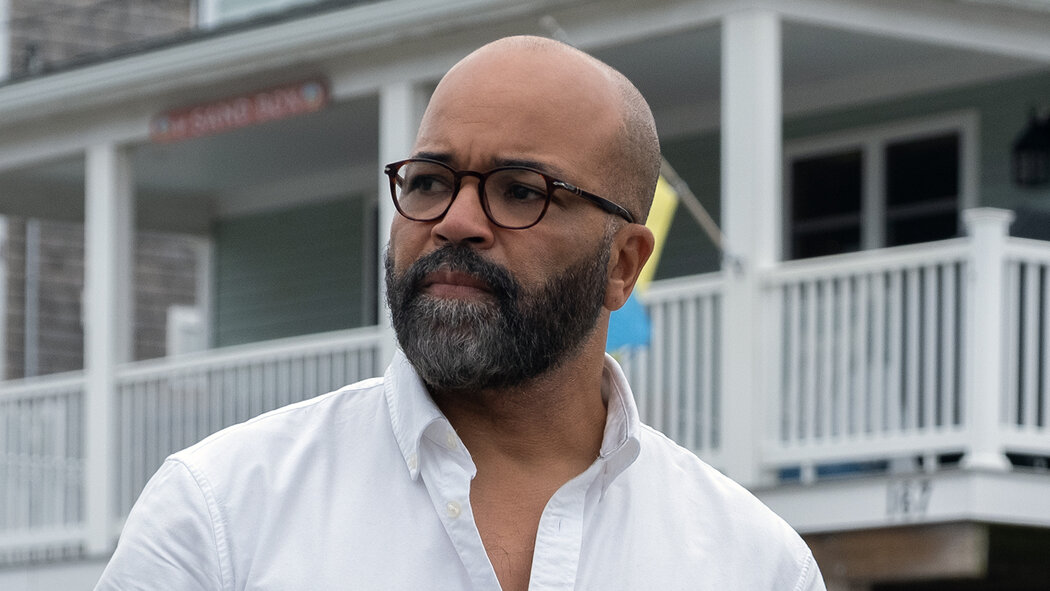
Photo caption: Jeffrey Wright in AMERICAN FICTION. Courtesy of MGM.

In the sharply funny American Fiction, Monk (Jeffrey Wright) is an academic and a novelist, the kind who wins literary awards, not the kind who people read on the airplane or on the beach. He is also African-American, named Thelonious Monk Ellison at birth, and his father and both siblings are physicians. His literary agent (John Ortiz) has not found a publisher ready to buy Monk’s latest high-falutin manuscript, an updating of Aeschylus.

Monk’s sensibilities are offended whenever he is pigeon-holed as a Black Writer. But he is enraged by books and movies that portray everyday African-American life as driven by deadbeat dads, crack addicts, and getting shot by the police. Monk, himself financially stressed by circumstance, goes ballistic when a Black writer (Issa Rae) gets a best seller by penning a story crammed with negative tropes.

Monk, in his cups, goes all in, adopting the pseudonym Stagg R. Leigh, and cramming every offensive stereotype into a volume initially titled My Pafology (until it gets an even worse new title). Monk demands that his agent submit it to publishers, and they are shocked when publishing houses and movie studios vie over the rights.

The joke here is that, far from ignoring black voices, the New York and Hollywood cultural gate-keepers, not a Trump voter among them, are eager to embrace black artists and black content – as long as the work conforms to the stereotypes with which they are comfortable. American Fiction sends up the white intelligentsia for incentivizing black creatives to perform in a new, but equally disgusting, form of black face. It’s wickedly funny.

While American Fiction is a successful social parody, it includes heartfelt threads of family dynamics and personal self-discovery. (There’s even a wedding.)

Jeffrey Wright is wonderful as a Monk who is pompous and curmudgeonly when we first meet him, but who becomes more complicated as we learn more about his upbringing. Tracee Ellis Ross (Blackish), Sterling K. Brown and Erika Alexander are each remarkably winning as Monk’s siblings and love interest, respectively. Leslie Uggams is downright brilliant as Monk’s mother. The entire cast is excellent, including the actors playing powerful white nitwits, especially Miriam Shor and Adam Brody

American Fiction is the directorial debut of its screenwriter, Cord Jefferson, who won a Primetime Emmy for Watchmen. It is a brilliant screenplay; Jefferson adapted it from the book Erasure by Percival Everett.

American Fiction is nominated for the Best Picture Oscar. Jefferson’s screenplay, Laura Karpman’s score, Jeffrey Wright and Sterling K. Brown are also Oscar-nominated. This is one of my Best Movies of 2023.

THE COMPLEX FORMS: what did he bargain for?

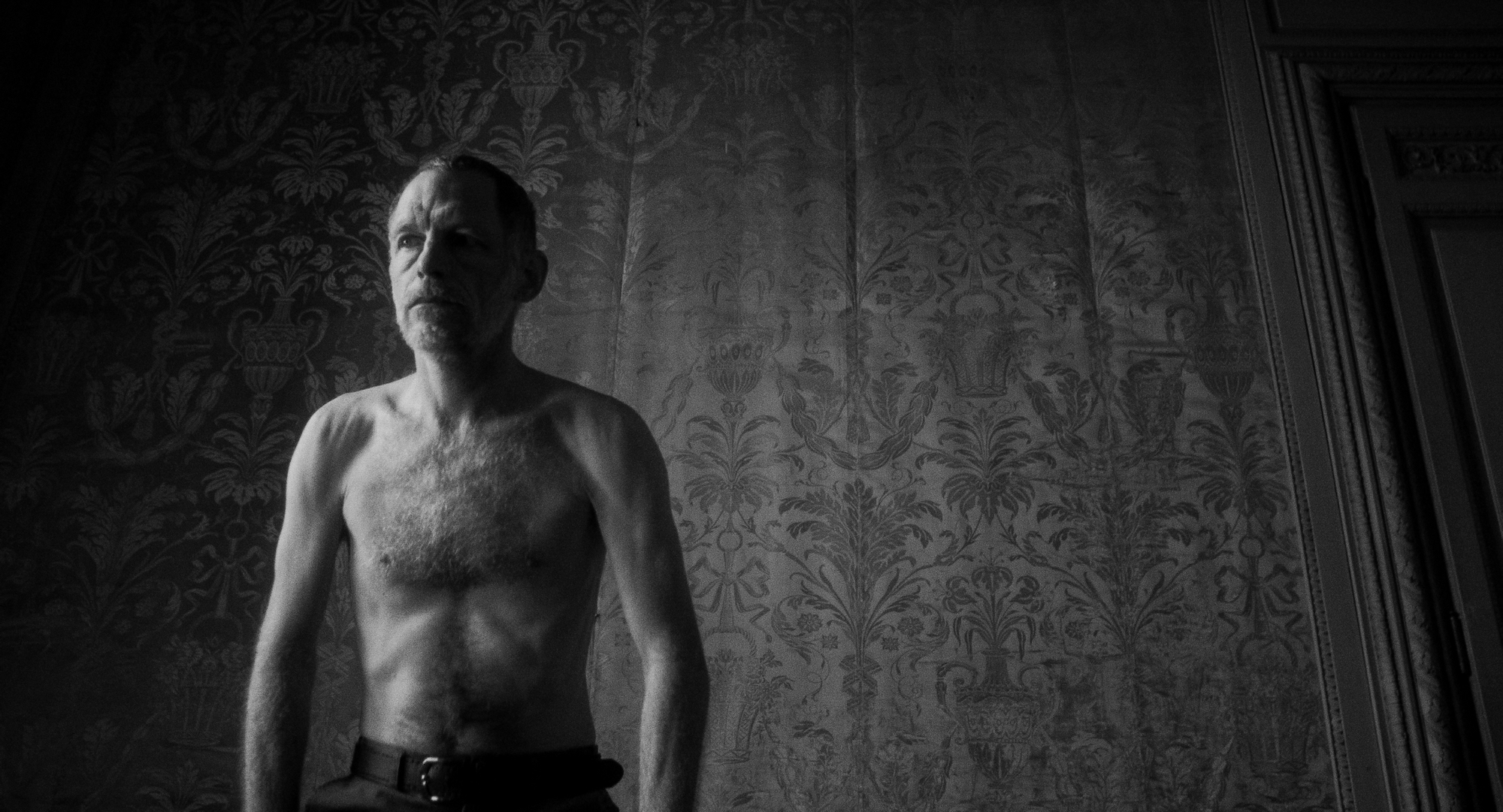
David Allen White in Fabio D’Orta’s THE COMPLEX FORMS. Courtesy of Slamdance.

The visually striking atmospheric The Complex Forms is set in a centuries-old Italian villa, where Christian (David Allen White) and other down-on-their-luck middle-aged men sell their bodies for a period of days to be “possessed”. Possessed how? By who or by what? As the dread builds, Christian resolves to pry the answers from the secretive masters of the villa.

Director Fabio D’Orta unspools the story with remarkably crisp black-and-white cinematography, a brooding soundtrack and impeccable editing. In his astonishingly impressive filmmaking debut, D’Orta wrote, directed, shot and edited The Complex Form.

David Allen White is excellent as Christian, who begins resigned to endure whatever process that he has committed to, but becomes increasingly uneasy as his probing questions are deflected. So are Michael Venni as Christian’s talkative roommate Luh and Cesare Bonomelli as the impassive roommate simply called The Giant.

Like his countrymen Fellini and Leona, D’Orta has a gift for using faces to heighten interest and tell the story. He makes especially effective use of Bonomelli’s Mt. Rushmore-like countenance.

Slamdance is hosting the United States premiere of The Complex Forms. The Complex Forms is the my favorite among the dozen or so films I screened in covering this year’s Slamdance. The Complex Forms won Slamdance’s Honorable Mention for Narrative Feature.

THE ACCIDENT: she’s too nice, until…

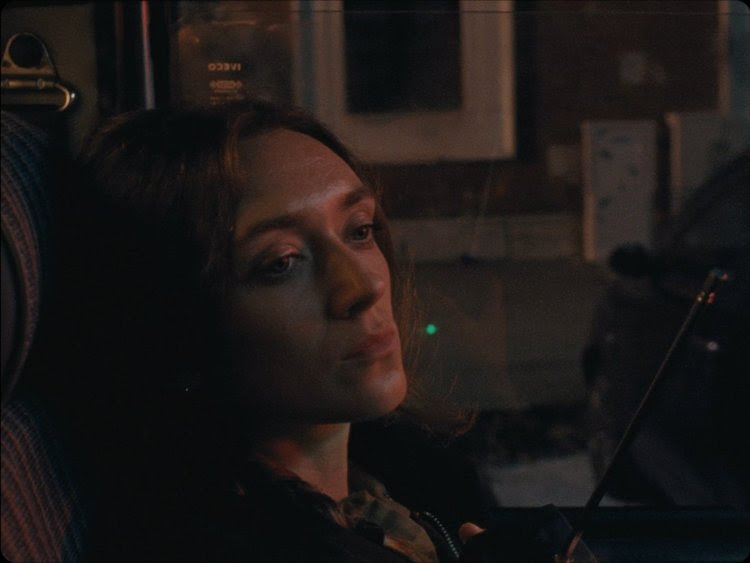
Giulia Mazzarino in THE ACCIDENT. Courtesy of Slamdnce.

In The Accident (L’Incidente), Marcella (Giulia Mazzarino) is a meek, good-hearted young woman who in quick succession, loses her partner, custody of their daughter, her car and her job. Desperate for financial survival , she buys a tow truck, but she is utterly unsuited for the cutthroat Italian towing industry, where no good deed goes unpunished. Marcella is trapped into a downward spiral of an increasingly disadvantageous situations, until she happens on a logical, but outrageously amoral, solution.

Marcella is empathetic and kind, which are qualities we all should aspire to have. But she’s the type of person destined to always be pushed around, exploited and bullied by those more venal and ruthless. The Accident is acid social commentary on how society rewards selfishness, an allegory which could have been titled The Parable of Marcella.

The Accident is the first full-length narrative feature for documentarian Giuseppe Garau, who describes it as an “experimental film” because virtually the entire movie is shot from a camera in the front passenger seat of Marcella’s vehicle. That may be an experiment, but it’s not a gimmick because it drives our attention to Marcella’s incentives and disincentives.

Giulia Mazzarino is very good as Marcella. Anna Coppola is hilarious as Anna, the deliciously shameless owner of the towing company.

Slamdance hosted the North American premiere of The Accident where it won the Narrative Feature Grand Jury Prize.

DEMON MINERAL: environmental justice, indigenous voices

DEMON MINERAL. Courtesy of Slamdance.

The environmental justice documentary Demon Mineral explores the impact of uranium mining on the Navajo people. In her first feature, director and co-writer Hadley Austin uses indigenous voices to tell the story, including her co-writer, environmental scientist Dr. Tommy Rock. It’s the testimony of Navajo people themselves that traces the history of uranium mining, subsequent health problems and the science connecting the dots. Some of the first-person narratives are heart-breaking.

This real life story takes place in one of the most iconic locations in American cinema – Arizona’s Monument Valley. (The Navajo themselves have complicated feelings about the legacy of John Ford Westerns made in their homeland.) Cinematographer Yoni Goldstein’s black-and-white photography soars, bringing out the majesty of the harsh landscape and imparting a gravitas to the story.

There’s even a cameo by hard right Congressman Paul Gosar, who is so stupid that he doesn’t comprehend just how stupid he is.

Demon Mineral has enjoyed a robust film festival run and won the Audience Award for Documentary Feature at the 2024 Slamdance.

KLUTE: immune to her charms – until he isn’t

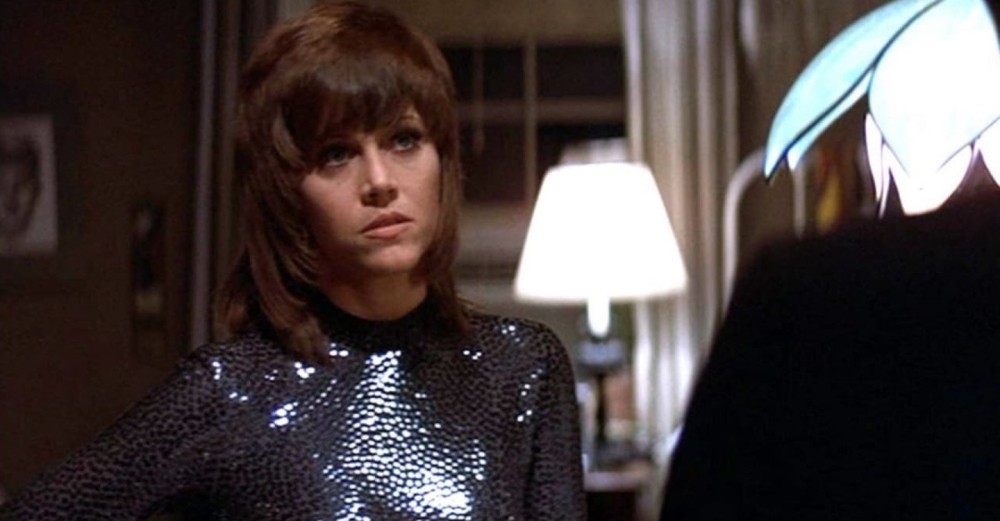
Jane Fonda in KLUTE.

On January 22, Turner Classic Movies is airing Klute (1971), highlighted by Jane Fonda’s first Oscar-winning performance. An out-of-town detective comes to Manhattan on a missing person’s case and becomes embroiled in tracking down a sexually sadistic murderer before he can kill a call girl. What elevates this ostensible mystery to a gripping psychodrama are the main characters and their chemistry.

Bree Daniels (Fonda) is both a masterful call girl and a failed actress/model. Fonda’s Bree is confident, sexy, vulnerable, manipulative and the terrified target of a maniac. She’s also a fashion plate – stylishly braless in long knit dresses and sporting the shag haircut that sparked its own fad. This is Fonda at her iconic peak – she earned six Best Actress nominations in a twelve year period.

Bree Daniels’ foil is the stolid John Klute (Donald Sutherland), who is so clear-eyed and disciplined that he is immune to Bree’s charms – until he isn’t. Sutherland’s career is still peaking today, but he sandwiched Klute between Kelly’s Heroes, M*A*S*H*, National Lampoon’s Animal House and Invasion of the Body Snatchers.

Director Alan J. Pakula takes us to the grimy, seedy NYC of the period, and keeps the tension building. The scenes with Bree’s junkie acquaintances are heartbreaking. Pakula received Oscar nominations for producing To Kill a Mockingbird, directing All the President’s Men and writing Sophie’s Choice. For more on Alan Pakula, you can stream the fine documentary Alan Pakula: Going for Truth, which features Jane Fonda’s memories of Pakula.

Veteran television writer Andy Lewis, with the far less prolific Dave Lewis (presumably his older brother), were nominated for the original screenplay Oscar. 

The supporting cast is good, too, Ray Scheider is superb as a smug pimp. In his first movie, Charles Cioffi’s very contained performance makes for a chilling villain; he followed Klute with a key role in Shaft and then essentially left movies for a long career in television (including playing another villain on a TV soap).

Klute has more than its share of bit players who were about to become famous:

  • Veronica Hamel (a decade before Hill Street Blues) as a model at a cattle call audition;
  • Richard Jordan (four years before Logan’s Run) as a guy kissing Bree at a disco;
  • Harry Reems (a year before Deep Throat) as another disco patron;
  • Jean Stapleton (just months before All in the Family) as the secretary at a garment factory.

I recently rewatched Klute, and it still works today. If you haven’t seen it, or seen it recently, set your DVR.

DRIVING MADELEINE: still spirited at 92

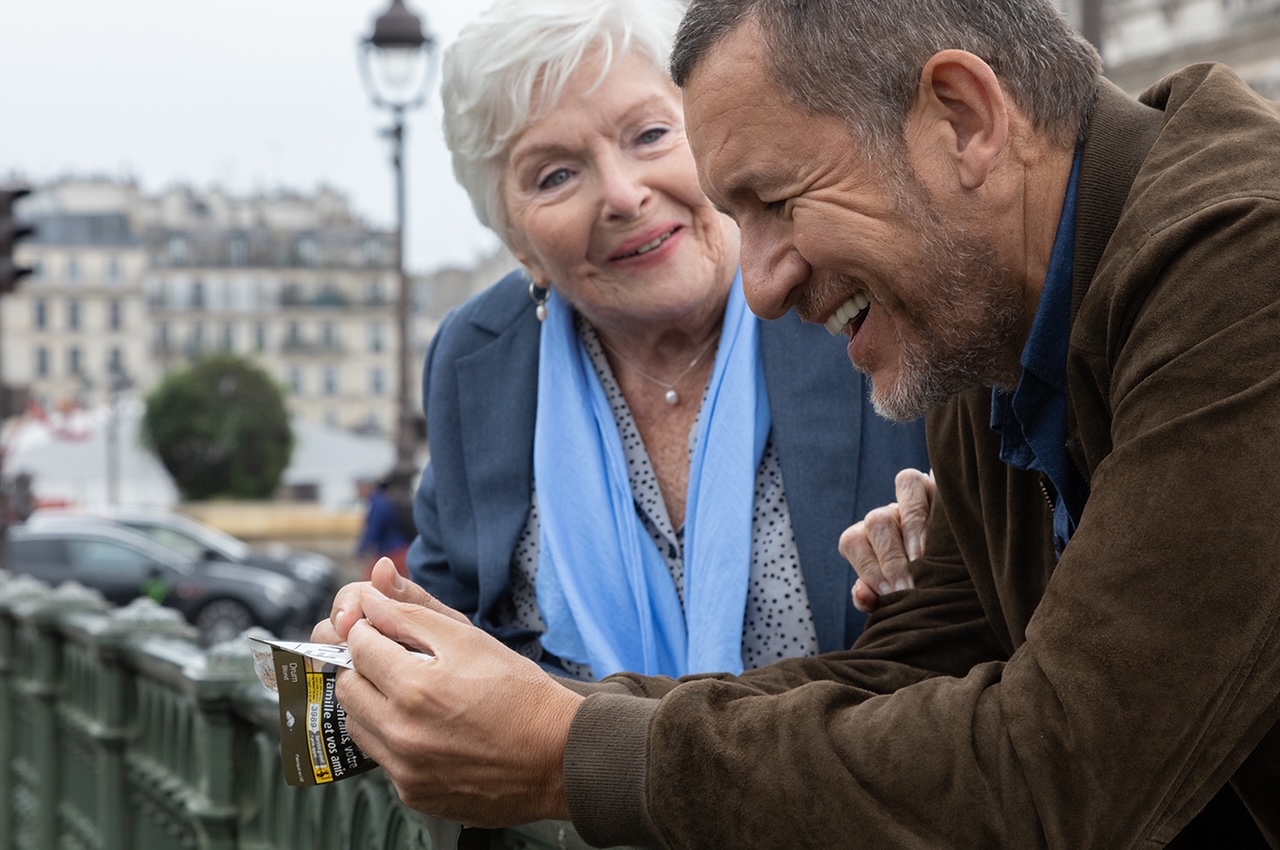
Photo caption: Line Renaud and Dany Boon in DRIVING MADELEINE. Courtesy of Cohen Media Group.

In Driving Madeleine, a ninety-two year-old Parisienne, having outlived her family, must move from her apartment to a nursing home. Madeleine (Line Renaud) cajoles her harried cabbie Charles (Dany Boon) to visit some of her old haunts along the way. As they stop at the locations where Madeleine’s life pivoted, director Christian Carion reveals that Madeleine has lived a helluva life, one spanning ecstasy, tragedy and even notoriety.

Charles’ family is facing severe financial pressure, he is one traffic violation away from losing his taxi license, and he is practically vibrating from the stress. As he reluctantly complies with Madeleine’s circuitous wishes, he takes some lessons from her life and softens. Driving Madeleine is an unflinchingly sentimental film, which is okay because it’s not trying to be anything else. There is a place for sweet, heartfelt movies.

Driving Madeline’s sweetness doesn’t get syrupy because of the painful injustices Madeleine survived in pre-feminist 1950s France. The cause of her notoriety is an act that I haven’t seen depicted before.

Actress-singer Line Renaud is actually older than her character, and she delivers the mischievousness and steely toughness that is Madeleine. The versatile comedian/actor/writer director Dany Boon easily inhabits the role of Charles; (Boon, often cast in broad comedies, is also in the recent The Crime Is Mine, which will release on VOD within a month.) Alice Isaaz is excellent in flashbacks as the young Madeleine.

Driving Madeleine’s opening tomorrow includes the Landmark Sunset 5 and the Landmark Pasadena; it opens more widely next weekend, including at the Opera Plaza in San Francisco.

POOR THINGS: brazen, dazzling, feminist and very funny

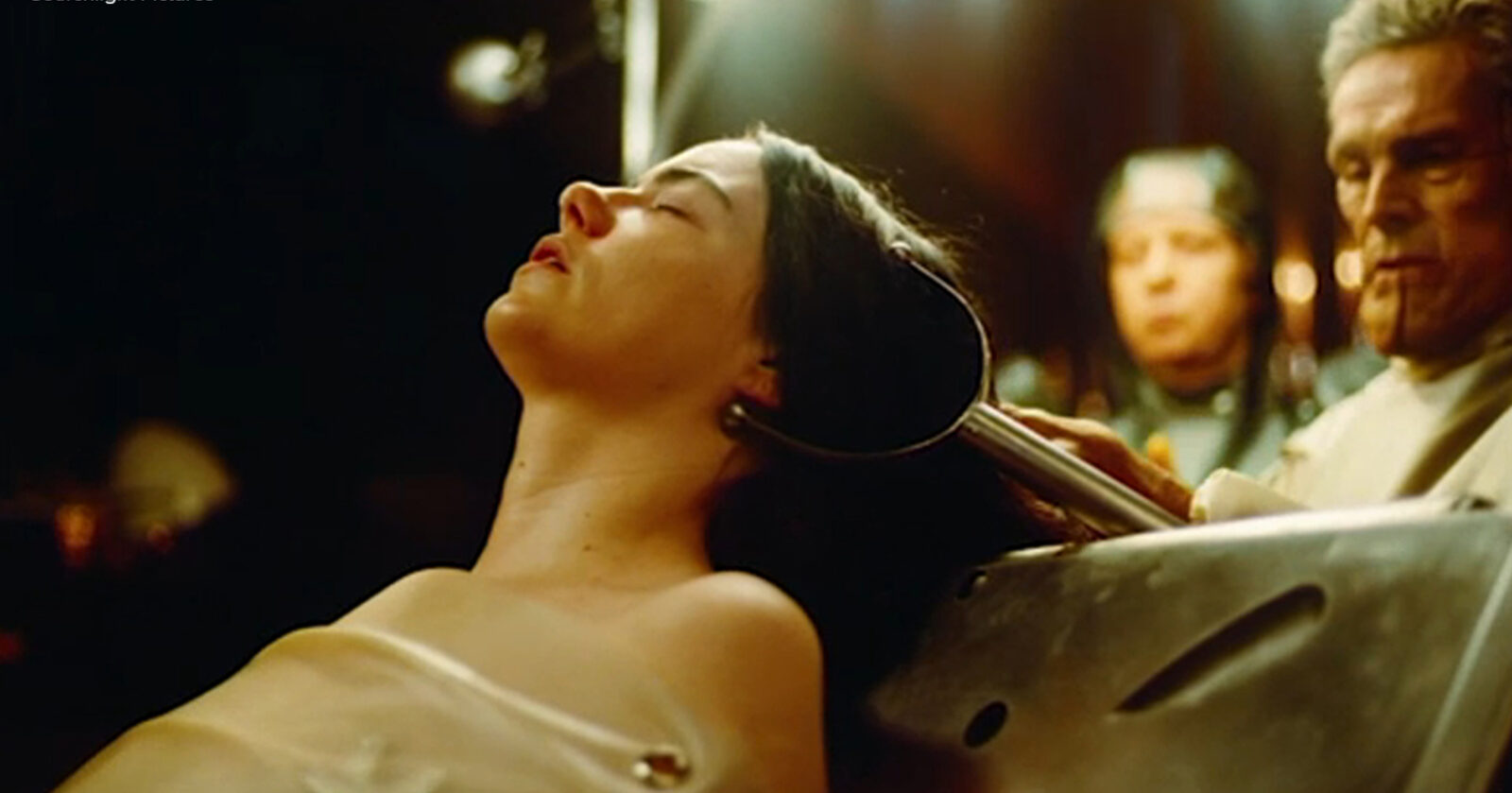
Photo caption: Emma Stone and Willem Dafoe in POOR THINGS. Courtesy of Searchlight Pictures.

Well, here’s a movie unlike any you have ever seen. Poor Things begins as a Frankenstein movie, and evolves into an outrageously raunchy, funny and thoughtful feminist triumph. The kindly mad scientist Dr. Baxter (Willem Dafoe behind geologic makeup) implants the brain of a fetus into the body of a young woman and creates Bella (Emma Stone). The adult-sized Bella acts like a baby, then a toddler, then a child and so forth as her brain develops.

The key is that Dr. Baxter, confining her to his house, shields the developing Bella from all societal constructs, like common views of morality, manners, religion and gender roles. Bella is driven by the most basic natural human impulses – for pleasure and safety – without ever having learned any inhibitions.

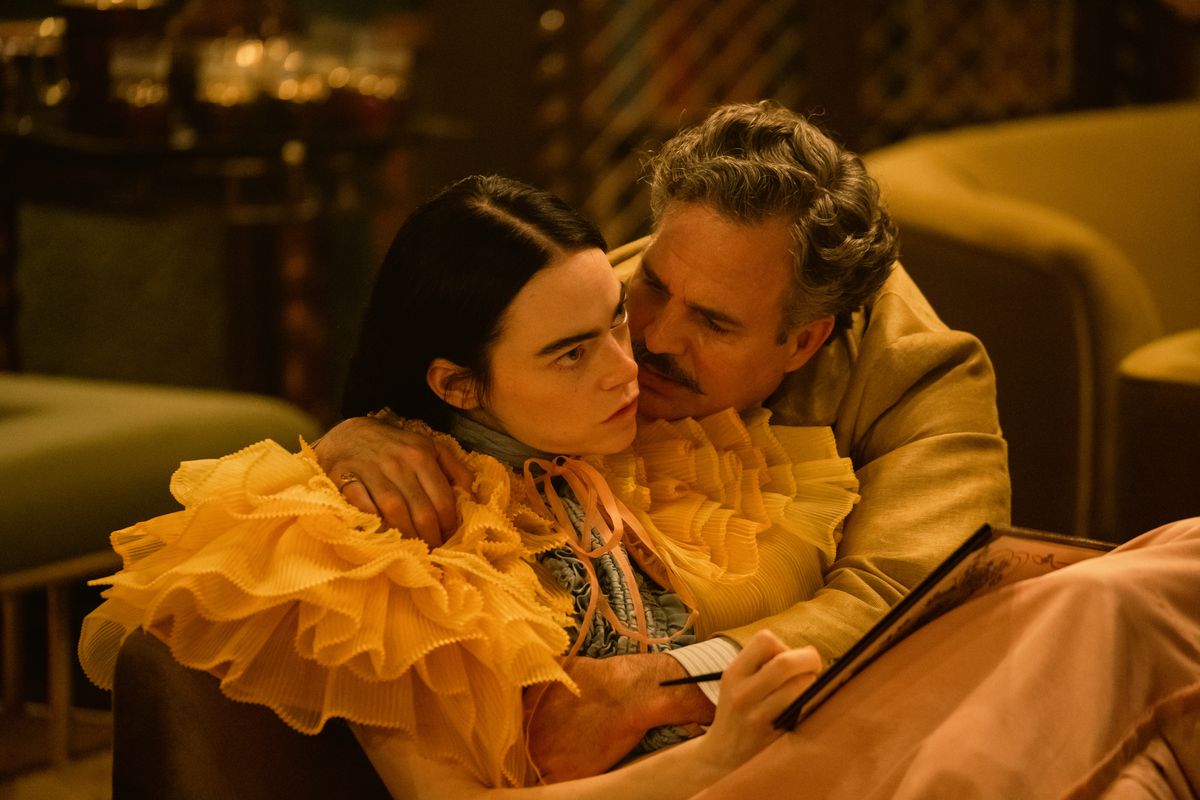
When Bella’s teenage brain rebels, the scientist allows her independence, accepting that she will make mistakes while she learns how to navigate an outside world populated with humans behaving with avarice, lust and ignorance. One such character, hilariously played by Mark Ruffalo, is only too happy to harness Bella’s urges for sexual pleasure to his own benefit. Unfortunately for him, Bella’s brain develops beyond his ability to exploit her.

Emma Stone and Mark Ruffalo in POOR THINGS. Courtesy of Searchlight Pictures.

Poor Things is based on the novel by Alasdair Gray, so he’s the guy who actually imagined this bizarre and singular story, but director/jokester Yorgos Lanthimos has imbued it with his often zany and transgressive sensibilities. I was a big fan of Lanthimos’ absurdist breakthrough film Dogtooth, but then I didn’t like his acclaimed The Favourite and downright hated The Lobster and The Killing of a Scared Deer. I was encouraged by Glenn Kenney’s New York Times dispatch from Venice about how much he despised previous Lanthimos films and yet still loved and admired Poor Things.

The one thing that I didn’t like in Poor Things was when Lanthimos aped Wes Anderson and Terry Gilliam with some overly fanciful sets. Totally unnecessary to the story and a distraction.

Emma Stone’s performance is the year’s most startling. For one thing, she is certainly courageous and a good sport about spending so much of the movie unclothed and simulating sex. But the extraordinary element of her performance is in calibrating the subtle growth in Bella’s development.

Willem Dafoe and Mark Ruffalo are both great, too, and Kathryn Hunter (The Tragedy of Macbeth) elevates yet another supporting role.

Poor Things won the Golden Lion for Best Film at the Venice Film Festival, and made my list of the Best Movies of 2023. A feminist message is cleverly embedded in this brazen, dazzling and very funny movie.

THE BOYS IN THE BOAT: the underdogs soar

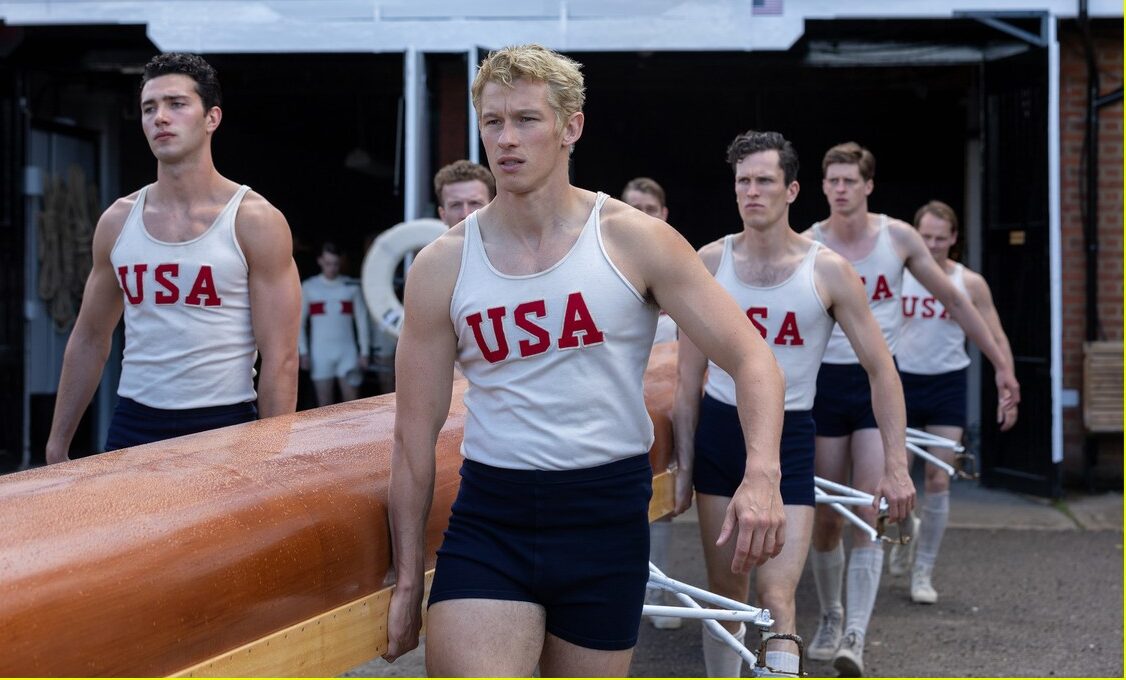
Photo caption: Callum Turner (center front) in THE BOYS IN THE BOAT. Courtesy of MGM.

The Boys in the Boat is the entertaining true story of the ultimate sports underdog – the University of Washington’s junior varsity rowing team, which won gold medals at the 1936 Olympics hosted by Hitler in Munich (the Jesse Owens Olympics). Again, this was UDub’s JUNIOR varsity boat.

The Boys in the Boat follows a familiar arc for sports movies – the heroes must win the Big Race (actually, three Big Races here). We’ve all seen this before, but director George Clooney gets the credit for keeping The Boys in the Boat from becoming unbearably hackneyed or corny. Best known as a movie star, Clooney has proven himself an able director: Confessions of a Dangerous Mind, Good Night and Good Luck, The Ides of March, The Monuments Men.

In telling the story, Clooney emphasizes the Depression setting and how impoverished the kids on the team are, especially the main kid, played by Callum Turner. Joel Edgerton plays the taciturn coach, who must gamble his job on an unconventional decision. Few of us have a deep understanding of the sport of team rowing, so Clooney takes us on a rowing procedural.

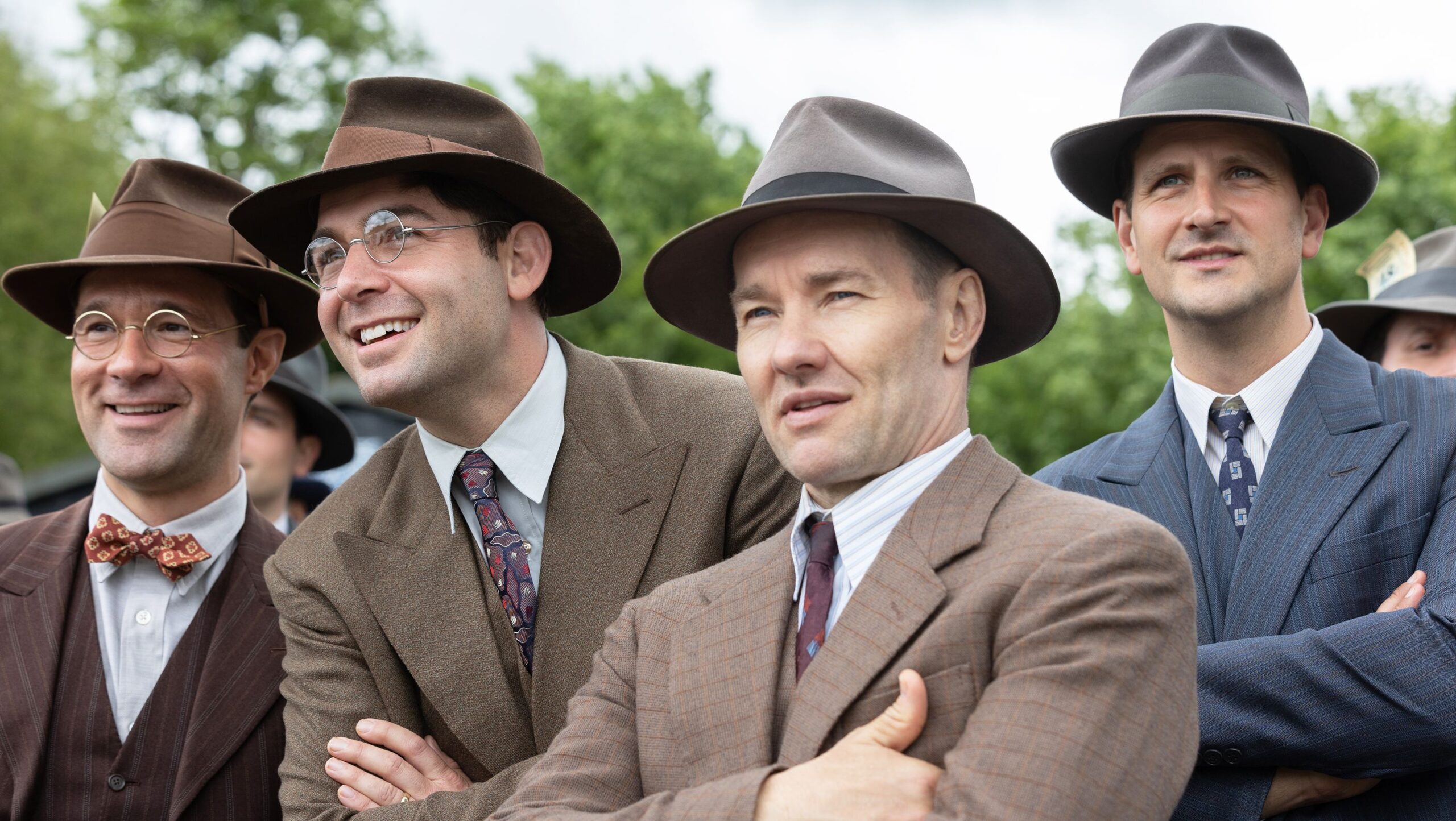
Joel Edgerton (second from right) in THE BOYS IN THE BOAT. Courtesy of MGM.

I love Edgerton in everything, and he’s starred in Master Gardener, Loving and Zero Dark Thirty. I especially recommend watching him in The Gift, which he also wrote an directed. Edgerton is very, very good here.

Callum Turner is adequate, but Luke Slattery and Jack Mulhern are especially vivid as his two of his teammates.

This story is still celebrated in Seattle, where you can still visit the boathouse and see the team’s memorabilia. One race is staged in the Montlake Cut between Lake Washington and Puget Sound. The coolest race scene has an observation train, with bleachers on the rail cars, keeping pace with the boats racing down the Hudson River.

The Boys in the Boat ain’t the most original film, but it’s enjoyable to watch.