The Act of Killing: the banality of evil like you’ve never seen it

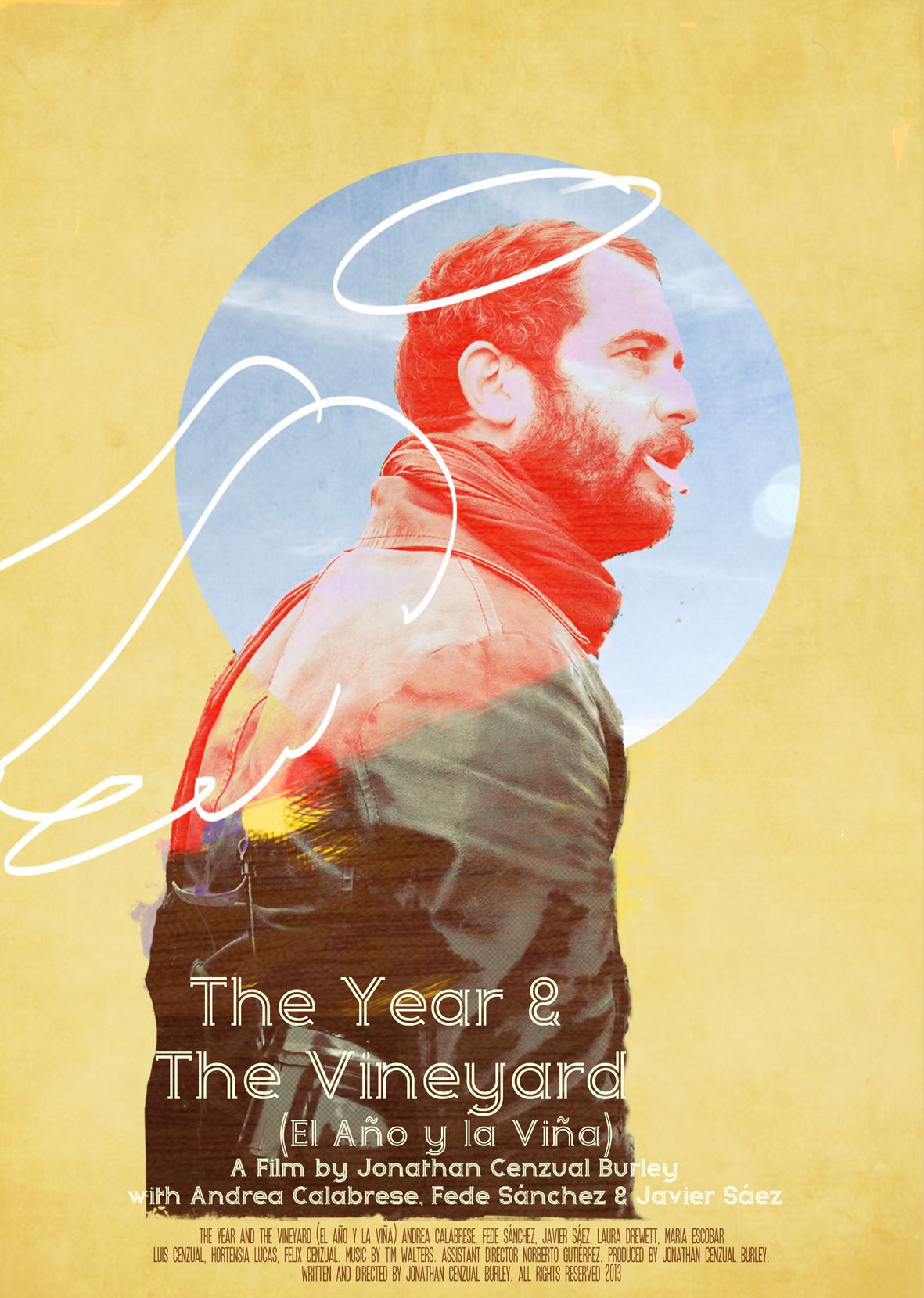
Okay, here’s a jaw dropper.  In the chilling documentary The Act of Killing, perpetrators of genocide in Indonesia are asked to re-enact their murders – and they are pleased as punch to do so.  We meet unapologetic mass murderers face-to-face.  Filmmaker Joshua Oppenheimer has created the year’s most startling documentary.

After the 1965 military coup, death squads sympathetic to the military labeling opponents of the regime, landless farmers and ethnic Chinese as “communists” – and killed 2-3 million fellow Indonesians.  The killers were mostly Indonesian paramilitary groups and gangsters.  The Act of Killing introduces us to several of these murderers,  who don’t try to evade or spin their deeds, but instead look proudly and nostalgically at their murders as the highlight of their lives.

The film primarily focuses on two self-described gangsters, Anwars and Herman.  The two enthusiastically embrace the film project so they can document their murders for history.  Anwars is said to have killed a thousand by himself.  Because beating them to death produced too much messy blood, he devised a method of strangling them with wire. The corpulent Herman chooses spends about a third of movie dressed in flamboyant drag, which is ridiculous, but the film is so disturbing that the audience just can’t laugh. Besides acting out interrogation torture murders and a village massacre, the two come up with a Bollywood-like musical number of Born Free, complete with dancing-girls in front of a waterfall, in which the garotted dead reappear to thank Anwars for sending them on to the afterlife.  It is beyond bizarre.

In the film’s most riveting scene, a guy who has been recruited to play a torture victim in the film-within-a-film, recounts the death squad murder of his step-father to Anwars and Herman.  To keep his composure, he awkwardly laughs as he describes the abduction – but his eyes are clearly blaming the old gangsters.  Then he acts out his torture for the camera.

The Act of Killing is hypnotically compelling – you can’t believe what’s on the screen, can’t believe that you’re still watching it and can’t stop watching.

The Act of Killing is directed by Oppenheimer and co-directed by someone credited as “Anonymous” and Christine Cynn.  Oddly, there is no writing credit.  The great documentarians Errol Morris and Werner Herzog are among the executive producers.

[We don’t often explore genocide from the perpetrator’s point of view, although two excellent documentaries come to mind:  Shoah and Blind Spot: Hitler’s Secretary, both on my 5 Essential Holocaust Films.  The current film Hannah Arendt is about the academic theorist who coined the term “banality of evil”, but that story’s duel of letters between hand-wringing intellectuals makes for a stale discussion.]

The Act of Killing is a very uncomfortable movie, and I suspect that it wouldn’t be not a great choice for most of my readers.  But it pushes the envelope of cinema and is the most uniquely original film of the year (or millennium so far?).  I’m really glad that I watched it.

Lovelace: soap opera – not that there’s anything wrong with that

Peter Sarsgaard and Amanda Seyfried in LOVELACE

Lovelace is a soap opera about a nice girl who meets the Wrong Guy and, before she knows it, she’s in a porn movie.  The movie is cleverly constructed.  First, it outlines the true story of the naive and troubled young woman soon-to-become porn star Linda Lovelace, culminating in the 70s porn megahit Deep Throat.  Doing so, it captures both the polyester period and the appeal of the then-novel campy humor in Deep Throat.   Then it fills in the blanks, completing the flashbacks of earlier scenes (and inserting new ones) so we see the relentless abuse of Lovelace by her Wrong Guy husband. His abuse of her – even pimping her out – is horrific.

It’s generally a well-acted film.  The appealing Amanda Seyfried works as Lovelace.   The most welcome aspect of the film is the goofy team of Hank Azaria, Bobby Cannavale and Chris Noth as the pornographers – they’re very funny and lighten the film.

As we would expect, Peter Sarsgaard makes for the most despicable movie husband since Lawrence Fishburne’s Ike Turner in What’s Love Got to Do With It.  His sadistic sociopath is both smarmy and sadistic.

An unrecognizable Sharon Stone is excellent as the rigidly devout Catholic mother who insists that Lovelace return to her physically abusive husband and obey him (although, to be fair, the mom can’t imagine the depth of the abuse).

Robert Patrick is excellent as her terse father, especially in one particularly heartbreaking scene.  So many of Patrick’s roles are in action movies, so I’m glad that he got a chance to play a rigidly unemotional guy that is having deep emotions.

Some of the other casting is pretty random.  James Franco is completely wrong as Hugh Hefner.  Hef is cool only because of the Playboy Empire.  Franco is cool because he’s Franco.  Here Franco doesn’t swap out his own personal magnetism for the real Hef’s stiff reserve.  Less would have been more.  And, oddly, Chloe Sevigny receives a credit for what may be less than five seconds on-screen.

The real Linda Lovelace wasn’t particularly deep, and neither is Lovelace.  As well-crafted as it is – and with the superb performances of Skarsgaard, Stone, Patrick, Azaria, Cannavale and Noth – the central cautionary tale of Lovelace – the fall and redemption of a sympathetic character – nonetheless remains a not very profound soap opera.

I Give It a Year: a twist on the rom com

I GIVE IT A YEAR

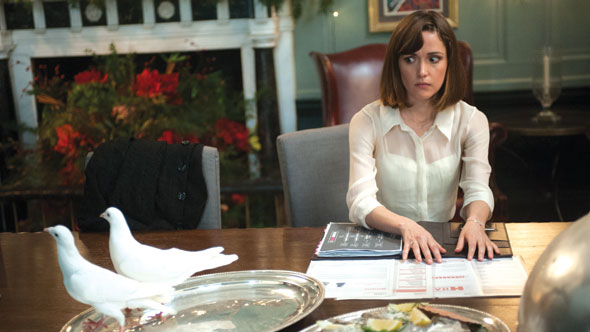
In a twist on the usual romantic comedy plot, I Give It a Year starts out with the perfect wedding, and then traces the couple’s (Rafe Spall and Rose Byrne) adventurous first year of marriage.  They have married after a brief infatuation, and it turns out that they aren’t a great fit.  It becomes rapidly apparent that she is more well suited with her new client (Simon Baker), and his true soul mate is his ex-girlfriend (Anna Faris).

Of course, this is a romantic comedy, so be prepared for some silliness and some implausibility.  But I give it credit for an original story, and it’s mostly entertaining, with some moments of hilarity.  Anna Faris is brilliant in her character’s earnest but futile attempt to master the acrobatics required in a three-way sexual encounter.  And it’s very funny when the young groom realizes that the honeymoon photos that the bride is showing her parents includes some naughty bits.

I especially enjoyed the fine dramatic actress Olivia Colman (Tyrannosaur, Broadchurch, The Iron Lady) playing broadly against type as the worst imaginable marriage counselor (she interrupts a session to take a call on her cell phone and scream abuse at her husband).  As in the very best comedy, Colman plays it absolutely straight as she, in turn, violates every professional precept.

You can stream I Give It a Year now on Amazon, iTunes, GooglePlay, YouTube, Vudu and other VOD purveyors – or try to find it in limited theatrical release.


Grabbers: coulda been a contender

GRABBERS

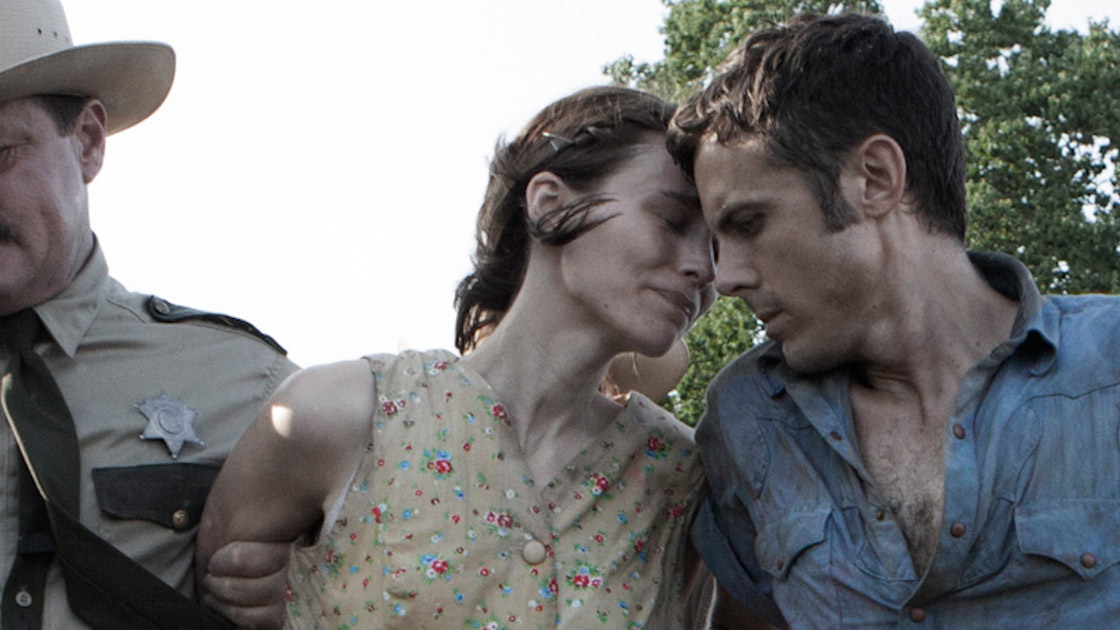
In the Irish horror comedy Grabbers, an isolated Irish island is attacked by tentacled, bloodsucking alien space monsters.  Here’s the inventive device that could have resulted in a cult classic – it turns out that alcohol is toxic to the monsters, so the residents can survive as long as they keep a high enough level of alcohol in their bloodstreams.  Pretty funny, right?  I could imagine the colorful villagers in Waking Ned Devine helping each other to stay drunk, but not too drunk.

Unfortunately, the bit about the effects of alcohol doesn’t appear until halfway through, and the real focus in on the romantic conflict between the pretty and highly professional cop from Dublin and the drunken local Garda – an obvious story that we’ve seen in every bad romantic comedy.  What we’re left with is a low-budget horror flick with a trite “Will they get together?” thread.  Too bad.

Grabbers is available streaming from Amazon, iTunes, YouTube, GooglePlay and other VOD sources.

A Band Called Death: before punk there was Motown punk

A BAND CALLED DEATH

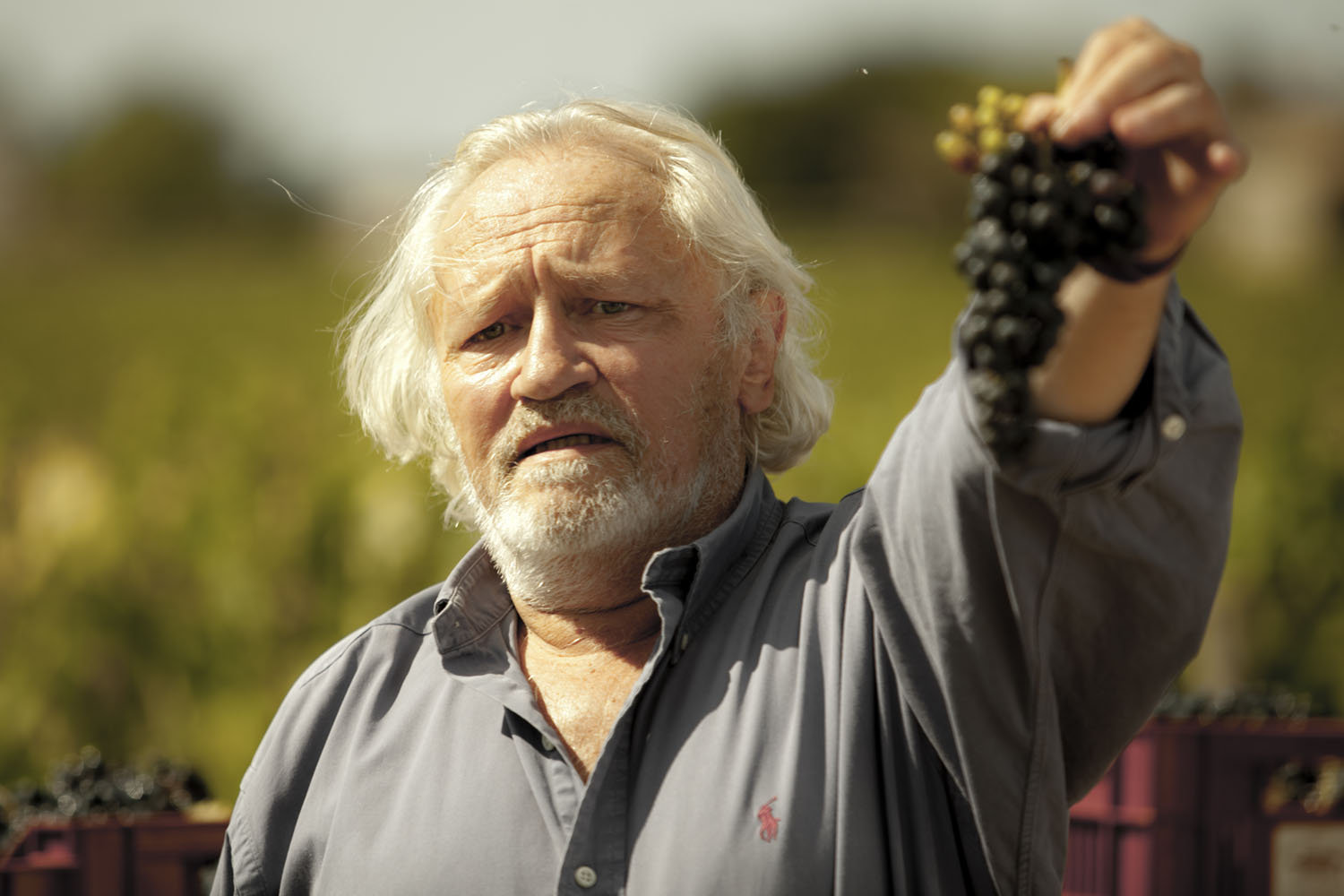
The documentary A Band Called Death tells the story of three African-American brothers from Detroit who formed a band that could have launched punk music – but remained unknown until the 21st century.  The brothers’ parents invested a settlement from a car accident into top flight instruments for the teens, who unexpectedly eschewed soul for rock.  Two years before The Ramones and The Sex Pitols, Death’s groundbreaking sound was about to earn the band a record deal when…Well, just watch the movie.  The filmmaking is solid if unremarkable, but the story is a great one.

Thanks to Paul and Harrison for turning me on to this gem.  A Band Called Death is available streaming on iTunes.

Casting By: revealing an essential piece of filmmaking

Marion Dougherty (left) and some of her discoveries in CASTING BY

Every serious movie fan should see the fine HBO documentary Casting By, which reveals the importance of the casting department, chiefly by focusing on the pioneering work of New York casting director Marion Dougherty and her Hollywood counterpart Lynn Stalmaster.

In the hey day of the Studio System, studios would simply typecast actors plucked from their list of contract players,  But Dougherty, casting for the early TV dramas shot in New York, picked the most promising stage actors and cast them AGAINST type.  When the Studio System collapsed in the early 1960s, Dougherty and Stalmaster were able to bring this approach to the movies, especially for former TV directors like Sidney Lumet and George Roy Hill and young up-and-comers like Martin Scorsese.

It’s really difficult to imagine American cinema from the past 50 years without Al Pacino, Dustin Hoffman, Gene Hackman and Robert Duvall – and Dougherty is the person who cast them for their breakout credits.  Not to mention James Dean, Jack Lemmon, Warren Beatty, Rod Steiger, Jon Voight, Christopher Walken, Glenn Close, Martin Sheen and Diane Lane.  And she pushed for Danny Glover to be cast in his Lethal Weapon role, originally written for a white detective.

Stalmaster’s story is just as compelling, including his advocacy for then unknown John Travolta and his casting of the very odd kid in Deliverance.

Casting By also takes on the turf war with the remarkably ungenerous Directors Guild, which results in grudging credits and no Oscars for casting directors.

Casting By is now playing on HBO.

Blue Jasmine: a portrait both profound and funny

Peter Skarsgaard and Cate Blanchett in BLUE JASMINE

Woody Allen’s Blue Jasmine is a remarkably profound portrait of a woman seemingly ruined by circumstance and trying desperately to cling to who she thought she was.  In a stunning performance, Cate Blanchett plays Jasmine, a New York socialite whose billionaire swindler of a hubby has lost his freedom and his fortune to the FBI.  Jasmine’s identity has been based on the privilege derived from her money, her marriage and her social station – and all of that is suddenly gone.  Flat broke and reeling from the shock of it all, she seeks refuge with her working class San Francisco sister.

Despite her desperate situation, Jasmine arrives still brimming with deluded entitlement, Woody having calculated an undeniable resemblance to Blanche Dubois in A Streetcar Named Desire.  But Blue Jasmine is more accessible than the great play Streetcar because it’s so damn funny.  Jasmine’s pretensions are as pathetic as Blanche’s, but it’s very, very funny when her top shelf expectations collide with her current reality.

Cate Blanchett will certainly be nominated for an Oscar for this role.  Blanchett is able to play a woman who is suffering a real and fundamental breakdown through a series of comic episodes.  She flawlessly reveals Jasmine’s personality cocktail of charm, denial, shock, desperation and sense of authority.

I know that a lot of folks are put off by the creepiness of Woody’s real life marriage, but he has written a great female lead role for Blanchett, and he’s directed actresses to four Oscars in the past, as outlined in this recent New York Times article.

In my favorite scene, Jasmine faces her young nephews across a diner’s booth in a diner.  They ask her questions with childish directness and inappropriateness.  Her answers are candid from her point of view, but nonetheless astoundingly deluded – and just as inappropriate.  The scene is deeply insightful and hilarious.

Who and what has brought Jasmine to her knees?  Certainly she has been victimized by her amoral sleazeball of a husband, but she vigorously refuses to consider taking any responsibility herself.  Can she be forced to look within?  And is she strong enough to face what she would see?

Sally Hawkins is equally perfect as Jasmine’s good-hearted sister Ginger, a woman who doesn’t expect much from life and still gets disappointed.  Andrew Dice Clay, of all people, is excellent as Ginger’s ex, a lug who rises to a moment of epic truth-telling.   Louis C.K. brings just the right awkward earnestness to the apparently decent guy who takes a hankering to the long-suffering Ginger.  Alec Baldwin nails the role of Jasmine’s husband,  a man whose continual superficial charm almost masks his cold predatory eyes, and it’s a tribute to Baldwin’s skill that he makes such a natural performance seem so effortless.

Playing a primarily comic character, Bobby Cannavale delivers a lot of sweaty energy, but with too much scenery chewing. The great actors Peter Skarsgaard and Michael Stuhlbarg do what they can with far less textured characters.

The Wife thought Blue Jasmine dragged in places, and she was distracted by some components that didn’t ring true about the San Francisco setting – two key working class characters with Tri-State Guido accents and a Sunday afternoon cocktail party where the men wear neckties; she’s dead right on both points, but they didn’t bother me.

Blue Jasmine may not rise to the level of Allen’s Midnight in Paris, Annie Hall, Manhattan, Hannah and Her Sisters and Husbands and Wives, but it’s a pretty good film with a superlative, unforgettable performance.

Only God Forgives: laughably bad

ONLY GOD FORGIVES

I can say only three good things about Only God Forgives. First, it’s not painfully bad, but laughably bad.  Second, the great Kristin Scott Thomas is on-screen for 10-15 minutes in an outlandishly campy role.  Third, this week presents the rare opportunity to see the best of cinema (The Hunt) and the worst (Only God Forgives) in a perverse double feature.

After combining on the thrilling Drive, director Nicholas Winding Refn and Ryan Gosling return with Only God Forgives,  a hyper-violent revenge tale.  I loved Drive, with Winding Refn’s vivid colors and taut pacing, its shocking violence and Gosling’s evocative performance. Only God Forgives reprises the garish palette, but fails on the other aspects.

Gosling’s character, a pro kick-boxer and the henpecked son of a female crime lord,  has little so personality that he could have played by Keanu Reeves.  The exploitative violence doesn’t have the shock value of Drive’s.   But, most unforgivably, the pacing drags.  Winding Refn tries to deliver gravity by inserting pregnant pauses between virtually each shot.  Typically, one character looks off camera, and there’s a pause and a dramatic musical chord; then another character looks back, with another pause and another chord. Look Pause Chord Look Pause Chord Look Pause Chord ad nauseam.

Kristin Scott Thomas plays Gosling’s evil mom and gets to utter this unforgettable line: “How many cocks can you entertain in that cute little cumdumster of yours?”.

Playing the cop villain, Thai actor Vithaya Pansringarm walks deliberately – very deliberately – around Bangkok and is very good at moving his eyes without moving his head.  Oddly, after mutilating yet another person with his hidden sword, he enthralls a roomful of uniformed cops by crooning a karaoke ballad.

Highly anticipated (because of Drive), Only God Forgives got trashed by critics at Cannes and been reviled upon its US release.  Only After Earth, The Lone Ranger and Pacific Rim may keep it out of the bottom spot as the year’s worst major release.

Hannah Arendt: an intellectual argument now stale

HANNAH ARENDT

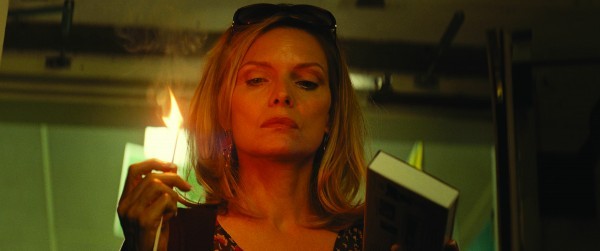
Hannah Arendt is a movie about an intellectual argument that has since been resolved in favor of the title character.  Hannah Arendt was a noted political theorist and a leading thinker on totalitarianism.  In 1961, The New Yorker assigned Arendt (a German Jew who herself avoided the Holocaust by fleeing to the US)  to cover the trail of Nazi war criminal Adolf Eichmann.  Instead of finding Eichmann to be personally monstrous, she saw him as a bureaucratic functionary who failed to think through the monstrous consequences of ordinary tasks; he took pride in successfully loading people on to a train without taking responsibility for sending them to their extermination.  Arendt made Eichmann the poster boy for she coined as “the banality of evil”.

While the banality of evil is is a concept generally accepted today, it caused a furor at the time from those who could not accept that a human catastrophe of the magnitude of the Holocaust could have been enabled by ordinary humans.  Hannah Arendt is the story of that controversy.  Unfortunately, it’s difficult to make a compelling movie about a quibble between intellectuals – and even more challenging when the argument itself has been stale for 40 years.

Arendt had achieved academic status in the 1950s that was remarkable for a woman of the time.  She was also arrogant and tone deaf to political correctness, which helped her step into the controversy.

Arendt is ably played by Barbara Sokowa.  Janice McTeer (Tumbleweeds, Albert Nobbs) gets a much flashier role as Arendt’s loyal friend, the feisty writer Mary McCarthy, and McTeer’s performance is by far the most watchable piece of the movie.

For a much more visceral exploration of the banality of evil, I recommend Blind Spot: Hitler’s Secretary, described in my 5 Essential Holocaust Films.

Fruitvale Station: the human moments that define a life

FRUITVALE STATION

The emotionally powerful Fruitvale Station explores the humanity behind the news.  If, as I do, you live in the San Francisco Bay Area, you know what happened to Oscar Grant.  Returning to the East Bay after 2008 New Year’s Eve revelries in San Francisco, the unarmed 22-year-old was handcuffed and lying on his stomach when he was mortally wounded by a transit cop’s gunshot.  Oscar Grant was African-American.  The transit cop was white.  Multiple cell phone videos of the incident went viral on New Year’s Day.  Fruitvale Station opens with one of those shaky videos.

But the beauty and strength of this impressive film is that Fruitvale Station is not about the incident and its political fallout – it’s about the people involved, in their workaday and familial roles to which all of us can relate.  It follows the fictionalized life of Oscar Grant as he lives out what he doesn’t know is his last day.

Writer-director Ryan Coogler’s Oscar Grant is a complete and textured character.  Oscar is a charming guy, a loving father and the fun dad/uncle who children love roughhousing with.  He’s remarkably unreliable as a boyfriend, son and employee.  He’s done a stretch in San Quentin, and he’s got a temper.  He’s  capable of random acts of kindness.  He’s a complete package of decency, fecklessness, irresponsibility and possibilities.  Would he have turned his life around if he hadn’t been at Fruitvale Station that night? We’ll never know.  And that’s the tragedy laid bare by Fruitvale Station.

Although it’s a tragedy with some heartbreaking moments, Fruitvale Station isn’t a downer – it’s too full of humanity for that.  Neither is it a political screed; Coogler lets the facts speak for themselves and the audience to draw its conclusions.

The acting is first-rate, especially Michael B. Jordan as Oscar, Melonie Diaz as his girlfriend and the great Octavia Spencer as his mom.  Equally, important, the supporting cast is just as authentic.

It’s a stunning debut feature for 27-year-old filmmaker Ryan Coogler, from whom much is now expected.  (Coogler is also an African-American from the East Bay who is roughly the same age as Oscar Grant.)

Fruitvale Station was justifiably honored at both the Sundance and Cannes film festivals.  It’s one of the best movies of 2013.