Philomena: an emotionally satisfying gem

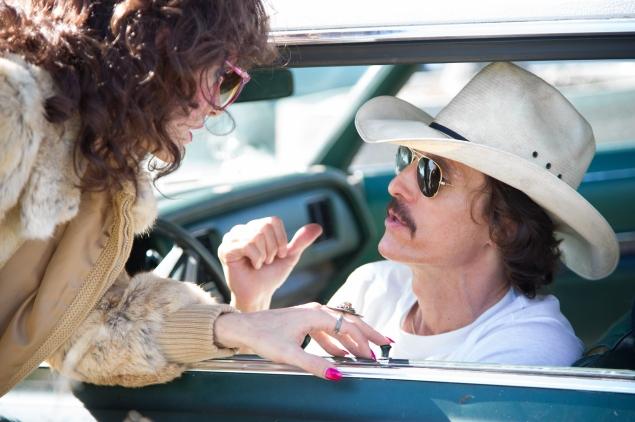
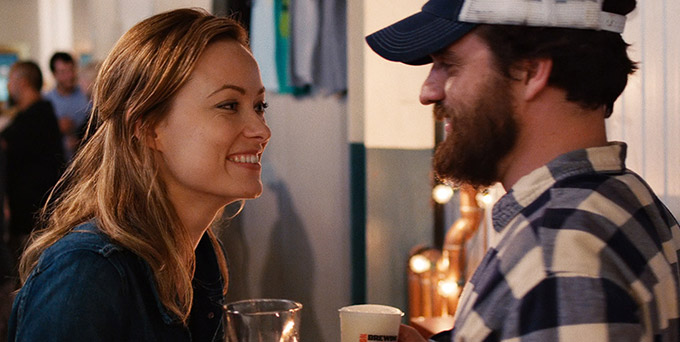
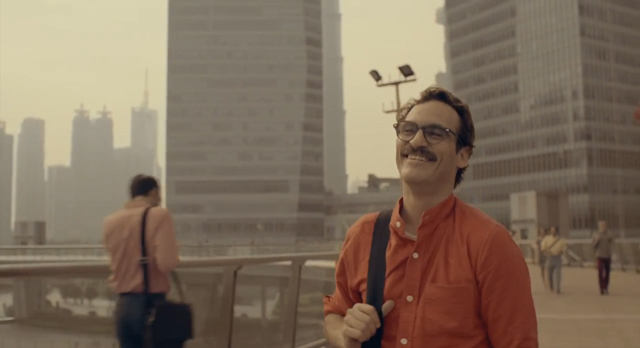
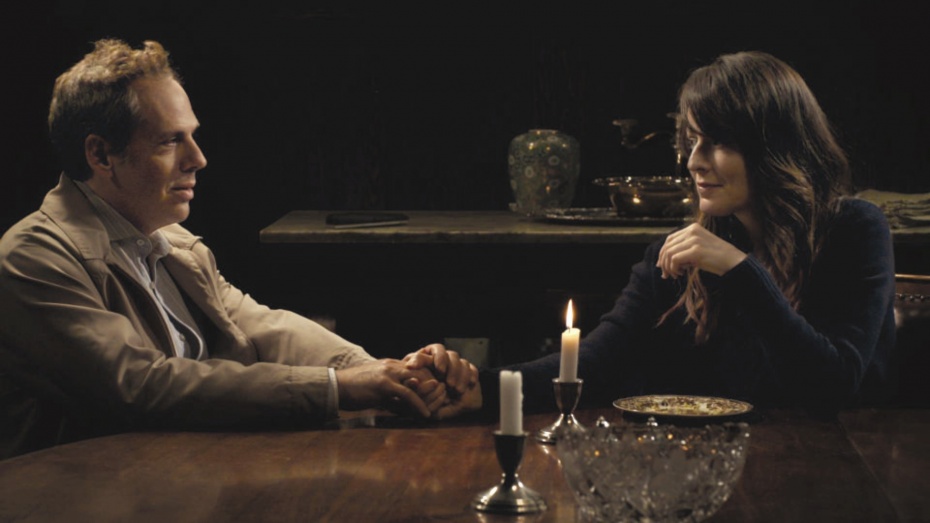
The title character in Philomena, is an Irish woman who was shipped off to the nuns as a pregnant teen and whose toddler was adopted without her genuine consent.  Now over forty years later, she wants to find what has happened to her son.  Philomena (Judi Dench) is a simple woman, whose deep faith has been unable to resolve her sense of loss.  She enlists a British journalist (Coogan) to help her in the investigation.  The journalist takes them on a journey that finds her answers – and some of those answers are wholly unexpected.

The nuns in the 1950s flashback are cartoonishly nasty, contrasted with their modern counterparts – just as evil but with slickly modern PR skills.  Philomena’s faith enables her victimhood, but then an act of transcendence reveals her to be the most Christian character.

Of course, Dench is always excellent, but Coogan’s performance shows an unexpected range.  His character has just had his high-flying career derailed and has lost the smug confidence that Coogan’s characters usually impart.

Director Stephen Frears (High Fidelity, Dirty Pretty Things, The Queen) has a big success with Philomena, a nice rebound from his most recent efforts (Tamara Drewe, Lay the Favorite).   Philomena is an emotionally satisfying success – the unexpected gem of Fall 2013.

The Great Beauty: decadence, stunning imagery and the beauties of Rome itself

As The Great Beauty (La grande belleza) begins, its protagonist Gep Gambardella is celebrating his 65th birthday in a feverishly hedonistic party.  Gep authored a successful novel in his twenties, which has since allowed him the indulgent life of a celebrity journalist, bobbing from party to party among Rome’s shallow rich.  Gep is having a helluva time, but now he reflects on the emptiness of his milieu and the superficial accomplishments of his past 40 years.  As he alternates introspection and indulgence, we follow him through a series of strikingly beautiful Roman settings.  (And, because Gep  parties all night, we see lots of gorgeously still Roman dawns.)

The Great Beauty is foremost an extraordinarily beautiful art film. If you’ve been to Rome, you know that it is a generally chaotic city with unexpected islands of solitude.  The Great Beauty captures this aspect of the Eternal City better than any other film I’ve seen.  On one level, The Great Beauty is very successful Rome porn.

Writer-director Paolo Sorrentino also explores the moral vacuity of the very rich and the party life. It’s the Italy of Silvio Berlusconi, whom Sorrentino blames for enabling a national culture of escapism.  These themes, along with the main character and the movie’s structure are of course nearly identical to Fellini’s great La Dolce Vita (1960), but The Great Beauty is more accessible, funnier and a bit more hopeful – and much more of a showcase for the cityscape of Rome.  Sorrentino provides plenty of laughs, especially with a gourmet-obsessed cardinal and a cadaverous celebrity nun with a Mephistopheles-looking handler.

It’s hard to imagine an actor better suited to play Gep than Toni Servillo.  Servillo perfectly captures both the happiness Gep takes in carnal pleasure and his self-criticism for giving his entire life to it.  Servillo’s Gep is brazenly proud of his own cynicism, until we see his humanity breaking through at a funeral.  Servillo is even magnificent in wearing Gep’s impressive collection of sports jackets.

There’s so much to The Great Beauty – stunning imagery, introspection, social criticism, sexual decadence, fine performances, humor and a Rome travelogue – each by itself worth a visit to the theater.  The Great Beauty, which will be one of the favorites for the Best Foreign Language Oscar, may not be in theaters for very long – catch it while you can.

Frozen: doesn’t leave you cold

by guest bloggers The Wife and Niece #1

We went to Frozen, to see how the film would stand up against other Holiday movies as well as other classic Disney movies. This heartwarming motion picture holds its own by taking a new spin on the Disney love story, reminding us that love comes in forms other than romantic.

The uniqueness of Frozen‘s story focuses on sisterly love.  While, like most other Disney movies, it does have a good dose of romance, the relationship between the sisters in Frozen  is very refreshing.

Frozen also stands out among the Disney movies through its music. The odd, tribal intro didn’t work for us, but the majority of the score does a good job bringing classic Disney show tunes into the modern-day musical.

Overall, the movie is a great balance between modern and classic Disney. While new twists on music and a refreshing tale of love keep this story from being your boring old animated film, the characters and plot give viewers the mix of adult and kid humor expected of Disney.  This is the perfect multi-generational movie for this Holiday season.  For those who feel like splurging, it may be worth seeing in 3D.  So warm up this winter, and go see Frozen.

[Note from The Movie Gourmet:  I really appreciate The Wife and Niece #1 seeing and commenting on Frozen, because it’s an important film that I just am not going to get to (I tend to skip musicals).  I’ve read several rave reviews of Frozen by mainstream critics (Frozen has a solid MetaCritic rating of 74) that predict that Frozen will win the Best Animated Feature Oscar and that see its potential Broadway spin-off as a sure-fire hit. But – at the end of the day – what makes a good movie is ALWAYS a good story, and it was very perceptive of The Wife and Niece #1, apart from other reviews I’ve read, to point out the sister-sister theme that sets Frozen apart.]

Nebraska: funny, poignant and thought-provoking

In the funny, poignant and thought-provoking Nebraska, a Montana geezer named Woody (Bruce Dern) gets a sweepstakes come on in the mail and believes that he has actually won a million dollars.  Unwilling to accept the explanations from his loved ones, Woody is determined to get to Omaha to claim his fortune – by walking if necessary.  His son David (Will Forte from Saturday Night Live) decides to drive him, and their journey takes them through Woody’s tiny Nebraska hometown.

At first, we see that Woody is bitter, drinks too much, is sometimes addled and drives his loved ones crazy.  As the story progresses, we learn that Woody’s bitterness is rooted in  frustration of his modest aspirations by both circumstance and by his own shortcomings.  And we see David longing for a relationship with his father that he had never thought possible before.  David makes a valiant effort, but Woody is long past any sentimentality.  In Nebraska, director Alexander Payne (Sideways, The Descendants) has another triumph of endearingly flawed characters.

There are many laughs in Nebraska, the funniest coming from Woody’s wife’s salty exasperation, David’s repellant cousins and the hilarious theft of a generator.

The acting is outstanding.  Bruce Dern will certainly – and deservedly – get an Oscar nomination.  It’s a character that is revealed to be more and more complex.  Is he demented, or is he in denial, or is he lying?  Some of each for sure, but it’s always hard to tell.  Dern has stated that he called upon his own experience with unsupportive parents to play the film’s most searing scene, in which David takes a reluctant Woody back to see Woody’s now abandoned childhood home.  June Squibb, who play’s Woody’s wife, has also been mentioned for an Oscar nod; indeed, she gets to deliver most of the funniest lines.

But there are two other exceptional performances that I don’t want to overlook.  As the son, Will Forte plays Woody’s straight man.  It’s a far less flashy role – and perhaps more challenging role.  But Forte lets us see past the son’s stoicism to his pain, embarrassment, frustration, determination and love.

And Actress Angela McEwan has the tiny part of the small town newspaper publisher.  She just gets one brief exchange with Forte and then a second scene where she looks at a truck driving past.  That look is one of the unforgettable moment in cinema this year.

Finally, my parents were from Nebraska, and I have spent plenty of time in the state.  I must say that I have NEVER seen such a dead on take on small town Nebraska and Nebraskans.  If you see Nebraska, you really don’t need to visit the real Nebraska to capture the full experience.

I found Nebraska to be an exceptionally evocative family portrait, and I’ve liked and admired it the more I’ve thought about it.  One of the Best Movies of 2013 – So Far.

Coming up on TV – two JFK classics

Cliff Robertson in PT 109

So it’s almost the 50th anniversary of the JFK assassination, and we’re being bombarded by Kennedybilia.  But I recommend two JFK films on Turner Classic Movies – the documentary Primary and the biopic PT 109 .  [I’m also highly recommending the 2013 day-of-the-assassination movie Parkland, available now streaming on VOD]

Primary (November 21) documents the Wisconsin Democratic primary election campaign in 1960.  This was a key stepping stone in Kennedy’s road to the White House because it was a chance for him to demonstrate that he appealed to voters outside the Northeast.  Kennedy’s rival Hubert Humphrey was favored because Wisconsin neighbors Humphrey’s home state of Minnesota.  Primary is both a time capsule of 1960 politics and an inside look at the Kennedy family unleashed in a campaign.  There’s an amazing scene where Humphrey appeals to a handful of flinty farmers in a school gym – he’s giving his all and he ain’t getting much back.  Only 60 minutes long, Primary has been selected for preservation in the National Film Registry.   The great documentarian D.A. Pennebaker, who went on to direct Monterey Pop and The War Room, shot, edited and recorded sound for Primary.

As 26-year-old PT boat commander in WWII, JFK was a real life war hero.  Some scolds deride PT 109 (November 21) as hagiography, but I don’t buy it – when things went bad, he acted heroically indeed and bore the health effects for the rest of life.  PT boats were essentially light wooden speed boats just big enough to hold some torpedoes and some depth charges on top of a tank of extremely combustible aviation fuel.  The commanders needed to maneuver the PT boat close enough to fire the torpedoes at a Japanese warship while avoiding return fire that would certainly be lethal .  No wonder the PT units were nicknamed  “They were expendable”.  It’s good history and an exciting true life action tale.  Cliff Robertson plays the young JFK.


Stranger by the Lake: an effective thriller with LOTS of explicit gay sex

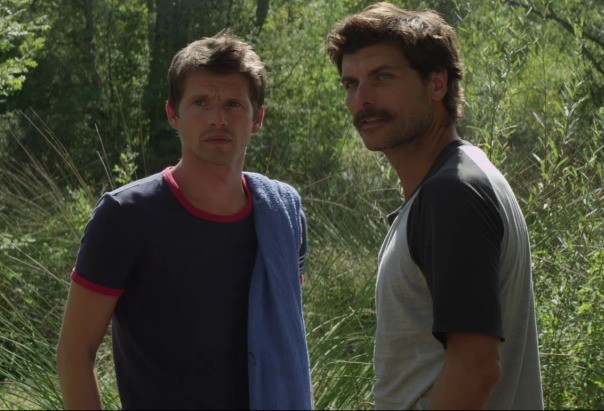
Writer-director Alain Giraudie uses the milieu of gay cruising to set his thriller, Stranger by the Lake (L’inconnu du lac), launched with great notoriety at Cannes.  A young man frequents a secluded beach to hook up with other gays.  He spots a dreamy newcomer, but he just can’t seem to meet the new guy.  After a few frustrating days, he witnesses a murder by drowning – and the murderer is the guy that he’s hot for. The next day, the murderer comes on to him and our hero can’t resist…until his new boy toy suggests that they go for a swim.

Stranger by the Lake is notorious because of lots of genitals-in-your-face male nudity and LOTS of explicit gay sex acts.  At least some of the sex is actual (not just simulated) sex.  I saw Stranger by the Lake in an audience that must have been 80% gay male, and there were lots of knowing chuckles at the cruising behaviors (along with gasps at an episode of decidedly unsafe sex).

Stranger by the Lake does work as a thriller, and it will get a limited US release beginning January 24, 2014,  (and certainly rated NC-17).

Suzanne: her bad choices take their toll

The authentic and raw French drama Suzanne starts as a family story about a single dad working as a long haul trucker and his two daughters, Maria and Suzanne.  The younger daughter Suzanne makes some bad choices that impact the rest of her family.  The film is not just about the title character, but about each family member and the consequences each must bear.

Francois Damiens is especially good as the dad, a guy who has sacrificed so much for his daughters, and just can’t bear anymore drama.   Adele Haenel is excellent as the exuberant and responsible older sister Maria.  As Suzanne, Sara Forestier manages to portray someone who is not a bit not superficial or not serious, but who is fatally impulsive.  In the fluffy The Names of Love,  Forestier was actually convincing as a woman so distractable that she doesn’t notice that she has left her flat and boarded the Paris Metro without wearing any clothes.  It’s impressive to see the range she demonstrates playing the train-wreck of a protagonist in Suzanne.

I saw Suzanne at the San Francisco Film Society’s French Cinema Now series.  I’ve read that Suzanne may get a US theatrical release starting December 13.  I hope so – it’s a fine film.

Bastards: unnecessarily disturbing

The great French actor Vincent Lindon (Mademoiselle Chambon, Augustine) leads a fine cast in the dark and unnecessarily disturbing Bastards (Les Salauds).  Bastards is getting attention primarily because of its renowned director Claire Denis.  I am generally NOT a fan of Denis (although I liked her 2008 film 35 Shots of Rum).  There’s really nothing wrong with Bastards – it’s well-crafted and well-acted – except the story.

The tale is about Lindon’s character seeking to take revenge for a family tragedy on the rich bad guy who is responsible.  Because this is a very dark movie, it doesn’t end well.  Now I like dark movies and I would have been OK with the despairing ending, but Bastards needlessly exploits a human trafficking plot thread to make the bad guy worse than he needs to be.  Then the final ten minutes is entirely gratuitous.  I’ve seen over 15,000 movies, and I would put Bastards among the five or so most disturbing.

(The 40-year-old actress Chiara Mastroianni is pretty damn appealing as the target of Lindon’s lust; as the daughter of Marcello Mastroianni and Catherine Deneuve, she benefits from good genes.)

I saw Bastards at the San Francisco Film Society’s French Cinema Now series.  It is available streaming on Amazon, Google Play and XBOX Live.

House of Radio: radio speaking for itself – on camera

French documentarian Nicolas Philibert takes on a backstage tour of the seven channels of Radio France in House of Radio (La Maison de la Radio).  Philibert’s style is entirely observational – there is no narration and I remember only one title  identifying the Radio France building at beginning of film.  The camera just watches the people of Radio France do their jobs – including interviews, news reports, performances, games shows and even the sports reporters on motorbikes covering the Tour de France.

As San Francisco Film Society Director of Programming Rachel Rosen noted, radio is a medium that draws much of its power from the absence of images.  The editing in House of Radio seems completely random but it’s not – Philibert strings all of his nuggets together so that we never lose interest.  I want to see this guy’s next movie.

I saw House of Radio at the San Francisco Film Society’s French Cinema Now series.  It’s not currently available in theaters or on DVD or streaming in the US.

Blue is the Warmest Color: stunning exploration of first love

Adèle Exarchopoulos in BLUE IS THE WARMEST COLOR

The French drama Blue is the Warmest Color explores first love, capturing the arc of a young woman’s first serious romance with remarkable authenticity and a stunning performance by 19-year-old actress Adèle Exarchopoulos. Exarchopoulos plays a 17-year-old (also named Adèle) who falls in love with an out lesbian five or six years her senior.  The film traces the course of their relationship over the next several years as the couple are challenged by jealousies and their different temperaments and class backgrounds, and as Adèle matures.

The acting is excellent, including Léa Seydoux (Farewell My Queen, Midnight in Paris) as the lover.  But Adèle Exarchopoulos is a revelation.  She is perfect as a teen typically full of curiosity and devoid of confidence, outwardly raunchy but profoundly innocent.  And she has an extraordinary gift to seem utterly alone in a crowd.  After watching Exarchopoulos, I felt as I did after seeing Jennifer Lawrence in Winter’s Bone –  I can’t wait to see this emerging major talent again.

This is the first film I’ve seen by Tunisian-born French director Abdelatif Kechiche, who  has twice before won the Cesar (the French Oscar).  In Blue Is the Warmest Color, Kechiche uses the closeup more than any recent director that I can recall, and he is fortunate to have Exarchopoulos, who can pull it off.  It’s an excellent reason to see Blue Is the Warmest Color on the big screen.

Blue Is the Warmest Color is three-hours long, which is an indulgent length, but not too long.  I am usually impatient with movies over two hours and quick to find them overlong.  But Blue Is the Warmest Color kept my interest and engagement for its duration, and I really couldn’t recommend many cuts.

There is a LOT of explicit simulated sex in this movie.   The main characters’ first love scene must sample the entire lesbian Kama Sutra.  That scene, reputed by some to last nineteen or twenty minutes, didn’t seem that nearly long.  The film proudly earns its NC-17 rating by depicting the (apparently very satisfying) sexual aspect of a romance.

But, in the end, it’s all about Adèle’s romance and Exarchopoulos’ performance.   Blue Is the Warmest Color won the top prize at Cannes, and is one of the year’s best films – perhaps the very best.