In the appealing comedy St. Vincent, Bill Murray plays the LAST guy – a hard-drinking, reckless gambling, whoring grump – that you’d ever leave your nine-year-old son with. Of course, circumstances force a desperate single mom (Melissa McCarthy) to do just that.
There’s plenty of comic potential in Murray’s talent and that set-up, but St. Vincent rises above the average comedy. The key is that – just like real life – these characters are complicated. Murray’s character isn’t just a hedonistic boor, McCarthy’s isn’t a saintly victim and her ex isn’t just a cartoonish meanie. Take all that authenticity, and toss in Chris O’Dowd as a priest with 21st Century irony and Naomi Watts as a pregnant Russian stripper, and the result is delightful. And the kid actor, Jaeden Lieberher, is very, very good.
Hey, St. Vincent is what it is – a sentimental but not too sentimental audience-pleaser, pure and simple.
Because I often fish along the Central California coast, I enjoy watching pelicans cruise majestically along the top of the bluffs and dive for fish in surgical strikes. The California Brown Pelican is the subject of Judy Irving’s meditative documentary Pelican Dreams. You may remember Irving’s surprise 2004 hit The Wild Parrots of Telegraph Hill, a documentary so captivating that it played 28 weeks in San Jose.
Wild Parrots had two things going for it – the oddity of birds from tropical rainforests living wild in a cold and grimy city, along with a compellingly unusual human star. Pelican Dreams doesn’t have those OMG features, but it has the very interesting stories of two individual birds, along with the riches to rags to kinda riches story of the species. The California Brown Pelican was named as an endangered species in 1970, but the ban of DDT has allowed the population to rebound, so they are no longer listed as endangered, but still face threats from oil spills, fishing tackle and climate change.
Irving had been looking to do a pelican documentary and met with the director of a pelican rescue facility, but she didn’t know how to begin the movie. Then, two weeks later, a pelican landed in the middle of traffic on the Golden Gate Bridge. Irving takes us through the life of that pelican, known to biologists as Pink 193 and named Gigi by Irving (for Golden Gate). Irving has a decidedly non-clinical view of the birds: “I would like a pelican in MY back yard”.
Pelican Dreams has a dreamy and meandering pace; like listening to Wyndham Hill New Age music for 80 minutes, it’s not a bad thing, you just need to be ready to settle in.
One more thing – the movie’s final shot (through a Panorama camera) is spectacular and unforgettable – a pelican diving at sunset – against a pink sky and purple coastline.
White Bird in a Blizzard is by no means a bad movie, but there just isn’t enough story to sustain its brief but leisurely 91 minutes. Shailene Woodley plays a 17-year-old whose neurotic mother (Eva Green!) suddenly disappears without a trace. She’s now living alone with her stolid dad (Christopher Meloni), hanging with her offbeat high school buddies and exploring her sexuality with the investigating police detective. The crux of the movie is that she’s trying to imagine why and how her mother left, all the while ignoring one of the most likely scenarios.
It’s all a mild disappointment from writer-director Gregg Araki. I loved Araki’s 2004 masterpiece Mysterious Skin (with Joseph Gordon-Levitt) and enjoyed his sci-fi sex romp Kaboom. White Bird in a Blizzard is weird at times, but not as “Araki weird” as it perhaps needed to be. He pretty much wastes Woodley, one of our very finest screen actresses. She’s very good, as is Thomas Jane as the detective.
White Bird in a Blizzard opens tomorrow in theaters and is available streaming on Amazon, iTunes, Vudu, YouTube, Google Play and Xbox Video.
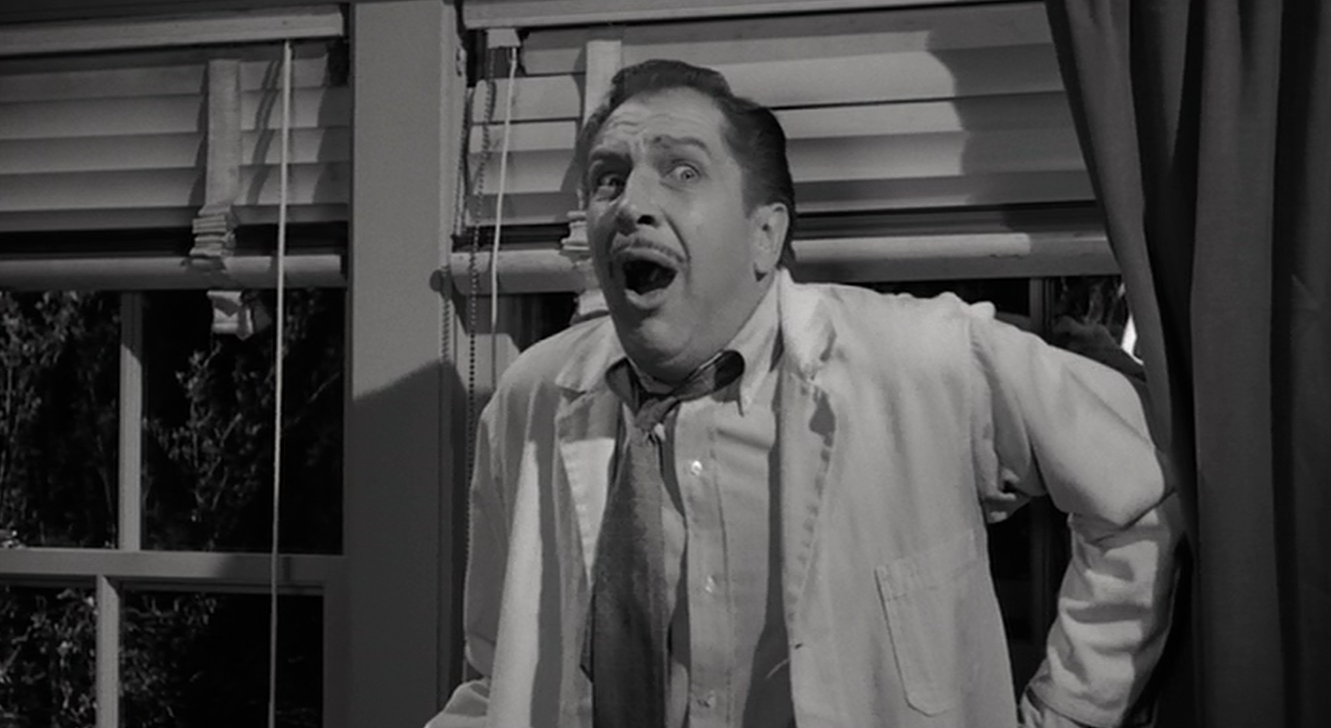
On Halloween, Turner Classic Movies is bringing us a campy Vincent Price horror classic from 1959, The Tingler. It has a scary premise – a parasite embedding itself in people’s spine and feeding on them – unaware until they feel a tingle AND THEN IT MAY BE TOO LATE! When finally revealed, the grown parasite is VERY scary-looking. Conveniently, the infested can weaken the parasite by screaming. Horror schlockmeister William Castle reportedly installed buzzers in the backs of some theater seats, so some audience members would get an actual tingle in the spine at the scariest moments. In the trailer below, Castle preps his audiences to scream if they feel a tingle. It’s a cult classic.
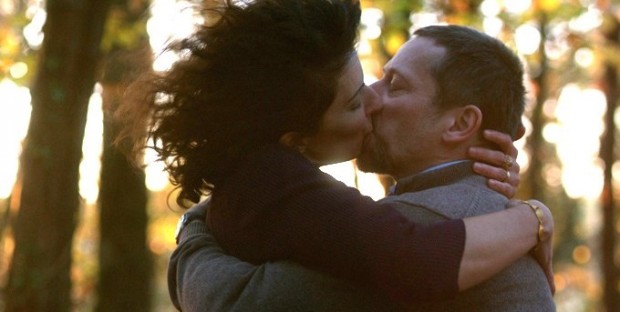
As the French psychological drama The Blue Room opens, a couple is having sex. We quickly learn that they are both married, but not to each other. And next, we see the man being interviewed in a police station. But The Blue Room is not a conventional police procedural, because the audience doesn’t know what crime he is suspected of committing. He knows what the crime is, but he doesn’t know how it happened. In The Blue Room‘s brisk 75 minutes, more and more is revealed to the audience and to our protagonist. He finally understands it all, but it’s too late.
The structure of the story is very inventive, co-written by the movie’s stars, Mathieu Amalric and Stéphanie Cléau, and directed by Amalric. Amalric is very good as a guy who spends the movie wondering “how did I get here, and how bad can this get?” It’s a dark little story that requires the audience to keep pace – and it’s pretty successful.
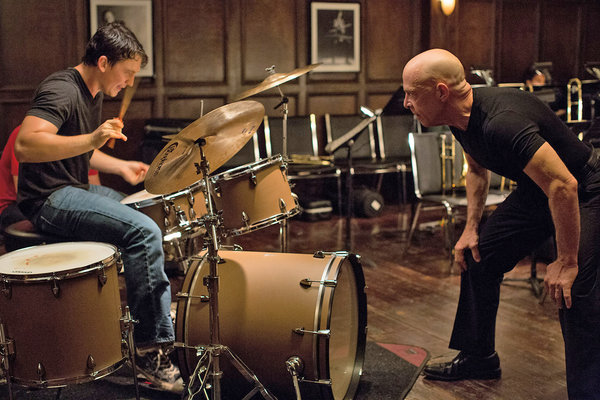
The big hit at this year’s Sundance Film Festival, the drama Whiplashis about the line between motivation and abuse and the line between ambition and obsession. A young jazz drummer (Miles Teller of The Spectacular Nowand Rabbit Hole) attends an elite music academy (think Julliard) and comes under the attention of a drill sergeant-type of instructor (J.K. Simmons). The teacher-tormentor pushes the kid toward perfection through tough love and, ultimately, abuse. To what extent is the teacher trying to get the kid to excel? And how much of the teacher’s behavior is just sadistic bullying? And how will the kid respond? (The movie’s title reflects both a jazz song and the teacher’s instructional technique.)
J.K. Simmons is a guy whose name you may not recognize, but whose face you will. He has 143 screen credits, most memorably as the of the ironic and supportive father in Juno and Vernon Schillinger, the Aryan Brotherhood leader in the prison series Oz. This is Simmons’ movie; it’s an exceptional performance, that will probably land Simmons an Oscar nomination.
How good a movie is Whiplash? It’s a very good one – taut, and intense. The fact that it’s extremely focused on the two characters and the fundamental questions about their characters is a strength, but also limits it from being a great movie. Still, Simmons, Teller and the unrelenting tension makes Whiplash definitely worth seeing.
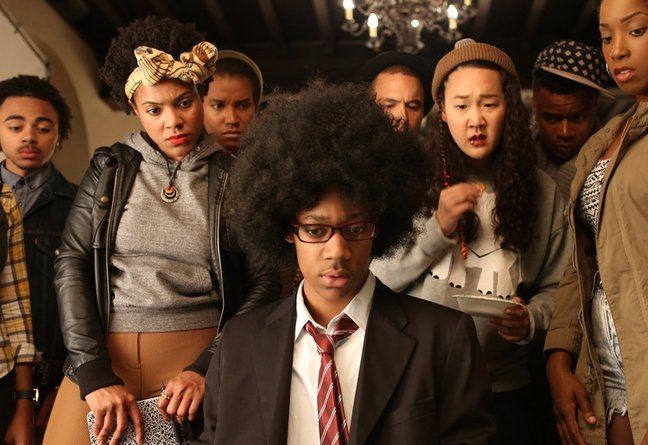
On its surface, the brilliant comedy Dear White People seems to be about racial identity, but – as writer-director Justin Simien points out – it’s really about personal identity (of which race is an important part). Set at a prestigious private college, Dear White People centers on a group of African-American students navigating the predominantly white college environment.
Each of the four primary characters has adopted a persona – choosing how they want others to view them. Middle class Sam is a fierce Black separatist (despite her White Dad and her eyes for that really nice White boy classmate). Coco, having made it to an elite college from the streets, is driven to succeed socially by ingratiating herself with the popular kids. Kyle, the Dean’s son, is the college BMOC, a traditional paragon, but with passions elsewhere. Lionel is floundering; despite being an African-American gay journalist, he doesn’t fit in with the Black kids, the LGBT community or the journalism clique. All four of their self-identities are challenged by campus events.
This very witty movie is flat-out hilarious. The title comes from Sam’s campus radio show, which features advice like “Dear White People, stop dancing!” and Dear White People, don’t touch our hair; what are we – a petting zoo?”. While the movie explores serious themes, it does so through raucous character-driven humor. It’s a real treat.
It’s the first feature for writer-director Justin Simien and it’s a stellar debut. Dear White People is on my list of Best Movies of 2014 – So Far. I saw it at this year’s San Francisco International Film Festival and have been telling people about it for months.
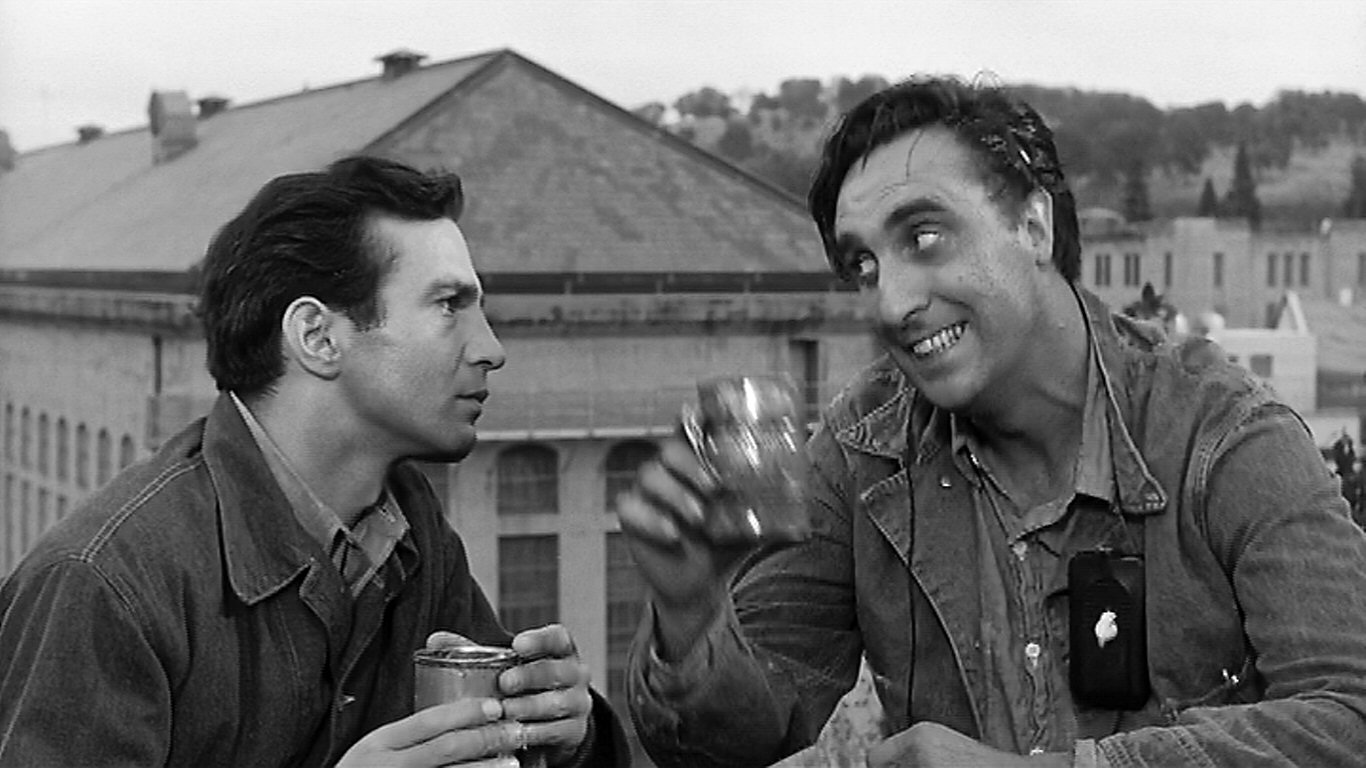
The title of Convicts 4 (1962) is odd because it’s really the true-life tail of one convict, played by Ben Gazzara, who develops into a fine artist while in prison. It’s based on the autobiography of John Resko, who was sentenced to death for a killing during a robbery; his sentence was commuted, and he developed his skills as a painter in prison, contributing to his eventual release.
Now Convicts 4 is not a masterpiece: some of the scenes are contrived, the dialogue is often stiff and there are some overwrought moments, especially the pre-execution shower and the wintertime escape attempt. interesting story. But it’s pretty entertaining because of the real-life story and the compelling performance by Ben Gazzara – at the height of his charisma.
Resko/Gazzara does have a set of cronies while in the Big House. There’s a particularly unforgettable turn by one of my favorite movie psychos, Timothy Carey, here in one of his most eccentrically self-conscious performances. Ray Walton (My Favorite Martian) plays another loony prisoner, crazier than Carey’s, but not a menacing. The rich cast includes Stuart Whitman, Vincent Price, Rod Steiger, Jack Albertson, Brodrick Crawford and Sammy Davis Jr.
Turner Classic Movies will air Convicts 4 on October 25.
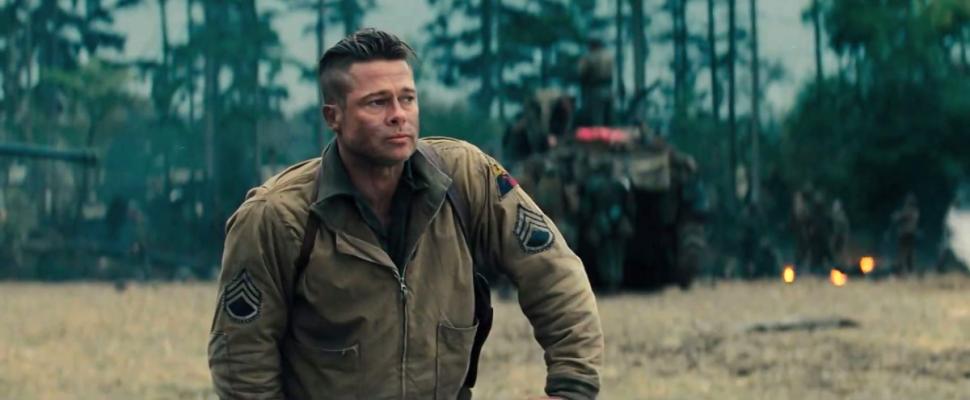
In the World War II movie Fury, Brad Pitt plays the commander of an American tank crew that has fought together from Africa through Italy and France; against all odds, they have survived and are now in Germany during the final months of the war. An unseasoned clerk typist is thrust upon the tight crew as a replacement; he is seeing the horrors of war for the first time, and we relate to the action through his eyes. His eyes don’t see much except for brutality by both belligerents and a Germany that is physically and emotionally devastated.
Unlike the traditional WW II films of the 20th century, these GIs are not atrocity-free. Battle-hardened, war-weary and staggering to the finish, these guys are very tough and they behave in some very unattractive ways.
Fury superbly depicts WW II tank and anti-tank tactics that I’ve never seen handled as well in a movie. There is a tank and infantry assault on dug in infantry supported with light artillery. And there is a tank-on-tank battle between three American Shermans and a German Tiger tank; the Tiger was far superior to the Sherman and the veteran Sherman crews – who don’t seem to be afraid of anything else – know to be terrified of it.
This is not a feel good or a date movie. Fury works as military history and as an action picture – all the way to the final, grim slaughterfest.
In the marvelously entertaining Gone Girl, Ben Affleck plays Nick, a good-looking lug who can turn a phrase. At a party one night, he’s on his A game, and he snags the beautiful Amy (Rosamund Pike). She’s smarter, a good rung on the ladder more attractive than he is, has parents with some money and is a second-hand celebrity to boot. Not particularly gifted and certainly not a striver, he knows he’s the Lucky One. He has married above himself, but he doesn’t have a clue HOW MUCH above until she suddenly disappears.
Based on the enormously popular novel by Gillian Flynn (who also wrote the screenplay), Gone Girl is the mystery of what has happened to Amy and what is Nick’s role in the disappearance. Plot twists abound, but you won’t get any spoilers from The Movie Gourmet.
This is Rosamund Pike’s movie. Her appearance is so elegant – she looks like a crystal champagne flute with blonde hair – that pulling her out of Victorian period romances into this thriller is inspired. And Pike responds with the performance of her career. She’s just brilliant as she makes us realize that there’s something behind her eyes that we hadn’t anticipated, and then keeps us watching what she is thinking throughout the story.
Gone Girl is directed by the contemporary master David Fincher (Fight Club, Se7en, Zodiac,The Social Network, The Girl with the Dragon Tattoo). Here, Fincher has successfully chosen to rely on Flynn’s page turner of a story and the compelling characters, so Gone Girl is the least flashy of his films, but one of the most accessible. I’ll say this for Fincher – I can’t remember a more perfectly cast movie.
Kim Dickens (Treme, Deadwood) is superb as the investigating detective – this time almost unrecognizable as a brunette. Tyler Perry is wonderfully fun as a crafty celebrity attorney. The unheralded Carrie Coon is excellent as Nick’s twin sister (I want to see more of her in the movies). Missi Pyle does such a good job as a despicable cable TV personality that I thought I was actually watching a despicable cable TV personality. And David Clennon and (especially) Lisa Banes positively gleam as Amy’s parents. (Carefully observe every behavior by the parents in this movie.)
Just like the thug in The Guard who forget whether he had been diagnosed in prison as a sociopath or a psychopath, I had the ask The Wife, who turned me on to this passage from Psychology Today. It’s useful to read this because, although you don’t realize it for forty-five minutes or so, Gone Girl is also a study of psychopathy.
Psychopaths … are unable to form emotional attachments or feel real empathy with others, although they often have disarming or even charming personalities. Psychopaths are very manipulative and can easily gain people’s trust. They learn to mimic emotions, despite their inability to actually feel them, and will appear normal to unsuspecting people. Psychopaths are often well educated and hold steady jobs. Some are so good at manipulation and mimicry that they have families and other long-term relationships without those around them ever suspecting their true nature.
When committing crimes, psychopaths carefully plan out every detail in advance and often have contingency plans in place. Unlike their sociopathic counterparts, psychopathic criminals are cool, calm, and meticulous. Their crimes, whether violent or non-violent, will be highly organized and generally offer few clues for authorities to pursue. Intelligent psychopaths make excellent white-collar criminals and “con artists” due to their calm and charismatic natures.
Gillian Flynn changed the story’s ending for the movie. The Wife, who is a big fan of the novel, didn’t mind. Gone Girl is recommended for both those who have and have not read the book. I understand that there’s more humor in the movie, as we occasionally laugh at the extremity of the behavior of one of the characters.
It all adds up into a remarkably fun movie and one that I’m still mulling over days later. Gone Girl is the best Hollywood movie of 2014 so far.