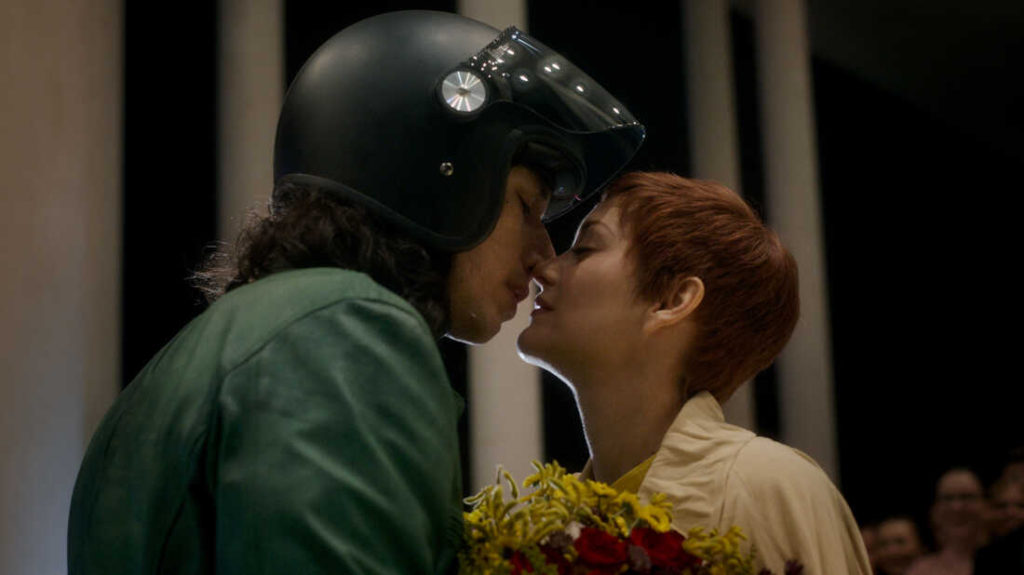
Noémie Merlant and Niels Schneider in CURIOSA. Photo courtesy of Memento Films.
The French romantic drama Curiosa is set in the Belle Epoque, when the Eiffel Tower was new and sexual liberation was burgeoning among literati.
The saucy Marie (Noémie Merlant) is in love with Pierre (Niels Schneider), but marries the more financially established Henri (Benjamin Lavernhe). Pierre is a libertine (and, if British, would have been called a “rake”). Pierre returns to Paris from Algeria with a girlfriend unencumbered with inhibitions and an obsession with erotic photography. Marie instantly begins an affair with Pierre, and, boy, does she start losing her inhibitions, too.
Merlant and others spend much of Curiosa in various states of undress, so much so that teenage boys will have difficulty fast forwarding between them. Impressively, the distributor was able to find and cobble together 1 minute and 38 seconds worth of mostly clothed action. for the trailer below. It bears mention that Curiosa was co-written and directed by a female filmmaker, Lou Jeunet.
The characters are “based loosely” on the writings and photographs of real literary figures. We do know that Marie de Heredia married Henri de Régnier, had an affair with Pierre Louÿs and posed for his erotic photographs.
The cinematography by Simon Roca is beautiful, and this movie filled with attractive, naked people should be more engaging. The problem is that it is difficult to relate to or care about any of the characters.
Aretha Franklin was, if anything, formidable, and Jennifer Hudson reaches formidability as Aretha in Respect. Hudson (handpicked by Aretha to star in her own biopic) is sensitive enough to play the ambitious but confidence-challenged young Aretha and brassy enough to soar as the diva that Aretha became.
Respect concentrates on three stages of Aretha’s life – her childhood in the 1950s, her uncertain career at Columbia Records in 1960-65 and her creative partnership with Jerry Wexler, beginning in 1967, that led to stardom. The film culminates with the1972 live gospel album that we can now watch in the 2019 film Amazing Grace.
The common thread in Respect is Aretha’s learning to push back on the attempts by men to control her artistically, financially and intimately. The film’s high point is Aretha finally getting the opportunity, in a Muscle Shoals recording session, to impose her own creativity on I Never Loved a Man (Like the Way I Love You); we’re able to watch the instant that Aretha transforms herself into an icon. Hudson also delivers killer versions of Respect, Amazing Grace, Natural Woman and (my personal favorite) Think.
During much of the film, 12-year-old actress Skye Dakota Turner, plays a ten-year-old Aretha (and she’s heartbreakingly great). Aretha’s formative years were startlingly unusual. For one thing, as the daughter of a celebrity minister dad and a celebrity gospel singer mom, she was unusually privileged for a black youngster in the 1950’s – she was spared poverty and grew up in a home where MLK himself, Dinah Washington and gospel music legend James Cleveland were frequent guests. On the other hand, her broken home was unhealthy enough that Aretha became pregnant at age 12, and again at age 14. She emerged well-connected – and severely traumatized.
Forest Whitaker is, as one would expect, excellent in the pivotal role of Franklin’s father, C.L. Franklin. The cast is uniformly excellent including Audra MacDonald as Aretha’s mom, Kimberly Scott as her grandmother, Marc Maron as Jerry Weinberg, Marlon Wayans as her seamy first husband, and Mary. J. Blige as Dinah Washington.
Respect is 2 hours, 25 minutes long, and could have been better if 15-20 minutes shorter. Nevertheless, it gives us a sound view of the factors that molded Aretha Franklin’s personality, and her struggles to take command of her own artistry.
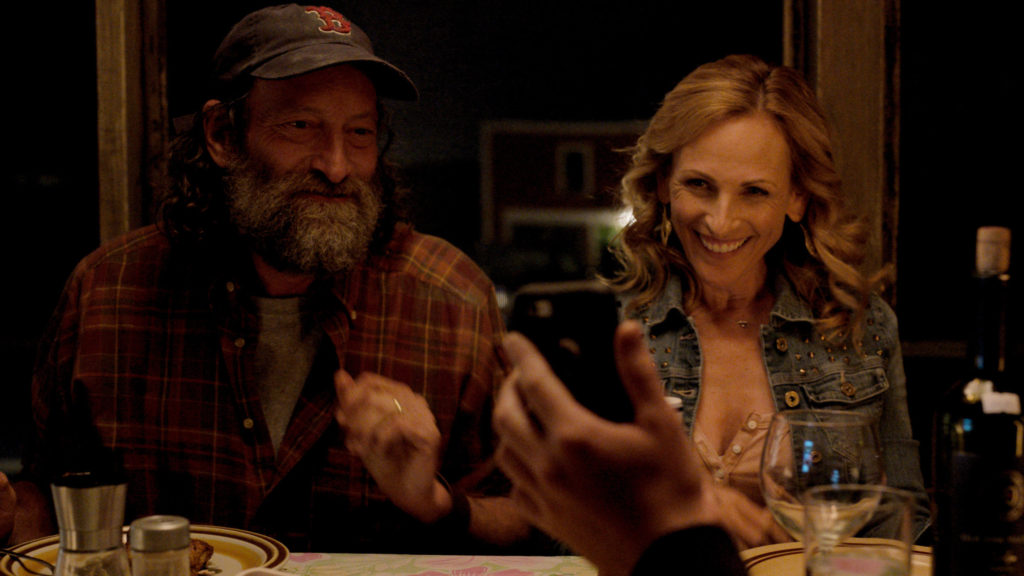
Photo caption: Troy Kotsur and Marlee Matlin in CODA
This week, the Must See is the surprisingly textured CODA.
IN THEATERS
CODA: Writer-director Sian Heder’s screenplay has made CODA, which could have been simplistic, into that rare, feel-good family film that is authentic, fumy and thought-provoking. Also streaming in AppleTV.
The Dry: a mystery as psychological as it is procedural. Amazon, AppleTV, Vudu, YouTube.
Louder Than Bombs: An intricately constructed family drama. Amazon (included with Prime), Vudu and YouTube.
ON TV
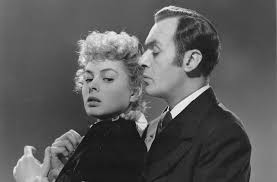
Ingrid Bergman and Charles Boyer in GASLIGHT
On August 25, Turner Classic Movies will air Gaslight(1944), a classic suspense thriller that still has a lot to say about domestic violence and abusive power in relationships.
An evil husband (Charles Boyer) isolates his wife (Ingrid Bergman) and uses manipulation to convince her that she’s going crazy. He’s seeking to conceal his crimes and gain unfettered control of her house and fortune. He’s also dallying with the maid (a nubile 18-year-old Angela Lansbury). Fortunately, the wife’s longtime admirer (Joseph Cotton) works for Scotland Yard and starts to investigate…
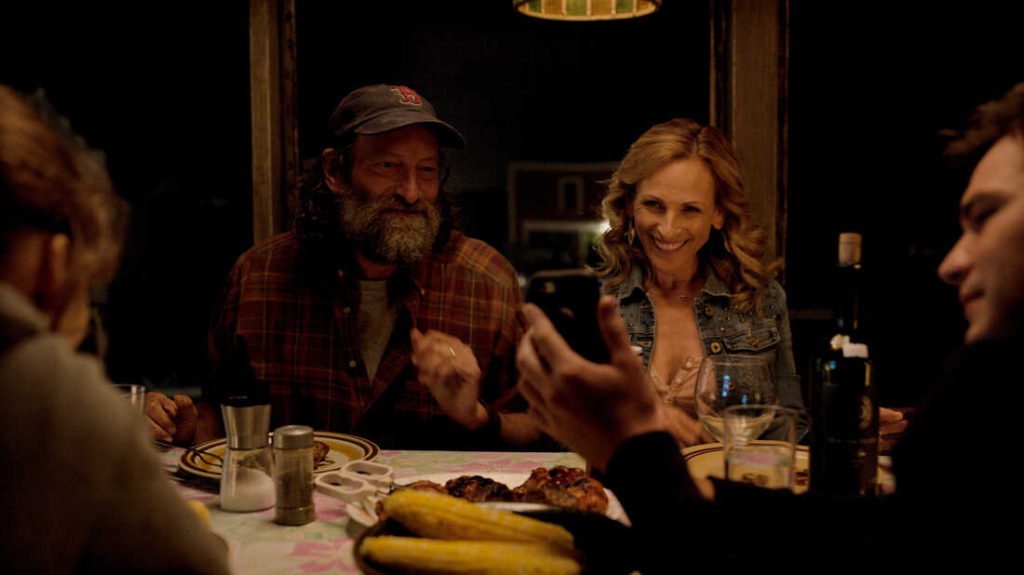
Emilia Jones, Troy Kotsur, Marlee Matlin and Daniel Durant in CODA
In the delightful audience-pleaser CODA, teenager Ruby (Emilia Jones) is the only hearing member of her family. CODA stands for Child of Deaf Adults. Her dad (Troy Kotsur), mom (Oscar-winner Marlee Matlin) and older brother Leo (Daniel Durant), all deaf, operate a New England fishing trawler. Ruby is a gifted singer with an opportunity to attend an elite music school, but her family depends on her helping the business.
Can Ruby stay true to her family and reach her dream? This could be the premise for a hackneyed movie, but CODA is anything but trite. My own taste in movies runs so dark that I sometimes forget that a film can be heartwarming without being corny. CODA achieves that.
CODA’s success results from the textured supporting characters and complicated family dynamics in writer-director Sian Heder’s screenplay. CODA is the second feature film for Heder, one of the main writers for Orange Is the New Black.
Ruby has a vibrant, humor-filled family, a family that is fun to be around. They are decidedly not barbarian drudges; they just don’t understand Ruby’s need to sing because they’ve never heard music.
But the family has grown to depend on Ruby to translate for them in the hearing world of doctor’s appointments and commercial fishing. Ruby is so essential to their functionality that losing Ruby’s presence is a legitimate concern.
Ruby’s older brother Leo has ideas for the business, but his role in the family has been overshadowed by Ruby’s, which he resents. Her mom self-isolates, afraid of being rejected by hearing people after her one youthful success as a beauty queen. The dad, determined to keep a multi-generational fishing business alive, is utterly lost as he faces new economic and regulatory realities, and he retreats into the Illegal Smile of cannabis.
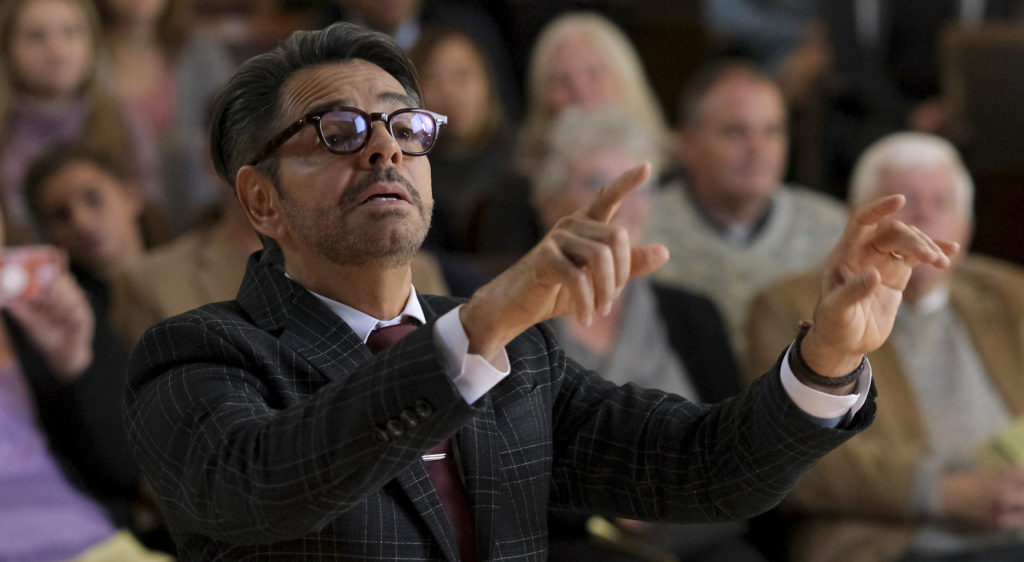
Eugenio Derbez in CODA
Ruby is mentored by an exacting music teacher Mr. Villalobos (Eugenio Derbez), and their reationship is one of CODA’s fresh elements. What keeps Mr. Villalobos from being the standard movie martinet is his sensitivity; he has failed to reach his own dream of music stardom, and, like Ruby, he has been The Other, the subject of discrimination and low expectations.
The charismatic Derbez is brilliant here. His Mr. Villalobos is frustrated when Ruby’s teen priorities keep from meeting the standard that he knows is necessary, but he understands enough about Ruby’s challenges to keep giving her another chance. Derbez is a huge star in Mexico as a comedian and filmmaker.
Emilia Jones and Marlee Matlin in CODA
Heder also chose to cast deaf actors for the deaf characters, which pays off in terms of authenticity. (Troy Kotsur, in particular, delivers a superb performance as the father.) She also chose just the right moment to impose silence when Ruby is singing to a large, hearing audience, so we can relate to her family trying to make sense of the audience reaction. There’s also searing dialogue between mother and daughter about the complexity of the deaf mom’s birthing a hearing baby.
CODA has the framework of a teen coming of age story, with mean kids at school and Ruby sweet on her classmate Miles (Ferdia Walsh-Peelo). But the core of the movie is about the family and about whether Ruby will let Mr. Villalobos take her to a new opportunity.
Heder’s writing has made CODA, which could have been simplistic, into that rare, feel-good family film that is authentic, fumy and thought-provoking. CODA is in theaters and is also streaming on AppleTV.
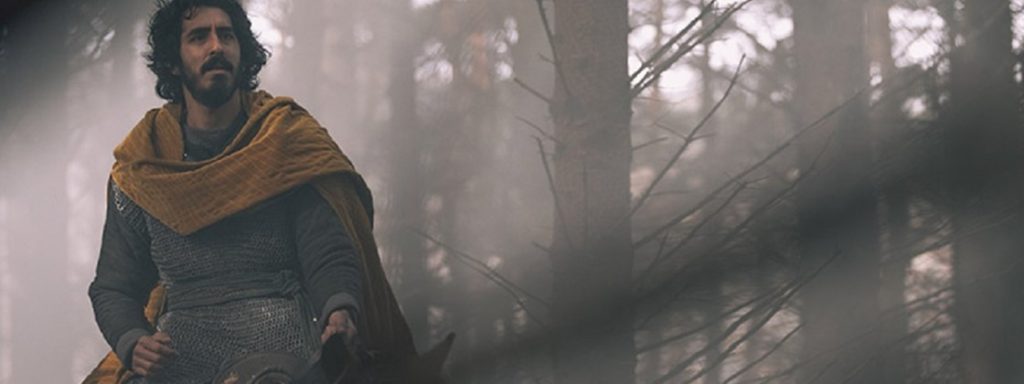
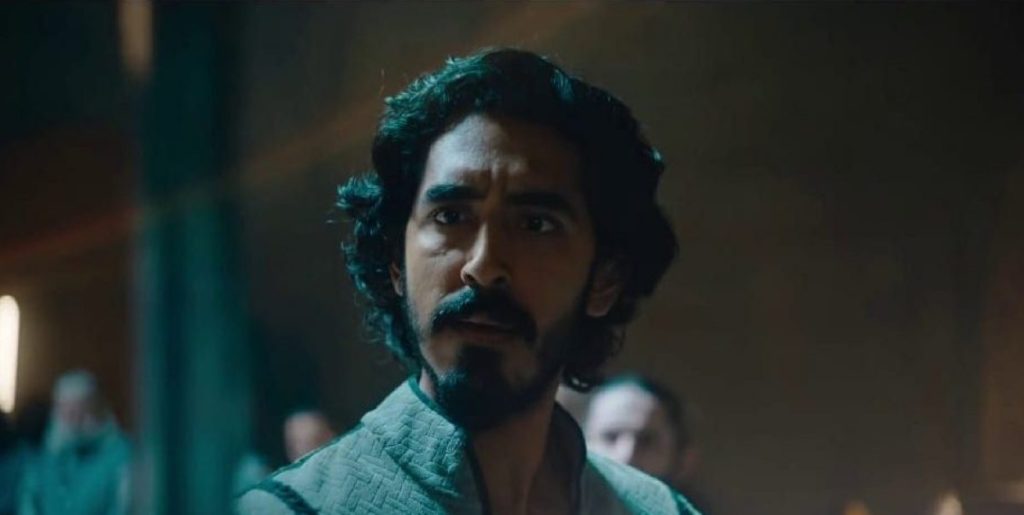
Photo caption: Dev Patel in THE GREEN KNIGHT. Photo courtesy of A24
This week – a thoughtful swords-and-sorcery fantasy and a spectacular misfire of an art movie. Plus my favorite film noir femme fatale.
IN THEATERS
The Green Knight: Dev Patel plays Sir Gawain of Arthurian legend in a movie more about a test of character than it is about a heroic quest. Thoughtful and character-driven – and great special effects, too.
Annette: This passionate and inventive art house musical is doomed by a flawed screenplay, bad pacing and a creepy puppet baby.
The Dry: a mystery as psychological as it is procedural. Amazon, AppleTV, Vudu, YouTube.
Louder Than Bombs: An intricately constructed family drama. Amazon (included with Prime), Vudu and YouTube.
ON TV
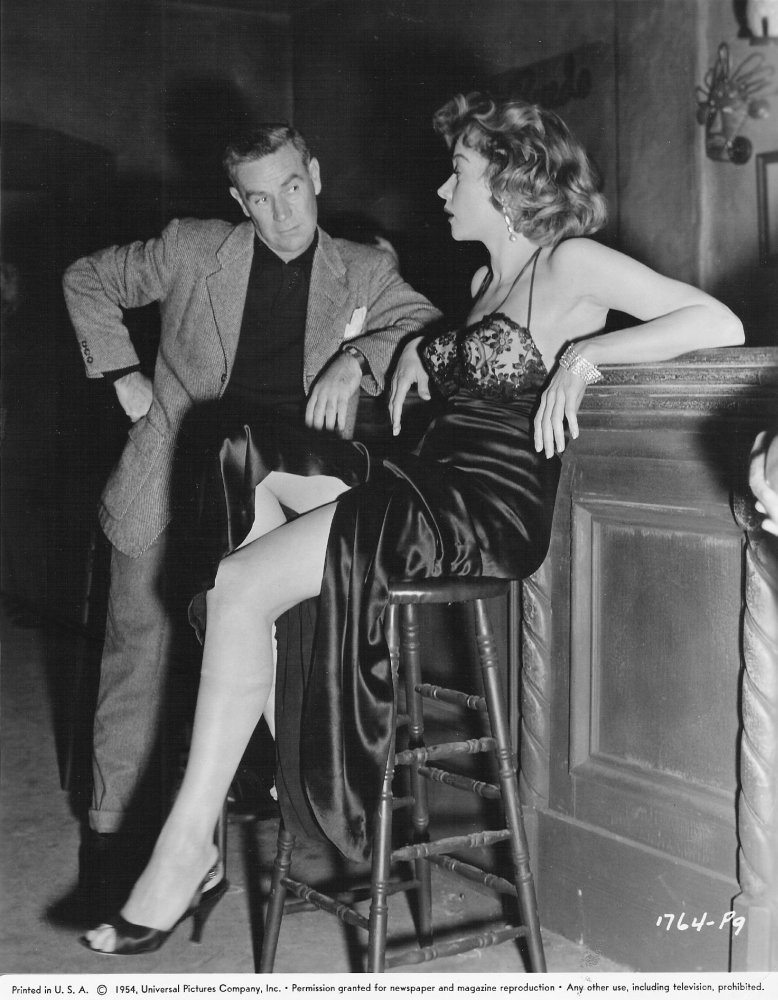
Gloria Grahame with Director Jerry Hopper on the set of NAKED ALIBI; Photo courtesy of Mark A. Clark and Film Noir Photos.
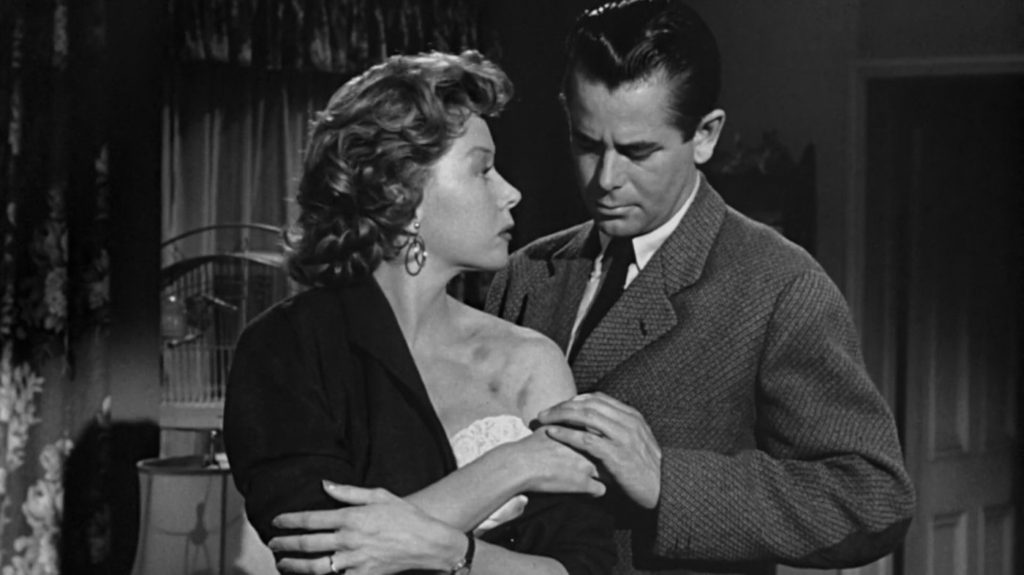
On August 17, Turner Classic Movies celebrates my favorite film noir actress, Gloria Grahame, with several Grahame films, including Human Desire, The Big Heat and In a Lonely Place. Grahame projected an uncanny mixture of sexiness, vulnerability and unpredictability. The fact that Gloria was a Bad Girl in real life doesn’t hurt.
The best of these films is In a Lonely Place, where Grahame falls for the troubled screenwriter Humphrey Bogart, a guy with a MAJOR anger management issue; once she’s hooked, she realizes that he might be a murderer after all… The flashiest Grahame role is in The Big Heat, where she is involved in an act of shocking cruelty and fitting retribution.
But I’m pitching her less well-known turn in Human Desire, where she plays Vicki, married to a brutish wife-beater (Broderick Crawford). Vicki is no saint, and accompanies hubby on a murder and helps him cover his tracks by coming on to a hunky railroad engineer (Glenn Ford). Vicki then suggests to her lover that if only her husband were dead…
Human Desire was directed by the great Fritz Lang, and is a remake of Jean Renoir’s classic La Bête Humaine (The Human Beast) with Jean Gabin and Simone Simon.
I have the Australian version of the Human Desire poster in my living room. The tag line is “She was born to be bad…to be kissed..to make trouble“, and the Aussie authorities have labeled it “NOT SUITABLE FOR CHILDREN“.
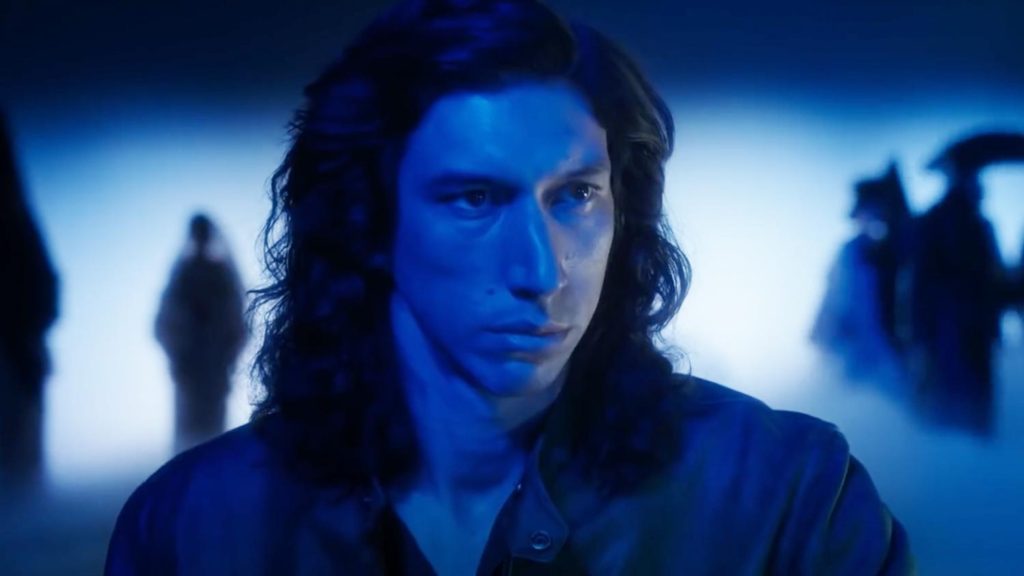
Photo caption: Adam Driver in ANNETTE. Photo courtesy of Amazon Studios.
You’ve never seen anything like the much ballyhooed art house musical Annette, and there’s a reason for that. At its best, Annette is a passionate and inventive pop opera. At its worst, it’s a cinematic death march – a noirish Umbrellas of Cherbourg with a spooky puppet baby.
Annette is a musical, written by Ron and Russell Mael of the art pop band, the subjects of this year’s fine documentary The Sparks Brothers. The Maels wrote and perform the songs, and appear in the movie.
Henry (Adam Driver) is a successful cult comedian, and Ann (Marion Cotillard) is a star opera soprano. They are newly in love, becoming a darling-of-the-tabloids celebrity couple, and soon marry and have a baby daughter Annette. Then there are warning signs that the relationship will turn dark, and a tragedy ensues. Then things get very weird, up to an intense final scene in a prison visiting room.
Annette begins with a thrilling uninterrupted shot of Spark performing the song So May We Start, with the Maels joined by the cast in street clothes as they leave the studio and walk Los Angeles streets, transitioning into their costumes and characters. This is followed by the equally wonderful song We Love Each Other So Much and a montage of romantic passion. All promising, but then Annette plunges off the rails.
Adam Driver and Marion Cotillard in ANNETTE. Photo courtesy of Amazon Studios.
The baby Annette is played by a puppet, which the actors treat as if it were a real baby. The infant puppet is extremely creepy, reminding me of the hundred-year-old dolls that freak out The Wife and me when we watch Antiques Roadshow. The toddler puppet is less unsettling, but still distracting for me.
The character of Henry is tormented by inner demons. Henry’s belligerent stage persona is intentionally provocative, and he performs in underwear and a bathrobe. He revels in being a public Bad Boy, but there are plenty of warning signs that it’s not just all an act.
Adam Driver is effective playing Henry, who is selfish, unpleasant and more than a little scary. But the screenplay lets him down. Annette is really about Henry, an unsympathetic character who is just not interesting enough. He’s no Iago. He’s no Travis Bickle. Just an asshole who stains the lives of others.
Cotillard, on the other hand, doesn’t have to do much to except sing beautifully and be angelic. Simon Helberg is also very good in the other significant role.
The most startling performance is by five-year-old Devyn McDowell, who replaces the puppet as a live-action Annette in the final scene. McDowell, who was singing on Broadway at age four, is a revelation in a nose-to-nose vocal duel with Driver. She’s already a great singer and a superb actress. Wow.
Annette was directed by Leos Carax, the wildman of French cinema, who made the spectacularly weird Holy Motors. Carax gets the weirdness right in Annette, especially in a nightmare Ann has while napping in the back of her limo. But he can be blamed for the puppet and the pacing, which becomes tiresome.
The Maels are cinephiles who were frustrated when their film project with the great French auteur Jacques Tati was aborted in the late 1970s. Two decades later, they invested six years working on a Tim Burton movie that didn’t happen. Now they have written a film that not only got made, but that premiered as the opening film of the Cannes Film Festival. Good for them.
The critic Jason Gorber had it right about Annette when he noted, “Twenty minutes of terrific cobbled to two hours of tedium may not be to everyone’s taste“. Annette begins and ends stirringly, but, overall, it’s a trudge with a flawed screenplay, bad pacing and that unfortunate puppet baby.
Photo caption: Dev Patel in THE GREEN KNIGHT. Photo courtesy of A24.
In the swords-and-sorcerers fantasy The Green Knight, Dev Patel plays Sir Gawain of Arthurian legend. Gawain is privileged to be the son of a sorceress (Sarita Choudhury) and the nephew of the king (Sean Harris), and both have high hopes for him. But Gawain is short in the maturity department; he is so much of a wastrel that he can’t find his own boots after a debauch.
The callow Gawain asks, Is it wrong to want greatness? His girlfriend (Alicia Vickander) replies, Isn’t it enough to be good? This movie is about goodness (responsibility, duty, loyalty, faithfulness) as a prerequisite to greatness. Gawain would prefer to skip a necessary step.
The otherworldly Green Knight crashes Christmas dinner at the king’s court and offers a chilling “game”. He challenges anyone to strike him a blow, on the condition that the Green Knight return the blow in one year’s time. Gawain doesn’t have the emotional intelligence to pick up that the actually heroic knights around him are all spooked by an offer that seems to good to be true. Impulsively, Gawain beheads the Green Knight. The Green Knight then picks up his head and exits, turning to utter the words, One year – hence. Oops.
One year later, it’s time for Gawain to keep his end of the bargain and travel to the Green Knight’s chapel in the woods. Not having used the year to develop any more maturity or responsibility, Gawain embarks on his quest, clearly not ready for prime time as a heroic knight. He is gifted with talismans that he keeps losing and which are nonetheless restored to him. He is embarrassingly outmatched by an untethered punk of a brigand (Barry Keogh).
After a series of adventures, Gawain arrives in the Green Knight’s forest lair, and it’s time for us to see what he’s made of. The Green Knight is less a movie about a quest than it is about a character test. The thing about a test is that it can be passed or it can be failed.
Writer-director David Lowery (Ain’t Them Bodies Saints, A Ghost Story) seems like a pretty high brow director for a Knights of the Round Table tale. It is Lowery’s focus on character that makes The Green Knight a movie fit for thinking adults (and decidedly not a popcorn movie for kids).
It may not be apparent from The Movie Gourmet’s unrelenting menu of indie, international and documentary films, but I like a good adventure movie. What The Green Knight demonstrates, as a counter example, is that the folks who make tent pole movies today aren’t even trying.
The special effects are great. In particular, the face of the Green Knight himself is literally wooden, yet his eyes range from mischievous to profoundly sad, and somehow he manages an expressive smirk. There’s a CGI fox as realistic as any I’ve seen and a spectacular platoon of ghostly giants.
Lowery creates a dark, damp, sinister medieval England. The Dark Knight was filmed around Cahir Castle in Ireland, a delightful place that I’ve visited in the summertime, but which is gloomy and forbidding in this movie.
The Green Knight is slow but not ponderous, the exception being when Vikander, as a second character, has to recite a pretentious and tiresome monologue.
Dev Patel ‘s performance is excellent. Patel is remarkably charismatic. His performances here and in The Personal History of David Copperfield indicate that he is currently underutilized – this guy can carry the biggest film. It’s hard to believe that he was only 18 when he broke through with Slumdog Millionaire. At 31, he should be on the verge of an epic body of work.
Joel Edgerton shows up late in The Green Knight, and steals scenes as a charming nobleman. Edgerton turns on a melodious voice and the delivery of a trained Shakespearean.
Edgerton continues to surprise me. He is a guy who could have settled into a career of hunky action roles; he played the Navy Seal leader in Zero Dark Thirty and the thuggish Baz Brown in Animal Kingdom. But he’s also played the husband in the civil rights drama Loving. And he’s written and directed the brilliant neo-noir thriller The Gift and the topical Boy Erased.
Does Gawain have the makings of a chivalric hero? Outwardly, he’s got the chain mail and the battle axe. The Green Knight takes the measure of what’s on the inside.
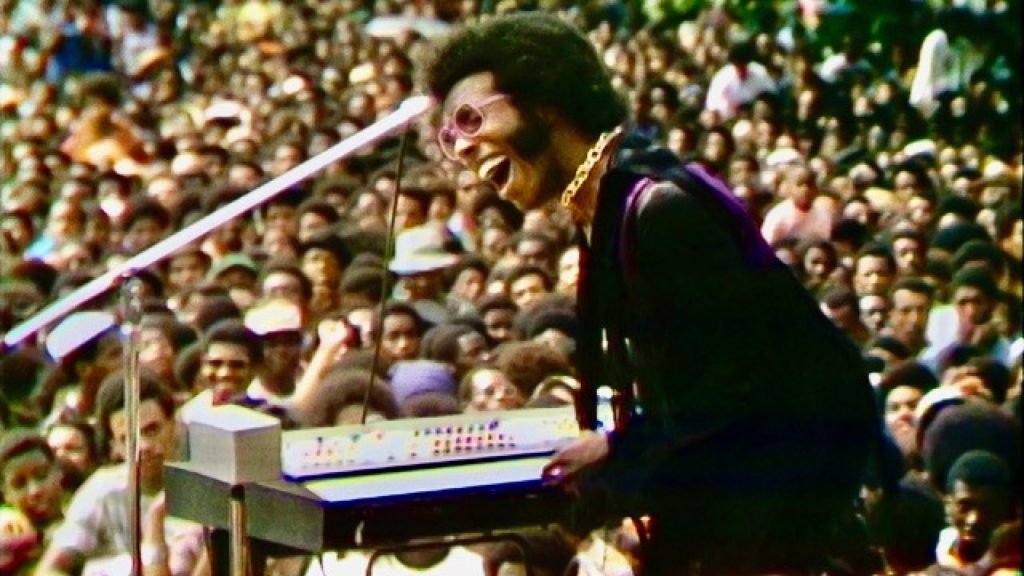
Photo caption: Sly Stone in SUMMER OF SOUL (…OR, WHEN THE REVOLUTION COULD NOT BE TELEVISED)
This week, we have a new period drama, but the best bets in theaters are still Roadrunner and Summer of Soul. I’m off to see The Green Knight and the Cannes winner Annette, so stay tuned.
IN THEATERS
Casanova, Last Love: In another of Benoît Jacquot’s visually sumptuous powered-wig-and-harpsichord movies, Casanova gets his comeuppance. The seducer is seduced and it’s well, pathetic.
The Dry: a mystery as psychological as it is procedural. Amazon, AppleTV, Vudu, YouTube.
Brewmance: barley, hops, yeast and underdogs. Amazon (included with Prime), AppleTV, Vudu, YouTube and Google Play.
Louder Than Bombs: An intricately constructed family drama. Amazon (included with Prime), Vudu and YouTube.
That Guy Dick Miller: Putting the “character” in “character actor:” Amazon (included with Prime).
Sword of Trust: comedy and so, so much more. Amazon, AppleTV, Vudu, YouTube and Google Play.
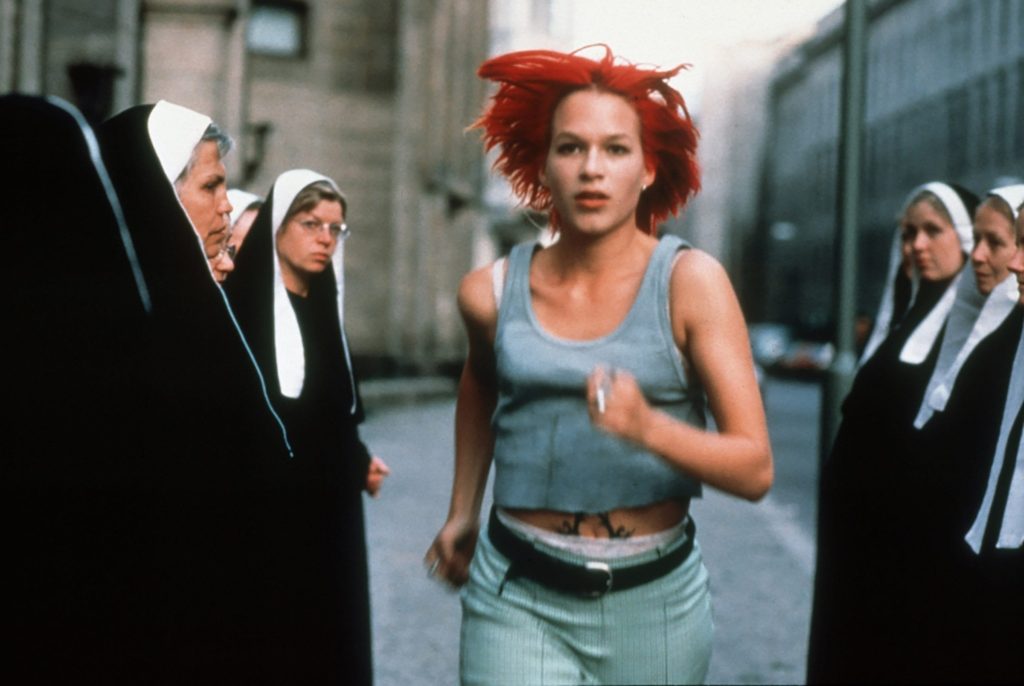
Run Lola Run: you’ll never see a more kinetic movie. Amazon, AppleTV, Vudu, YouTube and Google Play.
Franka Potente in RUN LOLA RUN
ON TV
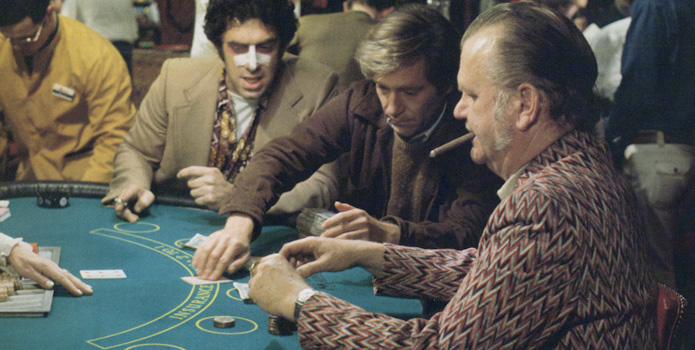
Tune into Turner Classic Movies on August 10 for director Robert Altman’s underappreciated California Split. Elliott Gould plays a guy deep in the throes of gambling addiction, and George Segal plays another guy well on his way. The two join up and play the LA-area card clubs before heading to Reno for a poker game that may be too big for them. Gould is at his manic, wise cracking best, and plays off the more reserved Segal in a very funny adventure. Of course, their decision-making is influenced by their addiction.
Actor Joseph Walsh wrote the screenplay about his own gambling addiction and plays the bookie you don’t want to owe money to. Real card club and casino patrons play the poker players, so the verisimilitude of the poker games is unmatched. The real Amarillo Slim elevates the big game.
California Split was the first non-Cinerama movie to use eight tracks for sound, which was perfect for Altman’s style of overlapping dialogue and tidbits of side and background conversations.
The poker is both authentic and entertaining. The two guys “read a table”, analyzing the other players in one particularly funny moment.
Reliable character actor Bert Remsen has a memorable bit in drag. Mickey Fox is memorable as a suspicious poker loser. Look for a young Jeff Goldblum, too.
Elliott Gould (center left) and George Segal (center right) in CALIFORNIA SPLIT
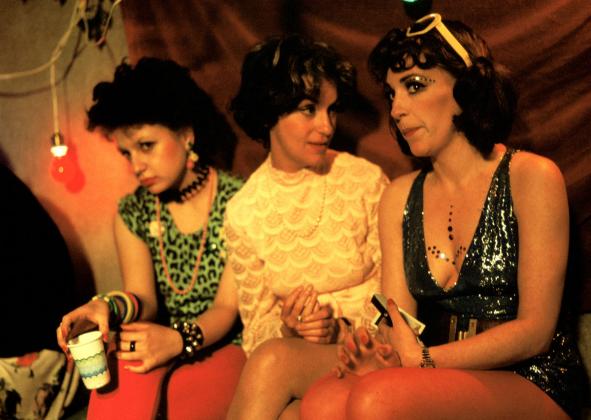
A very young Pedro Almodóvar’s 1980 Pepi, Luci, Bom and Other Girls Like Mom. This is early Almodovar – zany and ribald, even transgressive. The filmmaking craft is very rough (and very low budget), but Almodóvar’s signature energy and vibrant colors are already there. Fun rock music sets the tone from the get go in the title credits.
The humor is outrageous, embracing that of the very first American gross-out comedies (The Groove Tube and The Kentucky Fried Movie) and taking a step (or a few) farther:
A penis-measuring contest as a party game;
The question of whether a cop’s wife can become a punk band’s groupie;
Panties that turn farts into perfume;
Cops baited into a narc raid on a plastic marijuana plant;
Perhaps the dirtiest pop pseudopunk song ever: I love you because you’re dirty; Filthy slutty and servile.
The protagonist starts out as the party girl Pepi, but the story evolves to center around Luci, the wife of a brutish cop. As Luci is debased by more and more characters, becoming a human piñata, it is revealed that she is a masochist who actually is attracted to and pleasured by the meanest behavior. [SPOILER: There’s even a Golden Shower early in this story thread.]
Viewing through today’s lens, the movie violence against women no longer works as comedy, even though the character who is debased is a masochist and the rape that spurs the revenge theme is clearly intended to be broadly comic.
This is Almodóvar having fun being naughty. His most profound work was still two decades in the future: Talk to Her, Bad Education, Broken Embraces.
I watched Pepi, Luci, Bom and Other Girls Like Mom on TCM, and you can stream it from Amazon, AppleTV, Vudu and YouTube.
Pre-mockumentary, Christopher Guest’s first feature as a director was The Big Picture (1989), a pointed satire of modern Hollywood. It’s not as vicious as Robert Altman’s The Player, and not as funny as Guest’s own brilliant mockumentaries, but you can glimpse Guest’s path to realizing his comic genius.
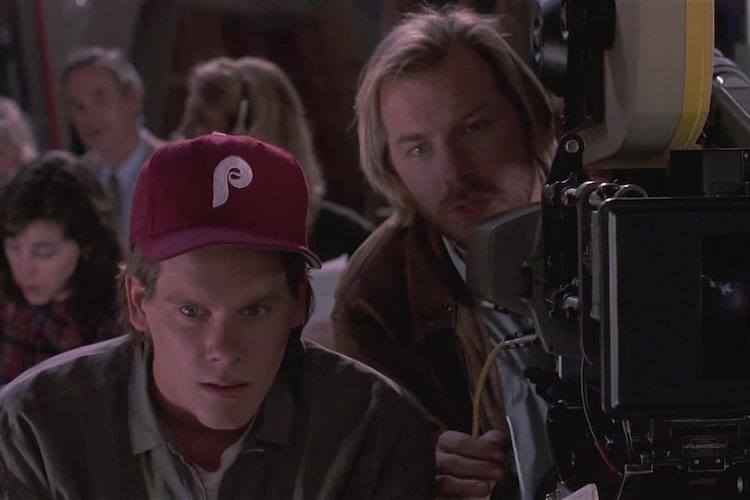
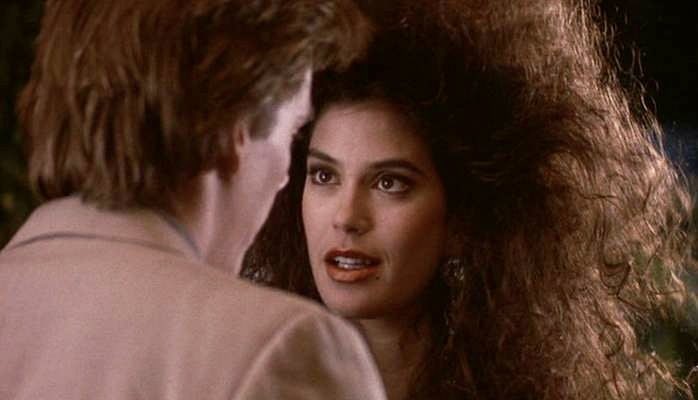
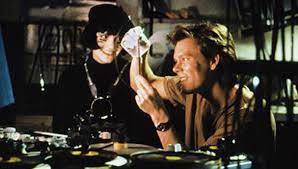
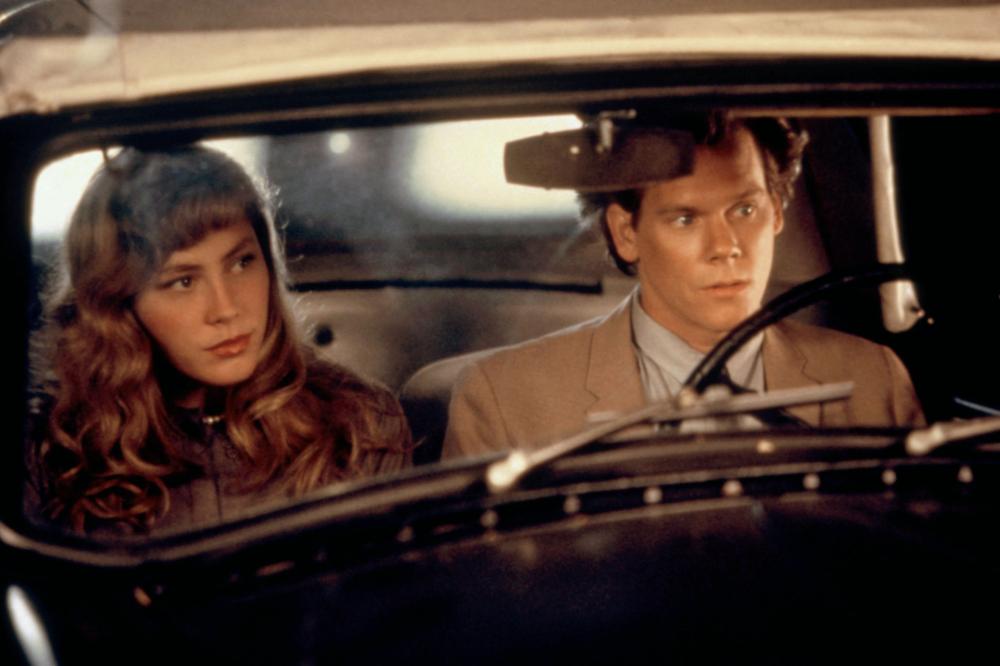
In this cautionary comedy, Nick (Kevin Bacon), a young director, wins a prestigious student film competition and suddenly finds himself Hollywood’s new Bright and Shiny Thing. Movie studios and agents clamor over him, and Nick moves to LA with his architect girlfriend (Emily Longstreth) and cinematographer and best friend (Michael McKean) for his first big movie; all three newcomers are very naive. Nick is soon dazzled by promises of fame and money (and Teri Hatcher’s body), loses his way and betrays his girlfriend and his best friend.
Kevin Bacon and Teri Hatcher in THE BIG PICTURE
Along the way, Nick hires a wacky agent (Martin Short) and encounters a range of Hollywood Suits, and there are lots of funny moments. My favorites are pitches for a beach party sexploitation movie and an Abe and Babe buddy picture (about Abe Lincoln and Babe Ruth).
The cast also includes the always welcome J.T. Walsh and Jennifer Jason Leigh at her most comically kooky (joyously manic but hinting at emotional damage underneath). Watch for John Cleese as the bartender Frankie. And then there’s Teri Hatcher, ravishing even in an unfortunate 1980s hairstyle.
Jennifer Jason Leigh and Kevin Bacon in THE BIG PICTURE
The Big Picture follows Rob Reiner’s 1984 This Is Spinal Tap, which Guest co-wrote and in which he starred in as the dim guitarist Nigel Tufnel, who sets his amp to eleven. In 1996, Guest followed The Big Picture with Waiting for Guffman, which launched his string of mockumentaries – Best in Show (his masterpiece), A Mighty Wind, For Your Consideration and Mascots.
I watched The Big Picture on on Turner Classic Movies, and it streams from Amazon, Vudu and YouTube.
Emily Longstreth and Kevin Bacon in THE BIG PICTURE