
DRIVE MY CAR: sublime and powerful

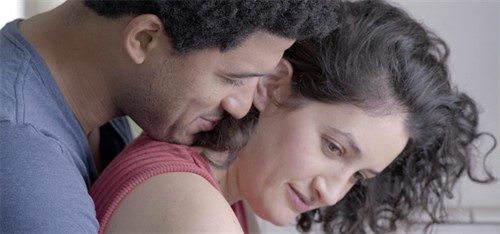
Photo caption: Reika Kirishima and Hidetoshi Nishijima in DRIVE MY CAR. Courtesy of The Match Factory.

Drive My Car is director and co-writer Ryûsuke Hamaguchi’s engrossing masterpiece about dealing with loss – and it’s the best movie of 2021. Layered with character-driven stories that could each justify their own movie, this is a mesmerizing film that builds into an exhilarating catharsis.

Drive My Car opens with an entrancing story about a teenage girl, told by a woman to her sexual partner. It turns out that the woman regularly tells stories to her husband during sex. advancing the plot after she climaxes, and the husband remembers and preserves the stories. She is Oto (Reika Kirishima), a television writer and showrunner. He is Yûsuke (Hidetoshi Nishijima), a theater actor and director, known for his work in Beckett and Chekhov. He works on his line readings while driving his beloved 13-year-old red SAAB 900 turbo.

Yûsuke and Oto’s relationship is complicated. We later learn how complicated and why.

Forty or so minutes in, the movie’s opening titles appear, and it’s two years later. Yûsuke still has the SAAB, which he drives to Hiroshima for a two-month theater residency. He is to cast and direct a pan-Asian, multi-lingual production of Uncle Vanya. His Japanese, Korean, Filipino and Taiwanese-American cast speak the lines in their languages (one being Korean Sign Language), with the dialogue subtitled at performances.

To Yûsuke’s distress, he is required by by the Hiroshima theater to use their driver, the impassive tomboy Misaki (Tôko Miura). He resents this incursion into his vehicular sanctuary, but Misaki is now driving his SAAB, and she turns out to be diligent and expert.

During the weeks of rehearsal, more stories emerge and more of Yûsuke’s own story is revealed. When Yûsuke and Misaki have dinner at the home of the theater project’s organizer (Dae-Young Jin) and his deaf wife (Yoo-rim Park), they are surprised by a deeply personal revelation.

Masaki Okada and Hidetoshi Nishijima in DRIVE MY CAR. Courtesy of The Match Factory.

Yûsuke has cast a young actor, Koji (Masaki Okada), whom we know to be unreliable, but even Koji comes through with an impassioned, and apparently true, story of his own.

There’s an outdoor rehearsal scene between two actors (Sonya Yuan and Yoo-rim Park) that becomes magical.

Sonya Yuan and Yoo-rim Park in DRIVE MY CAR. Courtesy of The Match Factory.

Each component story is powerful, and Drive My Car becomes even more than the sum of its parts and builds in intensity.

Drive My Car is three hours long. While screening a movie, I take notes on an unlined notebook, and I see that I had scrawled, MESMERIZING ENGROSSING WHAT AM I WATCHING? The rest of the art house audience was as spellbound as I.

There is one soon-to-be-iconic shot in Drive My Car. After a cathartic scene, Misaki and Yûsuke drive into a reddish tunnel. Hamaguchi shows us two hands holding lit cigarettes out of the SAAB’s open sun roof. It’s an exhilarating and unforgettable shot, and once enough cinephiles see Drive My Car, it will become the instantly recognizable signature of Drive My Car.

Hidetoshi Nishijima and Tôko Miura in DRIVE MY CAR. Courtesy of The Match Factory.

Hidetoshi Nishijima (Yûsuke) and Tôko Miura (Misaki) are superb. Both characters are poker-faced, so the performances are exceptionally subtle.

I’m dismayed that Drive My Car is so difficult to find. It is currently playing in only three Bay Area theaters, in Berkeley, Oakland and San Francisco, plus a couple For Your Consideration screenings in San Rafael. It is currently the number one movie on many top ten lists, including mine and Barack Obama’s.

Movies to See Right Now (Holiday edition)

Photo caption: Bradley Cooper in NIGHTMARE ALLEY. Courtesy of Searchlight Pictures.

See the year’s best movies now: Drive My Car, Belfast and Nightmare Alley in theaters and The Power of the Dog and Don’t Look Up on streaming services.

ICYMI here’s my year-end coverage to date. (I’ve been holding off on posting my Best Movies of 2021 until I see Licorice Pizza, The Tragedy of Macbeth and Parallel Mothers. ) But here’s my year-end list so far.

IN THEATERS

Reika Kirishima and Hidetoshi Nishijima in DRIVE MY CAR. Courtesy of The Match Factory.

Drive My Car: Ryûsuke Hamaguchi’s engrossing masterpiece about dealing with loss. Layered with character-driven stories that could each justify their own movie, this is a mesmerizing film that builds into an exhilarating catharsis.

Nightmare Alley: Guillermo del Toro’s absorbing remake of the 1947 film noir classic, a cautionary fable of overreaching. Del Toro has deepened the minor characters, creating a showcase for many of our finest film actors.

Red Rocket: Sean Baker’s dark comedy is a portrait of a human trainwreck and the Texas City, Texas, residents whose lives he touches (and none for the better). Once again, Baker makes inspired use of non-actor to tell his story.

The Humans: Stephen Karam’s film version of his Tony Award-winning play introduces us to a family that is guaranteed to be more depressing than yours. Remarkably cinematic and non-stagey for a play that takes place in one apartment. Its very brief theatrical run is over, but you can look or it on video soon.

Also in theaters:

  • Belfast: a child’s point if view is universal. If you have heartstrings, they are gonna get pulled.
  • C’mon C’mon: In Mike Mills’ charming and authentic film, Joaquin Phoenix plays a well-intentioned, emotionally intelligent guy who gets an immersion course in parenting.
  • House of Gucci: Lady Gaga and Adam Driver shine in this modern tale of Shakespearean family treachery.
  • Benedetta: Paul Verhoeven’s entertaining parable of belief and class, wrapped in scandal and sacrilege.

ON VIDEO

Cate Blanchett and Tyler Perry in DON’T LOOK BACK. Courtesy of Netflix.

Some of my choices for Best Movies of 2021 are already on video:

  • Riders of Justice: Thriller, comedy and much, much more. It’s the year’s best movie so far. Amazon, AppleTV, Vudu and YouTube.
  • The Power of the Dog: One man’s meanness, another man’s growth. Netflix.
  • Don’t Look Up: Wickedly funny. Filmmaker Adam McKay (The Big Short) and a host of movie stars hit the bullseye as they target a corrupt political establishment, a soulless media and a gullible, lazy-minded public. Netflix.
  • Roadrunner: A Film About Anthony Bourdain: Bad ass romantic. Amazon, AppleTV, Vudu, YouTube and redbox.

More 2021 movies on video:

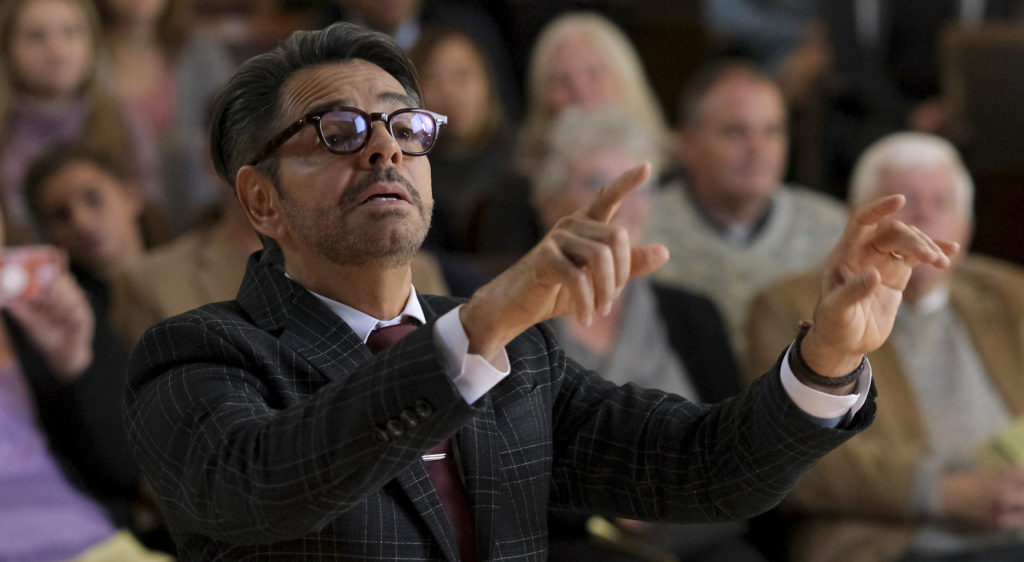
Eugenio Derbez in CODA. Courtesy of AppleTV.

2021: unusually strong year for biodocs

Photo caption: ROADRUNNER: A FILM ABOUT ANTHONY BOURDAIN. Courtesy of HBO Max.

2021 has been an unusually strong year for biodocs. With the notable exceptions of Dean Martin and Kenny G, most of the subjects have been disruptors: Anthony Bourdain, Julia Child, Kurt Vonnegut, Brian Wilson, Guy Clark, John Belushi, Truman Capote and Tennessee Williams.

Along with Penny Lane’s surprisingly revelatory Listening to Kenny G, a good watch even if you never ever think of Kenny G, here are the best from 2021:

  • Roadrunner: A Film About Anthony Bourdain: An unusually profound, revealing and unsentimental biodoc of a complicated man – a shy bad ass, an outwardly cynical romantic, a brooding humorist. A triumph for director Morgan Neville, Oscar-winner for 20 Feet from Stardom.
  • Brian Wilson: Long Promised Road: An unusual documentary about an unusual man.  Brian Wilson, The Beach Boys’ songwriting and arranging genius weighs in on his life and work.  Wilson’s old and trusted friend drove him around important places in his life – in the format of Comedians in Cars Drinking Coffee – and it paid off with oft emotional revelations from the usually monosyllabic Wilson. 
  • Without Getting Killed or Caught: This lyrical documentary traces the lives of singer-songwriter Guy Clark and his painter-songwriter wife Susanna. Their roommate was troubled songwriter Townes Van Zandt, Guy’s best friend and Susanna’s soulmate. This is a film about an unusual web of relationships amidst the creative process.
  • Julia: This charming documentary, affectionate and clear-eyed, tells the unlikely story of how Julia Child broke through every expectation of her gender, class and upbringing to become an icon in her fifties.
  • Kurt Vonnegut: Unstuck in Time: This uncommonly rich biodoc of the social critic/humorist/philosopher benefits from having been paused and restarted several times, resulting in hours of filmed interviews with Vonnegut in different decades. Very entertaining because Vonnegut was so damn funny.
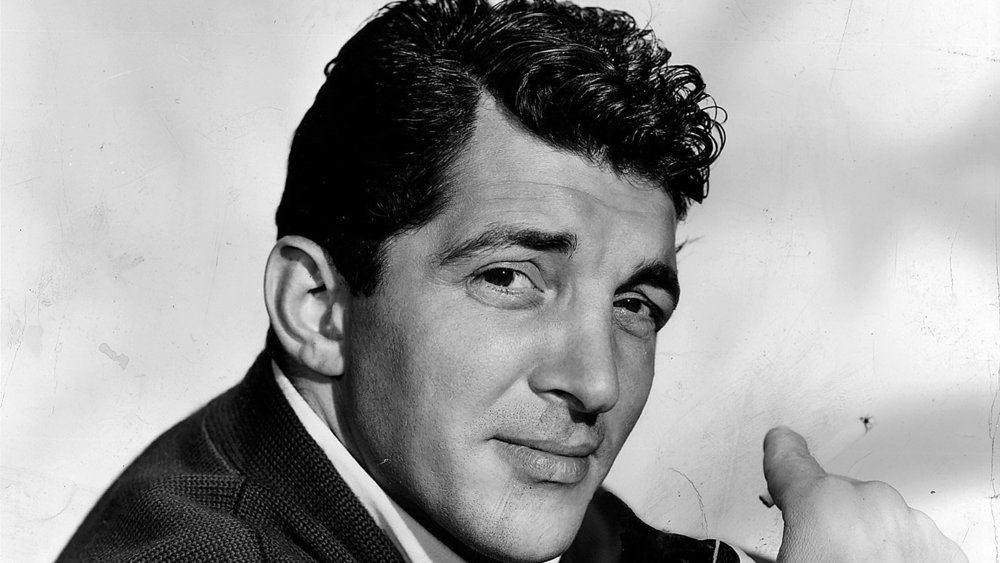
  • King of Cool: King of Cool is filled with insight into an icon who was extremely successful at being unknowable. Dean Martin used his charm to mask his detachment. Universally beloved, his internal life was still never understood by his closest friends and colleagues – and even by his family. The filmmakers turned to the device from Citizen Kane – what was the “Rosebud” that drove and explained Dean Martin?
  • Truman and Tennessee: An Intimate Conversation: Truman Capote and Tennessee Williams were both gay men from the Deep South, who attained fame and descended into addiction. They also knew each other. Truman and Tennessee tells their stories from their own letters and from being interviewed on TV by the likes of David Frost and Dick Cavett. There is no third-party “narration”. It’s an effective and increasingly popular documentary technique, used in, for example, I Am Not Your Negro.
  • Belushi: We all know the story of John Belushi – a career soaring like Icarus, propelled by comic genius and then death by drug overdose at age 33. The new biodoc Belushi brings us more texture because of unprecedented access to Belushi’s friends and widow and to Belushi’s own letters, notes and journals.
Dean Martin in KING OF COOL. Courtesy of TCM.

NIGHTMARE ALLEY: enough burning ambition for a thousand carnies

Photo caption: Bradley Cooper and Cate Blanchett in NIGHTMARE ALLEY. Courtesy of Searchlight Pictures.

Nightmare Alley is Guillermo del Toro’s absorbing remake of the 1947 film noir classic, a cautionary fable of overreaching. Del Toro has deepened the minor characters, creating a showcase for many of our finest film actors.

It’s just before WW II and a drifter named Stan Carlisle (Bradley Cooper) is desperate enough to take a menial job in a transient carnival. In the first scene, we learn that Stan is lethally dangerous; he also has movie star good looks, a gift of charm and enough burning ambition for a thousand carnies.

Stan befriends (and beds) the world-weary Zeena (Toni Collette), who stars in a mind-reading act. Zeena is married to Pete (David Straithairn), a master of clairvoyance acts, whose alcoholism has dropped him from vaudeville stardom to this gutter-level carnival. Stan ingratiates himself with Pete and steals Pete’s notebook of secret codes. Armed with Pete’s secret system, Stan seduces the good-hearted and pretty, young Molly (Rooney Mara), and the two head off to launch a new nightclub act in the Big Time.

Stan and Molly achieve great success and encounter Lilith, who has her own phony psychologist racket. Stan sees an opportunity for even greater riches by fleecing the rich – pretending to communicate with their dead loved ones. Pete had warned Stan against “the spook business”, and Molly has moral objections. But Stan sees Lilith as an equally ruthless and amoral partner, and he proceeds with his scheme. Will he succeed? (Hint – this is a film noir.)

Bradley is very good as Stan, a guy who will do anything to win, and who is intolerable when he gets to the top. Blanchett is superb as the sleek and cynical Lilith. Willem Dafoe is perfect as Clem, the carnival boss; Clem’s pay-by-play description of geek recruitment is one of the best scenes this year.

Del Toro wrote the screenplay with his wife Kim Morgan who is also (YAY!) a longstanding movie blogger (Sunset Gun). The source material for both movies was the William Lindsay Gresham novel. Gresham had a buddy in the – Spanish Civil War who was a carnie abd fascinated Gresham with his tales of the carnie life.

The 1947 original runs one hour and fifty minutes. With my strong bias against overlong films, I was initially skeptical of the 2021 version’s two hours, thirty minutes running time. But del Toro and Morgan invest the extra forty minutes into enriching the minor roles played by Straithairn and Dafoe, and other fine character actors: Ron Perlman, Mary Steenbergen, Richard Jenkins, Tim Blake Nelson, Jim Beaver and Holt McCallany (Mindhunters).

Willem Dafoe in NIGHTMARE ALLEY. Courtesy of Searchlight Pictures.

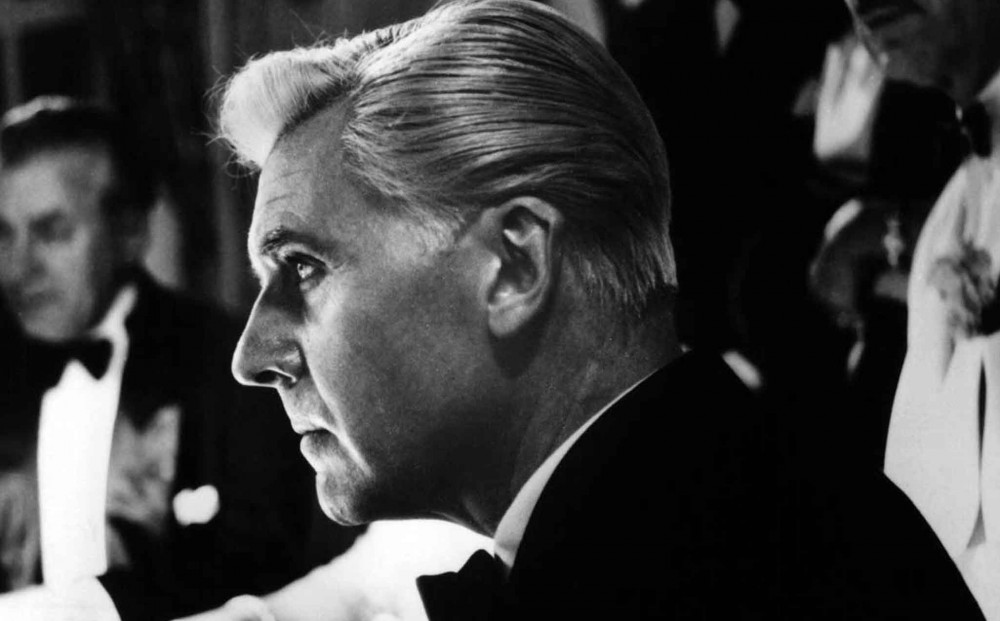
I recently rewatched the original 1947 Nightmare Alley, and it still stands up. I’m not usually a fan of Tyrone Power, but I’ll admit that he’s perfect as Stan, and his work at the end, when Stan is on the skids, is heartbreaking. Joan Blondell is excellent as Zeena, and Colleen Gray is compellingly adorable as Molly. Helen Walker’s turn as Lilith is brilliant, and it’s a shame that an auto accident scandal derailed her career. Ian Keith, a stage actor with very few memorable screen appearances, delivered a touching performance as Pete (in far less screen time than Straithairn gets).

Tamara Deverell should win the 2022 Academy Award for production design; she deserves it for Lilith’s art deco office suite alone, never mind for creating the extraordinary world of the carnivals.

Nightmare Alley is the first film i”ve seen with geek credits: Paul Anderson as Geek #1 and Jesse Buck as Geek #2. I also stayed to the end to see no animals were harmed – bad things happen to chickens, so the CGI effects in Nightmare Alley are pretty cluckin’ effective.

The final line is one of the all-time best. Nightmare Alley is one of the Best Movies of 2021, and is currently in theaters.

THE HUMANS: “Don’t wait until after dinner.”

Photo caption: June Squibb, Amy Schumer, Jayne Houdyshell, Steven Yuen, Beanie Feldstein and Richard Jenkins in THE HUMANS. Courtesy of A24.

A family grown apart checks in with each other in The Humans, Stephen Karam’s film version of his Tony Award-winning play. The family, living their separate lives, hasn’t gotten together for a while and it turns out that each member has experienced a significant life event.

The occasion is the first time the youngest daughter (Beanie Feldstein) has hosted a holiday dinner. She and her partner (Steven Yuen) have just moved into a decrepit apartment in NYC’s Chinatown and haven’t finished unpacking.

Her taciturn dad (Richard Jenkins,) and no-bullshit mom (Jayne Houdyshell) have brought the senile grandma (June Squibb), and her lawyer sister (Amy Schumer) shows up, too.

Deadpan humor results from the young’s couple’s blissful obliviousness to how hopelessly dilapidated the apartment is. They are embracing NYC charm but are choosing to overlook the stained and chipped tiles, exposed pipes and wiring, ancient fuse box, and the excruciatingly slow, tiny elevator adorned with male appendage graffiti. The parents and sister take it all in with polite silence.

There are also, of course, the eye-rolling moments of parent-adult child interactions and the well-known quirks of each family member. This all sounds like familiar movie fodder, but The Humans is NOT AT ALL sit-commy.

Big, life-changing things have happened to each family member, and they are about to be revealed. There’s the whispered admonition “Don’t wait until after dinner.” If you need to see a family that should be more depressing than yours, this is your movie.

Richard Jenkins in THE HUMANS. Courtesy of A24.

The Humans was a finalist for the 2016 Pulitzer Prize for Drama and won the 2016 Tony Award for Best Play.While off-Broadway, the script won the 2016 Obie Awards for Karam’s playwriting and Houdyshell’s performance.

The entire cast is excellent, especially Houdyshell and Jenkins.

The Humans must be the least stagey movie set completely in one apartment. The playwright Karam really uses cinema – this is not a theater performance on video. The camera stares at the apartment’s flaws, and the apartment becomes the seventh character. We hear dialogue off camera – some is atmospheric and some is important and revealing.

The Humans moves from wry to shattering as it authentically probes how we accept our failings and those of our loved ones – or not.

2021’s best movie-going experiences

Photo caption: Sylvie Mix and Bobbi Kitten in POSER at the Nashville Film Festival, Photo courtesy of the Nashville Film Festival.

2021, an unquestioned improvement over 2020, has come with its challenges, but I’ve still had a rich year at the movies. Here are my favorite movie-going experiences of 2021:

  • First, let’s acknowledge that The Movie Gourmet is back in theaters. On June 19, 2021, I saw The Sparks Brothers at the AMC Mercado in Santa Clara. The last movie that I had seen in a theater had been The Burnt Orange Heresy on March 5, 2020 in the California Theatre at the 2020 Cinequest. In the 472 days of COVID lockdown, I still managed to watch 329 movies and episodic series via streaming and screeners.
  • But here’s the year’s topper – for the first time, I traveled to cover the Nashville Film Festival. NashFilmFest’s director of programming Lauren Ponto curated an excellent slate. My favorites were discovering the dazzling indie Poser and attending the pre-release screening of Old Henry with the filmmakers, including star Tim Blake Nelson. I also caught a couple of non-fest movies at Nashville’s excellent art house theater, the Belcourt. Of course, Nashville is a culturally rich city with epic barbecue; (I worship the ribs at Peg Leg Porker and the pulled pork at Martin’s Bar-Be-Que Joint).
  • Along with Nashville, I discovered new films by virtually covering Cinequest, Frameline, San Francisco International Film Festival (SFFILM) and San Francisco Jewish Film Festival. My favorite festival nuggets were Poser (Nashville), Lune (Cinequest), Summertime (Frameline and Cinequest) and Ma Belle, My Beauty (SFFILM).
  • I discovered my favorite film of the year so-far, Riders of Justice (and I’m waiting for eveyone else to catch on to how good it is).
  • I got to revisit some of my all-time favorite films: Lone Star, House of Games, The Commitments, The Friends of Eddie Coyle, Point Blank. and the grievously overlooked One False Move.
  • And then, I have this very individual obsession – seeing a movie as the only patron in a theater (just like William Randolph Hearst in his personal theater at Hearst Castle). One would think that this would happen more than it does because I see lots of obscure movies at sparsely-attended weekday matinees. But, almost always, there’s at least one more audience member, and I had only enjoyed two solos screenings in thirty-five years. Anyway, it happened TWICE in late 2021 – The Souvenir Part II at San Francisco’s Landmark Embarcadero and Benedetta at Berkeley’s Landmark Shattuck.
RIDERS OF JUSTICE, a Magnet release. © Kasper Tuxen. Photo courtesy of Magnet Releasing.

RED ROCKET: a genius at burning bridges

Photo caption: Simon Rex in RED ROCKET. Courtesy of A24.

The dark comedy Red Rocket is Sean Baker’s portrait of a human trainwreck named Mikey. Mikey is introduced when he steps off a bus, with no luggage and bearing the wounds of a fistfight he has lost, returning to his hometown of Texas City, Texas, after 17 years in Los Angeles. When he re-introduces himself to the locals, he is invariably met with an unhappy “What are you doing here?“. He is there because he is no longer viable as a porn star, and he has burned every available bridge in Southern California.

A fast talker with a gift for gab and flexibility with facts, Mikey begs for shelter from his estranged wife Lexy and her mom Lil; they greet Mikey with well-earned wariness. Mikey is one of those people who churn through life leaving a trail of relationship carnage. He’s always on the lookout for some opportunity for someone else to get him something he wants, regardless of the cost to the other person.

Mikey basically has the worldview of a pimp, and the plot in Red Rocket is basically whether he hurl himself into well-deserved self-destruction before he can damage folks who don’t deserve it, including Lexy, Lil, his dim-witted neighbor Lonnie and the underage target of his affections, Strawberry.

Mikey is a scumbag, and Red Rocket only works as entertainment because Simon Rex (who has worked in porn himself) is very good as the loquacious and pathetically self-absorbed Mikey.

Sean Baker’s trademark is making excellent movies (Tangerine, The Florida Project) with non-actors. Here, Bree Elrod (Lexy) and Suzanna Son (Strawberry) have some professional experience. Shih-Ching Tsou (Miss Phan the doughnut shop proprietor) is a longtime Sean Baker collaborator who has been a producer of his previous films and has bit parts in them.

The rest of the cast are first-timers. Brenda Deiss is perfect as Lil, and she doesn’t look or behave like any professional from Hollywood. Brittney Rodriguez is very funny as the tough-as-nails enforcer of a family dope ring, and she is compelling enough on screen to find a pace in other movies.

Baker makes Texas City into a character in his story. In virtually every exterior shot, the smokestacks of petrochemical plants are visible. (And it helps to know that Texas City is about a 35 to 40 hour $200 bus ride to and from LA.) Pickup trucks are very popular, but Mike has to make do with a bicycle.

Sean Baker is the writer, director and producer of Red Rocket and, unfortunately, its editor – it’s 20 minutes too long. Red Rocket is not nearly as good as Baker’s best – Tangerine and The Florida Project, but it’s pretty good.

Movies to See Right Now

Photo caption: Hidetoshi Nishijima and Tôko Miura in DRIVE MY CAR. Courtesy of The Match Factory.

I’ve seen three of the best movies of the year in the past week: Drive My Car, Don’t Look Up and Nightmare Alley. I’ve written up Don’t Look Up and will get to the other two soon. Drive My Car is the very best movie that I’ve seen in 2021. Another of the year’s best, The Power of the Dog, is now streaming on Netflix.

I’m dismayed that Drive My Car is so difficult to find. It is currently playing in only three Bay Area theaters, in Berkeley, Oakland and San Francisco, plus a couple For Your Consideration screenings in San Rafael. It is currently the number one movie on many top ten lists, including mine and Barack Obama’s.

Note that the fabulous Noir City film festival returns in-person in January – this time to the 600-seat Grand Lake Theater in Oakland. 100 passes were sold in the first day, so check it out.

IN THEATERS

Don’t Look Up: Wickedly funny. Filmmaker Adam McKay (The Big Short) and a host of movie stars hit the bullseye as they target a corrupt political establishment, a soulless media and a gullible, lazy-minded public. I saw Don’t Look Up in a theater, but it will be streaming on Netflix beginning December 24.

Also in theaters:

  • Belfast: a child’s point if view is universal. If you have heartstrings, they are gonna get pulled.
  • C’mon C’mon: In Mike Mills’ charming and authentic film, Joaquin Phoenix plays a well-intentioned, emotionally intelligent guy who gets an immersion course in parenting.
  • House of Gucci: Lady Gaga and Adam Driver shine in this modern tale of Shakespearean family treachery.
  • Benedetta: Paul Verhoeven’s entertaining parable of belief and class, wrapped in scandal and sacrilege.

ON VIDEO

Kurt Vonnegut: Unstuck in Time: This uncommonly rich biodoc of the social critic/humorist/philosopher benefits from having been paused and restarted several times, resulting in hours of filmed interviews with Vonnegut in different decades. Very entertaining because Vonnegut was so damn funny. Amazon, AppleTV, Vudu and YouTube.
Listening to Kenny G: Penny Lane’s surprisingly revelatory is a good watch even if you never ever think of Kenny G. HBO Max.

Some of my choices for Best Movies of 2021 are already on video:

More 2021 movies on video:

ON TV

Allen Baron in BLAST OF SILENCE

Any film noir aficionado will want to take advantage of Turner Classic Movies’ rare broadcast of Blast of Silence on December 18 and 19. Arguably the first neo-noir (and among my my Overlooked Neo-noir), Blast of Silence features a solitary professional hit man who is NOT emotionally detached. Instead, he has to work himself into a cauldron of seething hatred before he performs each murder-for-hire. Perversely, this most nihilistic story is juxtapositioned against a New York City Christmastime.

Blast of Silence is not available to stream, so the only ways you can see it are to purchase the Criterion DVD or to tune in this weekend to TCM’s Noir Alley, with intro and outro by Eddie Muller.

The juxtaposition of Christmas in BLAST OF SILENCE

DON’T LOOK UP: hilarious satire or…?

Photo caption: Jennifer Lawrence and Leonardo DiCaprio in DON’T LOOK BACK. Courtesy of Netflix.

In the wickedly funny Don’t Look Up, filmmaker Adam McKay and a host of movie stars hit the bullseye as they target a corrupt political establishment, a souless media and a gullible, lazy-minded public.

The satire begins when an astronomy grad student (Jennifer Lawrence) discovers a new comet, and her professor (Leonardo DiCaprio) calculates that it will certainly strike Earth in 6 months and 14 days. This is a very big comet, so the scientists have pegged it as an “extinction level event”. In other words, the approaching calamity is apocalyptic enough to rule out any post-apocalyptic movies.

They get an immediate audience with the President (Meryl Streep), and they expect that their news will trigger an urgent, globally-coordinated effort to deflect the comet before it can end life on Earth. That rational and responsible response is not what they get. (Then again, you wouldn’t expect that vaccinating everyone against a deadly pandemic would be controversial, either.)

Instead, they find a public consumed with celebrity fluff and eager to turn any substantive conversation into tribalism. And a very greedy capitalist, who steers the US response into the ultimate example of privitization.

The media is represented by Cate Blanchett and Tyler Perry as the hosts of a popular television infotainment show. Expert in cynically dumbing down every subject, Blanchett and Perry are hilarious every time they are on-screen. Never sexier in a movie, Blanchett also gets to play a sexually voracious social climber (“I’ve slept with two former Presidents“).

McKay’s takedown of the media includes a televised meltdown worthy of Paddy Chayefsky’s Network.

Other comic highlights:

  • Mark Rylance as a tech billionaire, kind of a worst case cross between Steve Jobs and Elon Musk. He bullies his way through every situation with a forced confidence (although mere mortals in his presence are advised “not to make eye contact and to avoid negative facial expressions”).
  • Noah Hill as the President’s son, Chief of Staff and Brat-in-Chief. This is what the Trump kids would be like if they were witty. ‘You’re the working class, and we’re the cool rich.’
  • Ariana Grande as a vacant pop diva who is ultra savvy about social media.
  • Lawrence’s grad student just can’t get over a general’s (Paul Guilfoyle) scam with snacks.
  • Melanie Lynsky plays the astronomy professor’s long-suffering wife, and no one throws off a muttered killer line better than Lynsky.

In The Big Short, McKay took us inside the subprime mortgage scam. His genius was in taking the story of guys in front of their computers figuring out the current and future values of other people’s home mortgages. – and turning it into an edge-of-your-seat thriller. Watching The Big Short, we laugh, and then we get mad.

Don’t Look Up is very funny but is it a somber prophecy in the clothes of a comedy? It’s very plausible that everything really would happen this way. In fact, the human response to Climate Change IS NOW happening this way (although it will take more than six months and 14 days to end life on the planet). And our rocky test drive with COVID does not inspire confidence, either.

This one of the Best Movies of 2021. I saw Don’t Look Up in a theater, but it will be streaming on Netflix beginning December 24.

Cate Blanchett and Tyler Perry in DON’T LOOK BACK. Courtesy of Netflix.

KURT VONNEGUT; UNSTUCK IN TIME: when tragedy begets humor

Kurt Vonnegut: Unstuck in Time” Review – Music City Drive-In
Photo caption: Filmmaker Robert Weide and Kurt Vonnegut in KURT VONNEGUT: UNSTUCK IN TIME. Courtesy of IFC Films.

Kurt Vonnegut: Unstuck in Time is an uncommonly rich biodoc of the social critic/humorist/philosopher Kurt Vonnegut. Most importantly, there’s a heavy dose of Vonnegut himself, which is very entertaining because Vonnegut was so damn funny.

All of the Vonnegut is because filmmaker Robert Weide, early in his career, began to make this documentary of his literary hero, with Vonnegut’s participation. The film had to be paused and restarted several times, mostly due to the usual indie film obstacle of funding. Finally, Weide became very successful as the producer and director of Larry David’s Curb Your Enthusiasm and didn’t have the time to finish. As a result, Weide collected hours of filmed interviews with Vonnegut in different decades.

Over the years, Weide and Vonnegut developed a personal friendship that facilitated even more access and allowed Vonnegut to be even more forthcoming.. Weide filmed Vonnegut in visits to the homes in which he had pivotal experiences (including the one where he found his mother after her suicide on Mother’s Day).

In Unstuck in Time, Weide adds lots of file footage and interviews with all of Vonnegut’s kids (he sired three and raised his sister’s four sons).

(Incidentally, Vonnegut’s hometown is Indianapolis, which has embraced him posthumously to the extent there is a multi-story Vonnegut mural in downtown Indy.)

Vonnegut’s anti-war attitude came out of his especially horrific experiences in WWII, and he had his share of peacetime family tragedies. But I need to emphasize that Unstuck in Time is anything but grim because of Vonnegut’s humor. Kurt Vonnegut: Unstuck in Time is in some art house theaters and streaming on Amazon and AppleTV.