DELIVER ME FROM NOWHERE: a genius works out his issues

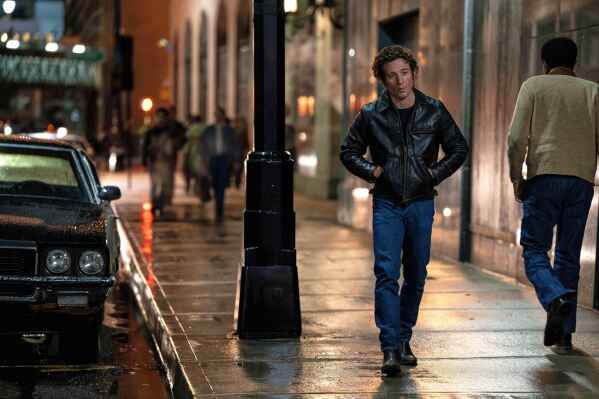
Photo caption: Jeremy Allen White in DELIVER ME FROM NOWHERE. Courtesy of 20th Century Studios.

As the Bruce Springsteen docudrama Deliver Me from Nowhere opens, Springsteen (Jeremy Allen White) is belting out the massive hit Hungry Heart to cap off his The River tour in 1981. Afterwards, his manager/producer/confidante Jon Landau (Jeremy Strong) finds him sitting alone in the bowels of the arena, exhausted and depleted. Too nice a guy to blow off chatting with local radio personalities, Springsteen rallies, but Landau can see that he’s fried.

Landau sets up Springsteen at a rented house in the countryside of Colts Neck, New Jersey. It’s an obscure enough location, so he can rest in privacy, but still only a 25-minute drive to Bruce’s old stomping grounds in Asbury Park. Bruce sits around, decompressing in the darkened house, pondering something other than his future. While their record company is eager for another exuberant, rockin’ Springsteen album and tour, Landau does his best to insulate Springsteen from the pressure.

Bruce experiences a few lighthearted moments, sitting in with the house band at The Stone Pony and having a dalliance with a single mom (a fictional character played by the Australian actress Odessa Young). The Terence Malick movie Badlands sparks his interest and he starts researching the teen killing spree that the film was based on. But mostly, he’s brooding.
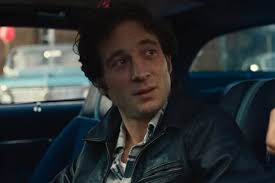
Jeremy Allen White in DELIVER ME FROM NOWHERE. Courtesy of 20th Century Studios.

In flashback, Deliver Me from Evil depicts the childhood that Bruce is reflecting on, dominated by his haunted and sometimes brutish father Doug (Stephen Graham). Doug had his demons, and now Bruce’s own demons are blocking his creative work. Bruce Springsteen is depressed, and that’s what Deliver Me from Evil is really about. In publicity for the film, Springsteen is oft crediting Landau for steering him to professional help and advocating for the destigmatization of mental health treatment.

The scenes with Doug Springsteen both with the young Bruce and the adult Bruce – are the core of Deliver Me from Evil.

The plot centers on Springsteen’s dark contemplations leading to his writing his darkest material yet, the songs that make up his Nebraska album. He records the material by himself, at home and on a cassette recorder, intending to record them in a studio with the E Street Band. The unconventional artistic choices that followed and the battle with his own record company, with Landau’s unwavering support, make up the rest of the story.

(In the same period, Springsteen also wrote Born in the U.S.A., Glory Days and I’m on Fire, which were later successful in arrangements with the full E Street Band on the Born in the U.S.A. album which followed Nebraska.)

Deliver Me from Evil depends on an actor’s success in a ballsy challenge – playing a person that all of us have watched closely for decades. Fortunately, Jeremy Allen White can match Bruce Springsteen in charisma and intensity, and that allows White to inhabit the character of Springsteen without resorting to impersonation.
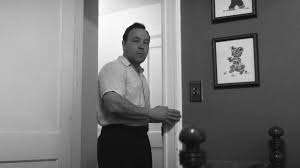
Stephen Graham in DELIVER ME FROM NOWHERE. Courtesy of 20th Century Studios.

Stephen Graham delivers another indelible performance as Doug, capturing the core disappointment and bitterness that leak out in rage and confusion. After early-career roles in Gangs of New York and Band of Brothers, the stocky Englishman has emerged as one of our great character actors, perhaps best in British crime mini-series like Little Boy Blue, Line of Duty, and Adolescence. He also appears in Hollywood movies like Rocketman and the Pirates of the Caribbean franchise (he plays Scrum), and the 2012 refresh of Tinker Tailor Soldier Spy. Along the way, he has become a one-man cottage industry playing fabled American gangsters – Baby Face Nelson in Public Enemies, Al Capone in Boardwalk Empire, and Tony Provenzano in The Irishman. I just love this guy’s work.

Gaby Hoffman is excellent as Springsteen’s mom.

Deliver Me from Nowhere’s director Scott Cooper (Crazy Heart) and Warren Zanes wrote the screenplay, adapting Zanes’ book about the writing and recording of Nebraska. Deliver Me from Nowhere was made with the participation and support of Springsteen and Landau; that provides lots insight to the screenplay, although Landau’s character is a bit saintly, for my taste. However, the portrayal of Springsteen is unsparing.

The E Street Band isn’t on screen much, but I didn’t completely swallow the depiction of certain band members. But that’s just a quibble about a film otherwise brimming with authenticity.

Deliver Me from Nowhere, as smart and genuine as it is, is irresistibly entertaining.
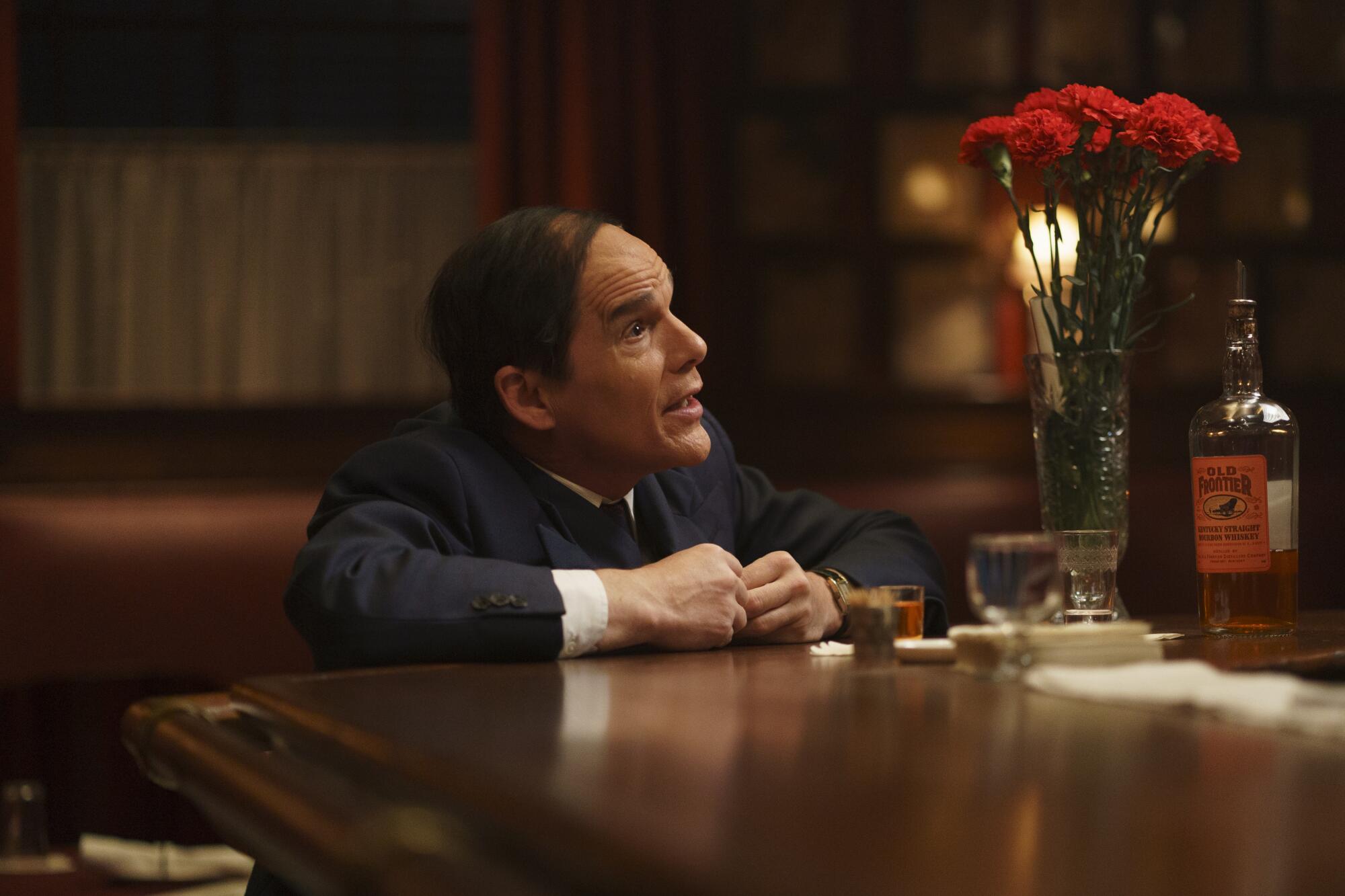
BLUE MOON: wit and vulnerability

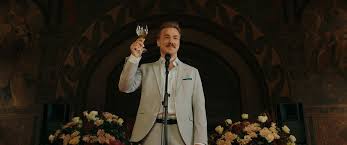
Photo caption: Ethan Hawke in BLUE MOON. Courtesy of Sony Pictures Classics.

The protagonist of Richard Linklater’s Blue Moon is lyricist Lorenz Hart (Ethan Hawke), who Linklater immediately shows us dying of alcoholism, before taking us to a night eight months earlier. Hart, having left the opening night production of Oklahoma!, has entered a familiar haven, the bar at Sardi’s, where he is ready, as always, to hold forth. His longtime partner Richard Rodgers has dumped him for a new collaborator, Oscar Hammerstein, and Hart has immediately recognized that the new duo’s debut musical would dwarf the success of the Rodgers and Hart work. It’s hard to feel good about yourself when you are dumped by your partner of 24 years, who then soars to new heights with a different collaborator.

Beginning in 1919 (when Hart was 24 and Rodgers only 17), the two created 28 stage musicals (including Babes in Arms and Pal Joey and more than 500 songs for Broadway and Hollywood, many of which have become American standards, like Manhattan, The Lady Is a Tramp, My Funny Valentine, and, of course, Blue Moon.

Seeing that body of work eclipsed in one night has Hart reeling. But, now, in 1943, Hart was 48 and Rodgers 41. Hart’s alcoholism has made him unreliable, so Rodger has moved on. Hart’s gift at wordplay is as brilliant as ever, but his confidence is crushed – and he is desperate to work again, and, in his wildest dreams, with Rodgers.

Hart’s career desperation is matched by his romantic desperation – from a doomed fixation with the comely Yale coed, Elizabeth (Margaret Qualley). Elizabeth is self-confident and ambitious, towers over the shrimpish Hart and can match wits with him . Hart is a successful celebrity, but not rich or conventionally attractive, and being an over-the-hill drunken gay man, neither the audience or other characters in Blue Moon see Hart’s pursuit of Elizabeth as anything but a pathetic fantasy.

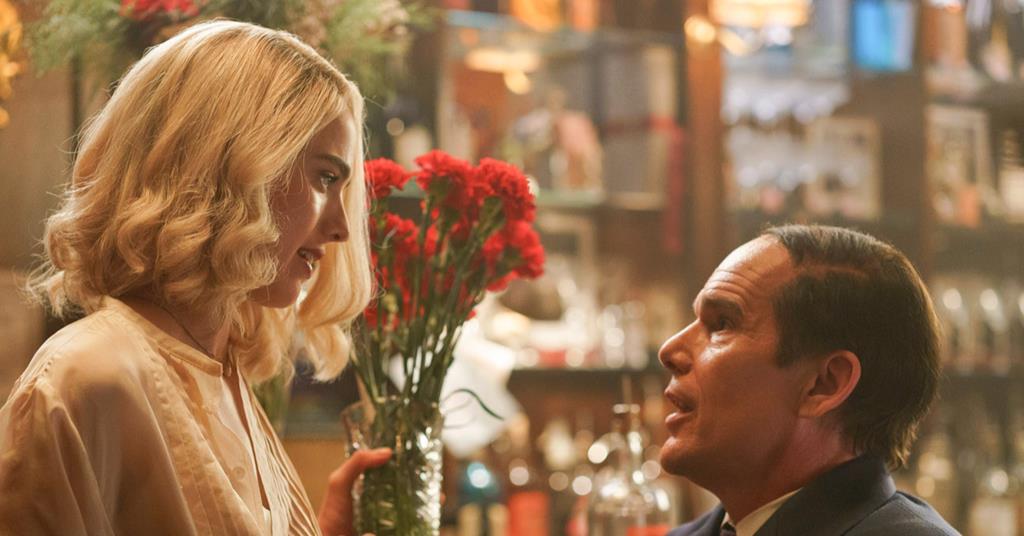
Margaret Qualley and Ethan Hawke in BLUE MOON. Courtesy of Sony Pictures Classics.

Hart presides over all conversation in the bar, and proves himself a most witty raconteur. Hart, usually unintentionally, reveals himself in banter with Sardi’s affable bartender (an excellent Bobby Cannavale).

Finally, Richard Rodgers (Andrew Scott) leads in his entourage from Oklahoma! for the opening night party, and Hart explodes into the full wheedle. Moment by moment, we learn more about Rodger’s complicated experience with Hart. It’s clear that Rodgers is genuinely grateful for Hart’s contribution to his life and is also relieved not to no longer be a secondary victim of Hart’s drinking. Rodgers still is affectionate and nostalgic with Hart, but wary about reliving Hart’s worst behavior. When Hart offers a celebratory glass of champagne, Rodgers recoils and barks, “I won’t drink with you!”, registering the pain that Hart’s drinking has inflicted on him over many years.

Why isn’t Blue Moon, a portrait of a man’s crash-and-burn, unwatchably sad?

  • Foremost, even when Hart is being sad, he’s very, very funny.
  • Hawke’s performance is deliciously vivid.
  • We stay engaged in sussing out the complicated relationship between Hart and Rodgers.
  • We delight in the stellar cast and in Richard Linklater’s storytelling genius.

Hawke is one of our very most interesting actors, and his turn as Hart is exceptional, plumbing all of Hart’s desperation, self-loathing and vulnerability. Of course, Hawke, who is 5′ 10″, can play a dreamy romantic lead, so there’s some movie magic – and a bad comb over – employed to help us see him as a 5 foot gnome. Others have described Hawke’s performance here as career-topping, but it’s hard for me to see this performance, as good as it is, as even better than those in Before Sunrise, Before the Devil Knows You’re Dead, and First Reformed, for example.

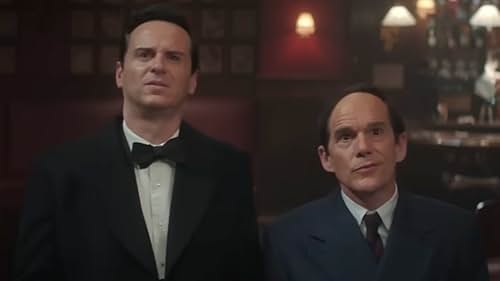
Andrew Scott and Ethan Hawke in BLUE MOON. Courtesy of Sony Pictures Classics.

Lorenz Hart is a flashy role, but Andrew Scott (Tom Ripley in the recent television episodic Ripley) is quietly mesmerizing as Rodgers, who struggles to contain the embarrassment, wariness, revulsion, pity and love that Hart triggers. Scott won the supporting actor Silver Bear at the Berlinale for this performance.

Qualley just seems to brighten every movie that she’s in – shall we call it the Joan Blondell quality?

One of the most interesting encounters in Blue Moon is between Hart and another bar patron, the writer E.B. White (Patrick Kennedy). The two know and admire each other’s work, although they are conversing for the first time. White can keep up with Hart intellectually, and also has the emotional intelligence to see, without comment, what’s going on with Hart. It’s a remarkably subtle performance by Kennedy.

The entire movie takes place in Sardi’s, except for two or three minutes at and near the beginning. Over 80% of the story takes place in Sardi’s bar. But Blue Moon never looks as inexpensive as it must be. No filmmaker has delivered more fine movies on low budgets than Linklater; I couldn’t find a Linklater movie budgeted at more than a frugal $35 million (School of Rock). Nevertheless, Linklater has created the three most thoughtful romances in cinema (the Before Sunrise series) and the milennium’s best film (Boyhood), along with launching an entire generation of actors in Dazed and Confused.

Here, Linklater turns one night into a vivid portrait of a man’s life and times, and Blue Moon is both funny and profound.

ROADS OF FIRE: an edge-of-your-seat documentary

Photo caption: ROADS OF FIRE. Courtesy of New Mountain Films

The edge-of-your-seat doc Roads of Fire explores undocumented immigration into the US by cross-cutting together three stories –

  • an Ecuadorian asylum-seeker prepares for her deportation hearing,
  • a small NGO faces the tsunami of migrants being dumped by the Texas Governor into NYC, and and
  • a group of Venezuelans try to get from Columbia to Panama on the first leg of their journey. 

The inside story of the Venezuelans is an incredible insider’s view – down to their orientation by their smugglers.  We hear the Ecuadorian woman’s description of the same harrowing route as we follow the Venezuelans.  Wow.

Many of the shots involve zipping through the jungle on motorbikes, hiding from authorities and interfacing with human traffickers. With its oft-breathtaking derring-do, Roads of Fire is a significant achievement for filmmaker Nathaniel Lezra. Every year, I screen a bunch of immigration-centered documentaries, and hardly ever do I see one with this much punch.

Super-topical, well-crafted and very compelling, Roads of Fire opens Friday at the Laemmle’s Monica Film Center and next week at the Glendale and the Claremont 5.

Movies to See Right Now

Photo caption: Rebecca Ferguson in A HOUSE OF DYNAMITE. Courtesy of Netflix.

This week on The Movie Gourmet – new reviews of A House of Dynamite, one of the Best Movies of 2025 – So Far, and Urchin, which isn’t, and the droll, hard-to-find Austrian comedy Peacock. Plus a highlight of the campy horror movie The Tingler, on TV late tonight.

CURRENT MOVIES

  • A House of Dynamite: a master filmmaker reminds us of the terrifyingly plausible. In theaters and on Netflix.
  • Eleanor the Great: grief, an appalling lie, redemption. In theaters.
  • Anemone: resisting redemption. In theaters.
  • One Battle After Another: sometimes hilarious, sometimes thrilling, always outrageous. In theaters.
  • Peacock: a chameleon, lost. Limited release in select arthouses.
  • To a Land Unknown: no good choices. Amazon, AppleTV, Youtube.
  • To Kill a Wolf: mysteries revealed. Amazon, AppleTV, Fandango.
  • Urchin: no redemption here. In arthouse theaters.

ON TV

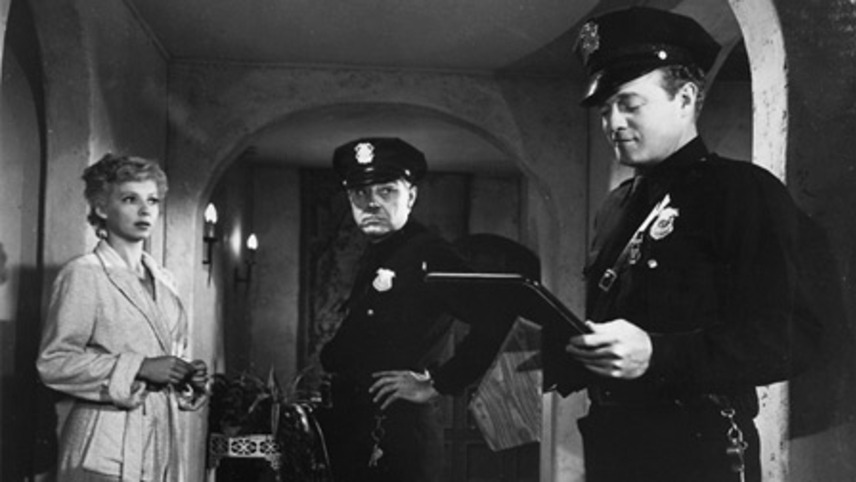
Evelyn Keyes (left) and Van Heflin (right) in THE PROWLER

On October 29, Turner Classic Movies brings us the 1951 film noir The Prowler stars the usually sympathetic good guy Van Heflin as the twisted bad guy.  Heflin is a beat cop responding to a call – a woman has reported a prowler outside her house. By the time Heflin and his partner arrive, the prowler is long gone, but Heflin is lusting after the comely woman (Evelyn Keyes), who is home alone every night because her husband works as an all-night DJ. Under the ruse of making sure that the prowler has vamoosed, Heflin returns and overcoming her reticence, seduces her. As befits a film noir, once he finds out about the husband’s insurance policy, sleeping with the guy’s wife just isn’t enough anymore.

It’s a strong screenplay, penned by the blacklisted screenwriter Dalton Trumbo (who also provides the voice of the DJ).  The Prowler is one of my Overlooked Noir.

THE TINGLER: Halloween fright from the 50s

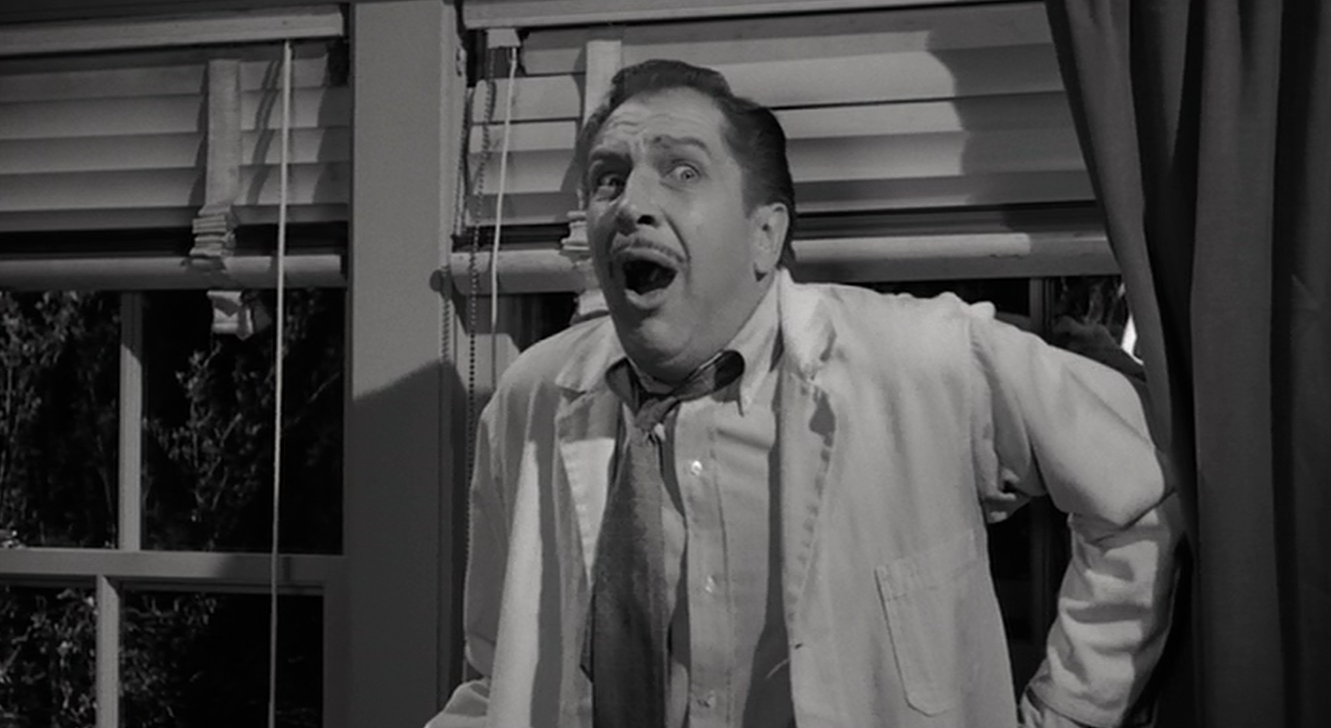
Vincent Price in THE TINGLER

On late Friday night, Turner Classic Movies is bringing us a campy Vincent Price horror classic from 1959, The Tingler.  It has a scary premise – a parasite embedding itself in people’s spine and feeding on them –  unaware until they feel a tingle AND THEN IT MAY BE TOO LATE!  When finally revealed, the grown parasite is VERY scary-looking.  Conveniently, the infested can weaken the parasite by screaming.  Horror schlockmeister William Castle reportedly installed buzzers in the backs of some theater seats, so some audience members would get an actual tingle in the spine at the scariest moments.  In the trailer below, Castle preps his audiences to scream if they feel a tingle.  It’s a cult classic.

A HOUSE OF DYNAMITE: a master filmmaker reminds us of the terrifyingly plausible

Photo caption: Rebecca Ferguson in A HOUSE OF DYNAMITE. Courtesy of Netflix.

In Kathryn Bigelow’s thoughtful nail-biter A House of Dynamite, a ballistic missile armed with a nuclear warhead is on its way to annihilate an American city. American military and national security officials have only minutes to act. That’s a terrifying scenario, and Bigelow knows that portraying it in exacting, realistic detail is very, very scary. She also forces the audience to undertake an intellectual exercise, thinking through What would I do?

All of us Americans – and all the Russian people – understand that if Russia were to launch a nuclear strike on the US, that the US would then automatically retaliate and destroy the military and economic capacity of Russia, along with most of its residents.  And vice-versa.  In that case, all the decision-makers know the procedures to implement, already carefully thought out in advance.

But what happens if we don’t know WHO has fired a nuclear warhead at us?  That very central ambiguity would make decisions very much NOT automatic.

Most of us know that the US President is shadowed by a military officer carrying a briefcase (“the football”) that contains the codes authorizing nuclear warfare.  Some of us know that select officials would be evacuated to nuke-proof bunkers. And that, in the event our top 36 leaders are wiped out at once, there’s a 37th person designated to take command. Here, Bigelow takes us inside to show us what all this would actually look like.

Most of the national security chain of command is highly trained to dal with the situations that the rest of see only as vague contingencies.  These folks know exactly what their responsibilities are and what to do.  Of course, they are human, and they recognize the consequences of the actions that they are trained to take and the impacts those situations will have on their loved ones.  I’m talking here about the National Security staff in the situation room, the top military commanders, the folks tasked with launching defensive missiles from their silos and that young guy carrying “the football”,  

But the President and Defense Secretary (try for a moment to forget the current occupants of those offices), press aides and others in the government probably don’t have that background, and must deal with a broadband of topics. With just an orientation briefing when they took office, they would essentially be thinking all this through for the first time, like the rest of us.

Bigelow also reminds us that a crisis may occur when we’re on vacation, running late to work, at some forgettable photo op, or when our spouse is taking the feverish kid to the doctor.  Civil War re-enactments have their value, but juxtaposed with an impending nuclear holocaust… Time waits for no one, as they say.

Idris Elba in A HOUSE OF DYNAMITE. Courtesy of Netflix.

Idris Elba and Jared Harris are superb as the President and Defense Secretary, plunged into a crisis they would never, never have chosen to address.  As the national security and military pros, Rebecca Ferguson, Jason Clarke, Tracey Letts and Anthony Ramos are similarly excellent.

We see so many national security thrillers with ridiculously implausible plots (The Diplomat and Hostage are recent examples) that it’s both welcome and bracing to see a screenplay so realistic. Bigelow gets everything right, down to how female decision-makers in DC wear comfy shoes to the office and change into dress shoes after passing though the metal detector.

I love movies that tell their stories in real time. Here, the key part of the story is only seven minutes long, so Bigelow tells it again and again from the perspective of different characters.

Along with being the first woman to win the Best Director Oscar, Kathryn Bigelow (K-19: The Widowmaker, The Hurt Locker, Zero Dark Thirty) may be our greatest national security filmmaker ever.  A House of Dynamite is thoughtful, chilling and one of the Best Movies of 2025 – So Far.

A House of Dynamite is in theaters and begins streaming on Netflix this Friday. The immersive experience of a movie theater was great for A House of Dynamite; if you’re streaming it at home on Netflix at home, turn off the lights in the room, crank up the volume on the TV and silence the notifications on your phone.

PEACOCK: a chameleon, lost

Photo caption: Albrecht Schuch in PEACOCK. Courtesy of Oscilloscope Laboratories.

In the droll and absurd comedy Peacock, Matthias (Albrecht Schuch of All Quiet on the Western Front) works in a most unusual companion service; he gets paid for jobs like masquerading as a client’s fictional partner. Matthias has so perfected being a chameleon that he has lost all sense of himself. This disquiets his wife and colleagues, and, when the vengeful ex-husband of a client terrorizes him, Mattias’ world starts to unravel.

Albrecht Schuch in PEACOCK. Courtesy of Oscilloscope Laboratories.

If you like Ruben Ostland’s work (Force Majeure, The Square, Triangle of Sadness), you’ll like Peacock. In fact, there’s a scene in Peacock that borrows A LOT from the chimp impersonator scene in The Square.

Austrian director Bernhard Wenger won a prize at Venice, where Peacock was also nominated for Best Film in the Critic’s Week.

I screened Peacock for NashFilm. It’s being shown at six Laemmle theaters in LA this Wednesday.

URCHIN: no redemption here

Photo caption: Frank Dillane in URCHIN. Courtesy of 1-2 Special.

In Urchin, the first film written and directed by actor Harris Dickinson, Mike (Frank Dillane) is a homeless British addict who gets jailed for a strong-arm robbery. Released on paroled with eight months of sobriety, Mike gets placed into a free apartment and a job with a very understanding boss, and he starts to forge healthy friendship with workmates.

The problem is that Mike thinks that society owes him. I’m not trying to get all Twelve-Steppy, but nobody is going to recover from addiction without accountability and gratitude, which Mike does not. Sure enough, Mike is frustrated by a normal minor responsibility and … Urchin is basically an exercise of waiting for Mike to blow it.

Critics have been falling over themselves in praising Dickinson’s film and Dillane’s performance. Indeed, Dillane is extraordinarily convincing in his portrayal of a street addict; unfortunately, he doesn’t succeed in getting us to care about Mike.

With the exception of a couple unnecessary and distracting moments of magical realism, Dickinson directs very ably. A la Mike Leigh (very high praise), he brings us right into the gritty world of panhandling, street drug sales, the police station booking room and menial workplaces. (Mike Leigh never needed magical realism and could keep us engaged in a bleak story.)

But Dickinson is a better director than a writer. The audience never develops a stake in Mike’s predictable demise, which leaves Urchin as an Eat Your Broccoli movie.

Movies to See Right Now

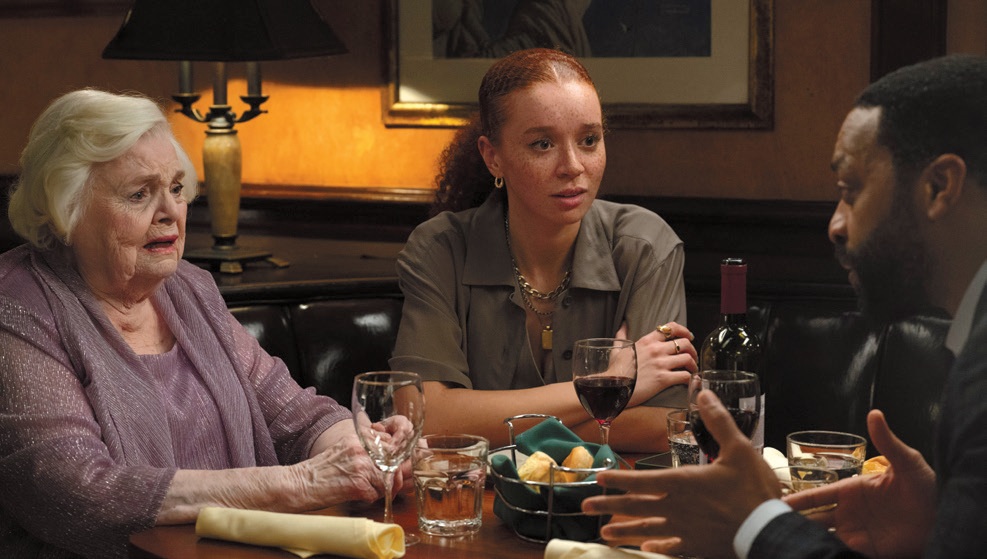
Photo caption: June Squibb, Erin Kellyman and Chiwetel Ejiofor in ELEANOR THE GREAT. Courtesy of Sony Pictures Classics.

This week on The Movie Gourmet – a new review of the astonishingly over-the-top One Battle After Another and a remembrance of an iconic actress. Don’t miss this week’s TV pick (below).

REMEMBRANCE

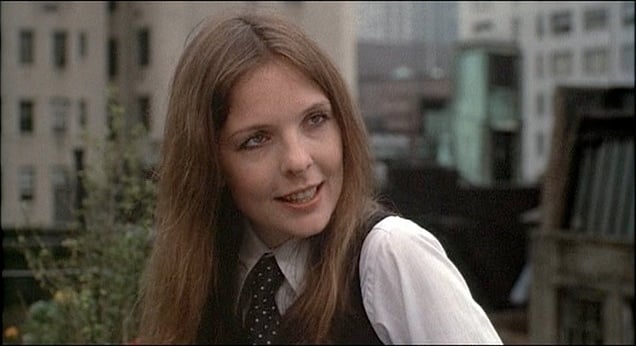
Diane Keaton in ANNIE HALL

The beloved Diane Keaton earned her status as a cinema icon with unforgettable performances in three of the 50 Greatest Movies of All Time. She won her Oscar her completely idiosyncratic portrayal of the title character in Annie Hall, my choice as the best romantic comedy ever. In The Godfather, her Kay Adams book ended the story of Michael Corleone, first accepting his “That’s my family, Kay, It’s not me.” and then ending the movie with the door to Michael literally closing in her face. The most searing moment in The Godfather Part II was Kay’s ferocity in telling Michael about a miscarriage that wasn’t. 72 more movies and three more Oscar nominations filled out Keaton’s 54-year screen career, but those three performances were indelible. A further note – my best pal in LA occasionally ran into Keaton around town, and she liked to dress like Annie Hall in real life.

CURRENT MOVIES

ON TV

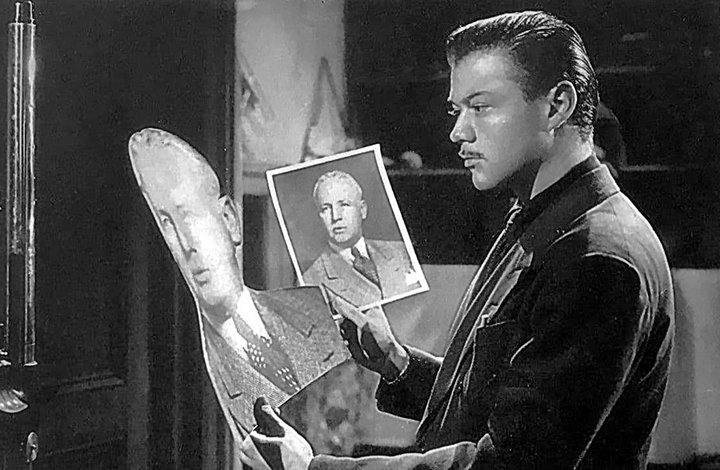
Turhan Bey and Lynn Bari in THE SPIRITUALIST.

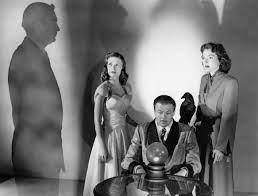
Here’s a rarity – on October 18, Turner Classic Movies brings us The Spiritualist (also The Amazing Mr. X), a 1948 B-picture that I hadn’t heard of until I saw it at last year’s Noir City in Oakland. It’s only 78 minutes long, and it’s a lot of fun. A cunning phony psychic (Turhan Bey) has convinced a wealthy widow that he can communicate with the dead, and she’s moved him into her mansion. Her world-wise daughter (Cathy O’Donnell) isn’t buying his act. But, while he is a con artist, he’s a really, really skilled one, and he pulls off illusion after illusion to keep the gullible widow believing – it’s like watching a magic show. The Spiritualist was shot by John Alton, one of the two greatest film noir cinematographers, and he makes the mansion extra spooky and the tricks extra sinister.

This was a rare leading role for Turhan Bey, and he makes a very charismatic charlatan, oozing suave charm and faux authority. Bey, an Austrian with a Turkish father and a Jewish Czechoslovakian mother, knocked around Hollywood playing exotic characters and never getting the lead in an A-picture. He has a very interesting Wikipedia page.

Cathy O’Donnell, Turhan Bey and Lynn Bari in THE SPIRITUALIST.

ONE BATTLE AFTER ANOTHER: sometimes hilarious, sometimes thrilling, always outrageous

Photo caption: Leonardo DiCaprio in ONE BATTLE AFTER ANOTHER. Courtesy of Warner Bros.

It’s been a while since I’ve seen a movie so over-the-top as Paul Thomas Anderson’s broad satire One Battle After Another. It’s sometimes hilarious, sometimes thrilling and always outrageous.

Leonardo DiCaprio stars as Bob, the tinkering bomb-maker in French 75, a group of far-left revolutionaries led by Perfidia (Teyana Taylor), charismatic and oversexed and too in love with her own badass flamboyance. Sure enough, once they piss off the nation’s repressive law enforcement establishment, French 75 is destined to go the way of the Weather Underground and the Symbionese Liberation Army. In a shock-and-awe campaign led by Colonel Stephen J. Lockjaw (Sean Penn), the revolutionaries are all neutralized or driven underground. Bob is able to get away and hide out under a new identity with Perfidia’s newborn daughter Willa.

The story resumes sixteen years later, with Bob and Willa living in a Northern California forest cabin. Bob is still a stoner underachiever, but he’s a devoted dad, and Willa (Chase Infiniti) has blossomed into a young woman of uncommon intelligence and curiosity. Suddenly, Lockjaw leads a military assault team to capture them, and the two are off on a two-hour race for their lives. When they become separated, Bob, despite his sparse hero skills, tenaciously tries to find her. Why has Lockjaw reappeared after sixteen years? He has his reasons, which I won’t spoil.

Paul Thomas Anderson, whose best movies are Boogie Nights and There Will Be Blood, has a body of work that ranges from the super-serious (The Master) to the silly (Inherent Vice). But his movies are always character-driven and always centered in empathy – we understand what makes his characters tick. In this case, he celebrates the resilience of his protagonists.

What I haven’t seen before from Anderson are the violent attacks and white-knuckle chases that we see in more conventional Hollywood thrillers. Anderson delivers here, with a movie that’s chock-filled with exciting set pieces. The final chase on an up-and-down road called the Texas Dip outside Borrego Springs, California, is spectacular. Is this a political satire embedded in a thriller, or the other way around?

And about that broad satire – principal photography took place in the first seven months of 2024, before Trump’s election and before his second-term weaponization of ICE and attempt to inflict martial law upon American cities. It’s chilling that reality is now mirroring what Anderson, as he was writing the screenplay, must have thought was far-fetched.

From the get-go, Anderson paints the government forces as fascist and white supremacist. But he skewers the wacko far-left as well. One of the scenes with the revolutionaries is as funny as the Liberation Front/Splinter scene in Monty Python’s Life of Brian.

Leonardo DiCaprio is a huge movie star who can carry a romantic drama (Titanic) or an action adventure (The Revenant) and, hell, play Jay Gatsby or Romeo. Here, his Bob shambles along, often terrified and klutzy, and none too strategic. It’s to DiCaprio’s credit that he turned down what became the righteous Jesse Plemons role in Killers of the Flower Moon to play a dumbass. And, again in One Battle After Another, he is racing for survival, always seemingly one step too slowly. It’s a fantastic, anti-Tom Cruise performance.

Sean Penn in ONE BATTLE AFTER ANOTHER. Courtesy of Warner Bros.

Penn’s Lockjaw is the most demented military character in the movies since Brigadier General Jack D. Ripper (Sterling Hayden) in Dr. Strangelove. As perverse and perverted as he is, you have to acknowledge his epic relentlessness. Penn is able to humanize the awful Lockjaw with his vulnerabilities – sexual and social-climbing yearnings that control him.

Chase Infiniti, in her first feature film, gives us a Willa with the latent ferocity of her mom, but with more grounding, discipline and self-awareness. More of Chase Inifiniti, please.

Chase Infiniti in ONE BATTLE AFTER ANOTHER. Courtesy of Warner Bros.

Teyana Taylor dominates the first chapter of One Battle After Another, with Perfidia’s stunning charisma and power. Benicio Del Toro and Regina King are excellent as two of Bob’s rescuers. Eric Schweig, an actor I’ve admired since The Last of the Mohicans (1992), shows up in a small but key role.

One Battle After Another has a Metacritic rating of 95. Although I’ve been singing its praises here, I initially found it a little too long for something so bombastic. Since then, I’ve thought about it more, and have placed it higher on my list of the Best Movies of 2025. Anyway, it’s so well-crafted and unusually outrageous that it’s a Must See.