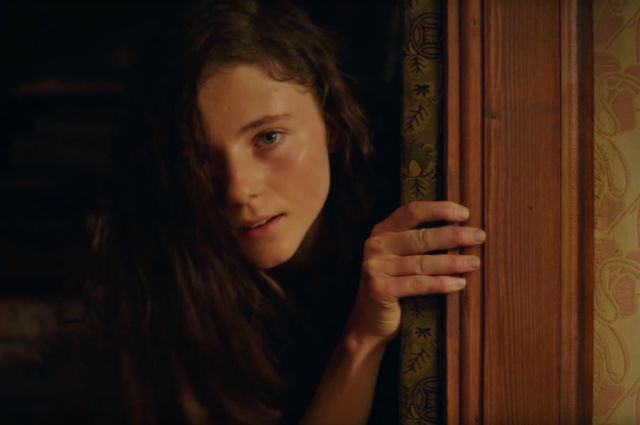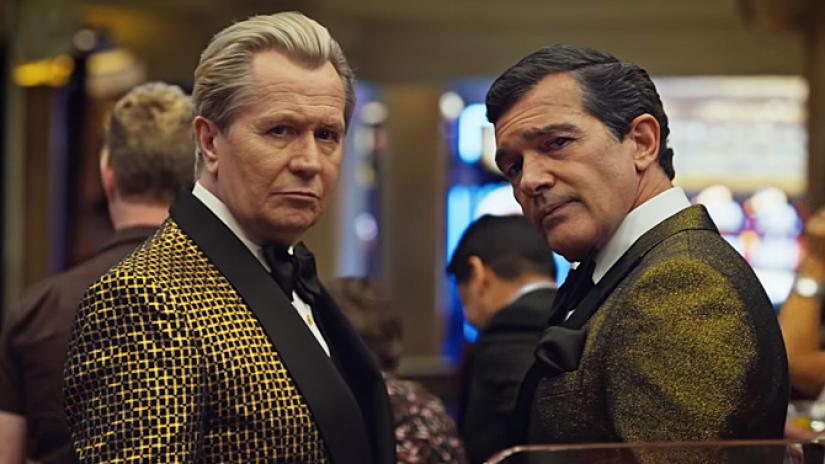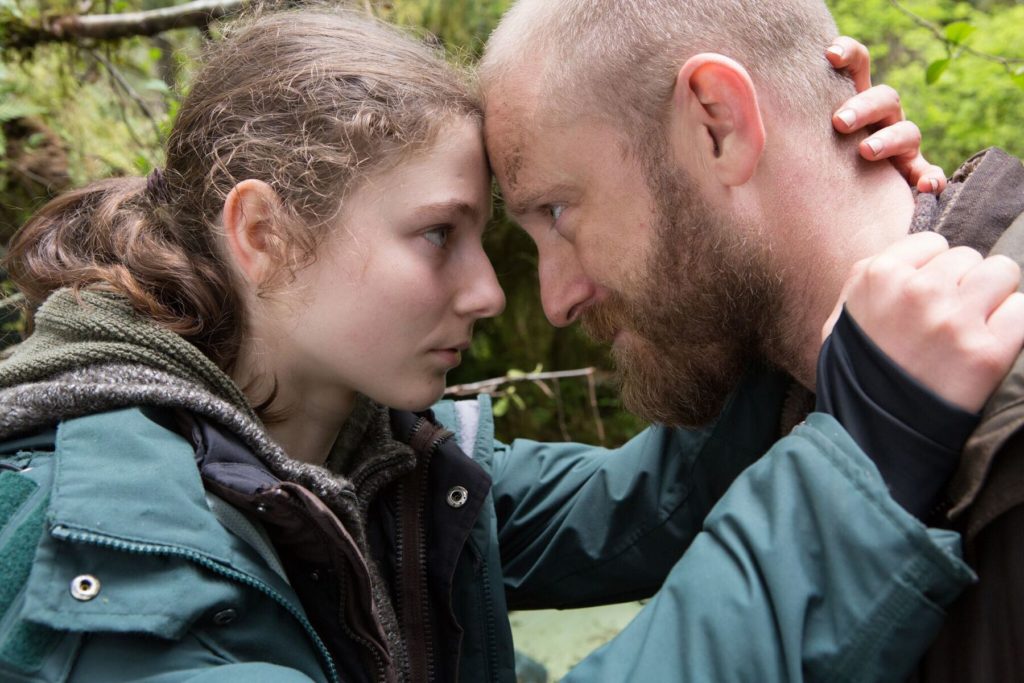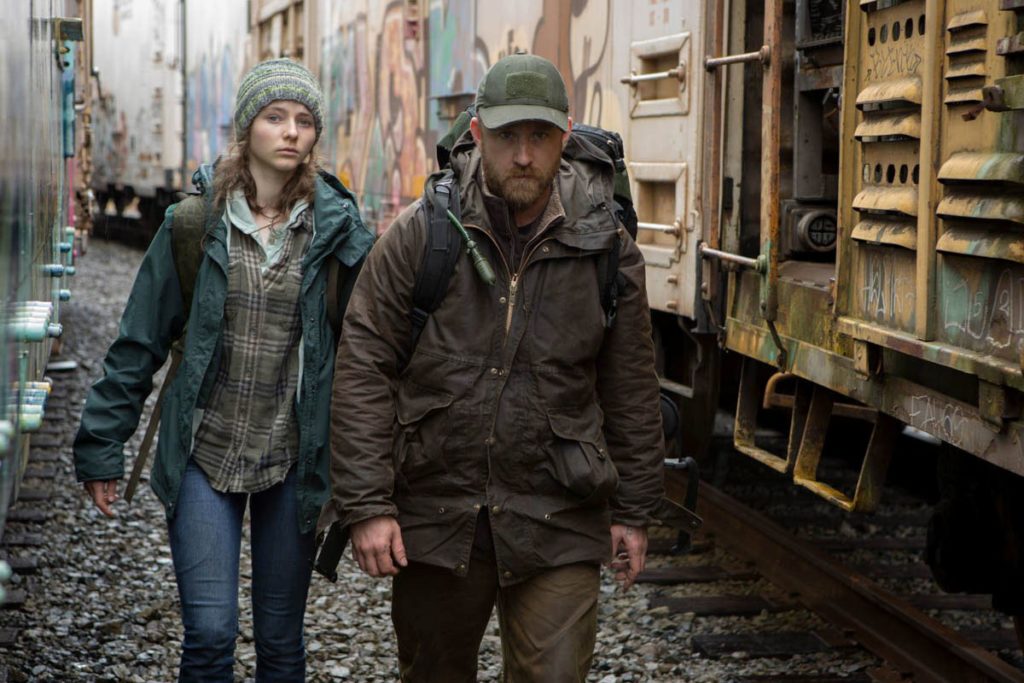
Elena is a superbly crafted film that vividly peeks into a dark, very dark contemporary Russia. Directed and co-written by Andre Zvyagintsev (The Return, Leviathan and Loveless), Elena is the triumph of drama over melodrama. There is an absolute minimum of on-screen action and no histrionics at all, yet the story simmers throughout. It’s on my list of Best Movies of 2012.
Zvyagintsev builds the story upon his characters. It is set in a tony apartment in a quiet upscale Moscow neighborhood, home of Vladimir and Elena. Vladimir is pushing 70 and rich. I doubt that any softies got rich in post-Soviet Russia, and Vladimir is a hard man, devoid of sentimentality except for his estranged daughter. Late in life, he has married the working class Elena, his one-time nurse, now in her 50s. They have a comfortable, frank, affectionate and practical relationship.
Both have adult children from previous marriages. Vladimir’s daughter Katerina has no use for her father, but he subsidizes her lifestyle of perpetual partying. Vladimir and Katerina finally share a moment, bonding over their shared cynicism.
Elena’s nogoodnik son Sergey lives in a hard scrabble suburb and embraces his chronic unemployment with alarming indolence. His equally lazy and selfish teenage son, having an indifferent high school career, is now facing the dreaded Army unless someone can bribe his way into a college.
Elena is desperate to rescue her grandson from his self-inflicted predicament, but only Vladimir’s money can help, and Vladimir despises Elena’s trashy and shiftless family. The movie is built on this conflict, and it is Elena’s story. As Elena, the actress Nadezhda Markina reveals Elena’s affection, desperation and determination with her eyes, face and movements. Perfectly framing Markina’s outstanding performance by isolating it, Zvyagintsev delivers the film in a series of long shots, with terse dialogue and a spare soundtrack. There is no expository dialogue explaining the plot or swelling music manipulating our reaction.
Elena is a dark movie that asks its audience to invest patience, thought and energy – so it’s not for everybody. Elena is also one of the year’s best films, and an extraordinary example of a very pure breed of filmmaking. Elena is available to be streamed from Amazon (free with Prime), iTunes and Google Play.
It’s time for one of the Bay Area’s top cinema events: the 39th annual San Francisco Jewish Film Festival(SFJFF), which opens this Thursday, July 18, and runs through August 4 at five locations throughout the Bay Area. As usual, the fest presents a broad range of feature films from 17 countries (but mostly from the US and Israel), plus 2 programs of short films (Jews in Shorts).
My top recommendation is Rob Garver’s What She Said: The Art of Pauline Kael, a remarkably thorough and insightful biodoc of the iconic film critic and her drive for relevance. It’s illustrated with clips of the movies that she loved and hated. I’ll publish my long form review when What She Said is released in the Bay Area.
Two more SFJFF entries about the movies are Curtiz, a narrative film about the prolific director Michael Curtiz and Carl Laemmle, a documentary about the pioneering movie impresario
SFJFF always presents an excellent slate of docs. This year’s batch includes Golda, with footage from Golda Meir’s last interview.
There are also comedies. The sibling roadtrip comedy Dancing Dogs of Dombrova looks promising. I’ve seen the comedy of manners How About Adolf? – a family provocateur trying to get under his brother-in-law’s skin unintentionally ignites an eruption of family resentments and revelations.
I haven’t seen it, but my favorite SFJFF title this year is the animated film Seder-Masochism.
One of the most appealing features of the SFJFF39 is that, wherever you live in the Bay Area, the fest comes to you. SFJFF39 will present films at the Castro in San Francisco, CIneArts in Palo Alto, the Albany Twin in Albany, the Rafael in San Rafael and the Piedmont in Oakland. You can peruse the entire program and buy tickets and passes at San Francisco Jewish Film Festival.
Jut for fun, here’s the delightful trailer from the 2016 version of SFJFF.
Wes Studi is getting an honorary Oscar, and I’m all for it. Slated for a Governors Award, Studi is being honored, along with David Lynch, Geena Davis and Lina Wertmuller by the Academy of Motion Picture Arts & Sciences.
Wes Studi has an uncommon gift of being compelling. I first noticed him in Dances with Wolves, but he’s compiled 97 screen credits from Geronimo: An American Legend to The New World to Heat to Avatar.
Undoubtedly, Studi’s greatest (and most searing) performance was as Magua in The Last of the Mohicans, a movie that he absolutely stole from the likes of Daniel Day-Lewis, Madeleine Stowe and Russell Means.
Studi, of Cherokee descent, is the first Native American actor to receive an Oscar.
Beanie Feldstein and Kaitlyn Dever as Amy in BOOKSMART. Photo credit: Francois Duhamel / Annapurna Pictures
The movie that I’m most eager to see is The Farewell; it’s out this weekend, but I’m in an undisclosed location with The Wife – there are Brown Trout but no movie theaters.
The Last Black Man in San Francisco is an absorbing exploration of inner lives reacting to a changing city – and it’s one of the best films of the year.
The wildly successful comedy Booksmart is an entirely fresh take on the coming of age film, and a high school graduation party romp like you’ve never seen. Directed and written by women, BTW.
Mindy Kaling’s very smart, privilege-skewering comedy Late Night stars Emma Thompson (and contains a performance gem by John Lithgow).
So you think you know what you’re going to get from a movie titled Rolling Thunder Revue: A Bob Dylan Story by Martin Scorsese. It is indeed a documentary of a concert tour, but Scorsese adds some fictional flourish, as befits Dylan’s longtime trickster persona.
ON VIDEO
THE GREAT BEAUTY
It’s time for foreign travel, so my Stream of the Week is The Great Beauty, with its stunning imagery, introspection, social criticism, sexual decadence, fine performances, humor and a Rome travelogue – each by itself worth watching the film. The Great Beauty won the Best Foreign Language Oscar and can be streamed from Amazon, iTunes, Vudu, YouTube and Google Play.
ON TV
On July 15, Turner Classic Movies will play the 1957 classic Western 3:10 to Yuma. This may the career-best performance by the underrated Van Heflin, who plays a financially ruined rancher who bets his life for a chance to support his family. All he has to do is to guard a cruel and resourceful outlaw (Glenn Ford) against rescue attempts by his gang. Heflin’s rancher is totally outmatched and his only chance comes from his desperation-fueled adrenaline. It’s an edge-of-your-seat countdown until help is scheduled to arrive. The 2007 remake with Christian Bale and Russell Crowe is very good, too, but Van Heflin reigns supreme.
AsThe Great Beauty (La grande belleza) begins, its protagonist Gep Gambardella is celebrating his 65th birthday in a feverishly hedonistic party. Gep authored a successful novel in his twenties, which has since allowed him the indulgent life of a celebrity journalist, bobbing from party to party among Rome’s shallow rich. Gep is having a helluva time, but now he reflects on the emptiness of his milieu and the superficial accomplishments of his past 40 years. As he alternates introspection and indulgence, we follow him through a series of strikingly beautiful Roman settings. (And, because Gep parties all night, we see lots of gorgeously still Roman dawns.)
The Great Beauty is foremost an extraordinarily beautiful art film. If you’ve been to Rome, you know that it is a generally chaotic city with unexpected islands of solitude. The Great Beauty captures this aspect of the Eternal City better than any other film I’ve seen. On one level, The Great Beauty is very successful Rome porn.
Writer-director Paolo Sorrentino also explores the moral vacuity of the very rich and the party life. It’s the Italy of Silvio Berlusconi, whom Sorrentino blames for enabling a national culture of escapism. These themes, along with the main character and the movie’s structure are of course nearly identical to Fellini’s great La Dolce Vita (1960), but The Great Beauty is more accessible, funnier and a bit more hopeful – and much more of a showcase for the cityscape of Rome. Sorrentino provides plenty of laughs, especially with a gourmet-obsessed cardinal and a cadaverous celebrity nun with a Mephistopheles-looking handler.
It’s hard to imagine an actor better suited to play Gep than Toni Servillo. Servillo perfectly captures both the happiness Gep takes in carnal pleasure and his self-criticism for giving his entire life to it. Servillo’s Gep is brazenly proud of his own cynicism, until we see his humanity breaking through at a funeral. Servillo is even magnificent in wearing Gep’s impressive collection of sports jackets.
There’s so much to The Great Beauty – stunning imagery, introspection, social criticism, sexual decadence, fine performances, humor and a Rome travelogue – each by itself worthwatching the film. The Great Beauty won the Best Foreign Language Oscar and can be streamed from Amazon, iTunes, Vudu, YouTube and Google Play.
The Last Black Man in San Francisco is an absorbing exploration of inner lives reacting to a changing city – and it’s one of the best films of the year.
The wildly successful comedy Booksmart is an entirely fresh take on the coming of age film, and a high school graduation party romp like you’ve never seen. Directed and written by women, BTW.
Mindy Kaling’s very smart, privilege-skewering comedy Late Night stars Emma Thompson (and contains a performance gem by John Lithgow).
So you think you know what you’re going to get from a movie titled Rolling Thunder Revue: A Bob Dylan Story by Martin Scorsese. It is indeed a documentary of a concert tour, but Scorsese adds some fictional flourish, as befits Dylan’s longtime trickster persona.
The documentary Framing John DeLorean is an incomplete retelling of this modern Icarus fable. If you already know the basics of the DeLorean story, I’d recommend this Car and Driverarticle instead. Framing John DeLorean is available to stream from Amazon, iTunes, Vudu, YouTube and Google Play.
ON VIDEO
My stream of the week, the documentary Project Nim,is the extraordinary story of a chimpanzee that was taught a human language – American Sign Language – by some far less reliable humans. Project Nim can be streamed from Amazon, iTunes, Vudu, YouTube and Google Play.
ON TV
On July 8, Turner Classic Movies is airing the always entertaining 1946 film noir Gilda. Glenn Ford plays a shady gambler who shows up in exotic Buenos Aires, where he lucks into a job with a casino operator; turns out that his new boss has a gorgeous young wife (Rita Hayworth). The Ford and Hayworth characters shared a past relationship that ended ugly. There are plot twists aplenty, including a faked death, former Nazis running a tungsten cartel, and a love affair that is on-again, off-again and on-again. Glenn Ford’s character spins like a top through sap-hero-jerk-hero. The wonderful actor Joseph Calleia comes brooding through the story. Gilda is almost worthwhile just for the dramatic cinematography of Rudolph Maté (D.O.A.) and for Hayworth’s stunning wardrobe.
In Mindy Kaling’s very smart comedy Late Night, Emma Thompson plays Katherine Newberry, the host of late night television talk show that has become, along with Katherine herself, an institution; the problem is that institutions tend to get stale, and networks eventually dump stale shows.
A woman in an almost all-male niche, Katherine has achieved by being brusque and exacting (and Emma Thompson nails the part). But is she still genuine? And is she still even trying? Katherine brings the inexperienced striver Molly Patel (Kaling) into her writers’ room as a diversity hire – and Molly can tell her the truths that others fear to tell Katherine.
Late Night skewers male privilege and affluent class privilege, and takes on slut shaming, too. Kaling has spent time as the only woman or only POC in writers’ rooms, and she clearly knows of what she writes. Kaling doesn’t pull any punches, but the wit makes it an easy, and perhaps instructive, watch for any audience.
It’s also worth watching Late Night for a secondary thread – the relationship between Katherine and her husband (John Lithgow). It’s such an authentic portrayal of a longtime partnership, based on affection and trust – the only venue in which Katherine allows herself to be vulnerable. Lithgow’s performance is powerful and heartbreaking.
The best joke involves Katherine Newberry coining the word, “catharticissistic”, a witticism that convulsed The Wife, but totally escaped the Millennial woman seated next to her.
Amy Ryan plays the network CEO, and at first we think it’s going to be a stereotypical the-suits-trample-the-creatives character. But Ryan’s CEO is the age and gender peer who calls Katherine on her shit. Ryan’s performance sparkles.
Ike Barinholz is ickily superb as the shallow, gross-out comic pegged to replace Katherine. Denis O’Hare is also excellent as Katherine’s loyal but enabling producer.
I haven’t been a big fan of Kaling’s performances, but Late Night is her triumph as a writer. This is a comedy with laughs and social criticism. And the supporting turns by John Lithgow and Amy Ryan are special,
Jonathan Majors and Jimmie Fails in THE LAST BLACK MAN IN SAN FRANCISCO. Photo: Peter Prato/A24
The Last Black Man in San Francisco is an absorbing exploration of the inner lives of two friends as they react to their changing city – and it’s one of the best films of the year.
Jimmie Fails (played by the film’s co-writer Jimmie Fails) shares a cramped room with his best friend Mont (Jonathan Majors) in Mont’s grandfather’s tiny bungalow in San Francisco’s downscale Bayview-Hunter’s Point. Both have low-skill, low-wage jobs and live to explore San Francisco together, Jimmie on his beloved skateboard and Mont more ecumenical in mode of transportation. Mont is writing a play.
Jimmie worships his childhood home, a Victorian that his grandfather settled in the postwar 1940s, when the Fillmore District was a vibrant black working class neighborhood and a national jazz mecca. The neighborhood has changed since Jimmie’s parents lost the home decades ago, and the current white middle class owners can’t keep up the property to Jimmie’s standards. Understandably, they don’t appreciate Jimmie’s guerilla painting and gardening at their house. When the owners are also forced out, Jimmie moves into the vacant house; of course, he has no legal right to the house and he can’t afford even a fraction of its $4 million price tag.
Is Jimmy living a fantasy? Or living a lie? Is he clinging to a city that no longer exists? Can he demand a place in the new version of San Francisco?
Here’s what sets The Last Black Man in San Francisco apart. That which is imagined (Jimmy’s “ownership” of the house and Mont’s play) is depicted with stark reality. That which is real (both the harshly sobering and the pedestrian) is often dreamlike. The effect of The Last Black Man in San Francisco is that of watching someone’s dream. Of course, much about San Francisco is surreal.
Director and co-writer Joe Talbot, only 28 years old, is clearly a major talent. Effective use of the musical montage is rare these days, but his montage to San Francisco (Be Sure to Wear Flowers in Your Hair) is spell-binding and provocative. In this Rolling Stone interview, Talbot discusses his lifelong friendship with Fails and the genesis of the film.
This is a love letter to San Francisco – but a clear-eyed one. San Francisco’s beauty and quirks are celebrated; our heroes skateboard down the hills before a backdrop of architectural charm and famous vistas. But the beautiful interior woodwork of the Fillmore Victorian is juxtaposed against the barren and toxic waterfront of Bayview-Hunters Point. Many movies are set in San Francisco – this is the one that best captures the current 2019 evolution, with its demographic and economic changes and their societal and cultural costs. Bay Area residents will especially enjoy inside references like the Segway tours for tourists (with the guide impeccably played by Jello Biafra).
Since the Gold Rush, San Francisco’s cultural ethos has been to be supremely tolerant of eccentricities, even to a to a fault. It has proudly stood as a welcoming refuge for individuals to express their non-mainstream lifestyles and as a muse to creatives, homegrown and otherwise. Now the city has been made ideal for a culturally mainstream young business class and tourists. The working class – white, Latino and especially African-American – has been priced out.
The social criticism is often pointed. There’s the character of Clayton, a native San Franciscan who is embracing and profiting from gentrification; he’s a St. Ignatius grad of Irish stock with slick charm and slicker hair – check out his surname. And there’s a gang of drunken tech bros on a faux cable car party bus; they expose their invaders’ vulture culture by their reaction to a Naked Guy.
Jimmie Fails, who has the advantage of essentially playing himself, is so good that it’s surprising that he’s a first-time actor. It’s Fails’ inventive writing, however, that is even more impressive.
Jonathan Majors is a promising discovery. Mont toggles between being the sensible one who tempers Jimmy’s house-related compulsions to caring deeply, perhaps over-caring. Majors’ Mont is an uncommon man, and we’re never quite sure if his passions are entirely healthy. Majors studied at Yale Drama and will play Bobby Seale in Aaron Sorkin’s upcoming Trial of the Chicago 7.
There’s a Greek Chorus of street guys in Bayview-Hunters Point who spend their time insulting each other and passersby. These guys are like buoys – anchored to the ocean floor but powerless to affect anything on the ocean surface. Mont later describes one of the chorus, Kofi, as having been “born into a box”, living a life without viable choices.
Once, Mont “directs” the street guys as if they performing a play. A hostile situation is defused by their bewilderment; the play, of course, is in Mont’s head.
The Greek Chorus is played by non-actors. Danny Glover is superb as Mont’s blind grandfather. Rob Morgan soars as Jimmie’s simmering dad.
The Last Black Man in San Francisco is a startlingly original Must See.
The documentary Project Nim tells the extraordinary story of a chimpanzee that was taught a human language – American Sign Language. In a remarkable and compelling journey, the chimp Nim is first placed as a baby with a human hippie family and then at a university-owned country estate and at college laboratories. Amazingly, he learns to use an ASL vocabulary – not just responding to commands, but initiating communication and forming sentences. Then, the experiment ends, and he is off to an assortment of post-placements, some terrifying.
Along the way, we hear from the motley assortment of humans involved in his raising, his exploitation and his care. One human who enters the story as a grad student, Bob Ingersoll, emerges as the hero of the story. It’s the story of a chimp, but we learn more about the foibles of humans.
Acclaimed documentarian James Marsh (Man on Wire) delivers another great story – one of the 2011’s best documentaries. Project Nim can be streamed from Amazon, iTunes, Vudu, YouTube and Google Play.
The Last Black Man in San Francisco is an absorbing exploration of inner lives reacting to a changing city – and it’s one of the best films of the year.
The wildly successful comedy Booksmart is an entirely fresh take on the coming of age film, and a high school graduation party romp like you’ve never seen. Directed and written by women, BTW.
Rocketman is more of a jukebox musical than a film biography, but it’s wonderfully entertaining.
So you think you know what you’re going to get from a movie titled Rolling Thunder Revue: A Bob Dylan Story by Martin Scorsese. It is indeed a documentary of a concert tour, but Scorsese adds some fictional flourish, as befits Dylan’s longtime trickster persona.
Charlize Theron and Seth Rogen are pleasantly entertaining in the improbable Beauty-and-the-Beast romantic comedy Long Shot.
The documentary Framing John DeLorean is an incomplete retelling of this modern Icarus fable. If you already know the basics of the DeLorean story, I’d recommend this Car and Driverarticle instead. Framing John DeLorean is available to stream from Amazon, iTunes, Vudu, YouTube and Google Play.
ON VIDEO
For the second straight week, I have the perfect film to kick off the summer – the marvelously entertaining dark comic thriller Headhunters. You can stream Headhunters on Amazon, iTunes, Vudu, YouTube or Google Play.
ON TV
On July 2, Turner Classic Movies is presenting Chandler, the 1971 neo-noir starring Warren Oates as a seedy private detective who gets in over his head. I mention, but don’t dwell on Chandler in my essay Warren Oates: a gift for desperation. Look for film noir icons Charles McGraw and Gloria Grahame in supporting roles.
And on July 3, TCM airs Laura, perhaps my favorite thriller from the noir era, with an unforgettable performance by Clifton Webb as a megalomaniac with one vulnerability – the dazzling beauty of Gene Tierney. The musical theme is unforgettable, too.