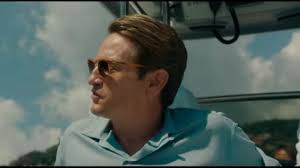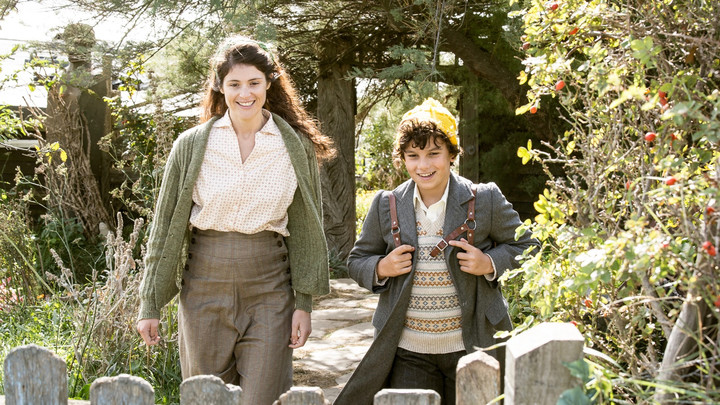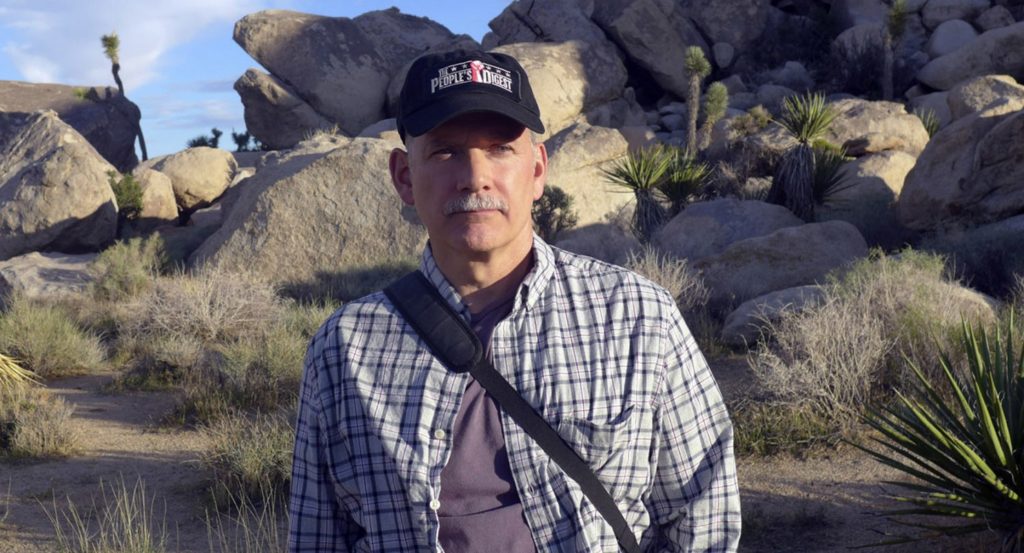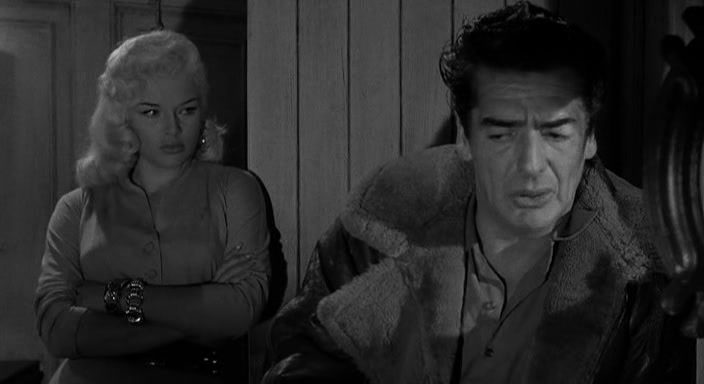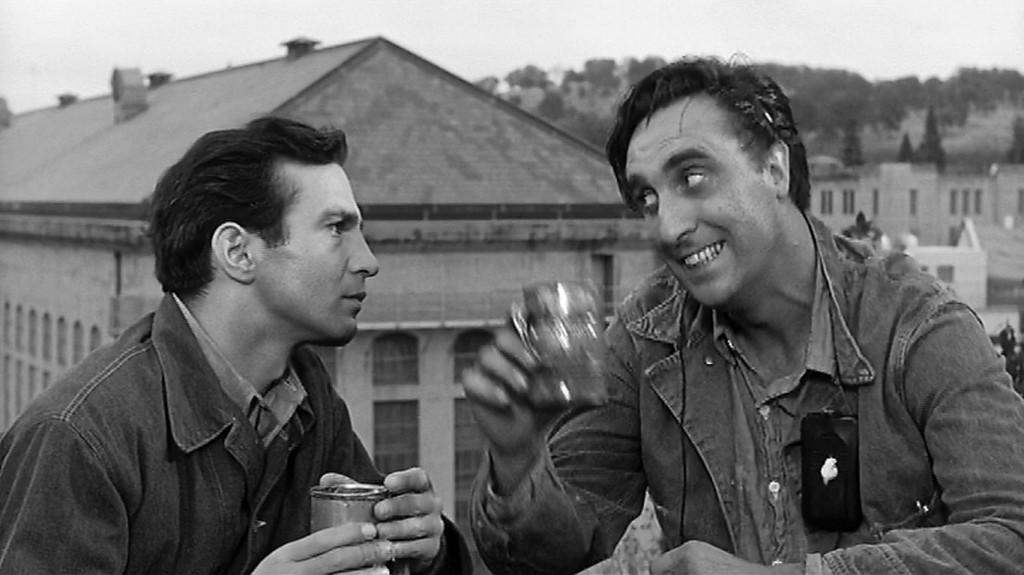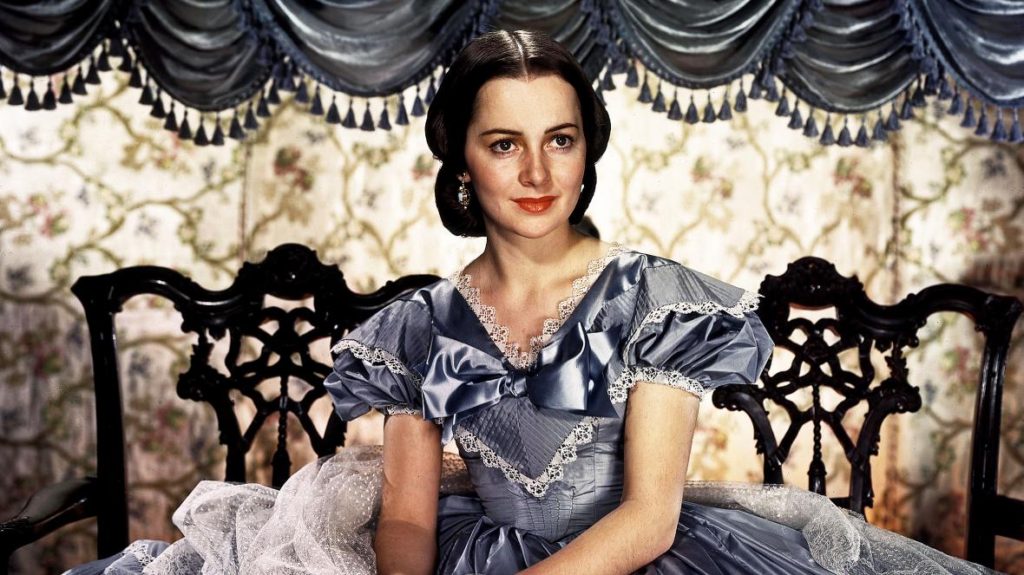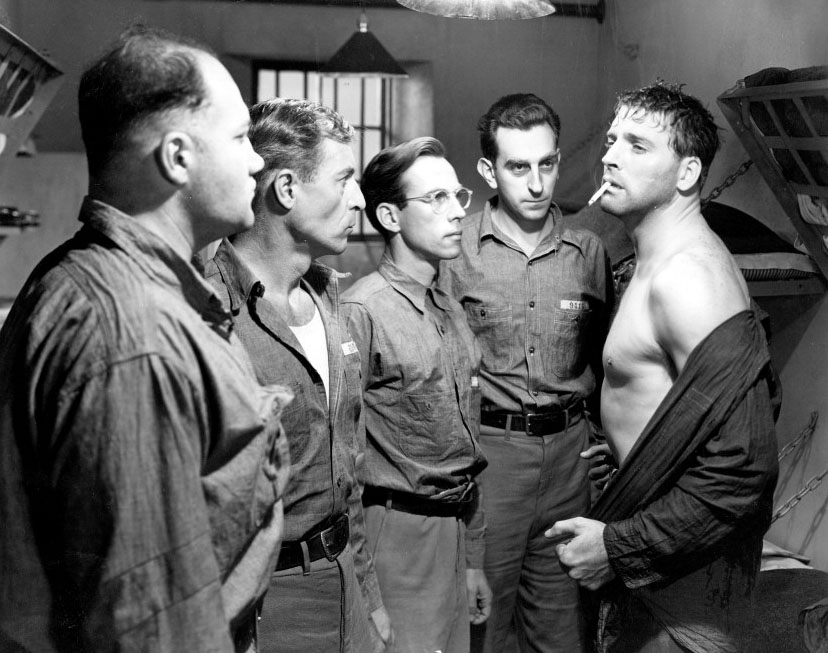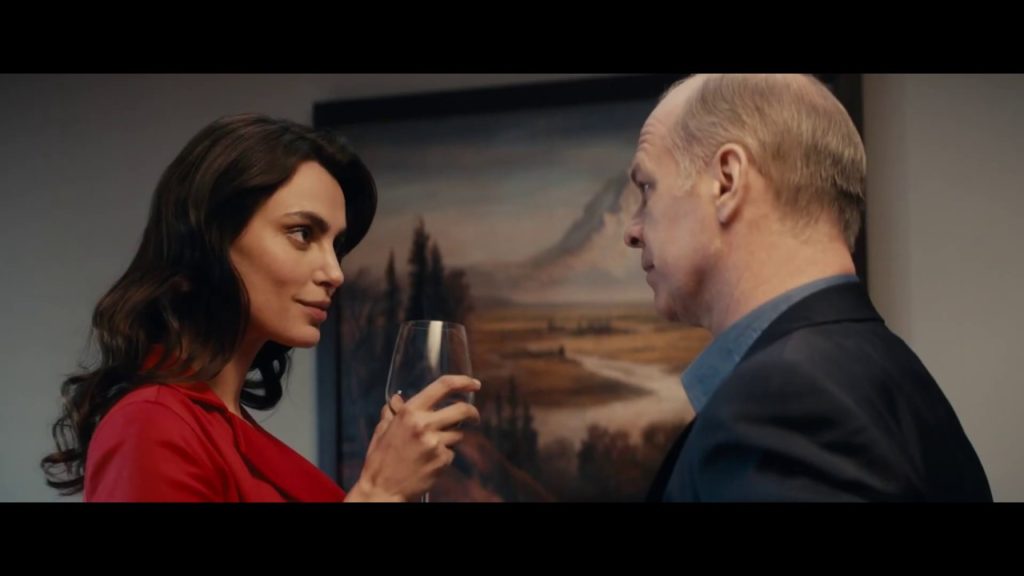
CAPITAL IN THE TWENTY-FIRST CENTURY. Courtesy of Kino Lorber.
Documentarian Justin Pemberton brings alive Thomas Piketty’s bestselling Capital in the Twenty-First Century, a critique of the concentration of wealth. There’s no more fundamentally important political topic than inequality, and this theme has resonated through the best of recent cinema, including Parasite and Knives Out.
Pinketty traces the economics of wealth from feudal times to the present, and Pemberton keeps all the economic history lively with plenty of eye candy. Capital in the Twenty-First Century covers a lot of ground – globalization and movable capital, deregulation and privatization, defanging of organized labor, China state capital, and the impact on today’s youngest generations.
Piketty’s proffered solutions are simple and intellectually sound (stopping off-shore tax dodges, taxing inheritance, incentivizing wealth to be invested in productive risk instead of moving around a closed-loop of financial instruments). But, given the political power of great wealth, this is a very heavy political lift.
CAPITAL IN THE TWENTY-FIRST CENTURY. Courtesy of Kino Lorber.
Capital in the Twenty-First Century pops along fairly briskly, but, as an entertaining popularizer, it’s no The Big Short or An Inconvenient Truth. Still, about an hour in, there’s a jaw-dropping psych experiment in which people benefiting from pure luck believe and act as though they are entitled.
During its Bay Area virtual run at the Roxie, you can stream Capital in the Twenty-First Century at Roxie Virtual Cinema, or at distributoe Kino Lorber’s new virtual platform Kino Marquee.
This week, The Movie Gourmet adds more three overlooked gems to watch at home: a real life survival story, an irresistible glimpse into The New Yorker cartoons and a forgotten anti-war classic.
ON VIDEO
The compelling The Deep tells the fact-based survival story of a shipwrecked Icelandic fisherman’s ordeal in frigid waters. You can stream The Deep on Amazon, Vudu, YouTube and Google Play.
If you’re like me and you worship the cartoons in The New Yorker, then the documentaryVery Semi-Serious is a Must See. You can stream it from Amazon (free with Prime), iTunes, YouTube and Google Play.
In the absorbing crime thriller The Whistlers, a shady cop and a mysterious woman are walking a tightrope of treachery. The Whistlers was a hit at last year’s Cannes Film Festival, but COVID-19 impaired its 2020 theatrical release in the US. You can stream it from Amazon, Vudu, YouTube and Google Play.
On May 3, Turner Classic Movies will present an overlooked masterwork. Set in England just before the D-Day invasion, The Americanization of Emily (1964) is a biting satire and one of the great anti-war movies. James Garner plays an admiral’s staff officer charged with locating luxury goods and willing Englishwomen for the brass. Julie Andrews plays an English driver who has lost her husband and other male family members in the War. She resists emotional entanglements with other servicemen whose lives may be put at risk, but falls for Garner’s “practicing coward”, a man who is under no illusions about the glory of war and is determined to stay as far from combat as possible.
Unfortunately, Garner’s boss (Melvyn Douglas) has fits of derangement and becomes obsessed with the hope that the first American killed on the beach at D-Day be from the Navy. Accordingly, he orders Garner to lead a suicide mission to land ahead of the D-Day landing, ostensibly to film it. Fellow officer James Coburn must guarantee Garner’s martyrdom.
It’s a brilliant screenplay from Paddy Chayefsky, who won screenwriting Oscars for Marty, The Hospital and Network. Today, Americanization holds up as least as well as its contemporary Dr. Strangelove and much better than Failsafe. Reportedly, both Andrews and Garner have tagged this as their favorite film.
One of the “Three Nameless Broads” bedded by the Coburn character is played by Judy Carne, later of Rowan and Martin’s Laugh-In.
Jule Andrews and James Garner in THE AMERICANIZATION OF EMILY
The compelling The Deep tells the fact-based survival story of a shipwrecked Icelandic fisherman’s ordeal in frigid waters. Amazingly, all of the footage was shot in the ocean (no tanks) without stunt professionals. The lead actor Ólafur Darri Ólafsson makes the protagonist endearing, and he must be a hell of a good sport to spend all that time in icy water.
Writer-director Baltasar Kormákur made the unconventional and successful choice not to end the movie with a climactic rescue, but to instead explore the impact of the incident and the attempts to explain how it was possible.
Kormákur also wrote and directed a very different and even better 2006 film, the very dark neo-noir police procedural Jar City, available on DVD and streaming.
I saw The Deep at the 2013 Cinequest. You can stream The Deep on Amazon, Vudu, YouTube and Google Play.
If you’re like me and you worship the cartoons in The New Yorker, then the documentary Very Semi-Serious is a Must See. Very Semi-Serious takes us inside The New Yorker for a glimpse inside the process of creating and selecting the cartoons, chiefly from the perspective of cartoonist and twenty-year New Yorker Cartoon Editor Bob Mankoff. You will know Mankoff from his cartoon with the caption, “How about never? Is never good for you?”. (Mankoff has since left The New Yorker for Esquire and the website Cartoon Collections.)
We also meet rock star cartoonists that include Roz Chast and George Booth, along with The New Yorker Editor David Remnick and some aspiring cartoonist newcomers. We are boggled by the tens of cartoons each cartoonist pitches each week and the hundreds that the Cartoon Editor must review. Rejection is a major part of the cartoon life.
We also learn how Mankoff scientifically studies the eye movements of readers to see how/when/if we “get” the jokes. And we get to laugh again at HUNDREDS of cartoons.
I saw Very Semi-Serious at the 2015 San Francisco International Film Festival (SFFILM), and now you can stream it from Amazon (free with Prime), iTunes, YouTube and Google Play.
We’re still watching our movies at home, so here are plenty of choices. Of the recently released, I am still recommending The Whistlers.
I also wrote about The Dark Horse, an extremely cynical and hilarious comment on American politics from 88 yer ago (and still timely), If you missed it yesterday on TCM, at least watch the clip in my post.
ON VIDEO
In the absorbing crime thriller The Whistlers, a shady cop and a mysterious woman are walking a tightrope of treachery. The Whistlers, was a hit at last year’s Cannes Film Festival, but COVID-19 impaired its 2020 theatrical release in the US. You can stream it from Amazon, Vudu, YouTube and Google Play.
And here’s one that I KNOW you haven’t seen – the droll comedy Radio Dreams. This indie set in the Bay Area explores the ambivalence of the immigrant experience through the portrait of a flamboyant misfit, a man who rides the roller coaster of megalomania and despair. Radio Dreams is available to stream from Amazon, iTunes and kanopy.
On April 29, Turner Classic Movies airs The Unknown, a Lon Chaney silent, and I think that Chaney’s charisma is worth sampling. And as a fun experience, not a “this is good for you” experience.
REMEMBRANCE
The actor Brian Dennehy stood a bear-like 6’3”and could have filled his career by playing menacing heavies (and he had his share of those). But Dennehy had uncommon range, as evidenced by his most well-remembered roles – Rambo’s nemesis in First Blood and the alien in Cocoon. My favorite Dennehy movie roles were the crooked sheriff in Silverado and Harrison Ford’s morally complicated boss in Presumed Innocent. Dennehy was even a bigger star on stage – he won Tony Awards for his Willy Loman in Death of a Salesman and his James in Long Day’s Journey into Night (the role Ralph Richardson played in the movie).
The droll dark comedy Radio Dreams explores the ambivalence of the immigrant experience through the portrait of a flamboyant misfit, a man who rides the roller coaster of megalomania and despair. That misfit is Hamid Royani (Mohsen Namjoo), the director of programming at an Iranian radio station in the San Francisco Bay Area.
Hamid, an author in Iran, is a man of great certainty, with an unwavering sense of intellectual superiority He assumes that everyone should – and will – buy in to his idiosyncratic taste. This results in extremely random radio programming, and Hamid tries to sabotage everything that he finds vulgar (which is everything that might bring more listeners and revenue to the station.)
With his wild mane and indulgent programming, we first think that Hamid is simply batty. But immigrants to the US generally forge new identities, and we come to understand that Hamid has not, perhaps will not, forge that new identity. His despair is real but it’s hard to empathize with – he might be a legitimate literary figure in Iran, but he’s probably a pompous ass over there, too.
The highlight of Radio Dreams is Hamid’s reaction when he is surprised that Miss Iran USA, whom he has dismissed as a bimbo, might have literary chops that rivaling his.
Hamid has concocted a plan to have Afghanistan’s first rock band visit with the members of Metallica on air, and that’s the movie’s MacGuffin. As we wait to see if Metallica will really show up, the foibles of the radio station crew dot Radio Dreams with moments of absurdity. There are the cheesy commercials about unwanted body hair, Hamid’s obsession with hand sanitizer, a radio jungle played live on keyboards EVERY time, a new employee orientation that focuses on international time zones, along with a station intern compelled to take wrestling lessons.
Writer-director Babak Jalali is an adept storyteller. As the movie
opens, we are wondering, why do these guys have musical instruments? Why
are they talking about Metallica? What’s with the ON AIR sign? Much of
the movie unfolds before Hamid Royani emerges as the centerpiece
character.
Hamid is played by the well-known Iranian singer-songwriter Mohsen Namjoo, “Iran’s Bob Dylan”. This is only Namjoo’s second feature film as an actor. He’s a compelling figure, and this is a very fine performance.
Except for Namjoo, the cast is made up of Bay Area actors. Masters of the implacable and the stone face, all of the actors do deadpan really, really well.
As befits the mix of reality and absurdism, here’s a podcast by the characters in Radio Dreams. I saw Radio Dreams at the Cinema Club Silicon Valley, and Babak Jalali took Q&A after the screening by phone from Belgium. Radio Dreams is available to stream from Amazon, iTunes and kanopy.
On April 23, Turner Classic Movies plays the great political comedy The Dark Horse (1932). If you think that political handlers, dumb candidates, spin and sex scandals are creations of contemporary politics, you need to see this gem from 88 years ago. A political party resolves its convention stalemate by nominating an obscure party regular (the gleefully dim Guy Kibbee) as its gubernatorial candidate. It happens that the dark horse is not merely a cipher, but is a vacuous buffoon who is challenged by the task of removing his own shoes. His own campaign manager describes him thus:
He’s the dumbest human being I ever saw. Every time he opens his mouth he subtracts from the sum total of human knowledge.
That equally ruthless and amoral campaign manager, brilliantly played by Warren William (the “King of Pre-Code”), presages modern political handlers with his skill, cynicism and shameless insincerity. He teaches his dimwitted candidate to answer every question with “Yes…and, then again, no.” William’s campaign manager is such a scoundrel that he must first get sprung from jail (by Bette Davis in one of her very first movie roles). There’s spin, staged photo opportunities and even crisis management, when the candidate is about to blunder into a potentially campaign killer of a sex scandal. And it’s still very, very funny today.
Yet more movies to watch at home, still topped by the excellent crime thriller The Whistlers.
ON VIDEO
In the absorbing crime thriller The Whistlers, a shady cop and a mysterious woman are walking a tightrope of treachery. The Whistlers was a hit at last year’s Cannes Film Festival, but COVID-19 impaired its 2020 theatrical release in the US. You can stream it from Amazon, Vudu, YouTube and Google Play.
Because the San Francisco International Film Festival (SFFILM) was supposed to be underway now (it’s been cancelled for the COVID-19 emergency), here’s a film from SFFILM’s 2017 program: The Lost City of Z revives the genre of the historical adventure epic, with all the spectacle of a swashbuckler, while braiding in modern sensitivities and a psychological portrait. This is a beautiful and thoughtful film. The Lost City of Z is available on DVD from Netflix and Redbox and to stream from Amazon, iTunes, Vudu, YouTube and Google Play.
Burt Lancaster and Kirk Douglas in Seven Days in May
“I’m suggesting Mr President, there’s a military plot to take over the Government of these United States, next Sunday…”
John Frankenheimer (The Manchurian Candidate) is a master of the thriller, and his 1964 Seven Days in May is a masterpiece of the paranoid political thriller subgenre. Edmond O’Brien’s performance is best among outstanding turns by Kirk Douglas, Burt Lancaster, Frederic March and Whit Bissell. Douglas showed his range by playing a profoundly decent man, for whom “patriotic” meant “devoted, dutiful and loyal to the nation’s principles”, not “jingoistic”. April 23 on Turner Classic Movie.
Charlie Hunnam in THE LOST CITY OF Z
photo courtesy of SFFILM
Because the San Francisco International Film Festival (SFFILM) was supposed to be underway now (it’s been cancelled for the COVID-19 emergency), here’s a film from SFFILM’s 2017 program. In auteur James Gray’s sweeping turn of the 20th Century epic The Lost City of Z, a stiff-upper-lip type British military officer becomes the first European to probe into the deepest heart of unmapped Amazonia. Finding his way through the lush jungles, braving encounters with sometimes cannibalistic indigenous warriors, he becomes obsessed with finding the lost city of an ancient civilization. I know this sounds like Indiana Jones, but it’s based on the real life of Percy Fawcett as chronicled in the recent book Lost City of Z by David Grann.
The Lost City of Z begins with an Edwardian stag hunt
through the verdant Irish countryside, complete with horses spilling
riders. This scene is gorgeous, but its point is to introduce the young
British military officer Percy Fawcett (Charlie Hunnam) as a man of
unusual resourcefulness, talent and, above all, drive. Despite his
abilities, he has been chaffing at the unattractive assignments that
have precluded his career advancement. In the snobby Edwardian military,
he has been in disfavor because his dissolute father had stained the
family name. One of Fawcett’s commanders says, “He’s been rather
unfortunate in his choice of ancestors”.
That yearning to earn the recognition that he believes he merits –
and to attain the accomplishments of a Great Man – is the core of this
character-driven movie. Fawcett resists yet another assignment away from
the career-making action, a mapping expedition designed to have a minor
diplomatic payoff. But it takes him on a spectacular Amazon exploration
that brings him celebrity – and backing for more high-profile
expeditions. Fawcett was surfing the zeitgeist in the age of his
contemporaries Roald Amundsen (South Pole), Robert Peary (North Pole)
and Howard Carter (King Tut).
In that first expedition, Fawcett becomes convinced that he can find the magnificent city of a lost civilization deep in the Amazon, a city he calls Z (which is pronounced as the British “Zed”). The Lost City of Z takes us through two more Amazonian expeditions, sandwiched around Fawcett’s WW I service in the hellish Battle of the Somme. That final expedition ends mysteriously – and not well.
No one knows for sure what happened to Fawcett. In The Lost City of Z,
Gray leads us toward the most likely conclusion, the one embraced by
Grann’s book. If you’re interested in the decades of speculation about
Fawcett’s fate, there’s a good outline on Percy Fawcett’s Wikipedia page.
Fawcett comes with his own Victorian upper class prejudices, but he
has the capacity to set those aside for a post-Darwin open-mindedness.
Gray made it a point that the indigenous peoples in the movie are
independent of Fawcett; Gray shows them living their lives in a world
that Fawcett has found, not just advancing the plot points in Fawcett’s
quest. Four real tribes – and their cultures – are shown in the film.
As Percy Fawcett, with his oft-manic obsession and fame-seeking that
color his scientific curiosity and his old-fashioned Dudley Do-Right
values, Charlie Hunnam gives a tremendous, perhaps carer breakthrough,
performance. He’s been a promising actor in Sons of Anarchy and the overlooked thriller Deadfall) (and such a good actor that I never dreamed that he’s really British). Hunnam will next star as the title character in the King Arthur movie franchise.
Robert Pattinson is unexpectedly perfect as Fawcett’s travel buddy Henry Costin. With his Twilight dreaminess hidden behind a Smith Brothers beard, Pattinson projects a lean manliness. It’s probably his best performance.
Sienna Miller shines as Fawcett’s proto-feminist wife Nina. I first
noticed Miller (and Daniel Craig) in the underrated neo-noir thriller
2004 Layer Cake. Now Miller is still only 35 years old and has delivered other fine recent performances in Foxcatcher, American Sniper and (in an especially delicious role) High-Rise.
Director James Gray (The Yard, Two Lovers, The Immigrant) is
a favorite of cinephiles and of other filmmakers, but regular audiences
don’t turn out for his movies. That may change with The Lost City of Z,
a remarkably beautiful film that Gray shot, bucking the trend to
digital, in 35 mm. The jungle scenes were filmed in a national park in
Columbia. The cinemeatographer is the Oscar-nominated Darius Khondji.
Khondji shot The Immigrant for Gray and has been the DP of choice for David Fincher (Se7en) Alan Parker (Evita), Michael Haneke (Amour), and Woody Allen (Midnight in Paris).
Along with the stag hunt and the voyages up and down the jungle rivers,
there is also a breathtakingly beautiful ballroom scene and a gaspingly
surreal nighttime discovery of a rubber plantation’s opera house deep
in the jungle.
There have been other Lost Expedition movies, most famously Werner Herzog’s Aquirre, the Wrath of God and Fitzcarraldo. The Lost City of Z
shares an obsession, a quest and a mysterious tragic end with those
films, but it stands apart with its exploration of the motivation of a
real life character and the authenticity of Gray’s depiction of the
indigenous people.
Movie studios used to make an entire genre of very fun movies from Gunga Din and The Four Feathers through Lawrence of Arabia and Zulu
that featured white Europeans getting their thrills in exotic third
world playgrounds. We often cringe at the racist premises and the
treatment of “the natives” those movies today. Since the 1960s, the best
examples of the genre, like Raiders of the Lost Ark, have had an ironic tinge. With The Lost City of Z, James Gray loses both the racism and the irony, and brings us brings a straight-ahead exploration tale.
The Lost City of Z revives the genre of the historical
adventure epic, with all the spectacle of a swashbuckler, while braiding
in modern sensitivities and a psychological portrait. This is a
beautiful and thoughtful film. The Lost City of Z is available on DVD from Netflix and Redbox and to stream from Amazon, iTunes, Vudu, YouTube and Google Play.
Also see my notes from the director James Gray’s Q & A at the San Francisco International Film Festival. [And here are some completely random tidbits. There’s a cameo by Spaghetti Western star Franco Nero. And the closing credits recognize the “data wrangler”.]
More movies to watch at home: I’ve amped up my streaming recommendations as we shelter in place. And we start with a new film, The Whistlers.
ON VIDEO
In the absorbing crime thriller The Whistlers, a shady cop and a mysterious woman are walking a tightrope of treachery. The Whistlers, was a hit at last year’s Cannes Film Festival, but COVID-19 impaired its 2020 theatrical release in the US. You can stream it from Amazon, Vudu, YouTube and Google Play.
My tribute to the San Francisco International Film Festival (SFFILM), which would have been underway but for COVID-19, is Rojo. Set just before Argentina’s bloody coup in the 1970s, this moody, atmospheric film works as a slow-burn thriller. Rojo made my list of 10 Overlooked Movies of 2019. Stream it from Amazon, iTunes and Vudu.
Be Natural: The Untold Story of Alice Guy-Blache is a biodoc of a female cinema pioneer – one of the first directors, producers and studio heads – in both France and the US. You don’t know the whole story of the beginnings of cinema if you don’t know about Alice Guy. It’s currently free on WATCH TCM and can be streamed from Amazon, iTunes, Vudu, YouTube and Google Play. You can watch Guy’s comic 1906 critique of male behavior, The Consequences of Feminism, on my blog post.
Evelyn Keyes in THE KILLER THAT STALKED NEW YORK
And is it too soon for Pandemic Noir? My post highlights Panic in the Streets and The Killer that Stalked New York. The Killer That Stalked New York has played on Turner Classic Movies; it’s not currently available to stream, but the DVD is available to purchase. The better movie, Panic in the Streets, plays frequently on Turner Classic Movies and can be streamed from iTunes, Vudu, YouTube and Google Play.
On April 11 and 12, Turner Classic Movies brings us Beyond a Reasonable Doubt, another film noir from the great Fritz Lang. Seeking to discredit capital punishment, a novelist (Dana Andrews) gets himself charged with and CONVICTED of a murder – but then the evidence of his innocence suddenly disappears! Crackerjack (and deeply noir) surprise ending. Film noir historian Eddie Muller will introduce the film.
Dana Andrews and Joan Fontaine in BEYOND A REASONABLE DOUBT
REMEMBRANCE
Character actor Allen Garfield contributed to many fine films, especially in the 1970s heyday of American auteurs, including The Candidate, The Brink’s Job, Nashville and The Stunt Man. My favorite Garfield performance was as the sleazy Bernie in the 1974 masterpiece The Conversation.