
ARCHITECTON: unexpectedly hypnotic

Photo caption: ARCHITECTON. Courtesy of A24.

The singular documentary Architecton is cinema as high art and surprisingly entertaining. Almost narration-free and elevated by Evgueni Galperine’s original music, Architecton is director Viktor Kossakovsky’s immersion into rocks – rocks arranged and moved by Nature and by humans. The visual experience is hypnotic.

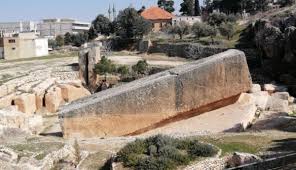
Kossakovsky takes us to the site of Baalbek, with its famed, massive stones, somehow hewn in antiquity and still among the world’s largest quarried stones and to its Roman quarry. We see scores of fallen segments of ancient fluted columns – and, then, the majesty of five columns still standing intact. Kossakovsky presents an enormous, tiered modern quarry, rock-crushing machinery in close-up and light cascading on wet, glisteneing rocks. In a very long shot, we see a seemingly endless freight train pulling a hundred gondola cars filled with rocks.

Architecton begins with ugly Soviet apartment blocks in Ukraine, destroyed by Russian bombardment. Later, we see similar damage in earthquake-ruined cities in Turkey. As the rubble is hauled away, it makes new mountains. It’s like the circle of life for inanimate rock.

There’s an elderly Italian architect named Marcele De Lucchi, who is directing construction of a circle of stones at his home; the only dialogue in Architecton is chatter between De Lucchi and his crew of stone masons.

ARCHITECTON. Courtesy of A24.

Kossakovsky had previously made the highly acclaimed Aquarela, taking audiences into the worlds of water. The movements of the camera and Kossakovsky’s choices of perspectives make looking at rocks for 98 minutes actually enthralling. The cinematographer is Ben Bernhard (Aquarela), who should win awards for his drone photography alone.

Early in Architecton there are close-ups of a rock slide, with four shots taking about four minutes, followed by an overhead shot. The scene could only have been safely captured by a drone zooming in, presumably, on a quarry explosion. It’s absolutely mesmerizing.

I take notes in darkened cinemas, and I wrote, “nowhere I’d rather be than in this theater watching this movie.” That was before the epilogue where Kossakovsky himself prompts De Lucchi to expound on the role of architecture, the malignant impacts of concrete and the planet’s future. The epilogue takes us out of the immersive experience and is a buzz kill, the one weak part of Architecton.

Architecton is now in theaters, and it’s one of those films which must be seen on the biggest screen that you can access.
MY OCTOPUS TEACHER: an octopus and her human pet

MY OCTOPUS TEACHER

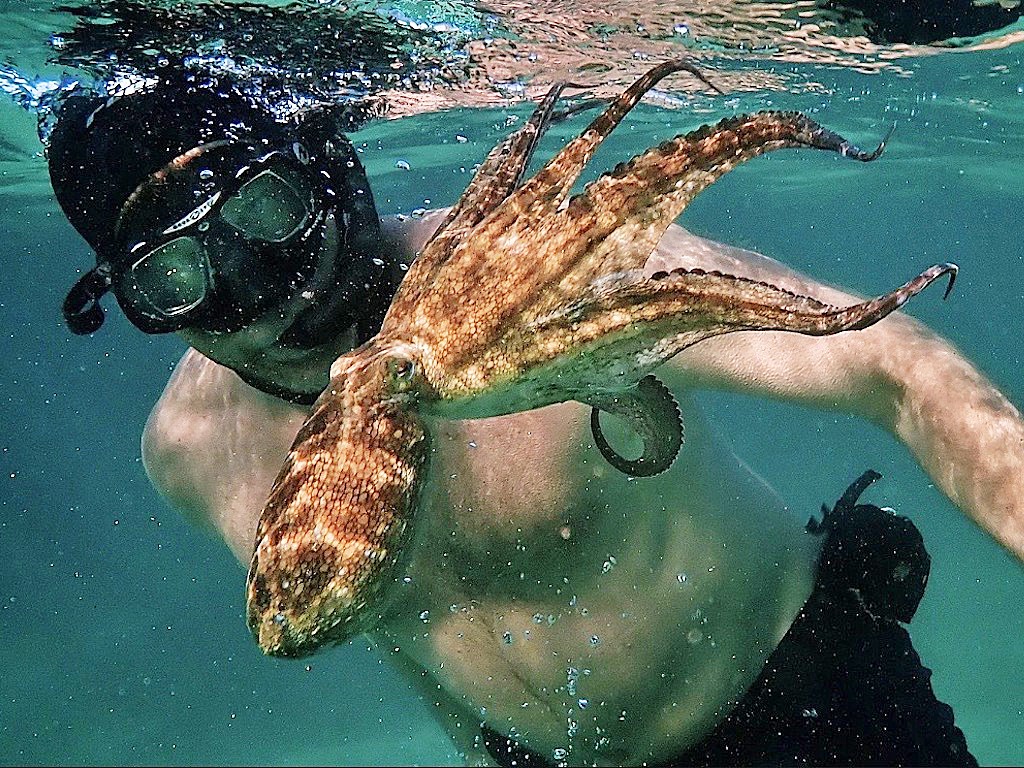
As nature documentaries go, My Octopus Teacher, is pretty singular. Filmmaker Craig Foster, stewing in mid-life disillusionment, is diving in a South African kelp forest when he encounters an octopus and decides to shadow her over a year and document her life every day. The octopus takes to Foster and adopts him as kind of a pet. But My Octopus Teacher is mostly worthwhile for the amazing resourcefulness of the octopus and the harrowing shark attacks.

I knew that octopuses are wizards at camouflage and at squeezing through tight spaces. I didn’t appreciate how intelligent they are and that they commonly live for only one year.

There are some sequences in My Octopus Teacher that are just astonishing. The underwater photography, especially the scenes just below the surf in the first fifteen minutes are among the best I’ve ever seen. The cinematographer is underwater specialist Roger Horrocks.

Foster himself narrates the film. The Movie Gourmet doesn’t cotton to the simpering of grown men, so I wish I had turned off the sound for the first fifteen minutes of his personal angst and the final ten minutes when he forges a blissful father-and-son shared interest in the ocean.

I do admire Foster for two things. First, he generally didn’t interfere with the course of nature (i.e., rescue the octopus from shark attacks). And he didn’t give her a human name. Good for him.

Off South Africa, the octopus’ major predator is the pajama shark, so named because of the stripes that resemble old-fashioned vertically-striped pajamas. Pajama sharks are especially well-equipped to attack in the narrow and deep crevices where octopuses hide out.

I can’t really blame the sharks because octopus is one of my favorite foods, too. It takes some mastery (which I haven’t as yet attained) to cook them so they’re not rubbery. So, I order octopus every time I see it on the menu (usually at Greek, Spanish, Mexican or Portuguese restaurants).

My Octopus Teacher is streaming on Netflix.

PELICAN DREAMS: real pelicans, dreamy pace

PELICAN DREAMS
PELICAN DREAMS

Because I often fish along the Central California coast, I enjoy watching pelicans cruise majestically along the top of the bluffs and dive for fish in surgical strikes. The California Brown Pelican is the subject of Judy Irving’s meditative documentary Pelican Dreams. You may remember Irving’s surprise 2004 hit The Wild Parrots of Telegraph Hill, a documentary so captivating that it played 28 weeks in San Jose.

Wild Parrots had two things going for it – the oddity of birds from tropical rainforests living wild in a cold and grimy city, along with a compellingly unusual human star. Pelican Dreams doesn’t have those OMG features, but it has the very interesting stories of two individual birds, along with the riches to rags to kinda riches story of the species. The California Brown Pelican was named as an endangered species in 1970, but the ban of DDT has allowed the population to rebound, so they are no longer listed as endangered, but still face threats from oil spills, fishing tackle and climate change.

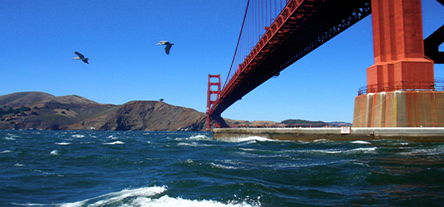
Irving had been looking to do a pelican documentary and met with the director of a pelican rescue facility, but she didn’t know how to begin the movie. Then, two weeks later, a pelican landed in the middle of traffic on the Golden Gate Bridge. Irving takes us through the life of that pelican, known to biologists as Pink 193 and named Gigi by Irving (for Golden Gate). Irving has a decidedly non-clinical view of the birds: “I would like a pelican in MY back yard”.

Pelican Dreams has a dreamy and meandering pace; like listening to Wyndham Hill New Age music for 80 minutes, it’s not a bad thing, you just need to be ready to settle in.

One more thing – the movie’s final shot (through a Panorama camera) is spectacular and unforgettable – a pelican diving at sunset – against a pink sky and purple coastline.

Here’s the trailer.