
SHOSHANA: two lovers amid a deepening conflict

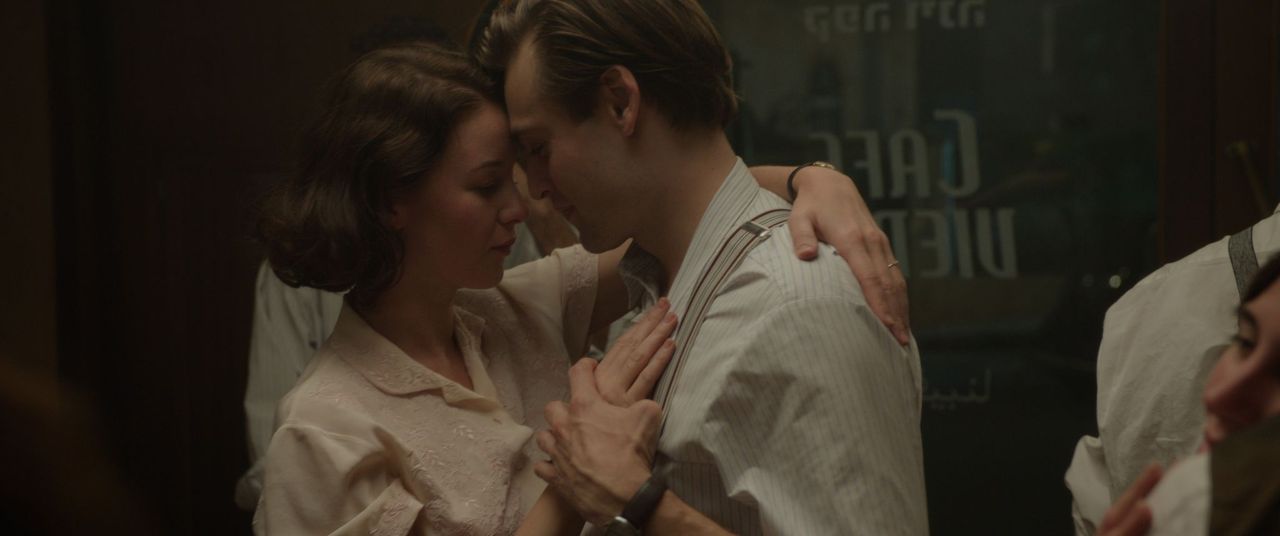
Photo caption: Irina Starshenbaum and Douglas Booth in SHOSHANA. Courtesy of Greenwich Entertainment.

The thriller Shoshana is a historical drama set in pre-Israel Palestine that revolves around a love story between two people on different sides. The Jewish journalist Shoshana Borochov (Irina Starshenbaum) is a committed Zionist and a supporter of the paramilitary group Haganah. Thomas Wilkin (Douglas Booth) is the Assistant Superintendent of Criminal Investigation for the British authorities.

All of the significant characters in Shoshana were real people, and the story takes place from 1933 to 1944. We don’t see many movies set in this time and place. The Ottoman Empire had ruled Palestine for 400 years, until the Ottomans were expelled by the British in WW I. The British then took over governing Palestine, with its majority Arab population and small Jewish community, under an international agreement – the British Mandate – and with a policy that there should be a Jewish homeland in Palestine. The Arab residents have been living with a few Jews, but are horrified by the specter of mass Jewish immigration, and they revolt. Tit for tat murders begin between Arabs and Jews, which the British try to suppress. Soon there are rival Jewish paramilitary organizations, each with a different take on how to deal with the British, with the Arabs and with each other. When the British sharply limit Jewish immigration and frustrate the efforts to form a Jewish-majority state, the Jews react with anger against the British.

It becomes a lethal gam of three-dimensional chess. Shoshana does a pretty good job in helping the audience track who is who – and who wants to kill who. Shoshana was directed by the veteran Michael Winterbottom (Welcome to Sarajevo, Jude, The Claim, A Mighty Heart and The Trip movies).

Thomas Wilkin and Shoshana Borochov forge an 11-year relationship in an environment that becomes more stressful every year. But Thomas is unwilling to stop being a British policeman, and Shoshana is unwilling to put aside her Zionist beliefs. They love each other, but not enough for either to abandon deeply-held values or their personal identities.

What could doom their relationship is not just arguing politics at the dinner table, but something more ominous – there are plenty of players who want each of them dead. The situation is explosive – often literally. And neither can hide in a Tel Aviv still small enough that everybody knows each other.

The British are trying to cope with what we now know as asymmetrical warfare. A British officer sneeringly asks a Zionist terrorist why he is blowing up women and children, and gets the reply “Because we don’t have the resources that you do“. Ironically, the British in Shoshana are themselves employing mass reprisals, extrajudicial executions and torture that would clearly be considered war crimes today.

Of course, British colonial rule was known for arrogant, racist, and culturally tone-deaf twits, and they are represented by Shoshana‘s villain, police official Geoffrey Morton (the fine actor Harry Melling).

Arabs and their cause may not be depicted in depth in Shoshana, but are shown as victims of both Jewish terrorism and British atrocities.

The historical events constitute the origin stories for both the nation of Israel and the Israeli-Palestinian conflict. The British throw up their hands and fal to provide for Palestinian self-determination within the borders of Palestine. The Jewish organizations in Shoshana later evolved into the two major Israeli political parties of the past 75 years, and the Haganah morphed into the Israeli Defense Forces. Israel has since become a military power and now faces its own asymmetrical warfare.

Given the impact of this history upon the current day, we might have expected more films about this period. After all, there are a zillion films about the Holocaust and a lot set in post-1948 Israel. In 1960, Otto Preminger made the blockbuster film Exodus from the 1958 Leon Uris novel which was the biggest best seller in US since Gone With the WindExodus was set in the period between 1946 and 1948. (My parents saw Exodus at a drive-in with me as a small boy in the back seat.) No less than the pioneering Zionist leader and Israeli prime minister David Ben-Gurion said of the novel, “as a piece of propaganda, it’s the greatest thing ever written about Israel“.

Shoshana is far more clear-eyed and nuanced than ExodusShoshana reflects a historical setting that was complicated, and tells the story of lovers’ inner conflicts amid a dynamic and perilous external conflict. Shoshana, which I reviewed earlier this year for the San Francisco Jewish Film Festival, is now streaming on Amazon, AppleTV, YouTube and Fandango.

SHOSHANA: two lovers amid a deepening conflict

Photo caption: Irina Starshenbaum and Douglas Booth in SHOSHANA. Courtesy of Greenwich Entertainment.

The thriller Shoshana is a historical drama set in pre-Israel Palestine that revolves around a love story between two people on different sides. The Jewish journalist Shoshana Borochov (Irina Starshenbaum) is a committed Zionist and a supporter of the paramilitary group Haganah. Thomas Wilkin (Douglas Booth) is the Assistant Superintendent of Criminal Investigation for the British authorities.

All of the significant characters in Shoshana were real people, and the story takes place from 1933 to 1944. We don’t see many movies set in this time and place. The Ottoman Empire had ruled Palestine for 400 years, until the Ottomans were expelled by the British in WW I. The British then took over governing Palestine, with its majority Arab population and small Jewish community, under an international agreement – the British Mandate – and with a policy that there should be a Jewish homeland in Palestine. The Arab residents have been living with a few Jews, but are horrified by the specter of mass Jewish immigration, and they revolt. Tit for tat murders begin between Arabs and Jews, which the British try to suppress. Soon there are rival Jewish paramilitary organizations, each with a different take on how to deal with the British, with the Arabs and with each other. When the British sharply limit Jewish immigration and frustrate the efforts to form a Jewish-majority state, the Jews react with anger against the British.

It becomes a lethal gam of three-dimensional chess. Shoshana does a pretty good job in helping the audience track who is who – and who wants to kill who. Shoshana was directed by the veteran Michael Winterbottom (Welcome to Sarajevo, Jude, The Claim, A Mighty Heart and The Trip movies).

Thomas Wilkin and Shoshana Borochov forge an 11-year relationship in an environment that becomes more stressful every year. But Thomas is unwilling to stop being a British policeman, and Shoshana is unwilling to put aside her Zionist beliefs. They love each other, but not enough for either to abandon deeply-held values or their personal identities.

What could doom their relationship is not just arguing politics at the dinner table, but something more ominous – there are plenty of players who want each of them dead. The situation is explosive – often literally. And neither can hide in a Tel Aviv still small enough that everybody knows each other.

The British are trying to cope with what we now know as asymmetrical warfare. A British officer sneeringly asks a Zionist terrorist why he is blowing up women and children, and gets the reply “Because we don’t have the resources that you do“. Ironically, the British in Shoshana are themselves employing mass reprisals, extrajudicial executions and torture that would clearly be considered war crimes today.

Of course, British colonial rule was known for arrogant, racist, and culturally tone-deaf twits, and they are represented by Shoshana‘s villain, police official Geoffrey Morton (the fine actor Harry Melling).

Arabs and their cause may not be depicted in depth in Shoshana, but are shown as victims of both Jewish terrorism and British atrocities.

The historical events constitute the origin stories for both the nation of Israel and the Israeli-Palestinian conflict. The British throw up their hands and fal to provide for Palestinian self-determination within the borders of Palestine. The Jewish organizations in Shoshana later evolved into the two major Israeli political parties of the past 75 years, and the Haganah morphed into the Israeli Defense Forces. Israel has since become a military power and now faces its own asymmetrical warfare.

Given the impact of this history upon the current day, we might have expected more films about this period. After all, there are a zillion films about the Holocaust and a lot set in post-1948 Israel. In 1960, Otto Preminger made the blockbuster film Exodus from the 1958 Leon Uris novel which was the biggest best seller in US since Gone With the Wind. Exodus was set in the period between 1946 and 1948. (My parents saw Exodus at a drive-in with me as a small boy in the back seat.) No less than the pioneering Zionist leader and Israeli prime minister David Ben-Gurion said of the novel, “as a piece of propaganda, it’s the greatest thing ever written about Israel“.

Shoshana is far more clear-eyed and nuanced than Exodus. Shoshana reflects a historical setting that was complicated, and tells the story of lovers’ inner conflicts amid a dynamic and perilous external conflict. Shoshana releases into theaters this weekend.