JIRGA: a quest to atone

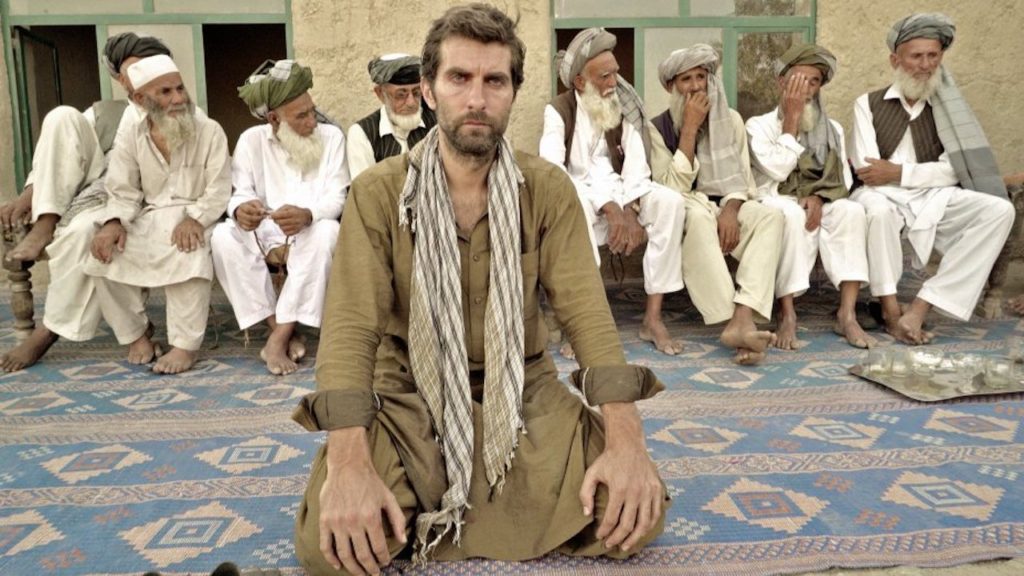
Sam Smith in JIRGA

In Jirga, the Australian soldier Mike (Sam Smith) returns alone to Afghanistan three years after his tour of duty. Mike begins a quest that takes him into the stark desolation of the hinterlands, where he must survive both the unforgiving elements and the Taliban. We don’t know his objective until it is revealed 44 minutes into the film. What we do immediately understand is that the stakes are very high.

The tension builds as we wonder if Mike will survive, but Jirga is a contemplation. How do you redress a wrong that you’ve committed? By paying compensation? By asking for forgiveness? By an act of atonement? Or of self-sacrifice?

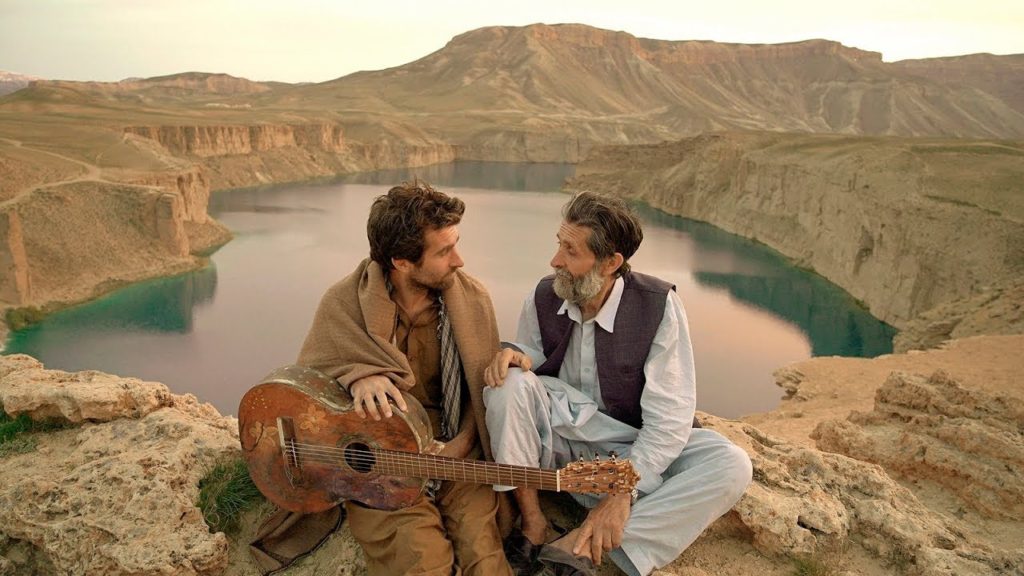
The Afghanistan in Jirga is as dramatic a desolate landscape as I’ve ever seen, often starkly beautiful. At one point, Gilmour relieves the severity of the desert by dropping in a totally incongruous and unexpected paddle boat in the form of a pastel swan.

Sam Smith is in almost every frame of Jirga, and his performance is impeccable.

Jirga is a notable achievement in filmmaking. Gilmour had received permission to film among the Pashtun in Pakistan’s tribal areas, but was frustrated (and finally harassed) by the ISI, Pakistan’s notorious intelligence force. Gilmour bought a small Sony camera in Islamabad and flew himself and Smith to Kabul. There, under the constant protection of bodyguards, Gilmour was able to shoot the film on the fly; conditions were safe enough to shoot during 20 days of a two-month sojourn. Only two of the Afghan cast had ever been in a movie. Gilmour’s previous film Son of a Lion was also set among the Pashtun and is available on Amazon Prime.
JIRGA

I saw Jirga at Cinema Club Silicon Valley, with a Q&A with writer-director-camera operator Benjamin Gilmour. Gilmour got the idea for the film in his other work as a paramedic, encountering the PTSD of Australian veterans of the Middle East wars.

Gilmour observed that “male bravery is taught as how well you can fight”, and focused Jirga on Mike’s non-violent courage in risking – and even offering -his life. Gilmour developed Mike’s story so the “moral injury he suffered doesn’t take the tragic path” of alcoholic self-medication or suicide that Gilmour has observed firsthand in combat vets.

Jirga was Australia’s submission to the Academy Awards. It has secured a late July limited release in NY and LA. I’ll let you know if Jirga opens in Bay Area theaters and when it is available to stream.
CLOWNVETS: unexpectedly powerful

CLOWNVETS

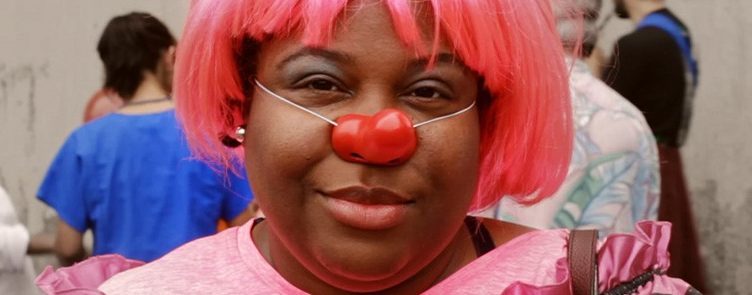
The winning documentary Clownvets pairs two groups of sufferers to bring relief to one and healing to the other.  First, we meet US military veterans in rural Michigan and learn about Post Traumatic Stress Disorder from their personal perspectives, and from their families and their health providers.  Then, unexpectedly, the famed hospital clown Patch Adams enters.  (Adams was portrayed by Robin Williams in a much reviled movie, but this is the real Patch Adams ).  Adams has the idea of teaching the vets how to clown and bringing them to entertain the most severely disabled in the Third World.

The result is remarkable.  Somehow Adams is able to introduce clowning to these macho guys, and then he brings them to facilities that warehouse the disabled in Guatemala.  The kindest description of these places might be “hell hole”. The plight of the patients/victims is heartbreaking.  The vets throw themselves wholeheartedly into brightening these deprived lives with clowning and with hands-on human compassion.

Why does clowning – of all things – seem to treat the veterans’ PTSD?  Perhaps it is the fully committed silliness and the absurd costumes – the vulnerability from intentionally looking ridiculous and acting ridiculous.  Somehow it seems to  refract/distract/heal the effects of PTSD.

I am generally not a fan of warmhearted movies, but Clownvets moved even me.  In a running time of little less than an hour, it’s able to pack an emotional punch.  I expect Clownvets to be the Feel Good hit of this year’s Cinequest.

Cinequest hosts the world premiere of Clownvets, and Patch Adams himself is expected to attend.

THEY SHALL NOT GROW OLD: technology transforms film and resurrects a generation

THEY SHALL NOT GROW OLD

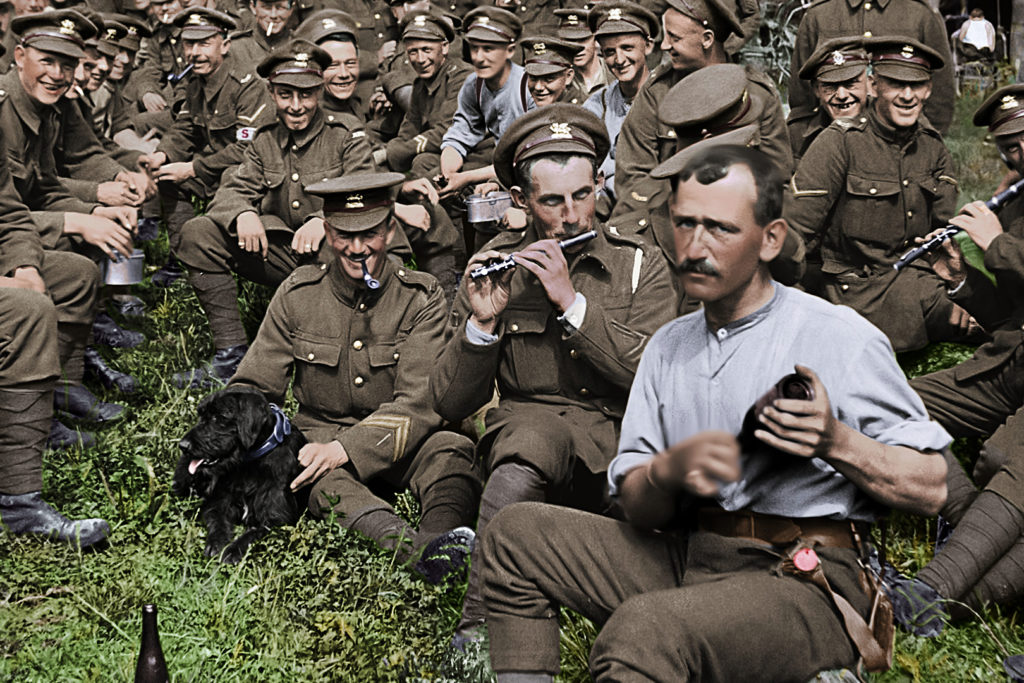
In They Shall Not Grow Old, Lord of the Rings filmmaker Peter Jackson has, for the first time, layered humanity over our understanding of World War I. By slowing down the speed of the jerky WWI film footage and adding sound and color, Jackson has allowed us to relate to the real people in the Great War.   All of the narration is from the recorded oral histories of actual WW I soldiers.

Jackson started with 100 hours of archived film and 600 hours of oral histories.  Removing the jerkiness by changing the film speed makes the biggest difference, but adding the sound of what we’re seeing through the work of Foley artists and even forensic lipreaders (who knew?) is also magically impactful.  Jackson was meticulous in newly recording the sounds of actual WWI equipment and artillery.

Stuff that we thought we knew is made real for the first time.  For example, we hear story after story of underage boys being accepted by military recruiters.  The non-battle relations between the Brit and German grunts seems new. And there are new tidbits, like the “sit on the rail” sanitary technique.   The soldiers’ reactions to the Armistice is unexpected – “too exhausted to enjoy it” and “the flattest feeling”.  I counted 94 individual oral histories in the end credits.

They Shall Not Grow Old is about 90-minutes long and is accompanied by a fascinating 30-minute “making of” documentary.  Jackson points out that soldiers had seen movies, but movie cameras were a novelty, so many soldiers are filmed staring at the camera agape and trying to hold still (as for a still camera).  Jackson also takes us to see a sunken road in the film today – and explains that most of the soldiers in the archived footage were in the final 30 minutes of their lives.

As he explains in the “making of ” documentary, Jackson chose to focus on the experience of the ordinary soldier, so he does not depict the naval or air wars, the roles of women and colonial troops or the home front.  It’s all-infantry all of the time.  That distillation is a sound choice and  allows the audience to immerse ourselves into that particular experience.

This is a generational achievement that should not be missed.

THE OUTLAW KING: medieval slaughter, falling flat

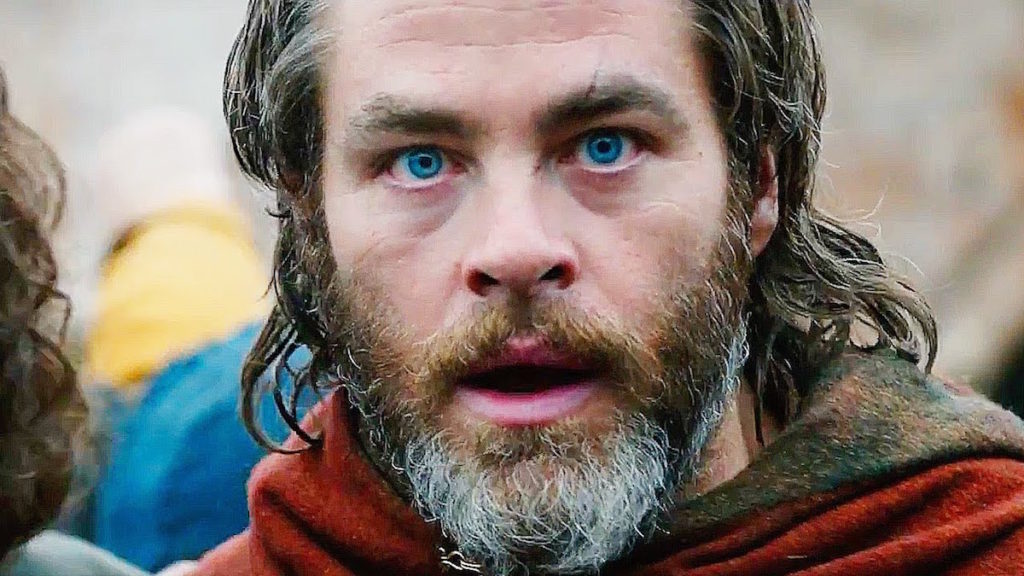
Chris Pine in THE OUTLAW KING

Chris Pine has the title role in Netflix’s The Outlaw King.  It’s the story of Robert the Bruce, who wrested control of Scotland from the English and became the Scottish king in the early 1300s. I like Chris Pine, and he makes a medieval warlord very relatable, but this movie is pretty flat. I was especially disappointed because I admired director David Mackenzie’s last movie (Hell or High Water – also with Chris Pine) so much.

I’m guessing from Mackenzie’s surname that he was drawn to Bruce as an icon of Scottish nationalism. But all these historical struggles of conquest and rebellion in the feudal era were really just tugs of war between rival warlords – the moral equivalent of the Soprano Family. To its credit, The Outlaw King (as do Shakespeare’s histories) does not overly romanticize the self-serving motivations of the nobility

The Outlaw King is kinda historically accurate – it captures the overall arc of the story, although Bruce’s archenemy, the future Edward II, was not at the battle of Loudin Hill and, hence did not engage in a mano a mano showdown with Bruce there as depicted.

On the other hand, there isn’t much in the historical record about most women in the early 1300s, particularly Bruce’s second wife, Elizabeth (Florence Pugh).  The filmmakers have constructed a pretty interesting character in Elizabeth, so that’s all to the good.

We do know that Edward II was a pretty interesting cat (not a complement), but, while The Outlaw King portrays Edward’s problems with Dad and hints at his narcissistic bravado, it misses the chance to go deeper.

There is a lot of the hacking and hewing of medieval combat a la Braveheart, in The Outlaw King, chiefly in Bruce’s pivotal victory at the battle of Loudon Hill. But the overall emptiness of the movie leaves the battle scenes, as well-crafted as they are, less thrilling than those in Orson Welles’ Chimes at Midnight and Kenneth Branagh’s Henry V.

The Outlaw King exists for those who need a dose of medieval slaughter and a spunky queen, but there’s not enough there for the rest of us.