FALLEN LEAVES: two lonely people amid the driest of humor

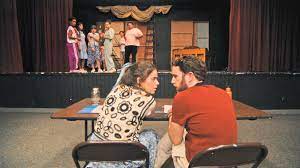
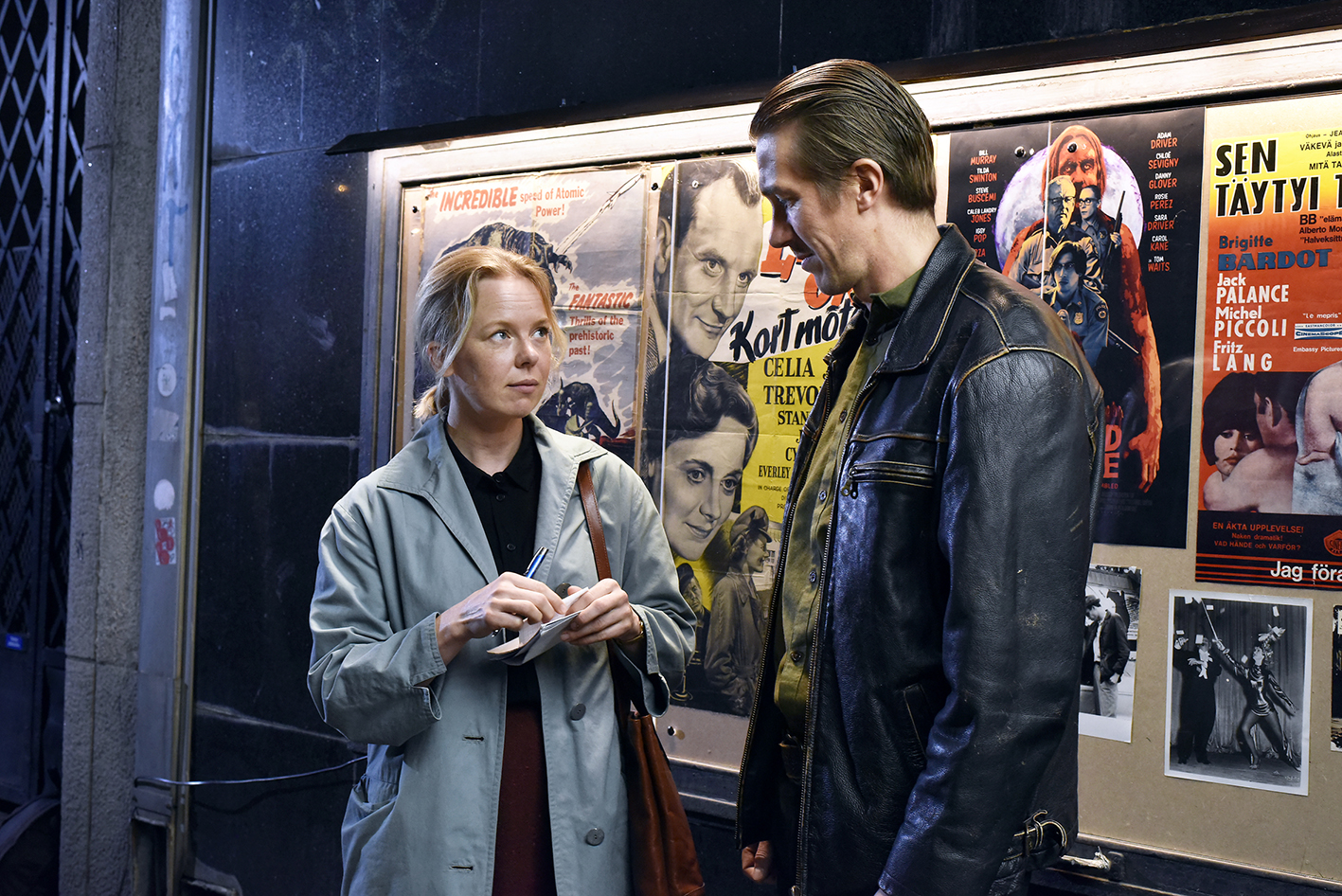
Photo caption: Alma Pöysti and Jussi Vatanen in FALLEN LEAVES. Courtesy of The Match Factory.

The Finnish deadpan comedy Fallen Leaves is the story of two fortyish singles navigating a blue collar world that is filled with disappointment, despite low expectations. We first meet the no-nonsense Ansa (Alma Pöysti) working in a supermarket, and then the sarcastic loner Holappa (Jussi Vatanen), working in a metal scrap yard. Fallen Leaves depicts Finnish middle-managers as tyrannical idiots, so neither Ansa or Holappa get any satisfaction from their work. Neither has much of social life, although they spot each other when accompanying friends to a karaoke bar.

These are two lonely people. But, not only don’t Ansa and Holappa meet CUTE, they keep not meeting AT ALL. Holappa’s shyness precludes an introduction at the karaoke bar, and then happenstance (and Holappa’s drinking) make them keeping missing each other, until a promising encounter is frustrated again.

We know that eventually, Ansa and Holappa will find the opportunity to launch a relationship. The impediment will be Holappa’s alcoholism. Here’s a public service from the Movie Gourmet: If you answer two or more of the following questions in he affirmative, then it is likely you have a problem with alcohol:

  • Have you been fired more than once for drinking on the job?
  • Have you passed out at a bus stop?
  • Do you regularly order three shots with a beer chaser?
  • Does a bartender tell you “[insert your name}, It’s time to go home so you can come back in the morning“?

Writer-director Aki Kaurismäki creates a humorously grim world for our droll heros and their pals. The dreariest of soulless dive bars, with the barmaid in curlers, is aspirationally named the California Pub. Holappa’s buddy tells him that he is no tough guy, “but maybe you could be a tough guy in Denmark”. Kaurismäki fills the screen with lots of Finns standing very still.

Fallen Leaves is not a Must See, I but I enjoyed the yearning for connection and intimacy, framed in the driest of humor. Many critics have describe the film as bittersweet; I see it as film with humor that is bitter-tinged, and then ultimately purely sweet.
a

THE CRIME IS MINE: better after Huppert shows up

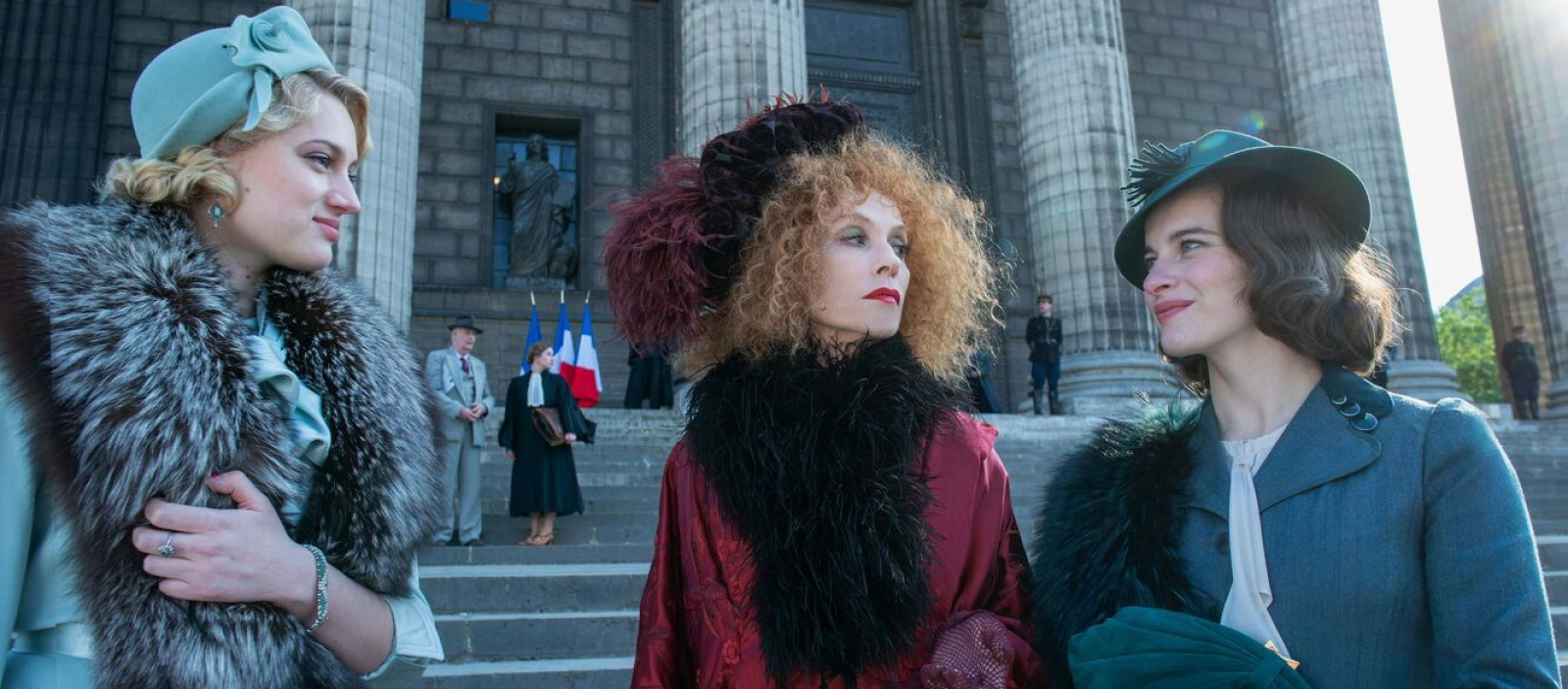
Photo caption: Nadia Tereszkiewicz, Isabelle Huppert and Rebecca Marder in THE CRIME IS MINE. Courtesy of Music Box Films.

Set in 1930s France, the breezy French comedy The Crime Is Mine is a proto-feminist farce. Madeleine (Nadia Tereszkiewicz of Only the Animals) is an actress struggling to find jobs because she won’t submit to the casting couch. Her roommate Pauline (Rebecca Marder) is a lawyer who law firms will not hire because of her gender. Madeleine seems to be the last person seen with a murder victim, a lecherous producer, and falls under police suspicion.

Pauline “defends” Madeleine with an ingenious strategy – confess to a killing that she didn’t commit, claim self-defense and ride the resultant wave of publicity to fame and riches.

The central joke, of course, is that a protagonist is trying to be proven guilty for a crime that she did not commit. The other novelty is that, in a decidedly non-feminist time and place, two young women without means must survive with dignity by their own cleverness and moxie.

I found all this mildly amusing until mid-film, when Isabelle Huppert shows up, playing a once famous diva of the silent screen. This character is unashamedly venal, and Huppert, as we can always expect, goes all in. She’s hilarious.

French comedian Dany Boone is a talented comic actor, and makes another welcome appearance here in a supporting role.

Director François Ozon is known for his light comedies like In the House and Potiche (as well as his recent drama Summer of 85),

As funny as Huppert’s performance is, the overall experience of watching The Crime Is Mine is more cerebral than emotionally engaging. The Crime Is Mine releases into theaters on December 25.

DREAM SCENARIO: but it can’t be my fault, can it?

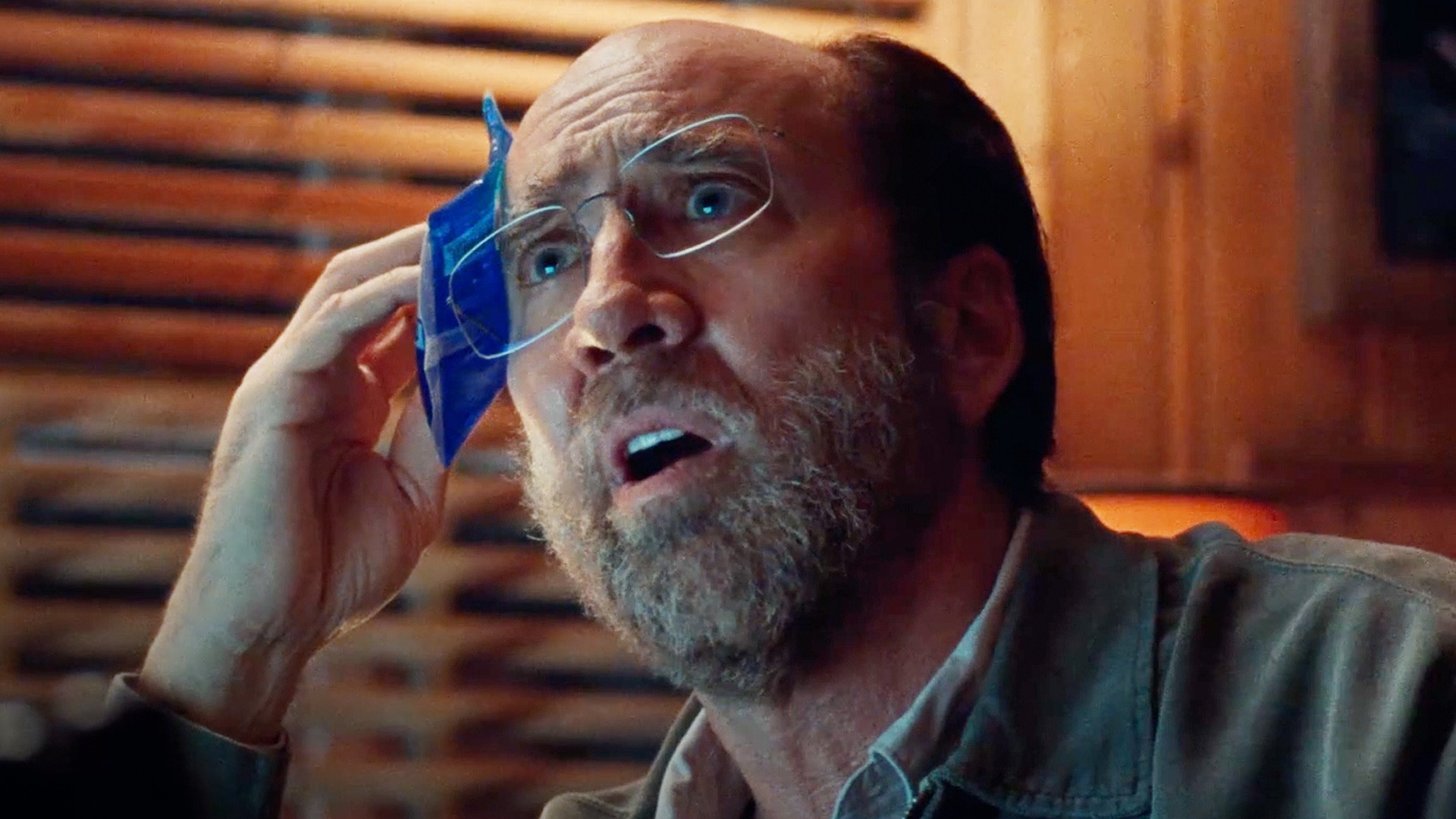
Photo caption: Nicolas Cage in DREAM SCENARIO. Courtesy of A24.

In the brilliant and utterly original comedy Dream Scenario, Nicholas Cage plays Paul, a hopelessly square, middle-aged professor of evolutionary biology, who suddenly starts appearing in other people’s dreams. At first, Paul shows up in dreams and does nothing at all (which is fitting for Paul’s personality), even failing to intervene as people dream that they’re in peril. When Paul’s students publicize the phenomenon on social media, thousands of people recognize Paul from their dreams and he goes viral.

His instant celebrity takes a turn when, through absolutely no action on his part, Paul’s behavior in the dreams becomes less benign, and the real Paul becomes associated with the threatening Dream Paul. Surely, he can’t be blamed for another person’s dreams, can he?

Dream Scenario slides from a comedy of manners into a sharply pointed parody of cancel culture, social media overkill, cognitive behavior therapy and our society’s impulse to monetize everything, not to mention today’s commercial imperative to leverage everything for micro-targeted advertising. Dream Scenario is highly intelligent and hilarious.

The guy who imagined this unique premise and all the killer moments of topical parody is Norwegian writer-director Kristoffer Borgli, whose work I haven’t seen before. This is the 38-year-old Borgli’s third feature; I can’t wait to mine his previous work and anticipate what he brings us next.

The character of Paul is not your off-the-shelf Everyman. He is, after all, smart enough to have a Ph.D., even be a tenured professor, and he’s a reliable and well-meaning, if unexciting, dad and husband. Paul has had career ambitions, now mere fantasies because we can tell right away that his social clumsiness and laziness keep him from realizing his them. He’s just too comfortable in his routines, which have become a rut.

Cage is excellent as Paul, whose natural, hard-wired response is to UNDERREACT (the opposite of most of Cage’s movie roles). He suffers each of the oddities, then indignities, then outrages ,until they reach his breaking point.

The cast of Dream Scenario is deep and excellent:

  • Julianne Richardson, as the wife who knows Paul best of anyone, for better and forworse, is stellar. Any actor who wants to learn the subtle slow burn should study Richardson’s reaction when one of her husband’s old girlfriends invites him for a coffee; Richardson lets us see her character’s building fury without a single stomp or eyeroll.
  • Dylan Gelula has an unforgettable turn as a very young woman driven by a compulsion toward a paroxysm of passion that is destined to elude her – one of the funniest movie scenes this year, and one that she has perfectly set up in earlier scenes.
  • Michael Cera is very funny as a hyper-opportunistic agency head, a paragon of insincerity.
  • The always-excellent Dylan Baker is perfect as the Cool Kid in the college town’s social set.
  • Tim Meadows is pitch-perfect as Paul’s longtime colleague/boss, who wants to dthe right thing, but can never cast side the bonds of an academic bureaucrat.

Dream Machine is one of the best comedies of the year, as funny and as smart as Barbie, which is high praise.

THEATER CAMP: show people in the making

Photo caption: Molly Gordon and Ben Platt in THEATER CAMP. Courtesy of Searchlight Pictures.

The good-hearted and relentlessly funny Theater Camp sends up the world of drama nerds without a hint of meanness. When the beloved founder (Amy Sedaris) of a summer theater camp for kids falls into a coma, the camp staff must run the summer program themselves. One challenge is that the founder’s son Troy (Jimmy Tatro) is now in charge, and he is a bozo brimming with misplaced confidence, one of those guys whose every instinct is enthusiastically wrong.

Because the camp staff are show people and the campers are show people in the making, there’s plenty of grist for comedy. The kids are budding prima donnas and the staff are flamboyant, temperamental and eccentric.

It’s an affectionate skewering by filmmakers who know the subculture well. Theater Camp was written by Molly Gordon, Ben Platt, Noah Galvin and Nick Lieberman. Gordon and Lieberman directed, and Gordon, Platt and Galvin play major roles as the camp’s faculty.

An avalanche of funny bits bury the audience as directors Gordon and Lieberman and editor Jon Philpot keep the laughs coming at a madcap pace. There are big jokes and little jokes; I found it very funny that Gordon’s character is named Rebecca-Diane.

The Big Show at the end, a tribute to their comatose founder titled Joan Still, is destined to surpass Springtime for Hitler in The Producers as the worst musical-within-a-movie until it is rescued by an unexpected tour de force by Noah Galvin.

Galvin’s performance is the showiest, but everyone in the cast is excellent, particularly Gordon and Platt. Patti Harrison is very good as a corporate predator with Troy in her sights, and Owen Thiele sparkles as the camp’s most flamboyant teacher.

And where did they find these kids? Some of the kids who play the campers are unbelievably talented.

Theater Camp is a breezy treat.

BARBIE: a marriage of the intelligent and the silly

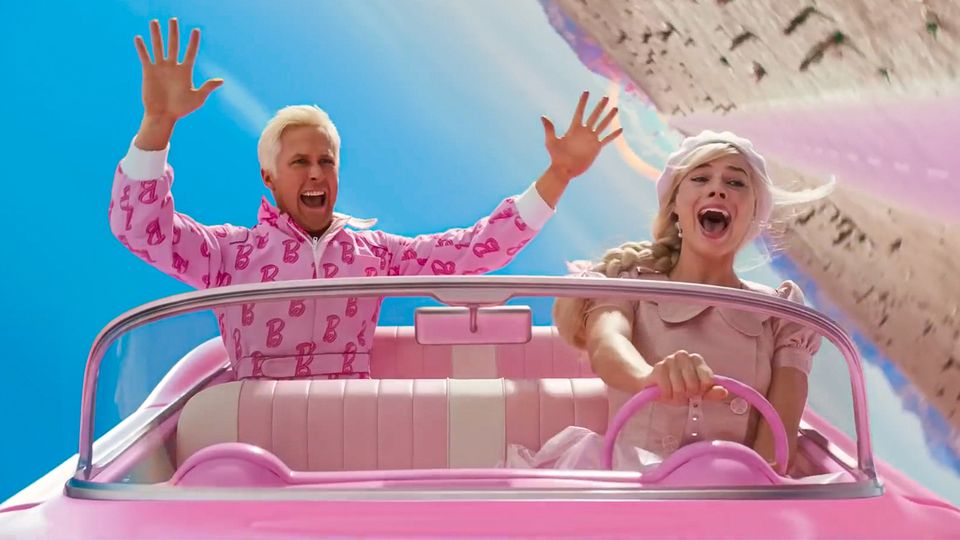
Photo caption: Ryan Gosling and Margot Robbie in BARBIE. Courtesy of Warner Brothers.

Thanks to a brilliant screenplay by Greta Gerwig and Noah Baumbach, Barbie is a spectacular marriage of the intelligent and the silly, and manages to celebrate a commercial brand amid pointed social satire. It’s delightfully funny throughout, and the third act is a crescendo of hilarity.

Gerwig and Baumbach have imagined a world in which the various versions of Barbie dolls, including Stereotypical Barbie (Margot Robbie), live in Barbie land, a female-centered but naïve, utopia. Developments force Barbie to leave Barbie Land on a mission to the human-populated Real World, and Ken (Ryan Gosling) stows away on her quest; because they live in a fantasy world, the two are unprepared for the harshness and ambiguity of the Real World, and their return to Barbie Land sparks disharmony. Will Barbie and Ken figure out their respective places in the universe?

Gerwig and Baumbach have somehow crafted a film that will satisfy those who treasure their Barbie doll, memories, those who are disturbed by Barbie’s impact on women’s body images and sexual objectification, and those who just dismiss the Barbie silliness. (I came to Barbie with one indelibly painful Barbie memory – from my bare feet stepping on Barbie shoes.) The biggest laughs come from Barbie’s relentless skewering of toxic masculinity.

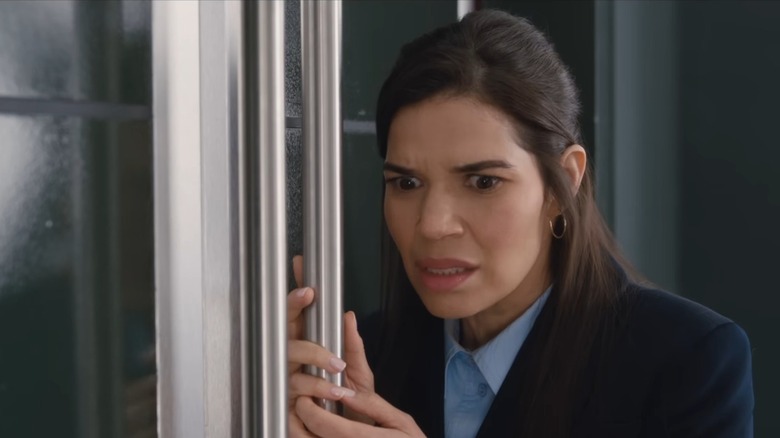
America Ferrera in BARBIE. Courtesy of Warner Brothers.

Robbie and Gosling are both excellent, and there’s a huge cast of familiar stars playing various Barbies and Kens. I think that the real star of Barbie is America Ferrera, who plays Gloria, an actual human woman who befriends Barbie in the Real World. Gloria is a workaday Every Woman struggling to navigate life under the withering scorn of her teenage daughter Sasha (Ariana Greenblatt). Both Ferrera and Greenblatt deliver superlative performances, and Ferrara gets to deliver the pivotal monologue in the film.

Because much of the humor derives from surprising the audience, I am being very careful to avoid spoilers, but I can say that Barbie’s many highlights include:

  • an inspired use of the Indigo Girls’ song Closer to Fine; it’s very funny to hear Barbie characters singing it, and it has the lyrics of existential inquiry, which is what Barbie is engaged in, as silly as that sounds.
  • the performance of Kate McKinnon, perfectly cast as Weird Barbie.
  • a hilarious turn by Michael Cera as Ken’s Friend Allen;
  • a breaking-the-fourth-wall aside by narrator Helen Mirren that brings down the house.
  • one of the funniest final lines of any movie comedy.
  • closing credits with real Barbie toys, including the discontinued ones: Growing Up Skipper, pregnant Midge, etc.

It’s been a while since a movie made me laugh until I cried, but that happened when i watched the campfire guitar serenades and the “battle of the Kens”.

I rarely complement capitalists, but I am grateful to Warner Brothers for assigning a project that could have been simplistic, exploitative schlock to an artist like director Greta Gerwig. And Mattel is a very good corporate sport to have have its corporate culture, its CEO (Will Ferrell) and even its headquarters building thoroughly mocked.

At a minimum, Greta Gerwig and Noah Baumbach certainly deserve Oscar nominations for Original Screenplay and America Ferrara should get an Oscar nod for Supporting Actress. Barbie is one seriously funny movie.

NO HARD FEELINGS: an amusement with Jennifer Lawrence

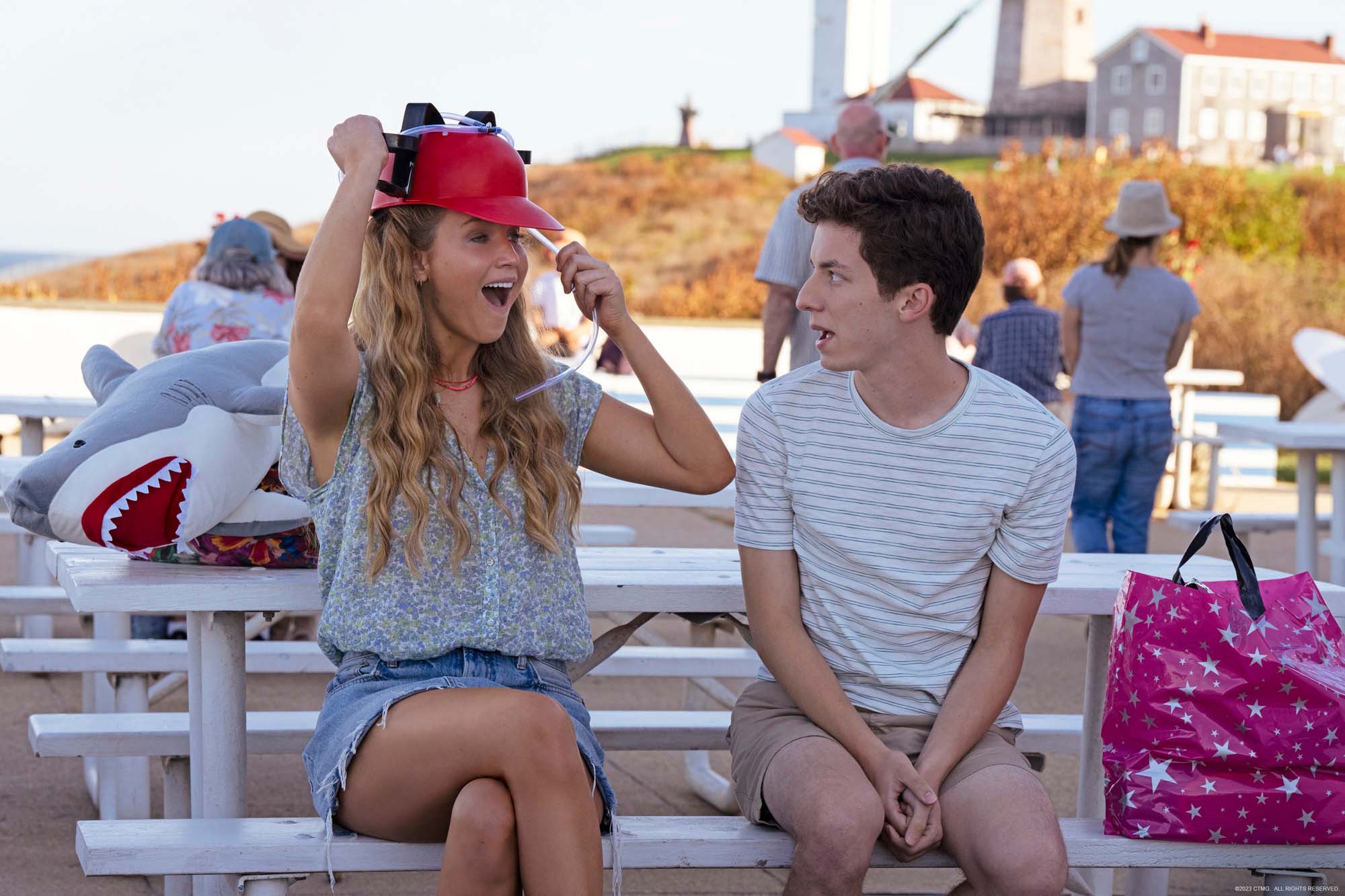
Photo caption: Jennifer Lawrence and Andrew Barth Feldman in NO HARD FEELINGS. Courtesy of Sony Pictures.

In the comedy No Hard Feelings, the summer season is beginning in Montauk, and the introverted rich kid Percy (Andrew Barth Feldman) is slated to enter Princeton in the fall. His over-protective and intrusive parents worry that his social immaturity will stunt his future, so they hire a financially strapped Uber driver/bartender (Jennifer Lawrence) to date him and get him out of his shell – essentially to take his virginity for a used Buick Regal.

Of course, it’s absurd that Jennifer Lawrence would have 103 minutes of difficulty in seducing a high school senior, and part of the fun is in suspending disbelief. It all makes for good, dirty fun, and No Hard Feelings is an amusing diversion because of Jennifer Lawrence.

After her stunning dramatic debut in Winter’s Bone, Lawrence has shown a gift for comedy in Silver Linings Playbook, American Hustle and Don’t Look Up, establishing that she can soar in wise-cracky role. She cracks wise here, too, and also shows off a gift for broad physical comedy in bits like climbing concrete stairs on roller skates.

Lawrence has achieved fame and fortune from eight fantasy movies as Katniss and Raven, respectively, in the Hunger Games and X-Men franchises. She has recently voiced her desire to return to human-scale stories, and No Hard Feelings is one of these, along with the much better Don’t Look Up and Causeway. Good for her.

No Hard Feelings skewers helicopter parents and the invasion of rich outsiders pricing the locals out of their hometowns. Matthew Broderick and Laura Benanti are excellent as the parents, and Broderick’s rich guy haircut is priceless.

The Wife and I laughed together at some scenes; she laughed at some others and I laughed at some more. I liked the movie more than she did, but neither of us complained about wasting an hour-and-a-half of our lives. We talked about it on the way to dinner, and I haven’t thought about it since.

Co-writer and director Gene Stupitsky wrote for the American version of The Office, earning some Emmy nominations, so he is capable of better comedy than this, I’m not embedding the trailers because both the Sony red band trailers make No Hard Feelings look like a very stupid teen comedy and, although it has elements of that type, it’s much better that that overall.

Photo caption: Jennifer Lawrence in NO HARD FEELINGS. Courtesy of Sony Pictures.

DEALING WITH DAD: two serious topics in an ok comedy

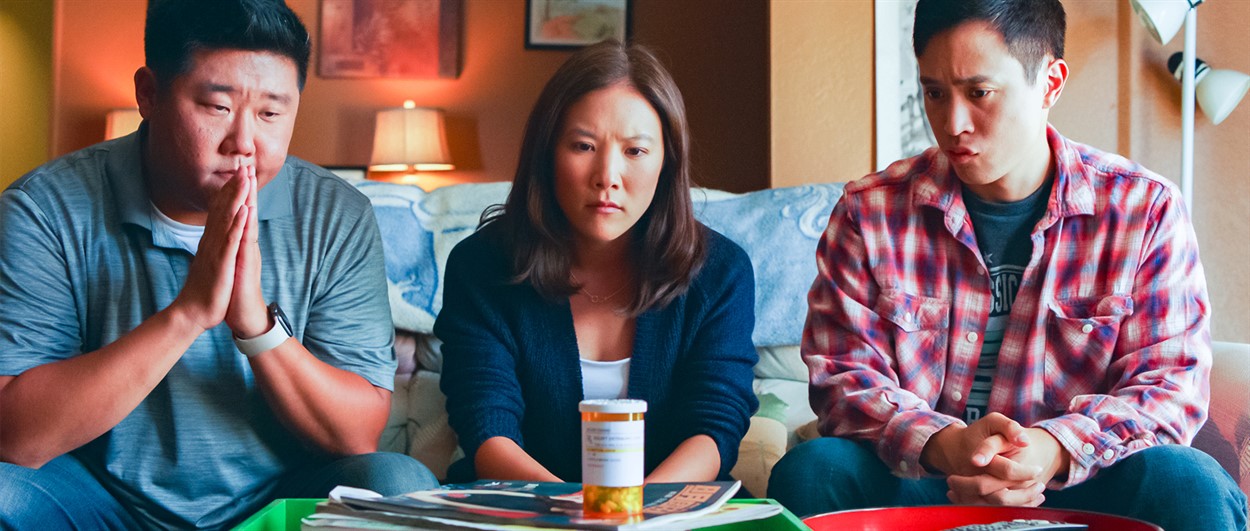
Peter S. Kim, Ally Maki and Hayden Szeto in DEALING WITH DAD. Courtesy of 1091 Pictures.

Dealing with Dad is a topical family comedy with an Asian-American cast. Three adult siblings – the super-achiever oldest sister, the passive middle brother and the infantilized youngest brother, a gaming slacker – meet at their parents’ home. The dad, whose harsh and never-bending expectations battered them as kids, has become paralyzed (and defanged) by severe depression.

Although Dealing with Dad is a comedy, its strengths are in addressing two serious subjects – depression and the issues that many second-generation Asian-Americans face because of their immigrant parents’ parenting styles.

The differences between the siblings spawn lots of laughs, but I found the banter a bit too sit-commy for my taste.

Bay Area audiences will appreciate that Dealing with Dad is set in MILPITAS.

I screened for the 2022 Cinequest. It started rolling out in theaters on May 19.

BLACKBERRY: woulda, coulda, shoulda

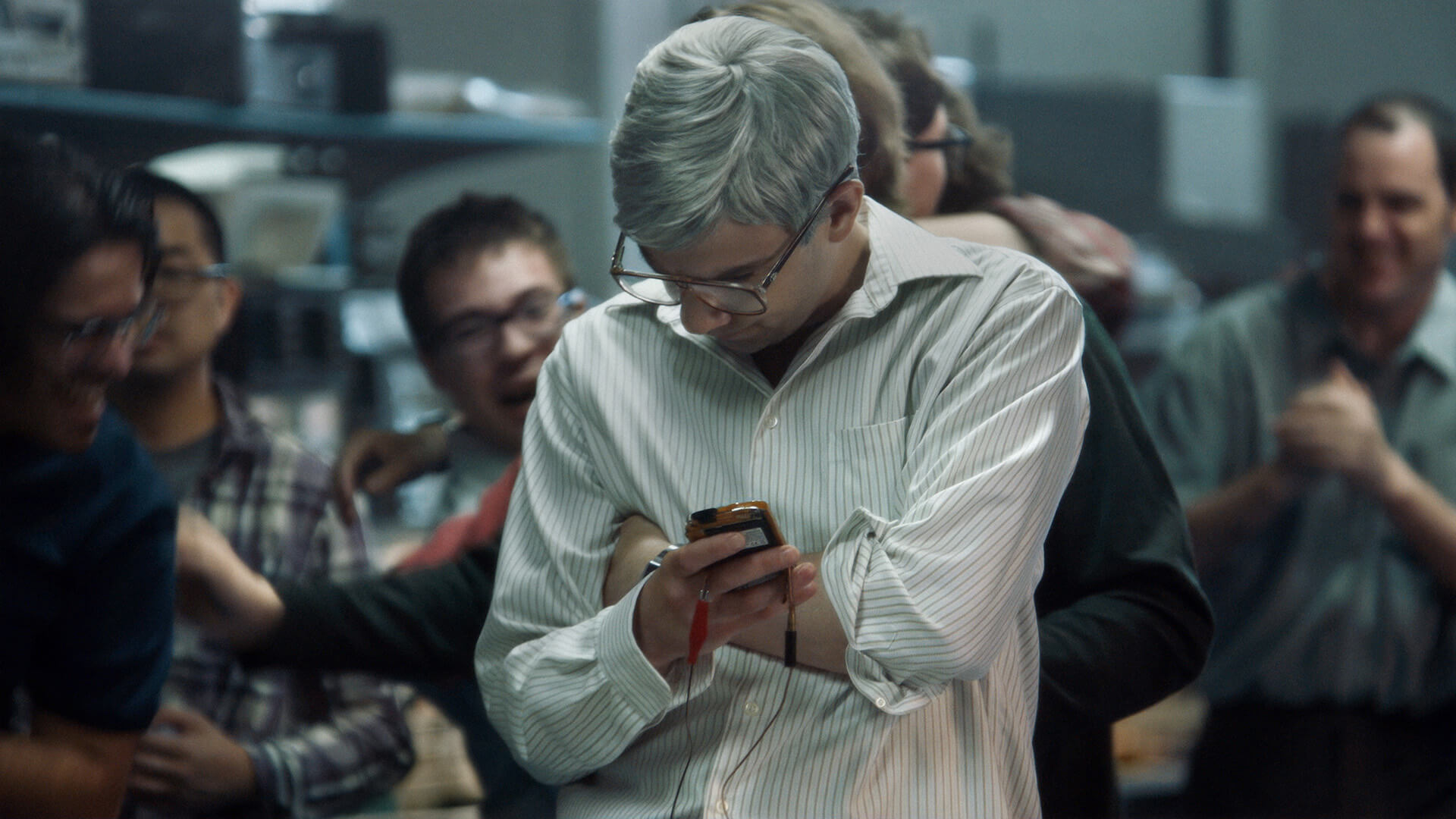
Photo caption: Jay Baruchal in BLACKBERRY. Courtesy of IFC Films.

BlackBerry is the funny true story of Canadian geeks who find themselves suddenly dominating the nascent smartphone market…but not for long. The improbable rise of BlackBerry’s parent company is a tale of the Odd Couple partnership co-CEOs, Mike Lazaridis (Jay Baruchal), who ran the engineering side, and Jim Balsillie (Glenn Howerton), who managed finance and sales.

Mike Lazaridis solved the technical challenge that had kept cell phones from becoming the email machines that they have been since. As played by Baruchal, Lazaridis is reserved, even shy, supremely confident in all things tech and not all confidant with other humans.

Lazaridis needed a pitchman, and that was the hard charging Balsillie, who, as played by Howerton ranged between hard-charging and abusive. A tech exec I knew in Silicon Valley was described to me as having “too much testosterone” and that’s Howerton’s Balsillie.

Lazaridis’ engineering brilliance, combined with Balsillie’s sheer will and audacity, allowed the company to nimbly pivot through various product cycles. Balsillie’s hubris even began to leak into Lazaridis. But then came an advance in product design that Lazaridis hadn’t anticipated, and Balsillie had cut one too many corners in finance.

I’ve mostly seen Baruchal in much more broadly funny roles (Tropic Thunder, This Is the End). Here, Baruchal successfully carries the leading role with a much more subtle and textured performance. One nice (and slyly underplayed) touch is that when Baruchal’s character transitions from the CEO of a start-up to the CEO of a company with a massive market cap, his haircut transitions, too.

For much of the movie, we see Howerton playing Balsillie as a one-note, hard charger. He refuses to acknowledge any obstacle, until, in a wonderful moment of performance, his face shows when knows he’s finally been had.

BlackBerry was directed by Matt Johnson, who also co-adapted the screenplay and plays one of company co-founders.

Make sure you watch the end credits to see what happened to the real guys.

I screened BlackBerry for the San Luis Obispo Film Festival, where it won the audience award for Best of Fest. BlackBerry opens in theaters tomorrow, and it’s a surefire audience-pleaser.

on TV – Preston Sturges’ comedy masterworks

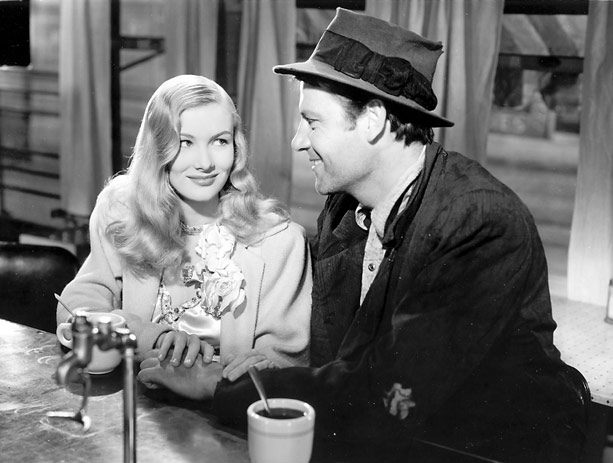
Veronica Lake and Joel McCrea in SULLIVAN'S TRAVELS
Veronica Lake and Joel McCrea in SULLIVAN’S TRAVELS

On May 9, Turner Classic Movies will be presenting the best work of Preston Sturges, the first workaday Hollywood screenwriter to transition into a major writer-director. TCM will be screening The Lady Eve, The Palm Beach Story, Sullivan’s Travels, Hail the Conquering Hero and The Great McGinty, an impressive body of work that Sturges churned out between the ages of 42 and 46. Unfortunately, his turbulent personality led to conflict in his business affairs, which exacerbated his drinking. He burned out and was dead at age 60, but he left behind some of the very, very smartest and funniest movie comedies.

Preston Sturges’ masterpiece is Sullivan’s Travels, a fast-paced and cynical comedy about a pretentious movie director who goes on the road to be inspired by The Average Man – and gets more of an adventure than he expects. There has never been a better movie about Hollywood. (See the clip below.) It’s on my A Classic American Movie Primer – 5 to Start With.

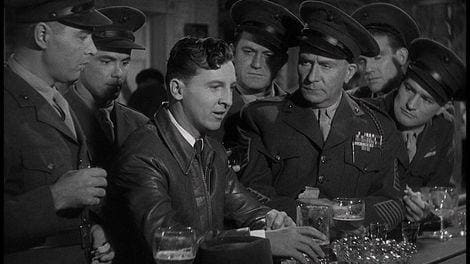
And don’t miss the brilliantly funny Hail the Conquering Hero.  It’s one of Preston Sturges’ less well known great comedies.  Eddie Bracken plays a would-be soldier discharged for hay fever – but his hometown mistakenly thinks that he is being sent home a war hero.  Hilarity ensues.  All the funnier when you realize that this film was made in 1944 amid our nation’s most culturally patriotic period.

Eddie Bracken surrounded by his new Marine pals in HAIL THE CONQUERING HERO.

ROISE & FRANK: therapy dog and hurling coach

Photo caption: Bríd Ní Neachtain in ROISE & FRANK. Courtesy of Juno Pictures.

In the delightful and sweet Gaelic comedy Roise & Frank, it’s two years after the death of Roise’s (Bríd Ní Neachtain) husband Frank, and her grief has turned her into a reclusive depressive. An apparently stray dog insists upon intruding into her life. She becomes convinced the dog is the reincarnation of her deceased hubbie – and the screenplay cleverly gives her credible reasons to believe this. She names the dog Frank, and off we go, as Frank the dog guides Roise out of her melancholy, despite the resistance of her adult, also still grieving, son and her lovestruck neighbor. Soon, there are even implications for the local school’s hapless hurling team.

Roise & Frank was deftly directed by Rachael Moriarty and Peter Murphy, who overcame W.C Fields’ admonition about working with animals and children. They succeeded in keeping Roise & Frank light and funny without turning it into sitcom silliness.

Bríd Ní Neachtain, who played the nosy postmistress in The Banshees of Inisherin, is convincing and relatable as both the gloomy and the rejuvenated Roise. In his first screen credit, Ruadhán de Faoite is especially winning as Mikey, the confidence challenged middle schooler next door.

The dog Frank is a mutt described as possibly part lurcher, a breed unfamiliar to many of us in North America. Lurchers, a mix of greyhound and terrier or herder, historically used in hunting, are more common in the British Isles.

Roise & Frank opens on April 7th at the Opera Plaza in San Francisco, the Smith Rafael in San Rafael, and the Laemmle Town Center and Royal in Los Angeles. This is a charmer and well worth seeking out.