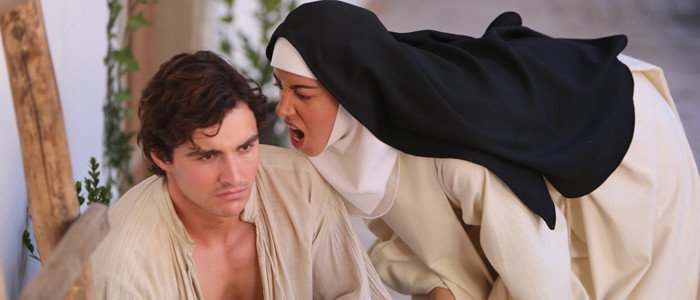
The amusingly naughty but forgettable comedy The Little Hours is based on the dirty fun in your Western Civ class, Boccaccio’s The Decameron. A hunky young lad goes on the lam after cuckolding a local lord and hides out in a nunnery, pretending to be a deaf-mute. He is then serially molested by the young over sexed nuns. There is lots of sexual activity in The Little Hours, all played for laughs and none of it erotic.
It’s the 1300s but the potty-mouthed nuns speak as though it was 2017. Aubrey Plaza is particularly funny as an unceasingly fierce nun with a knife-to-the-throat fetish and a secret life as a witch.
There are lots of low-grade laughs in The Little Hours, including an ancient nun so intent on her embroidery that she is oblivious to enthusiastic sex in the same room and communion made more challenging by a priest’s palsied hand. Comedy stalwarts John C. Reilly, Nick Offerman, Fred Armisen and Molly Shannon all sparkle.
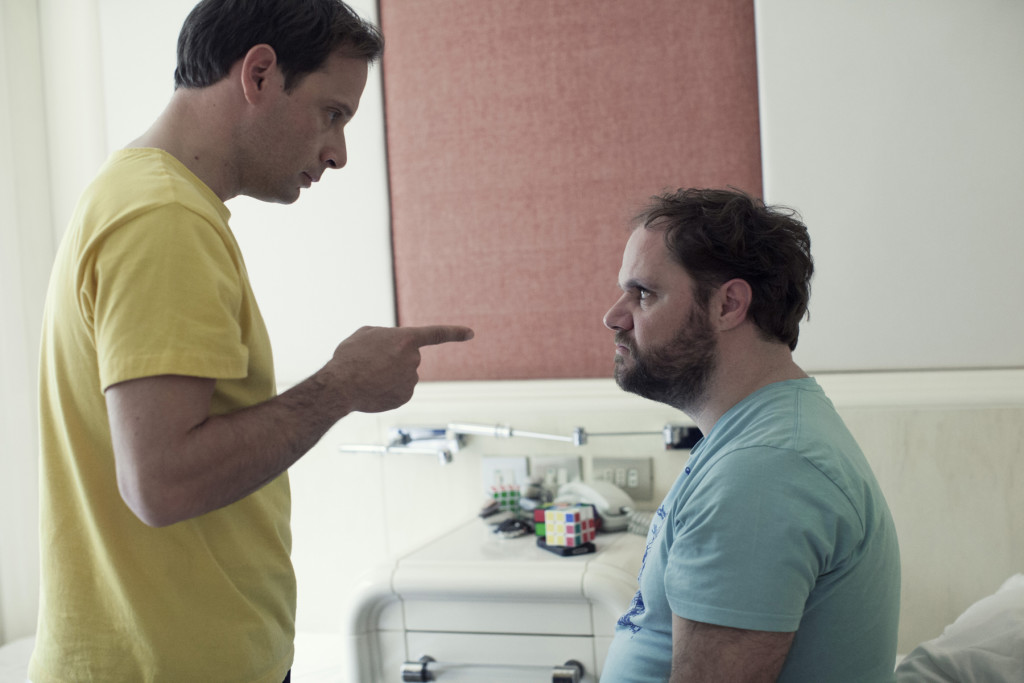
Here’s a really fun movie. Land Ho! features a vibrant and irascible geezer who conscripts an old friend into a rowdy road trip to – of all random places – Iceland. It’s a showcase for Earl Lynn Nelson, who essentially plays himself in the movie. Nelson is a 72-year-old Kentucky doctor who is a force of nature and has possibly an even dirtier mind than The Movie Gourmet’s. He is a friend of the 29-year-old writer director Martha Stephens who was INSPIRED to see the possibilities in sending him off on an adventure and filming the results. His friend (and ex-brother-in-law) is played by an actor, Paul Eenhoorn.
It all works. Nelson – an unapologetic hedonist – is funnier than hell, and Eenhoorn stays right with him as the more reserved and sometimes aggrieved buddy. Land Ho! is a string of LOL moments, whether Nelson is providing politically incorrect fashion advice to young women or unsolicited marital advice to a honeymooning couple or pulling out a joint and proclaiming “It’s time for some doobiefication”.
This is a geezer comedy that doesn’t make the geezers cute. Nelson may be a piece of work, but there’s nothing in Land Ho! that isn’t genuine.
I just have two knocks on the movie. It’s only 95 minutes long, but it would be crisper at about 87. And, as The Wife pointed out, there’s really no need for the huge jarring subtitles to let us know precisely where these guys are in Iceland.
Nevertheless, it’s worth a watch. The audience at Sundance loved this movie, and I think Land Ho! is a hoot-and-a-half. Land Ho! is available on DVD from Netflix and streaming from Amazon, iTunes, Vudu, YouTube, and Google Play.
{Note: I got the meet and spend some time with Paul Eenhorn at Cinequest 2015, when he was premiering his film In the Company of Women. Great guy.]
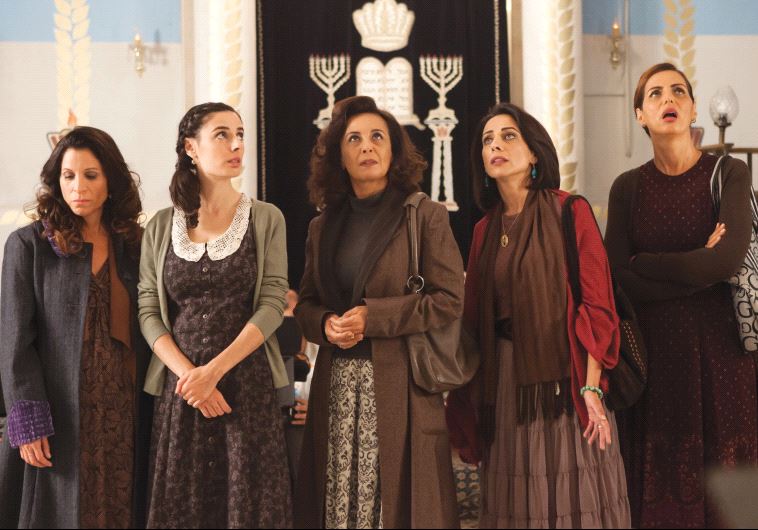
A community of women in a traditional culture revolt in the delightfully smart and funny Israeli comedy The Women’s Balcony. The balcony in a small Jerusalem synagogue collapses, and the building is condemned. The old rabbi’s wife is seriously injured, and he suffers a trauma-induced psychotic breakdown. Just when it looks like the leaderless congregation will die, a young and charismatic rabbi (Avraham Aviv Alush) appears, enlivens the congregation and repairs the building. But he rebuilds the synagogue WITHOUT the women’s section. Profoundly disrespected, the synagogue’s women strike in protest.
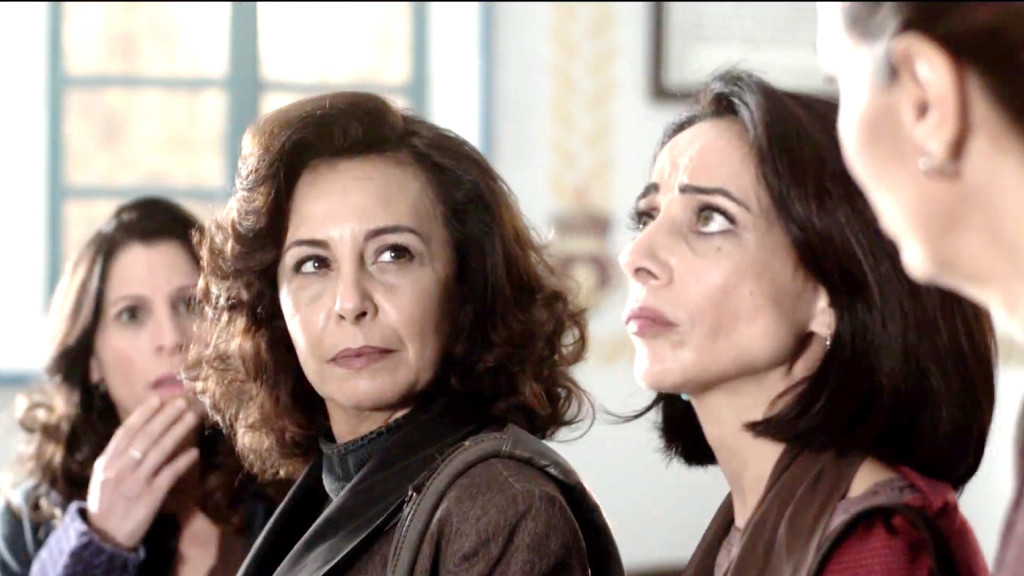
The women live in a culture where males have all the power and religious authority trumps all. The women all have their individually distinct gifts, personalities and rivalries. But they all appreciate the injustice of the situation, and they are really pissed off. They are very creative in finding way to leverage the power that they do have, and the result is very, very funny.
This could have been a very broad comedy (and a Lysistrata knock-off). Instead, it’s richly textured, with an examination of ethical behavior and loving relationships. It’s also dotted with comments on the relations between Israeli Orthodox and Ultra-Orthodox and on the importance of food in this culture. It’s the first – and very promising – feature for both director Emil Ben-Shimon and writer Shlomit Nehana.
THE WOMEN’S BALCONY
There are plenty LOL moments, including a scene where one of the congregants masquerades as the demented old rabbi to secure the needed psychotropic meds.
We soon understand that the young rabbi has a very unattractive side – grossly sexist and power-hungry. But he has seduced the men and then cows them by manipulating his religious authority. He’s tearing apart a closely bound community braided together by decades of deep friendship and inter-reliance. The movie turns on whether the men can recognize when his supposed righteousness veers into what is really unethical and, in one pivotal scene with the old rabbi, indecent.
Two of the male characters, deeply in love with their women, step up and do the right thing. This overt comedy has a very a romantic core.
Most of all, The Women’s Balcony is about mature relationships. Most of these couples have been married for decades, especially the couple at the core of the story, Ettie (Evein Hagoel) and Zion (Igal Naor). Ben-Shimon and Nehana prove themselves to be keen and insightful observers of long-lasting relationships.
A righteous man must keep his woman happy. This may not be written in the Holy Scriptures, but it’s damn useful advice. (It also helps, we learn, if he can make a mean fruit salad.) The longer you’ve been married, the funnier you’ll find The Women’s Balcony.
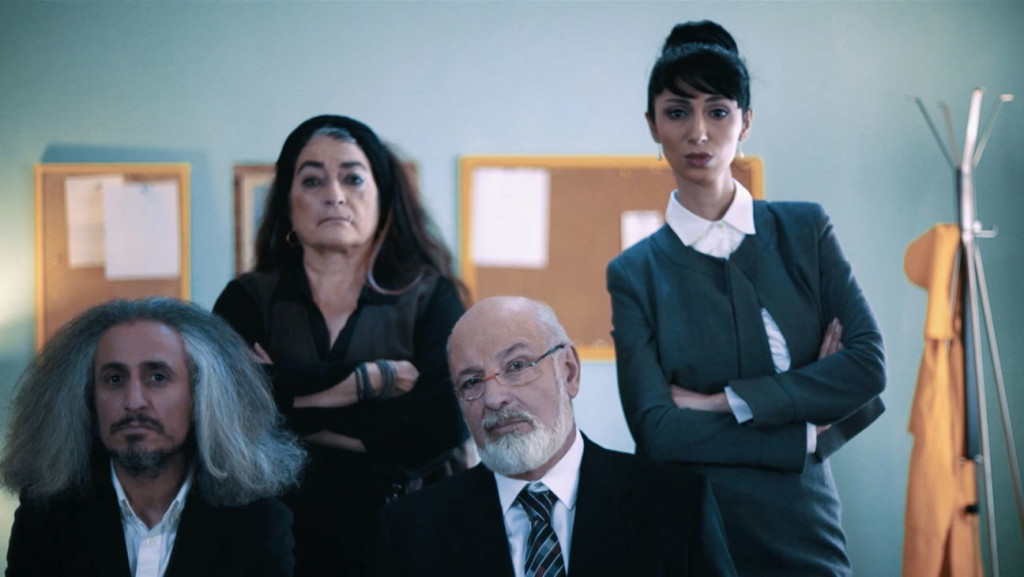
The droll dark comedy Radio Dreams explores the ambivalence of the immigrant experience through the portrait of a flamboyant misfit, a man who rides the roller coaster of megalomania and despair. That misfit is Hamid Royani (Mohsen Namjoo), the director of programming at an Iranian radio station in the San Francisco Bay Area. Radio Dreams opens tomorrow for a one-week-only run at the Roxie Theater in San Francisco.
Hamid, an author in Iran, is a man of great certainty, with an unwavering sense of intellectual superiority He assumes that everyone should – and will – buy in to his idiosyncratic taste. This results in extremely random radio programming, and Hamid tries to sabotage everything that he finds vulgar (which is everything that might bring more listeners and revenue to the station.)
With his wild mane and indulgent programming, we first think that Hamid is simply batty. But immigrants to the US generally forge new identities, and we come to understand that Hamid has not, perhaps will not, forge that new identity. His despair is real but it’s hard to empathize with – he might be a legitimate literary figure in Iran, but he’s probably a pompous ass over there, too.
The highlight of Radio Dreams is Hamid’s reaction when he is surprised that Miss Iran USA, whom he has dismissed as a bimbo, might have literary chops that rivaling his.
Hamid has concocted a plan to have Afghanistan’s first rock band visit with the members of Metallica on air, and that’s the movie’s MacGuffin. As we wait to see if Metallica will really show up, the foibles of the radio station crew dot Radio Dreams with moments of absurdity. There are the cheesy commercials about unwanted body hair, Hamid’s obsession with hand sanitizer, a radio jungle played live on keyboards EVERY time, a new employee orientation that focuses on international time zones, along with a station intern compelled to take wrestling lessons.
Writer-director Babak Jalali is an adept storyteller. As the movie opens, we are wondering, why do these guys have musical instruments? Why are they talking about Metallica? What’s with the ON AIR sign? Much of the movie unfolds before Hamid Royani emerges as the centerpiece character.
Hamid is played by the well-known Iranian singer-songwriter Mohsen Namjoo, “Iran’s Bob Dylan”. This is only Namjoo’s second feature film as an actor. He’s a compelling figure, and this is a very fine performance.
Except for Namjoo, the cast is made up of Bay Area actors. Masters of the implacable and the stone face, all of the actors do deadpan really, really well.
As befits the mix of reality and absurdism, here’s a podcast by the characters in Radio Dreams. I saw Radio Dreams at the Camera Cinema Club, and Babak Jalali took Q&A after the screening by phone from Belgium.
Radio Dreams is the second feature for Jalali, an Iranian-born filmmaker living and working in Europe. He shot Radio Dreams with a small crew over only 24 days in San Francisco. About 60% of the dialogue was scripted and 40% improvised. The band in the movie, Kabul Dreams, really is Afghanistan’s first rock band, they did get to meet Metallica in real life and the PARS-FM were filmed at a real Iranian radio station in the Bay Area.
Babak Jalali is a promising filmmaker and Radio Dreams is a movie that we haven’t seen before.
The droll dark comedy Radio Dreams explores the ambivalence of the immigrant experience through the portrait of a flamboyant misfit, a man who rides the roller coaster of megalomania and despair. That misfit is Hamid Royani (Mohsen Namjoo), the director of programming at an Iranian radio station in the San Francisco Bay Area.
Hamid, an author in Iran, is a man of great certainty, with an unwavering sense of intellectual superiority He assumes that everyone should – and will – buy in to his idiosyncratic taste. This results in extremely random radio programming, and Hamid tries to sabotage everything that he finds vulgar (which is everything that might bring more listeners and revenue to the station.)
With his wild mane and indulgent programming, we first think that Hamid is simply batty. But immigrants to the US generally forge new identities, and we come to understand that Hamid has not, perhaps will not, forge that new identity. His despair is real but it’s hard to empathize with – he might be a legitimate literary figure in Iran, but he’s probably a pompous ass over there, too.
The highlight of Radio Dreams is Hamid’s reaction when he is surprised that Miss Iran USA, whom he has dismissed as a bimbo, might have literary chops that rivaling his.
Hamid has concocted a plan to have Afghanistan’s first rock band visit with the members of Metallica on air, and that’s the movie’s MacGuffin. As we wait to see if Metallica will really show up, the foibles of the radio station crew dot Radio Dreams with moments of absurdity. There are the cheesy commercials about unwanted body hair, Hamid’s obsession with hand sanitizer, a radio jungle played live on keyboards EVERY time, a new employee orientation that focuses on international time zones, along with a station intern compelled to take wrestling lessons.
Writer-director Babak Jalali is an adept storyteller. As the movie opens, we are wondering, why do these guys have musical instruments? Why are they talking about Metallica? What’s with the ON AIR sign? Much of the movie unfolds before Hamid Royani emerges as the centerpiece character.
Hamid is played by the well-known Iranian singer-songwriter Mohsen Namjoo, “Iran’s Bob Dylan”. This is only Namjoo’s second feature film as an actor. He’s a compelling figure, and this is a very fine performance.
Except for Namjoo, the cast is made up of Bay Area actors. Masters of the implacable and the stone face, all of the actors do deadpan really, really well.
As befits the mix of reality and absurdism, here’s a podcast by the characters in Radio Dreams. I saw Radio Dreams at the Camera Cinema Club, and Babak Jalali took Q&A after the screening by phone from Belgium.
Radio Dreams is the second feature for Jalali, an Iranian-born filmmaker living and working in Europe. He shot Radio Dreams with a small crew over only 24 days in San Francisco. About 60% of the dialogue was scripted and 40% improvised. The band in the movie, Kabul Dreams, really is Afghanistan’s first rock band, they did get to meet Metallica in real life and the PARS-FM were filmed at a real Iranian radio station in the Bay Area.
Babak Jalali is a promising filmmaker and Radio Dreams is a movie that we haven’t seen before.
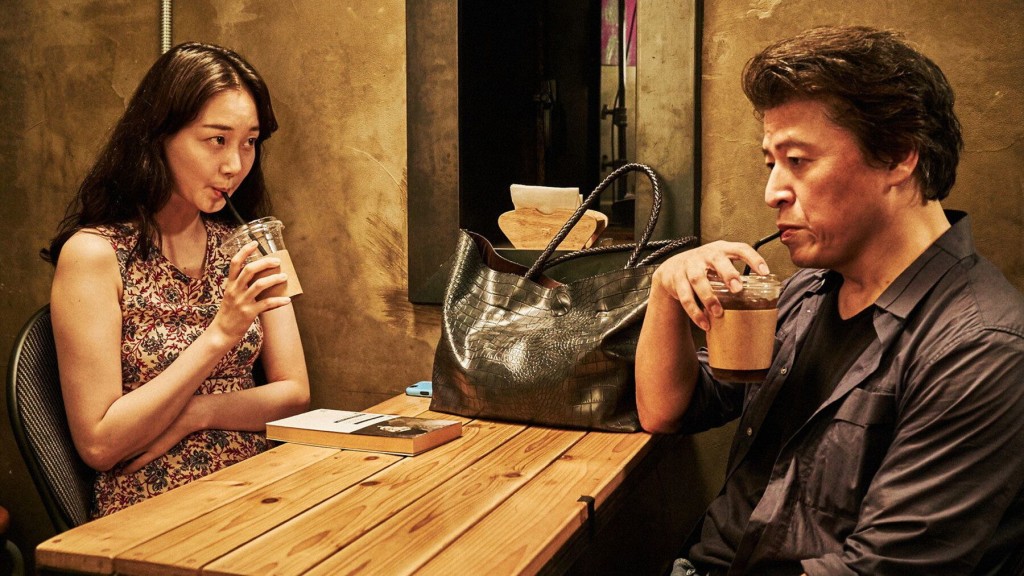
The absurdism of Luis Buñuel meets the social awkwardness of Seinfeld in Hong Sang-soo’s Koran comedy Yourself and Yours. I just saw Yourself and Yours (Dangsinjasingwa dangsinui geot) at the San Francisco International Film Festival (SFFILMFestival). In an Only-At-SFFILM moment, I (a Hong Sang-soo newbie) was surrounded in the audience by devoted Hong Sang-soo fans.
In Yourself and Yours, Minjung (Lee You-young) dumps her boyfriend (Kim Joo-hyuck) after he objects to her heavy drinking (“I’ve stopped drinking – now I only stop after five rounds”). Then another man thinks that he meets Minjung, but she claims that she is Minjung’s identical twin. We’re not so sure about that. And then she meets ANOTHER man, and her identity remains in question. Her original boyfriend is comically bereft, and he’s on the lookout for her, too.
One character says “You men are all pathetic”, and Minjung proves that point at every opportunity. In a deliberate homage to Buñuel’s That Obscure Object of Desire, Lee You-young plays the role of Minjung and her multiple doppelgängers (unless they are all really Minjung herself). There are plenty of LOL moments as Yourself and Yours winds its way full circle to a satisfyingly sly finale.
The San Francisco International Film Festival opens tomorrow night, so this week’s video pick is my favorite film from the 2016 SFIFF. One of the best films of the year, Chevalier is a sly and pointed exploration of male competitiveness, with the moments of drollness and absurdity that we expect in the best of contemporary Greek cinema. Chevalier is also now the Most Overlooked Movie of 2016, and I’m hoping that its popularity explodes now that it’s available on video.
In Chevalier, six guys are taking a holiday week on a yacht in the Aegean Sea. Each has his own stateroom, and the crew includes a chef. They spend their days scuba diving, jet skiing and the like. After a post-dinner game of charades, one suggests that they play Chevalier, a game about “Who is best overall?”. Of course, men tend to be competitive, and their egos are now at stake. The six guys began appraising each other, and their criteria get more and more absurd. “How many fillings do you have?”
In one especially inspired set piece, the guys race each other to construct IKEA bookcases, which results in five phallic towers on the boat’s deck (and one drooping failure). Naturally, some of the guys are obsessed with their own erections, too.
Director Athina Rachel Tsangari is obviously a keen observer of male behavior. Both men and women will enjoy laughing at male behavior taken to extreme. I sure did. Chevalier is perhaps the funniest movie of 2016, and it’s on my list of Best Movies of 2016 – So Far.
I saw Chevalier at the 59th San Francisco International Film Festival (SFIFF), where I pegged it as the Must See of the fest. (In 2011, Tsangari brought her hilariously offbeat Attenberg to SFIFF.) Unfortunately, in the Bay Area, Chevalier only got a blink-and-you’ve-missed-it release in June. Chevalier is now available to rent on DVD from Netflix and to stream from Netflix Instant, Amazon Instant, iTunes, Vudu, YouTube and Google Play.
Athina Rachel Tsangari, director of CHEVALIER . Photo courtesy of San Francisco Film Society
The title character in the agreeable misfit comedy Carrie Pilby (Bel Powley) is literally a genius, a girl with such high intelligence that she enrolled at Harvard at age 14. That experience proved to be better for her intellectual development than for her emotional development. Now she’s 19, a year out of college and holed up in her Manhattan apartment pretending that she’s anti-social because no one is smart enough to engage with her. She emerges only to see her therapist (Nathan Lane), who assigns her some tasks to draw her out, and comic adventures ensue.
Carrie sequentially encounters three dreamy-looking guys and all of the male characters except one are very sensitive. But Carrie Pilby isn’t one of those Chick Flicks that men won’t enjoy.
Powley is very good at making the audience relate to someone by definition very unlike us. She has mastered the comic take and has excellent timing.
I watched Carrie Pilby at a Cinequest screening with director Susan Johnson. Johnson says that the source material, a popular novel, “was about not judging a book by its cover”. She continued, “Think about your own journey and not judging others – that’s kind of deep for a comedy”. Johnson, who shot the film in only 20 days, said that her favorite scene was the prayer scene.
Carrie Pilby is an enjoyable comedy. It opens theatrically on March 31, on VOD on April 4 and will be on Netflix in September.
In the comedy The Last Word, Shirley MacLaine plays a control freak of absolutely unstoppable will. This is a person who is obsessed with getting her own way on even the most inconsequential detail. She is living a wealthy retirement, having been forced out of the company she founded when her behavior becomes too unbearable for everyone else. Facing her mortality, she decides to employ an obituary writer (Amanda Seyfried) to favorably pre-write her obit. The challenge, of course, is that no one – family members, former co-workers, anyone – has anything nice to say. This sets up an Odd Couple comedy until it becomes an Odd Trio when Harriet seeks to improve her obit profile by mentoring a disadvantaged nine-year-old (AnnJewel Lee Dixon).
Often contrived, The Last Word isn’t a masterpiece, but it has three things going for it:
Shirley MacLaine is in full willful grandeur, and her performance is tour de force.
Supporting players: Anne Heche is priceless in a “she is your daughter” scene. AnnJewel Lee Dixon is a force of nature herself, kind of a Shirley Mini-Me. Philip Baker Hall is a wonderful match for Maclaine. Thomas Sodoski is always appealing.
The remarkably smart soundtrack, which almost becomes a character of its own.
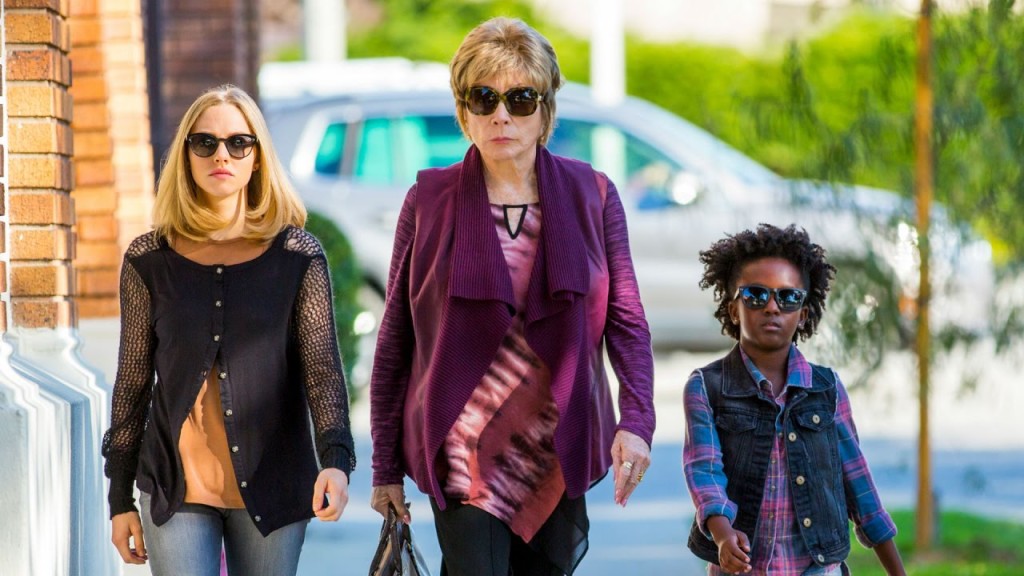
I did also appreciate the brief homage to Reservoir Dogs, the slo-mo power stride with sunglasses (pictured above).
I saw The Last Word at Cinequest at a screening with director Mark Pellington, who noted that The Last Word took 25 days to film. Crediting his music supervisor for finding obscure and affordable songs, he said, “the music works on an infectious level”. Describing the scene where the three actresses take a moonlit dip in a pond, he said, “I love that their laugh deflates the symbolism of it”. His favorite scene was the obne when Philip Baker Hall tells Shirley MacLaine, “I knew what I was getting when I married you”, which inspired Pellington’s next movie Nostalgia (now in post-production).
The title character in the agreeable misfit comedy Carrie Pilby (Bel Powley) is literally a genius, a girl with such high intelligence that she enrolled at Harvard at age 14. That experience proved to be better for her intellectual development than for her emotional development. Now she’s 19, a year out of college and holed up in her Manhattan apartment pretending that she’s anti-social because no one is smart enough to engage with her. She emerges only to see her therapist (Nathan Lane), who assigns her some tasks to draw her out, and comic adventures ensue.
Carrie sequentially encounters three dreamy-looking guys and all of the male characters except one are very sensitive. But Carrie Pilby isn’t a Chick Flick that men won’t enjoy.
Powley is very good at making the audience relate to someone by definition very unlike us. She has mastered the comic take and has excellent timing.
I watched Carrie Pilby at Cinequest; at a screening with director Susan Johnson. Johnson says that the source material, a popular novel, “was about not judging a book by its cover”. She continued, “Think about your own journey and not judging others – that’s kind of deep for a comedy”. Johnson, who shot the film in only 20 days, said that her favorite scene was the prayer scene.
Carrie Pilby is an enjoyable comedy. It opens theatrically on March 31, on VOD on April 4 and will be on Netflix in September.