Movies to See Right Now

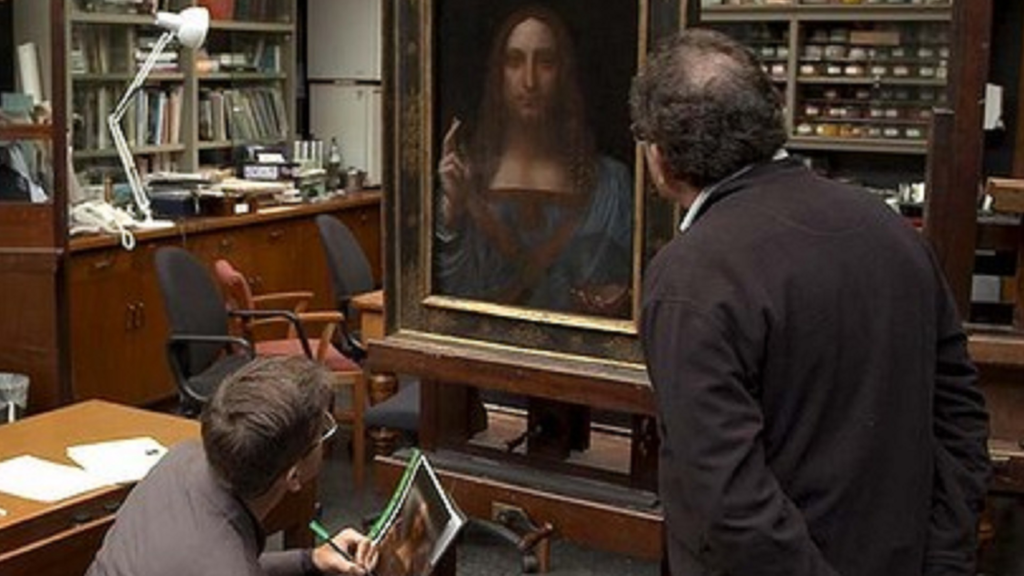
Photo caption: ROADRUNNER: A FILM ABOUT ANTHONY BOURDAIN

This week – my first stab at the Best Movies of 2021 – So Far – and you can see two of them in theaters right now and stream another. Plus the San Francisco Jewish Film Festival (SFJFF) opens, and here’s my SFJFF preview.

PERSIAN LESSONS, opening the SFJFF toinight. Photo courtesy of JFI.

IN THEATERS

Roadrunner: A Film About Anthony Bourdain: An unusually profound, revealing and unsentimental biodoc of a complicated man – a shy bad ass, an outwardly cynical romantic, a brooding humorist. A triumph for director Morgan Neville, Oscar-winner for 20 Feet from Stardom.

Also in theaters:

ON VIDEO

Neutral Ground: C.J. Hunt’s pointed exploration of the continuing legacy of Confederate monuments in America. Plus an essay – more thoughts about Neutral Ground and the Lost Cause lie.

The most eclectic watch-at-home recommendations you’ll find ANYWHERE:

  • Riders of Justice: Thriller, comedy and much, much more. It’s the year’s best movie so far. Amazon, AppleTV, Vudu and YouTube.
  • No Sudden Move: Steven Soderbergh’s neo-noir thriller has even more double-crosses than movie stars – and it has plenty of movie stars. HBO Max.
  • The Courier: amateur among spies. Amazon, Vudu, YouTube and redbox.
  • Truman and Tennessee: An Intimate Conversation: Two gay Southern geniuses, revealing themselves. Laemmle.
  • The Dry: a mystery as psychological as it is procedural. Amazon, AppleTV, Vudu, YouTube.
  • My Name Is Bulger: Two brothers, two paths to power. discovery+.
  • About Endlessness: Damned if I know. Streaming on Amazon, Vudu, YouTube and Google Play.
  • Brewmance: barley, hops, yeast and underdogs. Amazon (included with Prime), AppleTV, Vudu, YouTube and Google Play.
  • Hamlet/Horatio: More tragedy, less angst. Amazon, AppleTV, Google Play.
  • Louder Than Bombs: An intricately constructed family drama. Amazon (included with Prime), Vudu and YouTube.
  • That Guy Dick Miller: Putting the “character” in “character actor:” Amazon (included with Prime).
  • Sword of Trust: comedy and so, so much more. Amazon, AppleTV, Vudu, YouTube and Google Play.
  • Run Lola Run: you’ll never see a more kinetic movie. Amazon, AppleTV, Vudu, YouTube and Google Play.

ON TV

John Heard in CUTTER’S WAY

Tonight, Turner Classic Movies will present Cutter’s Way, which I recommended earlier this week. A paranoid thriller framed by post-Vietnam War disillusionment, it features early Jeff Bridges and career-best performances by John Heard and Lisa Eichhorn.

Here’s a choice to complement Summer of Soul. On July 27, TCM will air Monterey Pop (1968). The two music festivals took place within a year of each other – one with a Black audience and one with a mostly White one. The Monterey Pop audience was unfamiliar with – and blown away by Otis Redding’s epic performance.

This is one of the few DVDs that I still own, for the performances by Redding, the Mamas and the Papas, Jimi Hendrix, Janis Joplin, Canned Heat, Simon and Garfunkle, Jefferson Airplane, Eric Burdon and the Animals, Country Joe and the Fish and The Who.  

It’s okay with me if you fast forward over Ravi Shankar.  Don’t miss the reaction of Mama Cass Elliot, sitting in the audience, to Janis Joplin. Pete Townsend and Jimi Hendrix had a guitar-destroying competition, which Hendrix, aided by lighter fluid, undeniably won. 

Otis Redding in MONTEREY POP

Best Movies of 2021 – So Far

Photo caption: RIDERS OF JUSTICE, a Magnet release. © Kasper Tuxen. Photo courtesy of Magnet Releasing.

Every year, I keep a running list of the best movies I’ve seen this year.  By the end of the year, I usually end up with a Top Ten and another 5-15 mentions. Here are my Best Movies of 2020 and Best Movies of 2019 lists.

To get on my year-end list, a movie has to be one that thrills me while I’m watching it and one that I’m still thinking about a couple of days later.

THE BEST OF THE YEAR

Here’s the running list as of mid-July:

  • Riders of Justice: A character-driven comedy thriller, embedded with deeper stuff. Marvelous. Amazon, AppleTV, Vudu and YouTube.
  • Summer of Soul (…Or, When the Revolution Could Not Be Televised): Questlove’s magnificent revelation of the long-overlooked 1969 Harlem Cultural Festival – glorious musical performances at an important moment in our history and culture. In theaters and streaming on Hulu.
  • Roadrunner: A Film About Anthony Bourdain: An unusually profound, revealing and unsentimental biodoc of a complicated man – a shy bad ass, an outwardly cynical romantic, a brooding humorist. A triumph for director Morgan Neville, Oscar-winner for 20 Feet from Stardom.
  • About Endlessness: The master of the droll, deadpan and absurd probes the meaning of life. One of the best movies of the year, but NOT FOR EVERYONE. Streaming on Amazon, Vudu, YouTube and Google Play.
  • Slow Machine: An incomprehensible art film that is surprisingly engrossing.
  • Special mention: Lune: This Canadian indie, the Must See at this year’s Cinequest, is an astonishingly authentic exploration of bipolar disorder. A mother and teen daughter must navigate the impacts of the mom’s illness. Played by writer and co-director Aviva Armour-Ostroff, the mom Miriam is the most singular movie character I’ve seen recently. Miriam’s streams of manic speech have the rhythm of poetry. On the festival circuit and not yet available to stream.

Note that you see Summer of Soul and Roadrunner in theaters this week, and you can stream Summer of Soul and Riders of Justice at home.

There’s still plenty of room for more excellent 2021 movies. I’m especially eager to see the new works from directors Sean Baker, Asgar Farhadi, Joachim Trier, Hong Sang-soo, Todd Haynes, Joanna Hogg, Pedro Almodovar, Jacques Audiard, Emmanuelle Bercot, Charlotte Gainsbourg, Arnaud Deplechin, Leos Carax, Francois Ozon, Paul Verhoeven, Ruben Ostlund and Valdimar Johannson. Stay tuned.

Mavis Staples and Mahalia Jackson in SUMMER OF SOUL (…OR, WHEN THE REVOLUTION COULD NOT BE TELEVISED)

more thoughts about THE NEUTRAL GROUND and the Lost Cause lie

Dedication of the Robert E. Lee statue in Charlottesville, Virginia

C.J. Hunt, in his insightful and thought-provoking documentary The Neutral Ground, explores the lie of the Lost Cause, which is still embraced by many White Southerners and is the rationale for preserving Confederate monuments. That myth is that that the Civil War was about a principle of “States Rights” somehow divorced from slavery, and that the Southern cause in the Civil War was romantically heroic.

At one point, Hunt observes,

“The founding documents of the Confederacy talk so obsessively about slavery, the real mystery is how so many people came to believe that Confederate symbols have nothing to do with it.”

Not only is Hunt dead right, but you can read the actual declarations of the causes of secession yourselves. The truth is inescapable – the South fought the Civil War PRIMARILY to continue slavery.

The SECOND SENTENCE of Mississippi’s declaration is “Our position is thoroughly identified with the institution of slavery”.

Texas identified this grievance against the Northern States:

“based upon an unnatural feeling of hostility to these Southern States and their beneficent and patriarchal system of African slavery, proclaiming the debasing doctrine of equality of all men, irrespective of race or color– a doctrine at war with nature, in opposition to the experience of mankind, and in violation of the plainest revelations of Divine Law. They demand the abolition of negro slavery throughout the confederacy, the recognition of political equality between the white and negro races, and avow their determination to press on their crusade against us, so long as a negro slave remains in these States.”

One of South Carolina’s grievances against the northern states was, without irony, “They have encouraged and assisted thousands of our slaves to leave their homes.”

It is clear from reading the official actions of the Southern states AT THE TIME that the only relevance of “States Rights” was to continue and expand slavery. Baby Boomers recall that “States Rights” was code for “racial segregation” in the 1950s and 1960s. Same thing.

The Neutral Ground also documents that, after the subversion of Reconstruction in the last quarter of the 19th Century, Confederate statues were intentionally placed to impose terror and demonstrate White supremacist power. See the photo (above) of the dedication of the Charlottesville, Virginia, statue of Robert E. Lee during this period. The dedication is ringed by robed and hooded Ku Klux Klan members. Everybody AT THE TIME knew what was going on,

Unfortunately, Southern Whites have lived in a Lost Cause echo chamber for a century. It has become more offensive to tell them that the Civil War was about slavery than to suggest that Jesus was not the son of God.

The German people embraced a “stab in the back” lie to explain their defeat in WWI. That, of course, led to the Nazi regime, a second world war, mass genocide and the destruction of Germany itself. Today’s Germans know that they can be proud of their contributions to world culture, industry and science and still accept that following Hitler was a grievous mistake. Good luck finding a contemporary German who will say, “Hey, none of us actually believed all that stuff about a Master Race”.

THE NEUTRAL GROUND: the supremacist legacy of old statues

Photo caption: C.J. Hunt in NEUTRAL GROUND. Photo courtesy of PBS POV.

In the pointed documentary The Neutral Ground, C.J. Hunt explores the continuing legacy of Confederate monuments in America. Finding the backlash against removing New Orleans’ Confederate monuments so absurd, Hunt, a producer for The Daily Show, started out to make a snarky YouTube video. But he found himself drawn more deeply into the history of Confederate monuments, so intentionally braided with white supremacy.

In my view (and C.J. Hunt’s), it’s a no-brainer to remove monuments that should never have been erected in the first place. After all, these monuments celebrate men who led a traitorous insurrection against their own country, who sought to keep other human beings enslaved and who lost a disastrous war. Traitors. Slavers. Losers.

But Hunt is fascinated by the chorus of White Southerners advocating for the preservation of Confederate monuments to maintain pride in (White) Southern heritage. All of them claim that the Civil War was not about slavery. And none of them would say that they are White supremacists or that slavery was acceptable. Hunt notes a disconnect with historical fact:

The founding documents of the Confederacy talk so obsessively about slavery, the real mystery is how so many people came to believe that Confederate symbols have nothing to do with it.

I am a student of American history, and this is one of my pet peeves. If you’re interested, you can read more thoughts about THE NEUTRAL GROUND and the Lost Cause lie.

Now back to the movie, The Neutral Ground.

Hunt is very funny. To a woman who wants to keep all the statues in their prominent places with plaques for context, he suggests this wording: “Hi, I’m Robert E. Lee. A long time ago, I turned on my country and led over 200,000 Southern sons to their graves, so we could keep our basic right to own human beings as property. #SorryI’mNotSorry“.

After meeting a round of genteel “as long as you stay in your place” racists, Hunt is unnerved by encounters with the “I want to kill you” variety of racists.

For me, the highlights of The Neutral Ground were Hunt’s sparring with his own African-American father. His dad, moving about his kitchen in an Aunt Jemima apron, critically recounts the evolution of C.J.’s own racial awareness and imparts his own unblinking view of institutional racism in America. This repartee sets the stage for The Neutral Ground to become even more personally-focused for C.J. Hunt.

I watched The Neutral Ground on PBS’ POV; it’s now streaming on PBS.

Coming up on TV – CUTTER’S WAY – sometimes there really is a conspiracy

Photo caption: John Heard and Jeff Bridges in CUTTER’S WAY

This Friday, July 23, Turner Classic Movies brings us the overlooked 1981 neo-noir Cutter’s Way. A paranoid thriller framed by post-Vietnam War disillusionment, it features an early Jeff Bridges and career-best performances by John Heard and Lisa Eichhorn.

Bridges plays Bone, an aimless and hedonist slacker, bumming around the Santa Barbara yacht harbor. Bone’s buddie Cutter (Heard), a disabled Vietnam War vet, and Cutter’s wife Mo (Eichhorn) are decidedly not Yacht Club material. Cutter has been physically and emotionally scarred by the war, and Mo is damaged by what Cutter has become (a bitter drunk).

Lisa Eichorn and John Heard in CUTTER’S WAY

One night, Bone thinks he has witnessed the dumping of a murder victim. As he pokes around, he finds himself framed for the murder.

Bone becomes understandably engrossed and comes to a conspiracy theory, but then the stakes keep going up and up. Bone is a witness and then a suspect; Cutter is a kibitzer and then a victim. Cutter becomes even more obsessed than is Bone.

Santa Barbara Founder’s Day parade in CUTTER’S WAY

The marginalized trio finds itself in the tony Spanish-style clubs and posh haunts of Santa Barbara’s rich elite. From its beginning at the yacht harbor and the Founder’s Day Parade, Santa Barbara is a core ingredient in Cutter’s Way, and it’s still the best film set in Santa Barbara.

Cutter’s Way perfectly captures the post-Viet Nam cynicism that was an ideal petri dish for escalating paranoia. The screenplay was adapted by Jeffrey Alan Fishkin from a novel by Newton Thornburg.

Director Ivan Passer came out of the Czech New Wave (Intimate Lighting) to work in the US (fifteen features including award-winning Haunted Summer and Robert Duvall’s Stalin). My favorite Passer film is Cutter’s Way.

TCM will air Cutter’s Way on Friday in its July neo-noir series, hosted by Eddie Muller and Ben Mankiewicz.

I watched it again recently and it still holds up; you can stream it from Amazon, iTunes, Vudu, YouTube and Google Play.

John Heard in CUTTER’S WAY

Good news for cinephiles – the SFJFF is back

Photo caption: Nahuel Pérez Biscayart in PERSIAN LESSONS,opening the San Francisco Jewish Film Festival. Photo courtesy of JFI.

One of the Bay Area’s top cinema events is back – the San Francisco Jewish Film Festival (SFJFF) runs from July 22 to August 1. This year’s festival is a hybrid, including both movies to stream-at-home and in-person screenings at San Francisco’s Castro Theatre. The SFJFF is the world’s oldest and largest Jewish film festival, and the program offers over 50 films from over 20 countries.

The opening night film at the Castro, Persian Lessons, is especially strong. A Belgian Jew is sent to a German concentration camp and seeks to avoid death by claiming to be Persian, not anticipating that a Nazi officer will demand to be taught Farsi. To stay alive, the protagonist must invent an entire faux Farsi language, word-by-word, and remember it. All the while he’s sweating out the possibility that his ruse will be discovered. Persian Lessons walks a tightrope, and the ending is very emotionally powerful.

The SFJFF always presents an impressive slate of documentaries, recently including What She Said: The Art of Pauline Kael, Satan & Adam, Bombshell: The Hedy Lamarr Story, The Mossad and Levinsky Park. Among this year’s program, I liked Kings of Capitol Hill, an Israeli’s filmmaker’s insiders’ exposé of AIPAC, the American pro-Israel advocacy group.

One of the strengths of recent SFJFF festivals has been its promotion of films that explore aspects of the Israeli-Palestinian conflict. This year, Kings of Capitol Hill is one of seven films in the SFJFF program, both documentary and narrative, that touch on this topic.

I was also intrigued by the stylish Canadian indie narrative Sin la Habana, which braided together the yearnings of an Afro-Cuban couple and a Jewish-Iranian woman in Montreal.

You can peruse the festival’s program and schedule at SFJFF.

Yonah Acosta Gonzalez in SIN LA HABANA. Photo courtesy of JFI.

SIN LA HABANA: land of opportunity?

Yonah Acosta Gonzalez in SIN LA HABANA. Photo courtesy of JFI.

The stylish Canadian indie Sin la Habana braids together the yearnings of an Afro-Cuban couple and a Jewish-Iranian woman.

Leonardo (Yonah Acosta Gonzalez) is a Havana ballet dancer frustrated by what he sees as racist favoritism in his company. It doesn’t help that he is an impulsive hothead. His beautiful and canny girlfriend Sara (Evelyn Castroda O’Farrill) is a lawyer. In the socialist paradise of Cuba, their incomes consign them to a cramped, squalid apartment. They want out.

Sara concocts a plan – Leonardo will seduce a foreign tourist who can invite him to leave Cuba; once legally ensconced in the first world, Leonardo will send for Sara.

Evelyn Castroda O’Farrill and Yonah Acosta Gonzalez in SIN LA HABANA. Photo courtesy of JFI.

The cynical scheme begins to work. Leonardo gives salsa lessons (and more) to a Canadian visitor, Nasim (Aki Yaghoubi). Nasim, who is Jewish-Iranian, brings Leonardo back to Montreal.

But then stuff happens. Leonardo is not welcomed as the ballet star that he sees himself to be, and it’s unexpectedly more difficult for him to get the job that will bring him legal residence. And Nasim turns out to be far less of a dupe than first apparent.

The ending is well-crafted and authentic.

Sin la Habana is visually arresting from the very first shot, a closeup of a rooster’s red eye soon followed by arty shots of ballet practice. Havana feels steamy and Montreal feels frigid.

Aki Yaghoubi in SIN LA HABANA. Photo courtesy of JFI.

It’s pretty clear that writer-director Kaveh Nabatian, cinematographer Juan Pablo Ramírez and editor Sophie Leblond know how to tell a story with cinema. There are a couple too many flashbacks of Santería rituals, but Sin la Habana is otherwise well-paced.

I screened Sin la Habana for this year’s San Francisco Jewish Film Festival, which opens on Friday. You can peruse the festival’s program and schedule at SFJFF, and here’s my own SFJFF preview. Here’s where you can stream Sin la Habana.

KINGS OF CAPITOL HILL: evolution of a lobby

Benjamin Netanyahu in KINGS OF CAPITOL HILL. Photo courtesy of JFI.

The Israeli documentary Kings of Capitol Hill traces the history of an American political institution, the American Israel Public Affairs Committee (AIPAC). Founded as a lobby group to advocate for the interests of Israel, AIPAC has grown in power and has shifted (and narrowed) its mission.

AIPAC is controversial because the policies of the recent right-wing Israeli governments, supported by AIPAC, and those of most Jewish-Americans have diverged.

Kings of Capitol Hill highlights two pivotal moments. The first came in 1984 when Paul Simon unseated Charles Percy as US Senator from Illinois, and AIPAC was given the credit and the accompanying political fearsomeness. The second came a decade later, when AIPAC abruptly rejected bipartisanship to become a mouthpiece for the Israeli Right and the US Republican Party.

For 60 years, AIPAC leaders have refused to be interviewed about the organization. Israeli filmmaker Mor Loushy has secured the oral histories of many of AIPAC’s top leadership from its founding and fashioned them into a compelling story.

Note: The film was completed before both Donald Trump and Benjamin Netanyahu, two of Kings of Capitol Hill’s villains, were unseated in the past nine months.

I screened Kings of Capitol Hill for this year’s San Francisco Jewish Film Festival, which opens on Friday. You can peruse the festival’s program and schedule at SFJFF, and here’s my own SFJFF preview. Here’s where you can stream Kings of Capitol Hill.

ROADRUNNER: A FILM ABOUT ANTHONY BOURDAIN – bad ass romantic

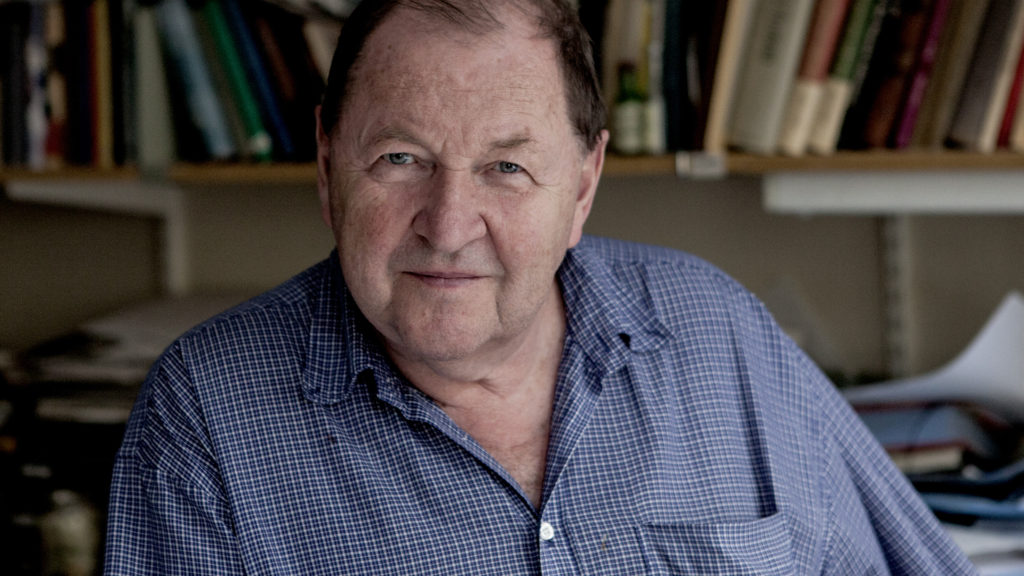
Photo caption: ROADRUNNER: A FILM ABOUT ANTHONY BOURDAIN

Roadrunner: A Film About Anthony Bourdain is an unusually profound, revealing and unsentimental biodoc. Rarely has a documentary revealed so much about such a complicated and ambiguous person. Roadrunner deliberately builds into a triumph for director Morgan Neville, Oscar-winner for 20 Feet from Stardom.

In Roadrunner, we hear from Bourdain’s brother, second wife and his close friends and associates. His friends were creatives – artists, musicians, writers, chefs. His work partners — agent, publisher, producers, TV crew – had all stayed with him for many years.

Bourdain attained overnight celebrity as the Bad Boy chef with his ribald and iconoclastic memoir Kitchen Confidential. That platform propelled him into his television career as a traveling professional foodie – and then as a professional traveler.

I didn’t know that, before his TV shows, Bourdain had not traveled outside the US except for boyhood visits to family in France. One friend observes that, “his travels were in his head“. Tony himself was allured by the chance to “have adventures while antisocial“. Bourdain’s brother said that Tony was “reborn” through travel.

ROADRUNNER: A FILM ABOUT ANTHONY BOURDAIN

Bourdain was so fun to watch because he was a kind of adult Holden Caulfield, perpetually aggrieved by phoniness in any form. The dark humor in his caustic observations was unfiltered. Yet, Bourdain was an unexpectedly shy man for such a bad ass. Often, when someone (including Bourdain himself) made an incisive statement, Tony would furtively glance directly into the camera – was this his “tell”?

His friends saw Bourdain, despite his overt cynicism, as a romantic . Romantics are always disappointed in – and sometimes betrayed by – reality.

Roadrunner: A Film About Anthony Bourdain does reveal what upset him on the night that he, cold sober, chose to kill himself. But it doesn’t label that disappointment as the simplistic reason for his suicide. Instead, Roadrunner thoughtfully documents his life as a “runner”, focusing his addictive personality on everything from heroin to jujitsu to evade his demons.

Ultimately, Roadrunner is about the people who loved Tony and his difficulty in accepting their love. The saddest scene in Roadrunner recounts when Tony dramatically summoned his producers and proclaimed that he needed to quit; he never anticipated that, far from pushing back, that they would be wholly supportive.

Bourdain was beloved by his fans (including me). If you need a dose of the sentimentality that Roadrunner eschews (and there’s nothing wrong with that), CNN-produced retrospectives are available in episodes 93 and 95 of Parts Unknown, which can be streamed from HBO Max.

[Note: Roadrunner has provoked some contretemps in the chattering class. A computer-simulated voice reads one of Bourdain’s emails as if it were Bourdain himself, and Neville chose not to invite Asia Argento, Bourdain’s last girlfriend, to participate as a talking head (although we see and hear plenty of her on film). In both cases, Neville was seeking the fundamental truth about Bourdain and made the absolutely best choices as a filmmaker. Ignore the hoohaw.]

One more thing – Neville went with the perfect ending for Roadrunner: A Film About Anthony Bourdain, so perfect that, now that I’ve seen it, I can’t imagine any better one. This is one of the Best Movies of 2021.

Movies to See Right Now

Photo caption: Sly Stone in SUMMER OF SOUL (…OR, WHEN THE REVOLUTION COULD NOT BE TELEVISED)

This week, the best film in theaters is still Summer of Soul (…Or, When the Revolution Could Not Be Televised). And there’s a long-lost Argentine masterpiece coming up on TCM.

IN THEATERS

Mama Weed: In this French comic thriller, a woman (Isabelle Huppert) embraces an increasingly bizarre and risky plan.  Mama Weed starts out droll and blossoms into madcap.

The Boys in Red Hats: A documentarian’s point of view shifts as he peels back the onion on a social media frenzy. It comes down to insights into media, social media and, especially, White privilege. I screened The Boys in Red Hats for its world premiere at Cinequest,. Now it’s in theaters and also streaming on Virtual Cinema.

Also in theaters:

ON VIDEO

The most eclectic watch-at-home recommendations you’ll find ANYWHERE:

  • Riders of Justice: Thriller, comedy and much, much more. It’s the year’s best movie so far. Amazon, AppleTV, Vudu and YouTube.
  • No Sudden Move: Steven Soderbergh’s neo-noir thriller has even more double-crosses than movie stars – and it has plenty of movie stars. HBO Max.
  • Slow Machine: incomprehensibly engrossing. At Laemmle now and coming to the Roxie.
  • The Courier: amateur among spies. Amazon, Vudu, YouTube and redbox.
  • Truman and Tennessee: An Intimate Conversation: Two gay Southern geniuses, revealing themselves. Laemmle..
  • My Name Is Bulger: Two brothers, two paths to power. discovery+.
  • About Endlessness: Damned if I know. Streaming on Amazon, Vudu, YouTube and Google Play.
  • Bad Tales: perhaps too dark. Virtual Cinema, including Laemmle.
  • Brewmance: barley, hops, yeast and underdogs. Amazon (included with Prime), AppleTV, Vudu, YouTube and Google Play .
  • Hamlet/Horatio: More tragedy, less angst. Amazon, AppleTV, Google Play..
  • Louder Than Bombs: An intricately constructed family drama. Amazon (included with Prime), Vudu and YouTube.
  • That Guy Dick Miller: Putting the “character” in “character actor:” Amazon (included with Prime).
  • Sword of Trust: comedy and so, so much more. Amazon, AppleTV, Vudu, YouTube and Google Play.
  • Run Lola Run: you’ll never see a more kinetic movie. Amazon, AppleTV, Vudu, YouTube and Google Play.
  • The Face of Love: Who is she really in love with? Amazon.
  • Augustine: obsession, passion and the birth of a science. Amazon (included with Prime), AppleTV, Vudu, YouTube and Google Play.

ON TV

Don’t miss the once-lost Argentine film noir masteriece Bitter Stems (Los tallos amargos). On Turner CLassic Movies on Saturday night and Sunday morning on TCM’s Noir Alley.

This image has an empty alt attribute; its file name is bitter-stems.jpg
Vassili Lambrinos and Carlos Cores in BITTER STEMS