WAITING FOR THE LIGHT TO CHANGE. Courtesy of Slamdance.
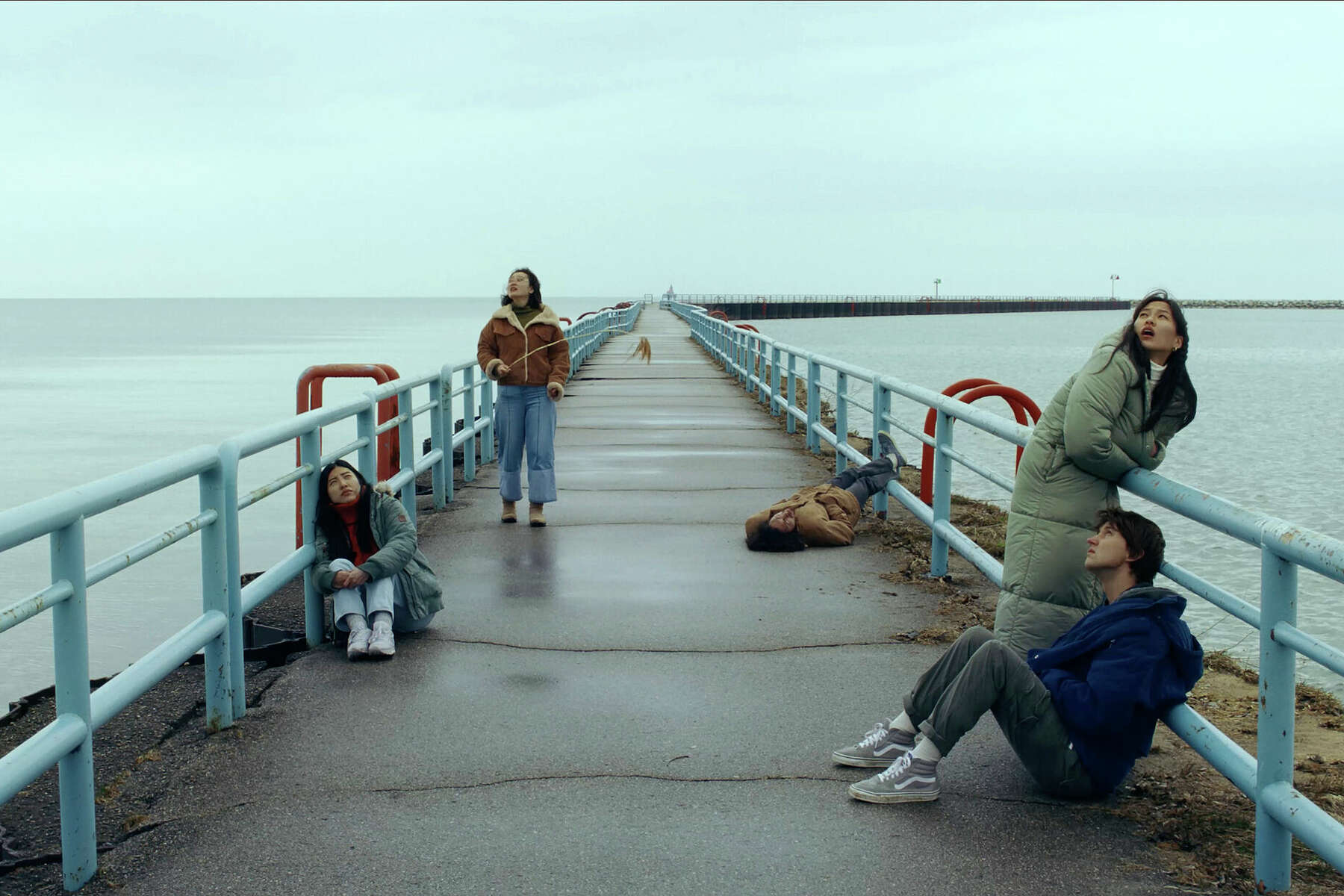
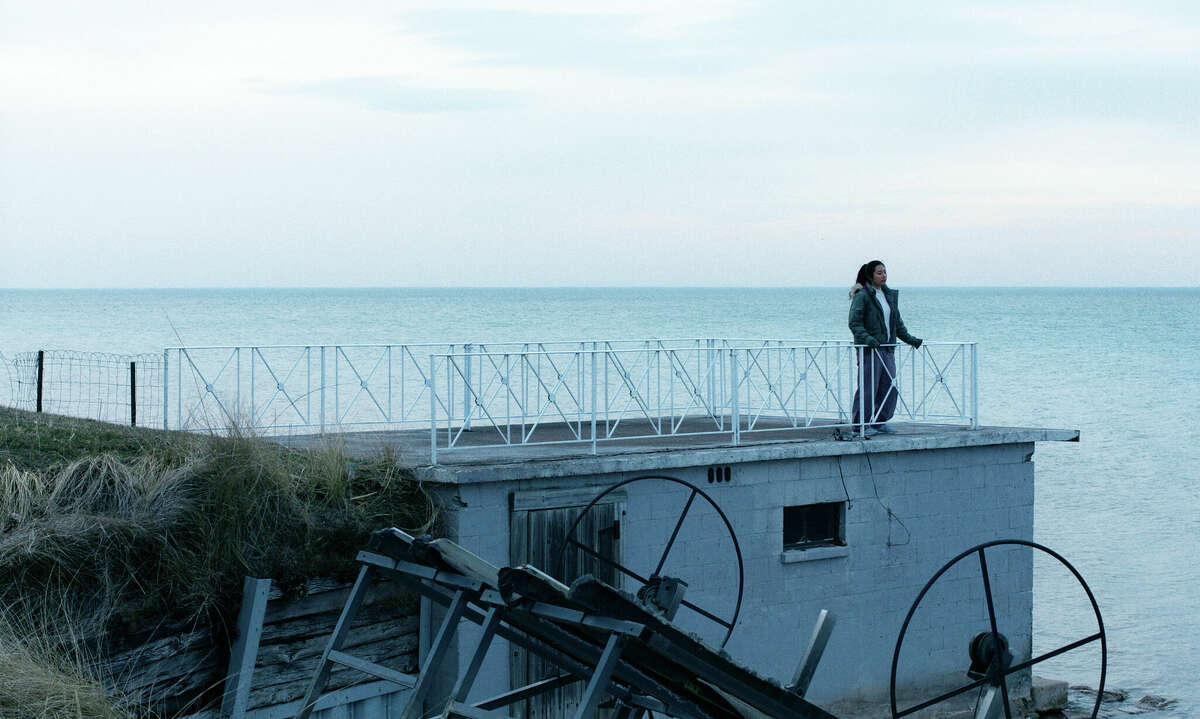
In the reflective and contemplative indie drama Waiting for the Light to Change, five twenty-somethings meet for a long weekend at a secluded lakeside vacation rental – decidedly off-season. Two of the women, Amy (Jin Park) and Kim (Joyce Ma), were originally very close friends, but their lives (jobs in different cities and Kim’s new boyfriend) have moved them apart in recent years.
The three other friends (Sam Straley, Erik Barrientos, Qun Chi) impact the story, but mainly to reflect what is going on between Amy and Kim. I very much appreciated this fresh dynamic in the screenplay – Amy has recently lost a lot of weight and consequently is now much more attractive to men that she has previously been during her friendship with Kim.
The film was shot near Port Austin where Michigan’s Thumb juts into Lake Huron. There’s a boathouse, a dock, some woods to hike in and not much to do when the weather is bleak and chilly. The five, mostly in combinations of two, take measure of their lives, and they already have a lot of regrets for people so young. Waiting for the Light to Change has been pitched as an Asian-American The Big Chill, but the talky tone is more like Whit Stilman’s early films (albeit not about preppy slackers with inherited wealth).
As Amy and Kim probe and spar, and we wait to see how and whether their relationship will survive, Waiting for the Light to Change is a slow, slow burn. So slow that, twice, I thought that I had accidently paused the screener.
Waiting for the Light to Change is the directing debut for Linh Tran, who also co-wrote the screenplay. Tran shows a gift for framing shots, and the audience can’t tell that the film was made for just $20,000.
Waiting for the Light to Change won Slamdance’s Narrative Feature Grand Jury prize.
WAITING FOR THE LIGHT TO CHANGE. Courtesy of Slamdance.
A scene in Brendan Geraghty’s MOTEL DRIVE. Courtesy of Slamdance.
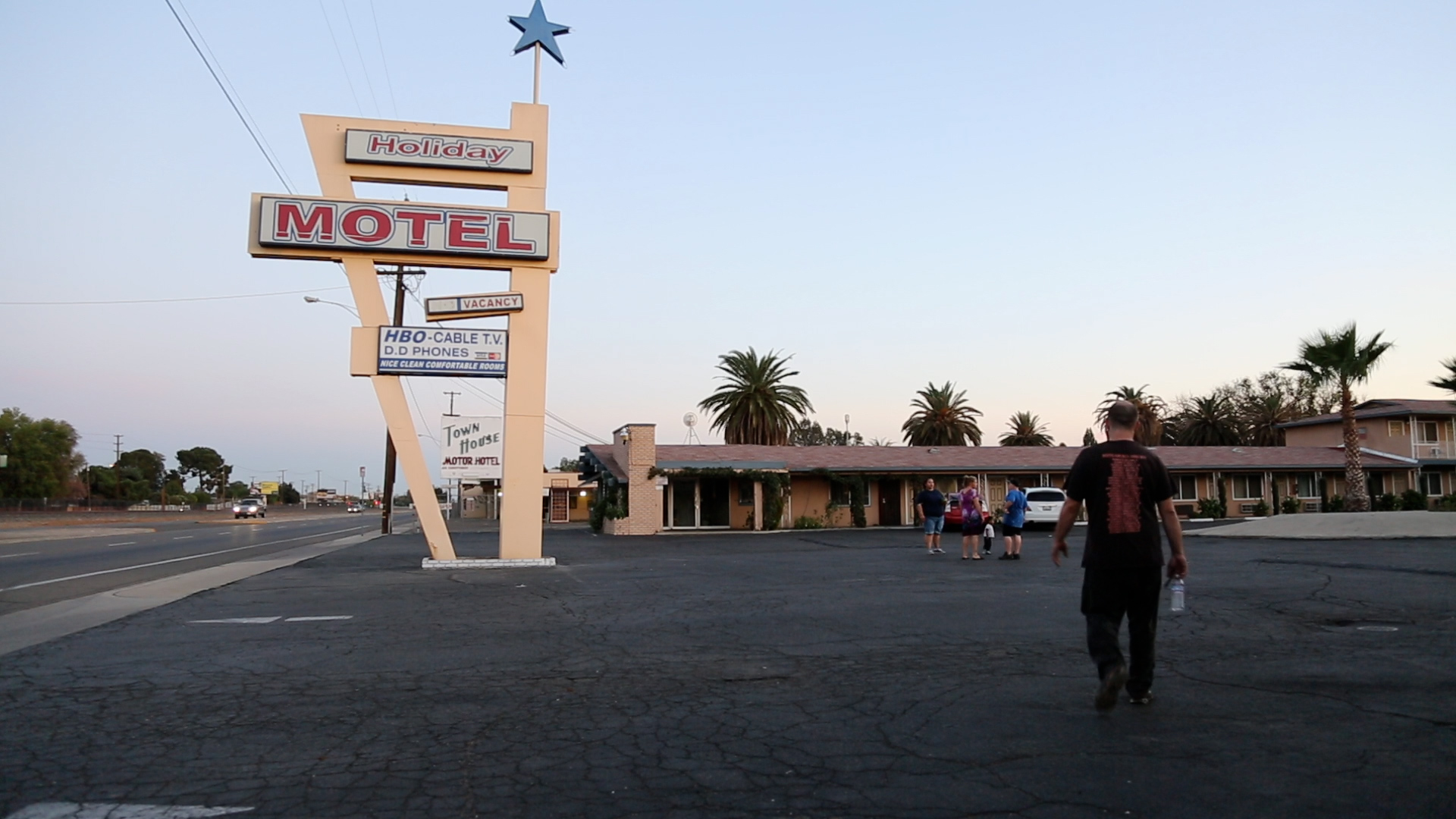
The searing documentary Motel Drive is set in a place none of us would want to be – a clump of three downtrodden motels on a single block in Fresno. The motels have become de facto brothels, emporiums of drug sales and housing-of-last-resort for the otherwise homeless. Registered sex offenders, who are barred from living elsewhere, have been placed in one of the motels. Early in Motel Drive, we learn that over 150 children live there, too, with their mostly meth-addicted parents.
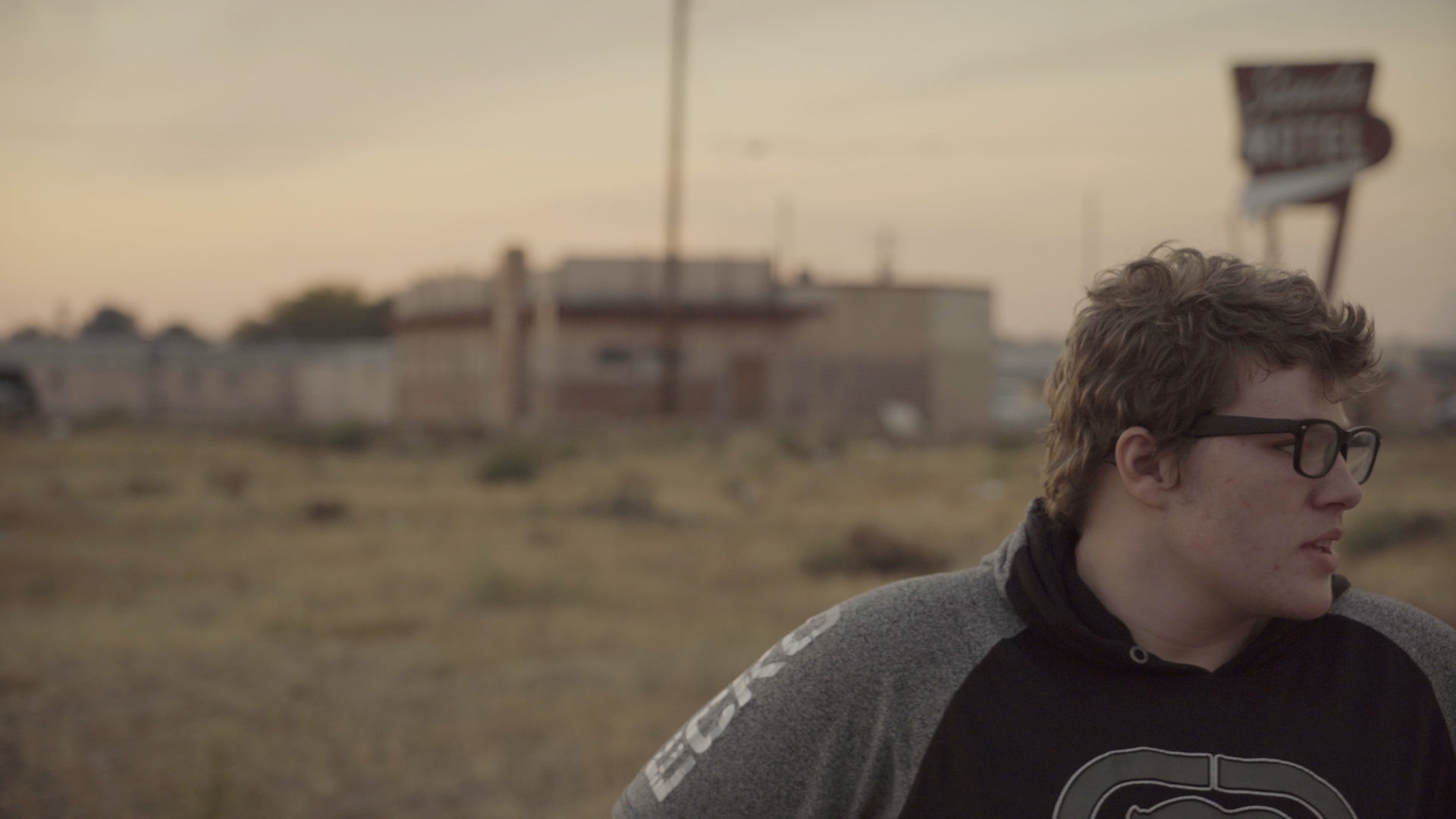
Documentarian Brendan Geraghty has spent seven years following the area’s residents, especially focusing on the Shaw family and their son Justin. The Shaws’ journey is a compelling story, a roller coaster ride of poverty, recovery and relapse with a major stroke of good luck and a shocking consequence to relapse. Addiction is a family disease, and we get a closeup look at the impact on Justin of his parents’ addiction and persistent homelessness.
Justin Shaw in MOTEL DRIVE. Courtesy of Slamdance.
The neighborhood itself is another character in the film, with its own arc driven by neglect and underinvestment, the California High Speed Rail project and changes in government programs on homelessness. We meet saintly do-gooders along with the prostitutes, druggies and the impoverished human flotsam.
Motel Drive is Geraghty’s first feature as a director, and it’s a promising debut; he’s clearly mastered cinéma vérité. Slamdance hosts Motel Drive’s world premiere. As I said in my festival preview, Slamdance: discovering new filmmakers, Justin Shaw was slated to appear on the Slamdance red carpet for Motel Drive’s world premiere, and I couldn’t be happier that this young man could have this experience.
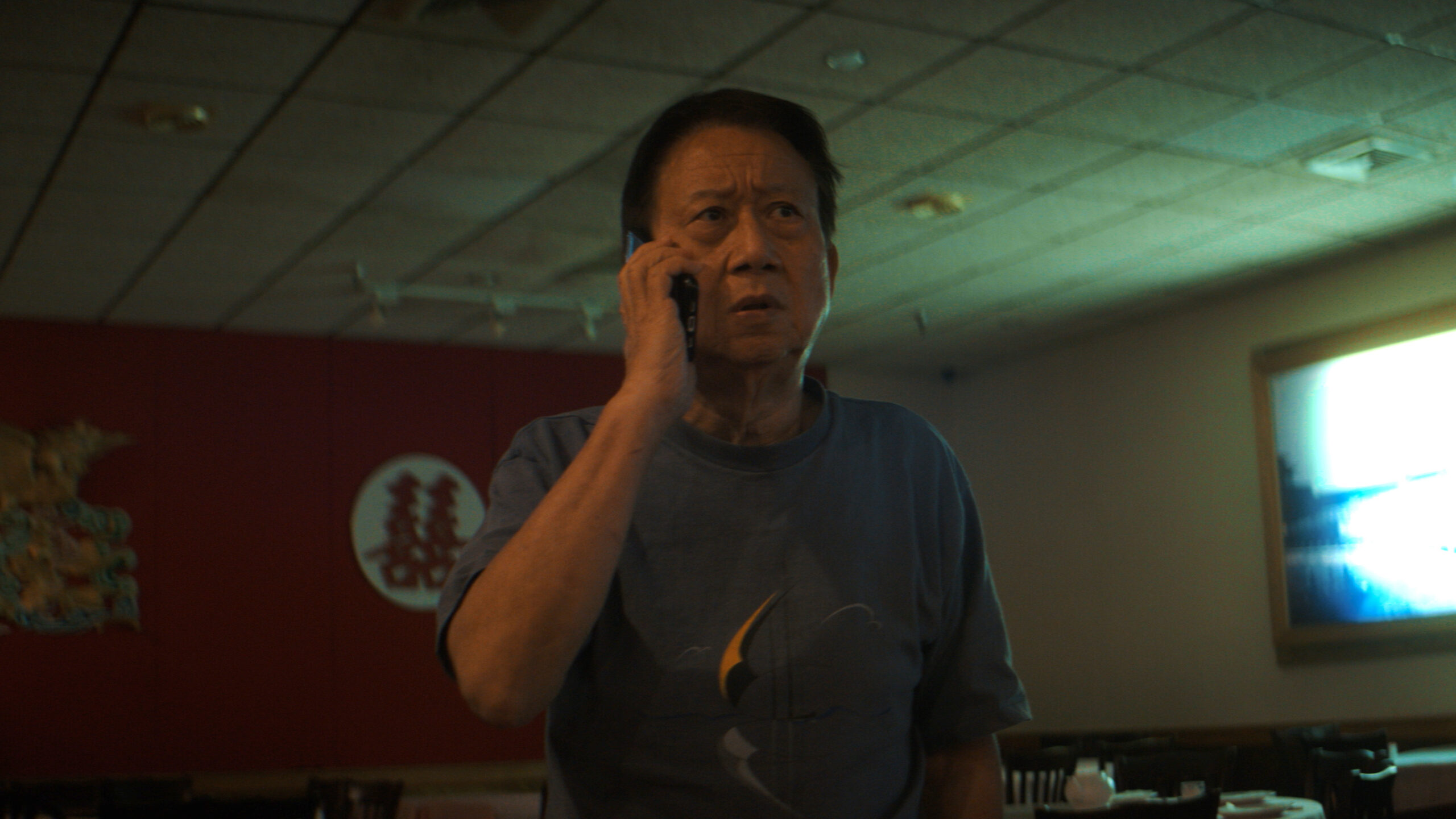
In the documentary Starring Jerry as Himself, a Florida senior sees himself recruited as an operative by Chinese police. The story is told in a re-enactment with the subject playing himself. We later learn why the filmmakers chose re-enactment, and what could have been a conventional true crime exposé or a weeper, is illuminated by the subject family’s humanity.
Starring Jerry as Himself is the first feature for director Law Chen, who also edited, co-produced and shot some of the footage. Law Chen and his co-producer and subject Jonathan Hsu were responsible for the decision on how to structure the film. That decision turned what could have been a heartbreaking downer into an engaging and satisfying family story, albeit a cautionary one.
I highlighted Starring Jerry as Himself as a MUST SEE in my Slamdance: discovering new filmmakers, and it won Slamdance’s Documentary Feature Grand Jury Prize.
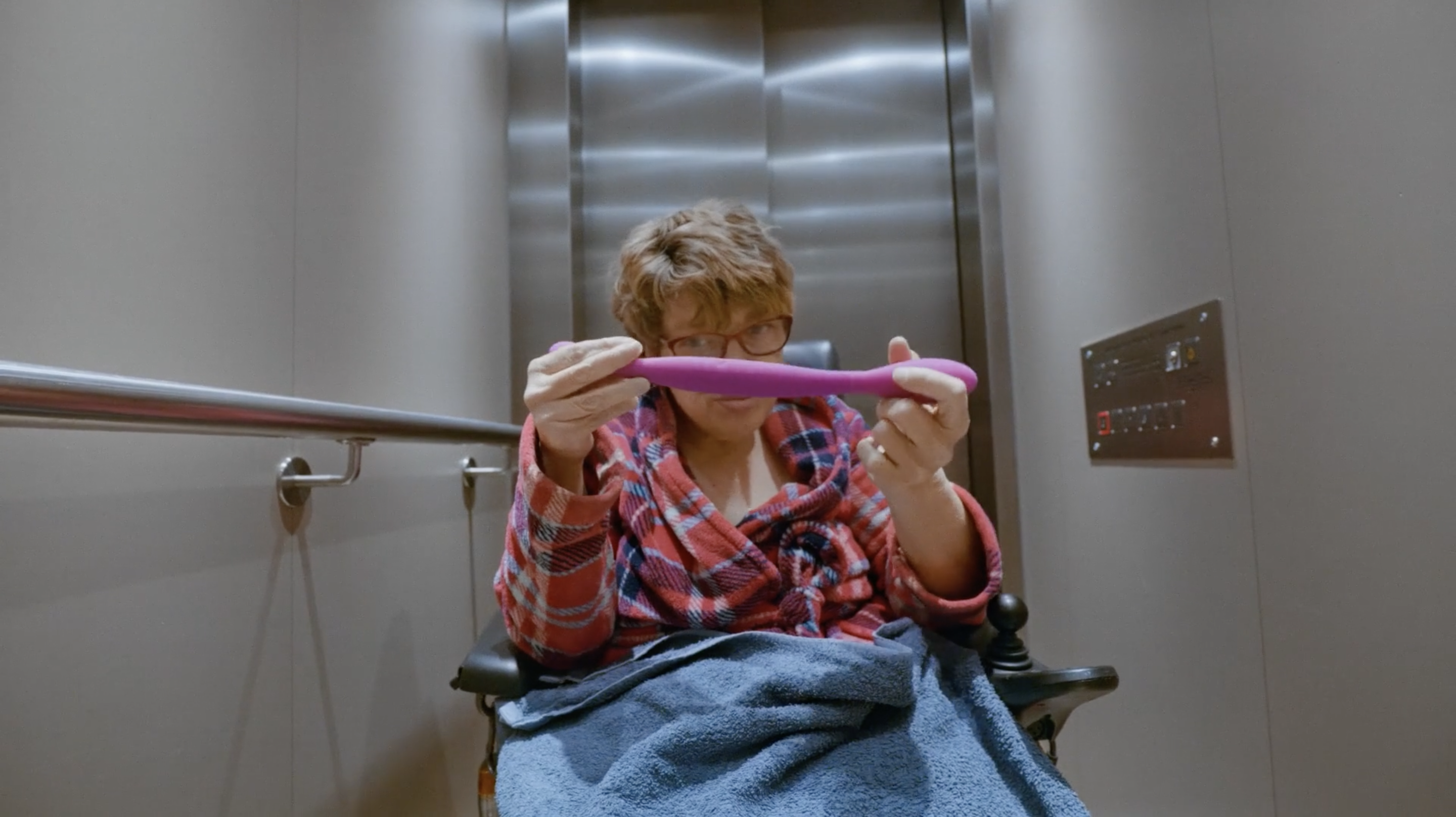
The Dutch documentary Sexual Healing traces the experience of Evelien, a 53-year-old woman, afflicted from birth with spasticity, who needs substantial assistance to live independently. Evelien has never enjoyed sexual fulfillment, and now she’s curious. Sexual Healing follows her quest with sensitivity, gentle naughty humor and taste.
Evelien has supportive friends and the good fortune to live in the Netherlands, where there’s an agency established to fill this need for the disabled, essentially a therapeutic escort service. If you’re like me, you’ll be surprised at the age of Evelien’s sex therapist.
Sexual Healing is the second 50+ minute feature for writer-director Elsbeth Fraanje.
[Note: I advisedly used the word ”spasticity” to describe the subject’s disability, to avoid the term that the film uses, “spastic”; in researching the appropriate language, I got no useful guidance from the various sources wagging their fingers at the use of “spastic” but offering no alternatives more specific than “disabled” or “differently abled”.]
Slamdance hosted its US premiere, which I highlighted as a MUST SEE in my Slamdance: discovering new filmmakers. Sexual Healing was programmed in Slamdance’s Unstoppable category, a “showcase of films made by filmmakers with visible and non-visible disabilities”.
Photo caption: Song Kang-Ho and Ji-eun Lee in BROKER. Courtesy of NEON.
This week on The Movie Gourmet – I have fallen behind because my reviews of Broker and Empire of Light are still not live. Broker is an exceptional film, which will take the #2 slot on my top ten movie list, and Empire of Light is going on the list, too. In my defense, I have been busy covering Noir City in person, while covering Slamdance virtually, and I’ll catch up soon.
Important note: many of the year’s most prestigious films have become available to stream (see below in CURRENT MOVIES): Aftersun, The Eternal Daughter, The Fabelmans, The Banshees of Inisherin, Decision to Leave, Armageddon Time and Triangle of Sadness. Check out my ever-updated Best Movies of 2022.
RUMINATION ON THE OSCAR NOMINATIONS
I was very pleased to see nominations for some achievements that I feared would be overlooked:
Paul Mescal, Best Actor for Aftersun;
Hong Chau, Best Supporting Actress for The Whale;
Kerry Condon, Best Supporting ACtress for The Banshees of Inisherin;
Barry Keoghan, Best Supporting Actor for The Banshees of Inisherin;
Brian Tyree Henry, Best Supporting Actor for Causeway.
OTOH I was aghast that Broker, especially, and Decision to Leave were snubbed in the international category.
At year-end, I suspend my usual The most eclectic watch-at-home recommendations you’ll find ANYWHERE so I can highlight the very best movies from 2022. These are on my list of Best Movies of 2022 and they shouldn’t be overlooked. Now you can watch them all at home.
Montana Story: a family secret simmers, then explodes. Amazon, AppleTV, Vudu, YouTube, redbox.
Compartment No. 6: a surprising journey to connection. Amazon, AppleTV, Vudu, YouTube, redbox.
Poser: personal plagiarism. Amazon, AppleTV, Vudu, YouTube, redbox.
The Tale of King Crab: storytelling at its best. Amazon, AppleTV, Vudu, YouTube, redbox.
12 Months: an authentic relationship evolves. Amazon.
ON TV
Jean Simmons and Robert Mitchum in ANGEL FACE
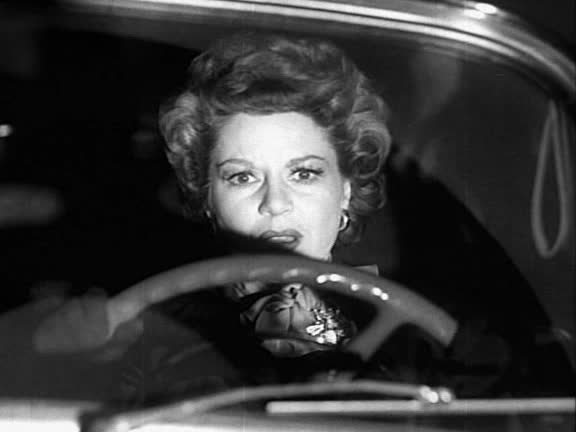
On January 31, Turner Classic Movies plays Angel Face, the 1953 film noir from director Otto Preminger, This movie has it all, the droopy-eyed magnetism of Robert Mitchum, the fragile beauty of Jean Simmons, and (along with They Won’t Believe Me) the most SHOCKING ENDING in film noir.
Jana Bjelica in WHERE THE ROAD LEADS. Courtesy of Slamdance.
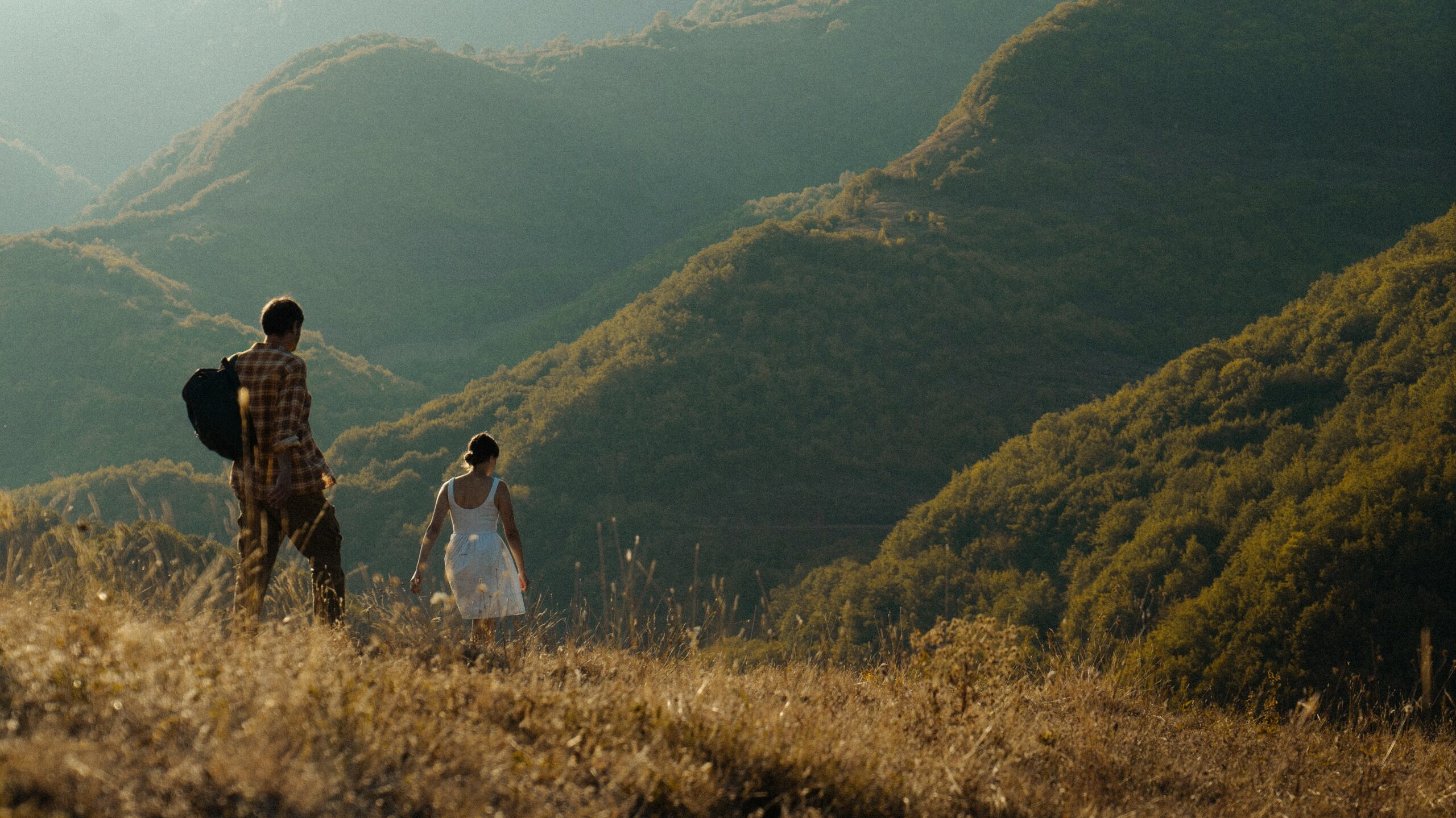
The Serbian feature Where the Road Leads opens with a single shot of very long duration – the protagonist Jana (Jana Bjelica) is running, in and out and all around a remote Serbian village. Is she running away from something or toward something? It turns out that she is racing to prevent something, but this is a film about escape.
The village is so secluded and devoid of commerce and culture, that there is no reaon to visit it – or to live there, which is Jana’s conclusion, too. Whenever an outsider drifts through, it is a major occasion – and, for some, an occasion for suspicion. In Where the Road Leads, when a stranger wanders through, everyone calls him “the new guy”, but Jana fixates on whether he can become her ticket out of town.
Technically, the story is a tragedy, but Ognjanović lightens its telling with wry deadpan humor, showing why Jana finds village life so stifling. There are bickering old marrieds, two determinedly stupid drunks, and the one veteran government official who is weary of dealing with the villagers’ foibles.
Jana Bjelica in WHERE THE ROAD LEADS. Courtesy of Slamdance.
What makes Where the Road Leads powerful is its construction, with the pivotal beginning of the story placed at the end of the film. Ognjanović explains, “From the start, I knew I wanted the film to end with that scene – even though, chronologically, it is the beginning of the story. It is the one moment in our protagonist’s story where she could have changed the course of the events that followed.”
The opening shot of Jana running and running and running ain’t Touch of Evil or Goodfellas, but it’s impressive filmmaking, especially for a film of this budget.
Where the Road Leads is a promising debut feature for writer-director Nina Ognjanović. World premiere on January 22. Slamdance narrative feature competition.
UPDATE: Where the Roads Leads won an Honorable Mention (essentially second place) for Narrative Feature Grand Jury Prize at Slamdance.
Photo caption: Olivia Colman in EMPIRE OF LIGHT. Courtesy of Searchlight Pictures.
This week on The Movie Gourmet – two film festivals at once, I’m heading to Oakland for Noir City, while covering Park City, Utah’s Slamdance virtually. Also, I have new reviews of Empire of Light and All the Beauty and the Bloodshed, a rant and a remembrance.
I just saw Broker, which I’ll be writing about soon. It’s an exceptional film, which will take the #2 slot on my top ten movie list. See it when you can.
Important note: many of the year’s most prestigious films have become available to stream (see below in CURRENT MOVIES): Aftersun, The Eternal Daughter, The Fabelmans, The Banshees of Inisherin, Decision to Leave, Armageddon Time and Triangle of Sadness.
A RANT ABOUT THE ELVIS MOVIE
I generally detest the filmmaking of Baz Luhrman, so I had skipped his 2022 Elvis until this week; The lead actor, Austin Butler, won the dramatic acting Golden Globe, so, even though the Golden Globes have little credibility with me, I gave it a whirl. Actually, I gave the first hour-and-ten-minutes a whirl. It’s rare that I can’t finish a big, popular movie, but I had to bail on Elvis.
Elvis turns out like much of Luhrman’s other work, with perhaps even more unrestrained garishness, which, in writing about his The Great Gatsby, I labeled “flashy, hollow and lame”. There is an unremitting assault of frenetic eye candy, none of which serves to reveal anything about Elvis.
And, having done a lot of reading about Elvis, I was distracted by Luhrman’s misleading narrative, most outrageously inventing a fantasy about Elvis’ relations with African-Americans, and even outsizing the career role of Elvis’ mother. For historical accuracy, Luhrman makes Oliver Stone look like David McCullough or Stephen Ambrose.
Austin Butler isn’t bad as Elvis, but I just never accepted him as Elvis, just as an actor playing Elvis. Luhrman and Butler captured Elvis’ simplicity, devotion to mother and ambition, but missed big on his playfulness and capriciousness. Now, I wouldn’t damn Butler with such faint praise for having to match the magnetism of one of the very most charismatic figures in world history if Kurt Russell hadn’t been so much better.
REMEMBRANCE
Gina Lollibrigida has died at 95. Her very solid mainly, European body of film work was overshadowed by her image in the US as a sex symbol (Solomon and Sheba). Check her out in John Huston’s sly Beat the Devil. Lollibrigida was the first five-syllable Italian word that I learned to pronounce.
CURRENT MOVIES
Empire of Light: a woman, revealed. In theaters, but hard to find.
Tar: a haughty spirit before a fall. In theaters, but increasingly hard to find.
Triangle of Sadness: more subtlety, please. Amazon, AppleTV, Vudu, YouTube, redbox.
WATCH AT HOME
At year-end, I suspend my usual The most eclectic watch-at-home recommendations you’ll find ANYWHERE so I can highlight the very best movies from 2022. These are on my list of Best Movies of 2022 and they shouldn’t be overlooked. Now you can watch them all at home.
Montana Story: a family secret simmers, then explodes. Amazon, AppleTV, Vudu, YouTube, redbox.
Compartment No. 6: a surprising journey to connection. Amazon, AppleTV, Vudu, YouTube, redbox.
Poser: personal plagiarism. Amazon, AppleTV, Vudu, YouTube, redbox.
The Tale of King Crab: storytelling at its best. Amazon, AppleTV, Vudu, YouTube, redbox.
12 Months: an authentic relationship evolves. Amazon.
ON TV
Henry Fonda and Lee J. Cobb (foreground) in 12 ANGRY MEN.
On January 22, Turner Classic Movies airs an iconic movie that I can’t believe I haven’t written about it before – 12 Angry Men. You’ve probably seen it before, but you may wish to appreciate it again.
Twelve men (and, befitting the 1957 time frame, they are all white men) have found themselves where no one wants to be – on a jury. It’s a hot and humid summer, and the jury room is stifling. It’s a murder case, and the prosecution has put on a credible case. The impetus is to convict the defendant and go home, but one juror (Henry Fonda) holds out. As the jurors probe the evidence more carefully, the debate becomes heated, especially between the hold-out and two of the others (Lee J. Cobb and Ed Begley). The room becomes more and more uncomfortable as opinions swing back and forth, with a man’s life in the balance.
Lee J. Cobb in 12 ANGRY MEN.
Fonda, Cobb and Begley are just the most brilliant in a remarkable cast: Jack Warden, Martin Balsam, E.G. Marshall, John Fiedler, Edwards Binns, Jack Klugman, Joseph Sweeney,, John Voscovec and Robert Webber. In their careers, Fonda, Warden, Balsam and Begley each won an Oscar, and the cast as a whole collected 11 Oscar nominations between them. I recently watched a Dick Cavett interview in which he asked Henry Fonda to name five of his films that would endure; Fonda blurted out “12 Angry Men‘ and then paused to consider the other choices.
The cast spends essentially all of 12 Angry Men’s 96 minutes in one room, yet director Sidney Lumet makes the excitement match any action movie or thriller. Lumet started out filming the characters from above, then moved to eye-level as the tension increased, and finally filmed from below to rachet up the claustrophobia in the room. The camera closes in tightly on the men’s faces as they sweat and yell. This is text-book filmmaking.
12 Angry Men probes themes of class bias, fairmindedness and citizen responsibility. It’s also about divisions of opinion, which is even more topical in today’s American society.
Jerry Hsu in STARRING JERRY AS HIMSELF. Courtesy of Slamdance.
It’s time for the 29th Slamdance Film Festival, which is all about discovering new filmmakers and unveiling their work. It’s a hybrid festival with events in Park City and Salt Lake City, Utah from January 20th to 26th and online on the Slamdance Channel from January 23rd to 29th. All Slamdance feature films selected in the competition categories are directorial debuts without U.S. distribution, with budgets of less than $1 million. The 35 features in this year’s program were selected from 1,522 submissions.
Slamdance was founded in 1995 by filmmakers reacting to the gatekeeper role and growing marketplace focus of a nearby film festival with a similar name. Whenever I cover a film festival, I’m on the lookout for first films and world premieres – and here’s a festival essentially entirely made up of first films and world premieres.
My favorite film from last year’s Nashville Film Festival, Hannah Ha Ha, was a Slamdance film. Slamdance alumni include: Christopher Nolan (Memento,Dunkirk), Bong Joon-ho (Parasite), Benh Zeitlin (Beasts of the Southern Wild), Jeremy Saulnier (Blue Ruin, Green Room), Lynn Shelton (Outside In,Sword of Truth), Sean Baker (The Florida Project, Tangerine), Rian Johnson (Knives Out, Brick), Benny & Josh Safdie (Uncut Gems) and the Russo Brothers (Avengers: Infinity War).
MOTEL DRIVE. Courtesy of Slamdance.
MUST SEE
Here are four films from the 2023 Slamdance program that you shouldn’t miss. Each features at least one original and fresh element:
Starring Jerry as Himself: A Florida senior sees himself recruited as an operative by Chinese police. The story is told in a re-enactment with the subject playing himself. We later learn why the filmmakers chose re-enactment, and what could have been a conventional true crime exposé or a weeper is illuminated by the subject family’s humanity. First Feature for director Law Chen. World premiere on January 21. Slamdance documentary competition.
Motel Drive: This searing cinéma vérité documentary chronicles years in a clump of downtrodden motels inhabited by prostitutes, sex offenders and the otherwise homeless, including over 150 children, with their mostly meth-addicted parents. One family’s compelling journey is a roller coaster ride of poverty, recovery, unexpected good fortune, relapse and redemption. First Feature for director Brendan Geraghty. World premiere on January 22. Slamdance documentary competition. Documentary subject Justin Shaw is slated to appear on the Slamdance red carpet for Motel Drive’s world premiere, and I couldn’t be happier that this young man will get the red carpet experience.
Where the Road Leads: This drama opens with a very long single shot of the protagonist running, in and out and all around a remote Serbian village. Is she running away from something or toward something? The film’s construction makes it more powerful, with the pivotal beginning of the story revealed at the end of the film. First Feature for director Nina Ognjanović. World premiere on January 22. Slamdance narrative feature competition.
Sexual Healing: This Dutch documentary is in Slamdance’s Unstoppable category, a “showcase of films made by filmmakers with visible and non-visible disabilities”. A 53-year-old woman, afflicted from birth with spasticity needs assistance to live independently and has ever enjoyed sexual fulfillment. Now’s she’s curious, and Sexual Healing follows her quest with sensitivity, gentle naughty humor and taste. Second feature for director Elsbeth Fraanje. US premiere on January 23.
Jana Bjelica in WHERE THE ROAD LEADS. Courtesy of Slamdance.
I’ve already screened a bunch of 2023 Slamdance films, and I’ll be publishing reviews as the films enjoy their in-person premieres in Utah and as I catch up with more of the program.
Remember, even if you don’t travel to Utah, you can sample these films on the Slamdance Channel from January 23rd to 29th. All Slamdance titles will available on the Slamdance Channel, which can be accessed on Roku, Amazon Fire Stick, and Apple TV for $7.99 per month.
The Noir City film fest, always one of the best Bay Area cinema experiences, returns IN-PERSON January 20-29, 2023 at the Grand Lake Theater in Oakland – and for the first time since the 2020 pandemic – for its traditional full ten days.
Noir City is the annual festival of the Film Noir Foundation, spearheaded by its founder and president Eddie Muller. The Foundation preserves movies from the traditional noir period that would otherwise be lost. Noir City often plays newly restored films and hard-to-find movies.
Past Noir City fests have been built around themes, like international noir and heist cinema. In this year’s fest, all of the films were released in 1948. As an audience, we get to sample films from peak year in the Noir Era and appreciate film noir as a distinct movement within American filmmaking.
These titles from this year’s Noir City program are NOT available to stream, so Noir City is your best chance to see them:
Larceny,
The Spiritualist,
Road House,
So Evil My Love,
Sleep, My Love,
The Hunted,
I Love Trouble,
Night Has a Thousand Eyes,
All My Sons,
The Velvet Touch,
Kiss the Blood Off My Hands, (my favorite title this year).
Richard Basehart in HE WALKED BY NIGHT
If you can make it for just one night, I’d recommend one of these four:
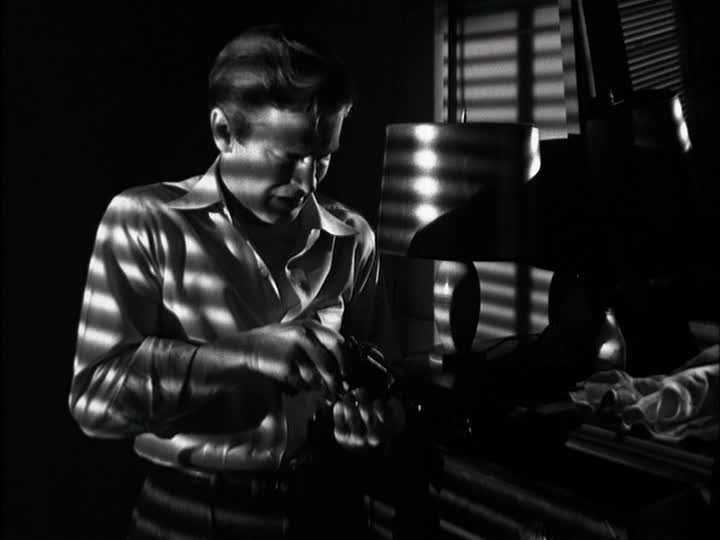
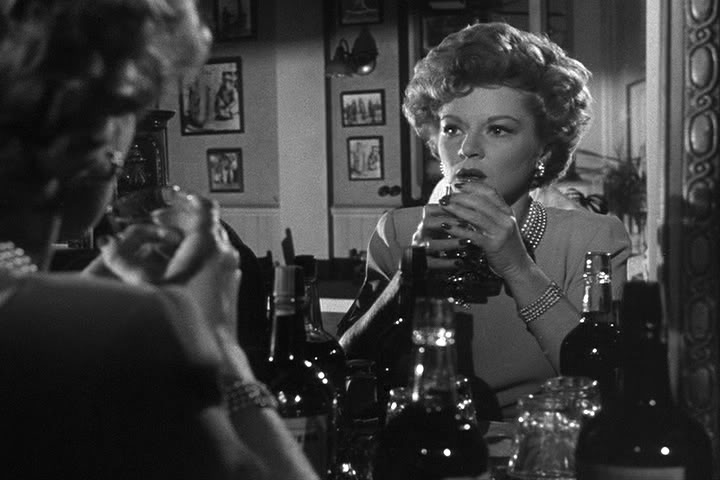
Friday, January 20 (Opening Night): Two classics that are famous for a reason – Key Largo (Bogart and Bacall, Edward G. Robinson, Claire Trevor’s heartbreaking performance as a gangster’s moll aging out of her looks and an underappreciated supporting turn by Thomas Gomez) and The Lady from Shanghai (Orson Welles’ noir adventure with his glamorous ex, Rita Hayworth, and the stunning hall-of-mirrors climax). You’ve almost certainly seen both of these, but probably not in a vintage movie palace with hundreds of other noiristas.
Saturday, January 21: Three movies that I have not yet seen and are not streamable – Larceny (John Payne, Dan Duryea), The Spiritualist and Road House(Richard Widmark, Ida Lupino, Cornell Wilde) – are sandwiching a more well-known film, The Big Clock, with Ray Milland being hunted down by the minions of the nefarious Charles Laughton.
Monday, January 23: Two more non-streamable films which I haven’t seen: So Evil My Love (Ray Milland) and Sleep, My Love (Claudette Colbert and Don Ameche in a noir?).
Saturday, January 27: Two of my favorite Overlooked Noir: Raw Deal (some of the best dialogue in all of film noir, a love triangle and the superb cinematography of John Alton) andHe Walked By Night(more John Alton, with the LAPD hunting down a nerdy wacko).
Make your plans now. Review the program and buy tickets at Noir City. I’ll be there.
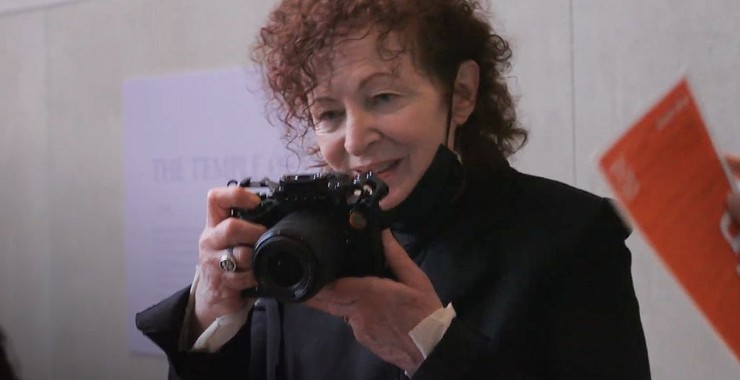
Photo caption: Nan Goldin in ALL THE BEAUTY AND THE BLOODSHED. Courtesy of NEON.
All the Beauty and the Bloodshed is a profile of photographer Nan Goldin and her leadership of Prescription Addiction Intervention Now (PAIN), the advocacy group seeking to punish the Sackler family for profiting on the addiction and overdose carnage from oxycontin. Purdue Pharma, a privately held company owned by the Sacklers, intentionally oversold oxycontin to doctors and misled the public on its addictive qualities. The saga ended up in bankruptcy court because the Sacklers drained the profits from Purdue Pharma before it could be forced to reimburse its victims.
It’s unusual to have a public controversy so without nuance – the Sacklers are clearly bad people who acted badly and irreparably injured thousands of others. As a result, we aren’t bothered when Nan Goldin, an addict in recovery herself, evenly says, “It’s personal. I hate these people.”
Up against a malevolent, heavily-resourced corporation, PAIN inflicted pain on the Sackler family by turning their own philanthropy against them, shaming major art museums into refusing gifts from the Sacklers and even removing the Sackler name from the buildings and galleries they had sponsored. The museums were the institutions with the very highest profiles: the Guggenheim, Metropolitan Museum of Art, [British] National Portrait Gallery and even the Louvre. To make things even more uncomfortable for the museums, Goldin’s own work is in the permanent collections of some of these museums.
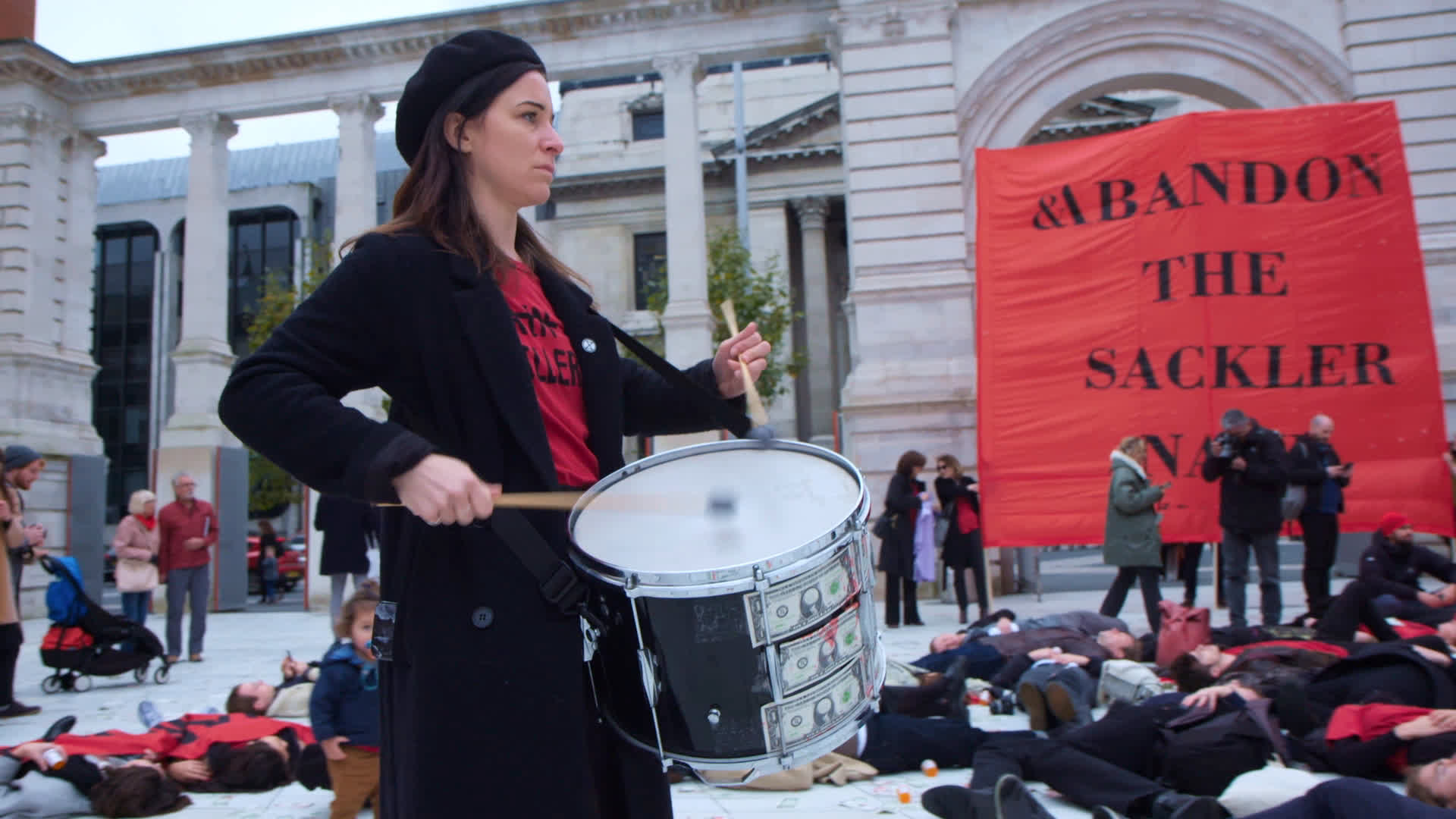
A PAIN action in ALL THE BEAUTY AND THE BLOODSHED. Courtesy of NEON.
PAIN’s actions were themselves works of performance art, often involving PAIN members feigning death en masse, surrounded by prescription bottle. To reflect Richard Sackler’s self-damning email that greedily rejoiced at the “blizzard of prescriptions”, PAIN members created a confetti blizzard of prescription slips in a major museum atrium.
The beginning and end of All the Beauty and the Bloodshed, about a third of the film, follows Goldin and PAIN’s campaign against the Sacklers. The rest of the film is the self-narrated life story of Nan Goldin, much of it illustrated by slide shows of her photos. Goldin became a key figure of the New York avant garde of the 70s, 80s and 90s, and she has led a colorful and oft turbulent life. There’s a major focus on the story of her older sister Barbara, and how the two reacted to their family by rebelling against conformity.
The bottom line is that I found the shaming of the Sacklers much more engaging that the Nan and Barbara Goldin story.
In the highlight of All the Beauty and the Bloodshed, the Sacklers on Purdue Pharma’s corporate board must themselves sit for two hours and listen via Zoom to the testimony of their victims, including one harrowing 911 call.
All the Beauty and the Bloodshed was directed by noted documentarian Laura Poitras, Oscar winner for Citizenfour. The film has been included in various critics’ top ten lists and is a contender for the Best Documentary Oscar. It’s good, but I’ve seen better docs this year.