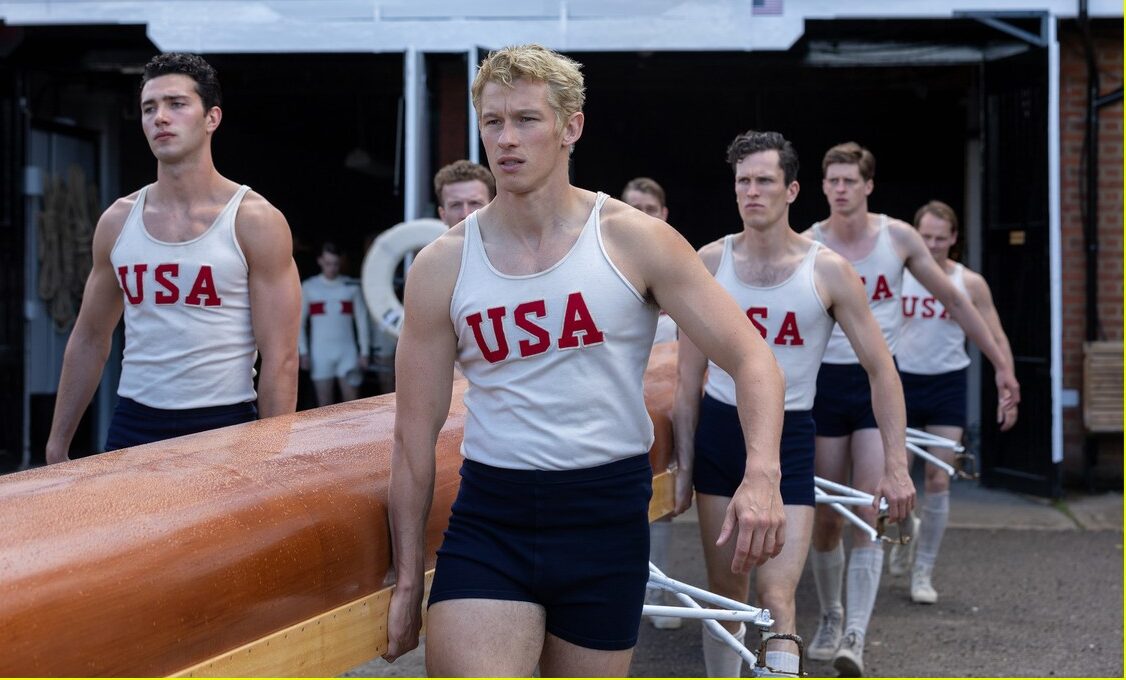
Photo caption: Callum Turner (center front) in THE BOYS IN THE BOAT. Courtesy of MGM.
The Boys in the Boat is the entertaining true story of the ultimate sports underdog – the University of Washington’s junior varsity rowing team, which won gold medals at the 1936 Olympics hosted by Hitler in Munich (the Jesse Owens Olympics). Again, this was UDub’s JUNIOR varsity boat.
The Boys in the Boat follows a familiar arc for sports movies – the heroes must win the Big Race (actually, three Big Races here). We’ve all seen this before, but director George Clooney gets the credit for keeping The Boys in the Boat from becoming unbearably hackneyed or corny. Best known as a movie star, Clooney has proven himself an able director: Confessions of a Dangerous Mind, Good Night and Good Luck, The Ides of March, The Monuments Men.
In telling the story, Clooney emphasizes the Depression setting and how impoverished the kids on the team are, especially the main kid, played by Callum Turner. Joel Edgerton plays the taciturn coach, who must gamble his job on an unconventional decision. Few of us have a deep understanding of the sport of team rowing, so Clooney takes us on a rowing procedural.
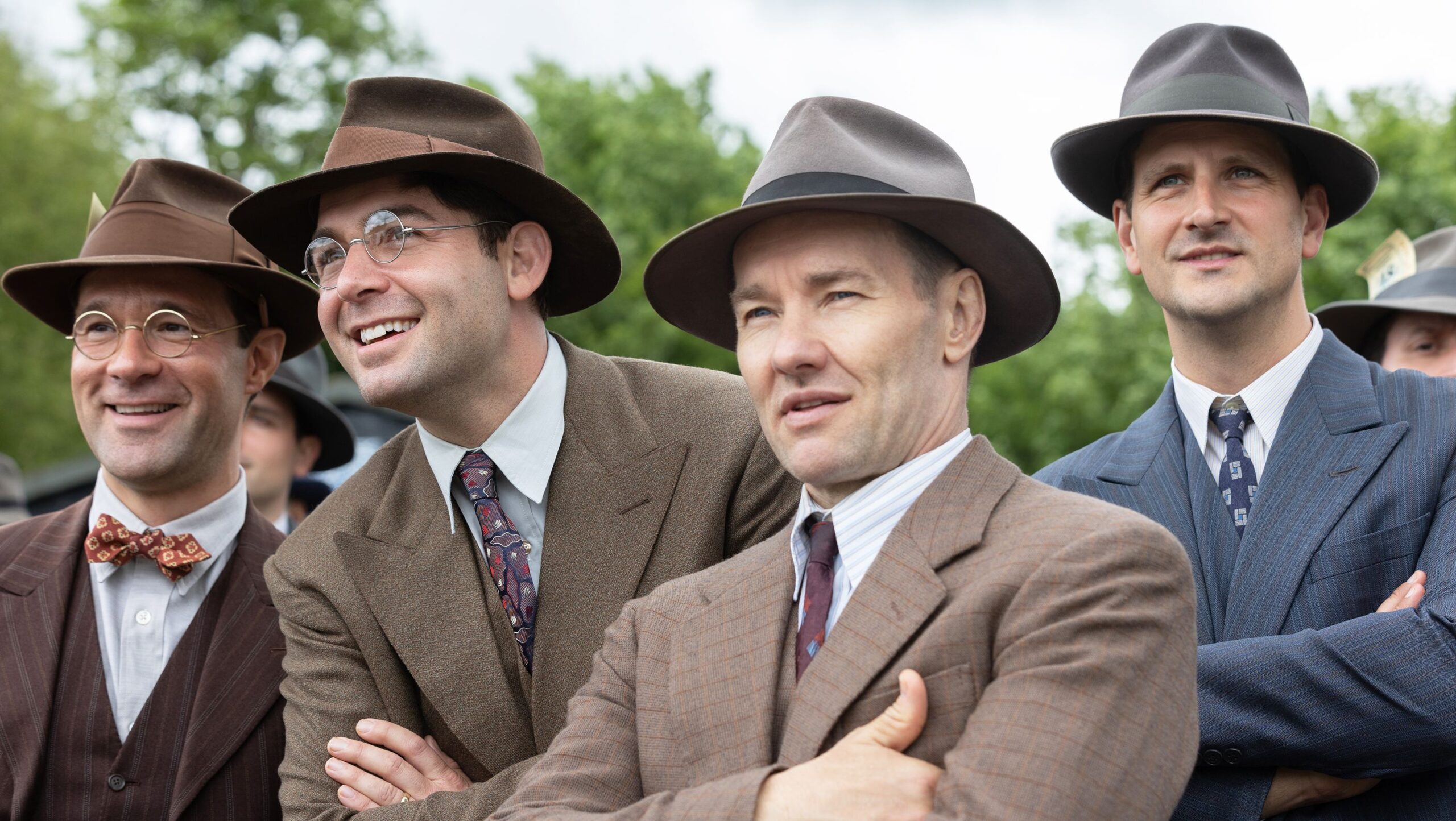
Joel Edgerton (second from right) in THE BOYS IN THE BOAT. Courtesy of MGM.
I love Edgerton in everything, and he’s starred in Master Gardener, Loving and Zero Dark Thirty. I especially recommend watching him in The Gift, which he also wrote an directed. Edgerton is very, very good here.
Callum Turner is adequate, but Luke Slattery and Jack Mulhern are especially vivid as his two of his teammates.
This story is still celebrated in Seattle, where you can still visit the boathouse and see the team’s memorabilia. One race is staged in the Montlake Cut between Lake Washington and Puget Sound. The coolest race scene has an observation train, with bleachers on the rail cars, keeping pace with the boats racing down the Hudson River.
The Boys in the Boat ain’t the most original film, but it’s enjoyable to watch.
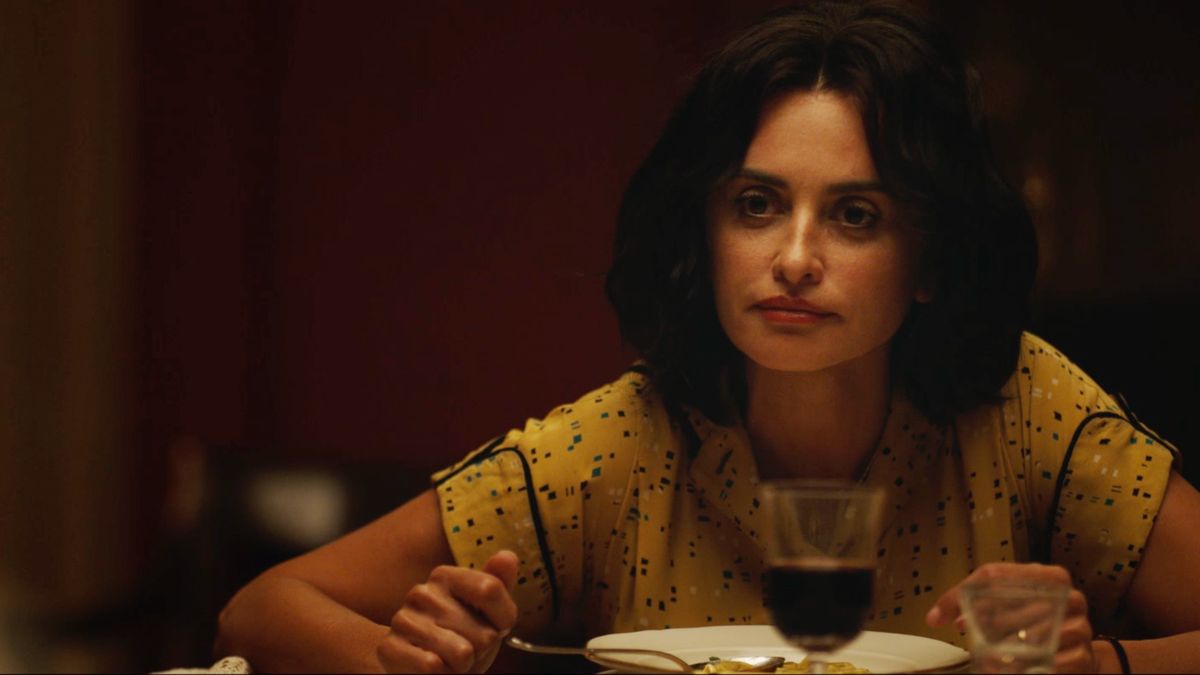
Photo caption: Penelope Cruz in FERRARI. Courtesy of NEON.
Ferrari takes place in 1957, when the groundbreaking auto racing figure Enzo Ferrari (Adam Driver) faces two crises at age 59. To attract a partnership with a larger automaker and save his company, Ferrari must win a famous road race. And, he must navigate the demands of both his wife and his girlfriend. The racing thread and the domestic thread combine to make a well-crafted, satisfying film.
Unconventionally, in Ferrari, Ferrari’s illicit relationship is anything but an exciting dalliance. Ferrari lives in the quiet countryside with his girlfriend Lina (Shailene Woodley) and their nine-year-old son. They live in modest domesticity, and Lina is supportive and generally undemanding.
Ferrari’s wife Laura (Penelope Cruz), on the other hand, is a volcano ready to blow at any moment. We learn that a tragic loss has devastated Enzo and Laura’s marriage, and Laura lives somewhere a simmer and a full blown rage. Complicating matters for Enzo, Laura is his business partner and must sign off on any Ferrari company decisions. And he must return to their Modena apartment on each workday morning.
The one thing that Lina asks for – that her son get his father’s surname – is the one thing that Laura forbids.
Driver, playing a character 20 years older than he is, is very good, and so is Woodley. It is Cruz, however, who has the juiciest role, and she knocks it out of the park. Cruz is outstanding when Laura is bitter or blazing, but beyond superb in a quieter scene where she reflects on the previous family tragedy.
I find auto racing to be the most boring of sporting endeavors, but director Michael Mann thrilled even me with the racing segments. Of course, Mann does know how to make a big, compelling movie (The Last of the Mohicans, Collateral, Heat, The Insider, Ali, Public Enemies).
Ferrari is a pretty good movie, most watchable when Penelope Cruz is on the screen.
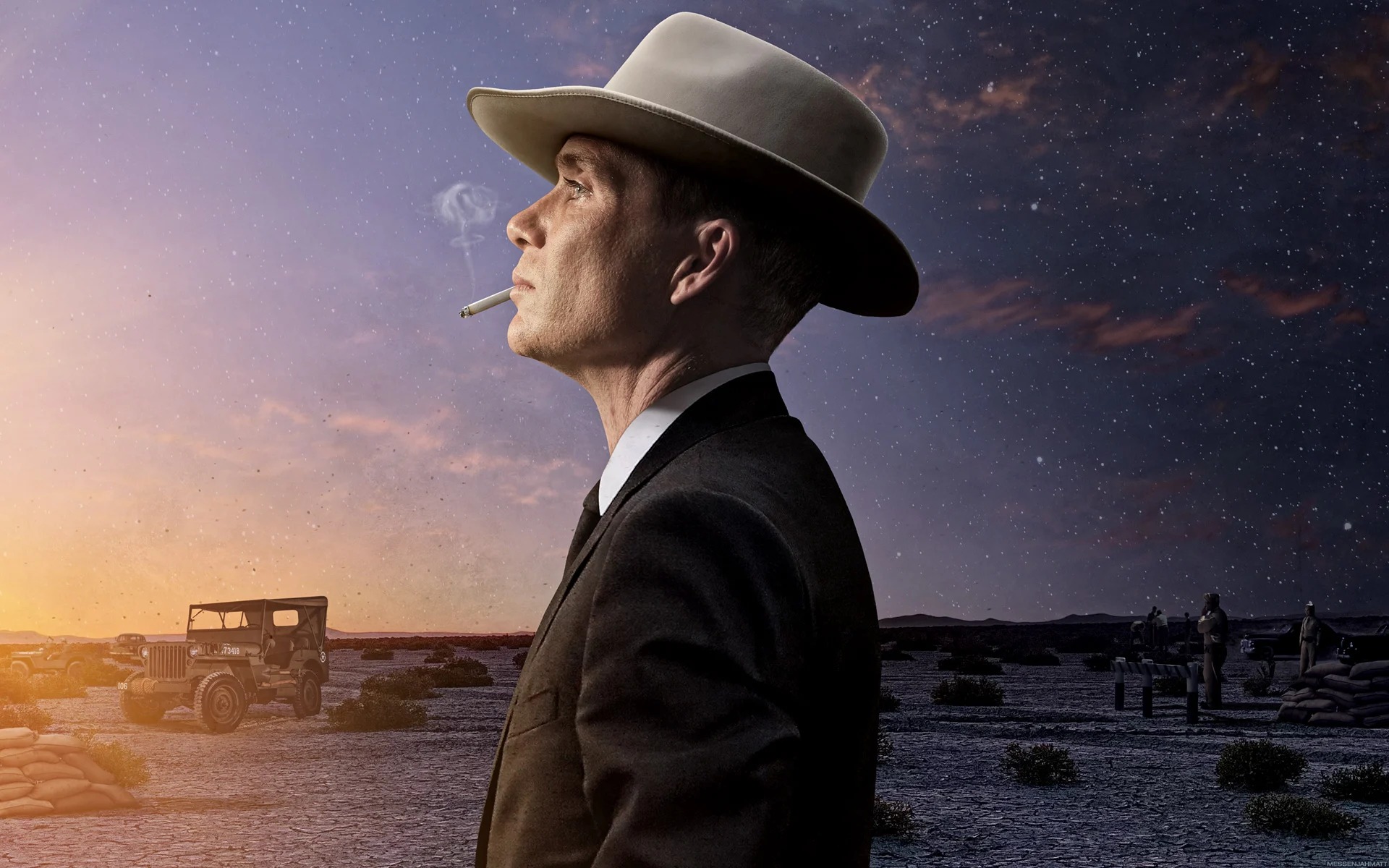
Photo caption: Cillian Murphy in OPPENHEIMER. Courtesy of Universal Pictures.
Every year, I keep a running list of the best movies I’ve seen this year. By the end of the year, I usually end up with a Top Ten and another 5-15 mentions. Here are my Best Movies of 2022 and Best Movies of 2021 lists. To get on my year-end list, a movie has to be one that thrills me while I’m watching it and one that I’m still thinking about a couple of days later.
I’ve seen 130 2023 films so far, but I have yet to see a few promising prestige films like Zone of Interest and American Fiction. Pretty sure some of those will end up high on my list when I finalize it in a couple months. (BTW that 130 total for 2023 doesn’t include the 89 festival submissions that I’ve screened (those will be 2024 films) nor the 121 movies from earlier years that I watched this year.)
I almost always pick an international film like Drive My Car or Incendies or an indie like Winter’s Bone, Hell or High Water or Leave no Trace as my top movie of the year. This year, my top pick is a big summer blockbuster, Christopher Nolan’s Oppenheimer. I especially admired Oppenheimer for these reasons:
Christopher Nolan’s imagination in threading together two riveting stories. The first is the Manhattan Project, the mastering of all the scientific and technological challenges in developing the first nuclear weapon, in a race with the worst villains in the history of the world – that’s fodder for an epic movie in itself. The second is the psychological study of a man who was brilliant enough to lead the development of the first atomic bomb, but who could not grasp that he would then lose all control on its use.
The brilliant performances of Cillian Murphy, Robert Downey, Jr, Emily Blunt, Florence Pugh, Matt Damon and Benny Safdie.
Oppenheimer is visually thrilling, thanks to the collaboration of Nolan, Dutch-Swedish cinematographer Hoyte Van Hoytema and editor Jennifer Lame. Ludwig Göransson’s music is pretty great, too.
Together the filmmakers have made a movie that runs for three hours without a single slow or dry moment, despite spending two hours on nuclear physics. I am confident in predicting that Oppenheimer will receive (and deserve) at least ten Oscar nominations and could challenge the record of fourteen.
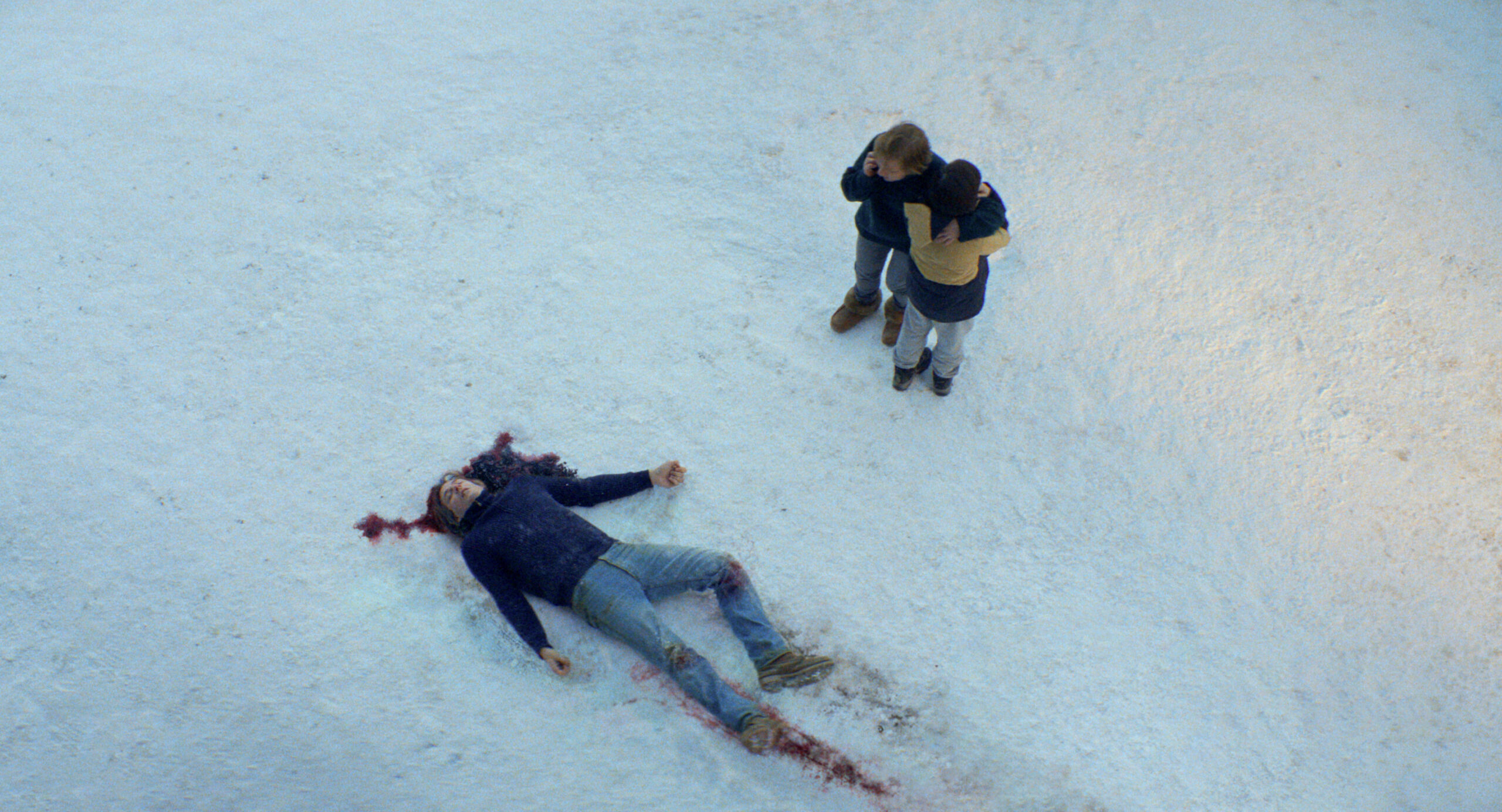
My number two film, Anatomy of a Fall, is good enough to have been my top in almost any other year.
ANATOMY OF A FALL. Courtesy of NEON.
Here’s the entire list:
OPPENHEIMER: creator of a monster controlled by others. Amazon, AppleTV, Vudu, YouTube.
ANATOMY OF A FALL: family history, with life or death stakes. In theaters.
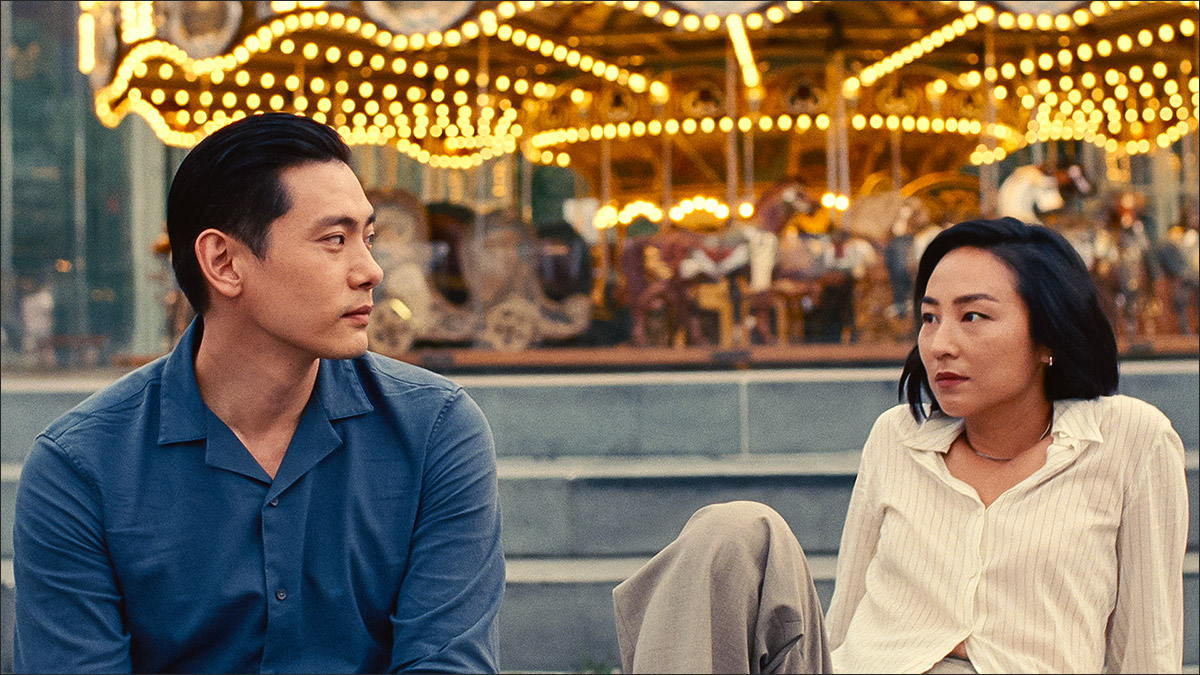
PAST LIVES: a profound and refreshing romance. Amazon, AppleTV, Vudu, YouTube.
KILLERS OF THE FLOWER MOON: an epic tale of epic betrayal. In theaters and will stream on AppleTV sometime after December 4, perhaps as late as January.
Photo caption: The Wife and The Movie Gourmet celebrating our anniversary
Happy 23rd Anniversary to The Wife, also known as Lisa, The Love of My Life!
We started out the year by catching up with Empire of Light and Living, and ended, as is our beloved Holiday tradition, watching It’s a Wonderful Life on the big screen. Along the way, we watched together almost 70 movies and seasons of episodic television. Barbie may have been the most fun. We were the only patrons at The Holdovers, which made it a private screening, just for us.
We had a great year with the classics, too, watching The Godfather and Godfather, Part II back-to-back and introducing our adult niece and nephew to our favorite film, Casablanca.
We attended a 100th anniversary event for Cecil B. DeMille’s 1923 The Ten Commandments, co-sponsored by the DeMille family, the Central Coast Film Society, the San Luis Obispo International Film Festival and the (Guadalupe) Dune Center (which houses remnants of the DeMille’s monumental set). (Impressive event, but we both contracted COVID.)
This year, like the previous three, we binged hundreds of hours of episodic television together; the highlights were the original Scandinavian version of The Bridge and rewatching Happy Valley.
Once again, she tolerated my spending huge chunks of time covering Noir City and the San Luis Obispo International Film Festival in person and Cinequest, Slamdance, Frameline, San Francisco International Film Festival (SFFILM), Nashville Film Festival and San Francisco Jewish Film Festival virtually. She was also OK with my helping out Cinequest by screening 89 film submissions. I’m getting ready now to cover Noir City in person and Slamdance virtually again in January.
She’s the biggest fan and supporter of this blog DURING ALL OF ITS THIRTEEN YEARS, and I appreciate her and love her. Happy Anniversary, Honey!
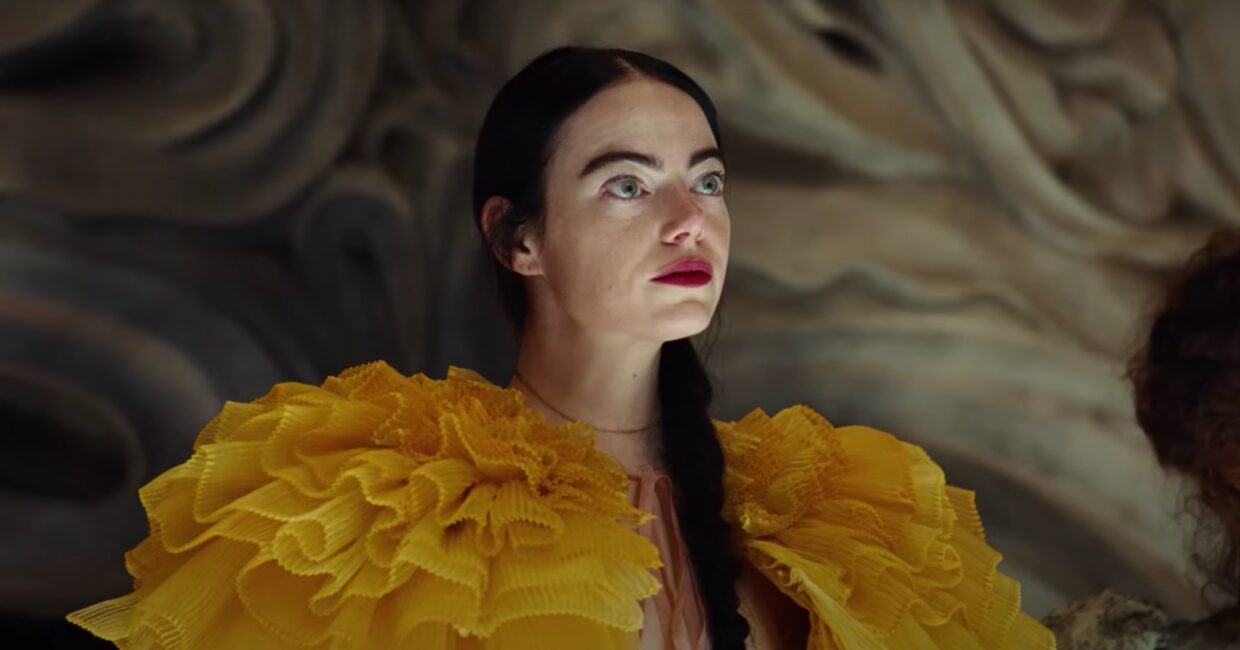
Photo caption: Emma Stone in POOR THINGS. Courtesy of Searchlight Pictures.
This UPCOMING week on The Movie Gourmet, I’ll have my Best Movies of 2023, and new reviews of Poor Things, The Boys in the Boat and Ferrari. All three are good movies, and the extraordinarily original Poor Things is one of the year’s best.
During the Holidays I pause my regular WATCH AT HOME feature The most eclectic watch-at-home recommendations you’ll find ANYWHERE) and replace it with the movies from my Best of 2023 list that are already available to stream.
CURRENT MOVIES
Anatomy of a Fall: family history, with life or death stakes. In theaters.
RETURN TO SEOUL: brilliantly crafted and emotionally gripping. Amazon, AppleTV, Vudu, YouTube.
BARBIE: a marriage of the intelligent and the silly. Amazon, AppleTV, Vudu, YouTube.
FREMONT: self-discovery and a fortune cookie. Amazon, Vudu.
HANNAH HA HA: what makes for human value and fulfillment? Amazon, AppleTV, Vudu, YouTube.
ON TV
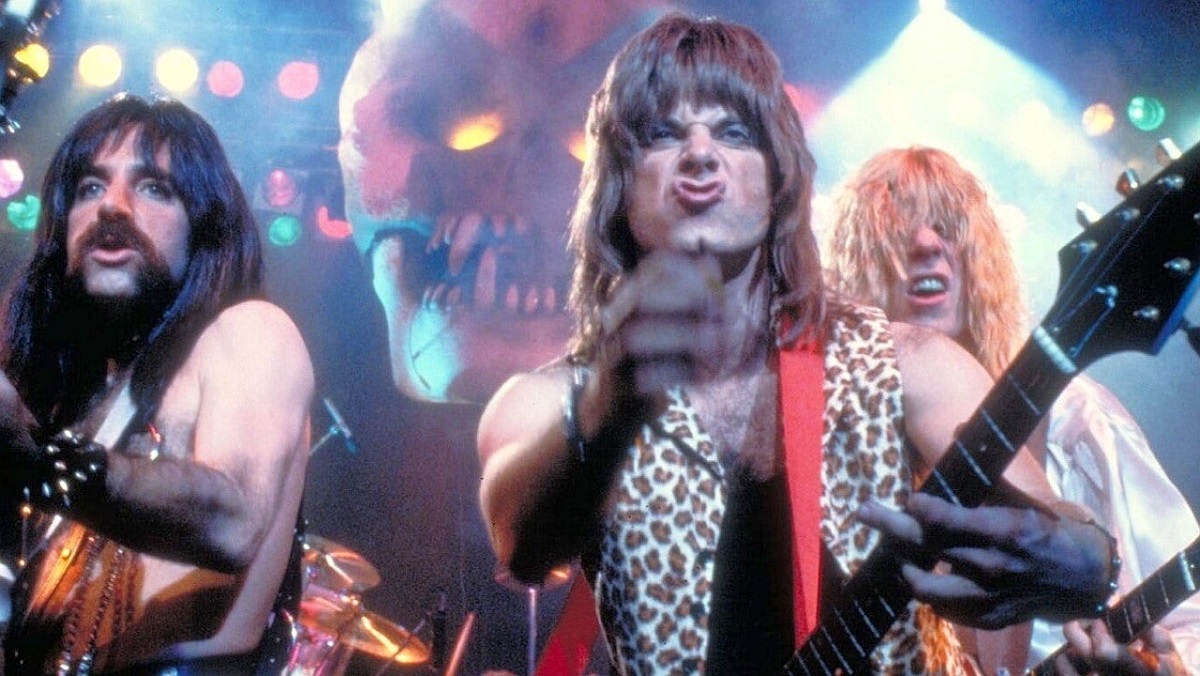
Harry Shearer, Christopher Guest and Michael McKean in THIS IS SPINAL TAP
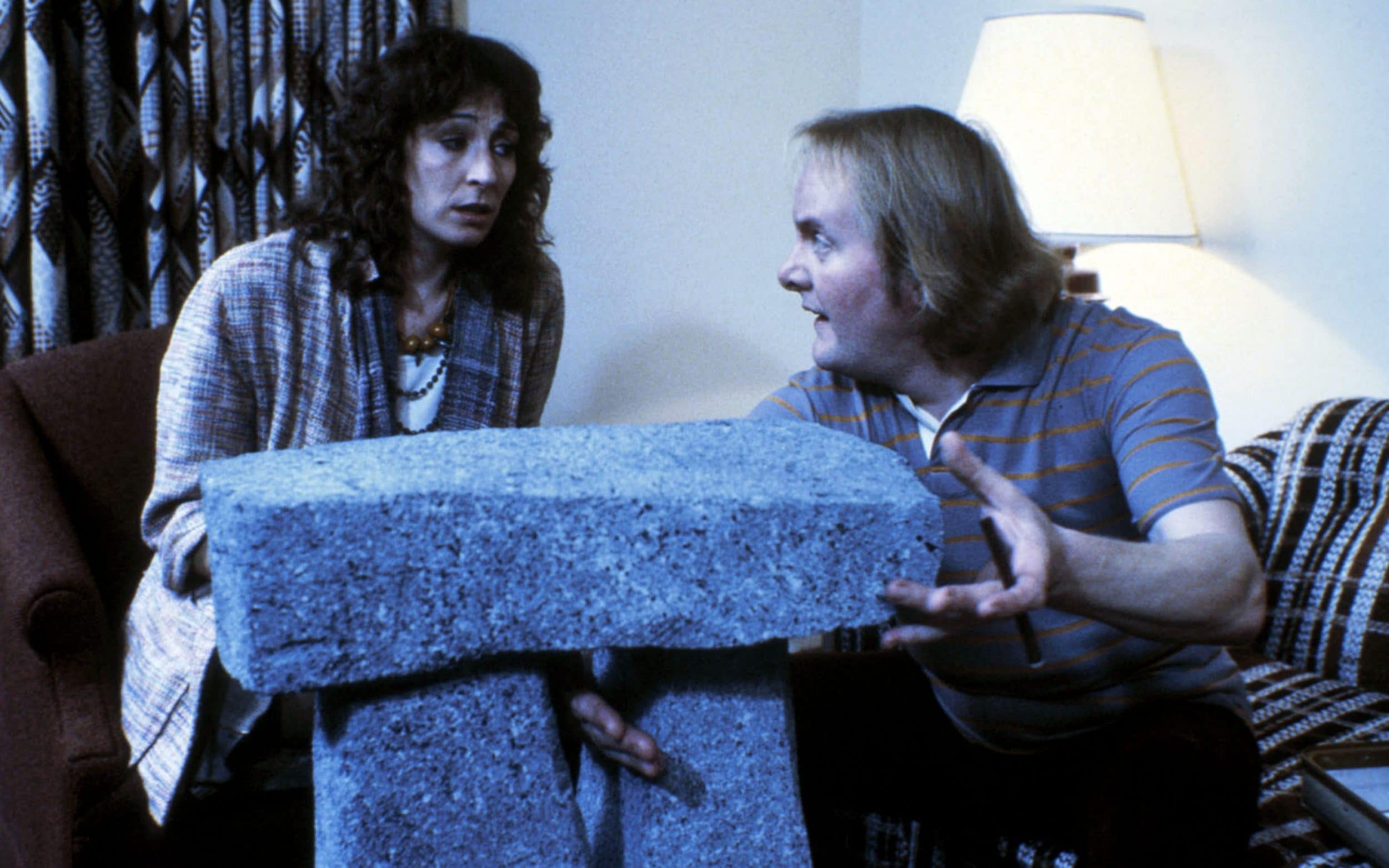
On New Year’s Eve, Turner Classic Movies presents the movie that invented the mockumentary: This Is Spinal Tap, co-written by Christopher Guest, Michael McKean, Harry Shearer and the director Rob Reiner. Guest, of course went on to direct the mockumentaries Waiting for Guffman, A Mighty Wind, For Your Consideration, Mascots and his masterpiece, Best in Show. This Is Spinal Tap follows a dim-witted rock band on the decline. Tony Hendra is brilliant as the band’s long-suffering road manager; he downplays their cancelled show in Boston with, “I wouldn’t worry about it though, it’s not a big college town.” Watch for Dana Carvey and Billy Crystal as mimes. It’s difficult to pin down the funniest moment – the Stonehenge-themed stage set, the band’s succession of ill-fated drummers or the guitar amp that goes to eleven.
Angelica Huston and Tony Hendra in THIS IS SPINAL TAP
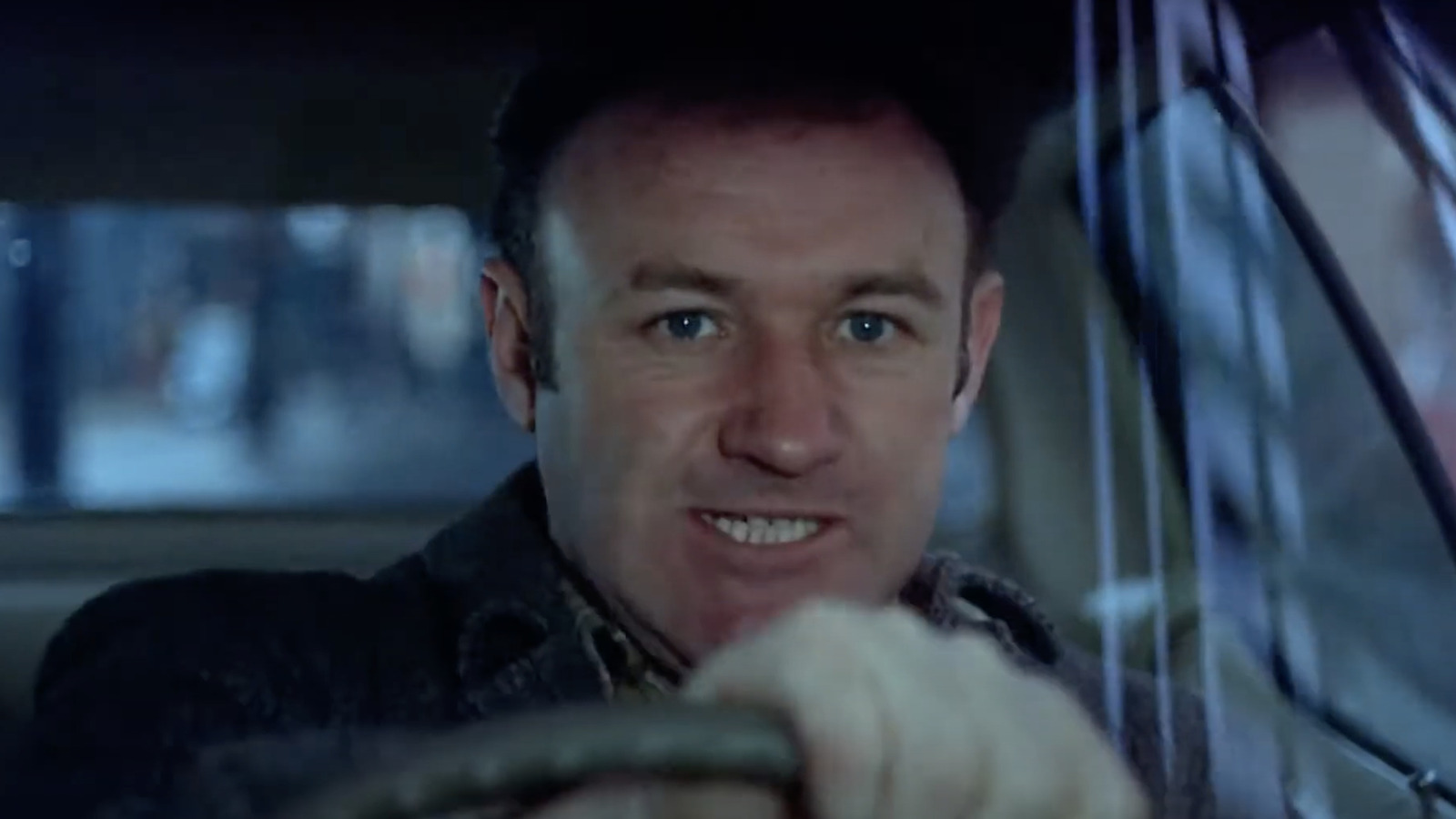
Gene Hackman in the car chase in William Friedkin’s THE FRENCH CONNECTION.
Director William Friedkin, one of the most significant filmmakers of the past 50 years, has died at 87. Friedkin is best known for his two great films, The French Connection and The Exorcist, each groundbreaking in its own way. The French Connection, despite an anti-hero with off-putting characteristics and a setting in NYC at its grimiest, had audiences on the the edge of their seats, and its car chase (before CGI) is still the gold standard. The Exorcist was the first horror movie to be nominated for Oscar (a recognition previously unthinkable).
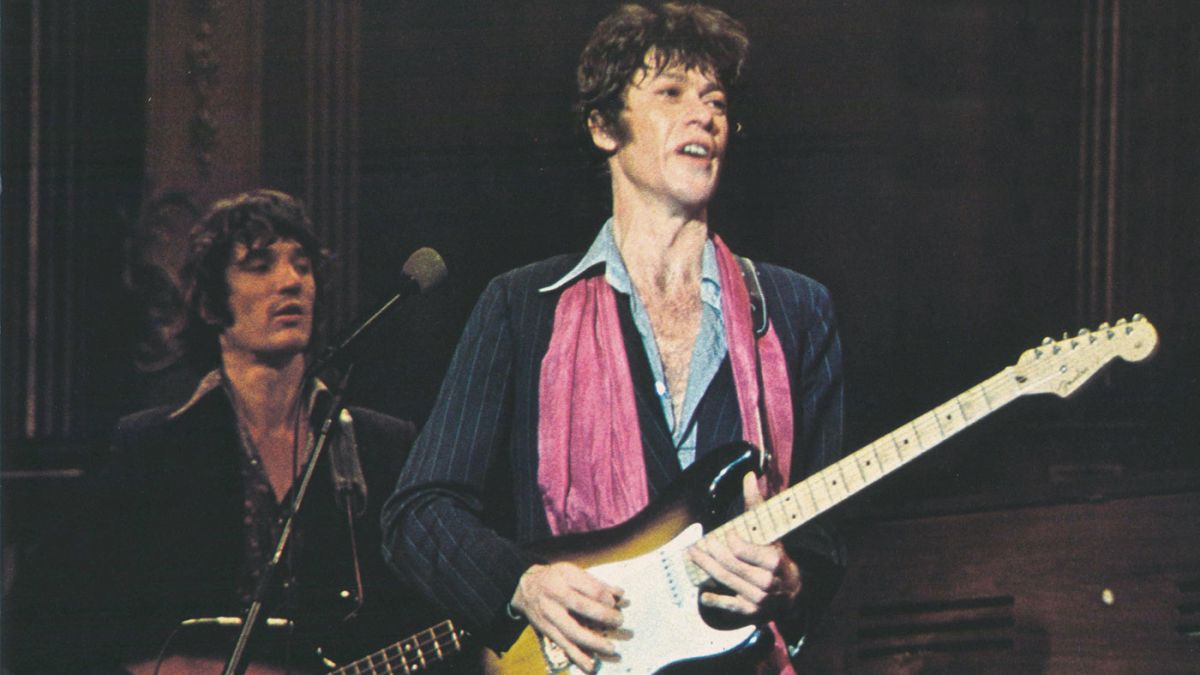
Robbie Robertson (front center) in THE LAST WATZ.
Robbie Robertson was justifiably famous as a musician and a songwriter, fronting The Band with its many hits and backing Bob Dylan’s transition from acoustic to electric. In fact, I was introduced to Robertson on-screen as a subject of Martin Scorsese’s documentary The Last Waltz, still one of the greatest concert films. But Robertson also became a significant force in the music of cinema, amassing almost 300 screen credits on IMDb as a composer, music supervisor or contributor to the soundtrack. Robertson’s behind the screen work included many collaborations with Scorsese, the last being the heralded Killers of the Flower Moon. Robertson identified as an indigenous Canadian, whose mother was Cayuga and Mohawk from the Six Nations Reserve.
Director Hugh Hudson’s FIRST FEATURE won the Best Picture Oscar – Chariots of Fire. He never approached that level of achievement with feature films again, although he had a successful career directing commercials. He was one of the very few directors to attempt to make a movie about the American Revolution, Revolution.
Writer Bo Goldman won an adapted screenplay Oscar for One Flew Over the Cuckoo’s Nest and an original screenplay Oscar for Melvin and Howard.
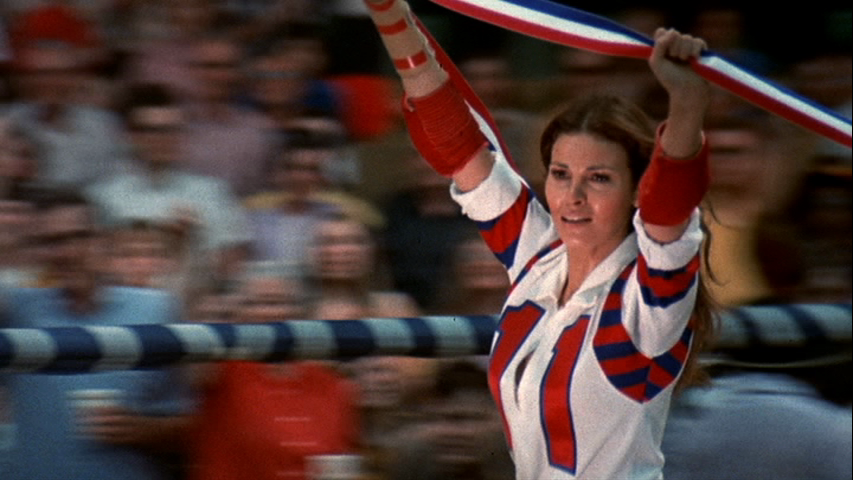
Early on, Raquel Welch was thought of more as a novelty movie star than as an actress. She had become instantly recognizable for displaying her spectacular figure in a skintight spacesuit (Fantastic Voyage), a doe-skin bikini (One Billion Years B.C.), a star spangled bikini (Myra Breckenridge), and flimsy undergarments (100 Rifles). In 1972, she proved that she could act in Kansas City Bomber. Welch nailed the character of a hard scrabble single mom committed to raising her kid while facing one indignity and bad choice after another. (Welch herself had two kids by the time she was 21 and was divorced at 24.) In 1973, she demonstrated brilliant comic acting chops in The Three Musketeers,
Her birth surname was Tejada; she took Welch from her first husband. Welch’s father was Bolivian, and her cousin was the first female president of Bolivia.
Alan Arkin in GLENGARRY GLEN ROSS.
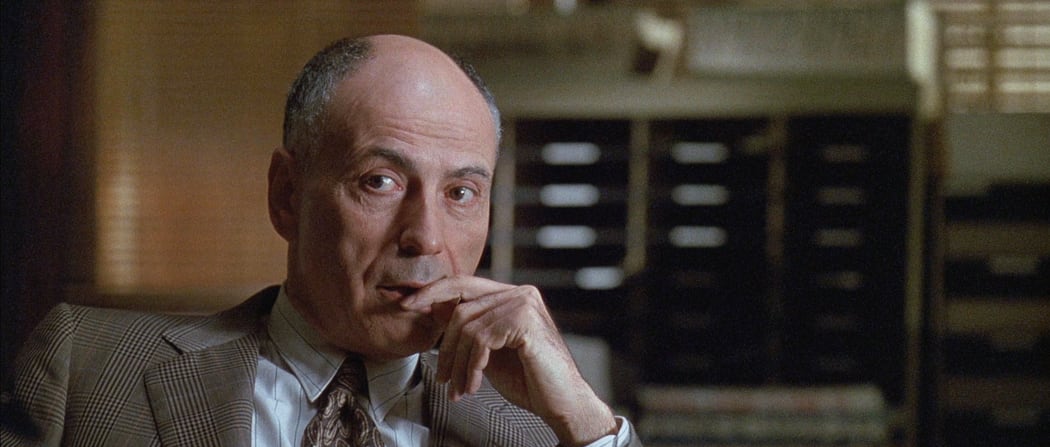
His NYT obit notes that Alan Arkin “won a Tony Award for his first lead role on Broadway (and) received an Academy Award nomination for his first feature film”. Arkin soared in comic roles, especially in The Russians are Coming! The Russians are Coming! and Little Miss Sunshine and as a chilling villain in Wait Until Dark. For my money, his greatest performance as as the desperate and life-worn salesman in Glengarry Glen Ross, a puddle of vulnerability.
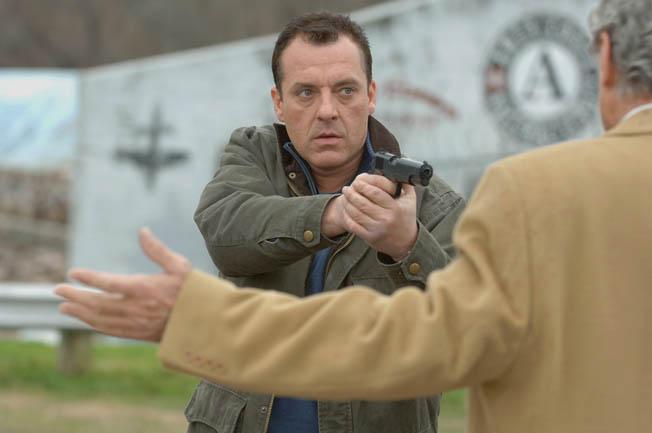
Tom Sizemore in THE LAST LULLABY
Actor Tom Sizemore is most remembered for his Oscar-nominated performance as Tom Hank’s sergeant in Saving Private Ryan. Sizemore was intense and charismatic and hugely talented, but his longtime cocaine addiction kept him off the screen and in the tabloids, rehab and jail. In a rare leading role, Sizemore carried an excellent little neo-noir, The Last Lullaby; see it on Amazon (included with Prime), Vudu and redbox.
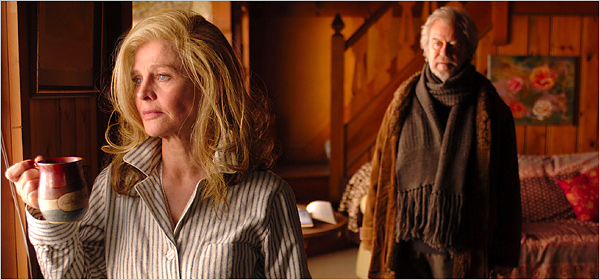
Julie Christie and Gordon Pinsent in AWAY FROM HER.
Prolific Canadian actor Gordon Pinsent was unforgettable in Away from Her, Sarah Polley’s Alzheimer’s movie with Julie Christie (my choice for the best movie of 2007). Pinsent piled up 152 screen credits, much of it lesser material on TV. He played a bad guy in one of my favorite neo-noirs, Chandler with Warren Oates.
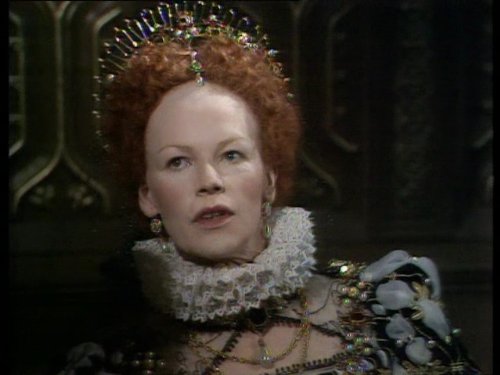
Glenda Jackson in Elizabeth R.
Glenda Jackson won Oscars for Women in Love and a A Touch of Class. I most admired her as the fierce Queen Bess in the 1971 miniseries Elizabeth R. Many actors have tried on politics in real life, but Jackson took off 23 years from her acting career to serve as a hard Left Labor Party MP, before returning to the stage as an acclaimed King Lear.
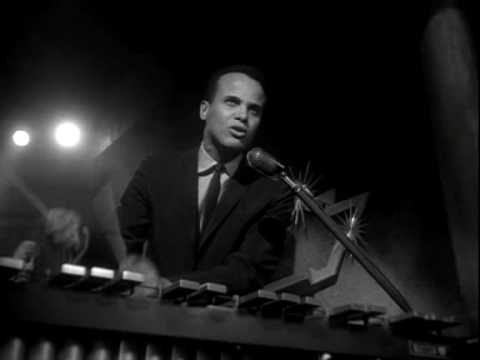
Harry Belafonte in ODDS AGAINST TOMORROW.
Already a big musical star, Harry Belafonte burst on screen with searing performances in the 1950s – Carmen Jones, Island in the Sun, Odds Against Tomorrow. He only made a few movies after 1959, but they were good ones: Sidney Poitier’s Buck and the Preacher, Robert Altman’s Kansas City and The Player, Spike Lee’s BlacKKKlansman. Belafonte could have had an even bigger film career, but, early on, he refused roles that he found demeaning and then devoted the last six decades of his life to civil rights work, where he made immense contributions.
Gina Lollibrigida has died at 95. Her very solid mainly, European body of film work was overshadowed by her image in the US as a sex symbol (Solomon and Sheba). Check her out in John Huston’s sly Beat the Devil. Lollibrigida was the first five-syllable Italian word that I learned to pronounce.
Richard Roundtree’s FIRST MOVIE role was as the iconic John Shaft in Shaft. He went on to over 250 more screen credits, including four more as John Shaft. Although in my mind, the biggest star of Shaft was Isaac Hayes’ music, Richard Roundtree was, along with Pam Grier, the most significant on-screen force in Blaxploitation cinema.
Michael Gambon, the venerated actor of the British stage, ended his career famously as Dumbledore in several Harry Potter movies. He had also played LBJ in Path to War, the lord of the manor in Gosford Park and the king in The King’s Speech, and elevated smaller movies like Page Eight, Quartet and Layer Cake.
Melinda Dillon was Oscar-nominated for Close Encounters of the Third Kind and Absence of Malice. But my favorite Dillon performance will also be that of another mom, who is worried her son will shoot his eye out in A Christmas Story. She also shared an intimate scene with Paul Newman in Slapshot, and said, “I spent 10 and a half hours naked in bed with Paul and absolutely loved it.”
Cindy Williams, before her TV success in Laverne and Shirley, made two of the 50Greatest Movies of All Time. George Lucas’ American Graffiti is about that moment in 1962 when the innocence of the 1950s was months away from being replaced by the turbulence of the 1960s, for which nobody in America was prepared; she played the girlfriend of Ron Howard’s Steve, whose willfulness got her in a situation that was more than she could handle. Williams’ apparent sweet innocence was also perfect for Francis Ford Coppola’s The Conversation, where it is revealed that her character was not so threatened after all.
Sadly, the actor Robert Blake will be remembered for the horrific childhood and sordid post-career detailed in his NYT obit, a hit TV show with a parrot and an absence of boundaries on TV talk shows. He was a child star, exploited by an abusive parent, in Our Gang and even The Treasure of the Sierra Madre. But he proved his underlying talent in In Cold Blood.
From 1974 to 1979, Frederic Forrest was making unforgettable movies (The Conversation, Apocalypse Now, The Rose), but those led to a passel of forgettable ones in the 80s. He did sparkle as the villainous Blue Duck in Lonesome Dove.
Treat Williams began his career with a string of interesting movies from 1976 through 1981: The Ritz, Hair, and the highly acclaimed Prince of the City. He continued a prolific and respectable career for four more decades, but his films never matched his early ones.
Julian Sands earned 156 screen credits and will be best remembered for A Room with a View.
Ryan O’Neal became a movie star when he starred in the disgustingly saccharine Love Story. He later was eclipsed by his own daughter’s Oscar-winning performance in Paper Moon. He was a good sport, mocking Love Story with his final line in What’s Up, Doc?.
Jim Brown is justifiably best known for being voted the best NFL player of the 20th Century, but the reason he left NFL was to star in Hollywood movies, where he was an African-American trailblazer. In 1969’s 100 Rifles, he played the first African-American male character in a major Hollywood movie to be shown having sex with a white woman (Raquel Welch). Although Brown displayed a range of emotion onscreen described by James Wolcott as “no wider than a mail slot”, he was a pretty convincing action star, perhaps best in The Dirty Dozen.
Paul Reubens was the star of and the creative force behind the goodihearted and gloriously weird Pee-wee’s Big Adventure.
Joss Ackland was one of those stage-trained British actors who could elevate a role in any film, as he did in Lethal Weapon 2, The Hunt for Red October, White Mischief and over 200 other screen credits.
Lance Reddick earned over 100 screen credits, appearing in several movie franchises and 60 episodes of The Wire. His final performance, in The Caine Mutiny Court-Martial, is one of his best.
Jane Birkin is remembered as a model, fashion icon, pop singer and a celebrity jet setter in the Mod 60s. She appeared in an extraordinarily good movie, Michelangelo Antonioni’s Blow-up, but in a cameo playing a Mod Era jet set model. She was the mother of a very gifted screen actress, Charlotte Gainsbourg.
As The Wife and I left a screening of Maestro, I noted that I just can’t recommend most of the prestige movies supported by heavy advertising – Maestro, and also the ponderous Napoleon and the creepy Priscilla. Of the high profile films, I do recommend Killers of the Flower Moon and The Holdovers. Of course, there was plenty of hoopla this summer about two wonderful movies, Oppenheimer and Barbie, which you can now watch at home.
When we het to the Holidays I pause my regular WATCH AT HOME feature The most eclectic watch-at-home recommendations you’ll find ANYWHERE) and replace it with the movies from my Best of 2023 list that are already available to stream.
CURRENT MOVIES
Anatomy of a Fall: family history, with life or death stakes. In theaters.
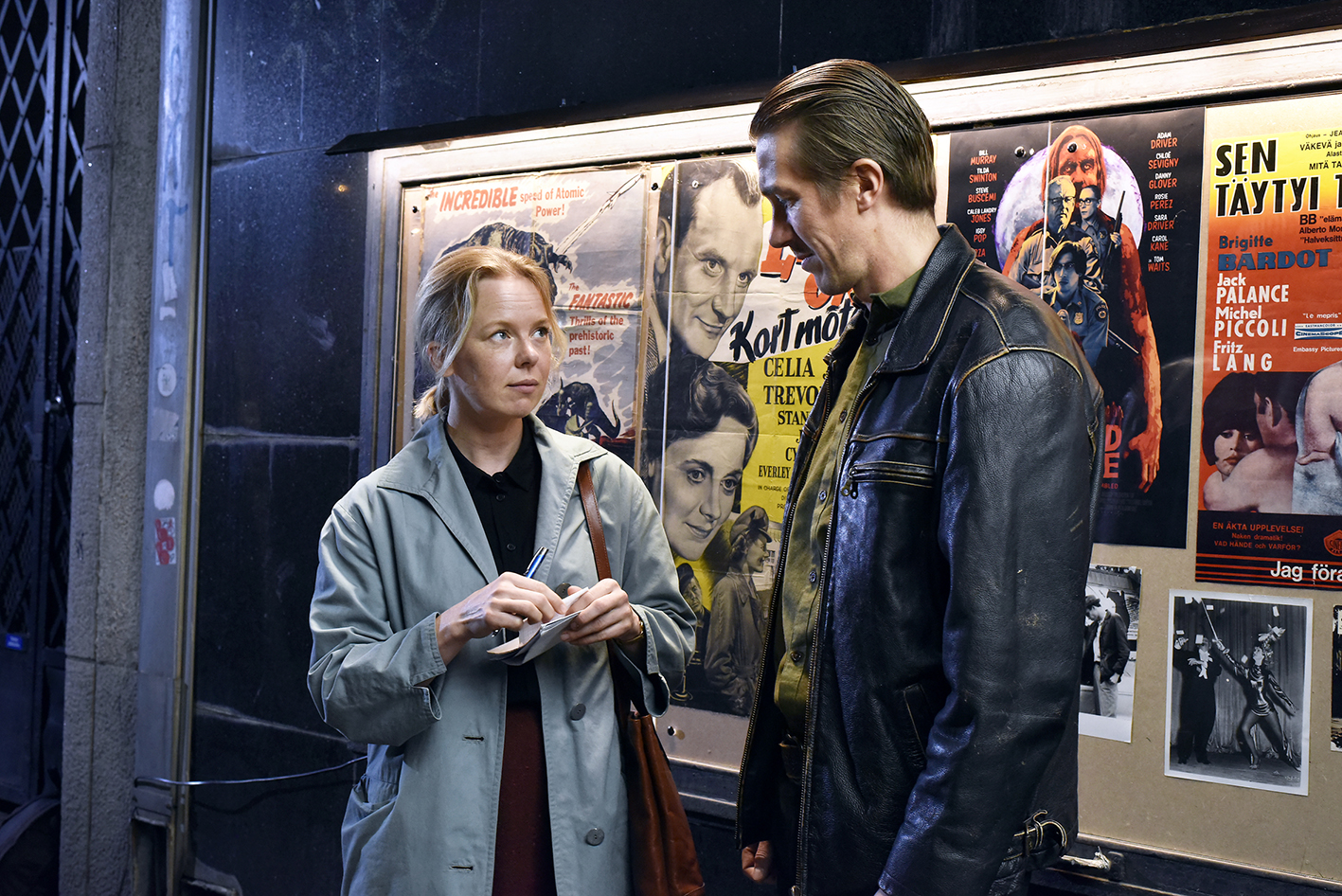
Photo caption: Alma Pöysti and Jussi Vatanen in FALLEN LEAVES. Courtesy of The Match Factory.
The Finnish deadpan comedy Fallen Leaves is the story of two fortyish singles navigating a blue collar world that is filled with disappointment, despite low expectations. We first meet the no-nonsense Ansa (Alma Pöysti) working in a supermarket, and then the sarcastic loner Holappa (Jussi Vatanen), working in a metal scrap yard. Fallen Leaves depicts Finnish middle-managers as tyrannical idiots, so neither Ansa or Holappa get any satisfaction from their work. Neither has much of social life, although they spot each other when accompanying friends to a karaoke bar.
These are two lonely people. But, not only don’t Ansa and Holappa meet CUTE, they keep not meeting AT ALL. Holappa’s shyness precludes an introduction at the karaoke bar, and then happenstance (and Holappa’s drinking) make them keeping missing each other, until a promising encounter is frustrated again.
We know that eventually, Ansa and Holappa will find the opportunity to launch a relationship. The impediment will be Holappa’s alcoholism. Here’s a public service from the Movie Gourmet: If you answer two or more of the following questions in he affirmative, then it is likely you have a problem with alcohol:
Have you been fired more than once for drinking on the job?
Have you passed out at a bus stop?
Do you regularly order three shots with a beer chaser?
Does a bartender tell you “[insert your name}, It’s time to go home so you can come back in the morning“?
Writer-director Aki Kaurismäki creates a humorously grim world for our droll heros and their pals. The dreariest of soulless dive bars, with the barmaid in curlers, is aspirationally named the California Pub. Holappa’s buddy tells him that he is no tough guy, “but maybe you could be a tough guy in Denmark”. Kaurismäki fills the screen with lots of Finns standing very still.
Fallen Leaves is not a Must See, I but I enjoyed the yearning for connection and intimacy, framed in the driest of humor. Many critics have describe the film as bittersweet; I see it as film with humor that is bitter-tinged, and then ultimately purely sweet.
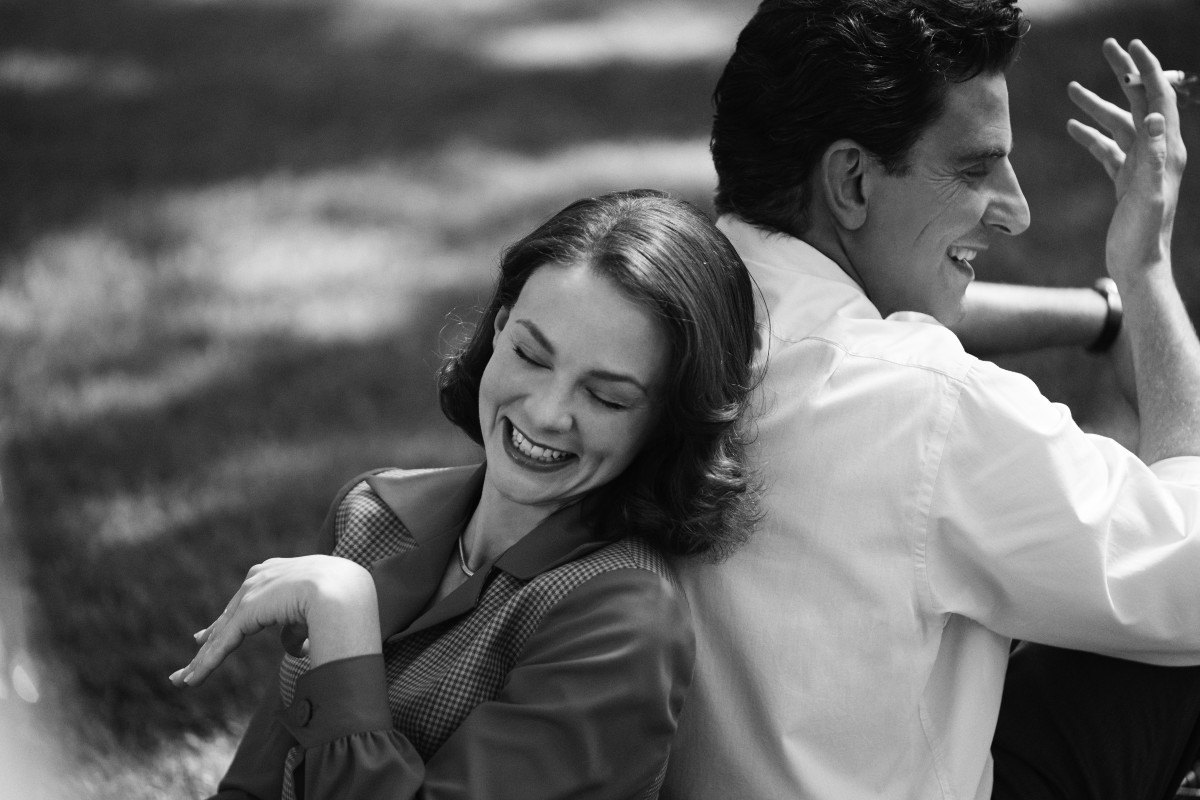
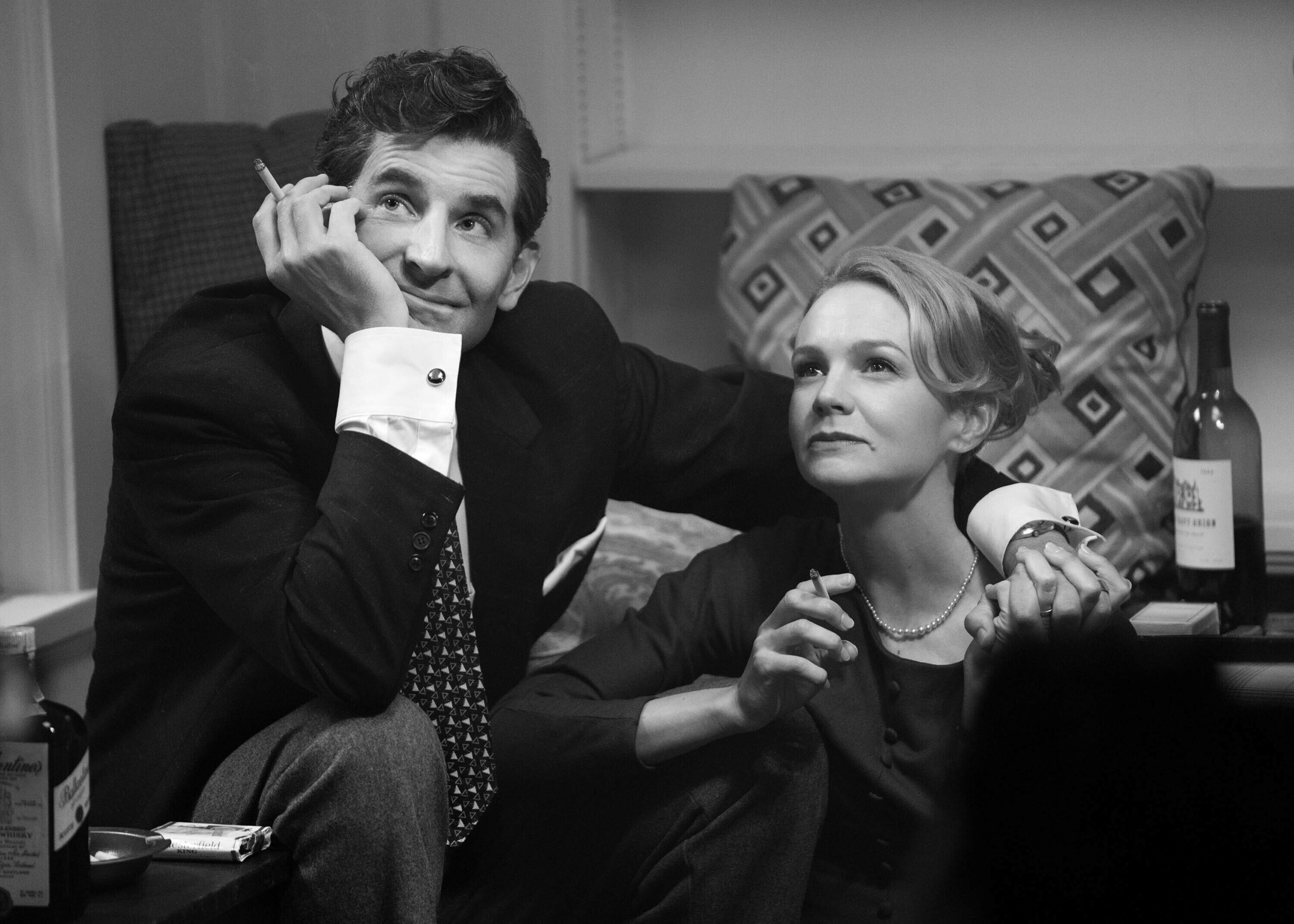
Maestro is the dramatization of the marriage between legendary conductor/composer Leonard Bernstein (Bradley Cooper, who also directed) and his wife Felicia (Carey Mulligan). As portrayed in Maestro, the marriage was shaped by three factors:
The two shared deep affection for each other, along with interests and sensibilities.
Bernstein’s career, driven by his genius, soared into superstardom.
In the first decades of the marriage, the mainstream would not accept a public figure who was gay or bisexual, which Lenny was.
Lenny was the prodigious talent and the celebrity, but Maestro is really Felicia’s story, because she faces the major conflict and because of Carey Mulligan’s sensational performance.
Indeed, although I’m lukewarm about Maestro, Mulligan is one of the two best reasons to see it. The second is a magical six-minute scene in which Bernstein conducts the London Symphony Orchestra in Mahler’s “Resurrection” Symphony No. 2 at Ely Cathedral in 1973; it is as spectacular cinema as we’ve seen (and heard) this year.
Bradley Cooper’s Lenny is a jumble of ebullience, creative energy and conflict-avoidance; he was always, perhaps compulsively, the life of the party. Sharing her life with a guy who sucked out all the oxygen in the room was enough of a roller coaster ride for Felicia. Felicia was pretty open-minded about her husband’s dalliances with other men; but his wanting to bring his male lover (Tommy Cothran, played by Gideon Glick) into her family was a bridge too far.
It seems that Lenny primarily valued Felicia for having his children and accompanying him to trendy parties; theNYT’s Manohla Dargis impeccably describes those as “those fabulously glamorous New York parties that mostly exist in old Hollywood films or in biographies of very important dead people.” He didn’t need her as a business adviser, a creative partner or even a muse, but she was much more than his beard. Her admiration for his artistry wasn’t that of a wannabe or a groupie – Felicia, as a working New York theater actor, was an accomplished artist herself.
So, as was common in the era, its was Lenny who defined their relationship, not he and Felicia together. Carey Mulligan inhabits a character who enjoys the initial exuberance and who slowly observes that Lenny is not going to deliver what she believed that he originally committed to.
Bradley Cooper is an excellent director, as demonstrated by A Star Is Born. Here, he is very cinematic, switching aspect ratios and toggling between black and white and color.
Sarah Silverman is delightful in a very small part as one of Felicia’s friends.
Back when the trailer was released, there was a tempest in a teapot about Cooper’s prosthetic nose, to make him resemble Bernstein, a familiar figure. Bernstein’s his family stepped in and quelled the silliness. But, I was distracted by another prosthetic, the folds of wattles and neck fat on Cooper playing the old Bernstein
I’m decidedly not a fan of classical music (although I did like Amadeus); The Wife likes classical music, and she liked Maestro a bit more than I did. We were both engrossed when Mulligan was onscreen, but I was bored when she wasn’t.
This is a BIG, ambitious movie, and all of my favorite critics liked it more than I did. It’s the kind of movie (like Kramer vs. Kramer or Spotlight) that may garner lots Oscar buzz (with Netflix support), but that we won’t remember in a few years. Maestro is in theaters and streaming on Netflix.