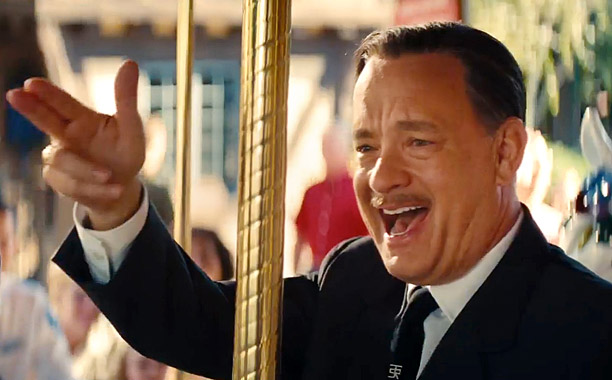
Saving Mr. Banks is Disney’s story of the making of Mary Poppins, centering on the conflict between the avuncular Walt Disney (Tom Hanks) and the harshly fastidious author of the source material, P.L. Travers (Emma Thompson). It’s a pleasing and satisfying movie, albeit sentimental, predictable and emotionally manipulative. (I saw this with The Wife, who found the movie to be deeper than I did.)
From top-to-bottom, Saving Mr. Banks is quite well-acted. It’s great to see Hanks bring alive Walt Disney – such an icon, especially to the Baby Boomers who watched him introduce the most imaginative family entertainment every Sunday night on television. Colin Farrell is very good as the playful and loving but unreliable father. Kathy Baker and Paul Giamatti are good in particularly unchallenging roles. Emma Thompson does just fine, too, although her role has been written to be somewhat one-dimensional.
Here’s a pet peeve of mine – the trailer gives away the heart of story (and the reason for the title). If you’re interested in Walt Disney and/or Mary Poppins – and you have two hours – skip the trailer and see the movie. Otherwise, just watch the trailer.
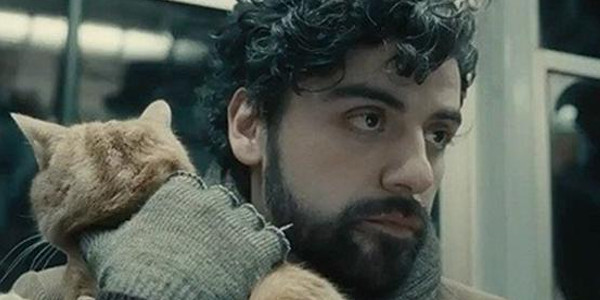
There is NO BETTER TIME to go to the movies than THIS WEEKEND. Of the films opening widely today, I recommend the gloriously entertaining American Hustle, with Christian Bale, Amy Adams, Bradley Cooper, Jennifer Lawrence, Jeremy Renner and Louis C.K. at their best. I haven’t yet seen the other promising movies opening today: the Coen Brother’sInside Llewyn Davis, Tom Hanks as Walt Disney in Saving Mr. Banksand Go for Sisters (by my favorite indie writer-director John Sayles). And you can still several of the best movies of the year:
The city of Rome dazzles in The Great Beauty, already another contender for the Best Foreign Language Oscar.
I really liked and admired the funny, poignant and thought-provoking family portrait Nebraska from Alexander Payne (Sideways, The Descendants).
Philomena, with Judi Dench and Steve Coogan is an emotionally satisfying gem.
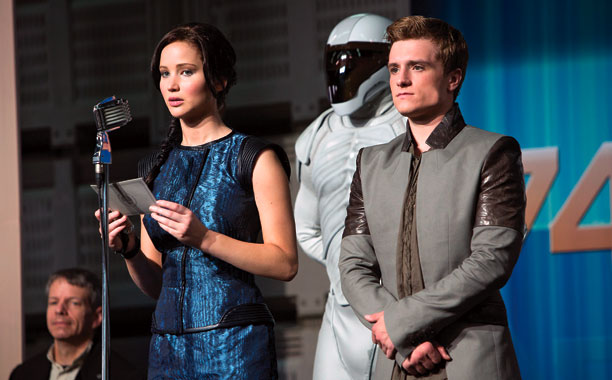
This weekend, I will write about The Hunger Games: Catching Fire, another fine thriller from that franchise, with another amazing performance by Jennifer Lawrence.
You can still find some of the earlier top 2013 movies in theaters: the flawless true story thrillerCaptain Phillips; the space thriller Gravity – an amazing achievement by filmmaker Alfonso Cuarón with what may be Sandra Bullock’s finest performance; and 12 Years a Slave, an unsparingly realistic depiction of the horrors of American slavery.
Make this a 2-3 movie weekend!
[Note: Sunday’s We Remember Billy Jack was The Movie Gourmet’s 1000th post. Thanks to all of you for your support.]
Why is American Hustle so gloriously entertaining? It’s certainly successful as a con man movie, as a 70s period piece and as a fast-paced (sometimes almost screwball) comedy. But I think the key is that writer-director David O. Russell develops such compelling characters – lots of them – and they’re so endearingly wacky, we just need to see what happens next. That’s the recipe he used in last year’s triumph Silver Linings Playbook (and in his under-appreciated 1996 Flirting with Disaster).
American Hustle opens with the wonderfully sly disclaimer “Some of this actually happened”, and then we see Christian Bale assembling the worst comb-over in cinematic history – and we’re hooked. The story follows the arc of the real-life Abscam scandal with the FBI forcing con artists to sting elected officials in an outlandish bribery-by-phony-sheik scheme. Bale plays an unattractive yet magnetic con man. Amy Adams is his tough and sexy partner. Bradley Cooper is their hyper-ambitious FBI handler.
As we would expect, Bale, Adams and Cooper are all fun to watch with this material. But Russell ‘s cast is very deep – the secondary and tertiary characters are just as fun. Jennifer Lawrence is a force of nature as Bale’s estranged wife, who takes passive aggressiveness to an entirely unforeseen level. Jeremy Renner (The Hurt Locker) almost steals the picture as an extremely sympathetic and good-hearted local pol who doesn’t see what’s coming. And Louis C.K. is hilarious as Cooper’s put-upon boss; as he did so successfully in Blue Jasmine, C.K. plays the character completely straight and lets the material generate the laughs; many comedians make the mistake of trying to act funny in movie comedies, but C.K. has a real gift for the lethal dead pan.
American Hustle plants us firmly in the late 1970s with an especially evocative score and very fun costumes and hair. Besides Bale’s comb-over, we enjoy the tightly permed curls of Adams and Cooper, along with Lawrence’s Jersey updo. And Adams and Lawrence sport an unceasing series of dresses with severely plunging necklines.
Funny and gripping at the same time, with scads of movie stars at their very best, American Hustle is a surefire good time at the movies.
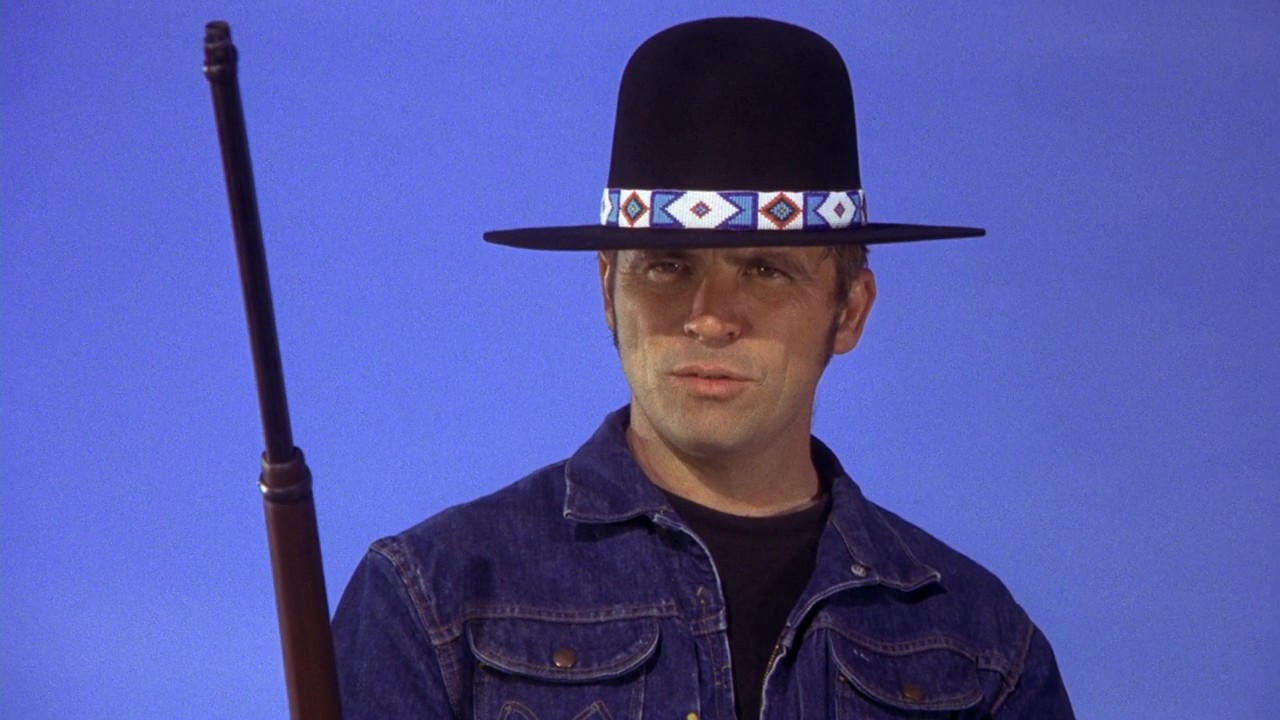
Tom Laughlin, the groundbreaking independent film maker who created the 70s iconic character Billy Jack, has died at age 82. Laughlin originated the character in his biker exploitation movie Born Losers (1967), and then fully unleashed him in Billy Jack (1971), The Trial of Billy Jack (1974) and Billy Jack Goes to Washington (1977).
Billy Jack is a Vietnam vet who embraces his own combo of New Age mysticism and Native American spiritualism and uses martial arts to kick the crap out of the bad guys who bully women, Native Americans and teenagers. Laughlin played a character along similar themes in his The Master Gunfighter (1975), only bearded and wielding a samurai sword.
The prickly Laughlin made and distributed his films independently, and Billy Jack and Trial were huge box office successes, among the most financially successful indies ever. For The Trial of Billy Jack, Laughlin engineered the then-unheard-of simultaneous release on 1500 screens. This excellent Bill Gibron article in Pop Matters describes this precursor of the Hollywood blockbuster strategy. Billy Jack was also the first widely seen martial arts movie in America.
Despite his innovations in the movie business, Laughlin never succeeded in making a good movie. Filled with clumsy acting and hackneyed dialogue, the films are still pompous, self-important and humorless.
Laughlin’s signature as a screenwriter is heavy-handedness. It’s never enough for the bad guys in the Billy Jack movies to be bad. They also have to be racist AND mean to animals AND sexually perverted. Billy Jack opens with the bad guys illegally raiding an Indian reservation to steal a herd of wild mustangs and herd them to a corral where they will be shot at pointblank range to bring in six cents per pound as dog food. One of the Billy Jack villains seduces a 13-year-old, insists on forcing a willing floozie at knifepoint and, for good measure, stakes a saintly teacher to the ground for a ritual rape. In The Trial of Billy Jack, a government henchman shoots a child – in the back – while he is cradling a bunny.
I have a Bad Movie Festival that features unintentionally bad movies that are fun to watch and mock. The Billy Jack movies are too painful for this list. While bad enough, they are gratingly platitudinous.
Laughlin was married since 1954 to his Billy Jack co-writer and co-star Delores Taylor.
The city of Rome dazzles in The Great Beauty, already a favorite for the Best Foreign Language Oscar.
I really liked and admired the funny, poignant and thought-provoking family portrait Nebraska from Alexander Payne (Sideways, The Descendants).
Philomena, with Judi Dench and Steve Coogan is an emotionally satisfying gem.
This weekend, I will write about The Hunger Games: Catching Fire, another fine thriller from that franchise, with another amazing performance by Jennifer Lawrence.
Other good choices include the flawless true story thrillerCaptain Phillips and the space thriller Gravity – an amazing achievement by filmmaker Alfonso Cuarón with what may be Sandra Bullock’s finest performance. 12 Years a Slave is an unsparingly realistic depiction of the horrors of American slavery.
If you’re in the mood for a top-rate Western (and I almost always am), there’s 3:10 to Yuma and Red River coming up on Turner Classic movies on December 19. Set your TiVo and ride ’em cowboy!
The Hunger Games: Catching Fire is another gripping episode from the popular and acclaimed young adult fiction trilogy by Suzanne Collins. Just like The Hunger Games, it’s a well-paced, well-acted and intelligent sci-fi adventure fable. And it’s yet another showcase role for Jennifer Lawrence.
To review, the story is set in the future, where several generations after a rebellion, an authoritarian government plucks teenagers from the formerly rebellious provinces to fight to the death in a forest. It’s all broadcast on reality TV for the entertainment of the masses. Children killing children – it doesn’t get much harsher than that.
This time, the malevolent tyrant picks his gladiators from the winners (i.e., survivors) of the past Games. Because they have survived by killing off the other children, they could constitute their own PTSD support group; they range from emotionally fragile to raging bonkers. This adds a particularly flavorful set of roles, acted especially deliciously by Jeffrey Wright, Amanda Plummer and Jena Malone.
The main purpose of a second act is to tee up the third, and Catching Fire is very successful, with the help of a new character played by Philip Seymour Hoffman. Francis Lawrence (no relation to Jennifer) does a fine job directing his first Hunger Games movie – and he’s set to direct the final chapter in the trilogy (which will actually be two movies – The Hunger Games: Mockingjay – Part 1 and – Part 2).
[Gary Ross, the director of the original The Hunger Games, is in pre-production on two new Jennifer Lawrence movies – Burial Rites from the Hannah Kent novel and Steinbeck’s East of Eden (where Lawrence’s role is the one played by Julie Harris in the 1955 Elia Kazan/James Dean version).]
But, at the end of the day, it’s all about Jennifer Lawrence, who must carry the movie as the plays the determined and resourceful Appalachian heroine. She’s an amazing screen presence, capable of believably portraying both panic attacks and action hero sequences. She’s worth the price of admission all by herself.
The source material may be aimed at tweens, but I haven’t met an adult yet who hasn’t enjoyed and been impressed with The Hunger Games or The Hunger Games: Catching Fire. I’ll probably go see Catching Fire again (this time with The Wife), and I’m looking forward to Mockingjay.
I really liked and admired the funny, poignant and thought-provoking family portrait Nebraska from Alexander Payne (Sideways, The Descendants).
Philomena, with Judi Dench and Steve Coogan is an emotionally satisfying gem.
The city of Rome dazzles in The Great Beauty, already a favorite for the Best Foreign Language Oscar.
This weekend, I will write about The Hunger Games: Catching Fire, another fine thriller from that franchise, with another amazing performance by Jennifer Lawrence.
Other good choices include the flawless true story thrillerCaptain Phillips and the space thriller Gravity – an amazing achievement by filmmaker Alfonso Cuarón with what may be Sandra Bullock’s finest performance. 12 Years a Slave is an unsparingly realistic depiction of the horrors of American slavery.
On December 7, Turner Classic Movies offers the unique Russian Ark (2002). A narrator wanders through the Winter Palace in the famed Hermitage Museum in St. Petersburg. He is from an earlier historical period, and he meets characters from other eras in Russian history. Along the way he talks to a 19th century French companion and, sometimes, directly to us – the audience. Sometimes the characters see each other and sometimes they don’t – all very trippy. And here’s the most remarkable aspect of Russian Ark – it was all shot with a Steadicam in ONE 96-minute continuous shot. Sure, it’s a gimmick, but the movie can stand on its own as a watchable art film.
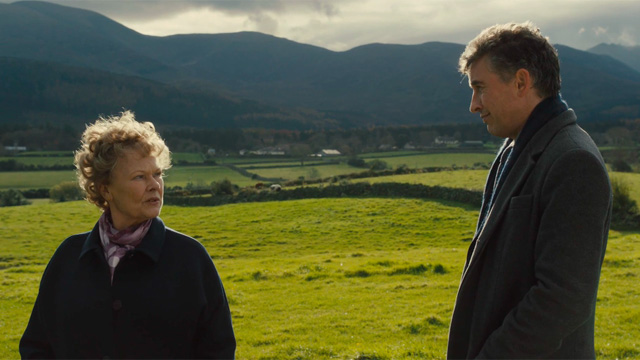
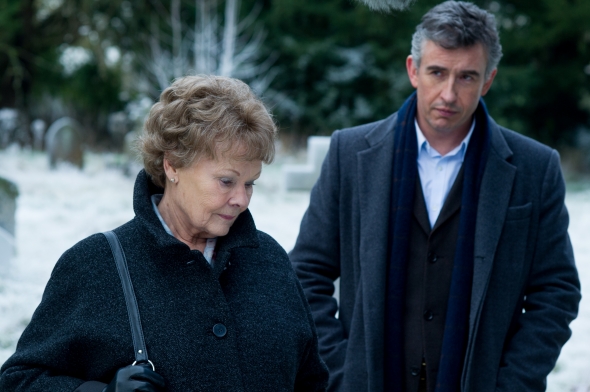
The title character in Philomena, is an Irish woman who was shipped off to the nuns as a pregnant teen and whose toddler was adopted without her genuine consent. Now over forty years later, she wants to find what has happened to her son. Philomena (Judi Dench) is a simple woman, whose deep faith has been unable to resolve her sense of loss. She enlists a British journalist (Coogan) to help her in the investigation. The journalist takes them on a journey that finds her answers – and some of those answers are wholly unexpected.
The nuns in the 1950s flashback are cartoonishly nasty, contrasted with their modern counterparts – just as evil but with slickly modern PR skills. Philomena’s faith enables her victimhood, but then an act of transcendence reveals her to be the most Christian character.
Of course, Dench is always excellent, but Coogan’s performance shows an unexpected range. His character has just had his high-flying career derailed and has lost the smug confidence that Coogan’s characters usually impart.
Director Stephen Frears (High Fidelity, Dirty Pretty Things, The Queen) has a big success with Philomena, a nice rebound from his most recent efforts (Tamara Drewe, Lay the Favorite). Philomena is an emotionally satisfying success – the unexpected gem of Fall 2013.
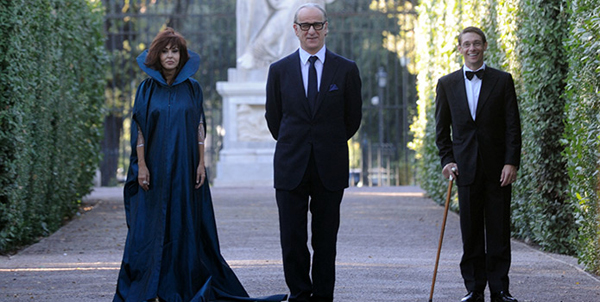
AsThe Great Beauty (La grande belleza) begins, its protagonist Gep Gambardella is celebrating his 65th birthday in a feverishly hedonistic party. Gep authored a successful novel in his twenties, which has since allowed him the indulgent life of a celebrity journalist, bobbing from party to party among Rome’s shallow rich. Gep is having a helluva time, but now he reflects on the emptiness of his milieu and the superficial accomplishments of his past 40 years. As he alternates introspection and indulgence, we follow him through a series of strikingly beautiful Roman settings. (And, because Gep parties all night, we see lots of gorgeously still Roman dawns.)
The Great Beauty is foremost an extraordinarily beautiful art film. If you’ve been to Rome, you know that it is a generally chaotic city with unexpected islands of solitude. The Great Beauty captures this aspect of the Eternal City better than any other film I’ve seen. On one level, The Great Beauty is very successful Rome porn.
Writer-director Paolo Sorrentino also explores the moral vacuity of the very rich and the party life. It’s the Italy of Silvio Berlusconi, whom Sorrentino blames for enabling a national culture of escapism. These themes, along with the main character and the movie’s structure are of course nearly identical to Fellini’s great La Dolce Vita (1960), but The Great Beauty is more accessible, funnier and a bit more hopeful – and much more of a showcase for the cityscape of Rome. Sorrentino provides plenty of laughs, especially with a gourmet-obsessed cardinal and a cadaverous celebrity nun with a Mephistopheles-looking handler.
It’s hard to imagine an actor better suited to play Gep than Toni Servillo. Servillo perfectly captures both the happiness Gep takes in carnal pleasure and his self-criticism for giving his entire life to it. Servillo’s Gep is brazenly proud of his own cynicism, until we see his humanity breaking through at a funeral. Servillo is even magnificent in wearing Gep’s impressive collection of sports jackets.
There’s so much to The Great Beauty – stunning imagery, introspection, social criticism, sexual decadence, fine performances, humor and a Rome travelogue – each by itself worth a visit to the theater. The Great Beauty, which will be one of the favorites for the Best Foreign Language Oscar, may not be in theaters for very long – catch it while you can.
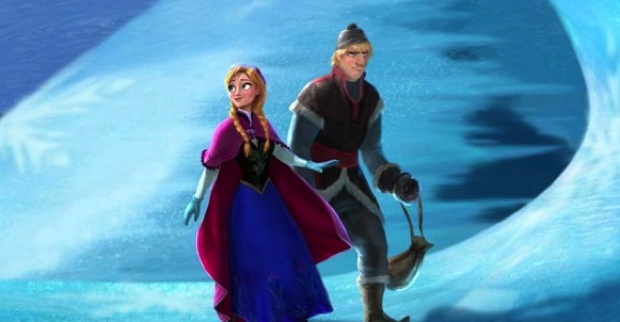
We went to Frozen, to see how the film would stand up against other Holiday movies as well as other classic Disney movies. This heartwarming motion picture holds its own by taking a new spin on the Disney love story, reminding us that love comes in forms other than romantic.
The uniqueness of Frozen‘s story focuses on sisterly love. While, like most other Disney movies, it does have a good dose of romance, the relationship between the sisters in Frozen is very refreshing.
Frozen also stands out among the Disney movies through its music. The odd, tribal intro didn’t work for us, but the majority of the score does a good job bringing classic Disney show tunes into the modern-day musical.
Overall, the movie is a great balance between modern and classic Disney. While new twists on music and a refreshing tale of love keep this story from being your boring old animated film, the characters and plot give viewers the mix of adult and kid humor expected of Disney. This is the perfect multi-generational movie for this Holiday season.For those who feel like splurging, it may be worth seeing in 3D. So warm up this winter, and go see Frozen.
[Note from The Movie Gourmet: I really appreciate The Wife and Niece #1 seeing and commenting on Frozen, because it’s an important film that I just am not going to get to (I tend to skip musicals). I’ve read several rave reviews of Frozen by mainstream critics (Frozen has a solid MetaCritic rating of 74) that predict that Frozen will win the Best Animated Feature Oscar and that see its potential Broadway spin-off as a sure-fire hit. But – at the end of the day – what makes a good movie is ALWAYS a good story, and it was very perceptive of The Wife and Niece #1, apart from other reviews I’ve read, to point out the sister-sister theme that sets Frozen apart.]