WHITE BIRD IN A BLIZZARD: just not enough there, even with Shailene Woodley

White Bird in a Blizzard is by no means a bad movie, but there just isn’t enough story to sustain its brief but leisurely 91 minutes. Shailene Woodley plays a 17-year-old whose neurotic mother (Eva Green!) suddenly disappears without a trace. She’s now living alone with her stolid dad (Christopher Meloni), hanging with her offbeat high school buddies and exploring her sexuality with the investigating police detective. The crux of the movie is that she’s trying to imagine why and how her mother left, all the while ignoring one of the most likely scenarios.

It’s all a mild disappointment from writer-director Gregg Araki. I loved Araki’s 2004 masterpiece Mysterious Skin (with Joseph Gordon-Levitt) and enjoyed his sci-fi sex romp Kaboom. White Bird in a Blizzard is weird at times, but not as “Araki weird” as it perhaps needed to be.  He pretty much wastes Woodley, one of our very finest screen actresses. She’s very good, as is Thomas Jane as the detective.

White Bird in a Blizzard opens tomorrow in theaters and is available streaming on Amazon, iTunes, Vudu, YouTube, Google Play and Xbox Video.

THE TINGLER: Halloween fright from the 50s

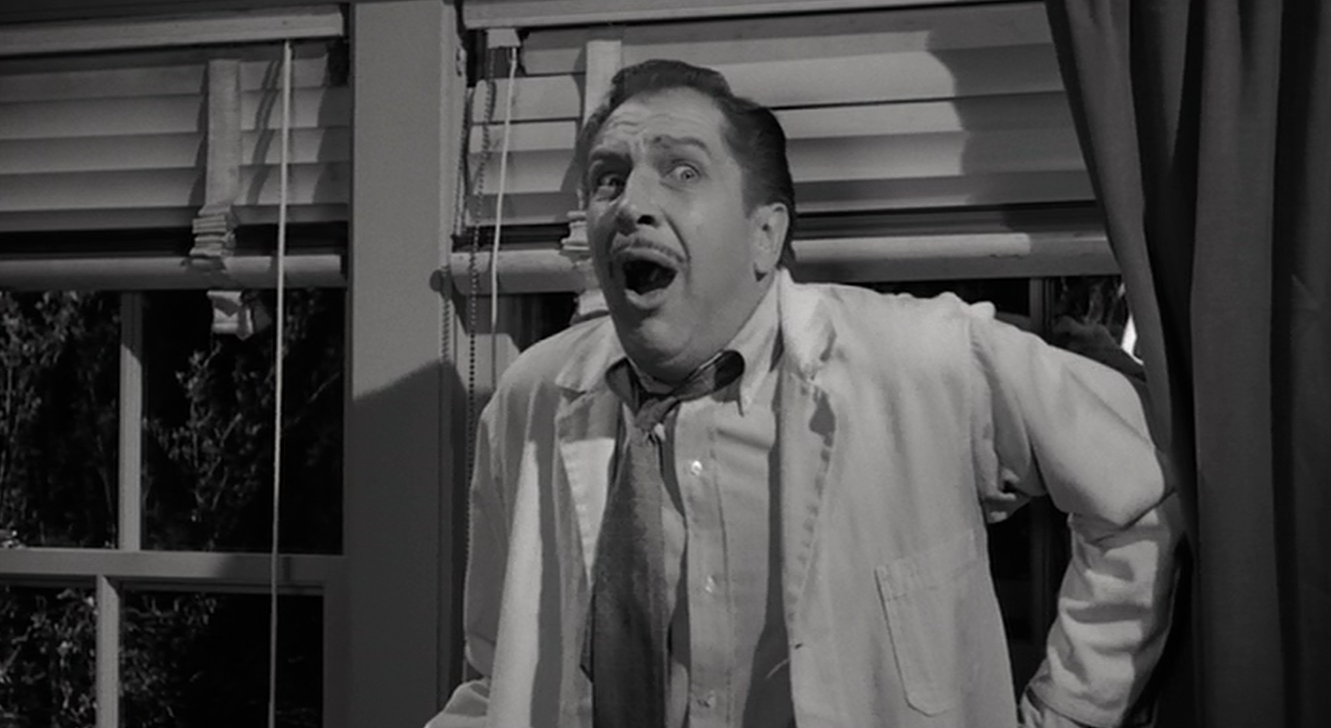
Vincent Price in THE TINGLER

On Halloween, Turner Classic Movies is bringing us a campy Vincent Price horror classic from 1959, The Tingler.  It has a scary premise – a parasite embedding itself in people’s spine and feeding on them –  unaware until they feel a tingle AND THEN IT MAY BE TOO LATE!  When finally revealed, the grown parasite is VERY scary-looking.  Conveniently, the infested can weaken the parasite by screaming.  Horror schlockmeister William Castle reportedly installed buzzers in the backs of some theater seats, so some audience members would get an actual tingle in the spine at the scariest moments.  In the trailer below, Castle preps his audiences to scream if they feel a tingle.  It’s a cult classic.

THE BLUE ROOM: what did I get myself into?

THE BLUE ROOM
THE BLUE ROOM

As the French psychological drama The Blue Room opens, a couple is having sex.  We quickly learn that they are both married, but not to each other.  And next, we see the man being interviewed in a police station. But The Blue Room is not a conventional police procedural, because the audience doesn’t know what crime he is suspected of committing.  He knows what the crime is, but he doesn’t know how it happened. In The Blue Room‘s brisk 75 minutes, more and more is revealed to the audience and to our protagonist. He finally understands it all, but it’s too late.

The structure of the story is very inventive, co-written by the movie’s stars, Mathieu Amalric and Stéphanie Cléau, and directed by Amalric.  Amalric is very good as a guy who spends the movie wondering “how did I get here, and how bad can this get?” It’s a dark little story that requires the audience to keep pace – and it’s pretty successful.

WHIPLASH: motivation and abuse, ambition and obsession

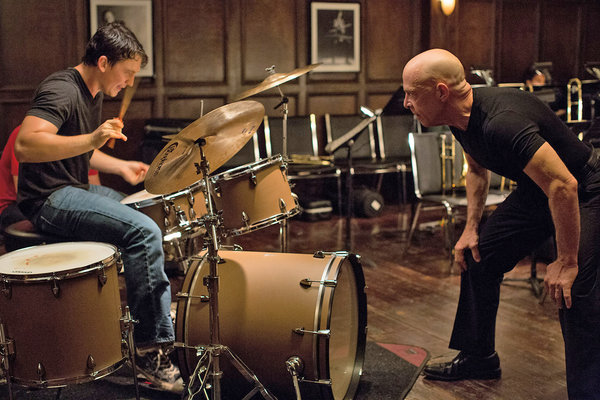
Miles Teller and JK Simmons in WHIPLASH

The big hit at this year’s Sundance Film Festival, the drama Whiplash is about the line between motivation and abuse and the line between ambition and obsession.  A young jazz drummer (Miles Teller of The Spectacular Now and Rabbit Hole) attends an elite music academy (think Julliard) and comes under the attention of a drill sergeant-type of instructor (J.K. Simmons).  The teacher-tormentor pushes the kid toward perfection through tough love and, ultimately, abuse. To what extent is the teacher trying to get the kid to excel?  And how much of the teacher’s behavior is just sadistic bullying?  And how will the kid respond?  (The movie’s title reflects both a jazz song and the teacher’s instructional technique.)

J.K. Simmons is a guy whose name you may not recognize, but whose face you will.  He has 143 screen credits, most memorably as the of the ironic and supportive father in Juno and Vernon Schillinger, the Aryan Brotherhood leader in the prison series Oz.  This is Simmons’ movie; it’s an exceptional performance, that will probably land Simmons an Oscar nomination.

How good a movie is Whiplash?  It’s a very good one – taut,  and intense.  The fact that it’s extremely focused on the two characters and the fundamental questions about their characters is a strength, but also limits it from being a great movie.  Still, Simmons, Teller and the unrelenting tension makes Whiplash definitely worth seeing.

Movies to See Right Now

DEAR WHITE PEOPLE
DEAR WHITE PEOPLE

The brilliant comedy about personal identity Dear White People opens today, along with the Sundance hit Whiplash and the Bill Murray crowd pleaser St. Vincent. I saw Dear White People at the San Francisco International Film Festival, and have been telling folks about it for months – it’s on my list of Best Movies of 2014 – So Far.

Other recommendations:

  • The thriller Gone Girl – the best Hollywood movie of 2014, with a career-topping performance by Rosamund Pike.
  • The successful period thriller The Two Faces of January sets a dark-hearted and shadowy story in sunny Greece. The Two Faces of January is in theaters and is also available streaming on Amazon, iTunes, Vudu, YouTube, Google Play and Xbox Video.
  • The exceptionally well-acted dramedy The Skeleton Twins contains several inspired moments.
  • If you’re in the mood for a brutal, brutal World War II tank movie, there’s Fury.

My DVD/Stream of the week is the exquisite Polish drama Ida – the best foreign film of 2014.  Ida is available on DVD from Netflix and streaming from Amazon Instant, YouTube, Google Play and Xbox Video.

This week, Turner Classic Movies will air the 1962 Ben Gazzara prison movie Convicts 4. TCM will also deliver two film noir masterpieces:

  • In a Lonely Place (1950): The most unsettlingly sexy film noiress Gloria Grahame falls for the troubled screenwriter Humphrey Bogart, a guy with a MAJOR anger management issue; once she’s hooked, she realizes that he might be a murderer after all…
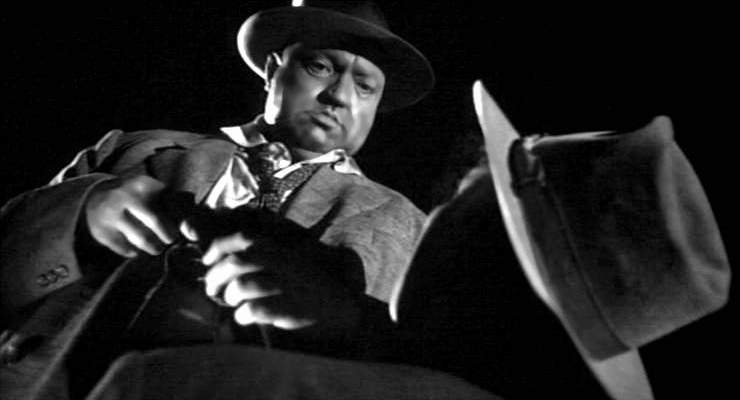
  • Touch of Evil (1958): This Orson Welles masterpiece begins with one of cinema’s great opening scenes, as our lead characters walk from a Mexican border town into an American border town in a single tracking shot of well over 3 minutes. Unbeknownst to them, they are being shadowed by a car bomb. There’s a lot to enjoy here in this cesspool of corruption: a repellent sheriff-gone-bad played by Welles himself, one of Joseph Calleia’s finest supporting turns, one of Dennis Weaver’s first roles (written just for him by Welles) and Charlton Heston as a Mexican.
Orson Welles in his TOUCH OF EVIL

DEAR WHITE PEOPLE: a brilliant comedy about identity

dear white people2
On its surface, the brilliant comedy Dear White People seems to be about racial identity, but – as  writer-director Justin Simien points out – it’s really about personal identity (of which race is an important part).  Set at a prestigious private college, Dear White People centers on a group of African-American students navigating the predominantly white college environment.

Each of the four primary characters has adopted a persona – choosing how they want others to view them.  Middle class Sam is a fierce Black separatist (despite her White Dad and her eyes for that really nice White boy classmate).  Coco, having made it to an elite college from the streets, is driven to succeed socially by ingratiating herself with the popular kids.   Kyle, the Dean’s son, is the college BMOC, a traditional paragon, but with passions elsewhere.   Lionel is floundering; despite being an African-American gay journalist,  he doesn’t fit in with the Black kids, the LGBT community or the journalism clique.  All four of their self-identities are challenged by campus events.

This very witty movie is flat-out hilarious.  The title comes from Sam’s campus radio show, which features advice like “Dear White People, stop dancing!” and Dear White People, don’t touch our hair; what are we – a petting zoo?”.   While the movie explores serious themes, it does so through raucous character-driven humor.  It’s a real treat.

It’s the first feature for writer-director Justin Simien and it’s a stellar debut.  Dear White People is on my list of Best Movies of 2014 – So Far.  I saw it at this year’s San Francisco International Film Festival and have been telling people about it for months.

CONVICTS 4: Ben Gazzara in prison with his crazy friends

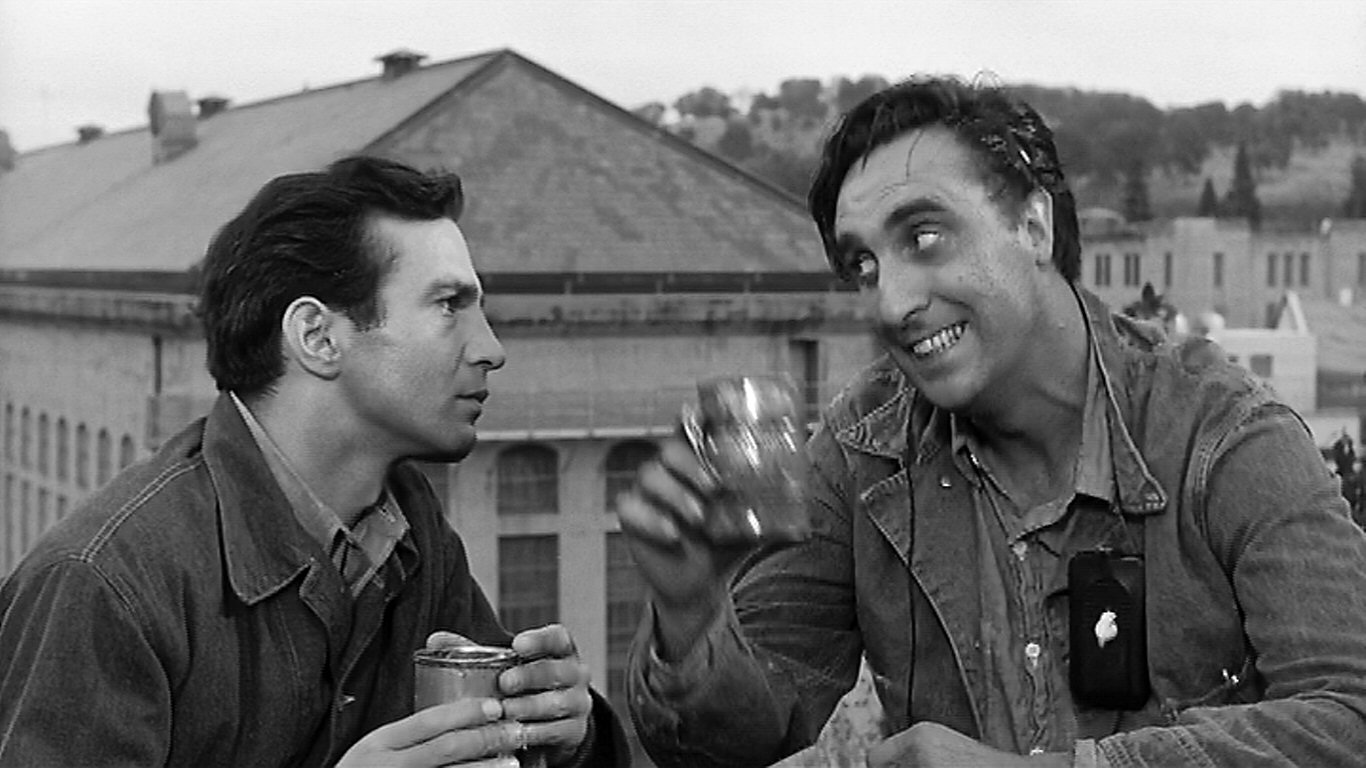
Ben Gazzara and Timothy Carey in CONVICTS 4

The title of Convicts 4 (1962) is odd because it’s really the true-life tail of one convict, played by Ben Gazzara, who develops into a fine artist while in prison.  It’s based on the autobiography of John Resko, who was sentenced to death for a killing during a robbery; his sentence was commuted, and he developed his skills as a painter in prison, contributing to his eventual release.

Now Convicts 4 is not a masterpiece:  some of the scenes are contrived, the dialogue is often stiff  and there are some overwrought moments, especially the pre-execution shower and the wintertime escape attempt. interesting story.  But it’s pretty entertaining because of the real-life story and the compelling performance by Ben Gazzara – at the height of his charisma.

Resko/Gazzara does have a set of cronies while in the Big House.  There’s a particularly unforgettable turn by one of my favorite movie psychos, Timothy Carey, here in one of his most eccentrically self-conscious performances.  Ray Walton (My Favorite Martian) plays another loony prisoner, crazier than Carey’s, but not a menacing.  The rich cast includes Stuart Whitman, Vincent Price, Rod Steiger, Jack Albertson, Brodrick Crawford and Sammy Davis Jr.

Turner Classic Movies will air Convicts 4 on October 25.

DVD/Stream of the Week: IDA

IdaThe Polish drama Ida, which I first saw at this year’s Cinequest, is now available on video.  I currently rate it as (next to Boyhood) the best movie I’ve seen this year.

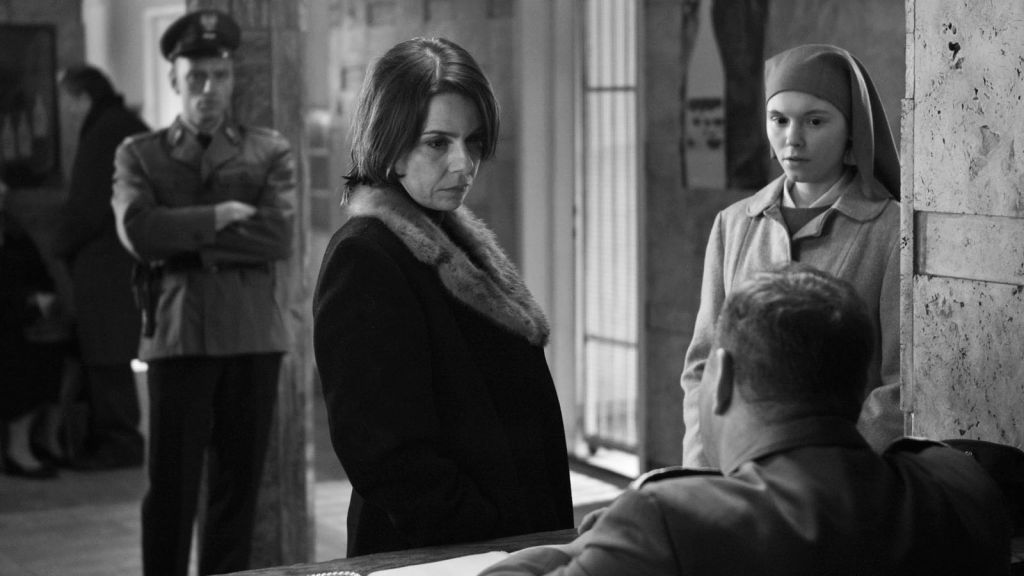
The title character is a novice nun who has been raised in a convent orphanage. Just before she is to take her vows in the early 1960s, she is told for the first time that she has an aunt. She meets the aunt, and Ida learns that she is the survivor of a Jewish family killed in the Holocaust. The aunt takes the novice on an odd couple road trip to trace the fate of their family.

The chain-smoking aunt (Agata Kulesza) is a judge who consumes vast quantities of vodka to self-medicate her own searing memories. But the most profound difference isn’t that the aunt is a hard ass and that the nun is prim and devout. The most important contrast is between their comparative worldliness – the aunt has been around the block and the novice is utterly naive and inexperienced (both literally and figuratively virginal). The young woman must make the choice between a future that follows her upbringing or one which her biological heritage opens to her. As Ida unfolds, her family legacy makes her choice an informed one.

The novice Ida, played by newcomer Agata Trzebuchowska, is very quiet – but hardly fragile. Saying little, she takes in the world with a penetrating gaze and a just-under-the-surface magnetic strength.

Superbly photographed in black and white, each shot is exquisitely composed. Watching shot after shot in Ida is like walking through a museum gazing at masterpiece paintings one after the other. Ida was directed and co-written by Pawel Pawlikowski, who also recently directed the British coming of age story My Summer of Love (with Emily Blunt) and the French thriller The Woman in the Fifth (with Kristin Scott Thomas and Ethan Hawke). He is an effective and economic story-teller, packing textured characters and a compelling story into an 80 minute film.

Ida is also successful in avoiding grimness. Pawlikowski has crafted a story which addresses the pain of the characters without being painful to watch. There’s some pretty fun music from a touring pop/jazz combo and plenty of wicked sarcasm from the aunt.

Ida won the International Critics’ Award at the Toronto International Film Festival. Ida was my pick as the best film at Cinequest, where it won the Jury Prize for Best Narrative Feature.

Ida is available on DVD from Netflix and streaming from Amazon Instant, YouTube, Google Play and Xbox Video.

FURY: tanks, brutality and more brutality

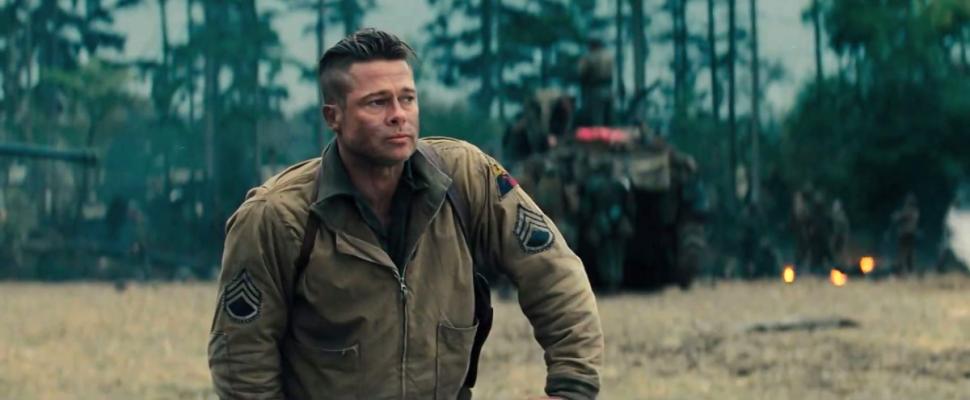
Brad Pitt in FURY
Brad Pitt in FURY

In the World War II movie Fury, Brad Pitt plays the commander of an American tank crew that has fought together from Africa through Italy and France; against all odds, they have survived and are now in Germany during the final months of the war.  An unseasoned clerk typist is thrust upon the tight crew as a replacement; he is seeing the horrors of war for the first time, and we relate to the action through his eyes.  His eyes don’t see much except for brutality by both belligerents and a Germany that is physically and emotionally devastated.

Unlike the traditional WW II films of the 20th century, these GIs are not atrocity-free.  Battle-hardened, war-weary and staggering to the finish, these guys are very tough and they behave in some very unattractive ways.

Fury superbly depicts WW II tank and anti-tank tactics that I’ve never seen handled as well in a movie.  There is a tank and infantry assault on dug in infantry supported with light artillery.  And there is a tank-on-tank battle between three American Shermans and a German Tiger tank; the Tiger was far superior to the Sherman and the veteran Sherman crews – who don’t seem to be afraid of anything else –  know to be terrified of it.

This is not a feel good or a date movie.  Fury works as military history and as an action picture – all the way to the final, grim slaughterfest.