Movies to See Right Now

BOMBSHELL: THE HEDY LAMARR STORY

As usual, I’m deep into covering Cinequest rigorously with features and movie recommendations. Bookmark my Cinequest 2018 page, with links to all my coverage. Follow me on Twitter for the latest.

Opening in the Bay Area today, Bombshell: The Hedy Lamarr Story is the riveting biopic of a glamorous movie star who invented and patented the precursor to wireless technology; that’s amazing enough, but Bombshell delves deeply into how Lamarr’s stunning face, her Jewish heritage and mid-century gender roles shaped her career, marriages and parenting. Top notch.

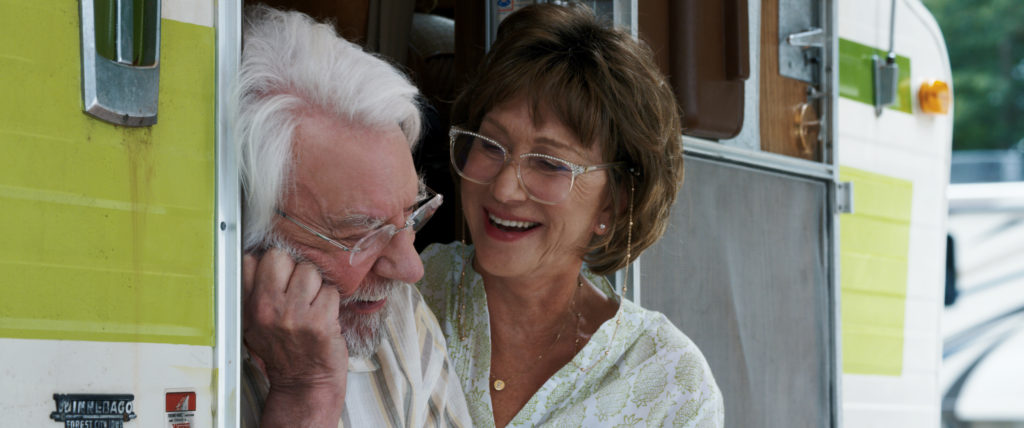
Also opening is The Leisure Seeker, an Alzheimer’s road trip dramedy with Helen Mirren and Donald Sutherland.  Mirren and Sutherland are excellent, possibly enough to see this in a theater.

These Oscar winners are still in theaters:

  • The Shape of Water, Guillermo del Toro’s imaginative, operatic inter-species romance may become the most-remembered film of 2017.
  • Three Billboards Outside Ebbing, Missouri a powerful combination of raw emotion and dark hilarity with an acting tour de force from Frances McDormand and a slew of great actors.
  • Pixar’s Coco is a moving and authentic dive into Mexican culture, and it’s visually spectacular.
  • I, Tonya is a marvelously entertaining movie, filled with wicked wit and sympathetic social comment.

My Stream of the Week, the insightful and topical documentary The Brainwashing of My Dad, comes from the 2016 Cinequest. The Brainwashing of My Dad is available streaming on Amazon Video, Vudu, YouTube and Google Play.

On March 10, Turner Classic Movies airs 99 River Street (1953), featured in my Overlooked Noir. Film noir tends to be about guys with bad luck, but nobody would trade their luck with Ernie Driscoll (John Payne), the anti-hero of 99 River Street; a former boxer with a career cut short, he’s being emotionally abused AND cuckolded by his no good wife, framed for a murder, beaten up, and THEN he’s set up by the Good Girl, of all people. That Good Girl is played by one of the most underrated of 1950s actresses, Evelyn Keyes. She has two killer scenes in 99 River Street. An “acting scene” on a darkened theater stage is one of the movie’s highlights. And later, her character gets to pretend to be a boozy floozy who lights her cigarette in the most suggestive manner possible.

Off-screen, Evelyn Keyes enjoyed a very rich personal life. “I always took up with the man of the moment and there were many such moments,” she said. She married directors Charles Vidor and John Huston and big band leader Artie Shaw. Her kiss-and-tell autobiography recounted affairs with Glenn Ford, Sterling Hayden, Dick Powell, Anthony Quinn, David Niven, Kirk Douglas.and Mike Todd (who left her for Elizabeth Taylor). Wow.
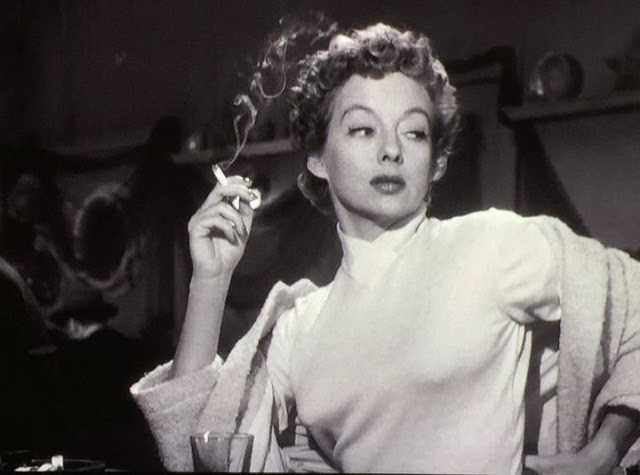
Evelyn Keyes in 99 RIVER STREET

THE LEISURE SEEKER: Mirren and Sutherland on a road trip

Donald Sutherland and Helen Mirren in THE LEISURE SEEKER, Photo courtesy of Sony Pictures Classics.

In The Leisure Seeker, a strong-willed suburban retiree (Helen Mirren) finds her longtime husband (Donald Sutherland) sinking into Alzheimer’s.   Having been a teacher who has found the greatest joy in his recall of literature, the impact of the memory disease will be very specific.  Facing a health issue of her own, she decides to take him on a road trip all the way down the Eastern Seaboard to Ernest Hemingway’s house in Key West. Off they go in their trusty Winnebago and adventures ensue.

There’s plenty of humor here, and this is not a particularly heartbreaking Alzheimer’s movie.  Mirren and Sutherland are both just so good in their roles.  Sutherland’s hubby is good-natured as long as he can pilot his 20-foot RV and get a decent hamburger without having to learn a restaurant server’s first name; he slips into a literary revelry at the slightest provocation.   Mirren is the social navigator, now faced with corralling somebody who now dips into another reality.

It’s the first American film for the accomplished Italian director Paolo Virzi (Like Crazy).  Unfortunately, there’s just something about the iconic American road trip and, perhaps, America itself that Virzi just doesn’t get, and The Leisure Seeker never quite ascends to greatness.

I was amused more than thrilled or moved by The Leisure Seeker.  Yet the performances of Helen Mirren and Donald Sutherland can justify catching the movie.

Cinequest: YOU CAN’T SAY NO

Marguerite Moreau and Hus Miller in YOU CAN’T SAY NO

In the indie romantic comedy You Can’t Say Know, Alex (Marguerite Moreau) and Hank (Hus Miller) are at the end of a 14-year-old marriage.  Their relationship has never been communication-rich, things have gotten stale and a Hank affair has brought down the curtain.  Just before they sign the divorce papers, they send the kids off to camp and take individual road trips.  Coincidentally, they meet up on the road, and they play a game, taking turns to order the other to do something that he/she cannot refuse.  Comic situations, raw emotions and redemption ensue.

Moreau is especially good as the wife who needs to express her anger but still believes that she will be happiest choosing an improved marriage over divorce.  Alex is trying to find her path, and she’s definitely not a doormat.  Moreau brings spunk and likeable charm to the role.

Peter Fonda is wonderful as Hank’s eccentric winemaking dad Buck.  Hamish Linklater is sometimes hilarious as Buck’s wacky protegé.  Ingrid Vollset brings spirit and sympathy as the free-spirited vagabond Allison.


Hus Miller wrote the screenplay in his feature debut as a writer.  Unfortunately, You Can’t Say No doesn’t harvest its comic potential. The scenes are often a few counts too long, and the direction and editing tend to be clunky.

You Can’t Say No had its world premiere at Cinequest.

Peter Fonda in YOU CAN’T SAY NO

Stream of the Week: THE BRAINWASHING OF MY DAD

THE BRAINWASHING OF MY DAD

In honor of Cinequest, this week’s video pick is The Brainwashing of My Dad, which had its US Premiere at the 2016 Cinequest.

Ever notice how people who watch a lot of Fox News or listen to talk radio become bitter, angry and, most telling, fact-resistant? In the documentary The Brainwashing of My Dad, filmmaker Jan Senko as she explores how right-wing media impacts the mood and personality of its consumers as well as their political outlook. Senko uses her own father Frank as a case study.

We see Frank Senko become continually mad and, well, mean. And we hear testimony about many, many others with the identical experience. Experts explain the existence of a biological addiction to anger.

Senko traces the history of right-wing media from the mid-1960s, with the contributions of Lewis Powell, Richard Nixon, Rush Limbaugh, Roger Ailes and Rupert Murdoch. Senko even gets right-wing wordsmith Frank Luntz on camera to explain the power of buzz words. If you don’t know this story (Hillary was right about the “vast, right-wing conspiracy”) , Senko spins the tale very comprehensively. If you do know the material (and my day job is in politics), it is methodical.

This topic is usually explored for its impact on political opinion. Senko’s focus on mood and personality is original and The Brainwashing of My Dad contributes an important addition to the conversation. One last thing about the brainwashing of Senko’s dad – it may not be irreversible…

I first reviewed The Brainwashing of My Dad for its U.S. Premiere at Cinequest 2016. The Brainwashing of My Dad is available streaming on Amazon Video, Vudu, YouTube and Google Play.

Cinequest at mid-festival

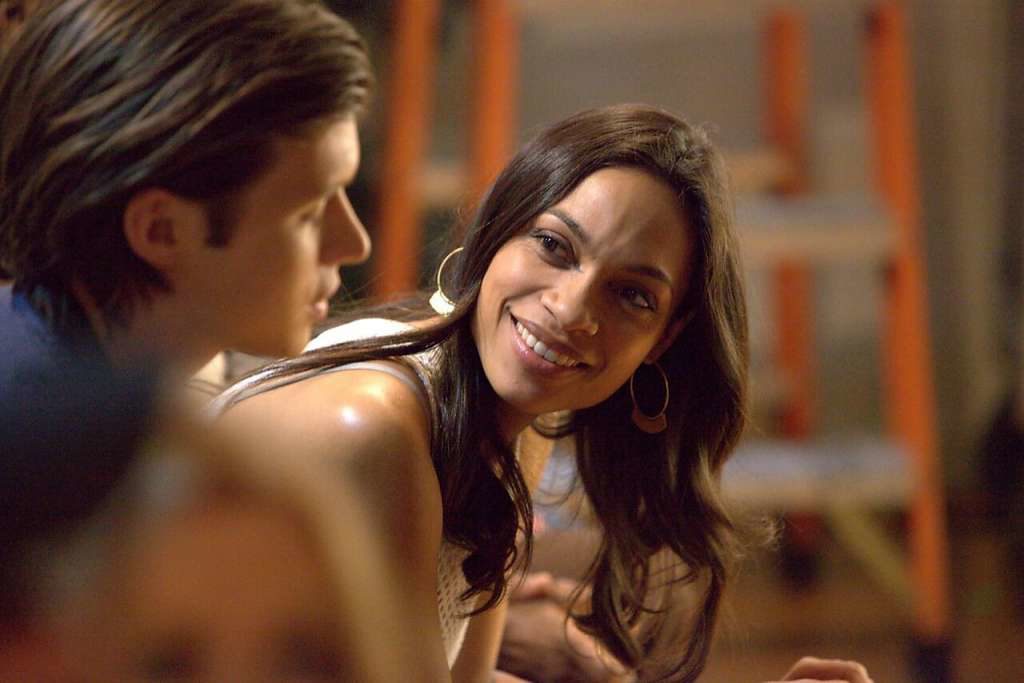
Nick Robinson and Rosario Dawson in KRYSTAL

We’re halfway through Cinequest 2018. What are the biggest hits and the most delightful surprises?  Cinequest opened with William H. Macy’s directorial debut Krystal, which was a hit with the opening night audience.  Macy successfully guided the Will Aldis story though an assortment of modes, including comedy of manners, madcap comedy and melodrama. The audience also loved the post-screening Q&A with Macy and producer Rachel Winter.  Krystal will open in theaters on April 13.

INDIE WORLD PREMIERES

See it here first – Cinequest 2018 is hosting 74 world premieres, and these have been the best so far:

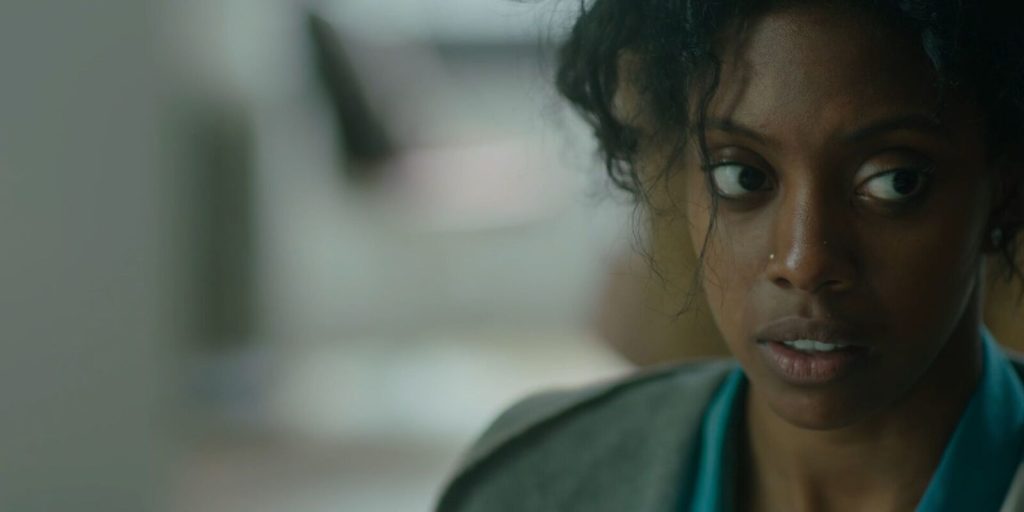
  • Bikini Moon: The Must See indie at this Cinequest, this gripping drama features a mesmerizing performance by the ridiculously charismatic Condola Rashad. It’s the first American feature for renowned filmmaker Milcho Manchevski. Simply brilliant.
  • Luba: This realistic Canadian drama explores the challenges of co-parenting with an addict. There’s a ticking time bomb finish.
  • Hunting Lands: This indie is a slow burn thriller about a recluse emerging from the woods to right a horrible wrong. First time writer-director Zack Wilson lets the audience connect the dots.
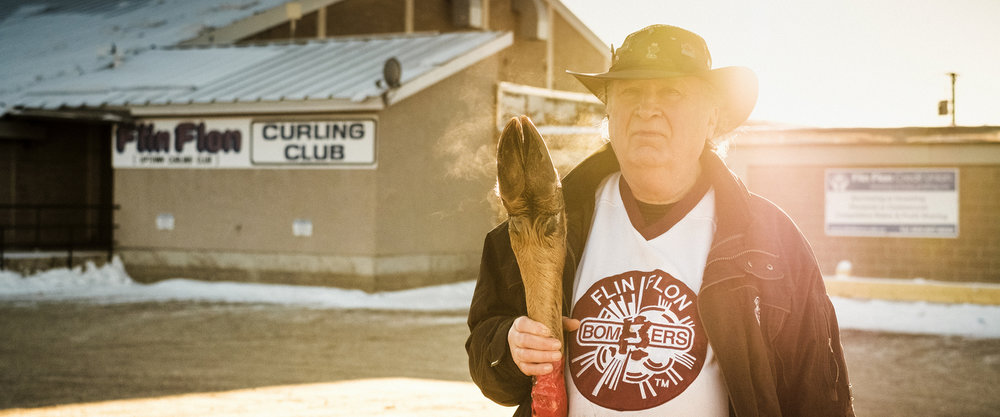
  • Flin Flon: A Hockey Town: This gentle documentary, without even a hint of condescension, paints a meticulous and revealing portrait of a remote Canadian hamlet and its beloved junior hockey team.  From San Jose filmmaker Dustin Cohen.
FLIN FLON: A HOCKEY TOWN

WE HAVEN’T SEEN THIS BEFORE

Film festivals can showcase ambitious artists that don’t try to fit into the familiar.  Here are some more world premieres:

  • 7 Splinters of Time is the trippiest film in this year’s Cinequest. Eye candy galore, as time travel goes wrong and doppelgängers abound. Listed in the Cinequest program by the alternative title of Omphalos.
  • Tommy Battles the Silver Sea Dragon has to be the bravest and most artistically ambitious movie premiering at Cinequest. In his debut feature as director, writer, composer and star Luke Shirock has imagined a guy put on trial by his own subconscious. And it’s a musical.
  • Skull, an absolutely bizarre film, is intended to be Indonesia’s first sci-fi film.  Opening with a beautiful drone shot, Skull lurches forward with bits of mystery, romance, chases and shootouts until its “science unleashes the end of the world” finish.
Luke Shirock in TOMMY BATTLES THE SILVER SEA DRAGON

STILL TO COME

I’ve only seen Luba, The Line and The Wind so far, but all of these upcoming films look promising:

Tonite:

  • The gripping single parent indie drama Luba.
  • The Last Movie Star with Burt Reynolds and Modern Family’s Ariel Winter.

Tuesday:

  • The searing Slovak thriller The Line.
  • Blythe Danner, Michael Shannon, Hilary Swank, Robert Forster and Taissa Farmiga in What They Had.

Friday:

  • The director Jan Sverak’s rare black-and-white cut of the Czech historical drama Barefoot.
  • The silent The Wind with Lillian Gish, projected in a period movie palace, the California Theatre, accompanied by world-renowned Dennis James on the Mighty Wurlitzer organ.
  • The feel-good festival hit Pick of the Litter.

Saturday:

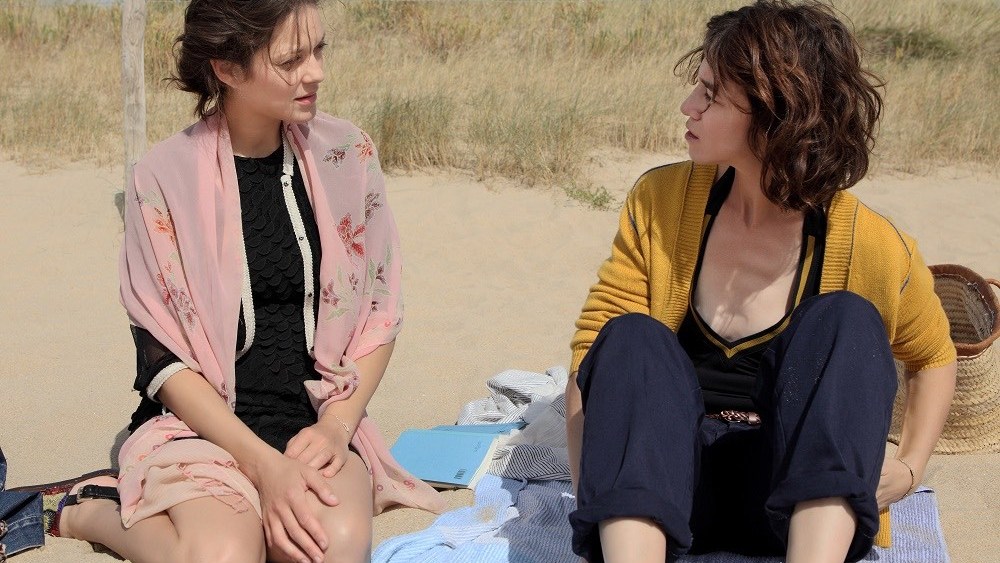
  • Arnaud Desplechin’s Ismael’s Ghosts with Marion Cotillard, Mathieu Amalric and Charlotte Gainsbourg.

Sunday

  • Turner Classic Movie host Ben Mankiewicz presents one of his favorite classic films.
  • Brothers in Arms, a documentary on the making of Platoon, co-presented by its narrator, Charlie Sheen.

Bookmark my Cinequest 2018 page, with links to all my coverage (links on the individual movies will start to go live on Sunday February 25). Follow me on Twitter for the latest.

Marion Cotillard and Charlotte Gainsbourg in ISMAEL’S GHOSTS

BOMBSHELL: THE HEDY LAMARR STORY: the world’s most beautiful woman and her secrets

BOMBSHELL: THE HEDY LAMARR STORY

Bombshell: The Hedy Lamarr Story is the riveting biopic of a glamorous movie star who invented and patented the precursor to wireless technology; that’s amazing enough, but Bombshell delves deeply into how Lamarr’s stunning face, her Jewish heritage, and mid-century gender roles shaped her career, marriages and parenting. Top notch.

In the last few years, one totally unexpected aspect of Lamarr’s life has become more well-known. She was a tinkerer/inventor who co-invented a radio guidance system for submarine torpedos, which she donated to the US military. The US Navy used this technology in WW II. Modern blue tooth technology stems directly from her innovation. Today her patent would be worth billions.

Bombshell adds layer upon layer to this tale of beauty and brains, as it traces Lamarr’s remarkable life. Hedy Lamarr had no control over being born a woman, being born to Jewish parents and being born to be a beauty. These three accidents of birth set the parameters of her journey – granting her access to some professional opportunities and stunting others, even threatening her life.

She burst into celebrity – and notoriety – at age 19, as the star of the film Ecstasy. Not only was Hedy the first actress filmed in full frontal nudity, she was the first screen actress to portray female orgasms. She was soon the young trophy wife of an Austrian industrialist, a formidable and fearsome supplier of munitions to Hitler. Hedy’s life seemed headed along the Bimbo Track, but she realized that her husband was powerful enough to keep her trapped in the marriage, but not powerful enough to protect her from the Nazis. At this point, she orchestrated an international escape that is the stuff of thrillers.

At age 24, often nominated as the most beautiful woman in the world, she launched a Hollywood career. Professional ups and downs, marriages and affairs and children followed, along with her work in technology.

Her beauty was often a blessing and sometimes a curse, but always affected her trajectory. Someone that beautiful is just different – the rest of us can’t help our reactions to her. But how many times can you be a trophy wife?

She was a person who survived troubling times, which left scars on her. How Hedy handled her Jewishness, how she raised her kids and how she was treated by the military are unsettling. Documentarian Alexandra Dean, Bombshell’s writer-director brings us witnesses, including Hedy’s children, to deliver an inside peek at a real life that would not be believable as a work of fiction.

I saw Bombshell: The Hedy Lamarr Story this summer at the 2017 San Francisco Jewish Film Festival (SJFF). It’s coming to Bay Area theaters this weekend.

Cinequest: FLIN FLON: A HOCKEY TOWN

FLIN FLON: A HOCKEY TOWN

Dustin Cohen’s gentle documentary Flin Flon: A Hockey Town, without even a hint of condescension, paints a meticulous and revealing portrait of a remote Canadian hamlet and its beloved junior hockey team.

Flin Flon is a town of five thousand on the Manitoba-Saskatchewan border.  The closest place that most of us have heard of is Saskatoon, Saskatchewan, and that’s a six-and-a-half hour drive from Flin Flon.  There’s a mine in Flin Flon and a junior hockey team, and that’s about it.

As the movie opens, the morning radio station announces a high temperature of minus 19.  Proud locals call their home “a great place to raise kids”, which is what locals say about every place that nobody else even wants to visit.  For decades, the residents have bonded with their beloved hockey team, the Bombers.

18-20 year old hockey players come to Flin Flon, live in the homes of local families (“billeting”) and work hard, physical day jobs off-season.  They are here to concentrate on hockey, although only 1-2 from each Bomber team are likely to significantly advance in the sport.   However, over 40 NHL players have been Flin Flon Bombers, including Hall of Famers Bobby Clarke and Reggie Leach.  Writer-director Dustin Cohen grew up in San Jose as a Sharks Fan.  He stumbled on Flin Flon as he researched Canadian hockey.  He needed more than just a small town for his subject, and he chose Flin Flon because of its hockey heritage.

Flin Flon is “the only city in the world named after a science fiction character (Josiah Flintabbatey Flonatin in J.E. Preston Muddock’s The Sunless City).  At Bomber games, the fans like to throw moose legs on to the ice.     This could have been one of those documentaries that make us laugh at the quirky subjects.  Or it could have been about unhealthily obsessed sports fans.

Instead, Flin Flon: A Hockey Town is an insightful and sympathetic study of the town and the kids on the team.  Cohen is very observant, and he shows us seemingly mundane details – driving the bus, prepping the ice, cutting wood – that reveal much about the internal lives of the people in the film.

Cohen only lets us directly watch the hockey in snippets.  Most of the time, we see it reflected through the reactions of teammates and the crowd.  The photography (Soren Nielsen, Christine Ng) and the editing (Kathy Gatto) are superb.

The more I think about Flin Flon: A Hockey Town, the more I admire it.  This is a very humane film.

FLIN FLON: A HOCKEY TOWN

Cinequest: THE ASHRAM

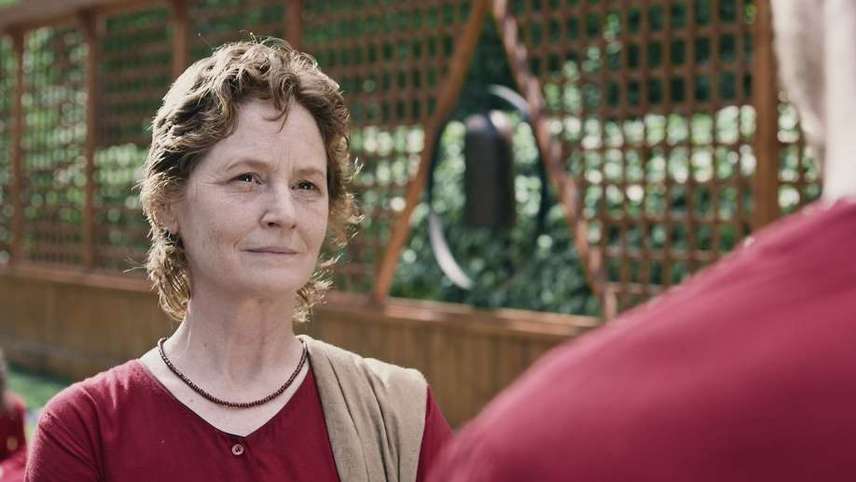
Melissa Leo in THE ASHRAM

In the ridiculous drama The Ashram, a sullen guy seeks his missing girlfriend and follows her trail to an ominous cult in a Himalayan ashram.  When we finally meet the ancient guru, he turns out to be a real miracle-maker (as demonstrated by the cheesiest of special effects).

Here’s the biggest problem with The Ashram – it is populated by one-dimensional characters that we care little about.  As an Ashram resident, Kal Penn is sympathetic, but it’s clear that his character’s only raison de etre is to be the Nice Guy.   The leading man is Sam Keeley, who scowls his way through this story, occasionally adding in a furrowed brow.

The disappeared girlfriend shows up in flashbacks, played by the remarkably uncharismatic Hera Hilmar.  Last year, Hilmar helped sink the execrable The Ottoman Lieutenant, proving to be boring even while losing her virginity to Michiel Huisman; she only sparked interest from the audience with unintentionally funny line misreadings. I left The Ashram thinking that Hilmar must have the worst showbiz agent to get her in such horrible films; but then I realized that she must have Hollywood’s BEST agent. Think about it.

But the worst thing about The Ashram is its misuse of the great Melissa Leo, who plays the guru’s gatekeeper and chief operating officer.  Leo’s character ranges from unctuously evil to snarlingly evil,.  Her performance brought to my mind the Disney villainesses Cruella Deville and the Evil Queen.    Absent any hint of nuance, Leo is left to twirl her non-existent mustaches.

Director Ben Rekhi (from San Jose) gets two things right in The Ashram – the two perfectly evocative locations. The first is the city of Rishikesh, “Spiritualism Ground Zero” since the Beatles visited their guru there.  Bisected by a river with a long pedestrian bridge, Rishikesh is filled with seekers searching for spiritual bless and lots of “holy men”  willing to sell it to them.  The Lourdes of the Indian subcontinent, it just screams “money changers in the temple”.

The second is the setting of the ashram, in a lush mountain valley at the confluence of two dramatic rivers. The guru’s cliff-side cave overlooks the ashram in the valley, and there are spectacular Himalayan landscapes in every direction.

The dark whodunit story here might work as Young Adult fiction with better special effects.  But still, The Ashram is a wretched movie.  I attended the world premiere of The Ashram at Cinequest.  It is now available to stream from several platforms.

Movies to See Right Now

Condola Rashad in BIKINI MOON, premiering this weekend at Cinequest

As usual, I’m deep into covering Cinequest rigorously with features and movie recommendations. My Cinequest Preview highlights this weekend’s United States premiere of the brilliant indie drama Bikini Moon.  Bookmark my Cinequest 2018 page, with links to all my coverage. Follow me on Twitter for the latest.

Before Sunday night’s Oscar show, you’re going to want to see the Oscar favorites Three Billboards Outside Ebbing, Missouri and The Shape of Water. (I’ve also written If I Picked the Oscars – before the nominations were announced.) Here are the best movie choices in theaters this week:

  • The Shape of Water, Guillermo del Toro’s imaginative, operatic inter-species romance may become the most-remembered film of 2017.
  • Three Billboards Outside Ebbing, Missouri a powerful combination of raw emotion and dark hilarity with an acting tour de force from Frances McDormand and a slew of great actors.
  • Steven Spielberg’s docudrama on the Pentagon Papers, The Post, is both a riveting thriller and an astonishingly insightful portrait of Katharine Graham by Meryl Streep. It’s one of the best movies of the year – and one of the most important. Also see my notes on historical figures in The Post.
  • Pixar’s Coco is a moving and authentic dive into Mexican culture, and it’s visually spectacular.
  • Lady Bird , an entirely fresh coming of age comedy that explores the mother-daughter relationship – an impressive debut for Greta Gerwig as a writer and director.
  • I, Tonya is a marvelously entertaining movie, filled with wicked wit and sympathetic social comment.

Here’s the rest of my Best Movies of 2017 – So Far. Most of the ones from earlier this year are available on video. Here’s another current (and Oscar-nominated) choice:

  • Call Me By Your Name is an extraordinarily beautiful story of sexual awakening set in a luscious Italian summer, but I didn’t buy the impossibly cool parents or the two pop ballad musical interludes.

My DVD/Stream of the Week is a crowd-pleaser from the 2013 Cinequest, The SapphiresThe Sapphires is available to rent on DVD from Netflix and Redbox and to stream from Amazon Video, iTunes, Vudu, GooglePlay and Flixster.

Turner Classic Movies is in its 31 Days of Oscars, and I’m calling out the March 9 telecast of High Noon. This is a movie that I rank among my 50 or so Greatest Movies of All Time. It’s also a movie that John Wayne called “the most un-American thing I’ve ever seen in my whole life”. I’m right, and the Duke was wrong.

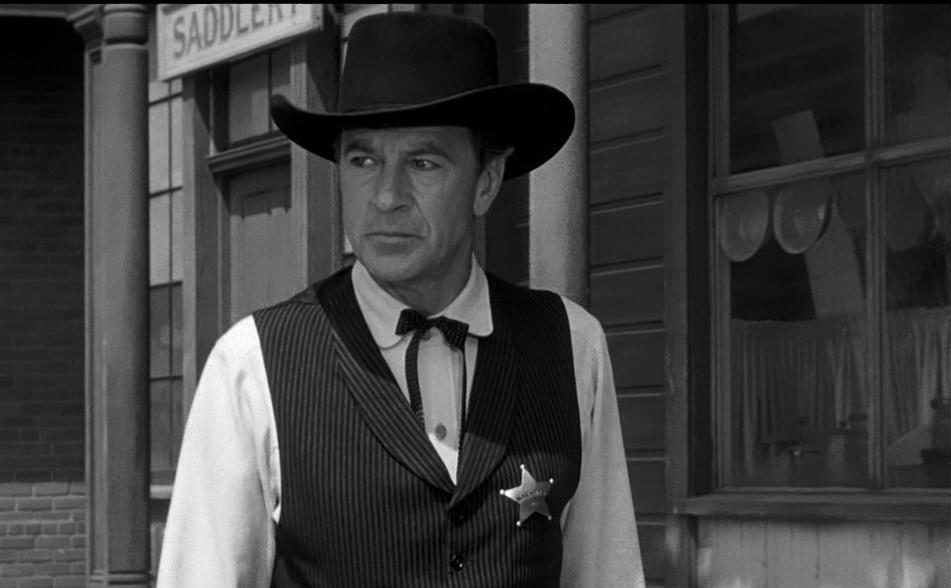
Gary Cooper plays Will Kane, a veteran town sheriff who is about to retire to a ranch with his Quaker bride (Grace Kelly). A thug that he sent to prison is about to get out and vows to return and take his revenge on Kane. His pacifist wife demands that he continue with the plan to retire and leave town. But Kane lives by a code – he can’t abandon his town to criminal disorder, and he can’t be seen as running away from a fight. He can handle the threat if only a few of the folks he has been protecting will step up and have his back.

High Noon is worth watching just for director Fred Zinnemann’s iconic montage when the clock is about to strike noon – it’s really the gold standard for any montage in cinema. But Gary Cooper’s performance as the stoic Will Kane, whose determination is bringing him more and more desperation, is a masterpiece of understatement. There are also two supporting performances for the ages. Thomas Mitchell (Uncle Billy in It’s a Wonderful Life) plays the mayor, Will Kane’s stoutest defender, who finds it politically convenient to take his chances with the outlaws; his speech of support-turned-into-betrayal can be compared only to Marc Antony’s burial speech in Shakespeare’s Julius Caesar. And the smoldering Katy Jurado is unforgettable as Will Kane’s ex; a woman who acts practically, but who respects a man with a code. Plus, there’s Dmitri Tiomkin’s Oscar-winning song Do Not Forsake Me, O My Darlin’.

High Noon is generally interpreted as a statement against the Hollywood Blacklist (hence John Wayne’s complaint). That’s the way it was intended by its soon-to-be-blacklisted screenwriter Carl Forman.  I recommend author Glenn Frankel’s interview on NPR’s Fresh Air about his book High Noon.  But, message aside, it works as a thriller without any political subtext.

Baby Boomers who remember Sea Hunt will be jarred by Lloyd Bridges as a less than heroic persona. Lee Van Cleef (without any spoken lines) looks menacing in his film debut.

Gary Cooper in HIGH NOON

The Movie Gourmet’s 2018 Oscar Dinner

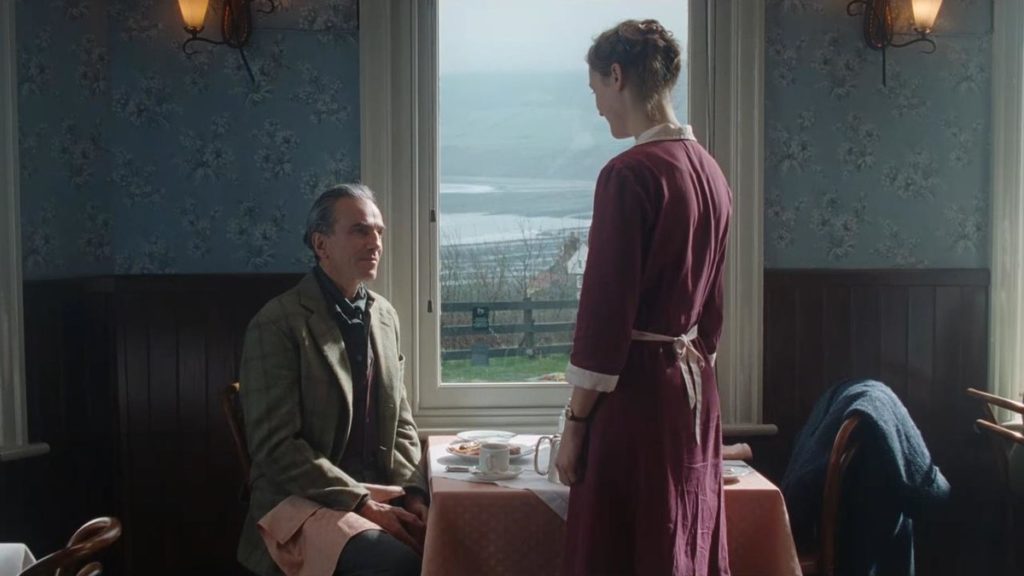
the breakfast order in PHANTOM THREAD

Every year, we watch the Oscars while enjoying a meal inspired by the Best Picture nominees. For example, we had sushi for Lost in Translation, cowboy campfire beans for Brokeback Mountain and Grandma Ethel’s Brisket for A Serious Man – you get the idea. The high point has been the Severed Hands Ice Sculpture in 2011 for 127 Hours and Winter’s Bone. Here’s last year’s menu, centered on the diner scene from Hell or High Water.

This year’s dinner is really breakfast because so many of the Oscar-nominated movies depict the morning meal. The most memorable, of course, is in Phantom Thread, where Reynolds Woodcock (Daniel Day-Lewis) gives a comically elaborate breakfast order to waitress Alma (Vicky Kneps): Welsh rarebit with a poached egg, bacon, scones, butter, cream, jam, a pot of Lapsang souchong tea. [Pause] And some sausages.

So here is this year’s menu:

Bacon, scones, butter, jam.  And some sausages from Phantom Thread.

Fried eggs from Darkest Hour:  Early in the film, Winston Churchill (Gary Oldman) is shown breakfasting in bed.  Our eyes are drawn to the glass of whisky and the glass of champagne, but he’s got eggs on the tray, too.

Scrambled eggs from Lady Bird: In one of the many scenes around the McPherson kitchen table, Lady Bird (Greta Gerwig) and her mom (Laurie Metcalf) bicker about who is fixing Lady Bird’s breakfast.

Hardboiled eggs from The Shape of Water: In an act of interspecies kindness, Elisa (Sally Hawkins) feeds that starkest of breakfast food to a grateful Amphibian Man.

Froot Loops and milk from Get Out: As the terror builds, we see Rose (Allison Williams) eating dry Froot Loops, chased by a glass of milk.

Peach from Call Me by Your Name: Not having access to the apple pie in American Pie, Elio (Timothee Chalamet) makes the peach unforgettable.

Rice Krispies and Froot Loops from Three Billboards Outside Ebbing, Missouri: Teenage son Robbie (Lucas Hedges) is splattered with soggy Rice Krispies by his Mom (Frances McDormand) and, at one point, he’s called Froot Loop Boy.

Tea from Dunkirk (and Darkest Hour): Essential to fortifying oneself against the threatened Nazi invasion.

Lemonade from The Post: Not your more common breakfast drink, but it was such an adorable moment when Ben and Toni Bradlee’s daughter earned a wad of cash by selling lemonade to a captive audience – the editors and reporters frantically studying the Pentagon Papers on the Bradlee’s living room rug.

The Movie Gourmet’s culinary tribute to 127 HOURS and WINTER’S BONE