I’ve been traveling and haven’t had a chance until now to recognize the life and career of the actor Harry Dean Stanton, who died this month at the age of 91. Coincidentally, Harry Dean was on my mind because I had just watched his masterpiece Paris, Texas on the flight to my vacation destination, and I was preparing to watch the screener for his last film, Lucky, to be released in the Bay Area next weekend.
Once of the most noticeable of the prolific character actors, he improbably became a leading man at age 58 and, in his 80s, starred as the menacing leader of a polygamist cult in Big Love. I’ll be writing about Lucky tomorrow.
Harry Dean was a great favorite of mine – and of many other cinephiles. Roger Ebert and Gene Siskel once posited that a movie could not be entirely bad if Harry Dean Stanton were in it. Harry Dean often seemed like that uncle/neighbor/mentor who had Lived A Life but would let you inside and let you learn from his journey. He was ever accessible and always piqued the audience’s curiosity about his characters.
Harry Dean Stanton garnered 200 screen credits, including scores of 1960s TV shows. He appeared on seemingly every TV Western: Rawhide, Bonanza, The Big Valley, The High Chaparral, The Virginian, Laramie, The Rifleman, Bat Masterson and Stoney Burke. Think how many times we Baby Boomers must have seen him in The Fugitive, Adam 12, Mannix, Combat!, The Untouchables, and even The Adventures of Rin Tin Tin.
In the early 1970s, I first really noticed Harry Dean for his quirkiness, singularity and forlorn humor in his sidekick roles in Pat Garrett and Billy the Kid and The Missouri Breaks. That’s when you had to sit through the end credits to find out who that actor was.
Along the way, he made three Monte Hellman cult films (Ride the Whirlwind, Cockfighter, Two-Lane Blacktop) and was friends with fellow Hollywood outlaws Warren Oates and Jack Nicholson. He shared a house with Nicholson for a while (can you imagine?).
Also a fine musician, Harry Dean left us with touching vocal renditions of Just a Closer Walk with Thee in Cool Hand Luke and Volver, Volver in Lucky.
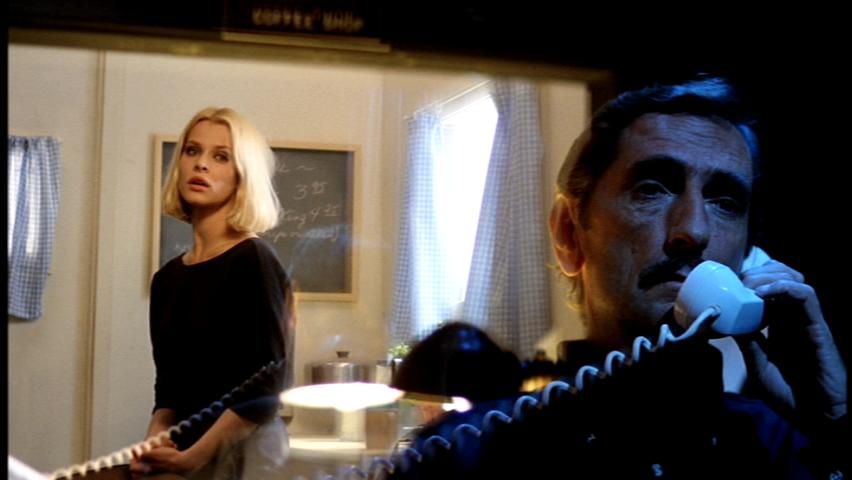
Natassja Kinski and Harry Dean Stanton in PARIS, TEXAS
In 1984, at the age of 58, Harry Dean Stanton broke through in two wonderful lead performances. He played the old school mentor of the punk Emilio Estevez in the cult film Repo Man. And he made his masterpiece, Wim Wenders’ Paris, Texas.
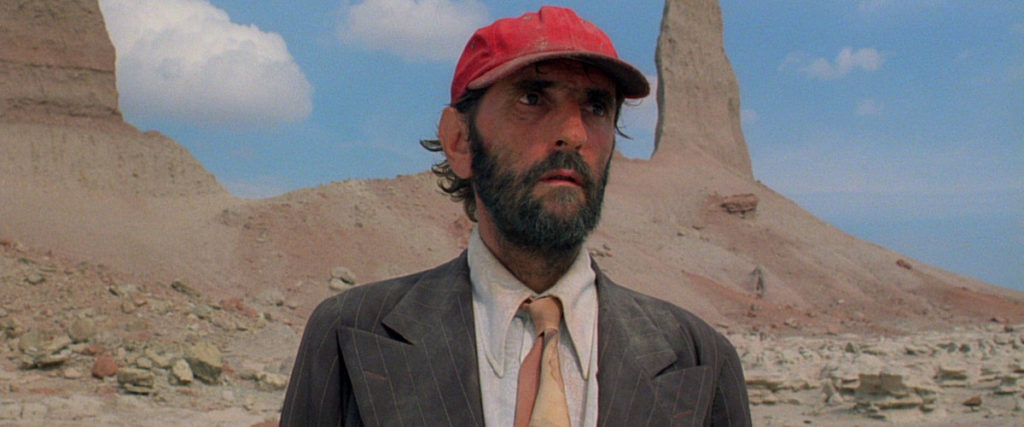
In Paris Texas, Harry Dean plays Travis, a man so traumatized that he has disappeared and is found wandering across the desert and mistaken for a mute. As he is cared for by his brother (Dean Stockwell), he evolves from feral to erratic to troubled, but with a sense of tenderness and a determination to put things right. We see Travis as a madman who gains extraordinary lucidity about what wrong in his life and his own responsibility for it.
At the film’s climax, Travis speaks to Jane (Natassja Kinski) through a one-way mirror (she can’t see him). Spinning what at first seems like parable, Travis explains what happened to him – and to her – and why it happened. It’s a 20-minute monologue so captivating and touching that it rises to be recognized as one of the very greatest screen performances.
Kinski, Stockwell and the child actor Hunter Carlson are also exceptional. Paris, Texas is available on DVD from Netflix and streaming from Amazon, iTunes and FilmStruck.
We’ll miss you, Harry Dean.
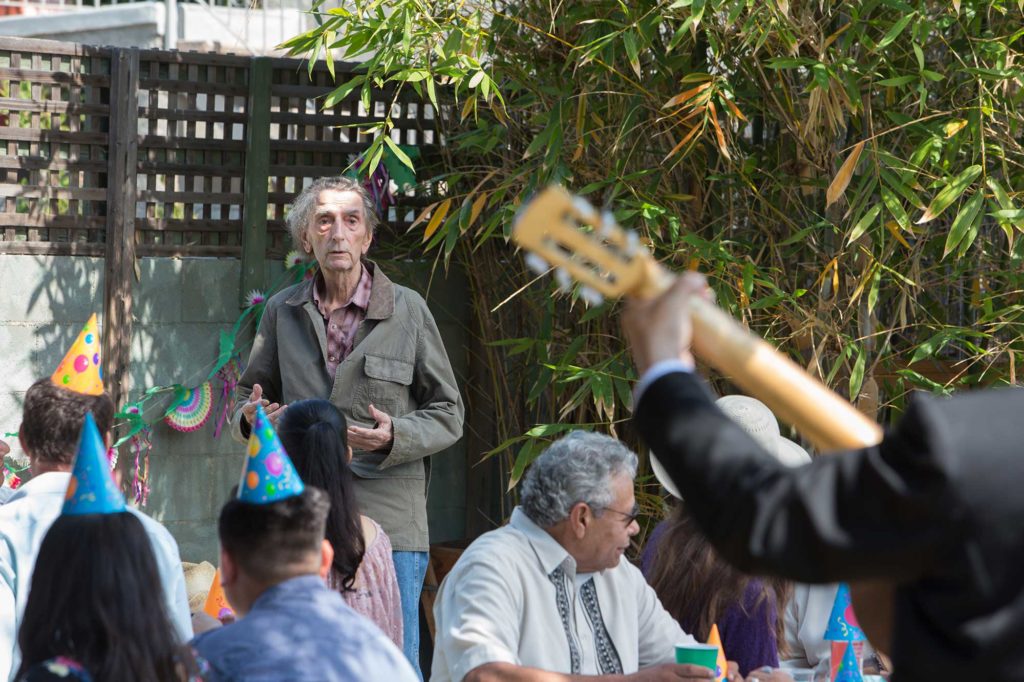
Harry Dean Stanton in LUCKY. Photo courtesy of Magnolia Pictures
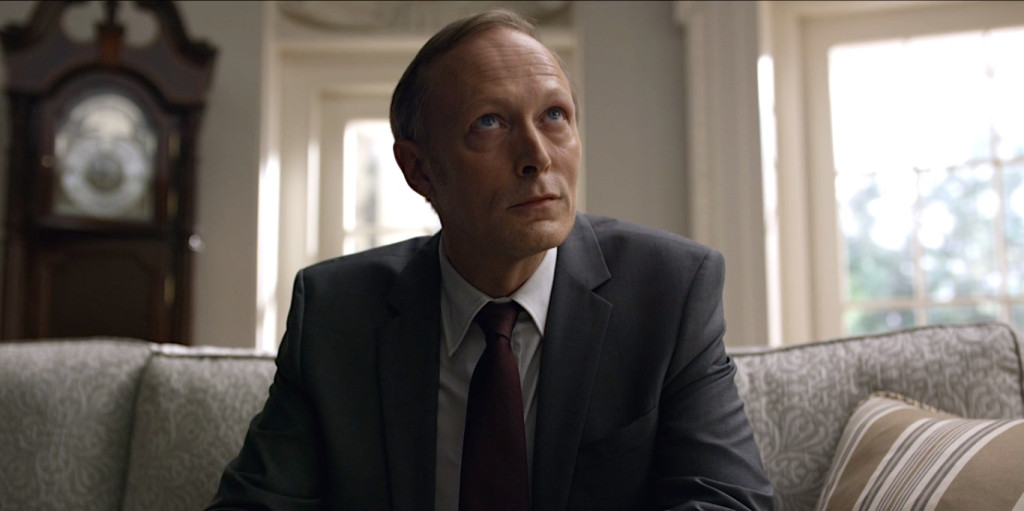
Season Five of House of Cardsis now available on Netflix. One of the jewels of Seasons 3 and 4 was the character of Victor Petrov, a thinly-disguised Vladimir Putin played by the Danish actor Lars Mikkelsen. (It doesn’t look like he’s back for Season 5, but you might want to rewatch some previous episodes to prep for binge watching the new season.)
Putin is such a rich real-life character, with such an unashamed flair for the inappropriate. In House of Cards, Petrov’s antics are only a shade more outrageous than Putin’s: kissing the American First Lady on the mouth, demanding that the President fire his own wife as UN Ambassador, etc. But Petrov is more sympathetic because he gets to make explicit his perceived need to look strong for his people. Lars Mikkelsen just nails the meaty role of Petrov.
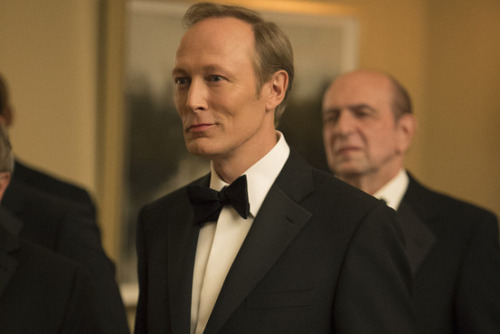
Lars Mikkelsen in HOUSE OF CARDS
What you might not know is that Lars Mikkelsen is the older brother of a much bigger European movie star, Mads Mikkelsen. You’ll recognize Mads Mikkelsen from After the Wedding and the 2006 Casino Royale (he was the villain with the tears of blood). He won the 2012 Cannes Best Actor award for his performance. in The Hunt. Reportedly, Lars followed his younger brother into acting, which is great for film fans.
Turner Classic Movies usually serves up war movies on the Memorial Day weekend, and, on May 27, TCM will present an uncommon slate of Korean War movies. Most of the featured films were made between 1951 and 1957 – more or less contemporaneously with the conflict. If you want to survey this subgenre, here’s your chance.
The best two are:
Men in War (1957): An infantry lieutenant (Robert Ryan) must lead his platoon out of a desperate situation, and he encounters a cynical and insubordinate sergeant (Aldo Ray) loyally driving a jeep with his PTSD-addled colonel (Robert Keith). In conflict with each other, they must navigate through enemy units to safety. Director Anthony Mann is known for exploring the psychology of edgy characters, and that’s the case with Men in War.
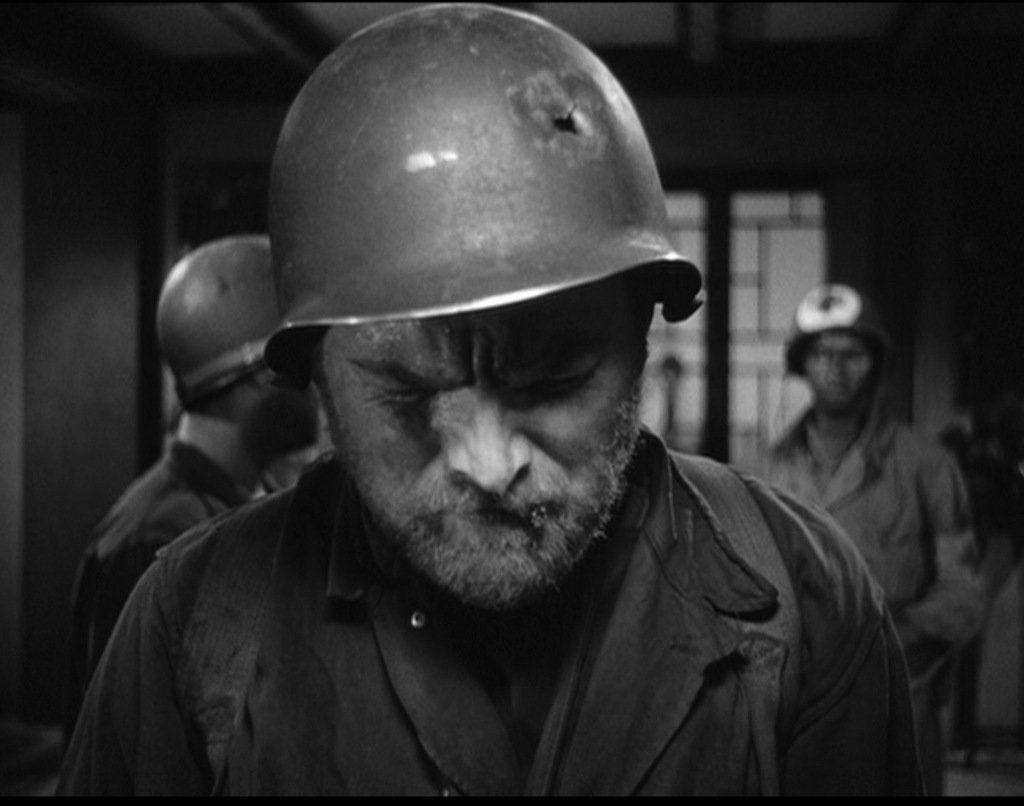
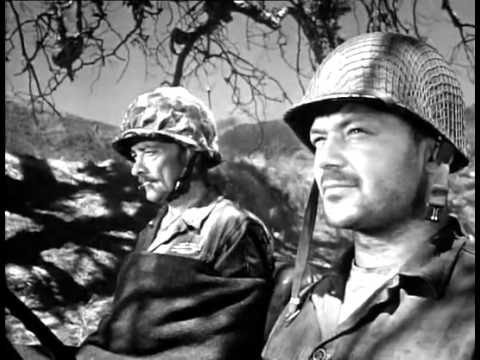
The Steel Helmet(1951) is a gritty classic by the great writer-director Sam Fuller, a WWII combat vet who brooked no sentimentality about war. Gene Evans, a favorite of the two Sams (Fuller and Peckinpah), is especially good as the sergeant. American war movies of the period tended toward to idealize the war effort, but Fuller relished making war movies with no “recruitment flavor”. Although the Korean War had only been going on for a few months when Fuller wrote the screenplay, he was able to capture the feelings of futility that later pervaded American attitudes about the Korean War.
And these two are unusually thoughtful “message” films:
The Rack (1956): A returning US army captain (Paul Newman) is court-martialed for collaborating with the enemy while a POW. He was tortured, and The Rack explores what can be realistically expected of a prisoner under duress. It’s a pretty good movie, and Wendell Corey and Walter Pidgeon co-star.
The Hook (1963): A small unit of GIs is ordered to kill a North Korean prisoner, and this stagey screenplay explores the morality of following – or resisting – orders that violate civilized standards. Kirk Douglas gives one of his testosterone-laden performances.
On the same day, TCM is also airing One Minute to Zero (1952), Target Zero(1955) and Battle Hymn (1957).
This time around, TCM is not showing the three most well-known Korean War movies: The Manchurian Candidate, Pork Chop Hill and M*A*S*H. The precursor to M*A*S*H*, of course, was Battle Circus, a 1953 Humphrey Bogart film about a camp full of rowdy army surgeons.
And here’s a curiosity among Korean War movies: War Hunt, a 1962 film about a rookie (Robert Redford) joining a Korean War unit as a new replacement with John Saxon as the platoon’s psycho killer. Along with Redford, Sidney Pollack and Francis Ford Coppola are in the cast, making War Hunt the only film with three Oscar-winning directors as actors. Don’t blink, or you’ll miss Coppola as an uncredited convoy truck driver.
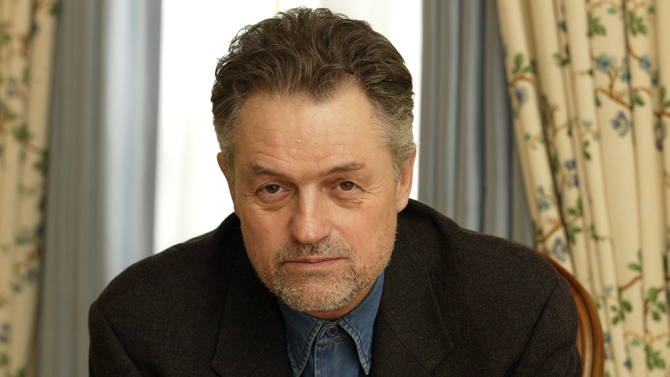
If he had made no other films, Jonathan Demme, who has died, would be forever remembered for his horror masterpiece The Silence of the Lambs (1991). Rarely has a film had such an immediate, visceral impact on me. I had unwisely super-caffeinated myself just before watching it for the first time, and I became so anxious when the door to the storage facility was opened that I had to leave the theater. Of course, my curiosity about what would happen to Clarice and Hannibal soon drove me back to sit through the whole thing.
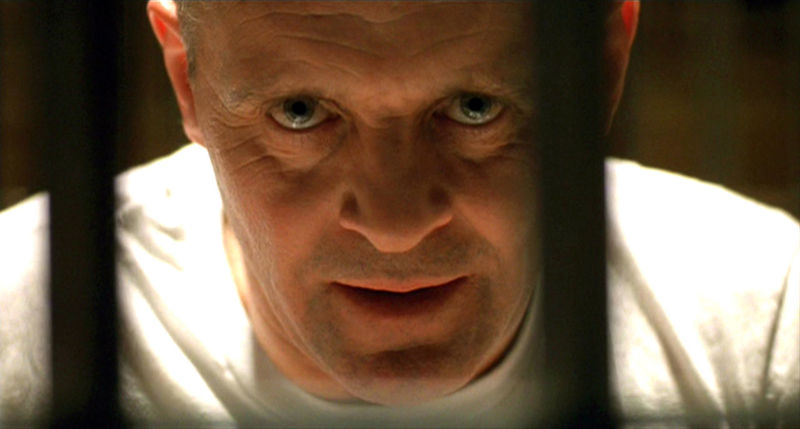
The Silence of the Lambs is one of only three movies to win Oscars in all four major categories: Best Picture, Director (Demme), Leading Actor (Anthony Hopkins) and Leading Actress (Jodie Foster). It also won the Screenwriting Oscar (Ted Tally).
Jonathan Demme, however, was a director who could master many genres. He started out with genre exploitation movies, and I first admired his work in the little indie Melvin and Howard (1980), with its delightful performances by Jason Robards and Paul Le Mat. Then he made one of the two or three best ever rock concert films, Stop Making Sense (1984) with The Talking Heads. Then he directed the topical drama Philadelphia (1993) and the wonderfully engaging addiction dramedy Rachel Getting Married (2008).
His body of work screams versatility, and his masterpiece…Well, his masterpiece just screams.
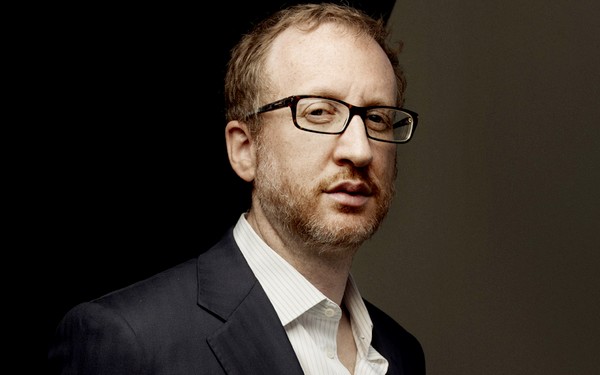
As I wrote on Friday, with The Lost City of Z, director James Gray revives the entire genre of the historical adventure epic. I saw The Lost City of Z earlier this month at the San Francisco International Film Festival (SFFILMFestival) at a screening with director James Gray, who took questions afterwards from SFFILM Director of Programming Rachel Rosen and the audience.
Gray joked that “You can’t really pitch a movie as ‘It’s like Indiana Jones, and then he gets eaten…'” Gray said, “You you can’t beat a story told with elegance”, so you can have a subtext that is subversive. “Classical form allows the subtext to emerge.”
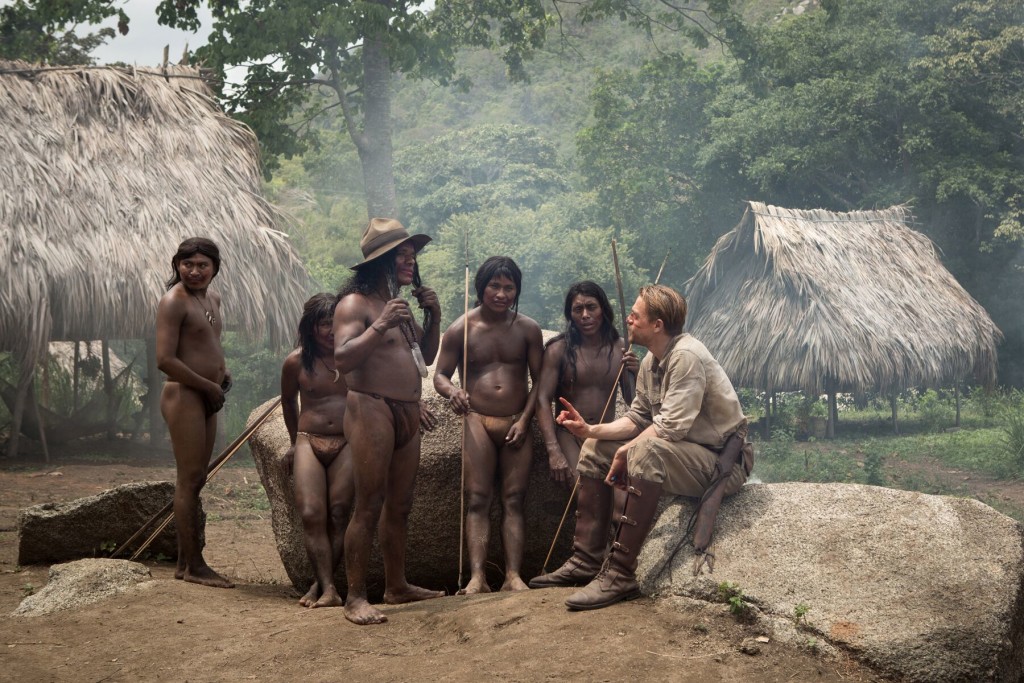
In one of those subtexts, Gray made it a point that the indigenous peoples in the movie are independent of his protagonist Fawcett; not just advancing the plot points in Fawcett’s quest. “It was very moving to be with the indigenous, and I filmed them doing what they do,”Gray said. He resisted filming the jungle scenes in South Africa and other less expensive locations because he needed the real indigenous people in the movie. Four real tribes – and their cultures – are shown in the film. Living so remotely, deep in the Amazon forest, the indigenous had little use for cash. One tribe asked to be paid in irrigation improvements. Another tribe negotiated for Lands End shorts. Referring to the Battle of the Somme scene, he explained that the folly and barbarism of “WW I was the end of any idea that Europe was superior”.
“I was genetically designed to be an accountant in Minsk. There’s no reason for me to go to Amazonia to be eaten by mosquitoes”. “Herzog has made three movies in the jungle. He is Superman. I’m not going back.”
Gray said that the real Fawcett is more complicated and less attractive than the screen version. As a man of his time, Fawcett was racist by our standards, and even thought that he would find more advanced “white Indians” responsible for his Lost City. The speech to the Royal Geographic Society was taken almost verbatim from Fawcett’s historical words. The actual location of Fawcett’s exploration “is no longer jungle because it has been cleared for soy bean fields”.
To shoot a film in 35 mm, Gray’s team had to train a film loader in 1970s camera equipment. Each day, the day’s work went by crop duster to a local airport to Bogotá to Miami and, finally, to the lab in London. Each day the crew endured a nerve-wracking wait until getting a call by satellite phone to confirm the film’s arrival in London, Three days’ work didn’t make it and had to be shot over again.
Gray originally adapted the screenplay for Brad Pitt, who owned the movie rights to the book by David Grann, but, by the time they had raised the money, “then his big WW II movie came along”. Pitt’s producers pitched Benedict Cumberbatch for the lead, and Gray thought, “Wow, this guy looks very odd”, but then embraced that casting choice.
Two weeks before shooting, Cumberbatch backed out because his wife was pregnant and due during what would be the middle of the jungle shoot.
Pitt’s producers then pitched Charlie Hunnam for the lead. Gray’s wife had been binge-watching Sons of Anarchy, so Gray didn’t see the fit until he dined with Hunnam. Gray learned that Hunnam is a Brit from Newcastle and found him to be swashbuckler-handsome, charming, intelligent and driven – feeling underappreciated as a TV actor. “I could mine that”. thought Gray. Gray “understood the burden of having a father blow the family fortune” and was attracted to the character responding with an obsession to with become a famed success.
Gray also noted that Charlie Hunnam will play the title character in the King Arthur movie franchise and that Tom Holland, who plays Fawcett’s son, will be the new Spider Man.
As I wrote on Friday, movie studios used to make an entire genre of very fun movies from Gunga Din and The Four Feathers through Lawrence of Arabia and Zulu that featured white Europeans getting their thrills in exotic third world playgrounds. We often cringe at the racist premises and the treatment of “the natives” those movies today. Since the 1960s, the best examples of the genre, like Raiders of the Lost Ark, have had an ironic tinge. Gray’s The Lost Cuty of Z has all the spectacle of a swashbuckler, while braiding in modern sensitivities and a psychological portrait. This is a beautiful and thoughtful film.
I highly recommend this brilliant interview of Gray by Peter Canavese on Groucho Reviews If you stay with it to the end, there’s a whopper of a Joaquin Phoenix anecdote.
Charlie Hunnam (right) in THE LOST CITY OF Z photo courtesy of SFFILM
Here’s an interview with San Francisco filmmaker Travis Mathews, the writer-director of Discreet. Mathews has also directed Do I Look Fat?, I Want Your Love, Interior. Leather Bar. and the In Their Room documentary series. The San Francisco International Film Festival (SFFILMFestival) is hosting the U.S. premiere of Mathews’ newest film Discreet, which debuted at the Berlinale.
The Movie Gourmet: SFFILM is giving your U.S. premiere the prime Saturday 9 PM slot at the Castro. Must be a good feeling.
Travis Mathews: Two of my earlier films have been screened at the Castro in the Frameline Festival, but not at the San Francisco International Film Festival. I can tell you that it’s pretty awesome. It’s my favorite theater in the world.
TMG: Where did you find Bob Swaffar, and just how tall is he? [Bob Swaffer plays John, the child sexual abuser, in Discreet.]
Travis Mathews: He’s really, really tall. 6′ 7″, I think. At least 6′ 5″. I found most of our cast at an open call in Austin – which is its own interesting experience. Bob is a gentle, wise man who makes pottery. I had already decided that his character would not speak.
TMG: Did you see a menace in Bob?
Travis Mathews: No. I knew that menace would be created by the editing and sound design, and that the menace would be projected (on Bob) by the audience. It’s like a Rorschach Test.
TMG: And where did you find Joy Cunningham? She’s great in a brief scene as Alex’ mom Sharon.
Travis Mathews: She’s a friend of mine, a lesbian married to a great woman with a couple of great kids. At the time (of shooting Discreet), they were renting out the house where Sharon lives (in the movie). Joy is a comedic actress. She had never done drama, but I knew that she’d be great. She and her wife Gretchen, they were invaluable when I was writing the film, giving me notes on the screenplay.
TMG: You’ve made a revenge film where the final act of violence is off-camera. It’s kind of anti-Peckinpah, with none of the customary splatter for the genre. What informed this choice?
Travis Mathews: In previous films, I’ve explored the opposite and showed more, especially raw emotion. This time I wanted to play with withholding instead of showing. That was part of the fun in making Discreet. We did a lot of test screenings and the audiences told me, “yeah, I already knew that” or “this wasn’t clear”. That helped with the editing choices of what to withhold.
Travis Mathews: I didn’t want to be so clear who was in the body (the body bag floating down the river) at the end. I have an idea, but it is elliptical. I don’t want to be “I don’t know – who did YOU think it was?”. But it (the ambiguity) strengthened the movie.
[Note: If the body isn’t the most obvious character, as I’d thought, then it’s got to be…Holy Toledo! This movie would be even darker than I’d recognized!]
TMG: Why did you have your characters carry out clandestine acts next to a freeway, when we would expect you to have set them out in the woods where no one could see?
Travis Mathews: I was in Texas for a long time on another film project. I was driving around the same van that Alex drives in Discreet. I became fascinated by the freeway structure in Texas. So many are built almost like roller coasters for reasons that seemed arbitrary. It’s a like a Texas show of strength: We have the tallest freeways! So I found it both absurd and fascinating. I wanted them to be a man-made monster in the background. A freeway is in the background of every setting except Joy/Sharon’s house. It made sense.
TMG: What’s the distribution plan for Discreet?
Travis Mathews: It’s being released (theatrically) in the UK and Ireland. We’re playing the festival circuit (here in the U.S.) as part of our strategy to get distribution. It’s a tough movie. I know that’s it’s not a commercial movie in several respects. I hope that people see it – it is a film that lingers, as it did with you.
TMG: What is your next project?
Travis Mathews: I will be a little coy here. I’m working on two projects. One is a remake of a 1970s film. The other is an original with horror elements. I want to do a horror movie, and Discreet is inching me toward the genre.
TMG: Will these be films that you both write and direct?
Travis Mathews: Yes.
TMG: One last question – and it’s about Interior. Leather Bar. Do you really believe, in your heart of hearts, that Friedkin had to cut an entire FORTY minutes of gay sex from Cruising?
Travis Mathews: Maybe not all gay sex, but forty minutes of what someone found too sexual, too violent or too something. Maybe 37 or 42, but about 40 minutes, yes.
On Sunday evening at 6 PM, Travis Mathews and author Karl Soehnlein will be speaking about art in the age of Trump, including Discreet, at Dog Eared Books, 489 Castro Street, San Francisco.
Bob Swaffar (left) and Jonny Mars in DISCREET photo courtesy of m-appeal World Sales
Cinequest 2017 opened with the Shirley MacLaine comedy The Last Word, which was well-received by the festival audience, as was the adapted-from-best-seller comedy Carrie Pilby. The Australian crime drama Goldstonewas another strong entry, leaving the laughably wretched The Ottoman Lieutenant as the only misfire among the Spotlight Films.
By far the most successful of the indies was the world premiere of the dramedy Quality Problems (which reprises in San Jose on Friday night at the Hammer). The crowd-pleasing For Grace will come to San Jose’s California Theatre on Tuesday night.
World cinema has been particularly strong:
The Slovak Iron Curtain drama The Teacher may be the best film in the festival, but it has flown under the radar and will screen only more time: Sunday in Redwood City.
The Norwegian drama All the Beauty offers a novel construction and an exploration of female sexuality from a first time woman director. Plays Cinequest again Thursday and Friday in Redwood City.
The Hungarian sci-fi thriller Loop is an intellectually provocative – and malevolent – Groundhog’s Day. It plays Cinequest again Thursday night in San Jose.
The Norwegian suspense thriller Revenge is another first film from a woman director and plays again Friday at Santa Row and Sunday in Redwood City.
The smart Uruguayan dramedy The Moderns has been completely overlooked and plays Cinequest just one more time: Saturday in Redwood City.
Other striking world cinema entries include the Swiss thriller Aloys (Tuesay at the Hammer), the Moldovan art film Anishoara (Wednesday in Redwood City), the cinematically brilliant Latvian drama Exiled (Tuesday and Wednesday in Redwood City) and the deadpan comedy King of the Belgians (Sunday at the Hammer).
Among the documentaries, New Chefs on the Block has emerged as popular. The final screening is Saturday morning at the Hammer. If you want to see my favorite Cinequest doc, you’ll need to chase down The Twinning Reaction in Redwood City today, Monday, Tuesday or Wednesday.
The Virtual Reality segment of the fest is well-organized. Just show up at the California Theatre any time and follow the signs to the VR Theater. You can get a taste of the medium (but I’m not a fan myself).
Best bets to come:
MONDAY: Thomas Vinterburg’s The Commune.
TUESDAY: The psychological thriller Una, with Rooney Mara.
THURSDAY: The period drama The Promise, with Oscar Isaac and Cristian Bale.
FRIDAY: The silent classic Flesh and the Devilwith the Wurlitzer Organ at the period movie palace California Theatre; the second San Jose appearance of the world premiere indie Quality Problems at the Hammer.
SATURDAY: New Chefs on the Block in the morning; celebrity appearance by Jane Lynch in the afternoon, and then what looks like a trashy guilty pleasure in (re)Assignment (to be released soon as The Assignment).
SUNDAY: The Sense of an Ending (Jim Broadbent and Charlotte Rampling); the Closing night extravaganza built around The Zookeeper’s Wife, starring Jessica Chastain.
Bookmark my Cinequest 2017 page, with links to all my coverage. Follow me on Twitter for the latest.
Every year, we watch the Oscars while enjoying a meal inspired by the Best Picture nominees. For example, we had sushi for Lost in Translation, cowboy campfire beans for Brokeback Mountain and Grandma Ethel’s Brisket for A Serious Man – you get the idea. You can see some of our past Oscar Dinners on this page (including our Severed Hands Ice Sculpture in 2011 for 127 Hours and Winter’s Bone).
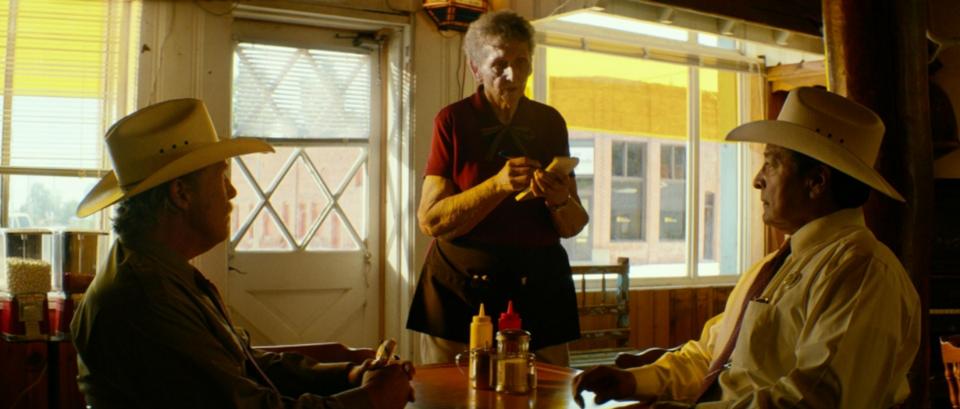
Here’s the menu for tonight’s Oscar Dinner. It’s centered around a scene in Hell or High Water which rates as one of the all-time great Diner Scenes in movie history (along with Jack Nicholson ordering the chicken sandwich in Five Easy Pieces and Meg Ryan’s faked orgasm in When Harry Met Sally).
Candles and flowers from La La Land: It’s not clear what food Sebastian (Ryan Gosling) is serving Mia (Emma Stone) in his apartment, but he had gone to great lengths create a romantic setting. (That dinner doesn’t go well.)
T-bone Steak, baked potato and green beans from the ancient cafe waitress (Margaret Bowman) in Hell or High Water. She asks what the boys are NOT having because they ARE having T-bone steak and baked potato. We’re NOT having the corn.
Cornbread muffins from Hidden Figures: Those are on the family dinner table when Colonel Johnson (Mahershala Ali) proposes to Katherine (Taraji P. Henson).
Palak Paneer from Lion: This is not actually consumed by any characters in the movie, but, hey, it’s Indian and we needed another veggie dish.
Rations from Hacksaw Ridge: Smitty Ryker (Luke Bracey) gobbles down a mid-battle meal while sharing foxhole with Desmond Doss (Andrew Garfield).
Gin from Fences: Troy (Denzel Washington) is always pulling from a pint of rotgut gin.
Frozen chicken from Manchester by the Sea: Patrick (Lucas Hedges) is very upset that his father can’t be buried until the New England soil defrosts, and he has a melt down at the fridge when the frozen chicken reminds him of Dad on ice.
Ketchup and hot sauce from Moonlight:they are on the diner table where Black (Travante Rhodes) meets up again with Kevin (Andre Holland).
Edible alien art from Arrival (photo below): The Wife worked in the medium of black beans to re-create one of the messages communicated by the aliens.
The Movie Gourmet asked the folks who pick the movies at Cinequest about this year’s program.
MIKE RABEHL is Cinequest’s Director of Programming/Associate Director.
Is there any remarkable new filmmaking talent with a first or second film (like Lost Solace or The Center) that I should seek out?
Rabehl: Personally, I think there are so many discoveries this year, so it would be hard to pick just a couple, but if I have to give you just a few titles, I think I’d look at:
Aloys
All the Beauty
Exiled
Fixed
For Grace
Quality Problems
The Moderns
Painless
Seat in Shadow
Hunting Flies.
I know that is a few more than a couple, but seriously have a huge list of “favorites” this year.
What are your predictions for the biggest audience pleasers? Something like The Grand Seduction, Wild Tales/Batkid Begins? What might be the festival’s biggest surprise hit?
Rabehl:: I am almost always wrong on this, so if you quote me, I know something else is going to be the big hit, but I think: For Grace or Quality Problems.
Is there anything that we haven’t seen before in a movie?
Rabehl: I won’t say too much about them, but the films that are completely original and like nothing I, personally, have not seen before:
Aloys
Exiled
Menento Mori
Any Can’t Miss movies from the Spotlight films?
Rabehl:
Opening (The Last Word)
Closing (The Zookeeper’s Wife)
Carrie Pilby
Una
The Commune
Goldstone
(Re)Assignment (this one is a button-pusher and going to really stretch minds a bit).
I see that you’ve pulled in your usual haul from Belgium and Norway. Any Must Sees this year from those national film programs or other world cinema?
Rabehl: My personal picks…
King of the Belgians (Belgium)
Hunting Flies (Norway)
All the Beauty (Norway)
Past Imperfect (Belgium)
Flemish Heaven (Belgium)
Anishoara (Germany, Moldova)
The Citizen (Hungary)
The Nurse (Turkey)
Secluded (Denmark)
The Teacher (Slovakia, Czech Republic)
That Trip We Took With Dad (Germany, Romania, Hungary, Sweden)
I must say that this is really just a paired down list, and there are SOOOOO many others I could do in each genre, break it down by experience, etc… So, choosing favorites is not always my thing, because we’re fans of so many of them.
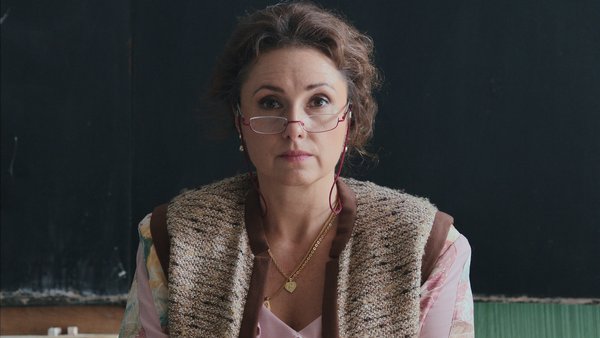
THE TEACHER
CHARLIE COCKEY is Cinequest’s International Film Programmer.
Some of Cinequest’s highlights always come from international cinema – IDA, of course, and THE HUNT, HEAVENLY SHIFT, IN THE SHADOW and the exquisite CORN ISLAND. What should we be looking for at Cinequest 2017?
Cockey: Five URGENTLY recommended, listed alphabetically. Don’t miss ANY of these!!
Aloys– Switzerland – 2016
Magical minimalist film that manages to breathe new life into a tired idiom. Visually riveting, it casts a truly unique spell with straightforward images and brilliant editing to convey its heart. That it is a first film makes it all the more remarkable. If you give yourself over to it I think you’re in for a wonderful experience.
The Citizen – Hungary – 2016
In my opinion, this one is a must. Suffice to say that I gave it a 9.75 rating. The non-professional actors bring a nobility to their characters that gives the film added weight. Really, don’t miss this one.
King of the Belgians – Belgium – 2016
Another wonderful one, another must-see. Plus which, it’s the perfect antidote to the cynicism and disappointment surrounding us these post-election days, a breath of fresh air equally welcome to the festival-goer. During festivals sometimes we NEED some light and freshness. This wonderful film has both in spades.
The Teacher – CR, Slovakia – 2016
Consider this a companion piece to “Identity Card”, the wonderful Czech film from several years back about the teenage boys in 1974. This one is set in the same year, but reveals a much darker aspect. A portrait of a schoolroom Stalin, it is a fine examination of manipulation and corruption whose parallels with Trump are inescapable. This must count as one of Hřebejk’s best films since his Oscar-nominated “Musíme si pomáhat” (the film during which I first met Helena – so of course this film is special for me). Don’t miss it. It’s really fantastic.
That Trip We Took With Dad – Romania, Germany, Hungary, Sweden – 2016
Easily the best Romanian film I saw this year, it has a deftness similar to “Identity Card”, though of course, being Romanian, it’s completely different. A widower-father with a medical condition that needs attention sets out with his two sons head from Bucuresti headed for Germany. But it’s 1968, and just about everything that can go wrong does, including Russia sending tanks into Czechoslovakia, and our hapless family cannot help but fall afoul of just about every bump in the road they encounter. Done in a wonderful understated retro style, by film’s end EVERYONE has changed: grown, learned, gained, lost. A truly wonderful film
Cockey: These are STRONGLY recommended:
Anișoara – Germany, Moldava – 2016
This is the followup to Panihida, which I brought to Cinequest, and which I hope you saw. The same young woman, now some years older, is at the heart of this film as well. Though this one has more overt narrative than Panihida, it’s told in an elliptical, indirect fashion that sometimes seems almost without a story. As before, the sounds, rhythms of the village are at its heart, but here with a darker edge.
The Listen Project: The First Five Years – MULTI – 2016
A gathering of music from around the world, local musicians from all over. What comes across along with the joy of making music – and of hearing it – is how there are so many differences, so many varieties, and yet, underneath, how similar they are at their heart.
Loop – Hungary – 2016
Science fiction with almost no “special effects”, and none needed. See it for its mindbending clockwork aspects as our hero gets caught up in a sort of time loop, that gets pretty wild at times. Definitely great fun.
Cockey: And these are recommended as well.
Queen Anne’s Lace – USA – 2016
US Indie of lesbian interest.
Train Driver’s Diary – Serbia – 2016
I only saw the beginning of this and knew it was going to be something Cinequest would want. I sent it ahead, and it turns out I was right, since here it is!
And one SHORT film:
Urban Cowboys– Poland – 2016
A wonderful film – 30 minutes. It’s a very unusual subject, and a lovely treatment of it. In fact, I was profoundly moved watching it. I’ve no idea which shorts program has it, but it’s worth finding. [Note: Urban Cowboys is part of Shorts Program 2.]
THE TWINNING REACTION
SANDY WOLF is Cinequest Documentary Programmer.
Last year’s doc program was very strong, especially The Brainwashing of My Dad, Chuck Norris Vs. Communism, Dan and Margo and The Great Sasuke. What do you see as the strongest 2-3 documentary features this year?
Wolf: The first doc I am going to recommend is Shorts Series 6, which is the short doc series and includes Bayard and Me. That is the only short doc I have seen, and I can not only vouch not only for the film, which is coming directly from premiering at Sundance, but for the filmmaker himself, who goes by the name of Matt Wolf (and unless there is a change of plans, Matt will not be here, as he has a work commitment which conflicts with Cinequest). [Note: Sandy’s son is the noted documentarian Matt Wolf (Teenage).]
Wolf: The following two docs were my two favorites this year:
The Bullish Farmer
The Twinning Reaction.
Wolf:I am also recommending these other docs (there are a few other which I
haven’t seen):
New Chefs on the Block
Levinsky Park
Cradle of Champions
Honest Struggle.
Bookmark my Cinequest 2017 page, with links to all my coverage. Follow me on Twitter for the latest.