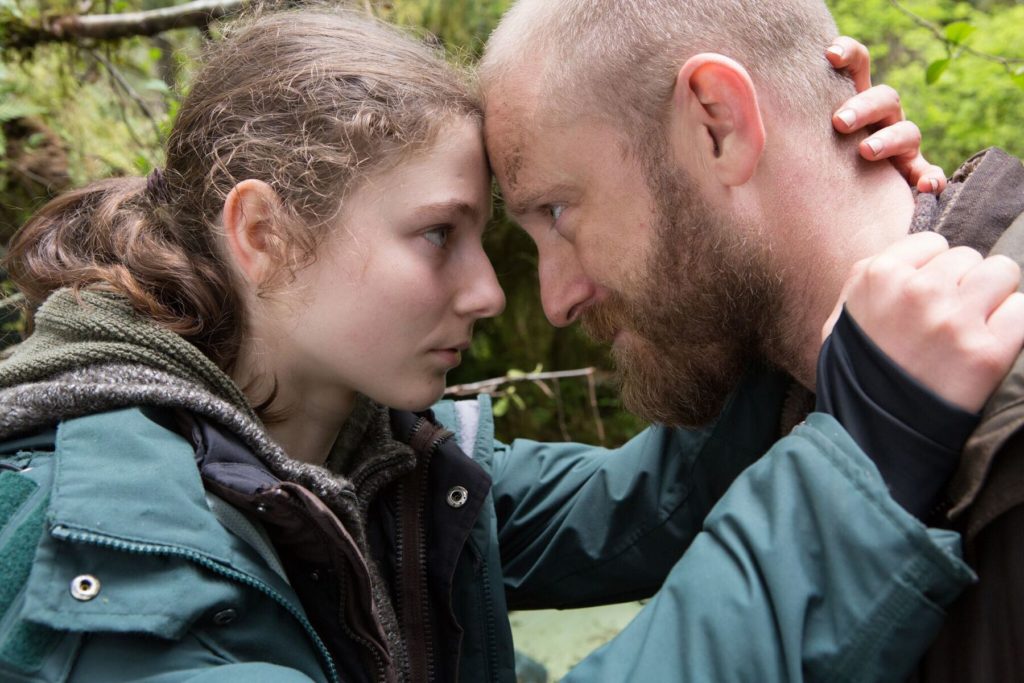
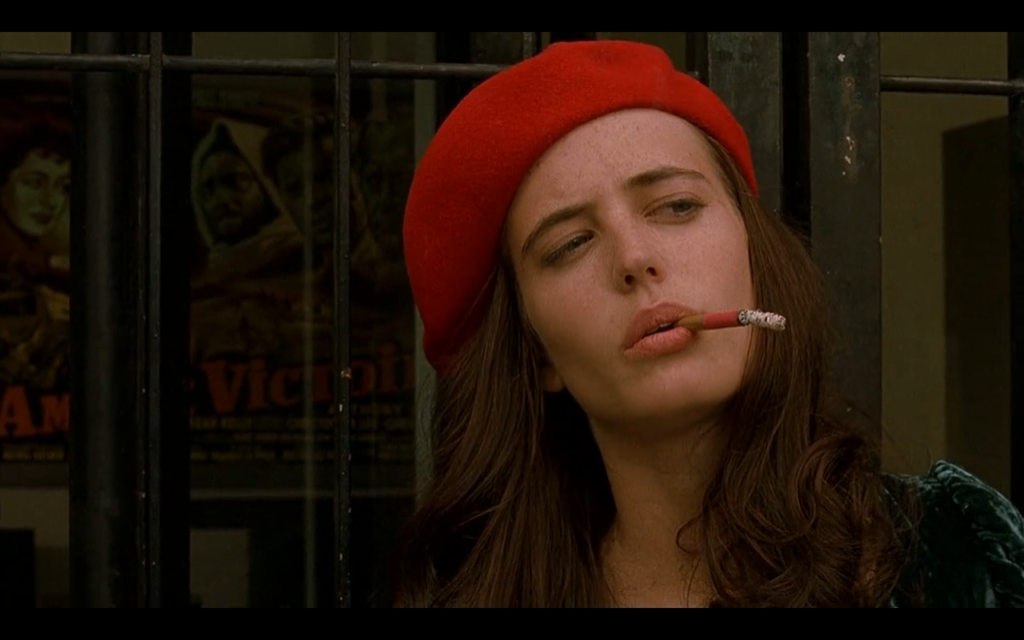
Thomasin Harcourt McKenzie and Ben Foster in a scene from Debra Granik’s LEAVE NO TRACE< playing
It’s time for The Movie Gourmet’s Top Ten list for 2018. To get on my year-end list, a movie has to be one that thrills me while I’m watching it and one that I’m still thinking about a couple of days later.
Between my number one and two choice, I could have gone either way. Here ‘s my Top Ten for 2018:
Leave No Trace
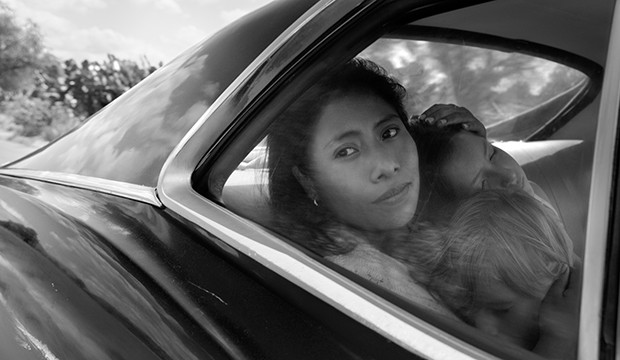
Roma
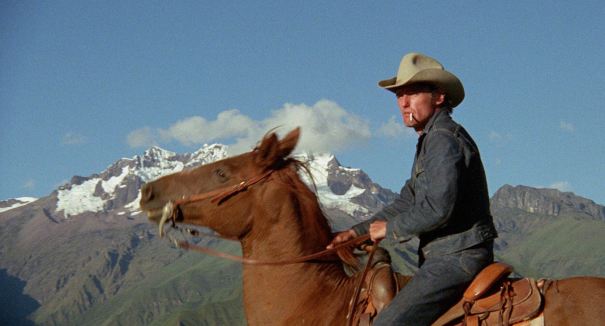
The Rider
Shoplifters
The Other Side of the Wind
A Star Is Born
Green Book
The Death of Stalin
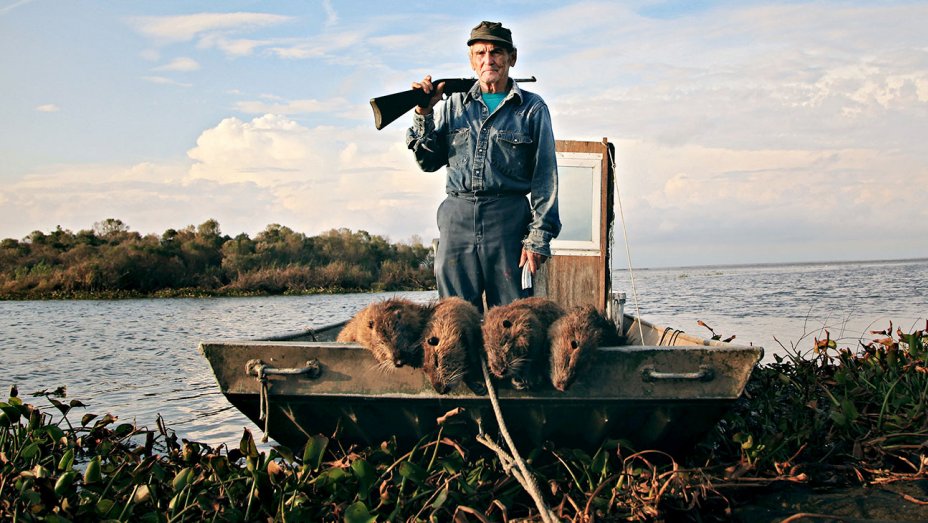
(tie) Beast and Custody
BlacKkKlansman
The rest of the best of 2018 are:
Monrovia, Indiana
Three Identical Strangers
Quality Problems
Outside In
I would have included Bikini Moonand Barefoot if they were more widely available.
You can find fuller descriptions of these films and links to my posts about them (with images and trailers) at my Best Movies of 2018 page.
Sara and I disagreed about THE LAST MOVIE with Dennis Hopper
The folks at Silicon Valley’s Cinema Club have dragged The Movie Gourmet into the Age of Podcast. In our podcast, Cinema Club co-director Sara Vizacarrondo and I reviewed the Cinema Club’s 2018 season and its two special events, the Bay Area premieres of Dark Money and The Last Movie.
Sara is a film teacher and film writer. We agreed (and twice disagreed) about Outside In, American Animals, We the Animals, Custody, Rodents of Unusual Size, Prospect and Styx, all of which I’ve written about. It was a very cool experience, and here’s our 42-minute podcast.
Bernardo Bertolucci, the Italian writer-director, dies recently after making 25 films over 51 years. He is most renowned for The Conformist (1970), Last Tango in Paris (1972) and the 9-Oscar winner The Last Emperor (1987). Bertolucci’s body of work benefitted from his longtime collaboration with cinematographer Vittorio Storaro.
Of course, his most notorious film was Last Tango in Paris. I rewatched Last Tango in Paris in the last few years, and concluded that it just doesn’t stand up. In fact, I found parts of the vaunted Marlon Brando performance risible and, knowing what we know now about how Bertolucci and Brando treated actrees Maria Schneider, the famed butter scene is disturbingly unwatchable.
I actually prefer Bertolucci’s more recent work, beginning with the underrated The Sheltering Sky (1990) with John Malkovich and Debra Winger. I thought that his The Dreamers was the best film of 2003.
I especially like Bertolucci’s final film, Me and Youwhich he made in 2012 at the age of 72. I saw Me and You at the San Francisco International Film Festival, but it has never been widely available, and sadly, can only be streamed with a Realeyz subscription.
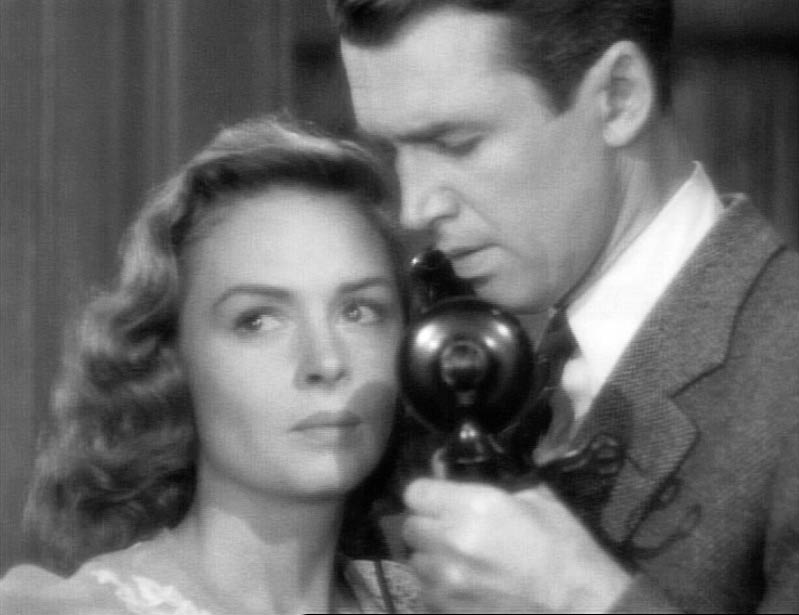
Donna Reed and James Stewart in IT’S A WONDERFUL LIFE
Every Christmas Eve, the Stanford Theatre presents Frank Capra’s It’s a Wonderful Life on the big screen. It’s a great retro experience to see any film in an elegantly restored movie palace (balcony and all), especially with a Mighty Wurlitzer Organ pre-concert. But sharing the laughs and tears of It’s a Wonderful Life with a large (I’m guessing about 750 seats), sell-out audience is very rich indeed.
The tickets are an egalitarian ten bucks or so, but you must be invested in the experience – you can only buy tickets IN PERSON at the Stanford Theatre box office. The tickets go on sale with little fanfare in the first week of December and quickly sell out. So you have to watch the Stanford Theatre’s website for the start of ticket sales and show up to buy tickets weeks ahead of time. The unforgettable experience is worth it.
This year, advance tickets go on sale Friday, December 14 at 5:00 PM. The Wife and I will be lined up at 4:30.
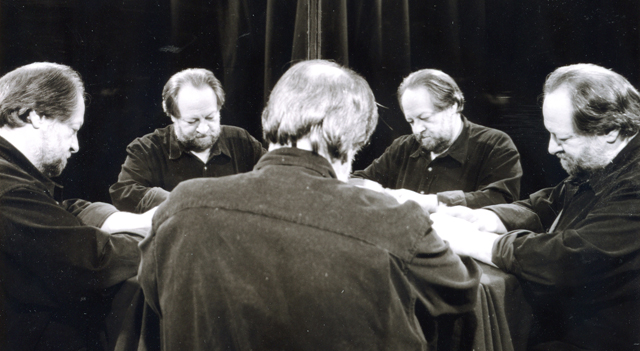
DECEPTIVE PRACTICE: THE MYSTERIES AMD MENTORS OF RICKY JAY
Ricky Jay, the great magician, magic historian and collector, has died at age 72 after also making his mark in cinema. Jay appeared in Boogie Nights, Magnolia and a passel of David Mamet films, including the masterpiece House of Games. You can also find video of his performance Ricky Jay and His 52 Assistants.
Jay’s development as a magician is traced in the documentary Deceptive Practice: The Mysteries and Mentors of Ricky Jay, which explores the fascinating history of 20th century American magic. We get to see performances by Jay and his mentors, with comments by Jay himself. Ricky Jay’s mysteries were the secrets of 1) his illusions and 2) his family – both unrevealed. Whether expansive about his mentors and his passion for magic, or tight-mouthed about his relationship with his parents, Jay was a fascinating character.
Because the audience gets to see lots of amazing magic, Deceptive Practice is attractive as a performance film. But Jay was an unsurpassed raconteur, one of my all-time favorites, and when he held forth, it was as entertaining as any of his illusions.
I was fortunate to see Deceptive Practice at the San Francisco International Film Festival sitting amongst a bunch of real magicians. Deceptive Practice: The Mysteries and Mentors of Ricky Jay is available on Amazon, iTunes, Vudu, YouTube and Google Play.
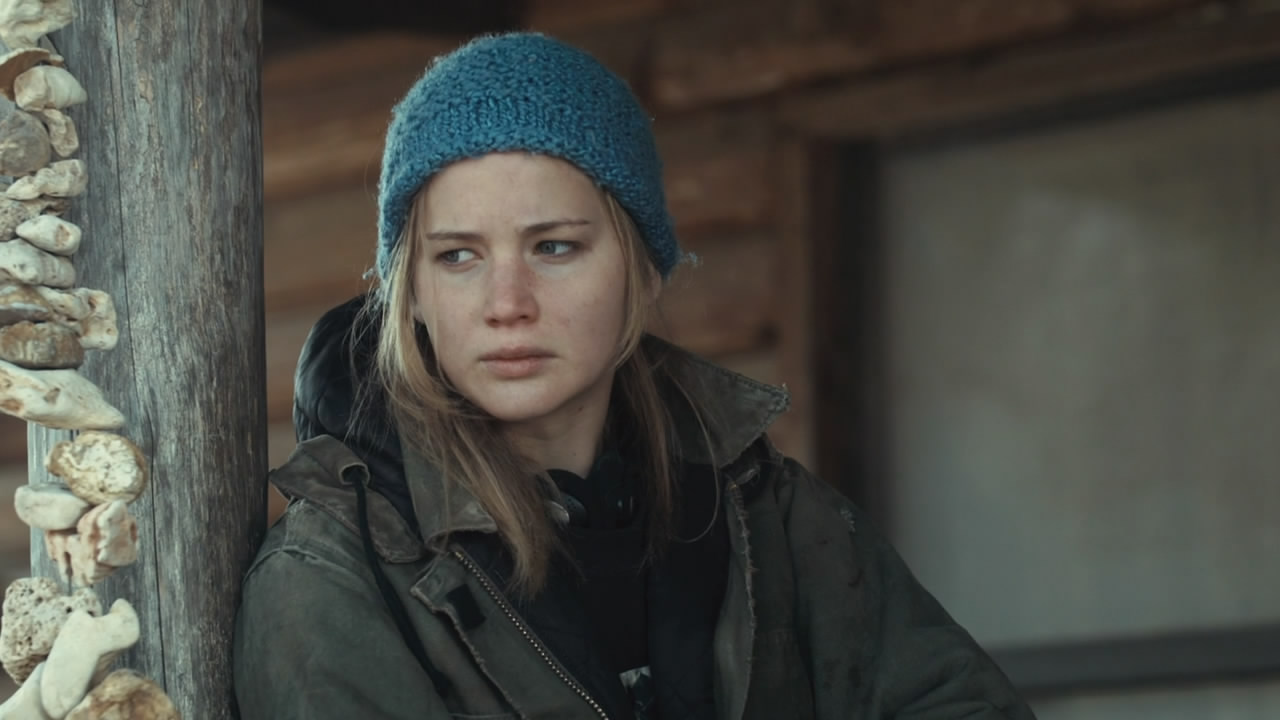
Jennifer Lawrence breaks through in WINTER’S BONE, featured at Silicon Valley’s Cinema Club
An absolute MUST for Silicon Valley film lovers, the Cinema Clubis wrapping up its 22nd season this weekend and looking forward to 2019. A 2019 Club membership can also be a treasured Holiday gift.
It’s your chance to see ten as-yet-unreleased films for $160. There’s usually an post-screening Q&A with a filmmaker, either live or via Skype. It’s like seeing ten movies at a film festival – except it’s a manageable one per month instead of all at once.
Here’s how it works. The club meets monthly on Sundays (you can choose between the morning or afternoon screenings) in downtown San Jose’s 3Below. The house lights go off and a movie appears on the screen. Until this moment, we don’t know which movie it is. The mystery is part of the club’s appeal, and, as a result, I’ve seen some wonderful films that I otherwise never would have chosen to see. Afterwards, there’s a discussion about the film – almost always with at least one of the filmmakers.
The movies range from indie gems to Oscar Bait and are selected by Alejandro Adams and Sara Vizcarrondo. Alejandro is a noted filmmaker (scroll down this NYT article). Sara is a film writer and film professor.
I first saw my pick for the top movie of 2010, Winter’s Bone (four Oscar nominations, including for Jennifer Lawrence’s breakthrough performance), at the Cinema Club. Here are some other Cinema Club films that have made my Best of the Year lists:
Me and Earl and the Dying Girl, I’ll See You in My Dreams, Two Days One Night, Alive Inside, Bernie, Beasts of the Southern Wild, Rabbit Hole, Project Nim, The Messenger, The Tillman Story, Wendy and Lucy, Goodbye Solo, Taxi to the Dark Side, Shotgun Stories, American Splendor, Maria Full of Grace.
Cinema Club members get to see (before their release):
Crowd pleasers like Meet the Patels, Cloudburst, Once and Mad Hot Ballroom;
Challenging cinematic ground breakers like Shane Carruth’s Upstream Color and Gus Van Zant’s Last Days;
Unknown gems like The Grief of Others and In the Family by the as yet undiscovered genius Patrick Wang, the hitherto forgotten neo-noir The Woman Chaser and the delightful Bay Area indie Colma: The Musical.
And I have to admit that, otherwise, I never would have seen The September Issue (I have no interest in the fashion world) or The Tillman Story (I thought I already knew the whole story). Both were rewarding movie experiences.
Cinema Club members also get invited to special previews and events. This year, Alejandro and Sara curated:
The Bay Area premiere of the documentary Dark Money featuring appearances by two of the film’s subjects – Obama-appointed Chair of the Federal Elections Commissions Ann Ravel and journalist John S. Adams; and
A double feature of Dennis Hopper’s lost film The Last Movie and the Hopper documentary Along for the Ride with a panel of critics and the doc’s director.
In a rare revival showing, the Cinema Club also screened an almost lost film, the 1981 They All Laughed – and I found myself sitting next to its director, the legendary Peter Bogdanovich!
Alejandro and Sara are building on the work of previous club programmer Tim Sika, host and producer of the movie magazine radio show Celluloid Dreams, movie reviewer for KGO radio and recent president of the San Francisco Film Critics Circle.
I’ve been a Club member since its 2003-04 season. If you love movies and live in Silicon Valley, you need to be in the Cinema Club. Sign up for the new season here.
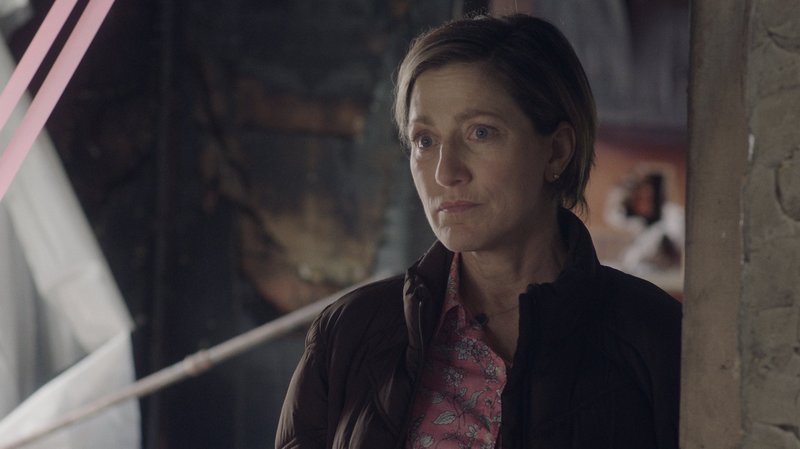
Edie Falco in OUTSIDE IN, screened in the 2018 Cinema Club program
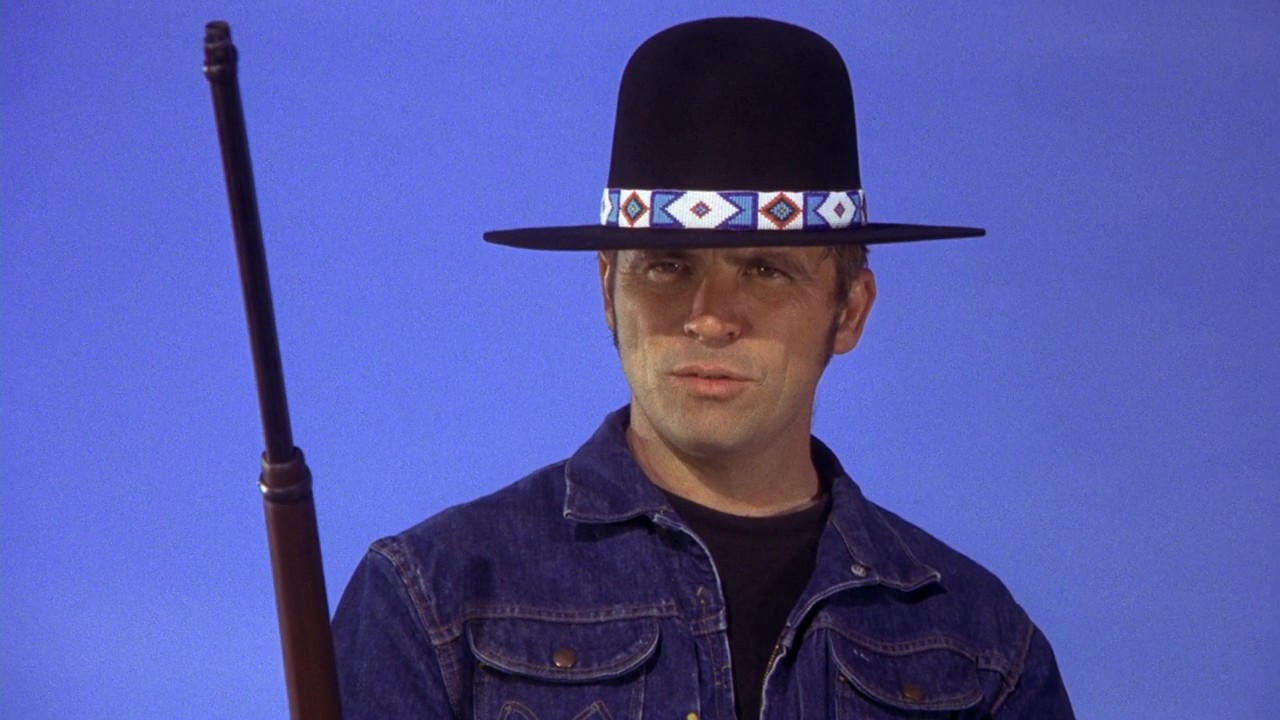
On November 14, Turner Classic Movies will present the Billy Jack trilogy. The iconic character of Billy Jack was created by the groundbreaking independent filmmaker Tom Laughlin. Laughlin originated the character in his biker exploitation movie Born Losers (1967), and then fully unleashed him in Billy Jack (1971), The Trial of Billy Jack (1974) and Billy Jack Goes to Washington (1977).
Billy Jack is a Vietnam vet who embraces his own combo of New Age mysticism and Native American spiritualism. Billy Jack uses martial arts to kick the crap out of the bad guys who bully women, Native Americans and teenagers. Laughlin played a character along similar themes in his The Master Gunfighter (1975), only bearded and wielding a samurai sword.
The prickly Laughlin made and distributed his films independently, and Billy Jack and Trial were huge box office successes, among the most financially successful indies ever. For The Trial of Billy Jack, Laughlin engineered the then-unheard-of simultaneous release on 1500 screens. This excellent Bill Gibron article in Pop Matters describes this precursor of the Hollywood blockbuster strategy. Billy Jack was also the first widely seen martial arts movie in America.
Despite his innovations in the movie business, Laughlin never succeeded in making a good movie. Filled with clumsy acting and hackneyed dialogue, the films are still pompous, self-important and humorless.
Laughlin’s signature as a screenwriter is heavy-handedness. It’s never enough for the bad guys in the Billy Jack movies to be bad. They also have to be racist AND mean to animals AND sexually perverted. Billy Jack opens with the bad guys illegally raiding an Indian reservation to steal a herd of wild mustangs and to herd them to a corral where they will be shot at pointblank range to bring in six cents per pound as dog food. One of the Billy Jack villains seduces a 13-year-old, insists on forcing a willing floozie at knifepoint and, for good measure, stakes a saintly teacher to the ground for a ritual rape. In The Trial of Billy Jack, a government henchman shoots a child – in the back – while he is cradling a bunny.
I have a Bad Movie Festival that features unintentionally bad movies that are fun to watch and mock. The Billy Jack movies are too painful for this list. While bad enough, they are gratingly platitudinous.
Laughlin died at age 82 in 2013. Laughlin was married since 1954 to his Billy Jack co-writer and co-star Delores Taylor, who died earlier this year.
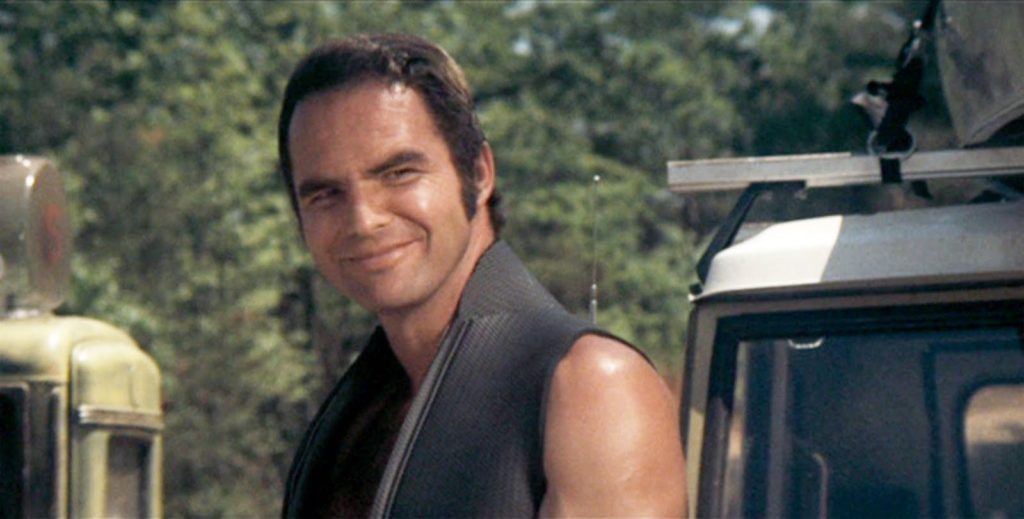
I’m gonna miss Burt Reynolds – both for being a movie icon and for being one of the greatest guests ever on Tonight Show with Johnny Carson. He solidified that icon status in Deliverance, brandishing a bow-and-arrow and clad in a sleeveless neoprene vest – there has never been a more studly image in the history of cinema.
The key to Burt Reynolds’ appeal is that unique combination of virility and charm, his stunning physicality leavened by his not taking himself too seriously. I’m ridiculously handsome, and isn’t that just ridiculous?
To celebrate Burt’s rollicking Smokey and the Bandit era, I recommend The Bandit, a documentary about Burt’s collaboration with stuntman/director/roommate Hal Needham. You can stream The Bandit from Amazon, Vudu, YouTube and Google Play.
In his last film, this year’s The Last Movie Star, an aged action movie star (Burt Reynolds playing someone very similar to Burt Reynolds) examines his life choices. It’s very funny and sentimental (in a good way), and you can stream it on Amazon, iTunes, Vudu, YouTube and Google Play.
There are many aspects to Aretha Franklin’s art that we can celebrate. She had one notable appearance in a movie, and here it is, an utterly dominating performance in The Blues Brothers.
I also love non-actor/sax player Lou Marini in this scene. Matt “Guitar” Murphy, who played Aretha’s movie husband in The Blues Brothers, died this June.
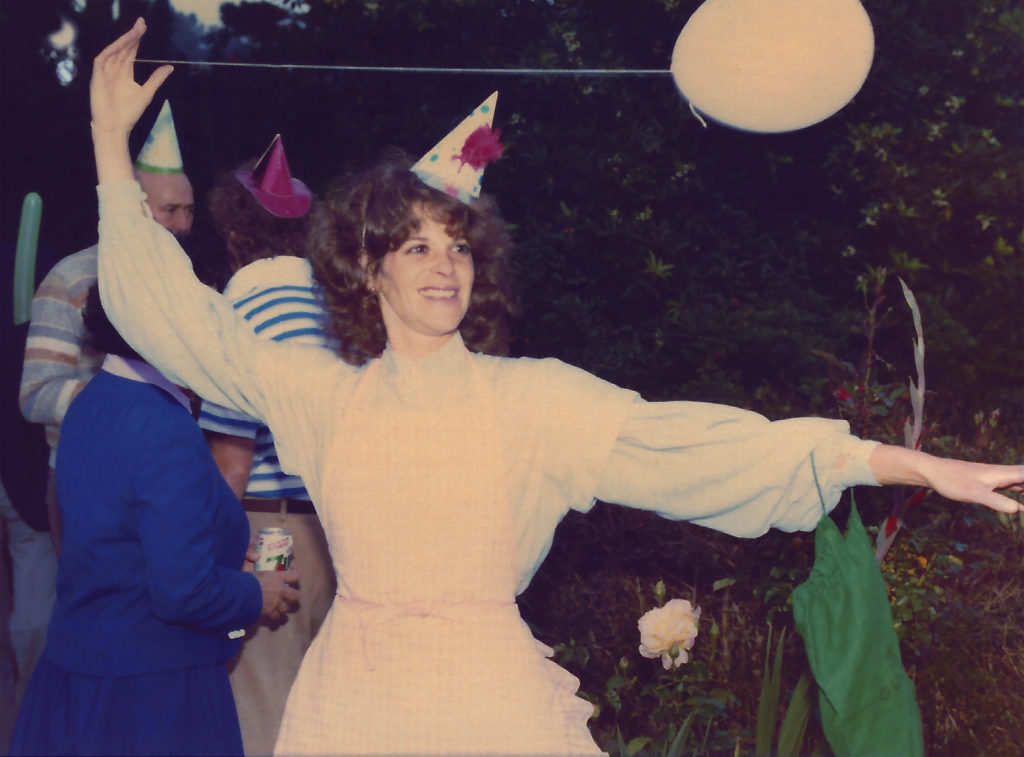
Subject Gilda Radner in a still from LOVE, GILDA. Photo courtesy JFI.
It’s time to get ready for one of the Bay Area’s top cinema events: the 38th annual San Francisco Jewish Film Festival (SFJFF38), which opens July 19, and runs through August 5 at five locations throughout the Bay Area. The SFJFF is the world’s oldest Jewish film festival, and, with a 2017 attendance figure of 40,000, still the largest.
Here’s an early peek at the fest highlights:
Opening night’s Bay Area premiere of the Gilda Radner biodoc Love, Gilda, featuring segments of Radner’s diaries. Director Lisa D’Apolito and original SNL cast member Laraine Newman will attend.
Closing night’s presentation of another showbiz biodoc, Sammy Davis Jr.: I’ve Gotta Me, with director Sam Pollard in attendance. I’ve seen it, and it’s top rate.
The especially strong slate of documentaries, always a rich trademark of the SFJFF. I’ll be recommending a slate of Must See docs.
A first-time partnership with the Film Noir Foundation, with the Hungarian neo-noir Budapest Noir presented by its director Éva Gárdos and the Czar of Noir himself, San Francisco’s Eddie Muller.
The 1924 silent film The City Without Jews, recently discovered in a Paris flea market and now digitally restored and presented with a commissioned live score. It’s a rare Silent Era look at the resurgence of antisemitism in Europe.
And the always popular program of short films, Jews in Shorts. The SFJFF is newly an Academy Award qualifying festival in the Short Documentary Subject category.
One of the most appealing features of the SFJFF is that, wherever you live in the Bay Area, the fest comes to you. SFJFF will present film events at the Castro Theatre in San Francisco, the Landmark Albany Twin in Albany, the CinéArts Theatre in Palo Alto, the Christopher B. Smith Rafael Film Center in San Rafael, and the Piedmont Theater in Oakland.