Photo caption: Bríd Ní Neachtain in ROISE & FRANK. Courtesy of Juno Pictures.
In the delightful and sweet Gaelic comedy Roise & Frank, it’s two years after the death of Roise’s (Bríd Ní Neachtain) husband Frank, and her grief has turned her into a reclusive depressive. An apparently stray dog insists upon intruding into her life. She becomes convinced the dog is the reincarnation of her deceased hubbie – and the screenplay cleverly gives her credible reasons to believe this. She names the dog Frank, and off we go, as Frank the dog guides Roise out of her melancholy, despite the resistance of her adult, also still grieving, son and her lovestruck neighbor. Soon, there are even implications for the local school’s hapless hurling team.
Roise & Frank was deftly directed by Rachael Moriarty and Peter Murphy, who overcame W.C Fields’ admonition about working with animals and children. They succeeded in keeping Roise & Frank light and funny without turning it into sitcom silliness.
Bríd Ní Neachtain, who played the nosy postmistress in The Banshees of Inisherin, is convincing and relatable as both the gloomy and the rejuvenated Roise. In his first screen credit, Ruadhán de Faoite is especially winning as Mikey, the confidence challenged middle schooler next door.
The dog Frank is a mutt described as possibly part lurcher, a breed unfamiliar to many of us in North America. Lurchers, a mix of greyhound and terrier or herder, historically used in hunting, are more common in the British Isles.
Roise & Frank opens on April 7th at the Opera Plaza in San Francisco, the Smith Rafael in San Rafael, and the Laemmle Town Center and Royal in Los Angeles. This is a charmer and well worth seeking out.
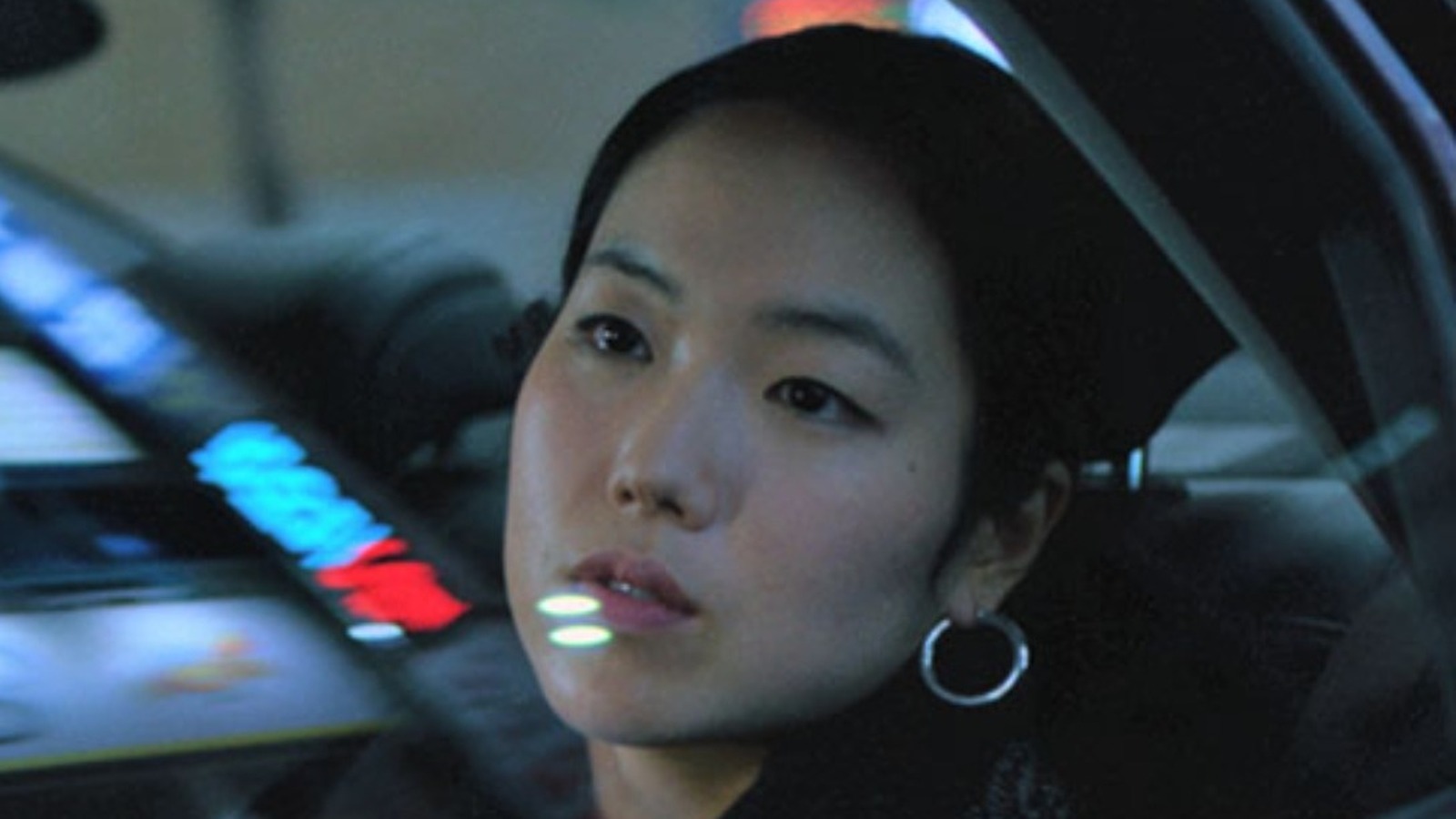
Photo caption: Park Ji-min in RETURN TO SEOUL. Courtesy of Sony Pictures Classics.
As the brilliantly crafted and emotionally gripping Return to Seoul opens, we meet a free-spirited young woman (Park Ji-min) with the decidedly non-Korean name Frederique Benoit. Freddie is French, having been adopted from Korea by a French couple as an infant. Freddie doesn’t speak Korean, doesn’t know anything about Korean culture, and is only in Korea because of a last minute pivot from some disrupted vacation travel.
Freddie travels for pleasure and loves to party – and party hard. She is certainly NOT prepared for a quest to find her biological parents, but an acquaintance gives her a tip, and she can’t resist following up. What follows is an exceptional and unpredictable personal journey told in four segments – the second five years after the first, the third and fourth just a year or two apart.
Return to Seoul features a screenplay without any hint of cliché and a stunning breakthrough performance by its lead actress.
Freddie is brash, impulsive and unfiltered. Her feelings about the circumstances of her adoption are authentic and complicated. She doesn’t seem either needy or resentful – but what is beneath the surface? After all, she does have a visceral distaste for celebrating her birthday.
Freddie is frequently impolite and often mistreats those who care for her with breathtaking awfulness; she dispatches one boyfriend with a line of staggering cruelty – and then repeats it..
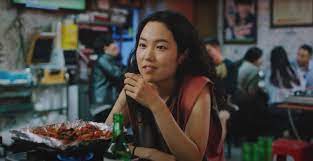
As Freddie, Park Ji-min is a revelation in her FIRST FILM role. She’s on screen in every scene, and we’re always on the edge of our seat wondering how she’ll react – for better or for worse. We ‘re on Freddie’s roller coaster, and Park Ji-min is driving it.
Park Ji-min in RETURN TO SEOUL. Courtesy of Sony Pictures Classics.
Park Ji-min is a visual artist who often paints with latex. Like Freddie, she’s confident enough – in her first filmmaking – to have insisted on eschewing a blonde wig for a black leather wardrobe in the second segment because she saw the character of Freddie as a warrior. After a stunning, sure to be star-making performance in Return to Seoul, she says she’s now deciding whether to accept further acting gigs (and I sure hope she does). In the meantime, she’s become a spokesperson for Dior.
Park Ji-min moved with her Korean parents from Korea to France in her childhood. She heard of this film project from a friend who, like the character of Freddie, was adopted from Korea by French parents.
Writer-director Davy Chou is French-born of Cambodian parents. This is only his second feature, and it’s a near masterpiece primarily because Chou has created an entirety original and complex protagonist.
Freddie’s biological father is played by Oh Kwang-rok, a Korean actor of note, who delivers a heartfelt and sometimes smoldering performance.
I found Return to Seoul to be a thrilling experience, a better film than any of last year’s ten nominees for the Best Picture Oscar. The Wife, while moved by the penultimate scene, was much less impressed. She thought one music-related thread had been ignored for the middle of the film, and was underwhelmed by the ending.
Go see Return to Seoul at your arthouse theater – it’s the first Must See of 2023. I’ll let you know when it streams.
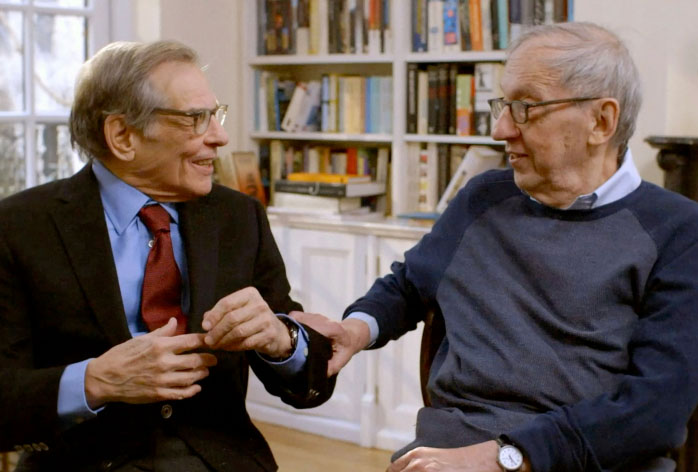
Photo caption: Robert Caro and Robert Gottlieb in TURN EVERY PAGE. Courtesy of Sony Pictures Classics.
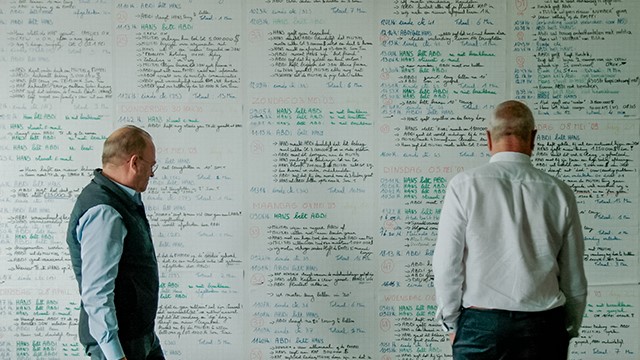
The fine documentary Turn Every Page profiles two American literary stars and their collaboration of over fifty years, which is, amazingly, still ongoing. Robert Caro, America’s top biographer and political writer, is 87-years-old. Robert Gottlieb, the most important American publisher, is 90. These are important guys, and their story is irresistible.
Turn Every Page is directed by Gottlieb’s daughter Lizzie Gottlieb – the only person who could get the cooperation of these two quirky masters – and she tells a great story.
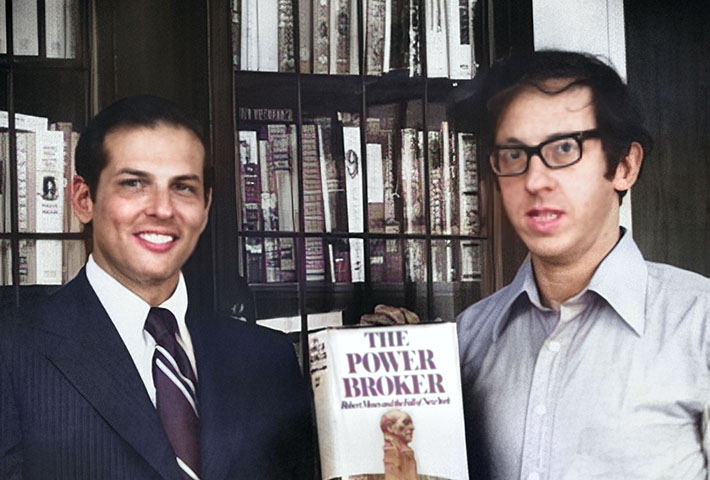
The two began their collaboration with Caro’s 1972 The Power Broker, which has become de rigeur among observers of and participants in America’s politics and government. The two then launched the greatest political biography in history, Caro’s four-volume revelation of Lyndon Baines Johnson.
Caro is defined by his meticulousness. To understand the background that molded LBJ, Caro moved his family for three years to the Texas Hill Country. Turn Every Page contains plenty of nuggets for Robert Caro geeks like me:
The moment when Caro and Gottlieb decided to abandon a Fiorello La Guardia bio for the LBJ project.
The space over Caro’s refrigerator, into which is crammed, a few pages at a time, carbon copes of his entire oeuvre.
How a change in the health of LBJ’s younger brother, Sam Houston Johnson, opened up the reality of LBJ’s childhood family for the first time.
How Caro’s incredible doggedness led him to find a man thought long dead, who handed Caro the smoking gun evidence for his biggest literary revelation.
Note: Turn Every Page discusses the Big Reveal in the second LBJ volume, Means of Ascent – that LBJ’s victory in the 1948 election for US Senate was stolen. What Turn Every Page leaves out (understandably because the movie is about the LBJ books, not about LBJ) is that Means of Ascent also proved that the preceding US Senate election was stolen FROM LBJ.
Those of us who are addicted to Caro’s LBJ series have been awaiting the final volume nervously, in light of the actuarial inevitabilities and Caro’s unsatisfying response that it will be published when he is ready; Turn Every Page doesn’t offer any different answer.
Gottlieb is arguably even more important than Caro. He broke through in 1961 by discovering Joseph Heller and publishing Catch 22. Since then he has guided the completion and publication of the work of Toni Morrison, Salmon Rushdie, John LeCarre, John Cheever, Ray Bradbury, Michael Crichton, Barbara Tuchman, Nora Ephron, Jessica Mitford, Antonia Fraser, Doris Lessing and a host of celebrity memoirs by the likes of Bill Clinton, Katharine Hepburn, Bob Dylan and Lauren Bacall. As obsessive as Caro, but in different ways, Gottlieb is also a bit of a Renaissance Man, with a surprising role in ballet and as an offbeat collector.
Turn Every Page has concluded its all too brief run in arthouse theaters, but I’m sure it will be streaming (or perhaps televised) soon; I’ll let you know when you can see it.
Robert Caro and Robert Gottlieb in TURN EVERY PAGE. Courtesy of Sony Pictures Classics.
Gerardo Reyes as adult Sansón in Rodrigo Reyes’ documentary SANSÓN AND ME. Courtesy of Cinema Guild.
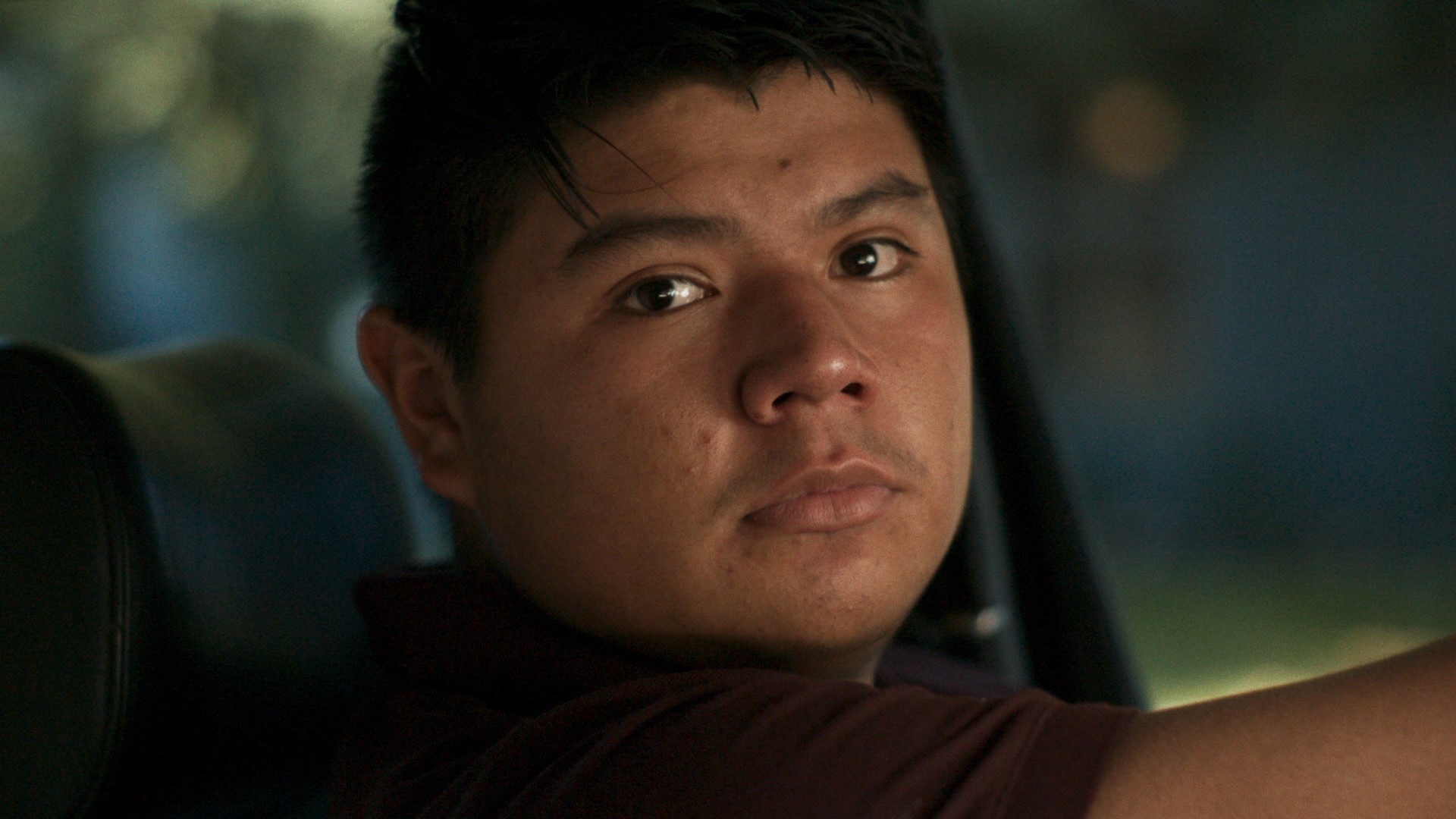
In the documentary Sansón and Me, director Rodrigo Reyes explores how an unremarkable 19-year-old living a decidedly non-monstrous existence could be locked up for life. Reyes, one of our most imaginative filmmakers, has a day job as a courtroom interpreter and met his titular subject at his California trial. Sansón, a Mexican immigrant, although apparently not the triggerman, was convicted of a murder and sentenced to life without the possibility of parole.
Reyes travels to Sansón’s hometown, a modest fishing village between Puerto Vallarta and Acapulco and enlists Sansón’s family members to re-enact pivotal moments in Sansón’s childhood. It turns out that the family has more than its share of troubles and that the village is less than idyllic. Reyes then uses local, non-professional actors, to depict Sansón’s sojourn in California’s Central Valley, up to the killing in the grubby agricultural town of Dos Palos. It doesn’t take Sansón very long to get in the wrong place at the wrong time.
Sansón made a bad decision and was also profoundly unlucky. For that, the remaining decades of his life have been discarded by the state, which Reyes paints as an unfathomably disproportionate consequence.
Two years ago, Reyes invented his own genre of documentary in 499, what I call a “docu-fable” because it is all as real as real can be (the documentary), except for a fictional, 500-year-old conquistador (the fable). That movie’s title reflects a moment 499 years after Cortés’ conquest of the Aztecs in 1520; the conquistador and the audience discover that the dehumanization inherent in colonialism has persisted to plague modern Mexico – essentially the legacy of Mexico’s Original Sin. I’m hoping that Reyes’ permanent day job becomes filmmaker.
Sansón and Me is rolling out in theaters and plays the American Cinematheque on March 24.
Cinequest’s online festival Cinejoy ran through March 12. Here are the films that in the program that I hadn’t posted about yet:
Egghead & Twinkie: In this remarkably funny, sweet and genuine coming-of-age film, high school senior Twinkie (Sabrina Jie-A-Fa – real talent) is trying to navigate her sexual awakening as a lesbian, and goes on a roadtrip with her lifelong bestie, the neighbor boy who is now sweet on her. Perfectly paced, with just the right amount of whimsical animation sprinkled in, Egghead & Twinkie is an impressive debut feature for writer-director Sarah Kambe Holland. IMO this is one of the best coming-of-age films of the decade.
Catching the Pirate King: The enthralling Belgian documentary is two movies in one. The first is a play by play of the hijacking of a Belgian ship by Somali pirates and the negotiating of their ransom. The second is about the Belgian law enforcement’s dogged campaign to bring the pirates to justice – in Belgium. We meet the ship’s captain and crew, the shipping company’s negotiator, the cops and prosecutors and even some pirates. Absorbing, exceptionally well-sourced and very well-crafted.
Under Water: This dark Dutch dramedy (or extremely dark Dutch comedy) starts out as the insistent effort of a pushy woman and her estranged husband to get her aged mother into residential care. The mother, a paranoid survivalist, resists every entreaty by the woman and her estranged husband to leave her isolated, condemned house – and even imprisons them in her basement. The husband’s role evolves, and we eventually see that this is a portrait of generational mental illness.
Sweet Disaster: This zany German comedy is driven by the protagonist’s ever-unleashed impulsiveness and utter lack of boundaries. Frida (Friederike Kempter) encounters and falls for an airline pilot and audaciously charms him into a relationship; their affair lasts just long enough for her to become impregnated and for him to abandon her for his ex. Consumed by the urge to win him back, Frida throws propriety to the winds. Frida’s zany roller coaster is tempered by sweet relationships with her apartment neighbors, a precocious teenage neighbor and a Greek Chorus of card-playing older women.
Sloane: A Jazz Singer: This is another laudatory doc on an overlooked musical artist. Now 82, she’s a lot of fun. I wasn’t wowed by an advance version that I screened, but I understand that revisions have since made this film very strong.
The Secret Song: This doc is an uncomplicated movie about a visionary and saintly public school music teacher. He has touched hundreds of lives; this movie won’t.
In the very funny sci fi think-piece Share?, an unnamed Everyman (Melvin Gregg) finds himself locked up in his civvies in a high tech cell – and he’s on camera. Through trial and error, he learns that he can acquire necessities – and also on-screen social interaction with other captives – by performing for the camera; the currency is not unlike the likes and follows of social media. There are many layers of metaphor in this exploration of human behavior and the human appetite for bread and circuses.
Our protagonist is able to connect through his screen with others in his situation. One veteran (a great Bradley Whitford) is jaded and burnt out, sometimes a sage life coach and sometimes bursting into a nihilistic frenzy. Another noobie (Alice Braga) is a brilliant, driven strategist who immediately turns to organizing their escape; she proves that rage and fear are clearly the most effective motivators of human behavior (Fox News essentially runs on this fuel), but is the trade off in mental health worth it? A third star of the computer screen (Danielle Campbell) advocates for complacent acceptance and exudes a creepy serenity.
So, how about our current addiction to social media? Is it all one big Distraction that steers us away from addressing real challenges, like injustice, socioeconomic inequality and planetary survival? It’s great to see sci fi that is once again about ideas, not just about blowing shit up in space.
One of the wry ironies in Share? is that the force that is sufficiently technologically advanced to have captured these people without their knowledge and imprisoned them in high tech cells employs a clunky user interface that resembles (and may even be) MS-DOS.
Here’s a novelty – all of Share? is entirely shot from one static camera position. As convenient as this must have been in working from a low budget and perhaps pandemic-driven restrictions, it figures to pose a challenge in keeping the audience interested. But, thanks to the collaboration between director Ira Rosensweig, Assistant Editor Peter Szijarto and Gregg (who’s on screen 99% of the time), that’s not a problem.
Melvin Gregg, with his energy and relatability, does an excellent job carrying the movie. The rest of the cast – Bradley Whitford, Alice Braga, Danielle Campbell – is great, too.
Share? is the first feature for director and co-writer Ira Rosensweig and the third feature for co-writer Benjamin Sutor. Cinequest’s online festival Cinejoy is hosting the world premiere of Share?, which tops my Best of Cinejoy recommendations. You can find the trailer and tickets at Cinequest.
The dark sci fi comedy Daddy: is set in a future where only a limited number of men are approved by the government to father children. Four guys apply for the privilege and are isolated in a mountain lodge to wait for the expert evaluator, who doesn’t immediately show up. As they try to figure out what’s going on and what they should do, they succeed only in demonstrating how unfit they would be as parents – until things get all Lord of the Rings. It’s a very funny skewering of both male overconfidence and male angst.
Finally, the guys get an unexpected visitor, who may or may not be the evaluator that they expect. What’s impressive about this episode is how each man’s instinctual reaction, different from each other’s, can be so profoundly wrongheaded.
The mountain lodge is equipped with an artificial baby model (a doll). Co-writers Neal Kelley and Jono Sherman refrain from overusing this prop in slapstick. It’s far funnier to glimpse the doll as it seems to silently rebuke the foolhardiness around it.
Daddy is the second feature and first feature, respectively, for for co-directors/co-writers Kelley and Sherman, who also play two of the guys. Cinequest’s online festival Cinejoy hosts the world premiere of Daddy.
Photo caption: DESTINY ON THE MAIN STAGE. Courtesy of Cinequest.
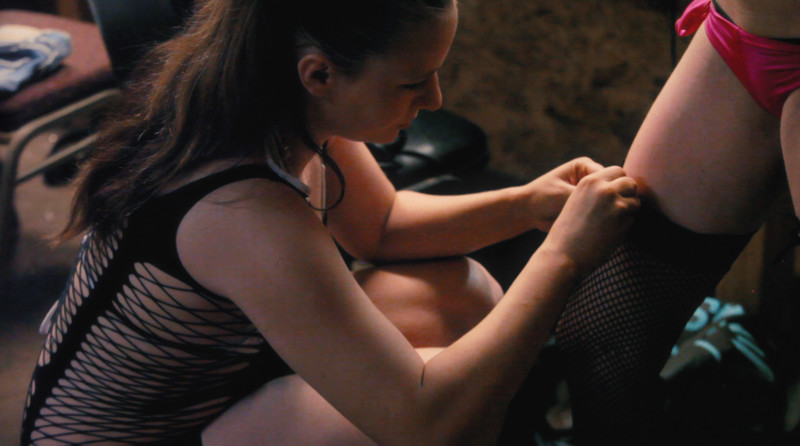
In the brilliant documentary Destiny on the Main Stage, a female director (and almost all-female crew) chronicle three years in the lives of Dallas-area strippers – and it’s authentic and NOT sensationalist or exploitative. The strippers include both a 20-year veteran very comfortable in her vocation and a former stripper organizing to help women exit the business. And, of course there are the very young women who are puddles of bad choices. Over the three years, the subjects’ lives take some very gripping turns.
This is not an advocacy film that seeks to criticize or promote the industry. This is cinéma vérité, and the pivotal events in the women’s lives are depicted as they happen. Hearing the strippers’ voices through a female lens/gaze/perspective is both novel and insightful. Director Poppy de Villenueve says, “These events are revealed as part of life, filmed in a nuanced way, reflecting something these women rarely are given the opportunity to have revealed.“
What Destiny on the Main Stage is filled with, instead of titillation, is humanity. De Villenueve says, “It is difficult to find real intimacy and connection these days, but by highlighting it in the darkest environments, I believe we move the world towards a better, kinder place.”
This is a serious film that could become an audience favorite, too. Destiny on the Main Stage is the second feature for director Poppy de Villenueve. Cinequest’s online festival Cinejoy hosted the world premiere of Destiny on the Main Stage, and it’s playing the in-person Cinequest in August..
Lea Drinda and Anne Ratte-Polle in EVERYBODY WANTS TO BE LOVED. Courtesy of Cinequest.
This German dramedy Everybody Wants to Be Love is a triumph of the harried mom genre. As a psychotherapist, Ina (Anne Ratte-Polle) spends her workdays listening to whining and naval-gazing. Then she goes home to her self-absorbed boyfriend and her teen daughter – and the job of teenagers is to be self-absorbed.-Nobody is most narcissistic and entitled than Ina’s mom. It’s the mom’s birthday, and she is rampaging with demands. The daughter is threatening to move in with Ina’s ex, and the boyfriend wants to move the family to Finland for his career. As Ina is swirling around this vortex of egotism, she gets some sobering news about her own health. As everyone converges on the birthday party, what could possibly go wrong?
Everybody Wants to Be Loved is the first feature for director and co-writer Katharina Woll, who is a perceptive and clear-eyed observer of human behavior. Woll maintains the perfect level of simmering as Ina’s indignities build toward a meltdown.
Anne Ratte-Polle is excellent as the long-suffering Ina, whose tank is about to hit Empty if she doesn’t start putting her needs above those of everybody else.
The rest of the cast is excellent, too, including Urs Jucker as Ina’s maddening boyfriend. Lea Drinda is very good as the teen daughter who pushes Mom to get what she wants, but knows when to stop.
Cinequest’s online festival Cinejoy will host only the second screening of Everybody Wants to Be Loved in the US. It’s one of my picks for theBest of Cinejoy. Watch it through March 13 at Cinejoy.
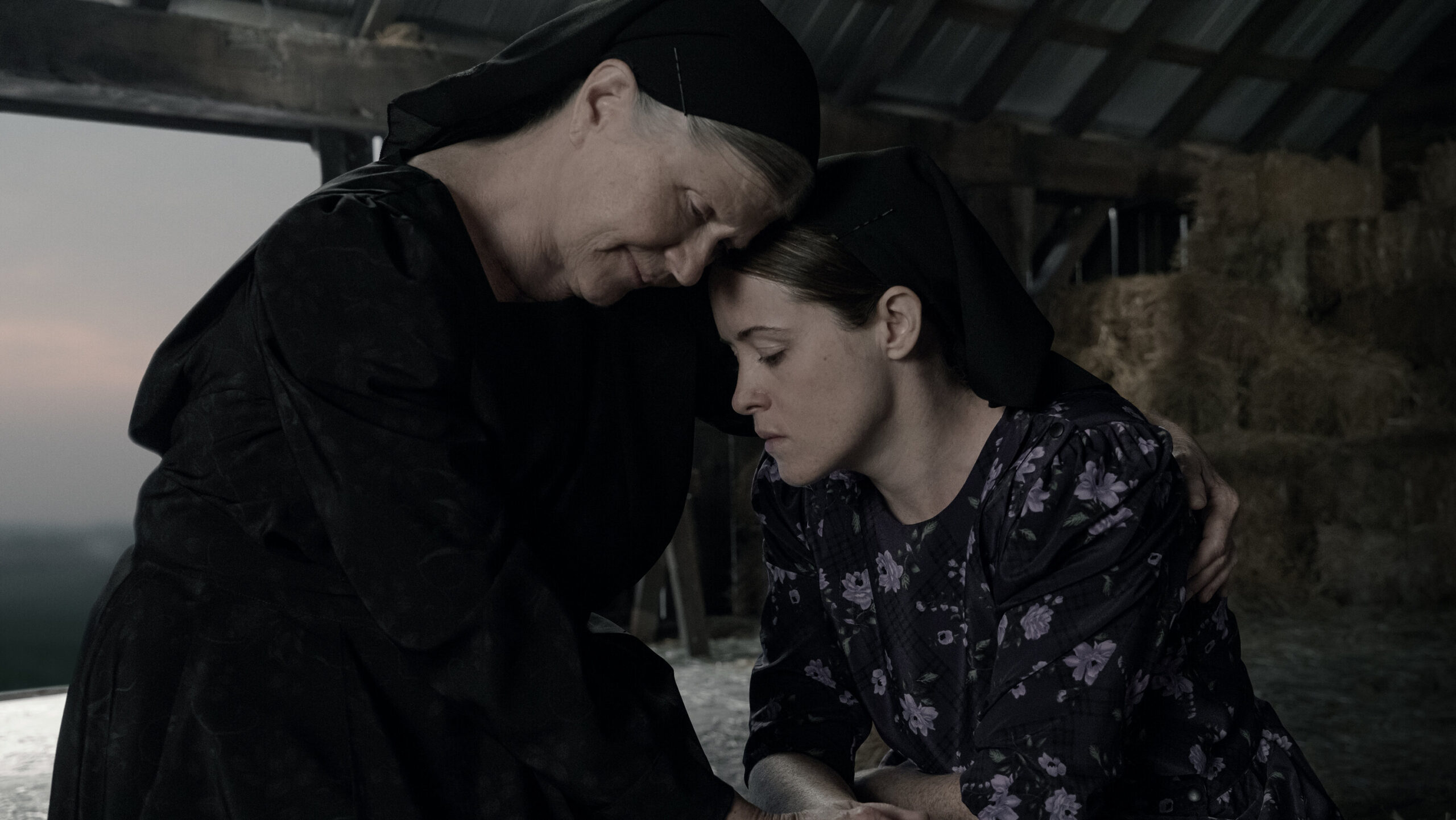
Photo caption: Judith Ivey and Claire Foy in WOMEN TALKING. Courtesy of United Artists Releasing.
In the drama Women Talking, a Mennonite farming settlement is rocked by predatory sexual abuse; some of the men are locked up, and the rest are away trying to bail them out. That leaves the women a moment to decide whether to stay and fight off the the men or to abandon their homes and flee for safety.
This is based on actual events in a Mennonite colony in Bolivia in 2011 – and the story was told in the slightly fictionalized book by Miriam Toews, then adapted into this screenplay by director Sarah Polley.
The women know that the return of the men in imminent, so they are under a deadline to debate whether to stay and fight or to leave. IMO that is a false choice, because they really can’t expect to fend off the abuse from the men in such an isolated environs. What they are really doing is assessing the cost of leaving – losing their husbands and older sons, the community that they have invested their lives in building and any possessions that they can’t carry on a horse-drawn buggy. The drama in Women Talking stems from the life and death consequences of their decision, as well as its urgency. It does seem to me that,once they have made a decision, it takes a lot of movie running time to implement it.
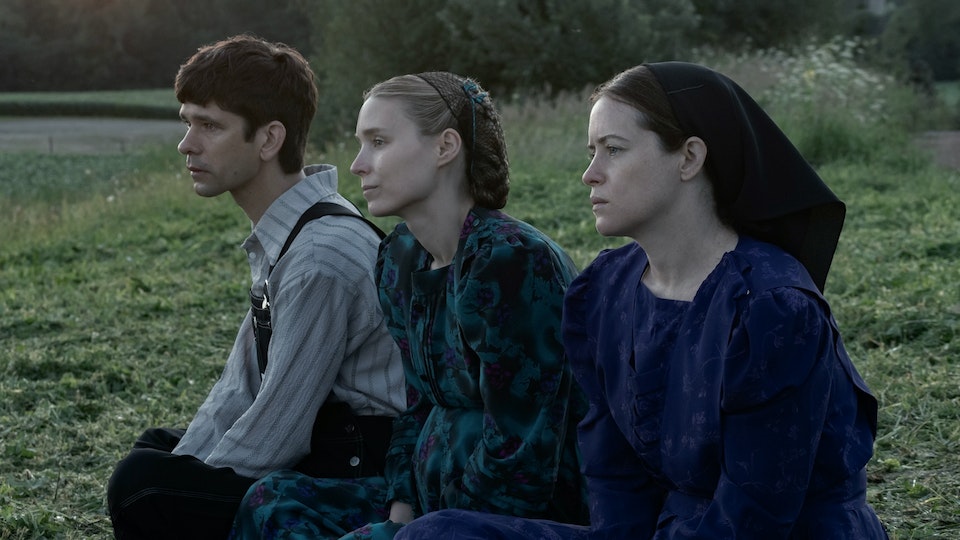
Ben Whislaw, Rooney Mara and Claire Foy in WOMEN TALKING. Courtesy of United Artists Releasing.
This is essentially a six-hander, with almost all the dialogue between the women played by Claire Foy, Rooney Mara, Jessie Buckley, Judith Ivey and Sheila McCarthy and the one remaining man, the gentle schoolteacher August (Ben Whislaw). August is serving as the taker of minutes.
This is an exceptionally well-acted movie. All six actors are superb. Frances McDormand produced Women Talking and plays an almost non-speaking role, although she ably deploys her fierce visage.
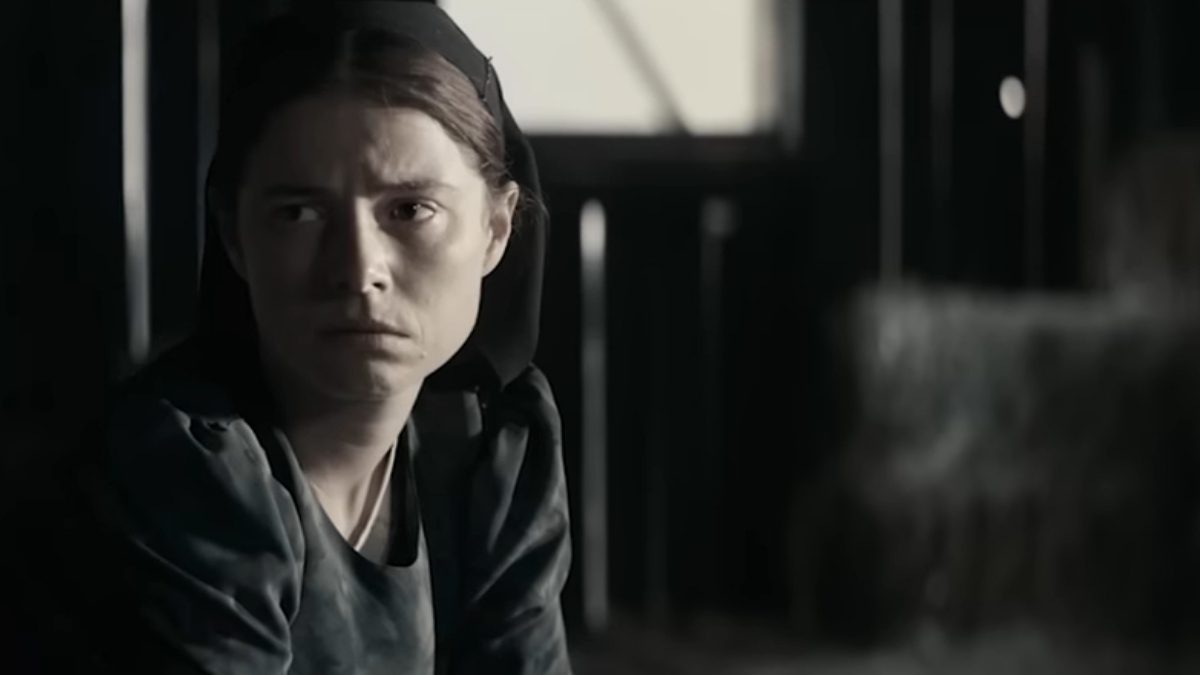
Jessie Buckley in WOMEN TALKING. Courtesy of United Artists Releasing.
Claire Foy’s character has the most pivotal moment, and Jessie Buckley’s gets some sparks, too. The scenes with Whislaw and Rooney are especially heartbreaking.
The Wife liked Women Talking much more than I did (and she had read much of the book, but paused, not wanting to spoil the movie). There were plot points that confused me, and I was impatient with all the decision-making process.
I was very disappointed, because I am a longstanding admirer of Sarah Polley. Polley’s very first film, Away from Her, was my pick for best film of 2007, and Polley’s adapted screenplay was Oscar-nominated. She followed that by directing her original screenplay Take This Waltz, with its remarkable performance by Michelle Williams, and the astonishing autobiographical documentary Stories We Tell.
Polley’s screenplay for Women Talking has also been Oscar-nominated, but it’s a failure anytime I am watching a movie and thinking about anything other than what is going to happen to her next? In Women Talking, I kept thinking about stuff like has it only been an hour?, THAT would never happen and was this originally a stage play? That’s never good, and it’s not what Polley intended.
A Mennonite colony in 2011 Bolivia is an odd setting for a Monkees song to pop up, but Polley’s use of Daydream Believer is inspired (and I think I recognized Anne Murray’s cover over the closing credits). Polley had brilliantly used Video Killed the Radio Star in Take This Waltz.
So, Women Talking is original and strongly acted, but not the most watchable movie.