The Salt of Life: men will be boys

The Salt of Life (Gianni e le donne) is a gently funny and insightful comedy about a certain time in a man’s life.  In the lives of men who are not rich, famous or powerful, there comes a time when attractive young women no longer see them as potential lovers.  This is painful for any guy, and our contemporary Roman hero Gianni, with the help of his portly lawyer/wing man, sets out to deny that he has reached this plateau.

In a standard movie fantasy, some adorable young hottie would come to appreciate Gianni’s true appeal and find him irresistible.  But in The Salt of Life, the story is more textured, complex and realistic.

The Salt of Life  stars and is written and directed by Gianni Di Gregorio, just like the very fun Mid-August Lunch.  It is definitively a movie for guys of a certain age and the women who tolerate them, as well as the younger guys who will become them.

Sorry, no subtitles yet on the trailer embedded here.  You can watch the English subtitled trailer on IMDb.
 

Pete Smalls is Dead: see Living in Oblivion instead

That’s the trailer for a movie I was really looking forward to – Pete Smalls Is Dead.  Quirky characters played by Peter Dinklage (The Station Agent) and Mark Boone Junior (Sons of Anarchy) embark on a comic adventure.  The rest of the cast is great: Tim Roth, Steve Buscemi, Rosie Perez, Michael Lerner,  and Seymour Cassel.  Unfortunately, the writing fails the actors, and the movie just isn’t that funny.  I fell asleep and had to finish it the next day.

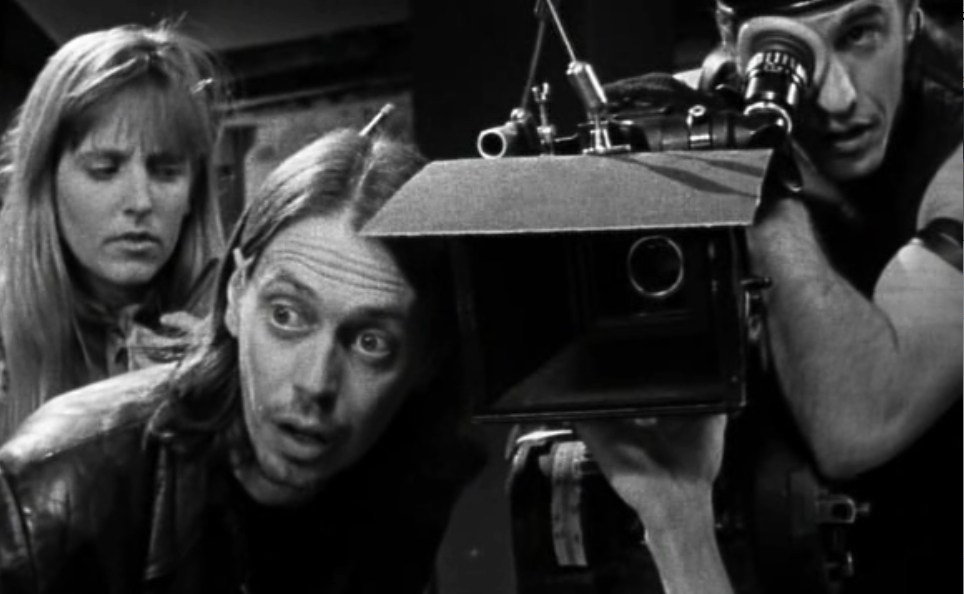
So instead, I recommend that you watch the trailer (much funnier than the movie) and then rent a really funny Peter Dinklage/Steve Buscemi movie – Living in Oblivion.  Real life indie director Tom DiCillo (Johnny Suede, Box of Moonlight) wrote Living in Oblivion about skating on the edge of disaster while making a very low-budget indie film.  Buscemi plays the indie director, who must deal with a narcissistic leading man (James LeGros), a low self-esteem leading lady (Catherine Keener), a pretentious and self-absorbed cameraman (Dermot Mulroney) and a dwarf actor with an attitude the size of Manitoba (Dinklage).  The screenplay is hilarious and the fine actors all nail their roles.  Watch and laugh.

LIVING IN OBLIVION

The Deep Blue Sea: a woman who loves too much

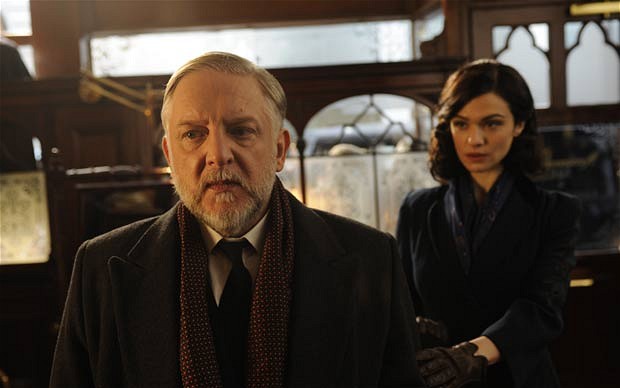
Simon Russell Beale and Rachel Weisz in THE DEEP BLUE SEA

In The Deep Blue Sea, an ordinary love triangle becomes a profound tragedy.   A woman (Rachel Weisz) leaves her affluent and prestigious older husband (Simon Russell Beale) for a younger man (Tom Hiddleston) who is more vital, but aimless, troubled and unreliable.  The younger man cannot match her love for him.

The fling is doomed.  The tragedy is that she knows it, but cannot help herself.  As with many addictions, her passion for him drives her to do what she knows is self-destructive.

The story is set is grim post-war London and director Terence Davies  vividly paints the period and place.

One magically evocative scene takes place in an underground station serving as a bomb shelter during the Blitz.  A man sings Molly Malone in a plaintive tenor, with his fellow Londoners joining at the chorus, as the camera slowly pans the train platform filled with people waiting out the raid.  In another scene, a pub is filled with singing patrons.   Everyone is having fun, sharing a moment of trivial conviviality, but Rachel Weisz is looking at her lover and having a moment of profound feeling.

Weisz is excellent, and all of her scenes with Beale are especially searing.  The Deep Blue Sea is well-crafted and deeply, deeply sad.

The Hunger Games: the harshest reality tv ever

Jennifer Lawrence in THE HUNGER GAMES

I was impressed by The Hunger Games, a well-paced, well-acted and intelligent sci-fi adventure fable for tweens – and for the rest of us, too.

Since I apparently live under a rock, I was unaware of the source material, the popular and acclaimed young adult fiction trilogy by Suzanne Collins. The only reason I saw The Hunger Games was to accompany The Wife, who had read the first Hunger Games book. I hadn’t even seen the trailer, so I went in totally blind.

The story is set in the future, where several generations after a rebellion, an authoritarian government plucks teenagers from the formerly rebellious provinces to fight to the death in a forest.  It’s all broadcast on reality TV for the entertainment of the masses.  Children killing children – it doesn’t get much harsher than that.

Jennifer Lawrence plays the heroine, a poor Appalachian girl who volunteers to compete in place of her little sister.  Lawrence starred in Winter’s Bone, my pick for the best movie of 2010.  Here she carries the movie with her performance as an incredibly determined and resourceful girl. Her character is completely candid and unfiltered.  This creates a moment that is all the more powerful when she has to pull off smarmy inauthenticity for an insipid TV interview.

Stanley Tucci is brilliant as the oleaginous reality TV host – it’s an Oscar-worthy performance.

The Kid with the Bike: a riveting and unsentimental story of unconditional love

The Kid with a Bike is an extraordinary film that tells a riveting story of unconditional love.  It is emotionally powerful without being sentimental and is gripping without stunts and explosions.

A 12-year-old boy wants to find the father who dumped him at a children’s home, but meets a woman who becomes his de facto foster mom.  In the face of overwhelming evidence, the boy refuses to acknowledge the possibility that his father doesn’t want him.  He becomes angry, acts out and is poised to make life-ruining choices.  His one chance in life is the woman who is drawn to caring for him, but he could alienate her, too.

The writer-directors, the Belgian brothers Luc and Jean-Pierre Dardennes, are two of my favorite film makers (The Son, Rosetta).  Their gift is minimalistic filmmaking that addresses fundamental themes like love, loss, forgiveness and belonging.  To avoid sappiness, they set their stories in gritty industrial towns and employ vividly realistic characters.  As all their work, The Kid with a Bike is an unvarnished and utterly realistic looking film.  This helps them create a fable about absolute goodness and the saving of another human being and present it in a credible, unsentimental and immediate package.

The Dardennes are known for their success with untrained actors, and here Thomas Doret is excellent as the kid – energetic, longing and single-minded.  The Belgian-born French star Cecille De France (Hereafter, The Spanish Apartment) is wonderful as the foster mom – steadfast but unknowable.  The compelling actor Olivier Gourmet (The Son, Rosetta, Mesrine) briefly appears in a bit part.

It’s one of the best films of the year.

Footnote: a comedy of awkwardness reveals two guys choosing misery

A rising Talmudic scholar sees his career-topping prize accidentally awarded to his grumpy father.  This potentially comic situation reveals a character study of the two men.  At the beginning, we see the father as bitterly sullen.  As the story peels back the onion, we see the pomposity and narcissism in both men.

As you would think from watching the trailer, the first two-thirds of the film is very funny.  In fact, the scene of an academic meeting in a cramped office is one of the funniest moments you’ll see in any movie this year.  However, once the father makes a discovery, the movie darkens as the two men miss every chance to grasp selflessness.

As the end of the movie nears, the filmmakers create tension that makes the ending too abrupt for me, with too little payoff.  I think that the filmmakers of A Separation, by winding down the end of the movie, created a much successful ambiguous ending.

I admired Footnote more than I liked it, and, indeed, the critical consensus warmed to the film more than I.  Footnote won the screenplay award at Cannes and was nominated for the Best Foreign Language Oscar.

Capturing the essence of the film perfectly, Roger Ebert wrote, “The Talmud provides guidance to Jews about how to lead their lives, but these two Jews have learned nothing that helps them when they find themselves in an impossible situation.”

Coming up on HBO: Hemingway and Gellhorn

HBO has released the trailer for Hemingway & Gellhorn, which will broadcast beginning on May 28.  It’s the story of Ernest Hemingway and his third wife Martha Gellhorn.   Gellhorn was a leggy blonde whose work as a war correspondent leading up to and during World War II eclipsed Hemingway’s.  She was also the only one of Hemingway’s wives to kick his butt to the curb.  Gellhorn is played by the leggy Nicole Kidman.  Clive Owen is Hemingway.

(A year ago, I had a drink at the Key West bar where Gellhorn had paid the bartender $20 to introduce her to Hemingway; I understand that the movie may move the bar to Bimini).

Hemingway & Gellhorn is directed by Philip Kaufman, one of the great American directors.  His masterpiece is The Right Stuff, the story of the Mercury astronauts.  But his remake of the sci fi horror classic Invasion of the Body Snatchers is also excellent.  And I just rewatched his art film about love and sex set in the Prague Spring of 1968 and its aftermath, The Unbearable Lightness of Being, and it still stands up.  That’s three top-rate movies in three different genres, an accomplishment few filmmakers can claim.

Kaufman lives in the Bay Area and shot Hemingway & Gellhorn’s Key West, Havana, Carnegie Hall, Finland, Germany and Spain scenes in San Francisco, San Rafael, Livermore and Oakland. Incidentally, earlier this year, Kaufman was in the house at Noir City this year for Bad Girl Night.

I’ve added Hemingway & Gellhorn to Movies I’m Looking Forward To.

Coming up on TV: Night and the City

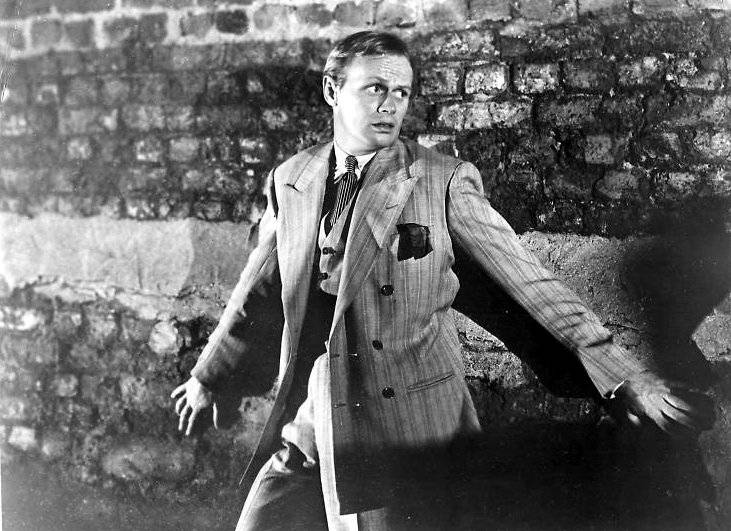
Richard Widmark running out of luck in THE NIGHT AND THE CITY

On March 25, Turner Classic Movies is showing the under appreciated film noir classic Night in the City (1950).  Richard Widmark is superb as a  loser who tries to corner the pro wrestling business in post-war London – and, as in any noir classic, it doesn’t end well for the sap.

The American director Jules Dassin had just made the noir classics The Naked City and Thieves’ Highway when he shot Night and the City in the UK.  He was blackballed in the McCarthy Era and never moved back to the US.

At the request of a studio exec, Dassin created a role in Night and the City for the stunningly beautiful but emotionally fragile Gene Tierney.  The cast also includes real life wrestlers Stanislaus Zbyszko and Mike Mazurki.

Night in the City (along with The Wrestler) represents wrestling on my list of Best Sports Movies., and there’s a clip of an extended wrestling scene from the movie on that page.  (Also, Dassin’s Brute Force makes my list of Best Prison Movies.)

Coming up on TV: Boomerang!

BOOMERANG!

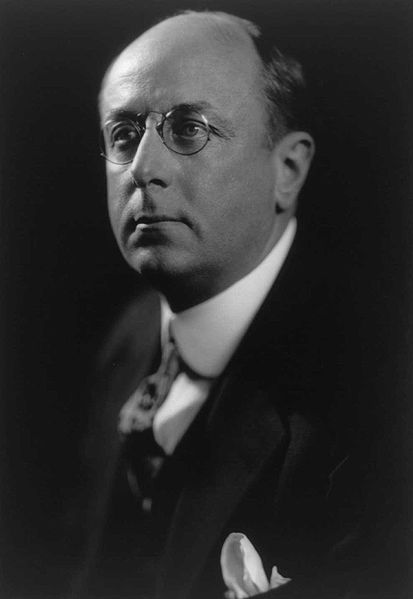
Having practiced law in my misspent youth, I often roll my eyes (or change the channel) when I see something in a courtroom movie that could NEVER happen in real life.  Watching Elia Kazan’s 1957 Boomerang!, I saw the same District Attorney convict a guy of murder, change his mind and then successfully prove the guy’s innocence.  Although scornful of the plot, I kept watching and was shocked to see that the ending credits claimed that this was a true story.  In disbelief, I looked it up and found that, indeed, while state’s attorney for Bridgeport, Connecticut, Homer Stille Cummings convicted – and then cleared – Harold Israel of the same murder!  Cummings then went on to become the Attorney General of the United States.

Once I got over my disbelief, I realized that Boomerang! is a pretty good movie.  It’s one of Elia Kazan’s very first features, just before Gentleman’s Agreement, Panic in the Streets, A Streetcar Named Desire, On the Waterfront, East of Eden, Baby Doll and A Face in the Crowd.

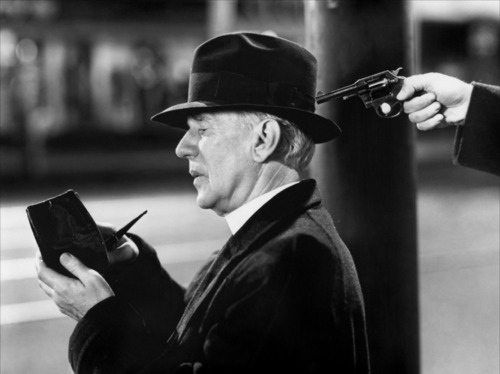
Boomerang! opens with a shocking scene – a man executes a priest with a pointblank gunshot on a busy downtown street and then melts away.  Dana Andrews plays the prosecutor and Arthur Kennedy is the hapless convicted guy.  The fine cast also features Lee J. Cobb, Ed Begley (in the first of his 103 screen credits) and (one of my favorites) Sam Levene.  Look for Karl Malden and Brian Keith in bit roles.

Turner Classic Movies is airing Boomerang! on March 22.

The real Homer Stille Cummings


Cinequest – Visible World: creepy, even for a voyeur movie

visible worldIn the unsettling Slovak film Visible World (Vidite ny Svet), the protagonist Oliver lives by himself in a high-rise apartment building and trains his binoculars on unsuspecting people in the high-rise across the street. The tag line is “There’s a man with binoculars at the window, watching the people across the street. And he’s definitely not James Stewart.”

It’s an uncommon voyeur film.  First, the voyeur isn’t looking at any bad behavior by the people across the street.  Second, although he is compelled to spy, he isn’t getting any apparent sexual kick out of what he sees.  Instead – and this is the really, really disturbing aspect – he is using what he sees to interfere with their lives – and to insinuate himself into their lives.

Most women like a guy who makes that extra effort to find out what she likes. But going through a woman’s garbage to see what products she uses – before he has met her – that’s pretty high up on the Creep-O-Meter.  “I like Chilean Carmenere.  You do, too? Imagine that!”

Oliver is played by Ivan Trojan as an extremely terse and focused guy, but one who can surprise the audience by putting on an act of affability to get what he wants. He is an odd duck, for sure – often rudely abrupt with people who wander between him and his obsessions.  But he is that unusually high functioning crazy who can hide how very, very sick he is.

I saw Visible World at its North American premiere at Cinequest 22.