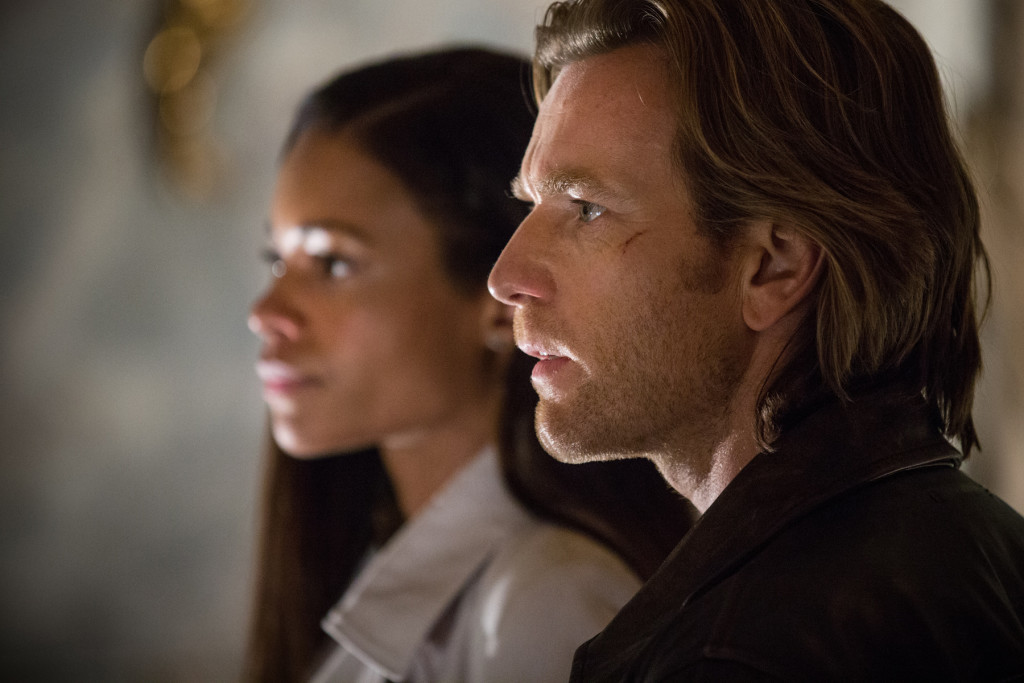
Naomie Harris and Ewan McGregor in OUR KIND OF TRAITOR. Photo courtesy of the San Francisco Film Society.
Our Kind of Traitor is a robust globe-trotting thriller, enlivened by a lusty Stellan Skarsgård and played out in a series of stunning set pieces. A meek Everyman (Ewan McGregor) is a tag-along on his high-powered wife’s trip to Cairo. Nursing a drink after a tiff with said wife (the sleek Naomie Harris from 28 Days Later… and a couple of Bond films), he is inveigled into joining a crew of partying Russians and becomes entangled in an intrigue that puts entire families at stake – including his own.
It turns out that our protagonist has been randomly plucked from the humdrum by Dima (Skarsgård), the top money launderer for the Russian Mafia, who is trying to get British intelligence to help his family escape from his murderous colleagues. The story having been adapted from a John le Carré novel, the dour British spy (Damian Lewis from Homeland) on the case is being hindered at every turn by a thoroughly corrupt British law enforcement and intelligence bureaucracy, with the rot reaching up to Cabinet level.
The very best thing about Our Kind of Traitor is Stellan Skarsgård’s performance. Dima is loud, flamboyant and profoundly course. Skarsgård has filled his career with brooding roles, but here he gets to play the life of the party, and he is hilarious – and steals the movie.
Our Kind of Traitor also looks great as it takes us from Russia (shot in Finland) to Cairo (Morocco) to Switzerland to London to Paris. Director Susanna White is a veteran (21 directing credits on IMDb), but Our Kind of Traitor is her first big budget action movie. The success of the film revolves around a series of spectacular set pieces, and White pulls it off masterfully.
Our Kind of Traitor isn’t as good as the best of his work (Tinker, Tailor, Soldier, Spy, for instance), but it’s damn entertaining. I saw the final four plot twists coming, but by then I was hooked, so I still enjoyed the film. And, adapting to the post-Cold War world, le Carré may have become even more cynical.
I saw Our Kind of Traitor earlier this year at the 59th San Francisco International Film Festival at a screening with director Susanna White. If you’re looking for an intelligent summer thriller for adults, this is your movie.
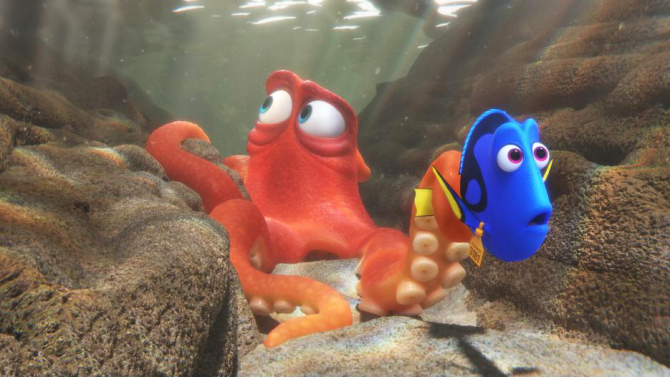
Finding Dory, the latest animated Pixar film, is built on characters from Finding Nemo. The memory-challenged fish Dory (Ellen DeGeneris) goes on a quest, aided by Nemo’s Dad Marlon (Albert Brooks). Pixar is exceptional for bringing depth of story to animated films, and the story here just isn’t up to snuff. It’s that tired trope about finding one’s parents, augmented with a nice message about acknowledging and overcoming one’s disabilities.
The cleverest part of Finding Dory is the new octopus character of Hank (voiced by Ed O’Neill of Modern Family). Hank is able to help Dory with his ability to change his coloring for camouflage, to fit through and into virtually every opening and to clasp objects in his tentacles. That allows for Dory to get thru a lot more plot devices and supplies lots of comic situations.
There’s also a very funny running joke involving Sigourney Weaver and another one with three sea lions on a rock. The dialogue and voicework are very good.
The animation in Finding Dory is high quality, but it’s not the Great Leap Forward animation that sometimes thrills us at Pixar films. The bottom line on Finding Dory is that it may not be a Must See, but it won’t be painful to sit thru twenty times with your small kids .
However, one of joys of Pixar is that they precede their features with short films, many of which (For the Birds, La Luna, The Blue Umbrella, Lava) are at least as good as the features. The short shown with Finding Dory is Piper, a tale about a young seabird’s first lesson in finding food in the surf. The animation in Piper is just exquisite; watch for the grains of sand, the feathers and down on the little bird and the above- and below-the-surf shots. Piper’s story is sweet, uplifting and funny and worth watching on its own.
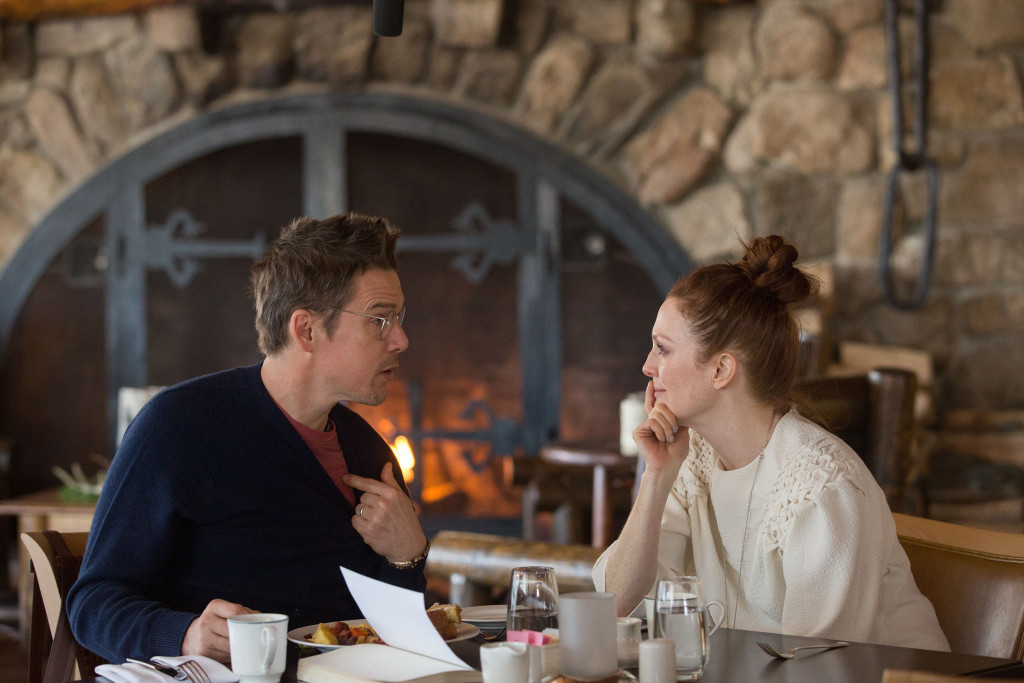
I only saw Maggie’s Plan because The Wife DRAGGED me to it, but I was surprisingly entertained by this amiable romantic comedy. A typically floundering mumblecore Millennial (Greta Gerwig) finds herself in an affair with an older man (Ethan Hawke). When she awakens to his relationship-killing self-absorption, she decides the ease the breakup by handing him back to his overachieving ex-wife (Julianne Moore).
Hawke, of course, excels in playing the unreliable man (Before the Devil Knows You’re Dead, Boyhood, Born to Be Blue). Gerwig (the reason I didn’t want to see this movie) is not nearly as annoying and tiresome as she has been to date in her career. But it’s Julianne Moore who really elevates Maggie’s Plan, along with Bill Hader and Maya Rudolph, who are hilarious in supporting roles. Aussie Travis Flimmer shows much promise in a very minor, but eye-catching role.
It all adds up to an amiable and satisfying rom com with a fresh twist.
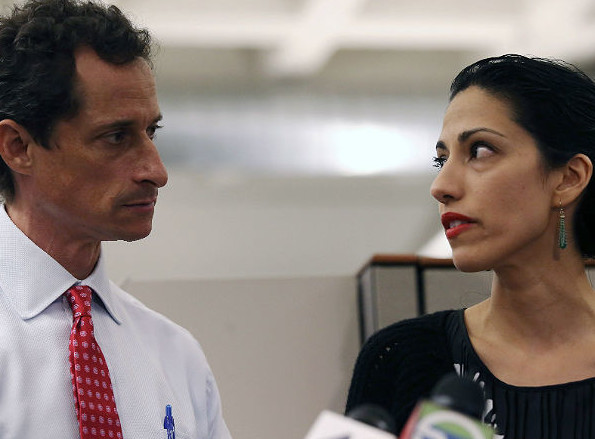
WEINER. Photo courtesy of San Francisco Film Society.
Don’t miss the political documentary Weiner, probably the best documentary of the year. It also provokes some reflection on the media in this age.
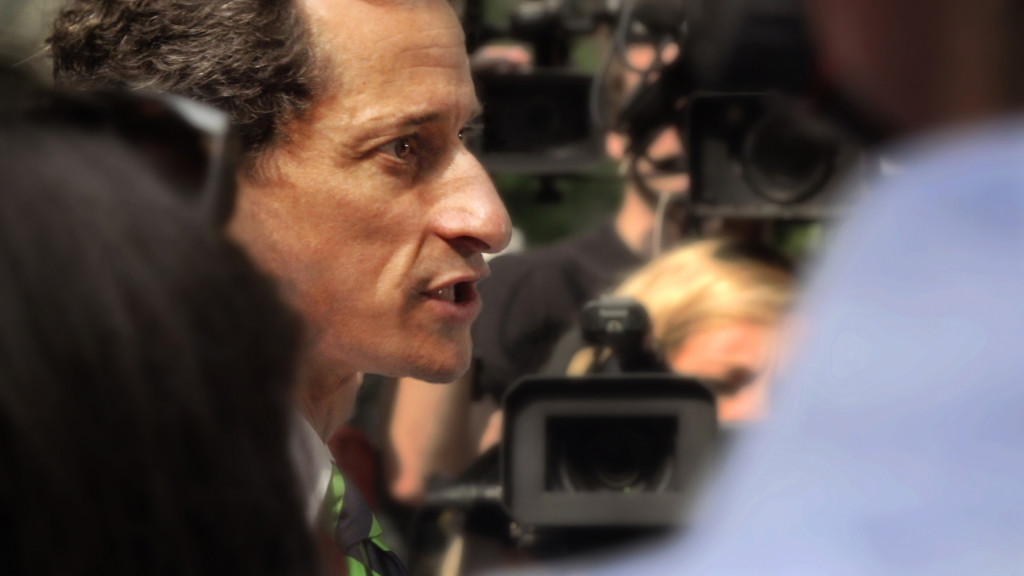
You may remember Anthony Weiner as the politician forced out of Congress in a sexting scandal. A couple of years later, he tried to make a comeback by running for mayor of New York City. Weiner is the inside story of that campaign, which self-immolated when the sexting scandal popped up again. Weiner is a marvelously entertaining chronicle of the campaign, a character study of Anthony Weiner himself and an almost voyeuristic peek into Weiner’s marriage to another political star, Huma Abedin.
Co-director Josh Kriegman served as Weiner’s Congressional chief of staff and left politics for filmmaking. When Weiner was contemplating the run for mayor, Kriegman asked to shadow him in the campaign, and Weiner agreed. Kriegman and co-director Elyse Steinberg shot 400 hours of backstage footage and caught some searing moments of human folly, triumph and angst.
In office, eight-term New York Congressman Anthony Weiner was a firebrand, pugnacious and a master debater with a vicious sense of humor, always eager to mix it up. He is married to Huma Abedin, a close Hilary Clinton advisor often described as “Hilary’s other daughter”. Huma is as reserved as Anthony is ebullient, and her own distinguished career in politics has been behind the scenes. He lives for the limelight, but she is uncomfortable in it.
Anthony begins his comeback with brutally painful media launch. The press is in a complete feeding frenzy – all revisiting the scandal and nothing else. One of the highlights of Weiner is a montage of talking heads reviling Weiner, including Donald Trump, who bellows, “We don’t want any perverts in New York City”.
But when Anthony goes on the campaign trail, the electorate begins to really respond to his passion and feistiness. Weiner unexpectedly surges into the lead 10 weeks to go. We are treated to a first-class procedural and see what only political pros see – the banal opening of a campaign office, rehearsing speeches, shooting commercials, dialing for dollars.
But then the scandal re-opens when a publicity-seeking bimbo releases a photo of Anthony’s penis that Weiner had texted her. We see his Communications Director as the new scandal unfolds in real-time, her eyes becoming lifeless; my day job for the last thirty years has been in politics, and I have gotten some bad news, but nothing like this.
Amazingly, we see Anthony calling Huma and telling her. When the screenshot of Anthony’s penis shot goes viral, we watch as Hums see it for the first time on the Internet, and her anger builds into rage. Anthony finally kicks out the camera.
Anthony Weiner and Huma Abedin in WEINER
New York Post prints headlines like “Weiner: I’ll Stick It Out” and “Obama Beats Weiner”. Anthony tells his shell-shocked and pissed off staff “nobody died”, but nobody’s buying it. Anthony has masterfully redefined himself to be more than the punchline once, but the second set of revelations make him indelibly a punchline – and no one can come back from that. From behind the camera, Kriegman plaintively asks Weiner.”Why did you let me film this?”.
Anthony’s pollster gives him the bad news: “There’s no path anymore to get to a runoff” and “So this is a solo flight”. The smell of death is about the campaign at the end, but Anthony is in “never quit” phase.
Anthony’s best moment is when he is obligated to face a hostile neighborhood meeting in the Bronx neighborhood of City Island. He knows that he is doing poorly there, and there aren’t many voters out there anyway, but he keeps his head high and delivers a courageous effort.
Anthony’s worst moment may be when he is re-watching himself in a mutual evisceration of a TV host on YouTube. He is relishing the combat, but Huma, behind him, is appalled by Anthony’s Pyrrhic victory. He smugly thinks that’s he won the verbal firefight, but Huma just says, “It’s bad”. She’s right.
I saw Weiner at the 59th San Francisco International Film Festival (SFIFF) at a screening with co-directors Josh Kriegman and Elyse Steinberg. Kriegman said that he “intended to show the humanity behind the headline – the nuance that is Anthony”. Steinberg noted that “the most exposed are the least revealed”. As of the SFIFF screening on April 23, Anthony Weiner had to date declined to watch Weiner. In Weiner, Anthony looks back after the campaign and ruefully sums it up, “I lied and I had a funny name”.
Weiner has more than its share of forehead-slapping moments and is often funny and always captivating. It’s almost certainly the year’s best documentary and one of best films of 2016, period.
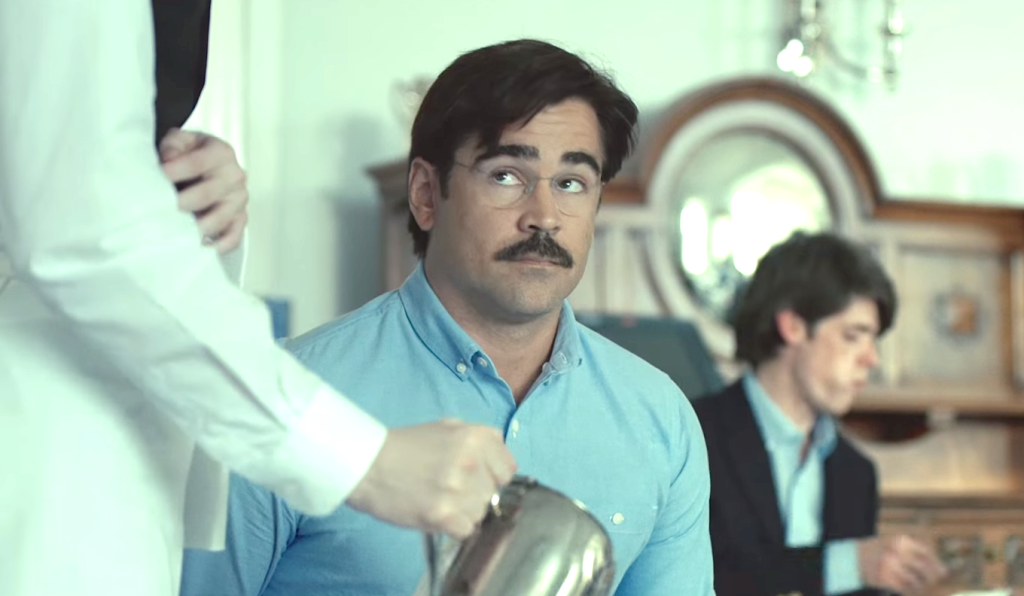
The Lobster, which is supposed to be a dark comedy, won the Jury Prize at last year’s Cannes Film Festival, along with acclaim at the Toronto and Sundance fests, so I had been eagerly awaiting it for just over twelve months. I had liked Director Yorgos Lanthimos’ Greek absurdist film Dogtooth. Unfortunately, The Lobster is a disagreeable misfire, which makes it the biggest movie disappointment of the year.
The Lobster takes place in an imagined world that looks like ours, but where being single is the worst status possible. Single people go to a woodsy resort hotel, where they are under a time limit to find a partner or be turned into the animal of their choice. After all, in the city, they are challenged by law enforcement to produce their most important form of identification – the certificate that proves they are in a couple. Guests at the resort go on daily hunts in the forest, where they shoot escaped single people – the Loners – with tranquilizer darts. (The Loners have their own monstrous leader (Lea Seydoux) and harsh rules.)
If a guest finds a partner, they enjoy a double room for two weeks and then a holiday on a yacht. The hotel manager (Olivia Colman) drily announces, that if the new relationship becomes troubled, “We will assign you children. That always helps.”
It’s all very deadpan. As the cast earnestly complies with ever more absurd rules at the hotel, The Lobster is darkly funny.
But then, The Lobster runs off its rails. We lose the drollery and find our way in a survivalist love story with Colin Farrell and Rachel Weisz, and then, into a what is essentially a horror ending. Inside all this mess is an allegory about society putting obstacles in the way of our reaching happiness through a love match. But it stops being funny, and starts becoming tedious and uncomfortable.
Colin Farrell leads a fine cast with Weisz, Colman, Seydoux and James C. Reilly. The failings of The Lobster are not their fault.
The first third of the The Lobster is amusing, and I hung hopefully with the second third. The final third is dark, without much, if any, leavening humor, and the last fifteen minutes is almost unwatchable. Stay away.
Here’s a delightful movie that you haven’t seen – the grievously overlooked romantic comedy Man Up. The British Man Up had a very brief US theatrical run last November that did not even reach the Bay Area. I suspect that’s because it doesn’t have any big name American stars. But it’s better than any other romantic comedy from 2015.
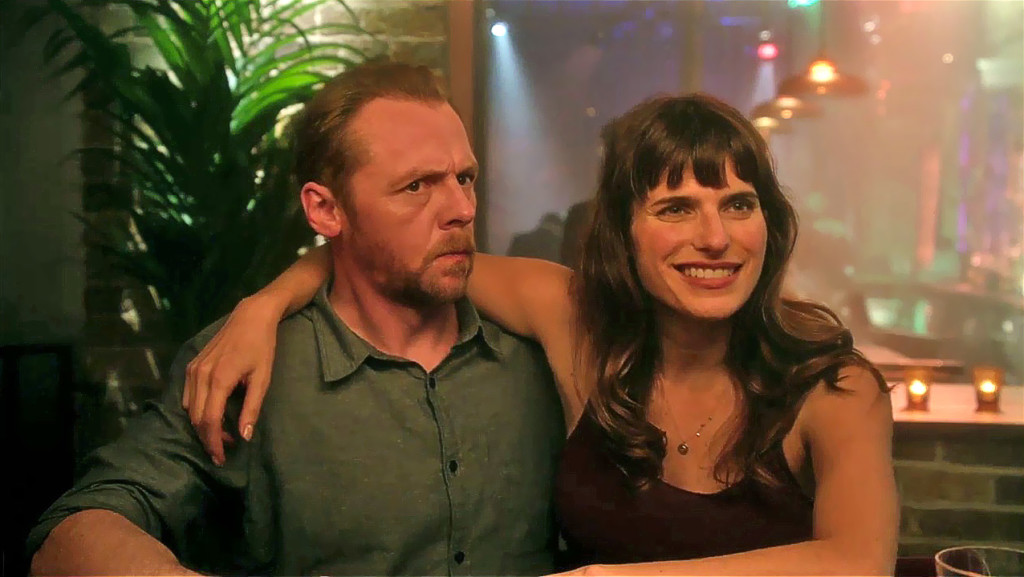
Nancy (Lake Bell) is on a four-year dating drought and has given up all hope when she inadvertently stumbles into a blind date meant for another woman. She’s intrigued with what she sees in Jack (Simon Pegg from Shaun of the Dead) and decides to impersonate his real date. As they get more and more into each other, the elephant in the room is when she will be exposed.
Like many of the best recent romantic comedies, Man Up was written by a woman, the British television writer Tess Morris. Again and again in Man Up, Morris authentically captures dating behaviors and female and male insecurities. Nervous at meeting Nancy, Jack just can’t stop talking; in a later date with someone who he’s not so much into, he checks off the same conversation points in a fraction of the time. Everyone who has dated will recognize himself or herself at some moment in this film.
The very talented Lake Bell wrote/directed/starred in the American indie comedy In the World…, which I really, really liked. Simon Pegg is a comedy star, and he’s very appealing here, but Bell has seriously good comedic chops.
Rory Kinnear, who you might remember as persistent but sensitive detective in The Imitation Game and as Tanner in the James Bond movies, plays an outrageously inappropriate admirer from Nancy’s youth.
Man Up is available to stream from Netflix Instant, Amazon, iTunes, Vudu, YouTube, Google Play and Flixster.
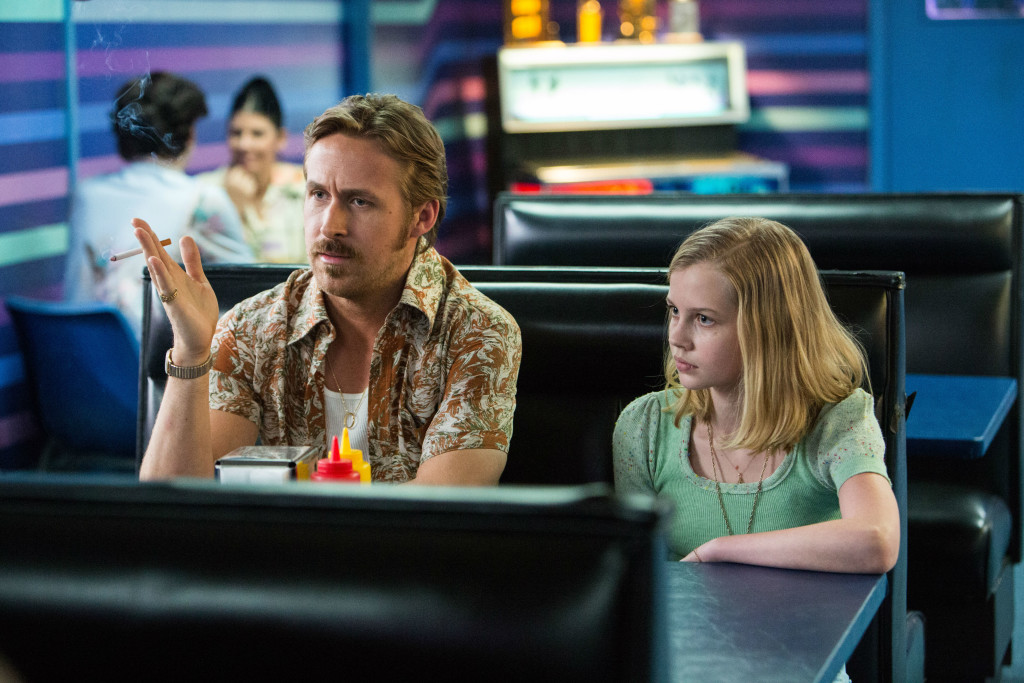
Director Shane Black created the Lethal Weapon franchise, so he is pretty much the Jedi Master of the mismatched cop buddy genre. His latest action comedy, The Nice Guys, is an entertaining romp through 1970s LA. Russell Crowe plays LA’s toughest goon – but a goon who is a man-of-his-word stand up guy. Ryan Gosling plays LA’s seediest private eye, a morally ambiguous drunk and and an epically unreliable single dad. Circumstances force them to work a mystery together, and the fun begins.
Ryan Gosling delivers a comic tour de force performance. His losing battle with the door of a toilet stall rates with the best work of Charlie Chaplin and Peter Sellers. He even delivers a reaction that’s a wonderful homage to Stan Laurel. Crowe turns out to be a very able straight man.
The MacGuffin that the guys are chasing is the print of a porn flick with an activist political message. The conspiratorial villain is Detroit’s US auto industry. The plot is so absurd that it’s actually a pretty fair parody of another genre – the paranoid political thriller. In a nice touch, the super scary evil hit man doesn’t look a bit like you would expect.
And then there’s the private eye’s child rearing habits, which today would prompt calls to Child Protective Services. Just like much of the fun in Mad Men is the interior smoking, day drinking and secretary-chasing, here we get to mock the capital I Inappropriateness of Gosling’s 1970s single dad. He lets his 13-year-old hang out at a vacant lot after dark and then accompany him to a drug-filled bacchanalian orgy.
That daughter is played by Aussie child actor Angourie Rice, who is just about perfect in this role. The last two-thirds of The Nice Guys becomes a three-hander with Crowe, Gosling and Rice.
Black takes us right back to the late seventies with more than just bad clothes, hair and music. We see gas lines, smog alerts, crawling freeways and pre-catylitic converter cars. Characters write checks, and there’s nary a cell phone.
The Nice Guys may not be deep, but it sure is funny. (And it sets up a sequel.)
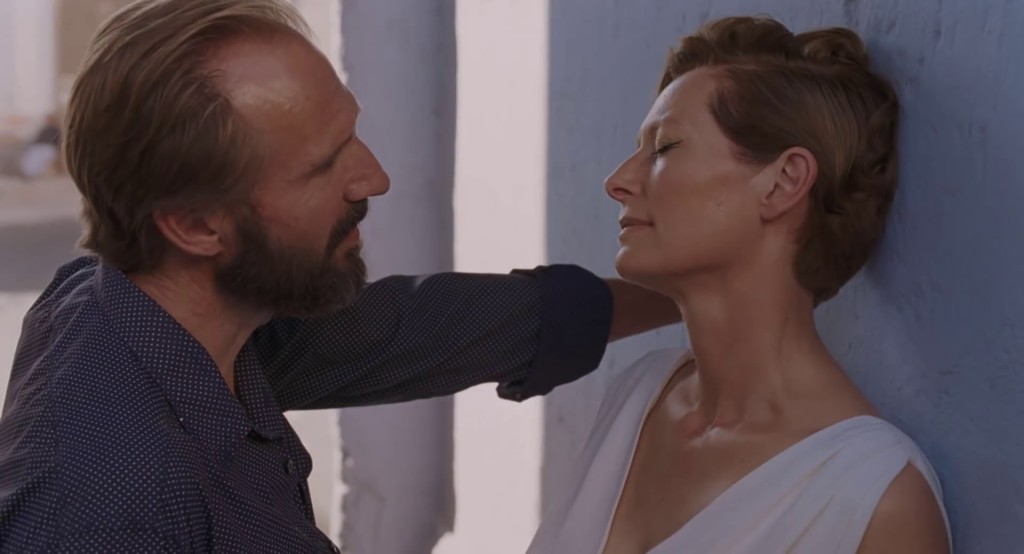
Ralph Fiennes and Tilda Swinton in A BIGGER SPLASH
Harry Hawkes (Ralph Fiennes) is the kind of guy who gives a bad name to joie de vivre. The ultimate disrupter, his gift is to seize all the attention, change any social situation into a party and take everyone else out of their comfort zones. In A Bigger Splash, he inflicts himself on his former rock star lover Marianne (Tilda Swinton), who is trying to enjoy a quiet romantic respite with her current lover Paul (Matthias Shoenaerts) on the secluded Italian island of Pantelleria. Enter Harry, exit solitude.
With only five minutes notice, Harry shows up, expecting to become a houseguest in Marianne and Paul’s borrowed villa. To make matters worse, Harry brings along his newly discovered daughter (Dakota Johnson), a highly sexual nymphet with eyes for Paul. And, and the first day, he invites two of his other friends to join them. Harry repeatedly tears off his clothes, starts everyone dancing (one of his dances is right up there in cinema history with the one in Napoleon Dynamite) and even turns a village cafe into an overflowing karaoke after-party. Because Marianne is recuperating from vocal cord surgery, she can’t talk, which makes Harry’s social intrusions even more unbearable.
Harry’s antics are very entertaining, and we watch with apprehension for the other shoe to drop – when are the others going to explode in reaction? Harry is also trying to insinuate himself back into Marianne’s bed, an intention apparent to the hunky/dreamy Paul, for whom still waters run deep.
This is Guadagnino’s first English language movie. He had a recent US art house hit with I Am Love, (also starring Swinton). I Am Love was notorious for its food porn, and there are tantalizing scenes in A Bigger Splash, too, with homemade fresh ricotta and a spectacular outdoor restaurant set amid hillside ruins.
Guadagnino’s greatest gift may be the sensuality of his films. Whether it’s food, a place or a social situation, he makes the audience feel like we’re experiencing it right along with the character. In A Bigger Splash, we start out as tourists in a hideout for the super rich, and then Guadagnino takes to us through a raucous comedy of manners to, finally, a suspense thriller.
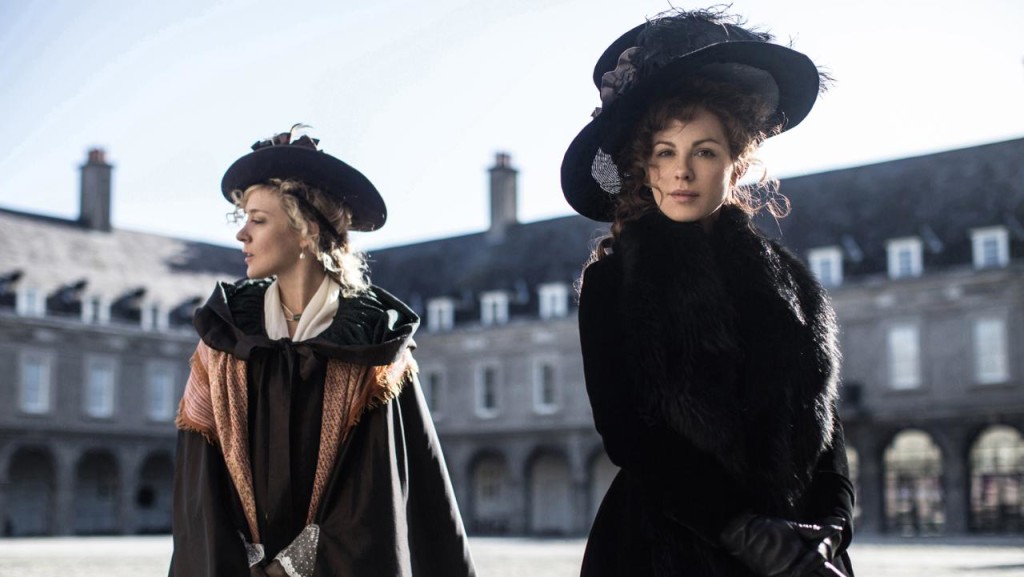
Chloe Sevigny and Kate Beckinsale in LOVE & FRIENDSHIP
Based on Jane Austen’s Lady Susan, the sharply witty Love & Friendshipcenters on the unabashedly amoral efforts by Lady Susan Vernon (Kate Beckinsale) to get exactly what she wants despite lack of resources and position.
Love & Friendship is filled with the 19th century version of “snappy dialogue” – old-fashioned wit. Mark Twain would have loved this movie. Much of the comes from Lady Susan’s clueless sense of entitlement and her unashamed and outrageous manipulation of the other characters. An unabashed moocher and deadbeat, she finds that, because her daughter’s school fees are “too high to even consider paying, it is actually an economy”.
It’s a pleasing turn from Kate Beckinsale at age 42, who has so often played ornamental movie roles. She first came to our attention at age 20 as the beauteous Hero in Kenneth Branagh’s Much Ado About Nothing, and broke through at age 23 by dominating the British indie Shooting Fish. After playing a bunch of less interesting roles, it’s great to see get a chance to really act in Love & Friendship.
Love & Friendship’s director is Whit Stillman, who debuted with two delightful indies from the world of old money Northeastern preppies. Metropolitan and Barcelona were talky and perceptive explorations of human nature, set in what usually is a less accessible and less sympathetic social set. (Unfortunately, he most recently made the dreadful Damsels in Distress with the always execrable Greta Gerwig.)
Right from the get-go, Stillman lets us know that he’s not taking this too seriously with self-mocking character introductions. In another nice touch, Stillman clads some of the male characters in noticeably ill-fitting clothes – something you never see in a movie from this period. It’s funny – and authentic, when you think about it.
In the funniest moments of the film, the enthusiastically dim Sir James Martin (Tom Bennett) takes twittery to new heights. Bennett, a British TV actor previously unknown to me, is quite a revelation. It’s always nice to see Chloe Sevigny, too, and she’s here playing Lasy Susan’s equally amoral American friend.
Although I did not see it there, Love & Friendship was the opening night feature of the 59th San Francisco Film Festival, and folks were still praising it in festival lines a week later.
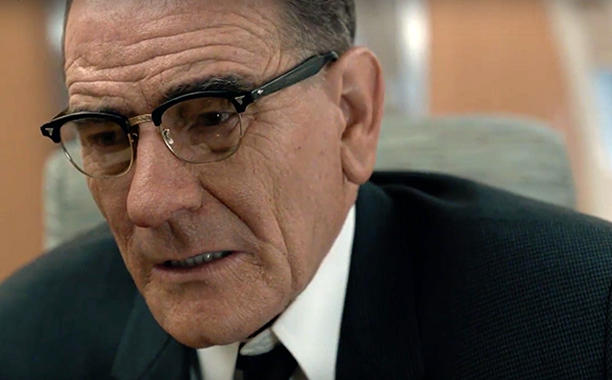
Lyndon B. Johnson, one of American history’s larger-than-life characters, finally comes alive on the screen in the HBO movie All the Way. Bryan Cranston (Breaking Bad, Trumbo) is the first actor who captures LBJ in all his facets – a man who was boring and square on television but frenetic, forceful and ever-dominating in person. All the Way traces the first year in LBJ’s presidency, when he ended official racial segregation in America with the Civil Rights Act of 1964.
LBJ was obsessed with gaining and keeping political power, and he was utterly ruthless and amoral about the means to do that. His tools of persuasion included deceit, flattery, threats, promised benefits and horse-trading. He was equally comfortable in playing to someone’s ideals and better nature as well to one’s vanity or venality. In All the Way, we see one classic moment of what was called “the Johnson treatment”, when LBJ looms over Senator Everett Dirksen, and it becomes inevitable that Dirksen is going to be cajoled, intimidated or bought off and ultimately give LBJ what he wants.
LBJ was so notoriously insincere that one of the joys of All the Way is watching LBJ tell completely inconsistent stories to the both sides of the Civil Right battle. Both the Civil Rights proponents (Hubert Humphrey and Martin Luther King, Jr.) and the opponents (the Southern Senators led by Richard Russell) must determine whether LBJ is lying and to whom. Each of them must make this calculation and then bet his own cause on his perception of LBJ’s real intentions.
But LBJ amassed power for two reasons – he needed to have it and he needed to do something with it. Along with the LBJ’s unattractive personal selfishness and the political sausage-making that some may find distasteful, All the Way shows that Johnson did have two core beliefs that drove his political goals – revulsion in equal parts to discrimination and poverty. We hear references to the childhood poverty that led to the humiliation of his father, to the plight of the Mexican schoolchildren in Cotulla, Texas, that he mentored as a young man, and his outrage at the discriminatory treatment suffered by his African-American cook Zephyr.
Bryan Cranston brilliantly brings us the complete LBJ – crude, conniving, thin-skinned, intimidating and politically masterful. Besides Cranston’s, we also see superb performances by Melissa Leo as Lady Bird, Anthony Mackie as MLK, Bradley Whitford as Hubert Humphrey and Frank Langella as Richard Russell.
All the Way is remarkably historically accurate. It does capsulize some characters and events, but the overall depiction of 1964 in US history is essentially truthful. As did Selma, All the Way drills down to secondary characters like James Eastland and Bob Moses. We also see the would-be scandal involving LBJ’s chief of staff Walter Jenkins, a story that has receded from the popular culture. Vietnam is alluded to with a reference to the Gulf of Tonkin incident, which is fitting since Vietnam grew to become LBJ’s nemesis and the national obsession only after the 1964 election.
All the Way was adapted from a Broadway play for which Cranston won a Tony. I saw three movies in theaters last weekend and none of them were as good as All the Way. LBJ’s 1964 makes for a stirring story, and All the Way is a compelling film. Seek it out on HBO.