PATERSON: inside a poet

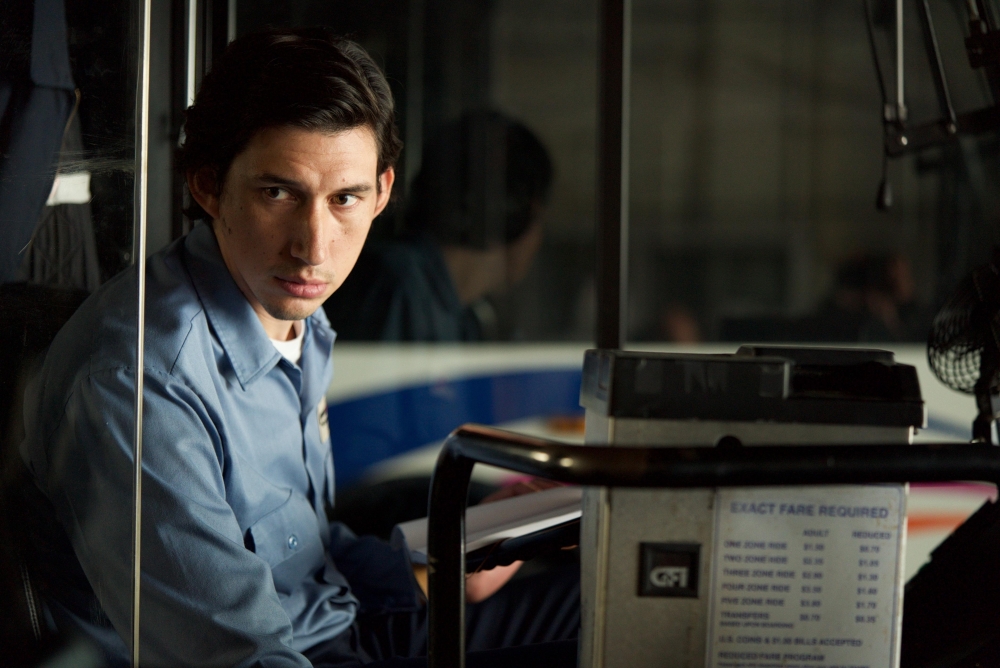
Adam Driver in PATERSON

In Jim Jarmusch’s Paterson, Adam Driver plays a Paterson, New Jersey, bus driver named Paterson.  Paterson is a poet, and, when you think about it, bus driver is a perfect job for someone who eavesdrops and observes, and who needs time to rework phrases in his head. Paterson the movie is a genial, occasionally very funny, portrait of an artist’s creative process.

There’s not much overt action or conflict in Paterson. Every morning Paterson awakes between 6:09 and 6:27 AM, kisses the cheek or naked shoulder of his girlfriend Laura and heads to the kitchen for coffee and Cheerios.  While his bus is warming up, he drafts and edits poems in his notebook until his supervisor appears at his bus.  After work, he walks home past old factories and straightens his leaning mailbox.  After dinner, he walks Laura’s bulldog Marvin and stops for exactly one beer at the neighborhood tavern. The bus, the bar and Paterson’s time going to and fro constitute the platform for his art: finding material for observation and for crafting and recrafting poems.

The city of Paterson is a perfect setting for this story. Paterson is not a tourist destination, and there doesn’t seem to be much interesting in the place that boasts of its memorial to Lou Costello. But a careful, open-minded observer like Paterson can revel in the beauty of the Great Falls of the Passaic River and find interest in all the dingy places and seemingly ordinary denizens.

Paterson doesn’t share any of his poetry, except VERY occasionally to Laura; in Paterson, he even chooses to quote her a poem from someone else when she asks for one of his. Laura (Golshifteh Farahani), a suitably kooky artist, is impractical and adorable, and obsessed with black and white. She seems as frivolous as Paterson is deep, but he is devoted to her, and she lightens his life and is the unrelenting cheerleader for his poetry.

Paterson is filled with sly humor, much coming from the antics of the regular folks that Paterson encounters, along with Laura’s goofiness. I particularly enjoyed the two guys on bus talking about women they think have hit on them and the knowitall college student posing as an anarchist. At my screening, wry chuckles kept erupting in the audience.

To make sure we’re paying attention (and enjoying the film on other levels), Jarmusch has filled it with patterns, with recurring themes like twins and secrets and with repeated phrases. Paterson meets three other poets – none anything like him and at the most unexpected locales.

For Paterson to work, an actor is needed who has the charisma to be interesting while acting very passively. Adam Driver is the perfect choice, and he is exceptional. I also really liked Barry Shabaka Henley as Doc, the tavern’s proprietor and bartender.

Not everyone will enjoy Paterson, but I did. A viewer needs to appreciate the juxtaposition of a routine exterior with an artist’s sometimes bursting inner dialogue. I recommend settling in and going for the ride.
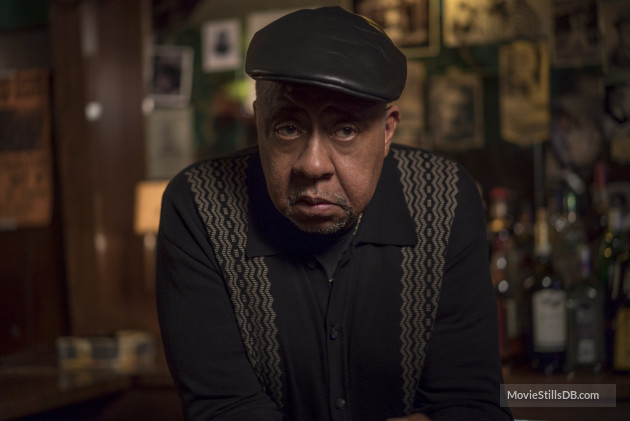
Barry Shabaka Henley in PATERSON

HIDDEN FIGURES: Woman Power, Black Power, Brain Power

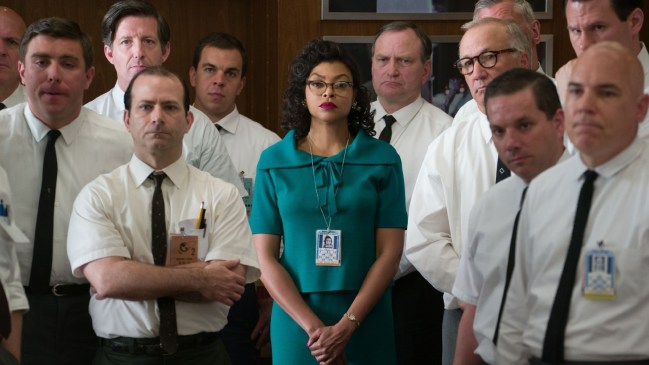
Taraji P. Henson in HIDDEN FIGURES

Hidden Figures tells the hitherto generally unknown story of some African-American women whose math wizardry was key to the success of the US space program in the early 1960s.  It’s pretty rare that someone can make a historical movie about something I had never heard of, but here we are.  The screenplay is based on real events, and we see the images of the real thee women at the end of the movie.  It’s a good story.

I had forgotten that engineers used to do even the complicated calculations by hand.  Indeed, lots of aeronautical engineering calculations were needed to send the first NASA astronauts into space, and this was before the government used mainframe computers, let alone handheld calculators.  So the answer was to have, for every room of (all male) engineers, a room full of women with the job title of “Computer” to do and check the math problems.

Hidden Figures’ heroines, including an authentic math prodigy and pioneer in computer programming, are perfectly played by Taraji P. Henson, Olivia Spencer and Janelle Monae (fresh from another acting triumph this fall  in Moonlight). Remember that these women had to overcome the automatic sexism of the Mad Men era.   On top of that, they were black women working in still-segregated Virginia.  And, just to make things even more difficult,  they were working for engineers, too!

The entire cast is excellent, especially Mahershala Ali (hunky and compelling yet again), Kevin Costner and Jim Parsons as a particular officious and sexist foil.

We see one of the first massive, room-filling but delicate IBM mainframe computers.  That, calling people “computers” and the use of the programming language FORTRAN all drew chuckles from the Silicon Valley audience at my screening.

Hidden Figures does an especially fine job in depicting the tension during John Glenn’s communications blackout.  Glenn’s space capsule had a problem with the heat shield.  When it re-entered the atmosphere, there was a period of a few minutes when Glenn’s communications went dead.  During this time (and I remember it well), everyone on the planet was watching on TV and no one knew whether the craft and Glenn were being consumed by a fireball or on the way to a successful splashdown.  Those moments were unbearable.

Hidden Figures is eminently watchable, but not a perfect movie.  There are some obviously over-dramatized and over-simplified segments.  I thought I heard a character – in this movie about math whizzes – refer to “an altitude of 116 miles per hour” (which should be either an altitude of 116 miles or a velocity of 116 miles per hour).  And John Glenn has hair even though, in real life, he was balding at the time (perform a Google Image search for “john glenn mercury 7” if you want to see for yourself).

But those flaws don’t detract from the core story, which is compelling.  The audience at my screening burst into applause, which doesn’t happen that often.

DVD/Stream of the Week: SEVEN CHANCES – Buster Keaton’s genius on the run

SEVEN CHANCES
SEVEN CHANCES

I thought that I knew the work of Buster Keaton, but somehow I had never seen Seven Chances.  It features a phenomenal chase scene that rates with the very best in cinema history – What’s Up Doc?, The French Connection, Bullitt!, Raiders of the Lost Ark and Keaton’s own The General.

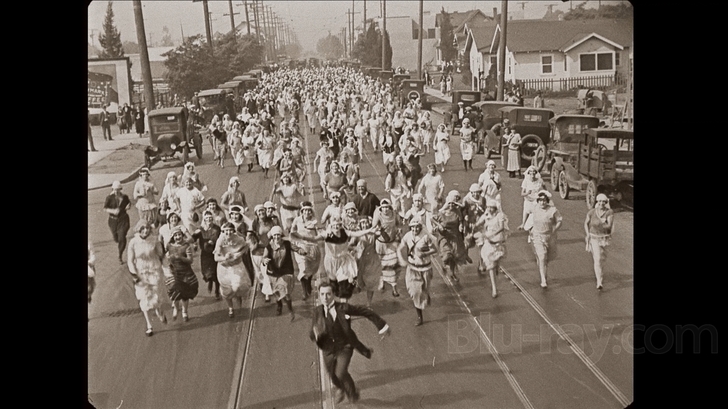
Keaton’s character publishes a public offer of marriage and gets way more takers than he can handle. There’s a very funny scene where he sits in a church to reflect on his situation and woman after woman seats herself next to and around him; he is oblivious to the fact that each of them is there to marry HIM.  The church fills up with prospective wives, and, 30 minutes into the movie, he flees, with a horde of veiled would-be brides in pursuit. The chase is on.

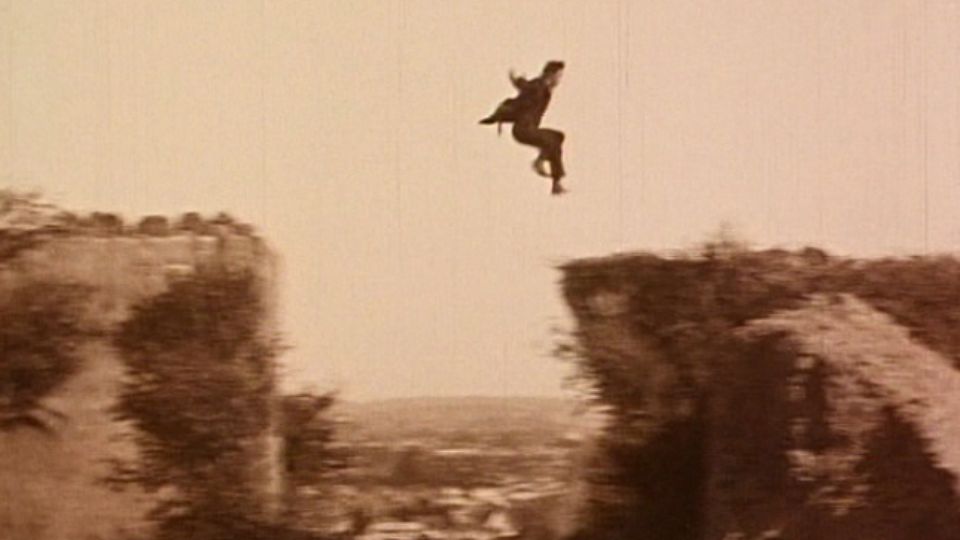
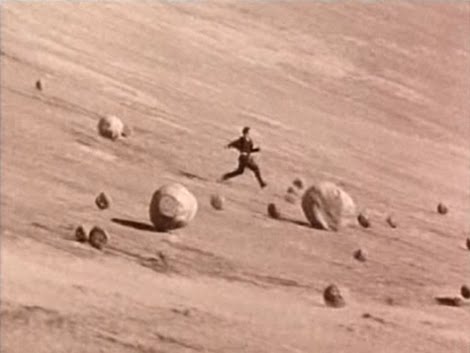
Keaton is off and running and running and running, in a ridiculously long sprint though the city’s downtown and rail yards and into the hills.  Amazingly, he did all of his own stunts, including leaping over an abyss and being swung around by a railroad crane.  His race with a cascade of falling boulders is pure genius.  You keep asking yourself, “How did they perform that stunt with 1925 technology?”

Keaton understood the comedic power of excess, and the sheer magnitude of the frustrated brides is hilarious   I think I can see the inspiration for the hundreds of crashing cars at the end of The Blues Brothers.

SEVEN CHANCES
Buster Keaton jumps the abyss in SEVEN CHANCES

When he made Seven Chances in 1925, Keaton was only 30 years old and had just directed his first feature two years before.  He had just made the classics Sherlock, Jr. and The Navigator in 1924.  He was about to make his masterpiece The General in 1926 and Steamboat Bill, Jr. in 1928.  Talking pictures changed the industry in 1929, and Keaton signed a disastrous contract with MGM in 1930.  Keaton was to direct only three more features in his career (all unaccredited).  MGM took away his artistic freedom, and no studio kingpin knew what to do with him in the talking era.  Keaton took to drink and went dark for decades.

I watched all 56 minutes of Seven Chances once by myself and the final 26-minute chase scene again with my wife and nephew.  I viewed Seven Chances on Turner Classic Movies. It’s also available to rent on DVD from Netflix and to stream on Amazon Instant.  You can also find the entire film, probably as an illegal bootleg, on YouTube.

SEVEN CHANCES
The race with the boulders in SEVEN CHANCES

LIVE AT THE FOXES DEN: a lame vehicle for a Twilight star

foxes den
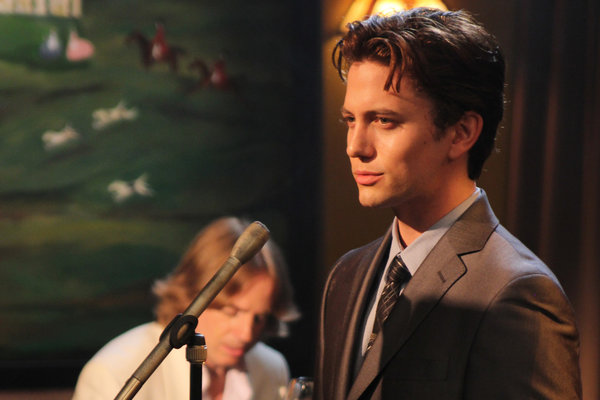
In Live at the Foxes Den, a disillusioned young lawyer leaves the pressures from his law firm and his bitchy princess of a girl friend and becomes the lounge singer at a downscale tavern.  It’s a vehicle for Twilight star Jackson Rathbone, whose voice is indeed good enough to play a member of the Parisian mob in Les Miserables.  Unfortunately, the story’s arc is pretty predictable, and it’s completely unbelievable that this guy is a promising lawyer.  Screenwriter Jack Holmes wrote the best role for himself as the tavern’s bitter alcoholic house pianist.

Pretty lame overall, Live at the Foxes Den might be worth streaming just so you can fast forward to one subversively funny scene, where the pianist disrupts an AA meeting with an infectious rendition of What Do You Do with a Drunken Sailor.

Live at the Foxes Den is available streaming from Amazon (free on Amazon Prime), iTunes and Vudu.

DVD/Stream of the Week: THE RUSSIANS ARE COMING! THE RUSSIANS ARE COMING!

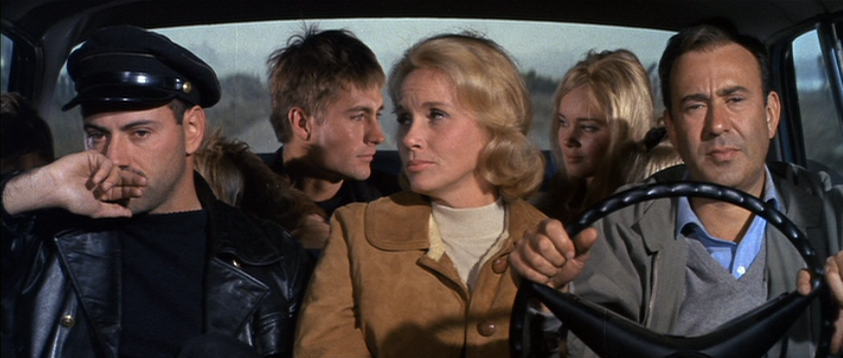
Alan Arkin, Eva Marie Saint and Carl Reiner in THE RUSSIANS ARE COMING! THE RUSSIANS ARE COMING!

One of my favorites comedies is the still timely satire on the Duck and Cover Era, the 1966 The Russians Are Coming! The Russians Are Coming!.  At the height of the Cold War, a Soviet nuclear submarine runs aground and is trapped just off a tiny New England coastal village, and the crew sends a party ashore to heist a boat. The landing party encounters a vacationing American family and the two groups must work together to find a solution to help the sub escape without igniting World War III.

The superb cast includes Carl Reiner, Eva Marie Saint, Jonathan Winters and Alan Arkin in his breakthrough performance. Although it primarily satirizes the paranoia of the Cold War, there are plenty of laughs sparked by small town New England, family dynamics, teen love and the recurring joke of the town drunk with his reluctant horse.

I watch The Russians Are Coming! every other year or so, and it still holds up.  Besides showing regularly on Turner Classic Movies, The Russians Are Coming! is also available to streaming from Amazon, AppleTV, Vudu and YouTube.

LA LA LAND: romantic, vivid and irresistible

LA LA LAND
LA LA LAND

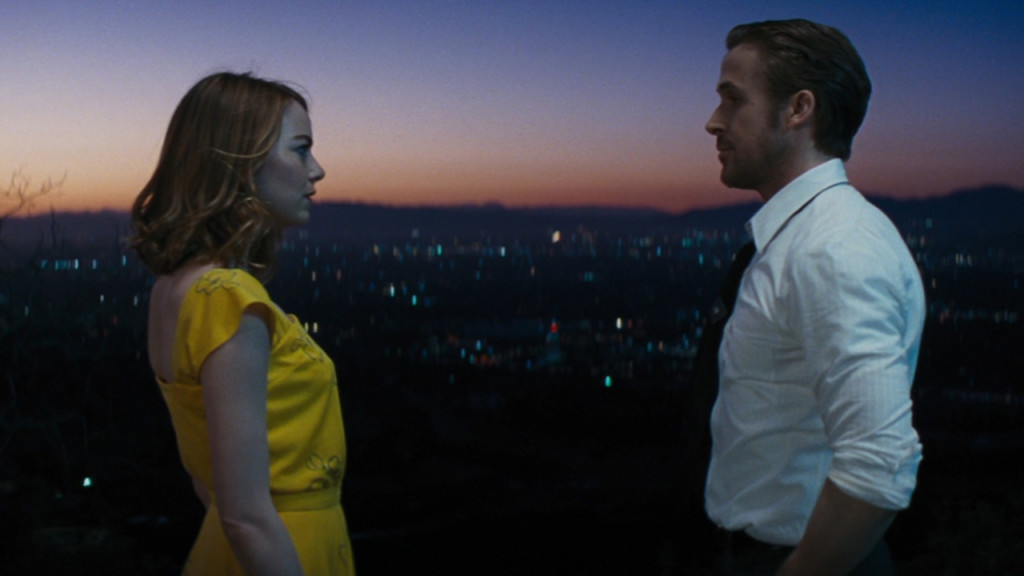
There’s a profound love story at the heart of La La Land, and it’s told with extravagant musical, visual and acting artistry. In dazzling performances, Emma Stone and Ryan Gosling star as struggling artists (actress and jazz pianist) in contemporary Los Angeles who meet and fall in love. Neither the actress or the musician can buy a break in their careers, and the tension between sticking to their passions and compromising for popular success will determine the future of their relationship. They can’t resist each other, and we, the audience, can resist neither them or La la Land.

Emma Stone and Ryan Gosling are Movie Stars in the best sense of the phrase.  Each has a special charisma before a camera; we are driven to watch them and to sympathize with them.  There’s a scene when Stone’s character is dining with another man, hears background music that reminds her of Gosling’s and runs to join him at the Rialto Theatre; it’s as authentically romantic as any scene in any movie.  When Gosling’s character lashes out and says something hurtful, the expression in Stone’s eyes is absolutely heartbreaking.

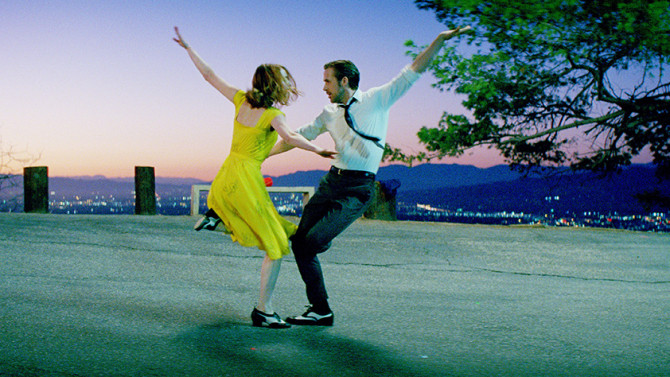
La la Land employs music and dance to tell its story in as immersive an experience as in the great 1964 French drama The Umbrellas of Cherbourg.  The original music by Justin Hurwitz (Whiplash) is excellent.  John Legend co-stars as the leader of an emerging band. The dancing in La La Land is the real thing – we see the full bodies dancing like we did with Fred Astaire and Gene Kelly – no phony close-ups and quick cuts.

They are no Fred and Ginger, but Gosling and Stone dance well enough; Gosling started out as a Mouseketeer, after all.  Gosling’s voice is not strong, but it’s pleasing (think Chet Baker).  Stone finally gets to really belt one out near the finale.

Gosling plays the piano – really plays it – magnificently.  Liz Kinnon is credited as Gosling’s piano teacher/coach – and she must have done a helluva job.

All of this comes from writer-director Damien Chazelle,  a 31-year-old guy from Rhode Island who most recently made Whiplash.  Chazelle has served notice that he’s a remarkable talent.

Chazelle’s use of vivid colors is at the core of La La Land’s hyper-stylized look.  Right in the opening scene, notice the colors of cars in the opening traffic jam and then the colors of clothes on the motorists that burst into a production number.  Carried throughout the movie, Chazelle’s use of the color palette made me think of the films of Pedro Almodovar.  The production design is by David Wasco, who has worked on six Quentin Tarantino films and movies ranging from Rampart to Fifty Shades of Grey.  It’s one of the best-looking movies in years.

LA LA LAND
LA LA LAND

As befits its title, La La Land is a love letter to Los Angeles.  We see locals doing the tourist thing, which I think is very cool, as the stars take in the Watts Towers and the Angels Flight Railway.  In a joint homage to LA and to the movies, our lovers watch Rebel Without a Cause at the Rialto and then sneak in the Griffith Observatory after dark themselves.

La La Land’s epilogue is as wistful and emotionally powerful as the storied snowy one in The Umbrellas of Cherbourg. This fantasy montage is the emotional climax of La La Land and perhaps its cinematic highlight.

It’s worth noting that golden age of movie musicals was when the Greatest Generation enjoyed them as a diversion from the Depression and world war.  We’re well past the apex of movie musicals, but, every so often, a musical arrives at a moment when we are ready to embrace one (Grease, Fame, Flash Dance, Chicago).  Now – after the election campaign of 2016 and as the new administration prepares to take over the government – is such a moment.

La La Land is a profound love story, exquisitely told with music, dance and superb acting.  It’s a landmark in cinema and one of my Best Movies of 2016.

OJ: MADE IN AMERICA: finally, the sensational story stripped of the sideshow

oj-made-in-america
OJ: Made in America
has been showing up on lots of critic’s year-end lists.  I hadn’t thought of putting it on my Best Movies of 2016 because it’s an eight-hour ESPN documentary series, I hadn’t hadn’t thought of treating it as a movie, but I will now because it’s good enough to merit it.

I remember the OJ saga with distaste because it became a sideshow – the Bronco ride, the Trial of the Century, the bloody glove (“if it doesn’t fit, you must acquit”), Kato Kaelin, Judge Lance Ito and the seemingly unfathomable verdict.  The genius of director Ezra Edelman is that OJ: Made in America rights a media wrong by keeping a laser focus on the crime itself  and setting out the societal factors that explain how this all went so far off track.  The sideshow elements are shown to be what they really were – distractions from the greater truth of a domestic violence murder.

OJ: Made in America is an unflinching look at a marriage that disintegrated because of chronic domestic violence, and then evolved into a terrifying stalker situation.  We also see glimpses of crime scene photos, grisly but not exploitative, that reinforce the gravity of the crime.

With more clarity than in any other film treatment of this case, we see OJ Simpson’s abandonment and even rejection of the African-American community and of his own racial identity – “I’m not Black, I’m O.J.”.  We see OJ creating a new community for himself of wealthy white men and refusing to perform advocacy, fundraising or even lending his name for African-American causes.  And so we are left with the sickening irony of OJ becoming a posterchild for black victimhood and a rallying point for resistance to white oppression.

To set the stage for the trial, Edelman shows us the historic racist oppression by the LAPD and the missteps by prosecution that created an environment that the legal team for a celebrity could exploit.  Through file footage and talking head witnesses, Edelman takes us through the trial to explain the critical choices that resulted in the verdict.  Finally, we see the surveillance video of the bumbling, thuggish crime that OJ is now imprisoned for.

OJ: Made in America benefits from an impressive group of witnesses, including prosecutor Marcia Clark, detective Mark Fuhrman, defense lawyer Barry Scheck, DA Gil Garcetti, former OJ confidantes Ron Shipp and Mike Gilbert and Nicole Brown Simpson’s sister.

ESPN, with its reliably solid 30 for 30 series, is, along with PBS and HBO, one of the most prolific sources of excellent documentaries.  With OJ: Made in Americas, ESPN has produced one of the top three or four documentaries of the year.

The trailer is on the film’s homepage. You can watch the entire movie on ESPNWatch and on some other streaming platforms such as iTunes and Hulu.

MIFUNE: THE LAST SAMURAI: an icon’s life and times

MIFUNE: THE LAST SAMURAI

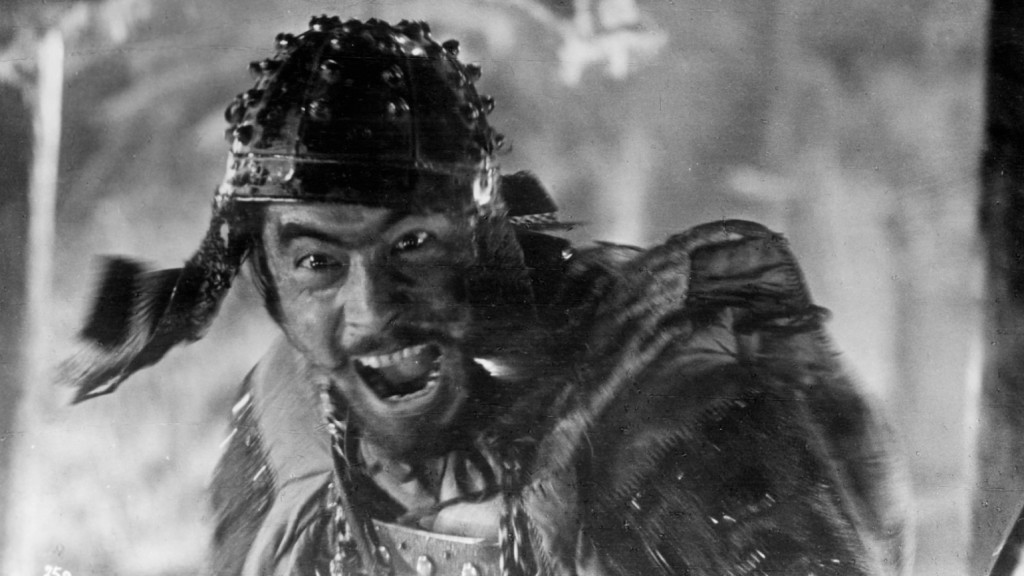
The documentary Mifune: The Last Samurai profiles the iconic Japanese actor Toshiro Mifune.  Mifune was director Akira Kurosawa’s essential collaborator and the star of the cinematic masterpieces Rashomon, Seven Samuari and Yojimbo.  In those films, along with  The Hidden Fortress, Throne of Blood, Sanjuro and Red Beard, Kurosawa and Mifune re-invented and elevated the samurai genre.

The title “Rashomon” has become a noun in every language for the telling and retelling of the same story from different points of view. Seven Samurai was remade as The Magnificent Seven and Yojimbo as A Fist Full of Dollars.  (Kurosawa and Mifune also made some brilliant Japanese film noirThe Lower Depths, High and Low, The Bad Sleep Well, Drunken Angel, Stray Dog – that are NOT discussed in Mifune: The Last Samurai.)

What Mifune brought these films was an irreplaceable vitality.  One of the great prototypes for “strong and silent” screen actors, his physicality made his characters powerful, even forces of nature.

Director Steven Okazaki wisely makes Mifune: The Last Samurai a “Life and Times” with a survey of Japanese cinema history with importance of period swordfighting movies (called chanbara after the sound of swords).   Besides tracing Mifune’s own personal history (he was born and raised in Chine, which I certainly didn’t know), Okazaki explores wartime and postwar Japan society.

Okazaki also brings us witnesses of Mifune’s life, including his son, Kurosawa’s son and many Mifune son and costars.  There’s even a sword fight choreographer who played over 100 movie characters killed by Mifune.  The talking heads are rounded out with Martin Scorsese and Steven Spielberg.

There are plenty of cool insights like how the dangerous death scene in Throne of Blood (where Mifune is shot by hundreds of arrows) was filmed on the cheap with college student archers – and uninsured!

Despite their long partnership and historic successes, Mifune and Kurosawa never made another movie together after Red Beard in 1965, although the two lived another 32 years.  That is addressed, but not answered in Mifune: The Last Samurai; initially, I found that unsatisfying, but now I find it even more interesting that their sons and closest confidantes don’t know the reason.

I recommend Mifune: The Last Samurai for those who are interested in Mifune, Kurosawa or cinema generally.

THE EAGLE HUNTRESS: girl power in traditional Mongolia

THE EAGLE HUNTRESS
THE EAGLE HUNTRESS

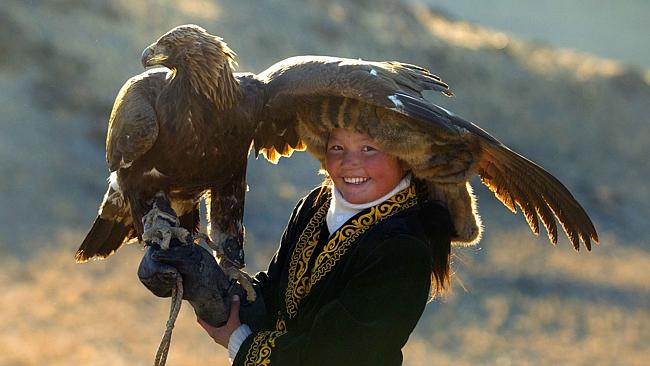
The documentary The Eagle Huntress is a Feel Good movie for the whole family, blending the genres of girl power, sports competition and cultural tourism. A 13-year-old girl in traditional (read “sexist”) Mongolian culture embraces hunting with an eagle. (It’s very funny when bitter old guys make excuses for losing a competition to a girl.) It’s also, at its heart, a heart-warming dad-daughter movie, as the girl’s father supports and encourages her at every moment.

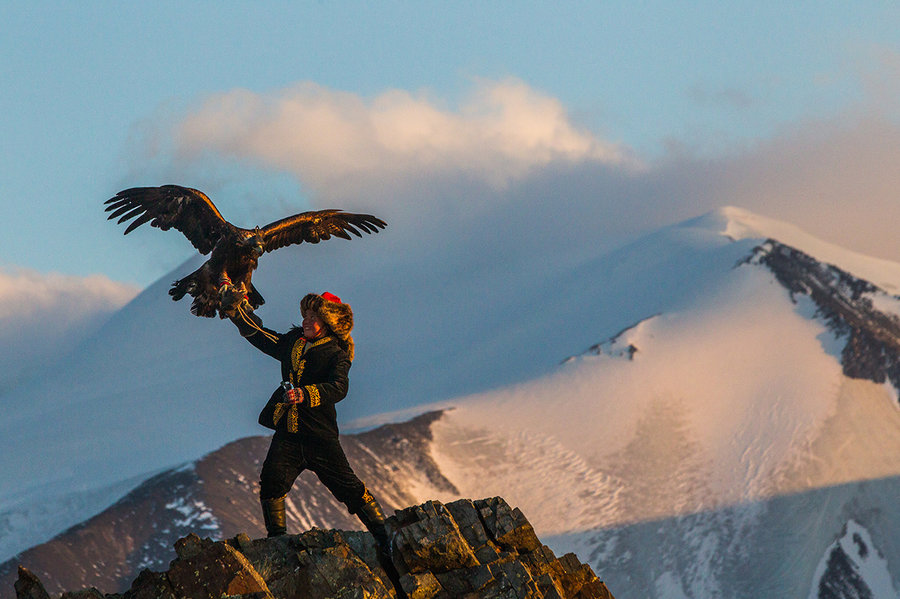
Now, to eagle hunting. Instead of walking off with a rifle over shoulder, one rides off with an EAGLE on your right forearm, heading miles into impossibly barren mountains where the temperature can get to -40 degrees Fahrenheit. When it’s not winter, you can’t see anything growing on the terrain. When it is winter, the horses almost skate on the treacherous ice. When one spots a fox out in the open, one takes the hood off the eagle’s head so the eagle can soar high in the air before diving down to the fox. The eagle and fox, whose bodies are about the same size, fight it out, and the fox, a predator itself, has a chance. Very Discovery Channel.

Eagles are big, although their legs look surprisingly skinny when dangling in flight. I’ve seen Bald Eagles in Alaska, where they will routinely snatch and haul off a 20-pound salmon from the river. And I’ve seen Golden Eagles just south of Silicon Valley. I can’t imagine having one sit on my forearm all day – I haven’t done enough curls in my whole life to hoist that weight.

The Mongolian culture and terrain and the eagle hunting in The Eagle Huntress are all pretty impressive and easy to watch.

THE EAGLE HUNTRESS
THE EAGLE HUNTRESS

JACKIE: dreary and somnolent

Natalie Portman in JACKIE

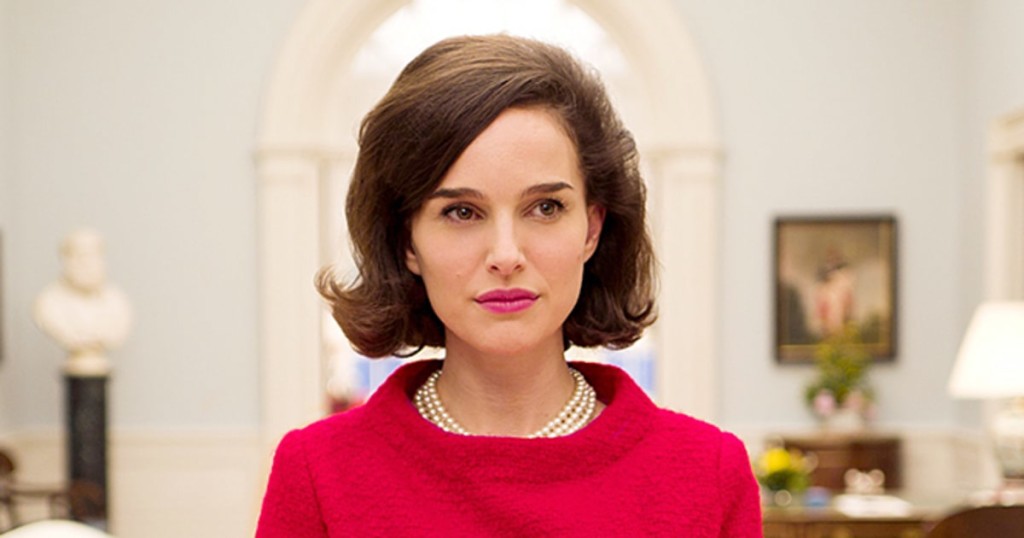
If you put a Chanel suit and pillbox hat on Natalie Portman and direct her to speak breathily, you’ve got Jackie Kennedy, which is noteworthy, but not enough reason to see the dreary Jackie.  Portman superbly paints the portrait intended by director Pablo Larrain (No), but that vision is unconvincing and not at all compelling.

Larrain’s thesis is that Jackie moved from shocking grief to a fierce determination to enhance her husband’s legacy in the three days after the assassination, intentionally creating the brand of “Camelot”.  He interweaves three stories: the assassination and funeral, Jackie’s later Hyannis Port interview with journalist Theodore H. White and a re-enactment of the First Lady’s televised White House tour.

Despite a remarkable impersonation by Portman, none of this really works.  Jackie ranges from dreary to gloomy, and in case we forget, we’re prodded by an intrusive score of sad, really sad discordant music.   One can imagine several cellists committing suicide after performing this score.

The real Jackie was bred to be a docent, and her confident White House tour was a television triumph.  Yet Jackie’s Jackie acts like she needed one more Xanax to make it through without a breakdown.  I didn’t believe Jackie’s bitter cat-and-mouse with the journalist, either.

Portman is exceptional at playing the on-top-of-the-world celebrity First Lady, the stunned and shattered victim and the laser-focused widow.  John Hurt is excellent as a consoling priest.  Greta Gerwig plays Jackie’s confidante Nancy Tuckerman, and manages  to avoid blame for ruining a movie by herself for the first time.  This is not the actors’ fault – it’s Larrain’s.

I’ll describe a movie with the word “somnolent” for the first time on this blog because I actually did drift off to sleep twice.  It would have been just once, but The Wife prodded me awake both times.

[SPOILER ALERT:  Bad history in historical movies enrages me, and there are two examples that appear in the last ten minutes of Jackie.  First, as Jackie is preparing to move out of the White House, we see Ladybird Johnson actually fingering the fabric for new curtains, which CERTAINLY did not happen for a variety of reasons, chief among them being that Ladybird was too decent.  Second, we see a flashback of JFK spinning Jackie around a White House dance floor like a polka king; of course, JFK’s chronic back condition did not allow him to move like that.]