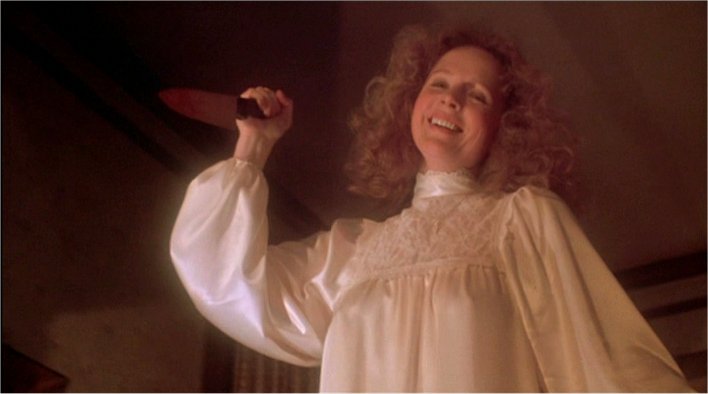
Mother’s Day is coming up, so I’ll trot out my list of Worst Movie Mothers. Piper Laurie played one scarily twisted mom in Carrie, but she’s only Number Four on my list. Note: some readers have found this list very unpleasant.
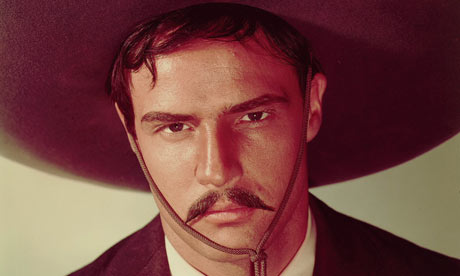
In honor of Cinco de Mayo, here’s 10 Least Convincing Mexicans, my list of the ten least convincing portrayals of Mexicans and Chicanos in film history. In Viva Zapata, Marlon Brando (above) proves that he can mumble with a Mexican accent. But Marlon is only 10th on the list!
After suggesting Franco Zeffirelli’s Romeo and Juliet for Valentine’s Day and commenting on the current release Coriolanus, I decided to make a list of Best Shakespeare Movies. You may be surprised at who makes my list – and who doesn’t.
Filmmakers have advantages not available to Shakespeare. They can depict realistic combat in the battle scenes. They can add sex and nudity to romance. And they can enhance Macbeth‘s witches and visions with trippy special effects.
The actor and director Kenneth Branagh is the best modern interpreter of Shakespeare (and shows up on this list three times). Branagh gives us a Henry V that is not just a Dead White Guy, but a young and impulsive king, fueled more by personal ambition and testosterone than national interest. Here is Branagh’s charismatic St. Crispin’s Day speech from his Henry V.
(Note: I’m saving room for some films that I haven’t yet seen, especially Roman Polanski’s Carnage and Ralph Fiennes’ Coriolanus.)
You can watch the trailers and see my comments on all these films at Best Movies of 2011.
According to Metacritic, all of my picks (except The Adjustment Bureau) were highly rated by prominent critics. I did disdain some art films, most notably The Tree of Life, which made lots of critics’ end-of-year lists. See 2011 in Movies: biggest disappointments, which I’m posting on Tuesday.
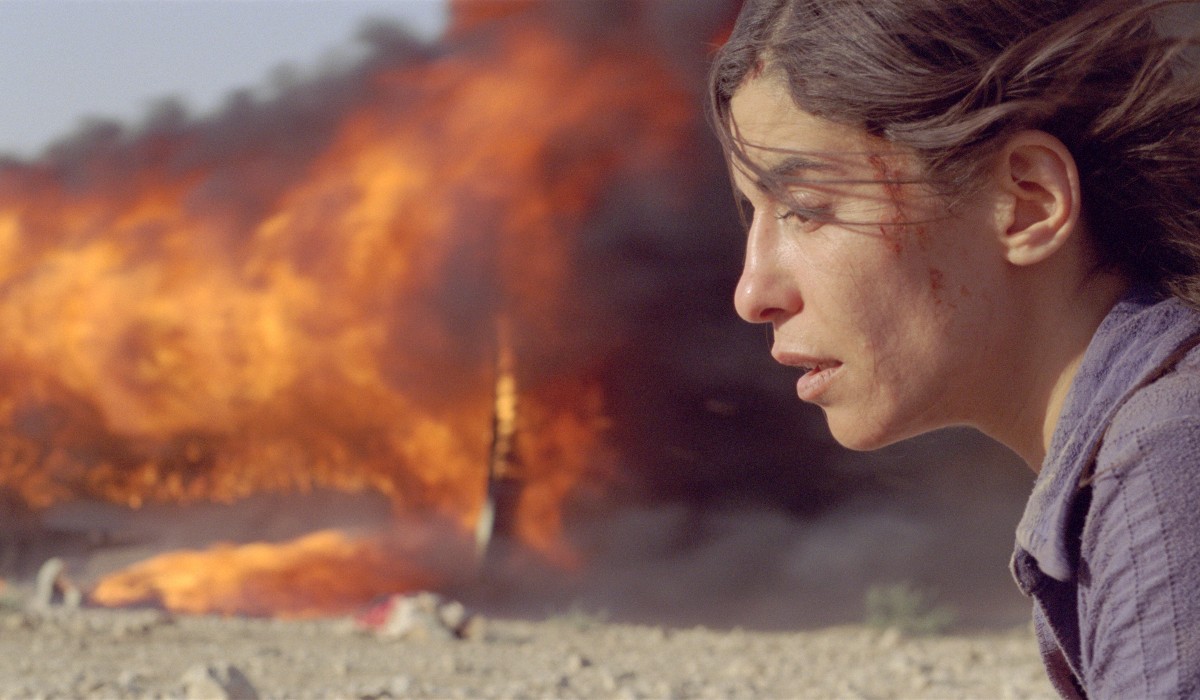
(Further Note: Incendies was nominated for the 2010 Oscar for Best Foreign Language Film, but was widely released in the US in 2011. A Separation, which I and most folks won’t be able to see until after January 27, will contend on my 2012 list.)
Werner Herzog gave us the wonderful 3D Cave of Forgotten Dreams. Page One highlighted David Carr of the New York Times. The Polish documentaryWar Games and the Man Who Stopped Them was a great find. I also admired Thunder Soul (about a Houston high school stage band in the 60s), Magic Bus (featuring actual footage of Ken Kesey’s Merry Pranksters), American Grindhouse (about the grindhouse films of the 40s, 50s and early 60s) and These Amazing Shadows (about the National Film Registry).
PBS had stellar year, especially with Woody Allen: A Documentary, Jimmy Carter, Stonewall Uprising and Troubadours.
HBO delivered Bobby Fisher Against the World. And ESPN has entered the documentary arena with the surprising The Marinovich Project.
Many consider the 1975 Thrilla in Manila, the heavyweight championship bout between Frazier and Muhammed Ali, to be the greatest boxing match of all time. Ali usually dominates the narrative of 1970s boxing. However, the 2009 HBO documentary Thriller in Manila revisits the fight and its aftermath from Frazier’s point of view. The film depicts Frazier in his final years, broke and living on the margins of society, still boiling with resentment from the experience.
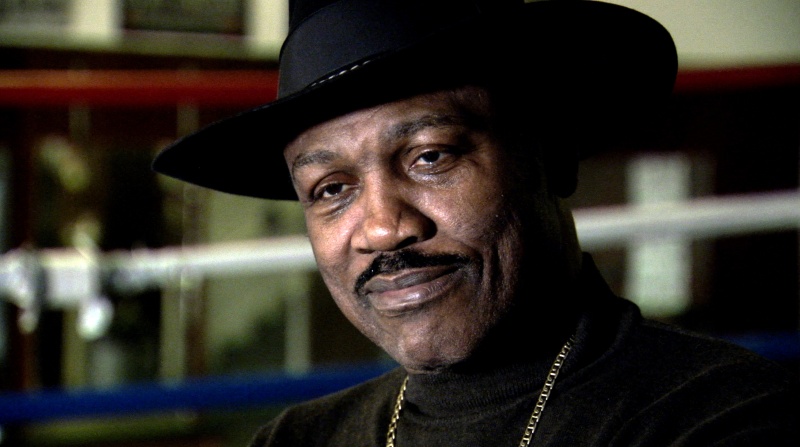
In contrast, the 2009 documentary Facing Ali showcases Ali’s other rivals, who have all embraced their experiences with Ali as their career-defining moment. We hear from George Chuvalo, Sir Henry Cooper, Earnie Shavers, George Foreman, Ernie Terrel, Larry Holmes, Ken Norton and Leon Spinks. Chuvalo, Cooper and Shavers prove to be surprisingly charming raconteurs.
Thriller in Manila is on my list of 10 Best Boxing Movies, and I’ll put Facing Ali on the list when I have time.
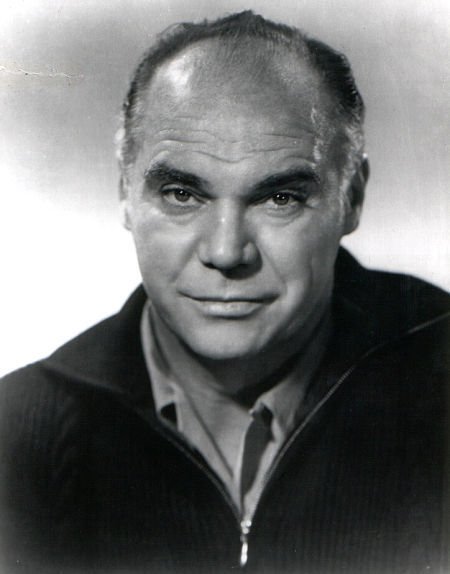
I was watching the 1950 Western Rancho Notorious when I asked myself, “Who’s the bad guy in the pageboy?”. Indeed, the reliable character actor John Doucette has been forced to don a platinum blonde pageboy wig to play Whitey. When shot in the back at the campfire, he gets to die with his boots on – and with his pageboy. I’ve added this on to my list of Least Convincing Movie Hair.
the John Doucette that we all recognize
BTW Rancho Notorious – directed by Fritz Lang and starring Arthur Kennedy, Marlene Dietrich and Mel Ferrer – really doesn’t stand up very well. It’s easily the most disappointing Lang film that I’ve seen.
On November 2, Turner Classic Movies will be airing Brute Force (1947). This Jules Dassin noir is by far the best of the Hollywood prison dramas of the 30s and 40s. A convict (Burt Lancaster) is taunted by a sadistic guard (Hume Cronyn) and plans an escape. It’s a pretty violent film for the 1940s, and was inspired by the 1946 Battle of Alcatraz in which three cons and two guards were killed. Charles Bickford, Whit Bissell and Sam Levene are excellent as fellow cons.
This week, Sarah’s Key and The Debt explore aspects of the Holocaust. Sarah’s Key is the story of the French round-up of French Jews in 1942, and of how a present day investigation shakes up several lives. The Debt is about a team of three Mossad agents charged with kidnapping a Nazi war criminal out of 1964’s East Berlin – and how they must revisit the mission 30 years later. I recommend both movies.
One of them is the 2002 documentary Blind Spot: Hitler’s Secretary. One of the central questions of the Holocaust is how could ordinary humans tolerate and even enable such monstrous acts? Blind Spot is the story of Traudl Junge who, as a rural, naive 22-year-old, happened on a job in Hitler’s secretarial pool. After the war, she lived in obscurity for decades. Wracked with guilt, she was interviewed for 90 minutes shortly before her death by a filmmaker who lost his parents in the Holocaust. This 90 minute interview is the core of Blind Spot.