LEFT-HANDED GIRL: a family’s path to to catharsis

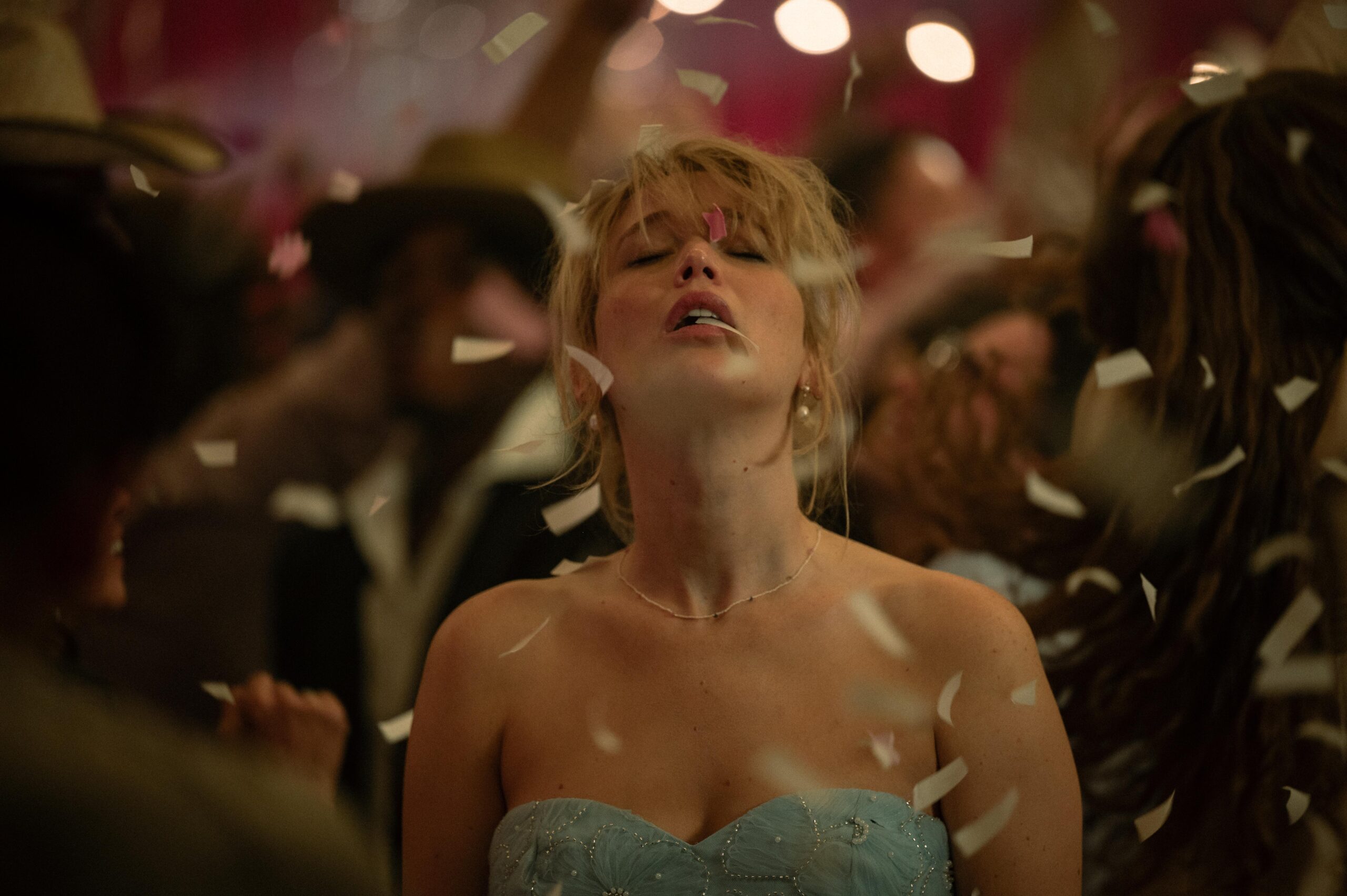
Photo caption: Shi-Yua Ma in LEFT-HANDED GIRL. Courtesy of Netflix.

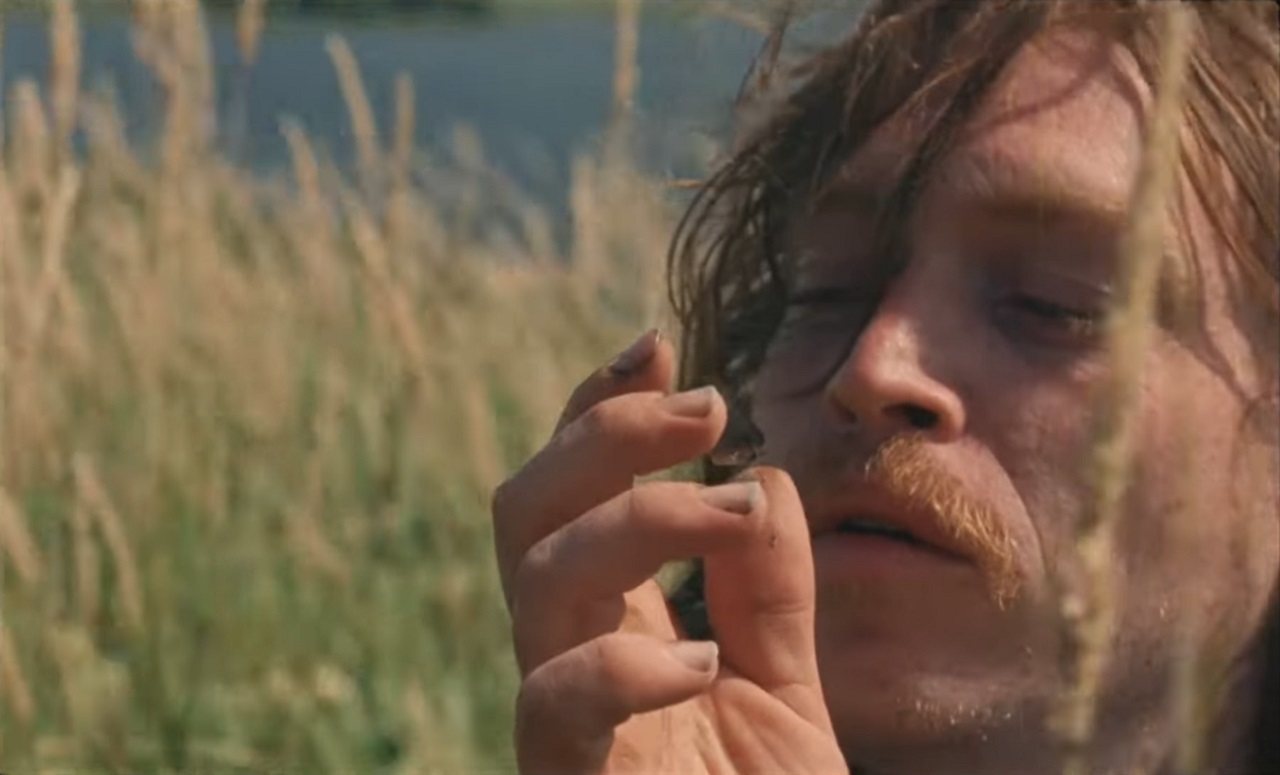
In the wonderful family dramedy Left-Handed Girl, a family moves back to Tapei. The single mom Shu-Fen (Janet Tsai) opens a noodle stand in a boisterous night market. The teen daughter I-Ann (Shi-Yua Ma) takes a job in a very dodgy betel shop. The five-year-old daughter I-Jing (Nina Ye) starts kindergarten and finds adventure zipping around the night market on her own. Shu-Fen, the mom, is exhausted all the time, and we learn that she’s experiencing grief and shame, too. Each of the three independently faces her own deeply stressful situation, until the revelation of a family secret, in the most awkward of circumstances, brings catharsis.

The extended family lives in Taipei, but offer little support. Shu-Fen’s adult sisters all bicker, Grandma makes international runs for a trafficker, and the grumpy Grandpa insists that I-Jing’s lefthandedness is the work of the devil. (I-Jing takes Grandpa seriously, and unwelcome results ensue.)

All of the angst is leavened with humor, and there are lots of laughs in Left-Handed Girl. The extended family is funny, as is Johnny (Brando Huang), the good-hearted, goofy owner of the gadget stand in the market, who is sweet on Shu-Fen. And there’s Goo-Goo, an unexpected mammal in the story, which I will not spoil.

You may not have heard of Left-Handed Girl’s director, Shih-Ching Tsou, but you’ve seen her work. She met Sean Baker in film editing class, and the two have since collaborated as filmmaking partners. They co-directed their first film, she produced his Starlet, Tangerine, The Florida Project and Red Rocket, and Baker and Tsou co-wrote Left-Handed Girl.

Left-Handed Girl brings us a slice of working class life in urban Taiwan, and family foibles that we all recognize. It also is a pointed critique of traditional gender roles in Taiwan. Although everybody except the grandpa wants to move on from the old-fashioned superstition about left-handedness, they’re all obsessed with saving face and marrying off the daughters so the generational wealth can pass to the son.

The child actor Nina Ye is adorable, and all the is acting excellent. Shi-Yua Ma is superb as what we first see as just a selfish, surly teen, but who grows into a much more complicated character as the story evolves.

Left-Handed Girl is a triumphant directorial debut for Shih-Ching Tsou, and one of the Best Movies of 2025 – So Far. It is streaming on Netflix.

JAY KELLY: finding that the ship has sailed

Photo caption: George Clooney and Adam Sandler in Jay Kelly. Courtesy of Netflix.

In the witty and poignant Jay Kelly, the famous movie star Jay Kelly (George Clooney) is having an end-of-career crisis. Jay has two grown daughters and never leaves the house without an entourage led by his longtime manager Ron (Adam Sandler).

His younger daughter (Grace Edwards) is taking a pre-college trip to Europe, which causes him to assess the relationships he has with his daughters. Jay impulsively decides to surprise her in Europe, so he heads off on a private jet with his team of manager, publicist, hair and makeup person, personal assistant and security guy.

Jay is finally forced to face the sharp reality that his daughters have experienced. It’s true, of course, that, as a parent, he has no privacy from fans and paparazzi and that he must leave town to make movies. But it’s clear that Jay hasn’t tried to forge family and personal connections by working around those obstacles. Although he refuses to admit it, he has been content to accept the tradeoffs.

At the same time, the members of Jay’s entourage question how Jay returns the devotion that they give to him. Ron, in particular, must ask himself whether Jay, after a decades-long partnership sees him as a friend. The film could have been aptly titled Jay and Ron.

Jay Kelly is very, very funny throughout, as it sends up the pretensions, narcissism, disloyalty, and hypocrisy that Hollywood is known for. The screenplay was co-written by the film’s director Noah Baumbach (The Squid and the Whale, Marriage Story) and the actress Emily Mortimer (her first feature screenplay). (Mortimer has a small role as one of Jay’s minions.)

Interestingly, Jay Kelly is not a stand-in for a George Clooney-type A-lister but is more of a Tom Cruise-type action mega star.

George Clooney, who doesn’t seem to take himself too seriously, is perfect as a movie star who does. Adam Sandler is very affecting as Ron. The entire cast is excellent, especially Billy Crudup as an old acquaintance of Jay’s. 84-year-old Stacy Keach plays Jay’s dad, and, unsurprisingly, he’s a hoot.

The most compelling performance is by Riley Keough as Jay’s elder daughter, who is determined to survive the emotional damage she has suffered.

This is an enjoyable comedy with substance. Jay Kelly is in theaters now and releases on Netflix on December 5.

Movies to See Right Now (Thanksgiving Weekend edition)

Photo caption: George Clooney in JAY KELLY. Courtesy of Netflix.

This week on The Movie Gourmet – a plug for my favorite romantic comedy of the year, The Baltimorons, a perfect watch-at-home choice for the Holidays.

I’ll soon post a new review of the George Clooney film Jay Kelly, which is a witty and poignant screen version of the Harry Chapin song Cat’s in the Cradle. I liked it, but you can wait until it streams on Netflix on the weekend after this one.

Thanksgiving weekend is a great time catch a prestige, or even movie, or even a popcorn movie at a movie theater. Recently, I’ve enjoyed some movies at my local multiplex equipped with Dolby’s ATMOS sound. ATMOS really enhanced the thrills in A House of Dynamite and One Battle After Another and the music in Frankenstein and Deliver Me from Nowhere. Look for it.

CURRENT MOVIES

Matthew McFadyen in DEATH BY LIGHTNING. Courtesy of Netflix.

ON TV

Turner Classic Movies is airing the 1962 version of Requiem for a Heavyweight. Anthony Quinn is Mountain Rivera, a fighter whose career is ended by a ring injury by Cassius Clay (played by the real Muhammad Ali). His manager, Jackie Gleason, continues to exploit him in this heartbreaking drama. Mickey Rooney, whose acting I usually despise, is real, natural and just perfect in this film. There’s no boxing in this clip, but it illustrates the quality of the writing and the acting.

THE BALTIMORONS: vulnerability, recovery, good-hearted laughs

Photo caption: Liz Larsen and Michael Strassner in THE BALTIMORONS. Courtesy of IFC.

Here’s the perfect film for the family to watch on Thanksgiving Weekend (after the littlest kids have gone to bed). In the goodhearted and witty comedy The Baltimorons, a cracked tooth sends a guy to an emergency dentist and launches them into a nighttime adventure through Baltimore that could result in romance. It’s a funny movie about second chances.

Each of them faces a very problematic invitations. Cliff (Michael Strassner) has been sober for a few months, but he hasn’t found work. His lack of resources and his failed suicide attempt have left him in an unhealthy power imbalance with his girlfriend. He’s got to choose between his promised appearance at the girlfriend’s family holiday gathering and the chance to perform again at a pop-up comedy show organized by his buddies. Problem is, he is terrified that he can’t be funny without drinking.

The dentist Didi (Liz Larsen), in contrast, has a strong business and owns a nice home. But she’s personally reeling from her divorce, which has left her lonely and gashed a hole in her confidence. Didi is suffering the humiliation of a courtesy invite to the Christmas party hosted by her ex-husband and his new wife. So, we have two talented people in moment pf vulnerability and recovery. An impounded car sends them out together, and comic situations ensue.

What happens is funny, but The Baltimorons succeeds because of its humanity – we really care about Cliff and Didi.

Cliff and Didi would make an unlikely romantic pairing. He’s already in a serious relationship, after all. She is significantly older, and more well-educated. She’s highly functional, and he’s a floundering goof.

The Baltimorons reflects the sharp comic sensibility of writer-director Jay Duplass. With his brother Mark, Duplass wrote and directed Baghead, Cyrus and Jeff Who Lives at Home, and has since been busy directing/producing in television and acting (Transparent, Lynn Shelton’s Outside In). This is the first feature he has directed since 2012. At its world premiere, The Baltimorons won the Best Narrative Feature award at SXSW.

I saw The Baltimorons at its third public screening, at the SLO Film Fest with Jay Duplass in attendance. It won the SLO Film Fest’s Best of Fest. It’s now available to stream from Amazon, AppleTV, YouTube and Fandango.

Movies to See Right Now

Photo caption: Mohammed Ali Elyasmehr, Majid Panahi and Hadis Pakbaten in IT WAS JUST AN ACCIDENT. Courtesy of NEON.

This week on The Movie Gourmet, new reviews of It Was Just an Accident, which won the Palm d’Or at Cannes, and Richard Linklater’s tribute to the French New Wave, Nouvelle Vague.

We’re now in prime movie season, It Was Just an Accident, Frankenstein, A House of Dynamite, and One Battle After Another are all in theaters or on Netflix – and they’re all on my Best Movies of 2025 – So Far. Die My Love, with the year’s best acting performance, by Jennifer Lawrence, is in theaters, too

Eleanor the Great and One Battle After Another are now streaming on home video, although they’re still expensive to rent.

CURRENT MOVIES

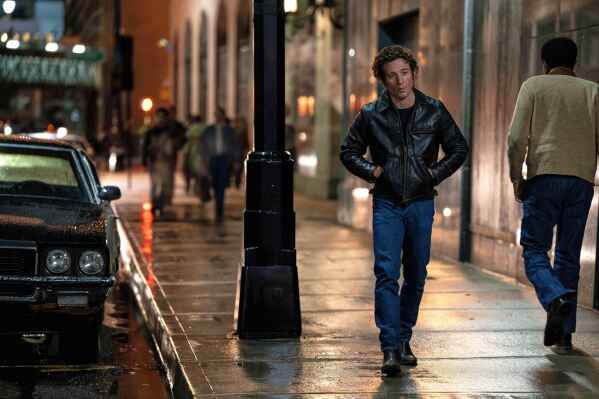
Jeremy Allen White in DELIVER ME FROM NOWHERE. Courtesy of 20th Century Studios.

IT WAS JUST AN ACCIDENT: trauma, revenge and complications

Photo caption: Ebrahim Azizi (right) in IT WAS JUST AN ACCIDENT. Courtesy of NEON.

The powerful (and often funny) drama It Was Just an Accident begins with a minor driving incident that triggers memories of traumas Those memories spark a new life-and-death situation.

Vahid (Vahid Mobasseri) is a workaday auto mechanic with a dodgy back. We later learn that he was locked up by the Iranian government and repeatedly tortured. Vahid was blindfolded during his ordeal, but he remembers the voice of the secret policeman who tormented him and the squeaky limp of his prosthetic leg. Now he hears what he believes is that voice and that squeak – and he impulsively kidnaps the man, intending revenge.

Problem is, the guy (Ebrahim Azizi) denies being the torturer and his explanation of his prosthetic leg is plausible. So Vahid tracks down former fellow prisoners to confirm the guy’s identity.

Vahid and his peers were not dissident ideologues, but just factory workers who complained about not being paid for months. Nevertheless, they were all severely traumatized by their experience, and each of them really, really hates their torturer.

Their suspect is sedated and trussed up inside a box in Vahid’s van, as Vahid picks up each of his witnesses. All of them have different personalities. Vahid is impulsive (obviously), and the photographer Shiva {Mariam Afshar} is clear-headed and decisive. One of them, Goli (Hadis Pakbaten), is in her wedding dress for a photo session and comes with a bewildered would-be groom (Majod Panahi). The most volatile one, Hamid (Mohammed Ali Elyasmehr) seems to be seriously mentally ill.

Mohammed Ali Elyasmehr, Majid Panahi and Hadis Pakbaten in IT WAS JUST AN ACCIDENT. Courtesy of NEON.

The motley group faces a moral question – is it just to kill the man who committed atrocities against them? Or would that act of violence lower them to the moral level of the hated regime?

And Vahid’s impulsiveness has presented them with a practical problem. There is the matter of kidnapping, whoever this guy is, so could they get away with letting him go? Would it be suicidal to release a vicious killer who knows where Vahid works? There doesn’t seem to be any way to put the toothpaste back into the tube.

As they careen around Tehran in a van with a live body in a box, circumstances get unpredictably more complicated – and absurdly funny – all the way to the emotionally devastating ending.

Mariam Afshari in IT WAS JUST AN ACCIDENT. Courtesy of NEON.

Written and directed by the acclaimed Jafar Panahi, It Was Just an Accident is a harsh critique of the Iranian government, both for its worst human rights violations and for its petty corruption. Making this film was an act of incredible courage by Panahi. Remarkably, Panahi shot this movie secretly, including even some scenes in in plain sight on the streets of Tehran.

Panahi is a critical and industry favorite because he is persecuted by the Iranian government. By supporting Panahi, the cinema world supports free expression and human rights in Iran.

He’s also a damn fine filmmaker, the only director to win the Golden Bear at the Berlinale, the Golden Lion at Venice, the Golden Leopard at Locarno and the Palm d’Or. How Panahi shot a movie this great IN SECRET is miraculous.

It Was Just an Accident won the Palm d’Or at Cannes and is high on my list of the Best Movies of 2025 – So Far. It’s now in theaters.

NOUVELLE VAGUE: a subversive trickster bets that he is an artist, too

Photo caption: Zoey Deutch and Guillaume Marbeck in NOUVELLE VAGUE. Photo credit. Jean-Louis Fernandez; courtesy of Netflix

With Nouvelle Vague, one of America’s greatest filmmakers, Richard Linklater, pays tribute to the French New Wave, which invigorated global cinema and inspired generations of American indie filmmakers. Nouvelle Vague, Linklater’s first film in French, tells the story of Jean-Luc Godard making his first film, the groundbreaking and influential Breathless. And it’s a hoot.

The French New Wave was a period when the young film writers at a cinema magazine got to direct their own movies. Basically, this was a time in the late 1950s when a bunch of movie nerds got to create their own cinema, resulting in a burst of freshness and originality. Godard’s peers Francois Truffaut and Claude Chabrol had already transitioned from film critic to movie director, but Godard still hadn’t directed his first film, and he was itching to get started.

With all the arrogance of a 29-year-old novice who is certain of his abilities, Godard famously proclaimed that all you need to make a movie is a girl and a gun. This is that film.

In Nouvelle Vague, Godard (Guillaume Marbeck) gets the casting gift of a famous Hollywood starlet, Jean Seberg (Zoey Deutch), to team with his boxer buddy Jean-Paul Belmondo (Aubry Dullin, who is an acting novice. Godard leads his cast and crew on an anarchic 20-day shoot that Godard makes up as he goes along, with no script and no shooting schedule, which challenges the mental health of his producer Georges de Beauregard (Bruno Dreyfurst). No one can tell if the film, if it gets finished, will be any good.

The key here is the character of Godard himself (brilliantly played by Marbeck in his feature debut), who is posing as an important artist even as he tries to become one, wearing sunglasses day and night. A subversive trickster, he is strong-willed and self-confident for sure, but is he just a narcissistic dilettante? Is his artistic vision just a delusion? So, the making of Breathless is a wild ride, one turns out to be interesting because we know that Breathless will turn out to be an artistic success and an important, influential film.

Linklater fills the Nouvelle Vague with a Who’s Who of French New Wave figures and plenty of jokey references to that style of filmmaking. LInklater even shows the last scene of Truffaut’s The 400 Blows, with its indelible freeze-frame, reflected in Godard’s sunglasses.

So, can you enjoy Nouvelle Vague even if you’re unfamiliar with the French New Wave, and haven’t seen any Godard films? Yes. The madcap nature of the shoot, and the other characters all reacting with amusement, frustration and disbelief to Godard’s outsized personality are plenty entertaining.

But, if you a cinephile, then Nouvelle Vague is a Must See. Linklater’s references are delightful. The actors physically look just like the real people they are playing, and Zoey Deutsch looks phenomenal in Seberg’s iconic blonde pixie cut and Breton stripes. Not many faces resemble Belmondo’s but Aubrey Dullin’s does; Dullin perfectly captures Belmondo’s rogueish charm and working class lack of pretension.

This is the Jean-Luc Godard of his early masterpieces (Breathless, Contempt, Band of Outsiders), before his arrogance made him into a tiresome polemicist. That later insufferable Godard is satirized in Godard, Mon Amour by Michel Hazanavicius (The Artist), which would make a fine second feature on the double bill. (I have found all of the Godard films since 1967’s Weekend to range from disappointing to completely unwatchable.) 

Nouvelle Vague is streaming on Netflix.

Movies to See Right Now

Photo caption: Jacob Elordi in FRANKENSTEIN. Courtesy of Netflix.

This week on The Movie Gourmet, new reviews of Jennifer Lawrence ablaze in Die My Love, the Netflix miniseries Death By Lightning and the artsy period allegory Harvest, to go with recent reviews of Frankenstein, A House of Dynamite, Deliver Me from Nowhere, Nuremberg and Blue Moon. The Palm d’Or winner at this year’s Cannes Film Festival, It Was Just an Accident, opens more widely today, so expect my review in the coming week; I’ve heard and read good things.

I will not be seeing Now You See Me Now You Don’t because the film’s trailer exposes the screenplay as stupefyingly lazy. Why would you have Woody Harrelson, born in 1961, putting down a kid born in the 2000s for using the word bummer, which came into wide use in the Hippie 1960s?

I also want to warn you off of The Summer Book, which you may see algorithm-recommended on your streaming platform and which I discussed in October.

REMEMBRANCE

Actor Tatsuya Nakadai starred in Akira Kurosawa’s two great color epics Ran and Kagemusha, and played the foil to Toshiro Mifune’s hero in Yojimbo.

CURRENT MOVIES

ON TV

THE LIFE OF BRIAN

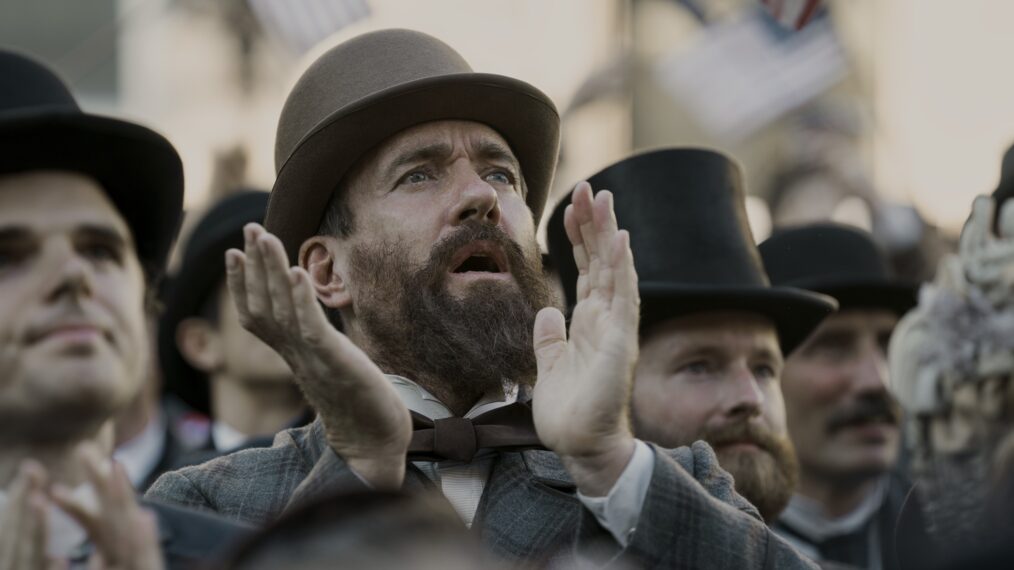
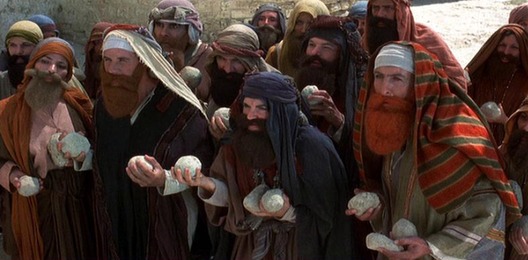
On November 15, Turner Classic Movies airs one of the great satires, Monty Python’s Life of Brian, which brilliantly skewers Biblical epics, left-wing militants and political correctness, the origin story of Christianity, religion and human nature, generally. Life of Brian also makes my lists of Worst Teeth in the Movies and Least Convincing Movie Hair.

HARVEST: peasants get the shaft

Photo caption: Caleb Landry Jones in HARVEST. Courtesy of MUBI.

The artsy allegory Harvest is a period piece, and it takes a while to figure out just what period of European peasant history we’re in. The look of Harvest immediately reminded me of The Return of Martin Guerre, set in 16th century France. But Harvest’s story takes place in Scotland between 1750 and 1860, in the Highland Clearances; in this period, landowners switched to more profitable, less labor-intensive agriculture, thereby depopulating huge swaths of Scotland.

The central character is Walter (Caleb Landry Jones), who is, unusually, a peasant by choice. He had been manservant to a landowner, but fell in love with a rural woman and moved to her village. Walter is more cosmopolitan than his neighbors; although he isn’t familiar with maps, he quickly grasps the concept.

Walter’s former boss and current landlord is Master Kent (Harry Melling), a gentle soul adrift as he mourns his late wife. Kent is not just a kind landlord, he is laughably lenient as he overlooks bad behavior by his peasants.

But as Kent’s wife estate is settled, he is replaced by the ruthless, smirking relative Jordan (Frank Dillane of Urchin), who can’t wait to get rid of all these inconvenient peasants so more sheep can graze. There is, of course, nothing the peasants can do about it.

So, Harvest seems to be an allegory about the inhumanity of unbridled capitalism. That shouldn’t take two hours and 19 minutes to tell, but that’s how long Harvest drags on.

I was eagerly anticipating Harvest because of my admiration for its Greek director, Athina Rachel Tsangari. Her Chevalier was one of my Best Movies of 2016. (In 2011, Tsangari brought her hilariously offbeat Attenberg to SFFILM.) Harvest is Tsangari’s first English-language feature, and she used a different co-writer this time, which did not help with the resultant film.

If you must stream it, Harvest is available on AppleTV.

DIE MY LOVE: Jennifer Lawrence ablaze

Photo caption: Jennifer Lawrence in DIE MY LOVE. Courtesy of MUBI.

In perhaps the year’s best onscreen performance, Jennifer Lawrence delivers an astonishing portrait of a young woman’s mental breakdown in Die My Love. Lawrence plays Grace, a writer who marries Jackson (Robert Pattison), whose job requires him to be on the road for days at a time. They move into Jackson’s inheritance, a ramshackle house in Montana outside the town Jackson’s mom Pam (Sissy Spacek) lives in. And they have a baby.

Grace is playful and imaginative, and she adores her baby. But she’s isolated at home with no relief from the grind of the baby care. She has lost her interest in writing. She becomes tired, irritable and down in the dumps. Jackson is selfish, clueless about Grace’s changing needs, and has a knack for doing exactly the wrong thing, like bringing home the most annoying pet dog on the planet.

Grace’s mother-in-law Pam, who likes Grace, sees that she is struggling and tries to help. But Grace slides into depression with ever more alarming symptoms and decompensates. Finally, Grace’s behavior shocks Jackson, who starts doing everything he can think of to help, but he is ill-equipped, and it’s too little, too late.

Many actors would love to portray an explosive meltdown, and Lawrence makes you lean back in your theater seats when Grace goes off. But Jennifer Lawrence’s genius is most apparent in the moments that she is just BEING in her condition and in the moments that she is trying to hold it together for others. As Grace’s psyche evolves, this is a performance of astonishing texture and nuance.

Robert Pattinson and Jennifer Lawrence in DIE MY LOVE. Courtesy of MUBI.

Pattinson is excellent as Jackson, who the audience initially sees as a shit, but who becomes very sympathetic as he struggles to help Grace get right, before her illness destroys him, too. Sissy Spacek, is perfectly cast as Pam, who has her own struggles with grief and aging, but brings her good heart, intuition and common sense to become the audience’s surrogate.

What’s going on with Grace? I think The Wife was correct is suggesting that Grace came with an underlying bi-polar disorder which was exacerbated by the postpartum depression. Early in the movie, we see Grace as playful, but maybe that playfulness is a bit frenzied. Of course, it’s fun for Jackson then, but she’s destined to become way more than he can handle. Late in the movie, we see flashbacks from their wedding, and the signs are there.

Die My Love was directed and co-written by Lynne Ramsey, who seems to specialize in madness (We Need to Talk About Kevin, You Were Never Here). Ramsey keeps us off-balance by keeping us unsure about whether what is onscreen is Grace’s real experience or a dream, delusion, or hallucination. Both a black horse and the LaKeith Stanfield character appear to Grace multiple times, but perhaps only once each in reality. It’s just not always clear. After the movie, The Wife and I actually had different views about which of the ending scenes really happened or were imagined. This is smart, artsy filmmaking, which works to keep us guessing.

So, should you see Die My Love? It’s an epic acting performance in a well-made Feel Bad movie, so there you are. Die My Love is now in theaters.