Movies to Watch Right Now (at home)

Amanda Seyfried in MANK on Netflix

This week, the prestige movies have started to roll out for the Holidays. Stay tuned.

ON VIDEO

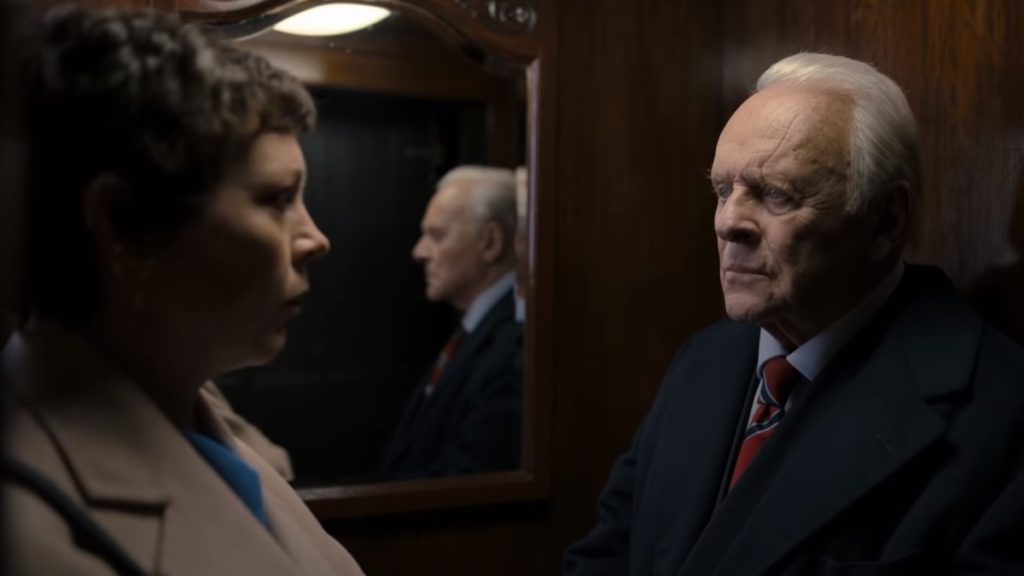
Don’t forget that some of my Best Movies of 2020 – So Far, are already available. I haven’t yet written about Mank or The Father. I haven’t yet seen Nomadland or The Sound of Metal.

  • Driveways: I can’t think of a more authentic movie about intergenerational relationships than this charming, character-driven indie. The more I think about Driveways, the more I admire it. It also features the final performance – so genuine and subtle – by Brian Dennehy. Driveways is available to stream on all the major platforms.
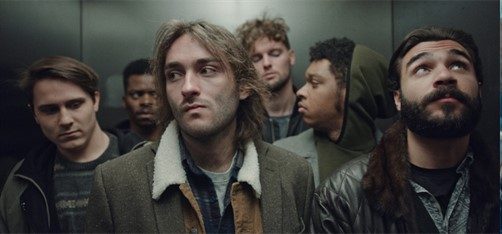
  • The Whistlers: In this absorbing crime thriller, a shady cop and a mysterious woman are walking a tightrope of treachery. The Whistlers was a hit at last year’s Cannes Film Festival, but COVID-19 impaired its 2020 theatrical release in the US. (Amazon, Vudu, YouTube, Google Play.)
  • The Truth: Writer-director Hirozaki Koreeda’s latest wry and authentic exploration of human behavior is a showcase for Catherine Deneuve and Juliette Binoche. Hirokeeda, such an insightful observer of behavior, cuts to the core of his characters’ profound humanity. (Amazon, Vudu, YouTube, Google Play.)

ON TV

Ray Harryhausen with one of his sword-fighting skeletons from JASON AND THE ARGONAUTS

On December 10, Turner Classic Movies will be airing Jason and the Argonauts, a work of artistic genius and fun with Greek mythology. The original thousands-year-old story is a fun adventure yarn, and the 1963 movie, even with its sword-and-sandal dialogue and acting, is loads of fun.

Ray Harryhausen was a unique genius of pre-CGI movie special effects.  His stop-motion animation created the vivid creatures that made possible movies about ancient mythology (from the 1958 The 7th Voyage of Sinbad through the 1981 Clash of the Titans) and fantasy literature (The Three Worlds of Gulliver).  His pioneering work in stop-motion animation has influenced the field since, all the way to today’s Aardman Animation and Wallace and Gromit.

Harryhausen’s masterpiece was Jason and the Argonauts, for which he created the Harpies, Talos, the Clashing Rocks Triton, the Hydra and the sword-fighting skeletons that emerge from the Hydra’s teeth.  I still watch Jason and the Argonauts whenever it’s on TV, and I often give the DVD to kids. 

JASON AND THE ARGONAUTS

on TV: THE GREAT BEAUTY – decadence, stunning imagery and the beauties of Rome itself

Toni Servillo (center) in THE GREAT BEAUTY

On Sunday, November 29, Turner Classic Movies will air The Great Beauty (La grande belleza), which begins as its protagonist Gep Gambardella is celebrating his 65th birthday in a feverishly hedonistic party. Gep authored a successful novel in his twenties, which has since allowed him the indulgent life of a celebrity journalist, bobbing from party to party among Rome’s shallow rich.

Gep is having a helluva time, but now he reflects on the emptiness of his milieu and the superficial accomplishments of his past 40 years. As he alternates introspection and indulgence, we follow him through a series of strikingly beautiful Roman settings. (And, because Gep parties all night, we see lots of gorgeously still Roman dawns.)

The Great Beauty is foremost an extraordinarily beautiful art film. If you’ve been to Rome, you know that it is a generally chaotic city with unexpected islands of solitude. The Great Beauty captures this aspect of the Eternal City better than any other film I’ve seen. On one level, The Great Beauty is very successful Rome porn.

THE GREAT BEAUTY

Writer-director Paolo Sorrentino also explores the moral vacuity of the very rich and the party life. It’s the Italy of Silvio Berlusconi, whom Sorrentino blames for enabling a national culture of escapism. These themes, along with the main character and the movie’s structure are of course nearly identical to Fellini’s great La Dolce Vita (1960), but The Great Beauty is more accessible, funnier and a bit more hopeful – and much more of a showcase for the cityscape of Rome. Sorrentino provides plenty of laughs, especially with a gourmet-obsessed cardinal and a cadaverous celebrity nun with a Mephistopheles-looking handler.

It’s hard to imagine an actor better suited to play Gep than Toni Servillo. Servillo perfectly captures both the happiness Gep takes in carnal pleasure and his self-criticism for giving his entire life to it. Servillo’s Gep is brazenly proud of his own cynicism, until we see his humanity breaking through at a funeral. Servillo is even magnificent in wearing Gep’s impressive collection of sports jackets.

There’s so much to The Great Beauty – stunning imagery, introspection, social criticism, sexual decadence, fine performances, humor and a Rome travelogue – each by itself worth watching the film.  The Great Beauty won the Best Foreign Language Oscar. If you miss it on TCM, you can still stream it from Amazon, Apple TV, Vudu, YouTube, Google Play, kanopy and the Criterion Channel. Courtesy of the Criterion Channel, here’s a illustrative clip.

Movies to See Right Now (at home) – Thanksgiving Weekend Edition

Brian Dennehy, Lucas Jaye and Hong Chau in DRIVEWAYS

While we are gathered – or NOT gathered – with family this Thanksgiving, I recommend 2020’s best family film, Driveways. It’s high on my list of the Best Movies of 2020 – So Far, and I hope it doesn’t get lost among the prestige movies poised for Holiday release.

This is the FINAL WEEKEND for Noir City International – coming TO YOUR HOME with great classic movies that you can’t find anywhere else. Please take advantage of this very rare opportunity through November 29.

ON VIDEO

Driveways: I can’t think of a more authentic movie about intergenerational relationships than this charming, character-driven indie. The more I think about Driveways, the more I admire it. It also features the final performance – so genuine and subtle – by Brian Dennehy. Driveways is available to stream on all the major platforms.

She Is the Ocean: In this visually stunning documentary, fearless and high-achieving women celebrate the oceans in science and sport. Now streaming at Laemmle’s.

Cinta Hansel in SHE IS THE OCEAN

The most eclectic watch-at-home recommendations you’ll find ANYWHERE:

ON TV

Joseph Cotten and theresa Wright in SHADOW OF A DOUBT

On Thursday and Friday, Turner Classic Movies presents a Hitchcock-a-thon: Rear Window, The Man Who Knew Too Much, The Birds, Psycho, Rope, The Lady Vanishes, Strangers on a Train, Saboteur, Torn Curtain, Marnie, The Trouble with Harry and Shadow of a Doubt.

What a lineup – festooned by some of the most iconic American movies, like Psycho, Strangers on a Train, Rear Window and The Birds! The most overlooked may be Shadow of a Doubt, with its great performances by Joseph Cotten and Teresa Wright. And it was shot in Santa Rosa.

In the second-earliest of these films, Saboteur, the wonderful character actor Norman Lloyd got to play the villain; 78 years later, Lloyd is still alive at age 106 – and still a great raconteur.

Norman Lloyd (then 28-years-old) in SABOTEUR

Movies to See Right Now (at home)

PALE FLOWER, playing at Noir City International

Once again this week, it’s all about Noir City International – coming TO YOUR HOME with great classic movies that you can’t find anywhere else. Please take advantage of this very rare opportunity through November 29

Plus the weekly, eclectic watch-at-home recommendations.

ON VIDEO

DICK JOHNSON IS DEAD

The most eclectic watch-at-home recommendations you’ll find ANYWHERE:

ON TV

Michael Caine and Barbara Hershey in HANNAH AND HER SISTERS

On November 22, Turner Classic Movies presents Woody Allen’s 1986 near-masterpiece, Hannah and Her Sisters, a story framed by two Thanksgivings. Biting and insightful, Hannah and Her Sisters won Best Supporting Oscars for Michael Caine and Dianne Wiest, along with a Best Screenplay Oscar for Woody. I particularly enjoy the performances of Barbara Hershey as the inappropriate object of Caine’s middle-aged infatuation and Max Von Sydow as her artist-boyfriend, a ridiculously pretentious and selfish artist.

Mia Farrow, Barbara Hershey and Dianne Wiest in HANNAH AND HER SISTERS

NOIR CITY comes to your home

Ingmar Zeisberg and Helmut Wildt in BLACK GRAVEL

Here’s a once-in-a-pandemic film noir experience, the opportunity to see classic film noir that you can’t see anywhere else. The Noir City International at the AFI Silver is available to stream through November 29.

Noir City is the annual festival of the Film Noir Foundation, spearheaded by its founder and president, the Czar of Noir, Eddie Muller. The Foundation preserves movies from the traditional noir period that would otherwise be lost. Noir City often plays newly restored films and movies not available on DVD or streaming.

This January, as usual, I attended this year’s festival, sharing the program with a thousand other film fans in a vintage movie palace, San Francisco’s Castro Theatre. In normal years, Eddie Muller then takes the program on the road, but the pandemic eliminated the satellite Noir City mini-fests in other cities. Good news – this year’s festival program is streaming through the AFI Silver so everyone can watch it at home.

This year’s program is Noir City International 2 – l focusing on international film noir, as it did so successfully six years ago. Then I was enthralled by the Argentine Bitter Stems and the Swedish Girl with Hyacinths, and must admit that I had never even imagined that vintage film noir from those nations existed. This year’s fest brings us titles from Argentina, France, Germany, Korea, Japan, Czechoslovakia, Italy, and Poland.

One of best things about Noir City is the opportunity to see films that are not available to stream. This year Noir CIty is outdoing itself by presenting SIX films that can’t found on a streaming platform, most of them impossible to see outside of Noir City in any format.

  • Black Gravel (West Germany 1961)
  • The Black Vampire (Argentina 1953)
  • …And the Fifth Horseman Is Fear (Czechoslovakia 1965)
  • The Devil Strikes at Night (West Germany 1957)
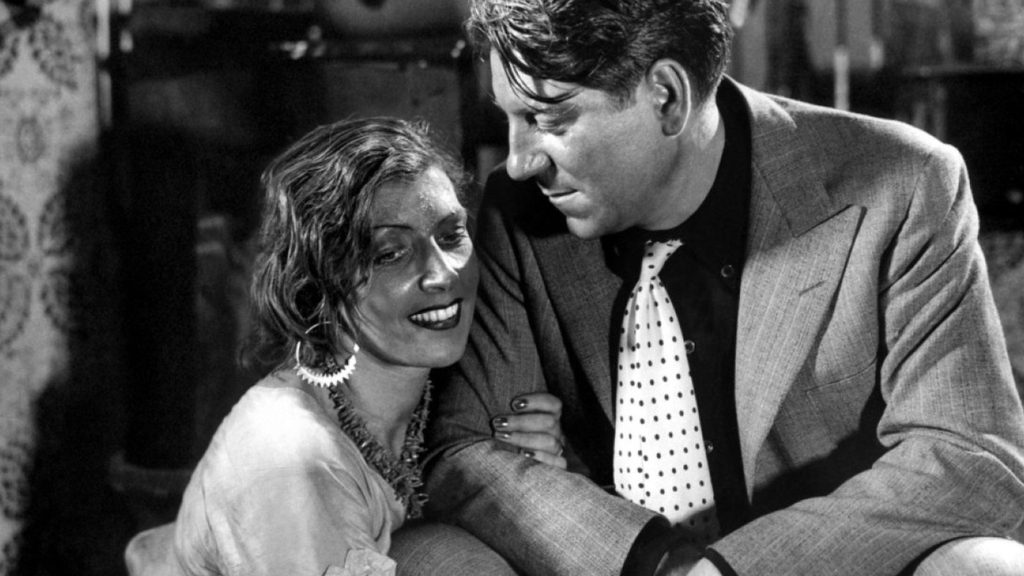
  • Panique (France 1947)
  • Razzia (France 1955)

Pale Flower, Ashes and Diamonds and Any Number Can Win are only available to stream periodically on the Criterion Channel.

“Difficult to find” doesn’t mean “obscure”. The program includes films directed by Michelangelo Antonioni, Jean-Pierre Melville and Roebert Siodmak and starring Ingrid Bergman, Jean Gabin, Alain Delon and Jean-Paul Belmondo.

PALE FLOWER

My personal favorites on the program:

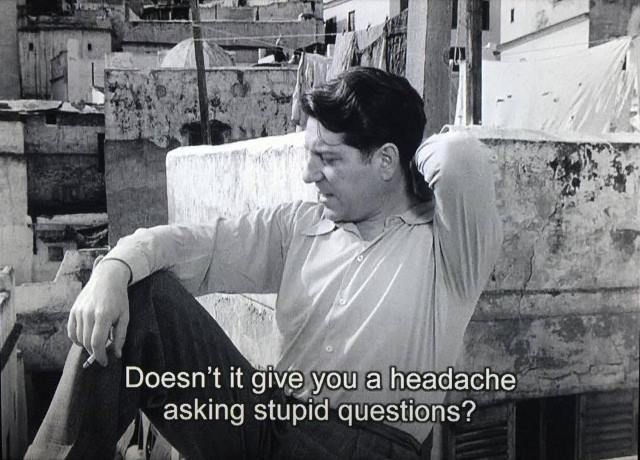
  • Pale Flower: Writer-director Masahiro Shinoda’s masterpiece is a slow burn that erupts into breathtaking set pieces. This is pioneering neo-noir; its look and feel is as different from classic noir as are Elevator to the Gallows and Blast of Silence.
  • Black Gravel: This tragic romance is set in post-war Germany, a Petri dish for hustlers. Rarely has a movie plot swung as rapidly between They’re gonna get caught – No, they’re gonna get away with it – No, They’re gonna get caught – No, they’re gonna get away with it – No, They’re gonna get caught – No, they’re gonna get away with it – No, They’re gonna get caught.
  • Ashes and Diamonds: Auteur Andrzej Wajda‘s filmmaking gifts are on display in this Hit Man Finds Love tale, set as the Polish Resistance battles for a place in post-war Poland. As kinetic and unpredictable as James Dean, Zbigniew Cybulski makes for an irresistibly charismatic leading man.
  • The Black Vampire: In this often trippy 1953 remake of Fritz Lang’s M, Nathán Pinzón is AT LEAST AS GOOD as was Peter Lorre in the original.

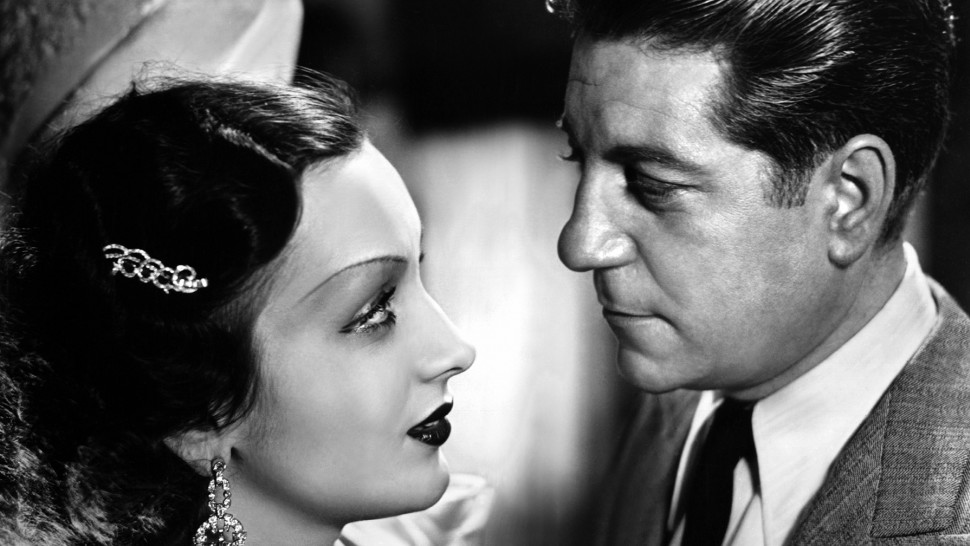
The offerings also include Leave Her to Heaven with Gene Tierney as the most disturbing female villain in film noir and Detour with Ann Savage as the grungiest and most predatory. The Korean The Housemaid is so bizarre as to defy description. And the coolest middle-aged guy in cinema, Jean Gabin, stars in Razzia and Any Number Can Win.

DO NOT MISS this rare opportunity. Individual screenings are $12 and the Festival Pass is $125. Explore the program and get your pass or tickets.

Zbigniew Cybulski in ASHES AND DIAMONDS

Movies to See Right Now (at home)

ASHES AND DIAMONDS, playing at Noir City International

This week, it’s all about Noir City International – coming TO YOUR HOME with great classic movies that you can’t find anywhere else. Plus the most eclectic watch-at-home recommendations you’ll find ANYWHERE.

PALE FLOWER, playing at Noir City International

ON VIDEO

Lena Olin and Bruce Dern in THE ARTIST’S WIFE

The most eclectic watch-at-home recommendations you’ll find ANYWHERE:

ON TV

Michael Polley in STORIES WE TELL

On November 17, Turner Classic Movies brings us the documentary Stories We Tell, the brilliant director Sarah Polley’s exploration of her own family’s secrets. Which secret is more shocking, and which family member’s reaction is more surprising? This was #4 on my Best Movies of 2013, and it’s a Must See.

STORIES WE TELL

Movies to See Right Now (at home)

Anne Bancroft and Aldo Ray in NIGHTFALL

This week: video at home, Nightfall on TV (and you can’t stream it) and my remembrance of the late Sean Connery.

ON VIDEO

The most eclectic watch-at-home recommendations you’ll find ANYWHERE:

ON TV

On November 9, Turner Classic Movies will present A Place in the Sun, one of the great films of the 1950s.  Montgomery Clift is a poor kid who is satisfied to have a job and a trashy girlfriend (Shelly Winters in a brilliant portrayal).  Then, he learns that he could have it ALL – the CEO’s gorgeous daughter (19-year-old Elizabeth Taylor), lifelong comfort, status and career.  Did I mention Elizabeth Taylor?  The now pregnant girlfriend is the only obstacle to more than he could have ever dreamed for – can he get rid of her without getting caught?

Elizabeth Taylor and Montgomery Clift in A PLACE IN THE SUN

coming on TV: NIGHTFALL

NIGHTFAL

Here’s a rare chance to watch a highly recommended film on my list of Overlooked Noir. Nightfall (1957) is not available to stream, but it plays Saturday and Sunday on Turner Classic Movies.

The set-upl: How’s this for a hard luck guy? Aldo Ray is camping in the Tetons with a buddy, when two bank robbers careen into a car accident, kill his buddy and frame poor Aldo. Aldo manages to escape, and, in the chaos, the crooks misplace their bag of loot, which is soon obscured by an early Wyoming snowfall. Now both Aldo and the robbers have to wait for the spring thaw to recover the treasure. In the mean time, Aldo – now in hiding from both the police and the outlaws – skips from town to town.

As the movie opens, we’re in a neon-lit LA night. Just as Ray meets a beautiful but broke model (Anne Bancroft), the bad guys appear with lethal intent. Brian Keith made for one coldblooded bank robber, and his partner (Rudy Bond with a machine gun laugh) is psychotically blood thirsty. Ray and Bancroft go on the run through LA, and then head for Wyoming to locate the money. Unknown to both the good guys and the bad guys, James Gregory (most well-remembered as Inspector Fran Kruger in TV’s Barney Miller) is also closing in on the loot on behalf of the bank’s insurer.  It’s a crackerjack plot, adapted from a novel by David Goodis (Dark Passage, The Burglar).  The final confrontation involves a death by snow plow.

The LA scenes are dark and shadowy, no surprise since Nightfall was directed by noir master Jacques Tourneur (Out of the Past). Tourneur evokes Hitchcock with a set piece when the killers hunt Ray and Bancroft at a poolside fashion show where Bancroft is on the runway. Bancroft bolts, and Ray has to pick her up because she can’t run in her long, clingy gown.

Anne Bancroft and Aldo Ray in NIGHTFALL

An important part of the appeal of Nightfall is the chemistry between Ray and Bancroft. Ray is a sympathetic Everyman, trying to make the best out of a hopeless circumstance. Bancroft was 31, ten years before her Mrs. Robinson in The Graduate, and very believable as a stunning model down on her luck. Because of the Production Code of the time, these two spend a lot of time NOT having sex when it’s clear that they SHOULD BE having sex. Bancroft purrs to Ray, “You’re the most wanted man I know”.

Rudy Bond and Aldo Ray in NIGHTFALL

THE TRIAL OF THE CHICAGO 7: an earlier bizarre moment in our political history

John Carrol Lynch, Jeremy Strong and Sacha Baron Cohen in THE TRIAL OF THE CHICAGO 7

In The Trial of the Chicago Seven, writer Aaron Sorkin (The West Wing, Oscar winner for The Social Network) brings history alive. The trial of anti-Vietnam war activists in 1969 was a bizarre moment in our political history (but not any more bizarre than the past four years).

Now in 2020, it’s time for this movie. Back in 1969, there were authoritative statements about criminality on both sides. But it’s more clear today – and indisputable – that the violence outside the 1968 Democratic Party convention in Chicago was a series of police riots, pure and simple, and that the trial was Nixon’s nakedly illegitimate legal assault against all activism.

The overriding absurdity of this political trial was that it alleged a conspiracy – and some of the alleged conspirators barely knew each other and some despised the others. These were rivals within the anti-war movement and only together in Nixon’s mind.

The movie makes this most clear in the conflict between Tom Hayden (Eddie Redmayne) and Abby Hoffman (Sacha Baron Cohen). Hayden of Students for a Democratic Society wanted to end the Vietnam politically. Hoffman of the Youth International Party (Yippies) was against the war, but sought a wider cultural revolution; the Yippies’ clownish political theater alienated the American Middle and made Hayden’s job harder. Hoffman was hilariously witty and Hayden was as funny as a heart attack. The two men couldn’t have conspired together to order lunch.

Hayden does not benefit from the Sorkin treatment. One is reminded that another activist said, “Tom Hayden gives opportunism a bad name.” THat almost tops Abby Hoffman’s own cutting appraisal of Hayden: “He’s our Nixon”.

The disparity between the defendants was emphasized by the prosecution of David Dellinger (John Carroll Lynch), the non-hippie, a pacifist leader from another generation. Dellinger was a suburban dad and boy scout leader, No one could see him as some punk kid, so when his outrage finally boils over, it’s one of the most powerful moments in the film.

John Carrol Lynch and Sacha Baron Cohen in THE TRIAL OF THE CHICAGO 7

Cohen and Lynch are superb in The Trial of the Chicago 7, along with Kelvin Harrison, Jr., who plays Black Panther leader and martyr Fred Hampton, and Mark Rylance as defense lawyer William Kunstler. It’s a star-studded cast with Michael Keaton, Joseph Gordon-Levitt and Jeremy Strong (so good as Lee Harvey Oswald in Parkland).

Frank Langella is also brilliant as the villain, Judge Julius Hoffman. Langella’s Hoffman is imperious and intemperate, and utterly blind to his own racism and generational bias.

Frank Langella in THE TRIAL OF THE CHICAGO 7

The facts are compressed and – for the most part – kept in context. The role of former Attorney General Ramsey Clark (Keaton) happened a little differently but is portrayed with basic truth. Fred Hampton didn’t actually attend the trial and sit behind Bobby Seale; but the facts and impact of his assassination are fundamentally correct.

The one thing that annoys me about The Trial of the Chicago 7 is the spunky character of the defendants’ office manager Bernardine – because it’s clearly inspired by radical Bernardine Dohrn. Dohrn, who was not part of the trial, was NOT some chick answering the phone, but had already graduated from law school and was about to co-found the Weather Underground terrorist cell. I’m guessing that Sorkin wrote her in the story in a well-intentioned attempt to make the story NOT all-male. But the truth is that even the counter culture was sexist, and even male hippies saw women as adornments in 1969. The 1963 publication of The Feminine Mystique did not immediately wash away millennia of patriarchy.

This, however, is a sound retelling of a salient moment in our political and cultural history. Cohen, Lynch, Rylance, Langella, Harrison Jr, are all exceptional, and The Trial of the Chicago 7 is pretty entertaining.

Sean Connery and his gifts

Sean Connery as Bond, James Bond

If we’re going to talk about male cinema stars with overpowering magnetism and studly charisma, we’re going to start with Sean Connery, who has died at age 90.

No screen actor has more personally defined a role than did Connery with James Bond. The character of James Bond in Ian Fleming’s source novels is nothing special; Bond was made iconic by Connery’s gifts.

The Bond movies are cartoonish, but Connery’s James Bond never is. Connery’s Bond is hunky, but he’s not just a hunk. He is supremely confident. He is cunning. He always assesses a risk before he takes it.

Several actors, some very talented, have also played the James Bond role that Connery originated. Only Daniel Craig has approached the mix of rugged charm and resourceful physicality that that Connery delivered.

I learned a lot about the crushing childhood poverty that formed Connery in this insightful NYT obit. There’s also a great Sydney Lumet admonition against underestimating an actor’s charm.

My favorite Connery performance (and the best movie he was in) is The Man Who Would Be King (1975). It’s a great Rudyard Kipling adventure yarn,  gloriously brought to the screen by director John Huston.

Connery stars with Michael Caine as a pair of reprobates mustered out of the Queen’s army in colonial India. Rather than return to menial prospects in England, these cheeky and lovable scoundrels seek to make their fortune as mercenaries in the outskirts of the Raj.  Fortune smiles, and they reach unforeseeable success – and then Connery’s character overreaches…

The Man Who Would Be King, which is widely available to stream, is unforgettable, and so is Sean Connery.

Sean Connery (right) with Saeed Jaffrey and Michael Caine in THE MAN WHO WOULD BE KING