
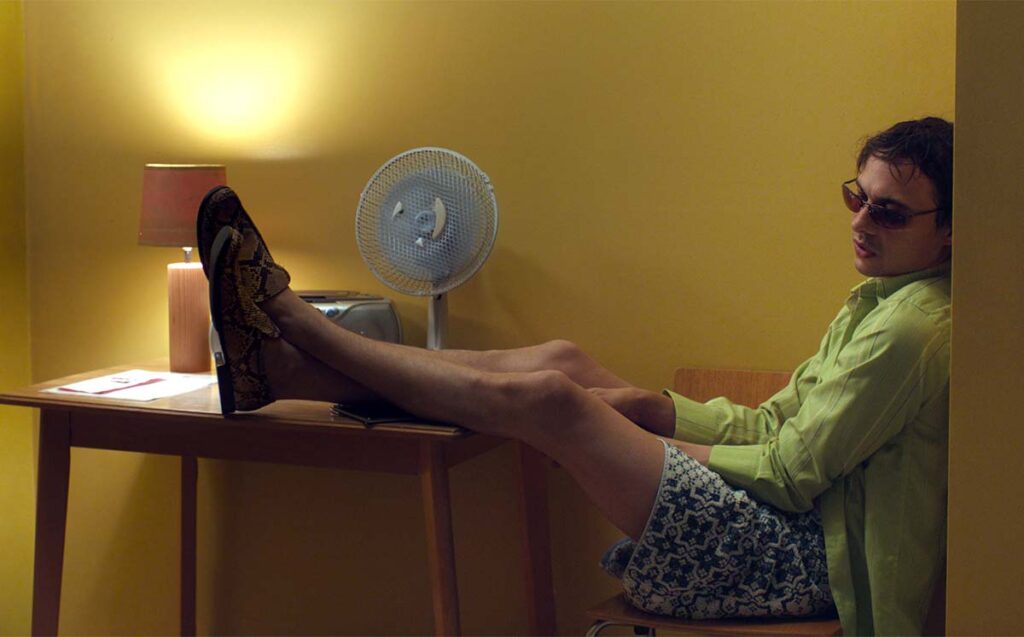
In Urchin, the first film written and directed by actor Harris Dickinson, Mike (Frank Dillane) is a homeless British addict who gets jailed for a strong-arm robbery. Released on paroled with eight months of sobriety, Mike gets placed into a free apartment and a job with a very understanding boss, and he starts to forge healthy friendship with workmates.
The problem is that Mike thinks that society owes him. I’m not trying to get all Twelve-Steppy, but nobody is going to recover from addiction without accountability and gratitude, which Mike does not. Sure enough, Mike is frustrated by a normal minor responsibility and … Urchin is basically an exercise of waiting for Mike to blow it.
Critics have been falling over themselves in praising Dickinson’s film and Dillane’s performance. Indeed, Dillane is extraordinarily convincing in his portrayal of a street addict; unfortunately, he doesn’t succeed in getting us to care about Mike.
With the exception of a couple unnecessary and distracting moments of magical realism, Dickinson directs very ably. A la Mike Leigh (very high praise), he brings us right into the gritty world of panhandling, street drug sales, the police station booking room and menial workplaces. (Mike Leigh never needed magical realism and could keep us engaged in a bleak story.)
But Dickinson is a better director than a writer. The audience never develops a stake in Mike’s predictable demise, which leaves Urchin as an Eat Your Broccoli movie.