This week, we can finally stop chasing the Oscar movies and watch some overlooked gems.
ON VIDEO
Augustine: obsession, passion and the birth of a science. Amazon (included with Prime), AppleTV, Vudu, YouTube and Google Play.
The Brainwashing of My Dad: Filmmaker Jan Senko expores how right-wing media impacts the mood and personality of its consumers as well as their political outlook – and she uses her own dad as a case study. Amazon, AppleTV, Vudu, YouTube and Google Play.
ON TV
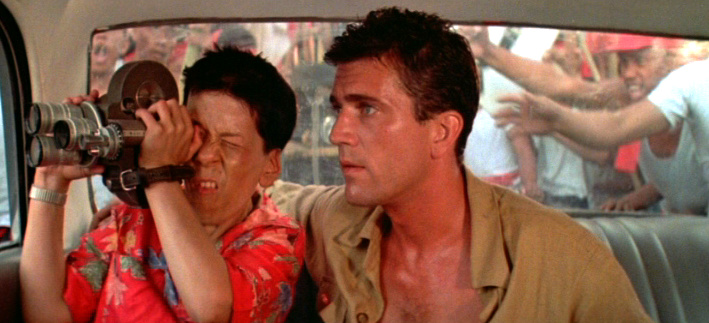
Linda Hunt and Mel Gibson in THE YEAR OF LIVING DANGEROUSLY
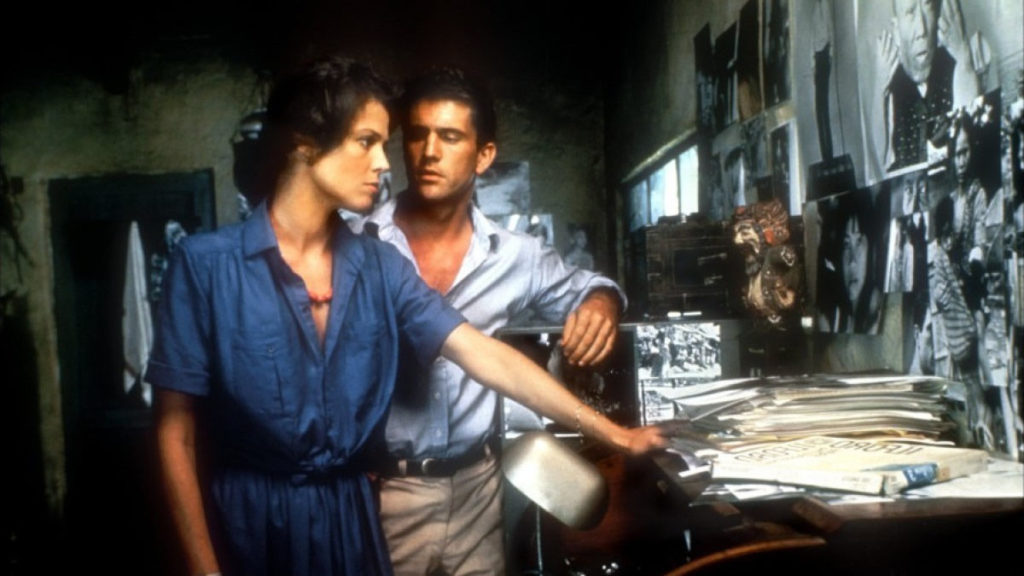
On May 2, Turner Classic Movies presents Peter Weir’s 1982 political thriller The Year of Living Dangerously, starring Mel Gibson and Sigourney Weaver. In the exotic setting of Sukarno’s Indonesia, this film has gripping intrigue, romance and a neo-noir ending.
The stars were each coming off their first major feature, Weaver’s Eyewitness with William Hurt and Gibson with the original Mad Max. The Year of Living Dangerously made them both solid A-list movie stars. Linda Hunt won an Oscar for her gender- and race-crossing performance as the local fixer.
Weir had made the fine Australian films Picnic at Hanging Rock, The Last Wave and Gallipoli. This major MGM release brought him success in his first Hollywood picture and empowered Weir to follow with Witness, Dead Poets Society, The Truman Show and Master and Commander.
Sigourney Weaver and Mel Gibson in THE YEAR OF LIVING DANGEROUSLY
Filmmaker Jan Senko’s dad Frank in THE BRAINWASHING OF MY DAD
How the hell did we get here – a moment when millions of Americans believe stuff that demonstrably isn’t true – and have this misconceptions drive them into unrighteous rage? For insight, let’s look at the prescient 2016 documentary The Brainwashing of My Dad, which saw some of this nightmare coming.
In 2016, I wrote, “Ever notice how people who watch a lot of Fox News or listen to talk radio become bitter, angry and, most telling, fact-resistant?” Then I couldn’t imagine an assault on a the US Capitol by propaganda-intoxicated hillbilly barbarians. In The Brainwashing of My Dad, filmmaker Jan Senko explores how right-wing media impacts the mood and personality of its consumers as well as their political outlook. Senko uses her own father Frank as a case study.
We see Frank Senko become continually mad and, well, mean. And we hear testimony about many, many others with the identical experience. Experts explain the existence of a biological addiction to anger.
Senko traces the history of right-wing media from the mid-1960s, with the contributions of Lewis Powell, Richard Nixon, Rush Limbaugh, Roger Ailes and Rupert Murdoch. Senko even gets right-wing wordsmith Frank Luntz on camera to explain the power of buzz words. If you don’t know this story (Hillary was right about the “vast, right-wing conspiracy”) , Senko spins the tale very comprehensively. If you do know the material (and my day job is in politics), it is methodical.
This topic is usually explored for its impact on political opinion. Senko’s focus on mood and personality is original and The Brainwashing of My Dad contributes an important addition to the conversation. One last thing about the brainwashing of Senko’s dad – it may not be irreversible…
I first reviewed The Brainwashing of My Dad for its U.S. Premiere at Cinequest 2016. The Brainwashing of My Dad is available streaming on Amazon, AppleTV, Vudu, YouTube and Google Play.
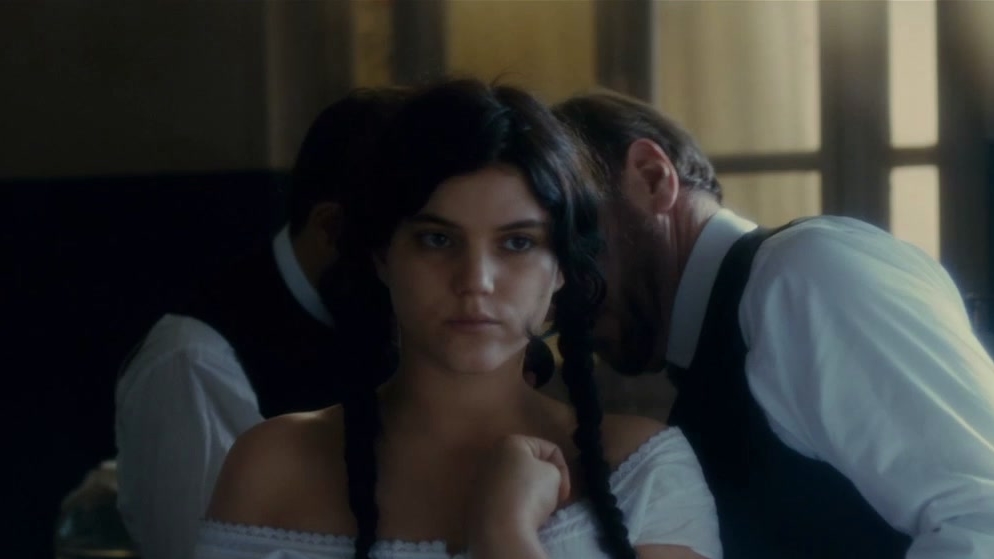
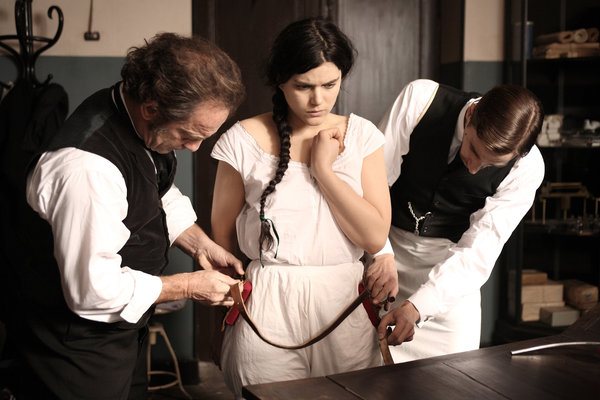
Vincent Lindon (left) and xxxxx (center) AUGUSTINE
The absorbing French drama Augustine is based on the real work of 19th century medical research pioneer Jean-Martin Charcot, known as the father of neurology. A young kitchen maid begins suffering wild seizures and is brought to Charcot’s research hospital. He ascertains the triggers for the seizures, and begins to close in on cure. Needing funding for his research, he triggers her seizures before groups of his peers; he is showing off his research, but it’s clear that his affluent male audience is titillated by the comely girl’s orgasmic thrashes.
She is drawn to this man whose kindness to her belies their class difference and whose brilliance is the key to her recovery. The good doctor intends to cure her – but not until she has performed for his potential funders. She is unexpectedly cured just before Charcot’s most important demonstration, and she gets to decide whether to continue her exploitation. In the stunning conclusion, she gets the upper hand and her simmering feelings erupt.
The fine French actor Vincent Lindon (Mademoiselle Chambon) excels at playing very contained and reserved characters, and here he nails Charcot’s clash of decency and professional ambition.
The French pop singer Soko is captivating as his patient. I noted the feral fierceness and simmering intensity of Soko in The Stopover, a film that I saw at the San Francisco International Film Festival (SFFILM).
It’s an auspicious first feature film for writer-director Alice Winocour. She has constructed a story that about two sympathetic characters whose interests converge, then diverge and then… Since Augustine, Winocur has co-written the wonderful Mustang and directed Disorder.
Augustine is available to stream from Amazon (included with Prime), AppleTV, Vudu, YouTube and Google Play.
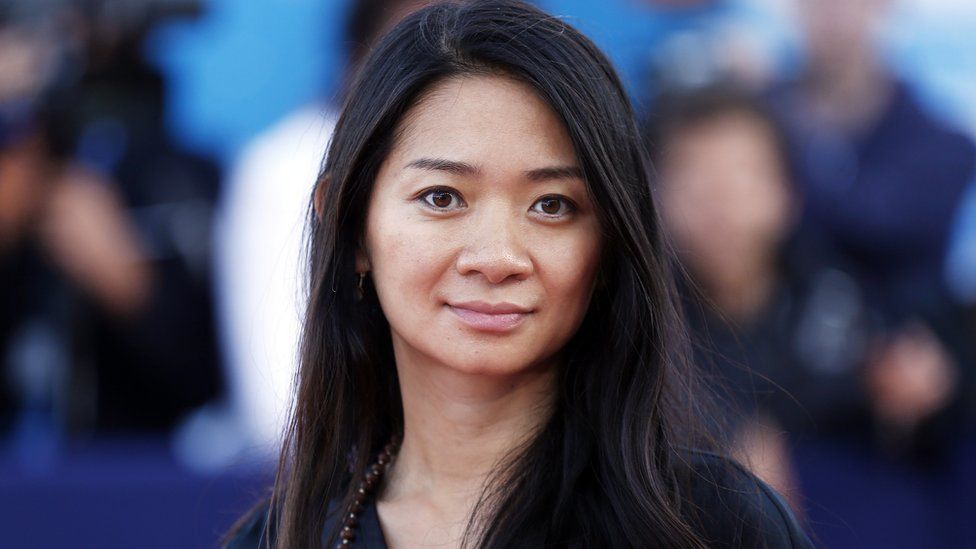
The Oscars will presented Sunday night, and I expect deserving Oscars for Nomadland (Best Picture), Chloe Zhao (Director), Chadwick Boseman (Actor), Another Round (International Feature) and Sound of Metal (Sound). I’ll generally be happy with any wins by Nomadland, Sound of Metal and Ma Rainey’s Black Bottom Blues.
Zhao is also nominated for Original Screenplay and Editing. I’m annoyed that IMDb and some other sources describe Chloé Zhao as a “Chinese director”. Although she was born in Beijing, I consider Zhao a Chinese-born American filmmaker. As a child, she left China for a London boarding school and finished high school in LA; she graduated from college and film school in the US, and has made all of her movies in America. Besides, what other filmmaker has set her last three movies in South Dakota, for chrissakes?
This Oscar week, I’ve also highlighted what I think is the Most Overlooked Movie of 2020: Driveways.
And here’s my remembrance of cult director Monte Hellman.
ON VIDEO
See the Oscar-nominated films (IN THIS ORDER).
Nomadland: refusing to be defeated. THE YEAR’S BEST MOVIE. Hulu.
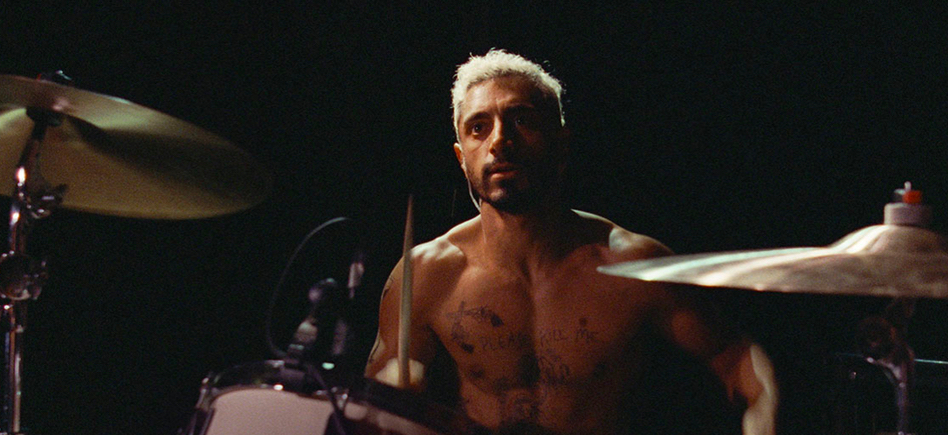
Sound of Metal: Seeking anything but stillness. Amazon (included with Prime).
Minari: who gets to decide on a family’s dream? Amazon, AppleTV, Vudu, YouTube, Google Play.
ON TV
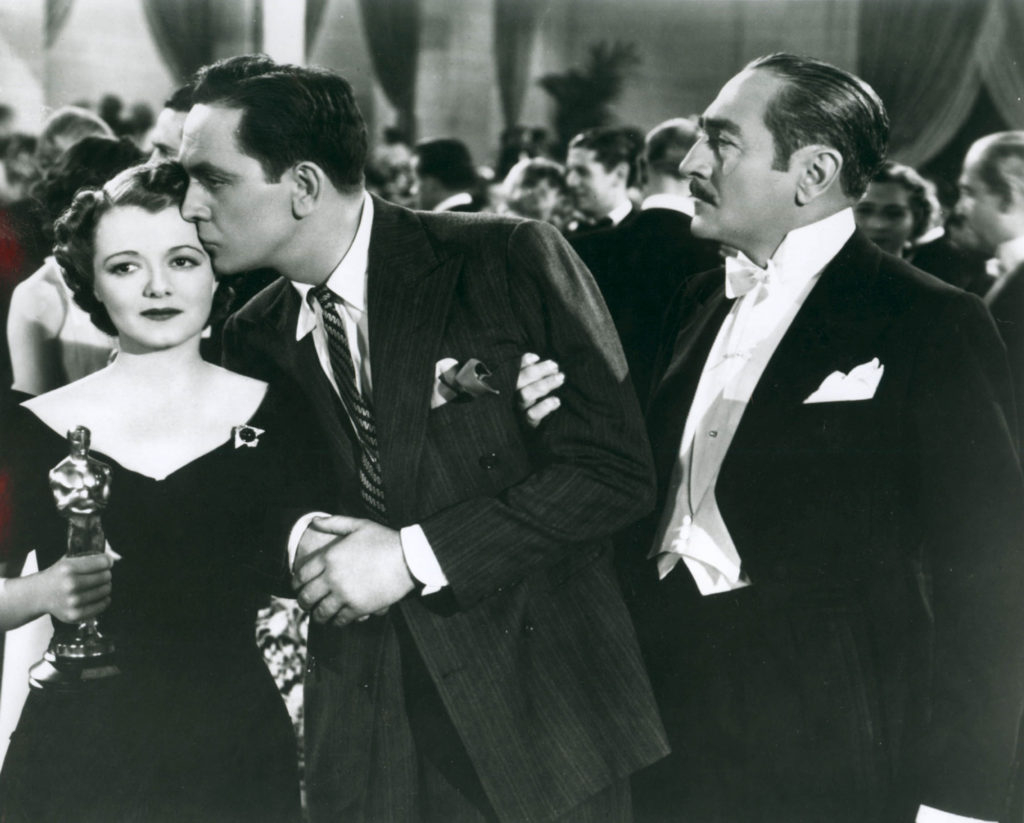
Janet Gaynor, Fredric March and Adolphe Menjou in A STAR IS BORN
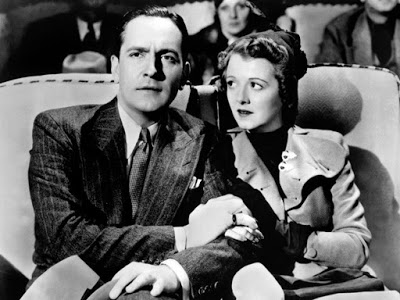
Compare and contrast. On April 26, Turner Classic Movies is showing the 1937, 1954 and 1976 versions of A Star Is Born. In all three, the story is about an entertainment superstar self destructing from narcissism and addiction, with a sinking career eclipsed by that of a lover-protege. Each version features with A-list talent, but some are much better than others.
The 1937 original stars Janet Gaynor and Fredric March, with the screenplay adapted by Dorothy Parker and others from a story co-written by director William Wyler. The 1954 screenplay was adapted by Moss Hart, and the movie, starring Judy Garland and James Mason, was directed by George Cukor. The 1976 re-remake stars Barbra Streisand and Kris Kristoffersson (at his hunkiest) with a script by Joan Didion and John Gregory Dunne.
The 1976 film launched the producing career of Jon Peters, Streisand’s hairdresser boyfriend. Despite a terrible personal reputation, he went on to produce 52 more films before his career was extinguished by a #MeToo scandal.
My favorites are the 1937 original and the 2018 version (which TCM is not airing) with Bradley Cooper and Lady Gaga. Cooper also co-adapted the screenplay and directed; Lady Gaga shared the Oscar for Best Original Song for Shallow. The Streisand-Kristoffersson version is not good.
The real life basis of the story is said to be Barbara Stanwyck and her contemptible and obnoxious first husband Frank Fay. 16 years younger than Fay, Stanwyck married him when she was 21 and transitioning from chorus girl to movie ingenue. Within seven years, she had become a major movie star and had had enough of the fading vaudevillian Fay. By all accounts, Fay was a drunken, anti-Semitic, pro-fascist, wife-beater with a massive ego: Fred Allen said of Fay, “The last time I saw him he was walking down Lover’s Lane, holding his own hand.“
The Oscars are coming up on Sunday night, so here’s a plug for The Most Overlooked Movie of the Year. I can’t think of a more authentic movie about intergenerational relationships than the charming, character-driven Driveways. I saw this modest little indie at Cinequest, and it’s one of the Best Movies of 2020.
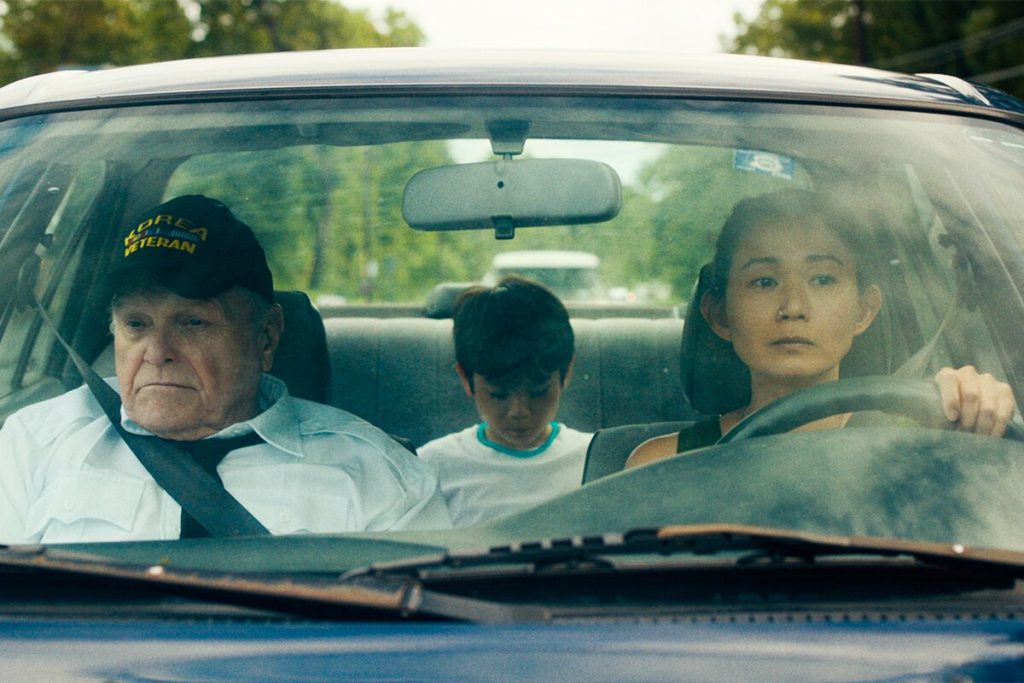
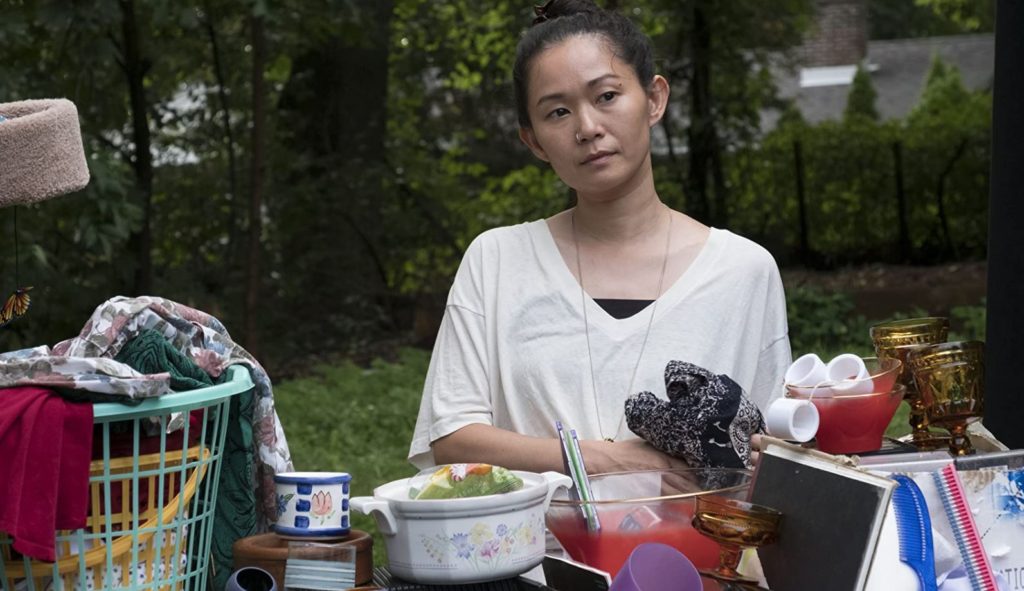
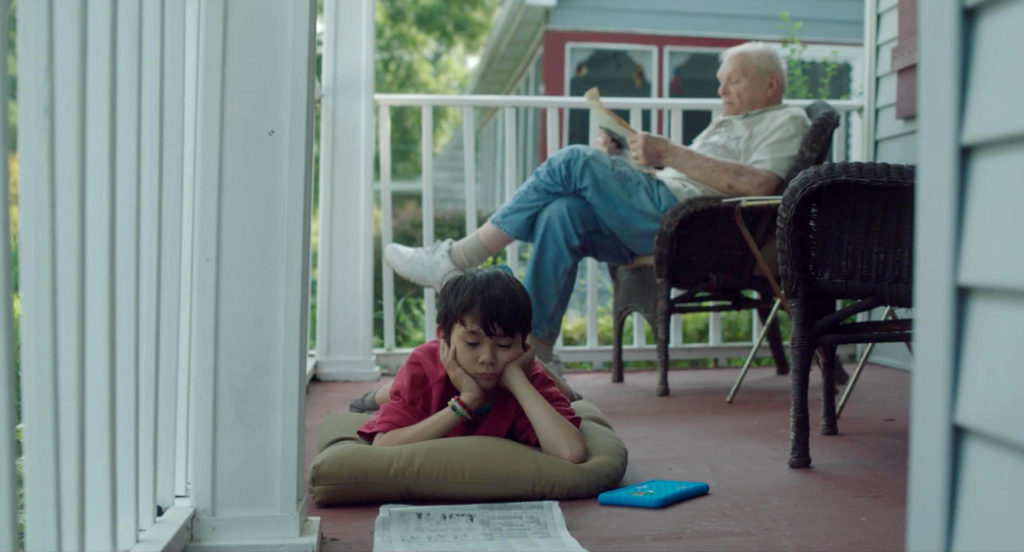
Kathy (Hong Chau) and her nine-year-old Cody (Lucas Jaye) arrive in a small town to clean out and flip the house of Kathy’s late sister. Kathy and her much older sister had lost touch,and Kathy is surprised and disheartened to discover that the sister had become a hoarder, making the clean-up job monumental. The octogenarian next-door neigbor Del (Brian Dennehy) watches from his porch.
All three are facing life challenges. Kathy is a single mom trying to navigate a career change; now she has an unwanted chore and some guilt from not reviving the relationship with her sister. Cody is a sensitive kid who isn’t comfortable in many situations and who has an embarrassing reaction to anxiety. Del is grieving the loss of his wife and facing the loss of his independence. Things do not go as the audience expects.
Hong Chau in DRIVEWAYS
Director Andrew Ahn, by dropping subtle clues, lets the audience connect the dots about the characters and their back stories. We learn about the mom-son relationship when she discards a cigarette on the ground and he wordlessly grinds it out with his shoe. We learn about Del’s fears about his independence when he glances at an increasingly forgetful buddy.
Driveways is a three-hander and all three actors, Hong Chau, Lucas Jaye and Brian Dennehy are superb. 91-year-old character actor Jerry Adler is brilliant in a few very brief scenes.
This was the final performance for Brian Dennehy (scroll down to bottom for my remembrance). His performance – so remarkably genuine and subtle – in Driveways is award-worthy. Dennehy’s facial expression, in one fleeting moment, conveys Del’s profound regret about a mistake that he made with his own daughter.
Brian Dennehy and Lucas Jaye in DRIVEWAYS
Driveways played at Cinequest 2020 with an in-person appearance by Hong Chau, which I skipped because I sized it up as too sappy. I was wrong.
You know how children are drawn to some kids and not to others? Driveways perfectly captures the joy of making friends when a kid discovers another kid with common interests.
That authenticity is exactly what keeps Driveways from being corny. There’s not a hint of manipulation from Ahn. That’s why Driveways is that rarity, a recommendation from The Movie Gourmet that can be described as”heartfelt”.
Cody is as much the lead character as are the mom and the old guy. The Wife thinks that the movie is too slow for kids. But I’d give it a try and challenge the kids. It’s only 83 minutes, and I think kids will be drawn to the portrayal of a kid that is so real-world and unlike the stock characters spoon fed them by the likes of the Disney Channel.
Driveways is available to stream on all the major platforms.
Minari: who gets to decide on a family’s dream? Amazon, AppleTV, Vudu, YouTube, Google Play.
ON TV
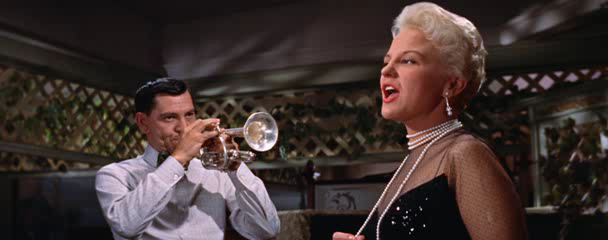
Jack “Dragnet” Webb and Peggy Lee in PETE KELLY’S BLUES
On April 21, TCM brings us something COMPLETELY different, the 1955 Pete Kelly’s Blues, directed by and starring Jack Webb, who we all know from TV’s Dragnet. Made at the downturn of the Big Band Era, Pete Kelly’s Blues is set at during Prohibition in the infancy of Big Bands.
It’s a fairly routine drama about a small time bandleader on the outs with a dangerous crime boss, but Jack Webb loved jazz and worked hard to get the music in the movie right, resulting in quite the period document. Peggy Lee received a Supporting Actress Oscar nomination for portraying an alcoholic vocalist. There’s an unforgettable cameo performance by Ella Fitzgerald at the top of her game. The house band includes many real-life musicians who played with Benny Goodman, Bing Crosby and the like, including Matty Matlock, Eddie Miller and Jud De Naut.
Webb never had much range as an actor, but the rest of the cast is excellent: Janet Leigh, Edmond O’Brien, Lee Marvin, Andy Devine, Jayne Mansfield and Harry Morgan. Not a great flick, but worth a look for the music.
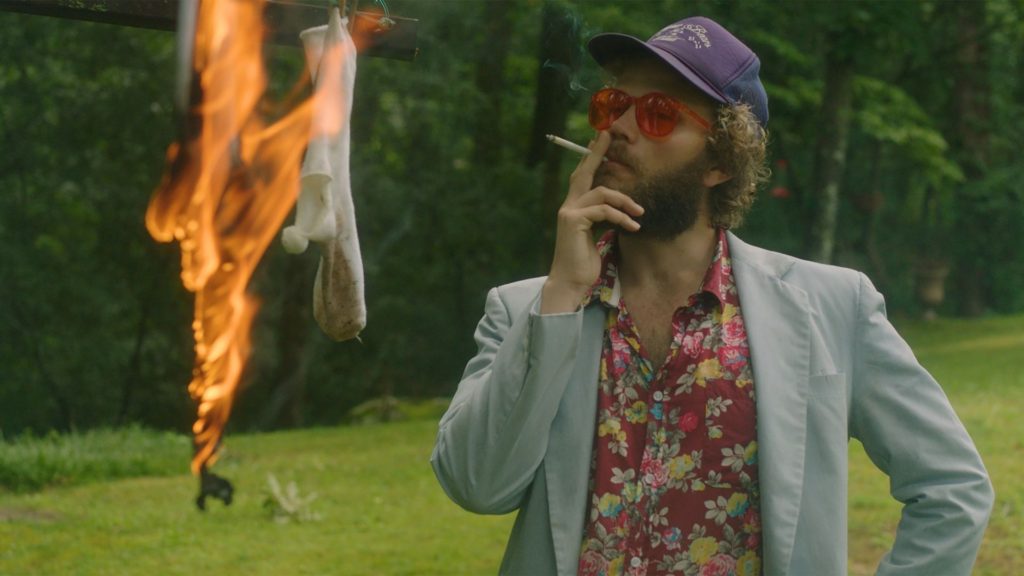
A scene from Bo Maguire’s’s film SOCKS ON FIRE, playing at the 2021 San Francisco International Film Festival, April 9 -18, 2021. Courtesy of SFFILM
It’s time for this year’s San Francisco International Film Festival (SFFILM), which opens tomorrow, April 9, and runs through April 18. This year, you can ATTEND AT HOME, so make the pandemic work for you and stream these movies. Here’s my first look at the 2021 SFFILM. Today or tomorrow, I’ll be posting recommendations of three very special indies.
ON VIDEO
Nomadland: refusing to be defeated. THE YEAR’S BEST MOVIE. Hulu.
The Father: as reality shifts. Amazon, Vudu, YouTube, Google Play.
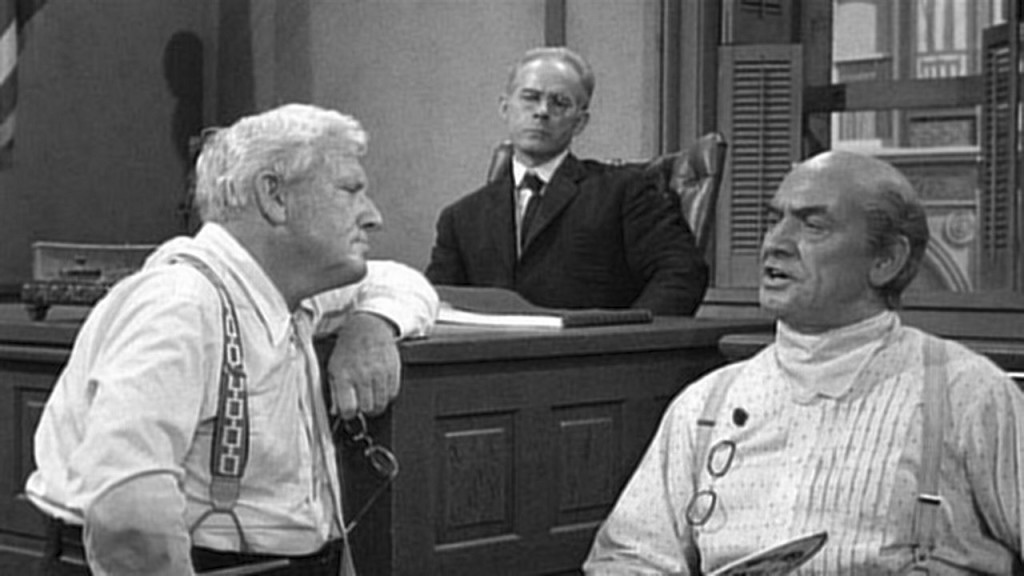
On April 12, Turner Classic Movies presents one of the greatest ever courtroom dramas, Stanley Kramer’s Inherit the Wind from 1960. The story is taken from the real-life Scopes Monkey Trial in 1925, so it has elements of the culture wars and politics that resonate today. Spencer Tracy and Fredric March are superb as the warring thought-leaders (based on Clarence Darrow and William Jennings Bryan).
Spencer Tracy, Harry Morgan and Fredric March in INHERIT THE WIND
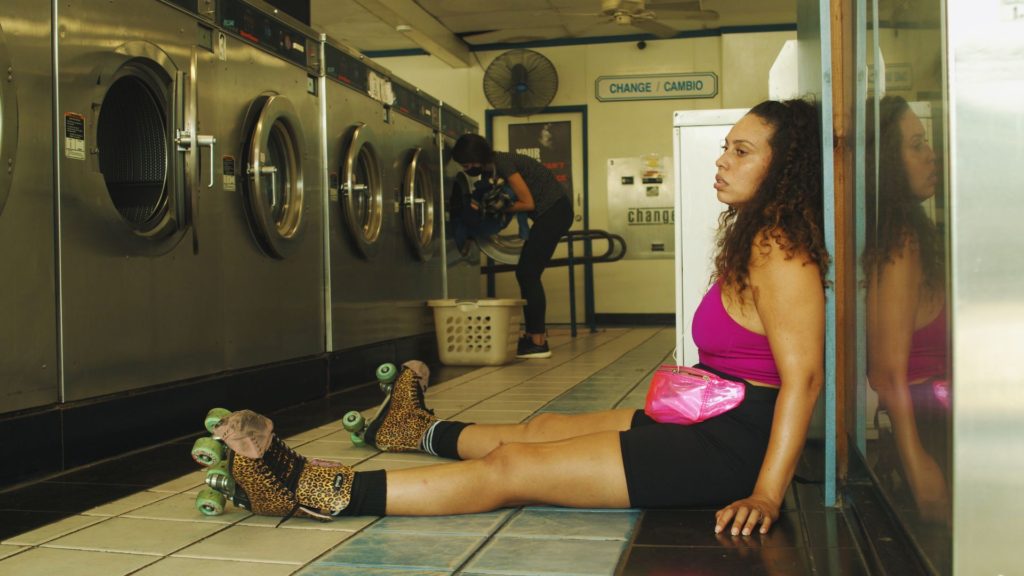
Kelley Kali in a scene from Kelley Kali’s and Angelique Molina’s film I’M FINE (THANKS FOR ASKING), playing at the 2021 San Francisco International Film Festival, April 9 -18, 2021. Courtesy of SFFILM
This week, we’re between Bay Area (virtual) film festivals – Cinequest, which just wrapped up on Tuesday, and the San Francisco International Film Festival (SFFILM), which opens next weekend. My CINEQUEST page has links to features, a filmmaker interview and comments on 19 Cinequest films. My SFFILM preview is coming very soon.
REMEMBRANCE
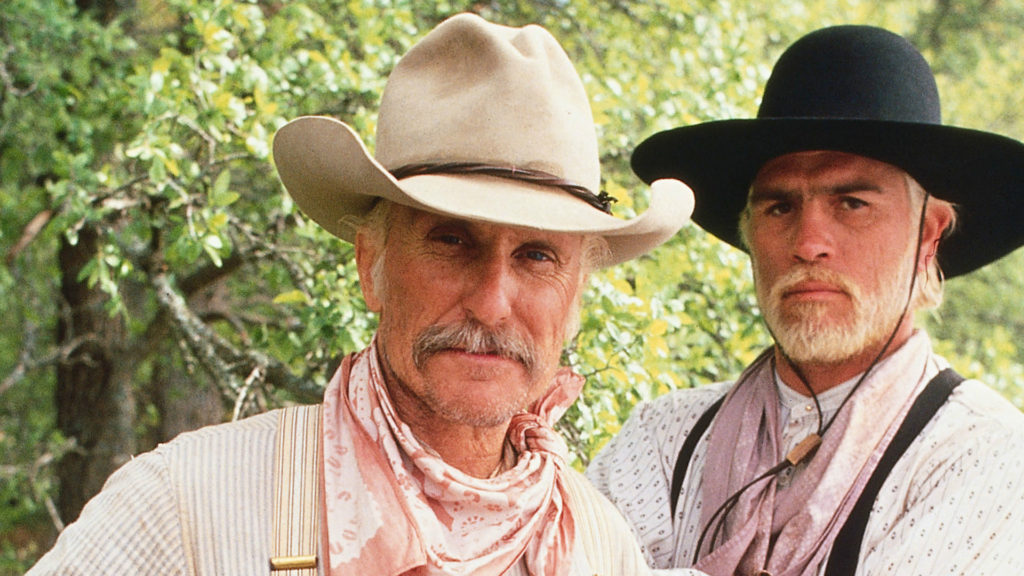
Robert Duvall and Tommy Lee Jones in Larry McMurtry’s LONESOME DOVE
Writer Larry McMurtry told powerful, unflinching, character-centered stories of the Old West (Lonesome Dove) and the contemporary West (The Last Picture Show). He won an Oscar for his Brokeback Mountain screenplay, and his novels were the basis for Hud and Terms of Endearment.
ON VIDEO
The most eclectic watch-at-home recommendations you’ll find ANYWHERE:
Nomadland: refusing to be defeated. THE YEAR’S BEST MOVIE. Hulu.
The Father: as reality shifts. Amazon, Vudu, YouTube, Google Play.
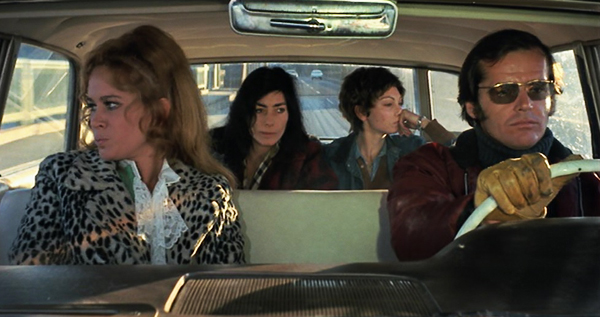
On April 5, Turner Classic Movies presents Jack Nicholson as the iconic 1970s anti-hero in Five Easy Pieces. It’s a profound and deeply affecting study of alienation. Nicholson plays someone who has rejected and isolated himself from his dysfunctional family. Then he must embark on the epic road trip back to the family home. Amid the drama, there is plenty of funny, including the funniest sandwich order in the history of cinema.
Don’t miss this beautifully-written essay on Five Easy Pieces by Steven Gaydos in Variety. Gaydos gets the impact on the 1970 audience just right and shines overdue credit on its female screenwriter Carole Eastman. There’s also a tidbit on Helena Kallianiotes, the funniest hitch hiker in movie history.
Karen Black, Helena Kallianiotes, Toni Basil and Jack Nicholson in FIVE EASY PIECES
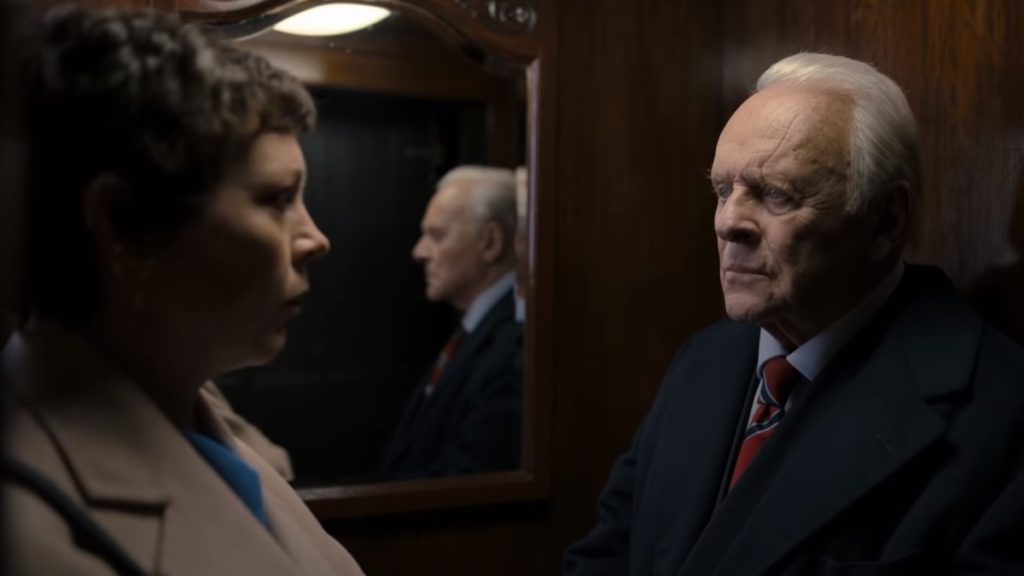
Anthony Hopkins and Olivia Colman deliver heartbreaking performances in The Father, an unsettling exploration of memory loss. I saw The Father while covering the virtual Mill Valley Film Festival in October, and it’s now widely available to stream (just before the Oscars). It’s on my list of Best Movies of 2020.
The most eclectic watch-at-home recommendations you’ll find ANYWHERE:
Nomadland: refusing to be defeated. THE YEAR’S BEST MOVIE. Hulu.
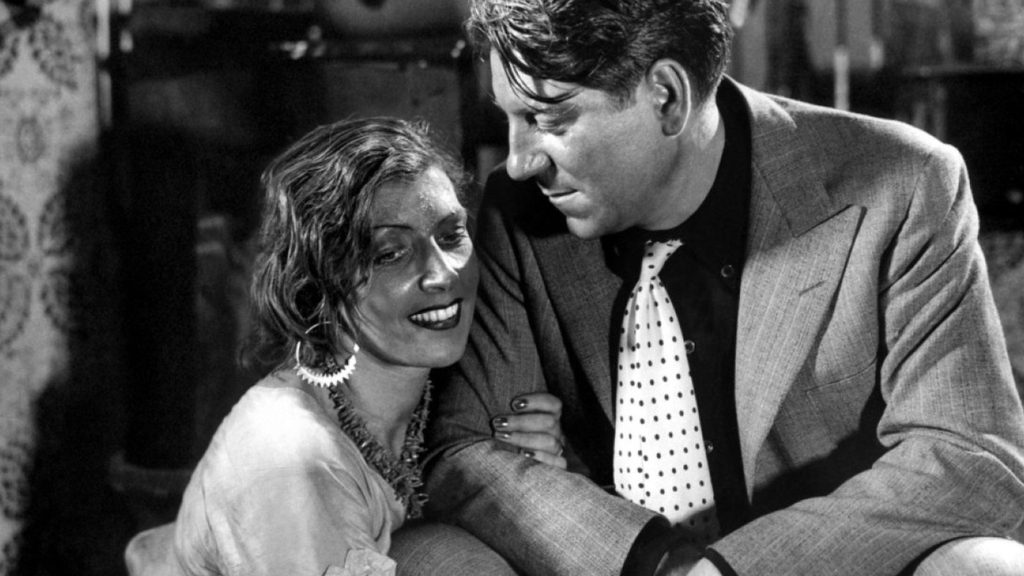
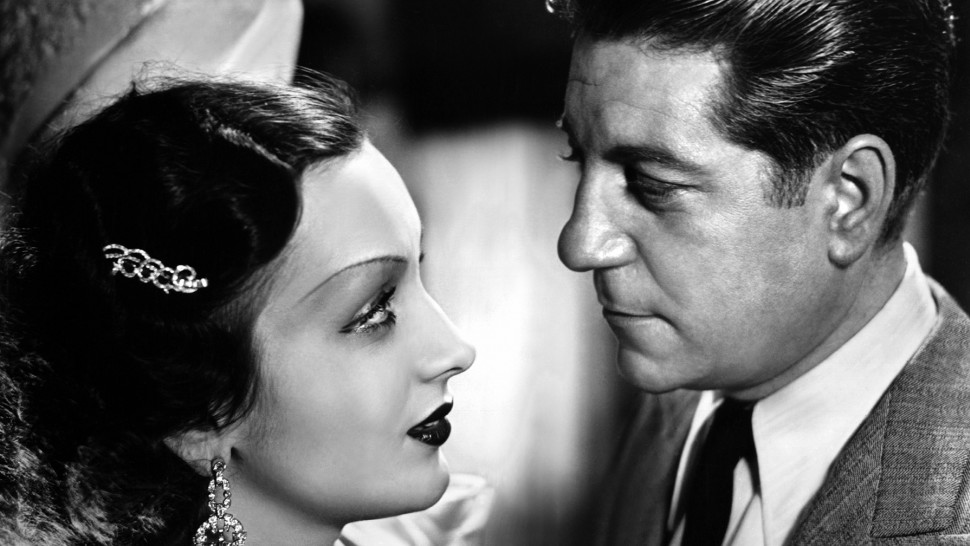
On March 27 and 28, Turner Classic Movies brings us one of the greatest movie stars, Jean Gabin in a pre-noir film, Pépé le Moko. Probably the greatest male French movie star ever, Gabin had dominated prewar French cinema with La Grande Illusion, Port of Shadows and Le Bete Humaine. After the war, he aged into noir (Touchez Pas aux Grisbi, Razzia) and, in the 1960s, into neo-noir (Any Number Can Win, The Sicilian Clan). Gabin oozed a seasoned cool (like Bogart) and imparted a stately gravitas to his noir and neo-noir characters.
Jean Gabin is on my very short list of the most perpetually cool humans to ever walk the planet, along with Dean Martin, Ben Gazzara, Joan Jett and Barack Obama.
In Pépé le Moko, Gabin plays the titular Algiers gangster who operates, immune from police interference, in the Casbah. The cops have been trying to lure him out of the Casbah for ages – and then they learn that he is obsessed with a woman…
Pépé le Moko was filmed in 1937, four years before the emergence of the film noir movement, an American cinematic phenomenon soon appreciated, named, and joined by the French. Pépé le Moko foreshadows noir with its elements of the dark, shadowy underworld setting and, of the course, the protagonist who has a dame for a weak spot. TCM is airing Pépé le Moko on TCM’s addictive Noir Alley, with intro and outro by Eddie Muller.
Mireille Balin and Jean Gabin in PEPE LE MOKOJean Gabin in PEPE LE MOKO
Anthony Hopkins and Olivia Colman deliver heartbreaking performances in The Father, an unsettling exploration of memory loss.
As we meet the elderly Anthony (Hopkins), he is insisting on independence that he can no longer sustain. That makes it hard on his daughter Anne (Colman), who is trying to keep him safe and healthy, despite his resistance. But Anthony is losing his memory and becoming ever more suspicious. Soon, all the characters are experiencing disorentation, even fantasies and hallucinations.
The Father is the directing debut for Florian Zeller, who wrote the original play. Along with the superb acting, the key to The Father is Zeller’s ever shifting of reality as understood by the characters and by the audience. As we think we understand what is going on and then have it unraveled, we, like Anthony, lose confidence in our orientation.
Anthony Hopkins has an Oscar and a long list of great performances (The Silence of the Lambs, The Remains of the Day, Nixon, The Human Stain, The Two Popes), but none is better than this one. His Anthony is a man whose characteristic wilfulness is finally self-defeating; he is a man ever confident of his opinions, but the factual basis for those opinions is eroding. He is a man who firmly believes he is always right, facing a new reality in which he demonstrably is not.
Colman is also superb as the able and devoted daughter who is hurt by her father’s perception that she is betraying him. The rest of cast – Rufus Sewell, Imogen Poots, Mark Gattis and Olivia Williams – is impeccable.
The Father, which I saw while covering the virtual Mill Valley Film Festival in October, will be widely available to stream on Friday. It’s on my list of Best Movies of 2020. It has earned six Oscar nominations, including Best Picture and acting recognition for Hopkins and Colman.