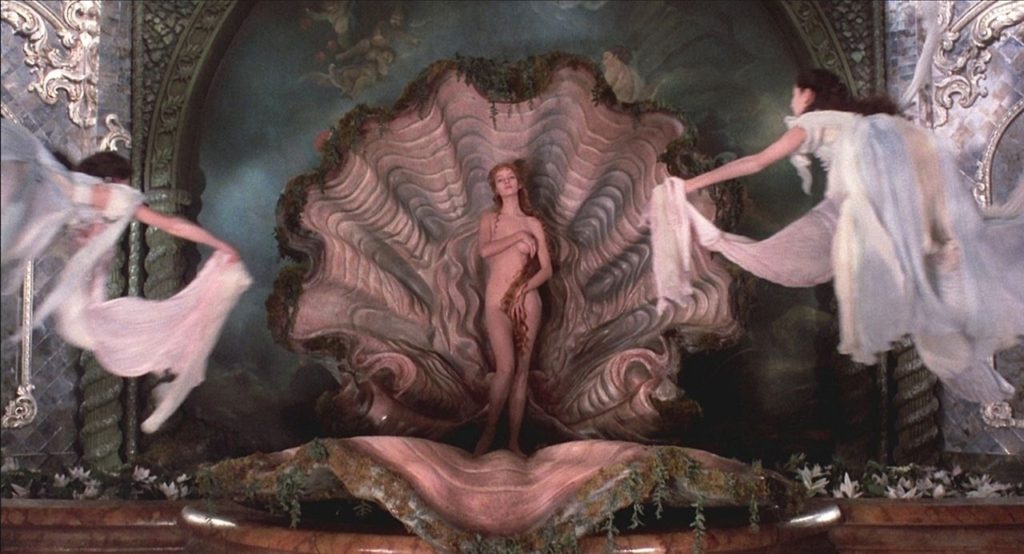
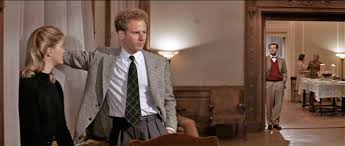
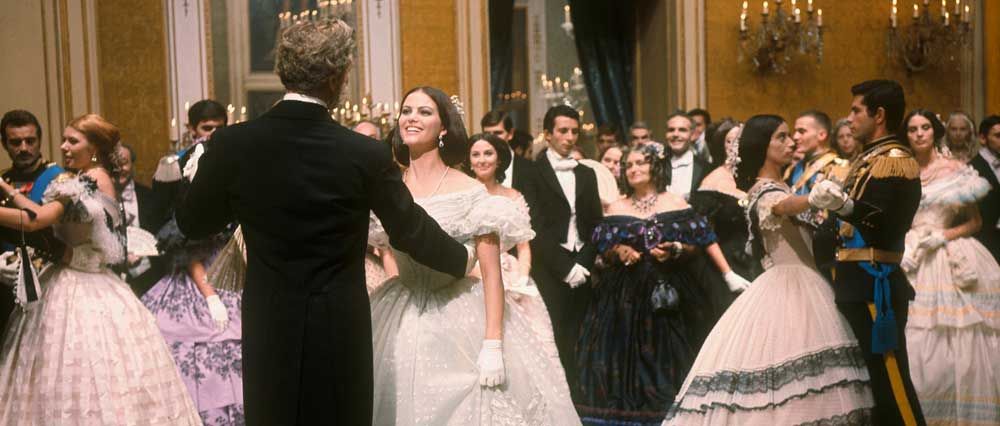
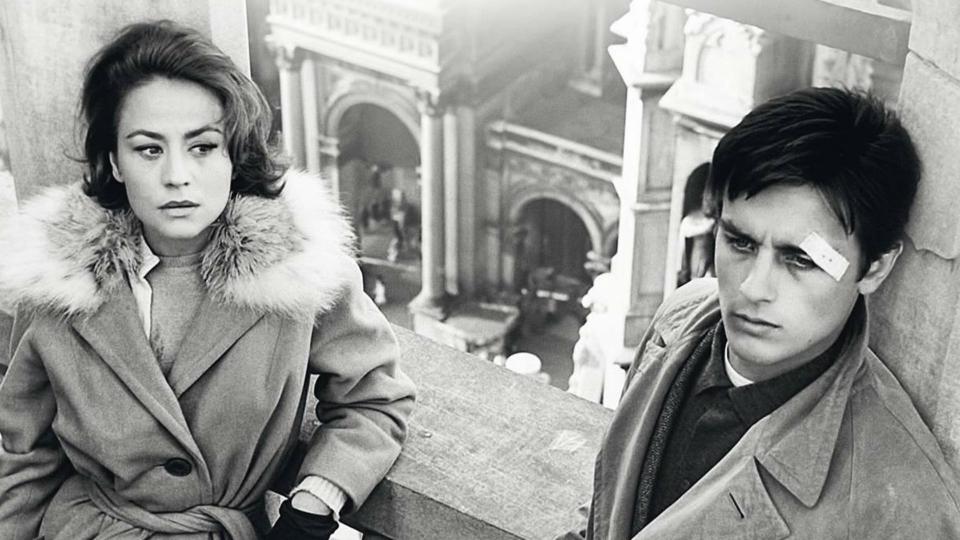
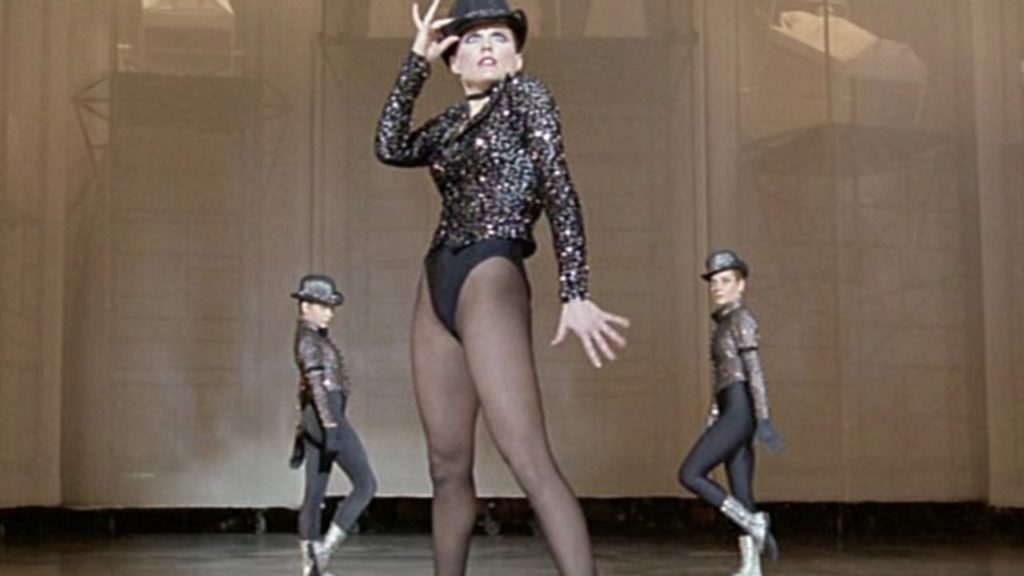
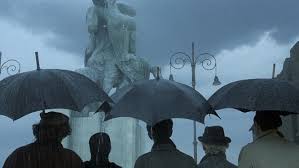
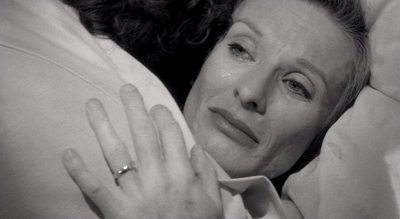
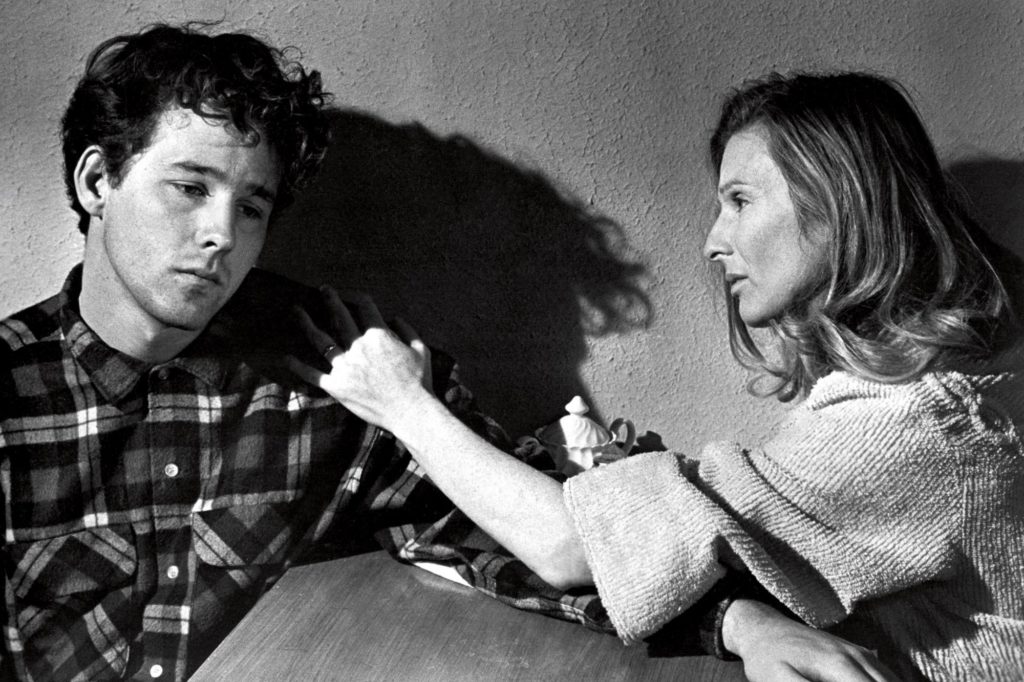
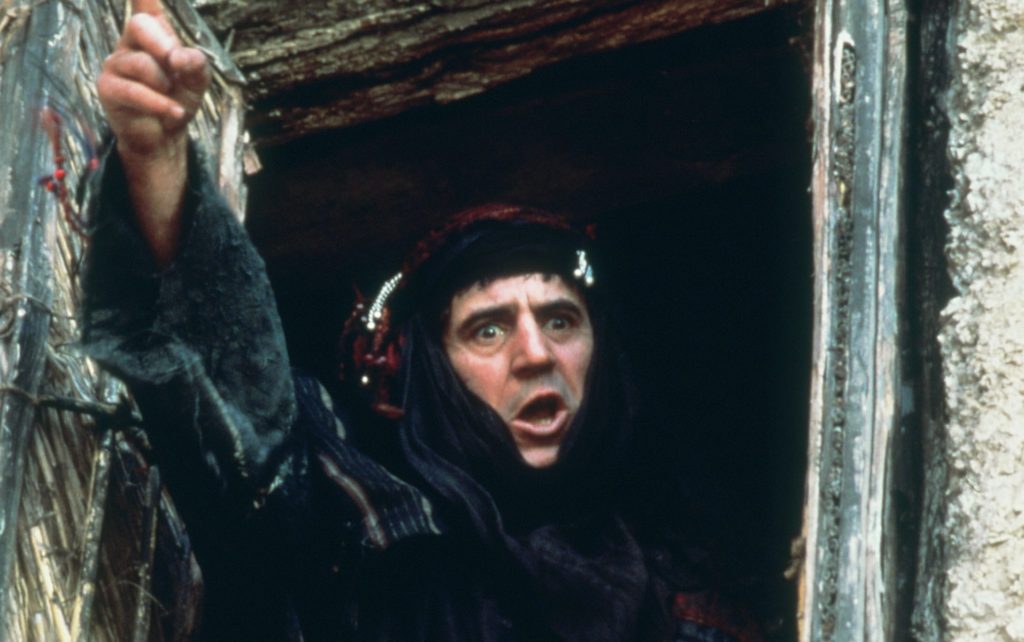
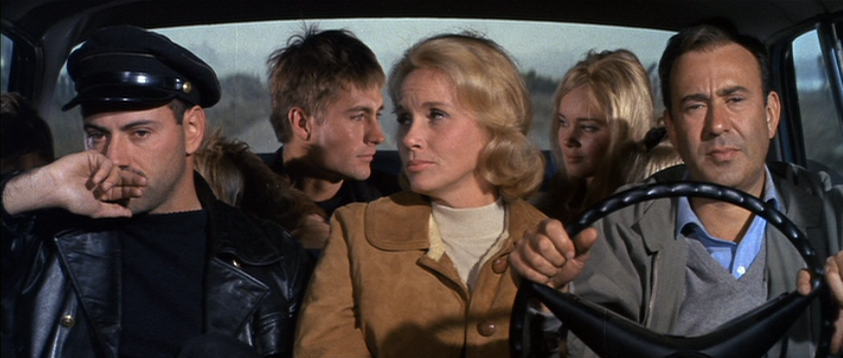
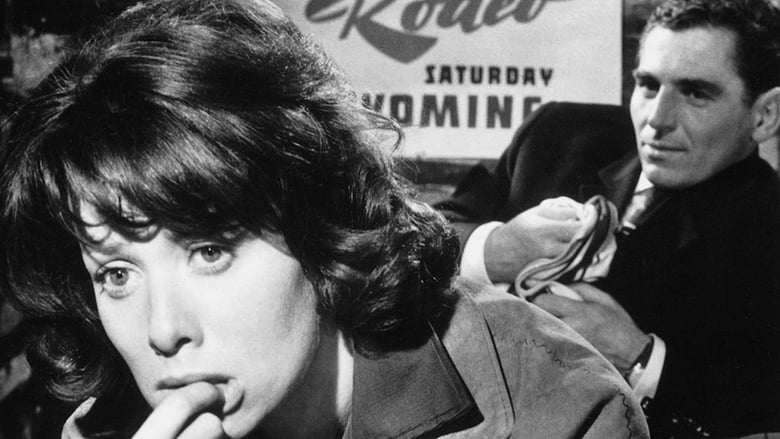
Cinema is a visual art form, and images, along with the music, sound and the dialogue, tell the story. I’m thinking about this obvious point because the great cinematographer Giuseppe Rotunno died last week at age 97. Rotunno could frame showy eye candy, of course, like his shot from Terry Gilliam’s The Adventures of Baron Munchausen above. But, check out how Rotunno could tell the audience about the characters and their relation to each other in the stills below from Mike Nichols’ Carnal Knowledge, Luchino Visconti’s The Leopard and Rocco and His Brothers, Bob Fosse’s All That Jazz and Federico Fellini’s Amarcord.
Of course, film imagery is even more impactful when the images move. To appreciate how intoxicating Rotunno’s cinematography could be, I recommend this brilliant video essay from Scout Tafoya on RogerEbert.com.
CARNAL KNOWLEDGETHE LEOPARDROCCO AND HIS BROTHERSALL THAT JAZZAMARCORD
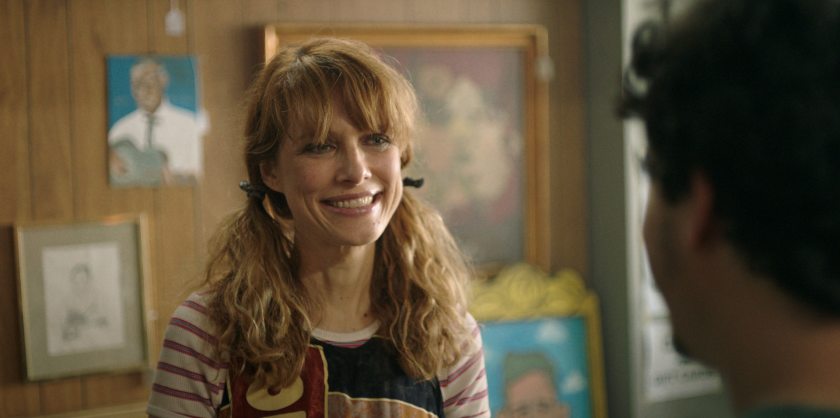
I first became aware of Cloris Leachman, who died last week at age 94, in 1971 – in her Oscar-winning performance in The Last Picture Show. Then I enjoyed her as Frau Blücher in Young Frankenstein and as Phyllis Lindstrom in The Mary Tyler Moore Show. Much later, as I delved into film noir, I learned that her movie debut was in the startling opening scene of the 1955 atomic noir Kiss Me Deadly.
What I didn’t know was that Leachman had, beginning in 1947, already amassed over 100 of her 285 screen credits before The Last Picture Show. Before her great run in the 70s, she had a prolific career in television, including guest appearances on Perry Mason, Mannix, The Big Valley, Dr. Kildare, Gunsmoke and 77 Sunset Strip. She even appeared 28 times in a recurring role on Lassie.
But Leachman will be forever remembered for her performance at age 45 as Ruth Popper in The Last Picture Show. Ruth Popper is the neglected wife of the football coach in a windswept Texas hamlet, a woman trapped in the most profound loneliness. She seeks comfort in an affair with Sonny (Timothy Bottoms), the local good kid, who is 18 and is entranced by the teen vixen Jacy (Cybill Shepherd).
Leachman’s performance is heartbreaking – the temporary sexual pleasure never entirely mitigates Ruth’s sadness, which is always peeking through. This relationship cannot last, and Ruth’s final monologue with Sonny is devastating.
Cloris Leachman in THE LAST PICTURE SHOW
When I saw The Last Picture Show at San Jose’s domed Century Theaters in 1971, I was the same age as the main characters – like Sonny – and I was especially interested in their sexual escapades. It’s a remarkable thing to watch a coming of age story about 18-year-olds when you are 18 and then again forty years later when you know stuff.
In 2019, the Roxie Theater screened The Last Picture Show – with the film’s legendary director Peter Bogdanovich in attendance, and I wrote about it: The Last Picture Show. The film is certainly a coming-of-age story, and the plot is about the kids. But the depth of the film – and what makes it a masterpiece – is in the middle-aged characters and how they face the real-life ennui and angst that is still ahead for the teenagers. They are played by Leachman, Ben Johnson, Ellen Burstyn and Clu Gulager. Johnson’s Sam the Lion is the anchor of the film (and Johnson won his own Oscar for his performance).
So, pour yourself a Dr. Pepper or a Jack Daniels, head to Anarene, Texas, and watch Cloris Leachman in The Last Picture Show. You can stream it from Amazon, AppleTV, Vudu, YouTube, Google Play and other services.
Timothy Bottoms and Cloris Leachman in THE LAST PICTURE SHOW
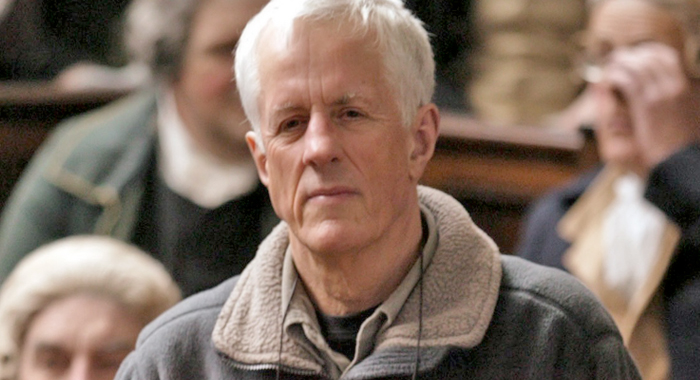
Michael Apted. Photo credit: First Run Features courtesy Everett Collection.
The director Michel Apted has died at age 79, leaving us with one of the most significant documentary series in cinema history (and on my list of Greatest Movies of All Time). Apted’s 7 Up series explicitly documented the impacts of societal privilege and evolved into a holistic observation of humanity.
Each of the nine films followed the same fourteen British children, filming snapshots of their lives at ages 7, 14, 21, 28, 35, 42, 49, 56 and 63. Choosing kids from different backgrounds, the series started as a critique of the British class system, but has since moved into a broader exploration of what factors can lead to success and happiness at different stages of human life.
Apted was the hands-on researcher, not the director, on Seven Up! and then directed the next eight films in the series. Apted was a big time movie director (Coal Miner’s Daughter, Gorillas in the Mist). It is remarkable that he returned so faithfully to his subjects in the Up series.
Because Apted included clips from earlier films to set the stage for each character, you don’t need to watch all nine movies. The earlier films are difficult, perhaps impossible, to find streaming, but the entire series (Seven Up!, Seven Plus Seven, 21 Up, 28 Up, 35 Up, 42 Up, 49 Up, 56 Up) has been available on Netflix DVDs (for anyone that still subscribes). 42 Up, one the most powerful films in the series, is available to stream from Amazon, AppleTV, Vudu, YouTube and Google Play. 56 Up can be streamed from AppleTV, Hoopla and kanopy.
I saw 63 Up in 2019 at the Mill Valley Film Festival, with Apted in attendance. Apted was then 78, and hoped to direct 70 Up if he still had mental acuity. Apted acknowledged that his biggest mistake was not including enough girls at the outset (four girls out of fourteen kids); he tried to address this in the later films by expanding the roles of several female partners of the male subjects.
To give you a feel for Michael Apted’s body of work, here’s the trailer for 63 Up.
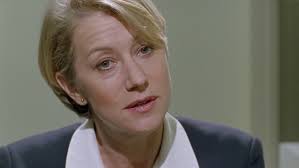
Not The Wife, but Helen Mirren in PRIME SUSPECT symbolizes the twenty seasons of British crime dramas we feasted upon together this year.
Happy 20th Anniversary to The Wife, also known as Lisa, The Love of My Life!
But – this dreadful year was like no other. We’ve sheltered in place together 24/7, with each of us working from home, for ten months. Overall, the year has been horrible, but our mutual confinement hasn’t been.
Like me, she has been evangelizing for Driveways, 2020’s most overlooked film. We enjoyed lighter fare, too: Lovebirds, Inmate #1: The Rise of Danny Trejo, Mucho, Mucho Amor: The Legend of Walter Mercado, The Speed Cubers and Voices of Fire.
This year we binged more episodic television together than ever, like The Crown (and, yes, Tiger King). Her favorite has been Derry Girls. And AT LEAST TWENTY FULL SEASONS of British crime dramas – Prime Suspect, Marcella, Vera, DCI Banks, Shetland, Deadwater Fell, Hidden, Broadchurch. As far as we can tell, England, Scotland and Wales are filled with entertaining murders.
As usual, I got to introduce her to some film classics: Key Largo, Witness to Murder and Le Boucher.
Once again, she tolerated my spending huge chunks of time covering Cinequest and Noir City in person and the SXSW, Mill Valley Film Festival, Cinequest’s Cinejoy and Noir City (again) virtually.
She’s the biggest fan and supporter of this blog DURING ALL OF ITS TEN YEARS, and I appreciate her and love her. Happy Anniversary, Honey!
Ennio Morricone, one of the greatest movie music composers (and perhaps the most iconic) has died. Among his 519 composing credits, he is most known for his groundbreaking scores in the Sergio Leone/Clint Eastwood Spaghetti Western trilogy: A Fistful of Dollars, For a Few Dollars More and The Good, the Bad and the Ugly. Morricone’s work was ever aspirational, seemingly seeking to become iconic, and he sure didn’t believe in understatement.
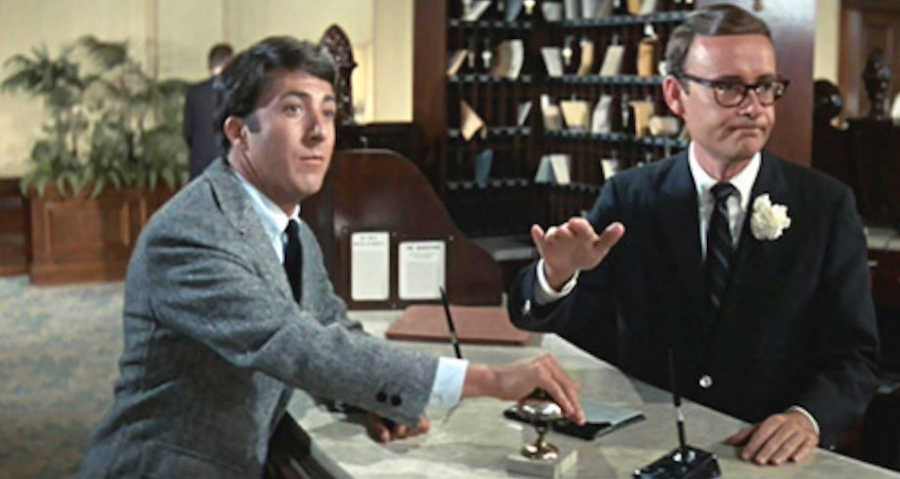
Buck Henry (right) in THE GRADUATE
“I just want to say one word to you. Just one word…Plastics.” Screenwriter Buck Henry wrote some of the most iconic dialogue in the movies. “Mrs. Robinson, you’re trying to seduce me!” Henry was nominated for Oscars for adapting The Graduate screenplay and for directing Heaven Can Wait. Along with The Graduate, I also love his screenplay for What’s Up, Doc? He also played the hotel clerk in The Graduate and played himself in The Player, pitching The Graduate II. He appeared often on Saturday Night Live, once getting nipped by John Belushi’s samurai sword. HisNYT obit includes his birth name and other tidbits.
Terry Jones in LIFE OF BRIAN
Best known as member of Monty Python’s Flying Circus, Terry Jones was responsible for much of the troupe’s surreal and wicked humor; he embraced cross dressing as British matrons in Python skits. Jones thought up And Now for Something Completely Different, co-directed Monty Python and the Holy Grail and wrote the The Meaning of Life. Jones wrote and directed one of the wittiest films ever, The Life of Brian.
The novels of author John le Carré made for unforgettable cinema. Le Carré’s complicated and conflicted Cold Warriors battled though what he revealed to be corrupting bureaucratic game. His work was the most sublime literature, and it elevated the spy movie genre. The VERY best screen adaptations of le Carré’s work are the BBC miniseries Tinker, Tailor Soldier, Spy (1979) and Smiley’s People (1982) with Alec Guinness.
Lynees Shelton in her SWORD OF TRUST
Director Lynne Shelton was the best of the mumblecore directors with Your Sister’s Sister, Touchy Feely, Laggies, Outside In and Sword of Trust. Between her uncompromisingly authentic and goofy indies, she was sought out to direct mainstream TV like Mad Men and GLOW. She got in front of her own camera in Sword of Trust and delivered one of last year’s best performances.
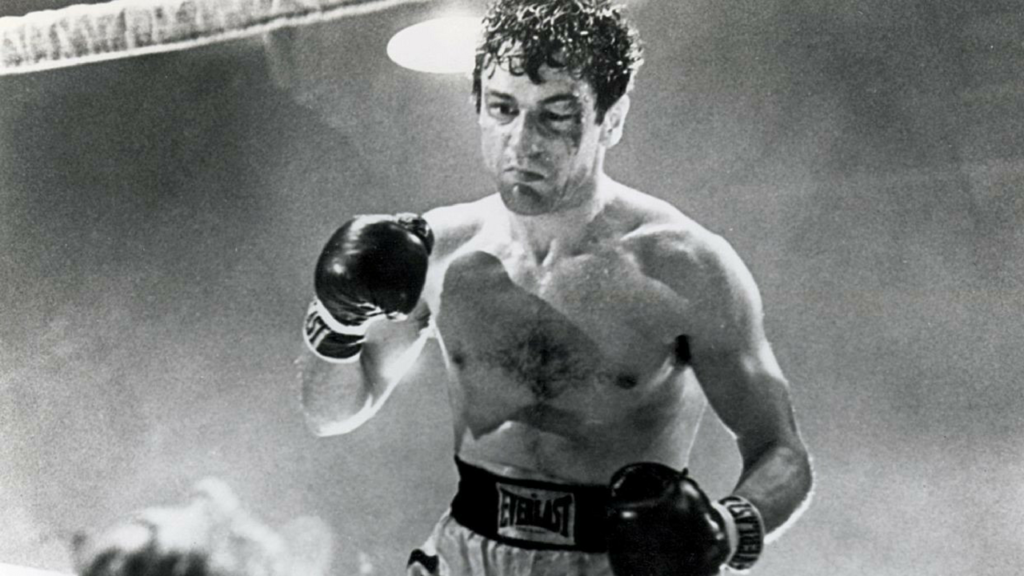
RAGING BULL: cinematography by Michael Chapman
Cinematographer Michael Chapman shot the most stunning boxing scenes ever in Raging Bull. Before that, Chapman had an amazing run of work in indelible films from 1973 through 1979: The Last Detail, Taxi Driver, The Last Waltz, Invasion of the Body Snatchers, The Wanderers.
Alan Parker had a gift for directing modern musicals (Bugsy Malone, Fame, Pink Floyd’s The Wall, Evita) but he was Oscar-nominated for two harrowing dramas, Midnight Express and Mississippi Burning. He also directed the deliciously trashy Angel Heart. My favorite Alan Parker film is the ever-delightfulThe Commitments.
Director Ivan Passer came out of the Czech New Wave (Intimate Lighting) to work in the US (fifteen features including award-winning Haunted Summer and Robert Duvall’s Stalin). My favorite Passer film is his 1981 Cutter’s Way, with its early Jeff Bridges and fine performances by John Heard and Lisa Eichhorn – and it’s still the best film set in Santa Barbara. I watched it again recently and it still holds up; you can stream it from Amazon, iTunes, Vudu, YouTube and Google Play.
Director Joel Schumacher had been a department store window dresser when he broke into movies as a set designer. Then he wrote the screenplay for the wonderful guilty pleasure Car Wash, which led to directing the similar DC Cab. His career took off when he launched the Brat Pack with St Elmo’s Fire, and followed that with Batman and Robin. My favorite Schumacher film is the 2002 thriller Phone Booth, in which an Everyman – or is he? – (Colin Farrell) is trapped in a phone booth by a sniper villain (Kiefer Sutherland); Phone Booth can be streamed from all the usual sources.
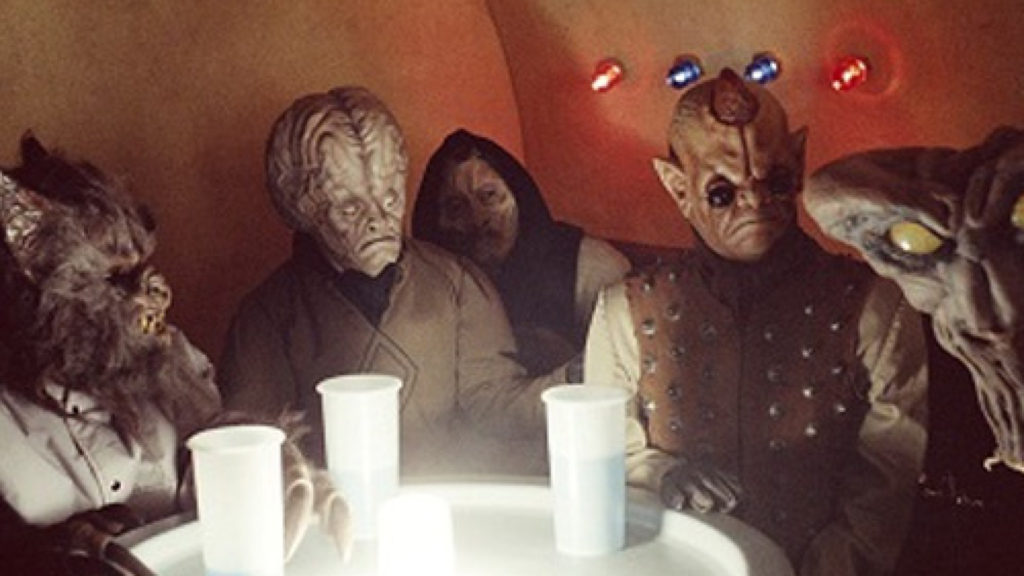
Production designer Ron Cobb imagined and brought to life the spacecraft in Alien, the DeLorean in Back to the Future and, in Star Wars, a dive bar for mercenaries in Space.
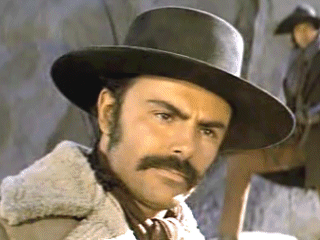
Actor John Saxon, was versatile, intense and prolific – the handsome, swarthy, character actor you would come to recognize in his 200+ screen appearances, mostly on TV. In 1976 ALONE, Saxon appeared on The Rockford Files, The Bionic Woman, The Six Million Dollar Man, Starsky and Hutch and Wonder Woman, acted in seven movies. and starred in the miniseries Once an Eagle. His best known movie roles were as Jackie Chan’s martial arts buddy Roper in Enter the Dragon (Saxon had already studied karate for years) and as police Lieutenant Don Thompson, who repeatedly battled Freddy Kreuger in the Nightmare on Elm Street franchise. Saxon could handle quality roles when he got them, as in War Hunt and Joe Kidd.
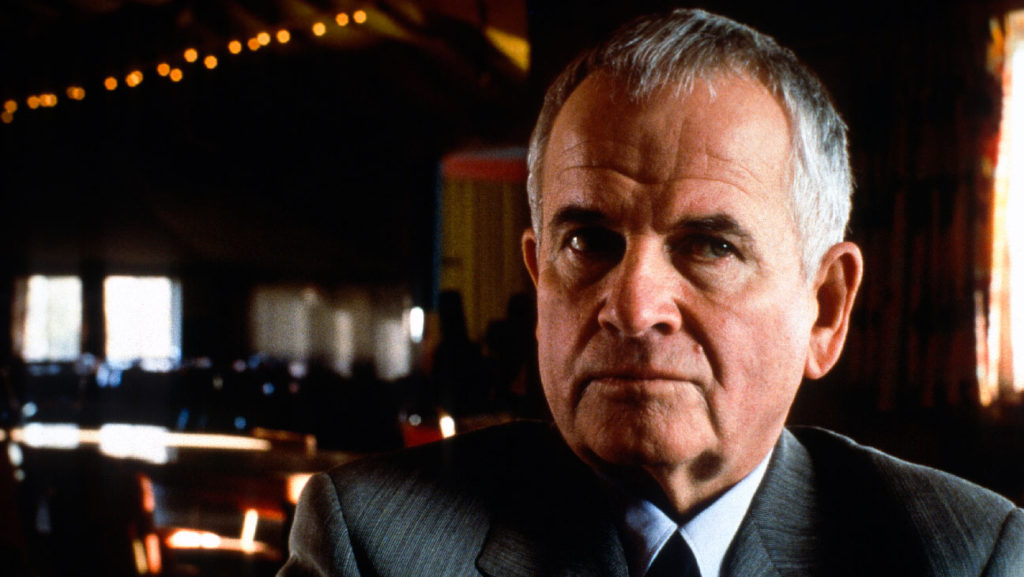
Ian Holm in THE SWEET HEREAFTER
The 5’5″ Ian Holm was a giant of the stage, where he created a definitive King Lear, and is most well-known in movies for playing Bilbo Baggins in the Lord of the Rings franchise. I remember Holm’s heartrending performance in Atom Egoyan’s The Sweet Hereafter, my choice as the most profoundly sad movie ever. He also appeared in supporting roles in some of my favorite movies: Young Winston, Jesus of Nazareth and the Kenneth Branagh Henry V.
Jerry Stiller, along with his wife and professional partner Anne Meara (scroll down), was a comedy pioneer. He’s best remembered for playing George Costanza’s father on TV’s Seinfeld and for being Ben Stiller’s real life dad. But Stiller sandwiched some good work in movies (The Taking of Pelham One Two Three, The Ritz, Hairspray) between the early and later phases of his work.
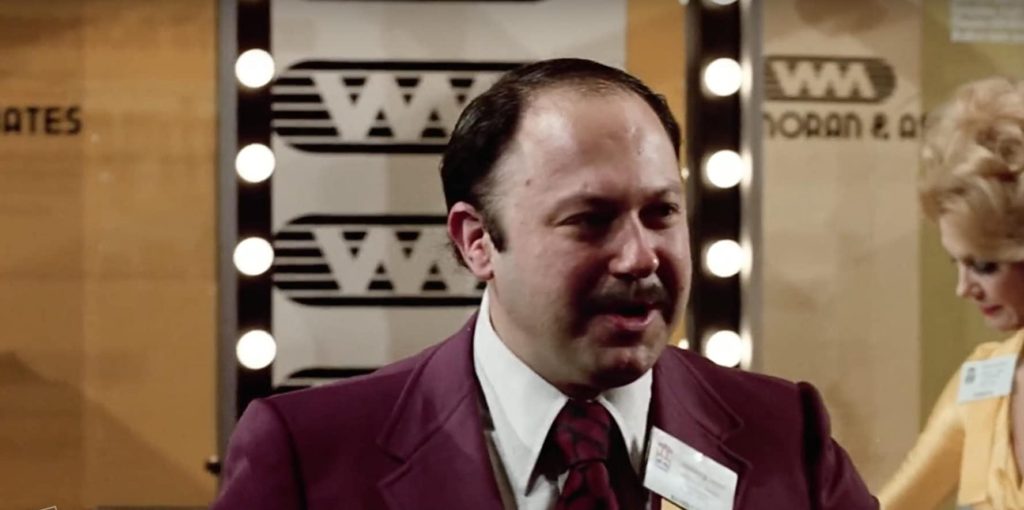
Allen Garfield in THE CONVERSATION
Character actor Allen Garfield contributed to many fine films, especially in the 1970s heyday of American auteurs, including The Candidate, The Brink’s Job, Nashville and The Stunt Man. My favorite Garfield performance was as the sleazy Bernie in the 1974 masterpiece The Conversation.
Michael Lonsdale in THE DAY OF THE JACKAL
Michael Lonsdale is justifiably best remembered for playing the determined investigator in The Day of the Jackal (plus a Bond villain). He also worked in the recently rediscovered Mr. Klein and over 100 French films.
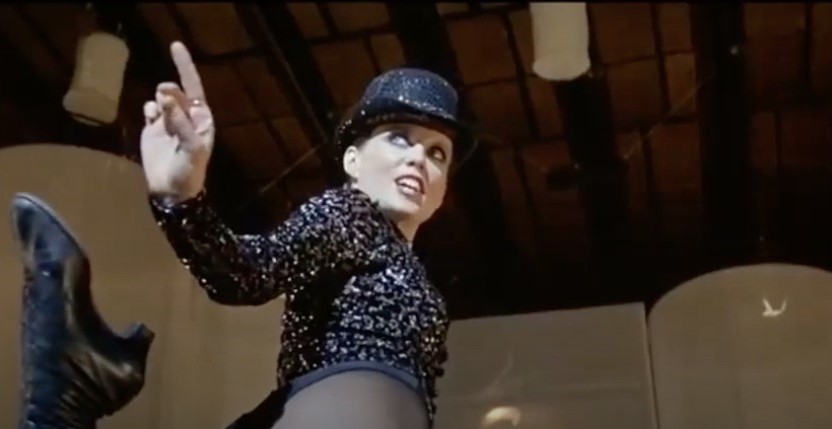
Ann Reinking in ALL THAT JAZZ
Ann Reinking, the great Broadway star, was most famous for originating the character Roxy in Chicago. Her greatest work came from her artistic partnership with Bob Fosse, with whom she lived for six years. Reinking’s art is forever preserved in one indelible film performance, essentially playing herself in Fosse’s All That Jazz. I strongly recommend Sheila O’Malley’s remembrance.
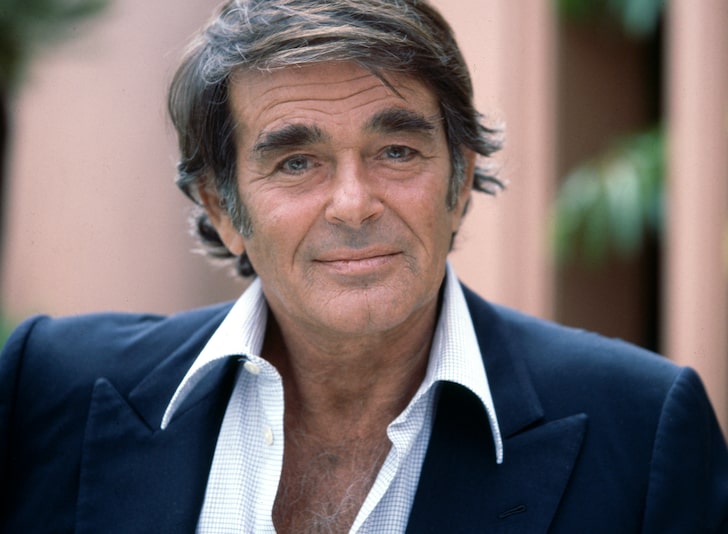
The prolific actor Stuart Whitman was strikingly manly and relatable, and also had the gift of imbuing strong-and-silent characters with emotional texture. Indeed, he was nominated for the Best Actor Oscar for a 1961 film that I haven’t seen – The Mark, in which he played a guy seeking a normal life after being imprisoned for attempted child molestation. I remember Whitman for his performances in The Longest Day and the offbeat Convicts 4. He would not wish to be remembered for the giant carnivorous rabbit chiller Night of the Lepus.
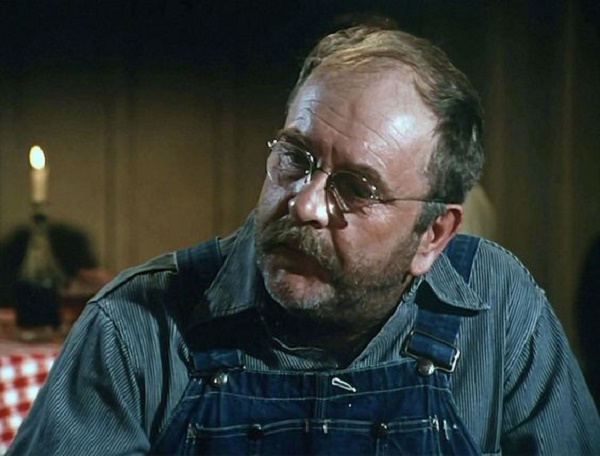
Wilford Brimley in THE CHINA SNDROME
Wilford Brimley started out in life as a real cowboy. At age 45, he broke through as an actor playing Jack Lemmon’s loyal assistant engineer in The China Syndrome. More good curmudgeon performances followed on TV and in movies (Cocoon, Absence of Malice). Ironically, this fine actor is most well-known for a Quaker Oatmeal commercial.
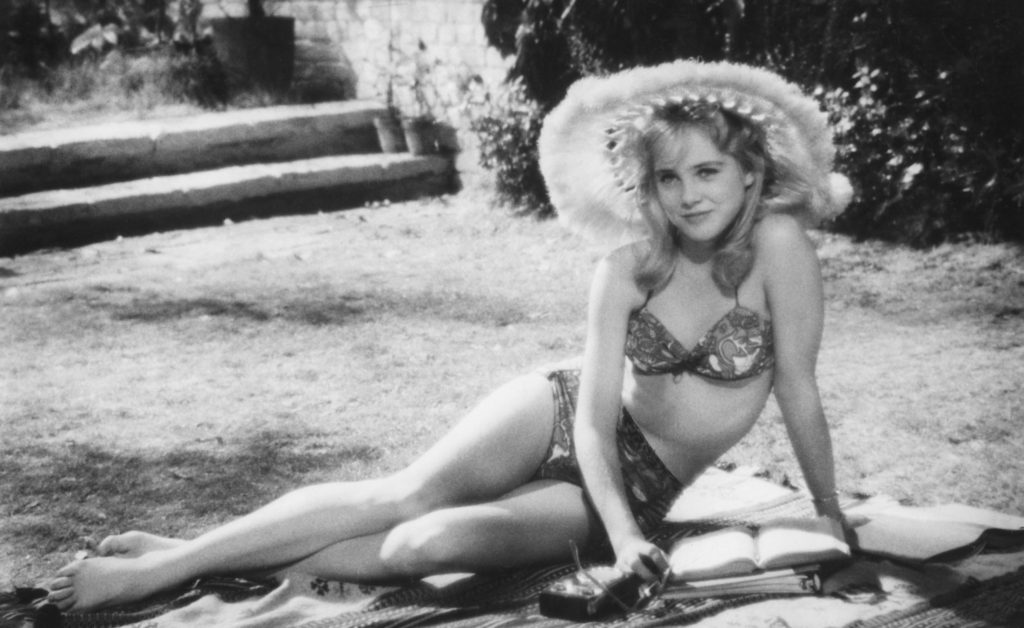
Sue Lyon in LOLITA
Actress Sue Lyon died at the very end of last year and hadn’t made a movie in forty years. She is best remembered for her performance at age 16 as the titular character in Stanley Kubrick’s 1962 Lolita. She also appeared in The Night of the Iguana and in one of my guilty faves, The Flim Flam Man.
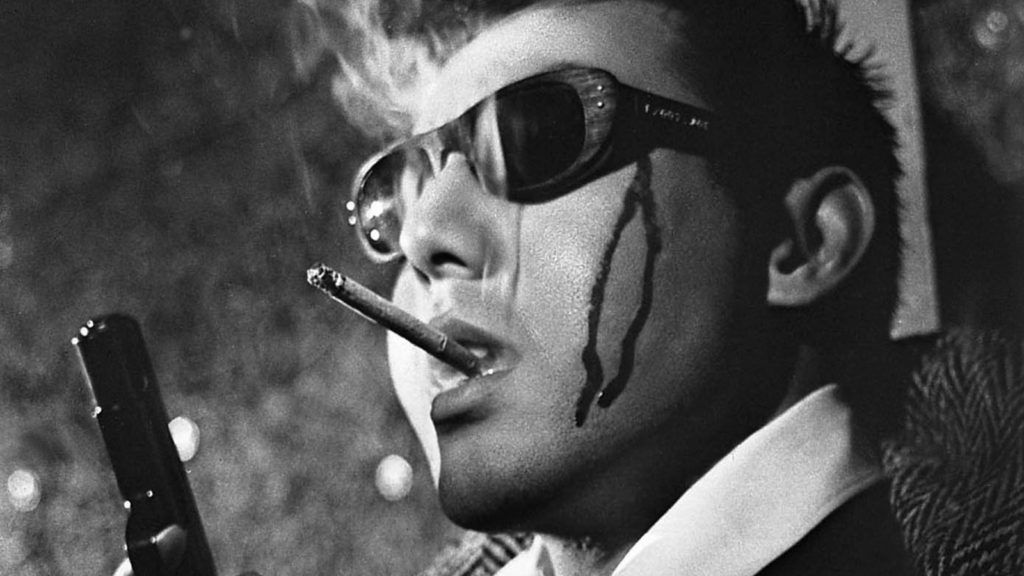
Jo Shishido in CRUEL GUN STORY
Actor Jo Shishido starred in a zillion Japanese crime action films, most notably Cruel Gun Story (1964) and A Colt Is My Passport (1967). Oddly, his career as a leading man took off after his plastic surgery, intended to emphasize his cheekbones, left him with puffy chipmunk cheeks.
I fondly remember the Rock pioneer Little Richard for his hilarious turn in Down and Out in Beverly Hills as the neighbor to Richard Dreyfus’ family, Orvis Goodnight. He appeared in one of the very first rock n roll movies Don’t Knock the Rock (1956), a same-year followup to Rock Around the Clock. His music was featured in hundred of films and television shows.
By the time she was 19 in 1980, Linda Manz had acted in and narrated a masterpiece (Terence Malick’s Days of Heaven) and appeared in two cult films (Philip Kaufman’s The Wanderers and Dennis Hopper’s Out of the Blue). Then she retired to raise a family.
John Benfield was superb as Mike Kernan, the sexist Britsh police commander perpetually frustrated by Helen Mirren’s Jane Tennison in five seasons of Prime Suspect.
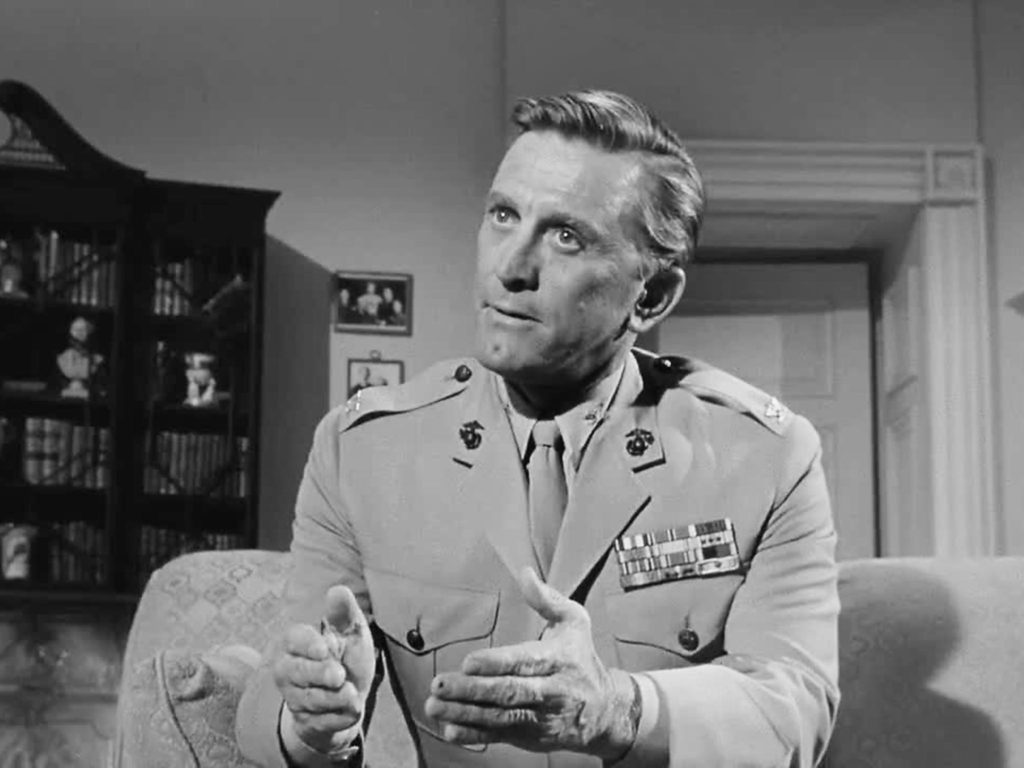
Kirk Douglas – that icon of explosive virility – died at age 103. Douglas will be forever remembered for the epic Spartacus, a blockbuster hit that he produced, with his own searing performance as the star and the effect of ending the Hollywood blacklist. He could play sexy and despicable at the same time in Out of the Past, Ace in the Hole and In Harm’s Way and a profoundly decent hero in Seven Days in May. Two of my guilty pleasures are Ulysses and The Vikings, with Kirk as a shirtless warrior.
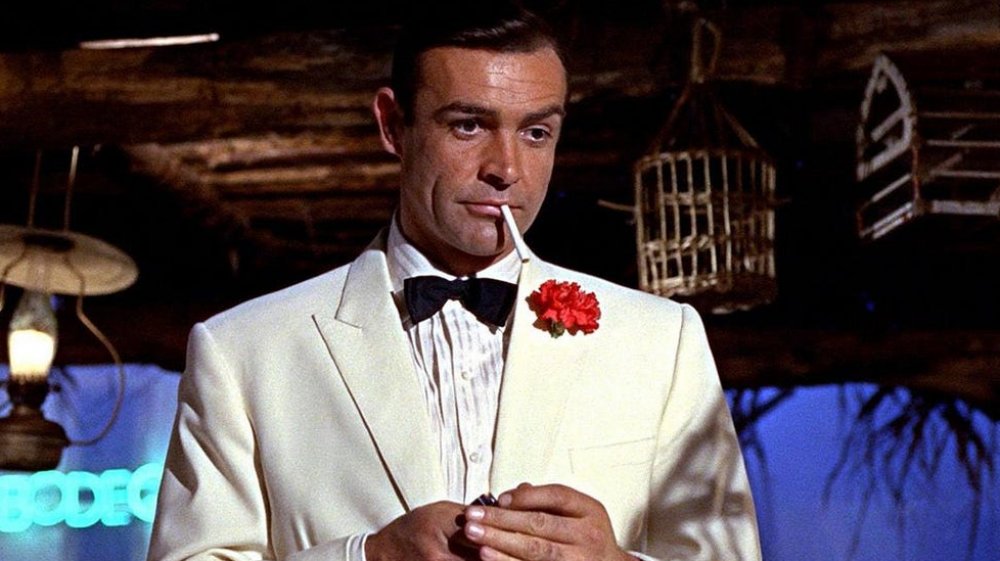
Sean Connery as Bond…James Bond
If we’re going to talk about male cinema stars with overpowering magnetism and studly charisma, we’re going to start withSean Connery, who has died at age 90.
No screen actor has more personally defined a role than did Connery with James Bond. The character of James Bond in Ian Fleming’s source novels is nothing special; Bond was made iconic by Connery’s gifts. The Bond movies are cartoonish, but Connery’s James Bond never is. Connery’s Bond is hunky, but he’s not just a hunk. He is supremely confident. He is cunning. He always assesses a risk before he takes it.
My favorite Connery performance (and the best movie he was in) is The Man Who Would Be King (1975).
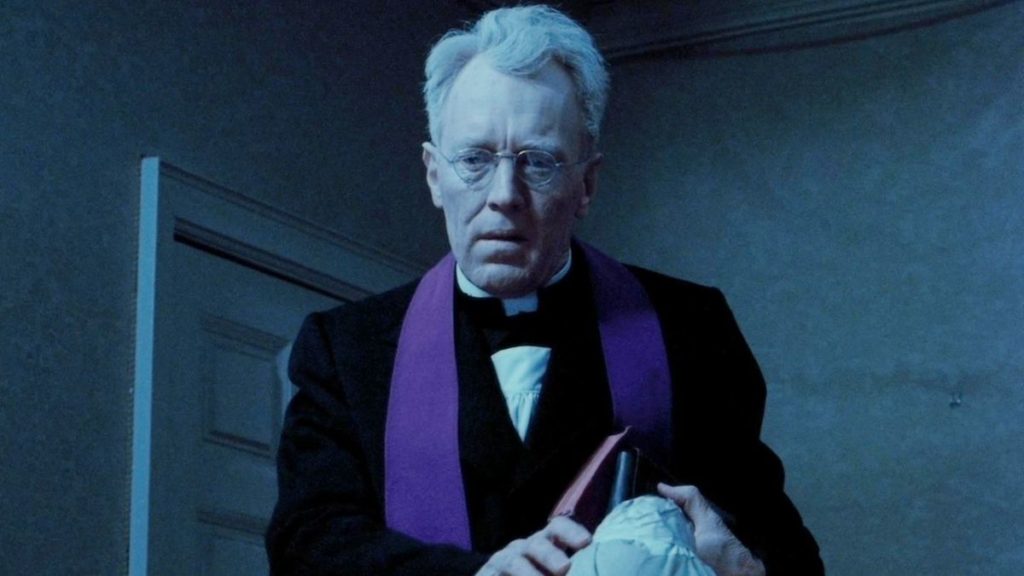
Max Von Sydow as THE EXORCIST
Sixty-three years after the chess game with Death himself in The Seventh Seal, actor Max Von Sydow has finally succumbed. Von Sydow is justifiably most well known among cinephiles for his many roles in a cascade of Ingmar Bergman’s grimness, including The Seventh Seal, The Magician, The Virgin Spring, Through a Glass Darkly, Winter Light, Shame and The Passion of Anna. And in The Magician, he had to don the most off-putting of facial hair. His biggest hit, of course was as the title character in The Exorcist. Contrary to his image, he had the capacity for hilarity, which he demonstrated in Hannah and Her Sisters as a ridiculously pretentious and selfish artist. Along with that role, my favorite Von Sydow performances were in Jan Troell’s The Emigrants and The New Land as a Swedish settler in frontier America.
Carl Reiner (far right) in THE RUSSIANS ARE COMING! THE RUSSIANS ARE COMING!
No one has been more important in the evolution of American comedy than Carl Reiner, who has died at age 98. Reiner was a writer and performer on Sid Caesar’s seminal Your Show of Shows. He created one of the greatest and most influential TV sitcoms, The Dick Van Dyke Show. Reiner was the comedy partner who helped Mel Brooks form his work. And he directed four Steve Martin comedies. Reiner was the third person awarded the Mark Twain Prize for American Humor. My favorite Carl Reiner performance was inThe Russians Are Coming! The Russians Are Coming!
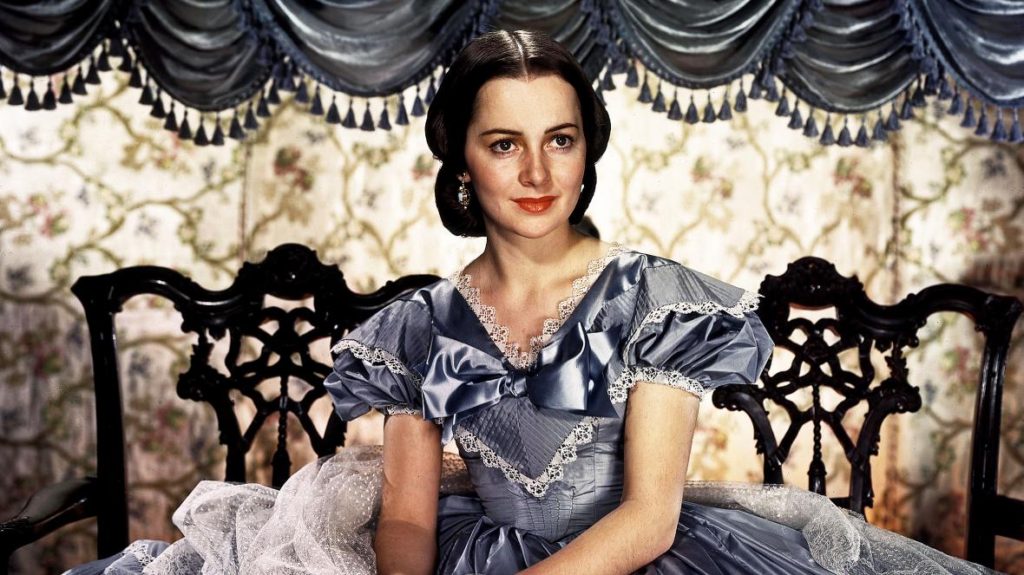
Olivia de Havilland in GONE WITH THE WIND
Silicon Valley native and icon of classic Hollywood, Olivia de Havilland (her real name) was raised in Saratoga and went to Los Gatos High. Her performance in A Midsummer’s Night’s Dream in the Saratoga Community Theater led directly to her appearing in the Hollywood film version of the play at age 19. She starred as the leading lady in her next film, Captain Blood, the first of a series of Warner Brothets costume romances that matched her with Erroll Flynn, with whom she had undeniable chemistry: The Adventures of Robin Hood, The Charge of the Light Brigade, The Santa Fe Trail, Dodge City, They Died with Their Boots On and The Private Lives of Elizabeth and Essex. In this period, she was loaned to David O. Selznick for her most remembered role, that of the profoundly sweet and decent Melanie in Gone with the Wind. De Havilland won her contractual freedom from Warner Brothers through landmark litigation in 1943. She went on to more serious fare and earned yhree Oscar nods in the next six years, winning for To Each His Own and The Heiress.
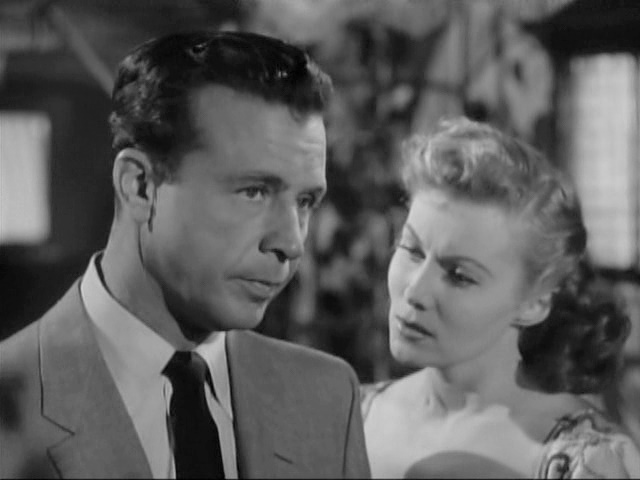
Dick Powell and Rhonda Fleming in CRY DANGER
Actress Rhonda Fleming has died at age 97. She was known as the “Queen of Technicolor” when movie studios exploited her blazing red hair, blue eyes, ivory complexion and uncommon beauty in a series of Western, sword-and-sandal and adventure films; in this period, she was a candidate for the world’s most beautiful woman, along with her age peers Gene Tierney, Lana Turner and Marilyn Monroe. But Fleming’s very best acting work was in black-and-white, in Spellbound, Out of the Past, Cry Danger and While the City Sleeps. My favorite Fleming performance is in Cry Danger, where she plays the girlfriend of the guy who had framed the hero (Dick Powell) – an irresistible woman of uncertain loyalty.
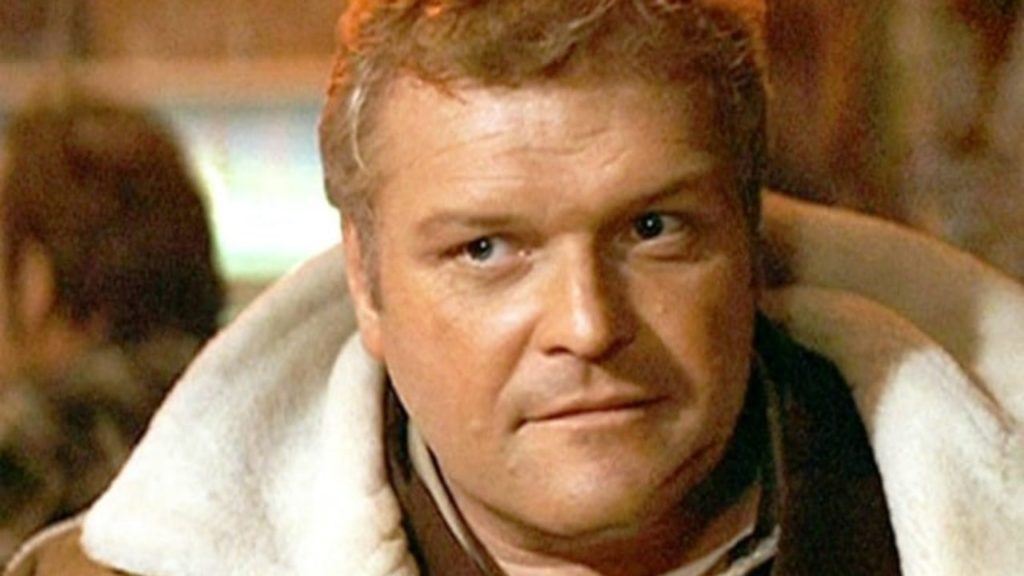
Brian Dennehy
The actor Brian Dennehy stood a bear-like 6’3”and could have filled his career by playing menacing heavies (and he had his share of those). But Dennehy had uncommon range, as evidenced by his most well-remembered roles – Rambo’s nemesis in First Blood and the alien in Cocoon. My favorite Dennehy movie roles were the crooked sheriff in Silverado and Harrison Ford’s morally complicated boss in Presumed Innocent. Dennehy was even a bigger star on stage – he won Tony Awards for his Willy Loman in Death of a Salesman and his James in Long Day’s Journey into Night (the role Ralph Richardson played in the movie).
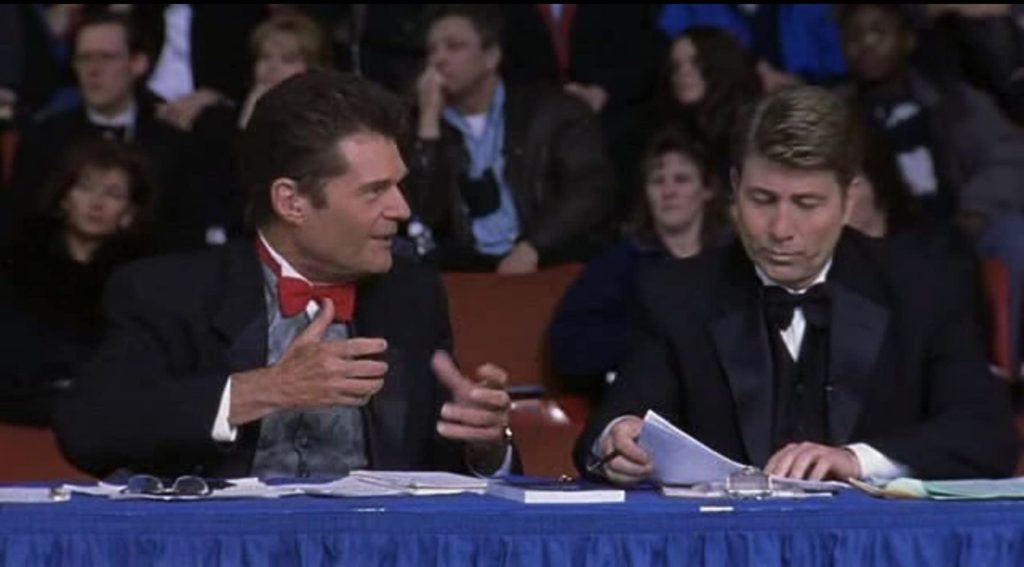
Fred Willard (left) in BEST IN SHOW
Fred Willard, as much as anyone, invented the deadpan mockumentary, starting with his talk show sidekick, Jerry Hubbard character in 1977’s Fernwood 2 Night with Martin Mull. Willard’s zenith was in This Is Spinal Tap and the Christopher Guest ensemble mockumentaries that followed: Waiting for Guffman, Best in Show, For Your Consideration, A Mighty Wind and Mascots. He finished up by playing yet another uncontrollable character, Phil Dunphy’s dad on Modern Family.
Here are some tidbits from Willard’s unashamedly unprepared dog show commentator Buck Laughlin in Best in Show:
If you put them in a race, who would come in first? You know if you had a little jockey on them, going like this imitates jockeys hitting the side of the horse].
And to think that in some countries these dogs are eaten.
I went to one of those obedience places once… it was all going well until they spilled hot candle wax on my private parts.
[sees the trophy] I’ve taken a sponge bath in smaller bowls than that.
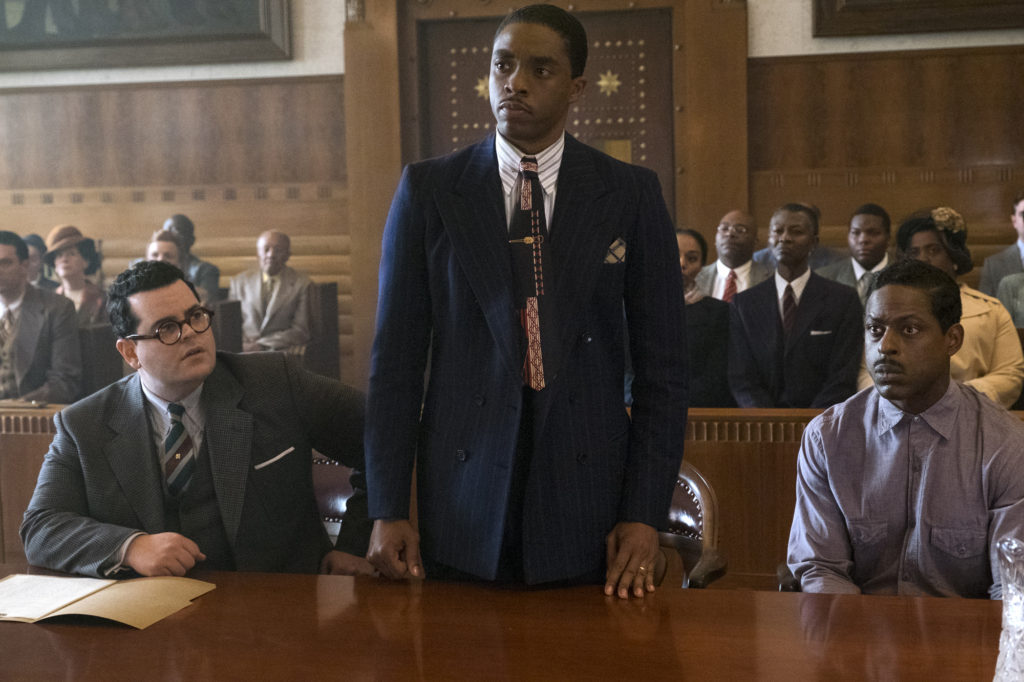
Chadwick Boseman in MARSHALL. Photo credit: Barry Wetcher ;ourtesy of Open Road Films
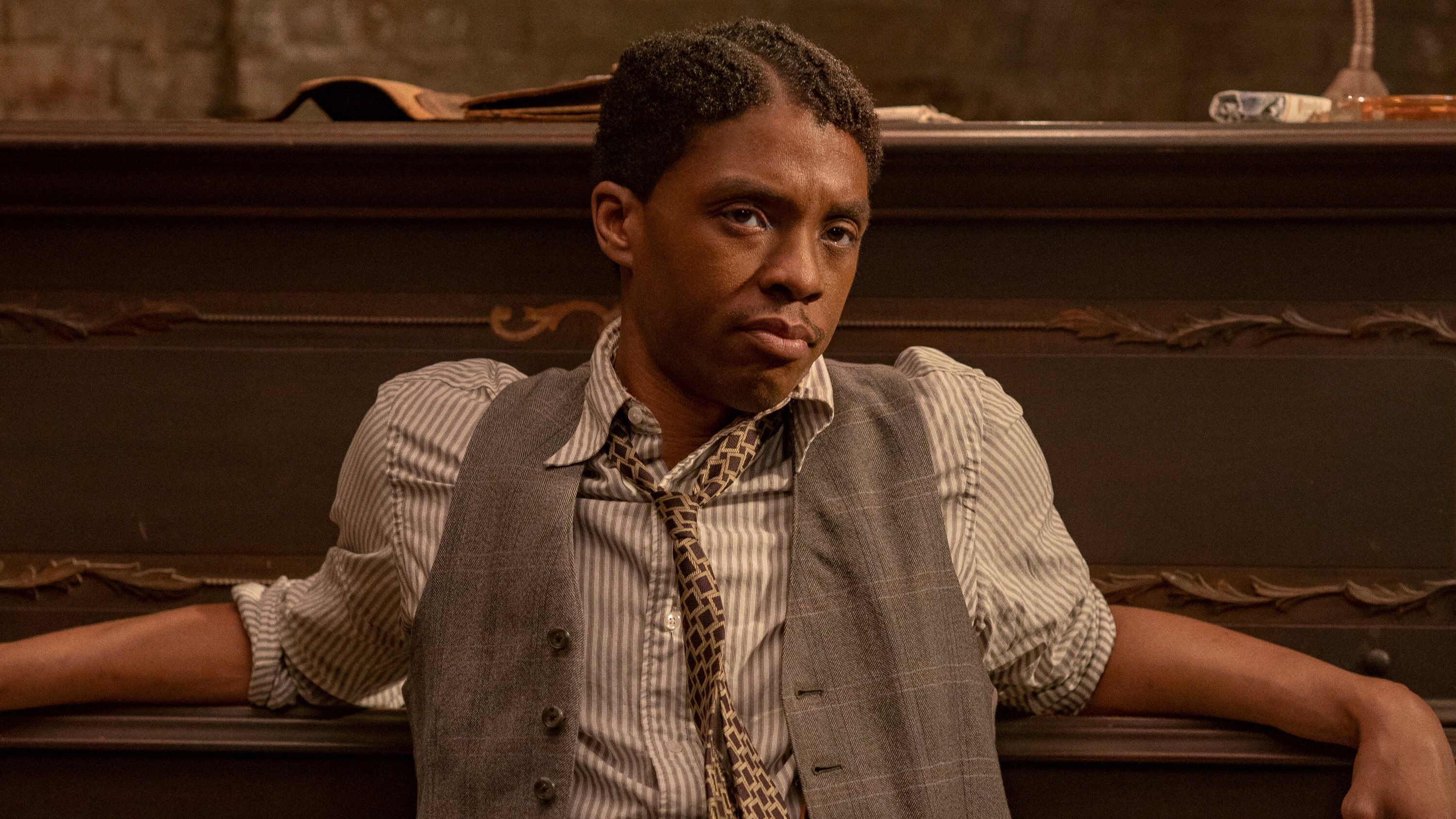
Chadwick Boseman, an emerging superstar after his iconic role in Black Panther, was able to humanize real life icons like Jackie Robinson, Thurgood Marshall and James Brown. My favorite Boseman performance was in Marshall.
This week: seven new movie recommendations for the Holiday weekend. But first, two remembrances.
REMEMBRANCES
The novels of author John le Carré made for unforgettable cinema. Le Carré’s complicated and conflicted Cold Warriors battled though what he revealed to be corrupting bureaucratic game. His work was the most sublime literature, and it elevated the spy movie genre.
The VERY best screen adaptations of le Carré’s work are the BBC miniseries Tinker, Tailor Soldier, Spy (1979) and Smiley’s People (1982) with Alec Guinness.
Ann Reinking, the great Broadway star, most famous for originating the character Roxy in Chicago, has died. Her greatest work came from her artistic partnership with Bob Fosse, with whom she lived for six years.
Stage performances are temporal and film performances can be everlasting. Reinking’s art is forever preserved in one indelible film performance, essentially playing herself in Fosse’s All That Jazz. I strongly recommend Sheila O’Malley’s remembrance.
Ann Reinking in ALL THAT JAZZ
ON VIDEO
Ma Rainey’s Black Bottom is a searing revelation of the impacts of racism, with charged performances by Chadwick Boseman and Viola Davis. It’s streaming on Netflix.
David Fincher’s Mankis a black-and-white beauty of a film, a portrait of troubled talent in Classic Hollywood. Amanda Seyfried is great as Marion Davies.
Don’t forget that some of my Best Movies of 2020 – So Far, are already available (and Ma Rainey’s Black Bottom, Mank and The Father are going on the list). I haven’t yet seen Nomadland, Mayor or The Sound of Metal.
Driveways: I can’t think of a more authentic movie about intergenerational relationships than this charming, character-driven indie. The more I think about Driveways, the more I admire it. It also features the final performance – so genuine and subtle – by Brian Dennehy. Driveways is available to stream on all the major platforms.
The Whistlers: In this absorbing crime thriller, a shady cop and a mysterious woman are walking a tightrope of treachery. The Whistlers was a hit at last year’s Cannes Film Festival, but COVID-19 impaired its 2020 theatrical release in the US. (Amazon, Vudu, YouTube, Google Play.)
The Truth: Writer-director Hirozaku Koreeda’s latest wry and authentic exploration of human behavior is a showcase for Catherine Deneuve and Juliette Binoche. Hirokeeda, such an insightful observer of behavior, cuts to the core of his characters’ profound humanity. (Amazon, Vudu, YouTube, Google Play.)
ON TV
On the always anti-climactic December 26, Turner Classic Movies gives us two ways to go. First, there’s Ben-Hur, with the thrilling chariot race around that phenomenal set – one of the greatest sets in movie history – before CGI, they actually used to build them. Its star Charlton Heston was advised by the stunt supervisor, “Don’t worry, Chuck. Just stay in the chariot and I’ll make sure you win the race.“
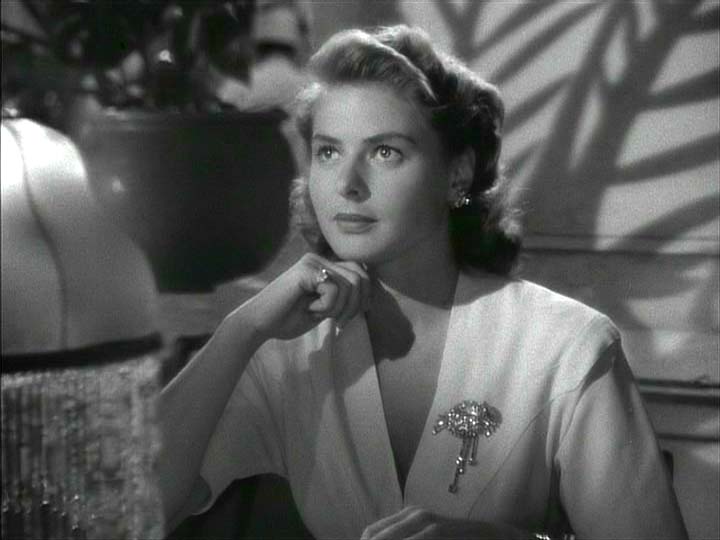
And then there’s Casablanca, the most perfect film ever made – as romantic, as funny and as emotionally powerful today as in 1943.
Here’s a once-in-a-pandemic film noir experience, the opportunity to see classic film noir that you can’t see anywhere else. The Noir City International at the AFI Silver is available to stream through November 29.
Noir City is the annual festival of the Film Noir Foundation, spearheaded by its founder and president, the Czar of Noir, Eddie Muller. The Foundation preserves movies from the traditional noir period that would otherwise be lost. Noir City often plays newly restored films and movies not available on DVD or streaming.
This January, as usual, I attended this year’s festival, sharing the program with a thousand other film fans in a vintage movie palace, San Francisco’s Castro Theatre. In normal years, Eddie Muller then takes the program on the road, but the pandemic eliminated the satellite Noir City mini-fests in other cities. Good news – this year’s festival program is streaming through the AFI Silver so everyone can watch it at home.
This year’s program is Noir City International 2 – l focusing on international film noir, as it did so successfully six years ago. Then I was enthralled by the Argentine Bitter Stems and the Swedish Girl with Hyacinths, and must admit that I had never even imagined that vintage film noir from those nations existed. This year’s fest brings us titles from Argentina, France, Germany, Korea, Japan, Czechoslovakia, Italy, and Poland.
One of best things about Noir City is the opportunity to see films that are not available to stream. This year Noir CIty is outdoing itself by presenting SIX films that can’t found on a streaming platform, most of them impossible to see outside of Noir City in any format.
Black Gravel (West Germany 1961)
The Black Vampire (Argentina 1953)
…And the Fifth Horseman Is Fear (Czechoslovakia 1965)
The Devil Strikes at Night (West Germany 1957)
Panique (France 1947)
Razzia (France 1955)
Pale Flower, Ashes and Diamonds and Any Number Can Win are only available to stream periodically on the Criterion Channel.
“Difficult to find” doesn’t mean “obscure”. The program includes films directed by Michelangelo Antonioni, Jean-Pierre Melville and Roebert Siodmak and starring Ingrid Bergman, Jean Gabin, Alain Delon and Jean-Paul Belmondo.
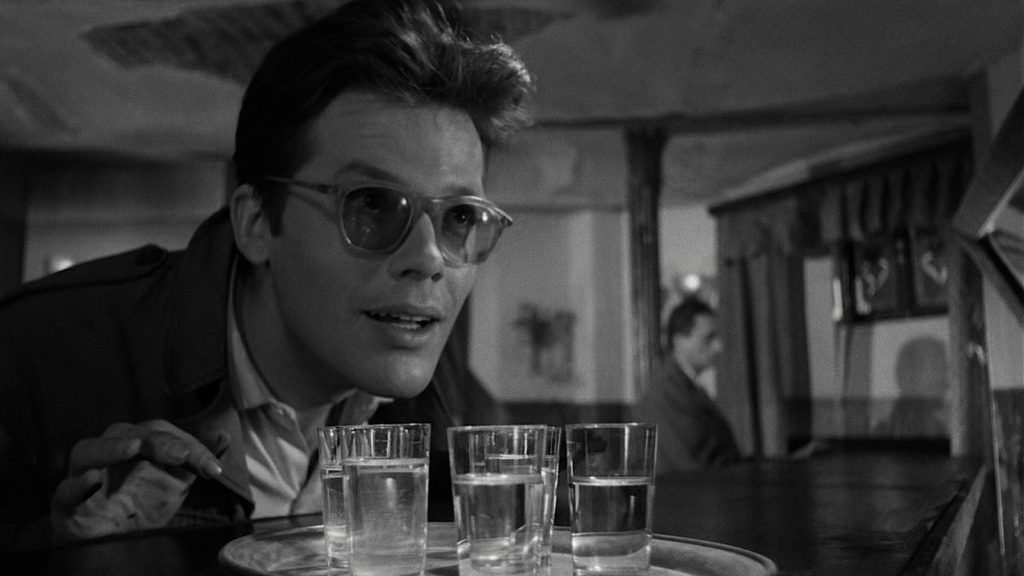
PALE FLOWER
My personal favorites on the program:
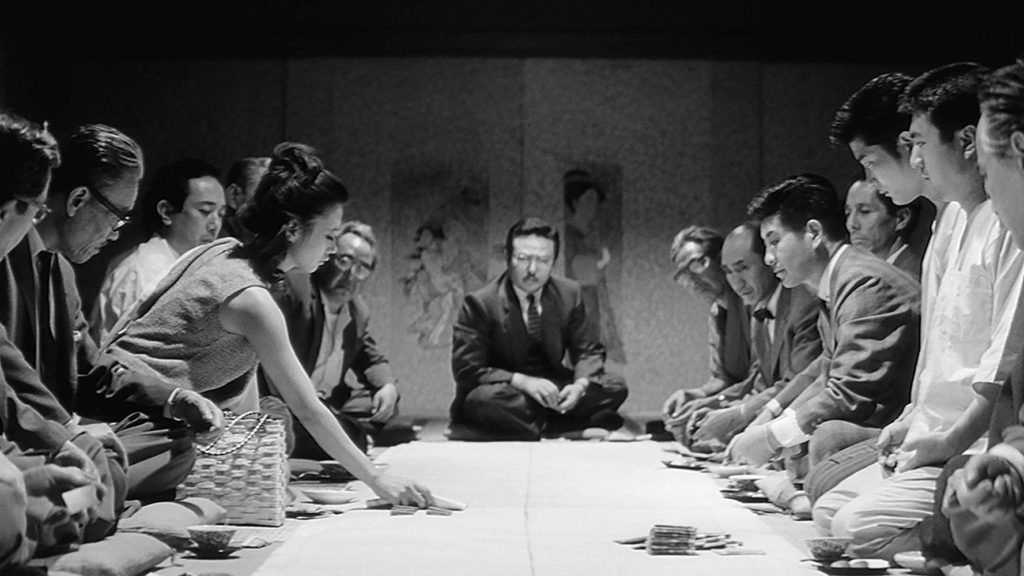
Pale Flower: Writer-director Masahiro Shinoda’s masterpiece is a slow burn that erupts into breathtaking set pieces. This is pioneering neo-noir; its look and feel is as different from classic noir as are Elevator to the Gallows and Blast of Silence.
Black Gravel: This tragic romance is set in post-war Germany, a Petri dish for hustlers. Rarely has a movie plot swung as rapidly between They’re gonna get caught – No, they’re gonna get away with it – No, They’re gonna get caught – No, they’re gonna get away with it – No, They’re gonna get caught – No, they’re gonna get away with it – No, They’re gonna get caught.
Ashes and Diamonds: Auteur Andrzej Wajda‘s filmmaking gifts are on display in this Hit Man Finds Love tale, set as the Polish Resistance battles for a place in post-war Poland. As kinetic and unpredictable as James Dean, Zbigniew Cybulski makes for an irresistibly charismatic leading man.
The Black Vampire: In this often trippy 1953 remake of Fritz Lang’s M, Nathán Pinzón is AT LEAST AS GOOD as was Peter Lorre in the original.
The offerings also include Leave Her to Heaven with Gene Tierney as the most disturbing female villain in film noir and Detour with Ann Savage as the grungiest and most predatory. The Korean The Housemaid is so bizarre as to defy description. And the coolest middle-aged guy in cinema, Jean Gabin, stars in Razzia and Any Number Can Win.
If we’re going to talk about male cinema stars with overpowering magnetism and studly charisma, we’re going to start with Sean Connery, who has died at age 90.
No screen actor has more personally defined a role than did Connery with James Bond. The character of James Bond in Ian Fleming’s source novels is nothing special; Bond was made iconic by Connery’s gifts.
The Bond movies are cartoonish, but Connery’s James Bond never is. Connery’s Bond is hunky, but he’s not just a hunk. He is supremely confident. He is cunning. He always assesses a risk before he takes it.
Several actors, some very talented, have also played the James Bond role that Connery originated. Only Daniel Craig has approached the mix of rugged charm and resourceful physicality that that Connery delivered.
I learned a lot about the crushing childhood poverty that formed Connery in this insightful NYT obit. There’s also a great Sydney Lumet admonition against underestimating an actor’s charm.
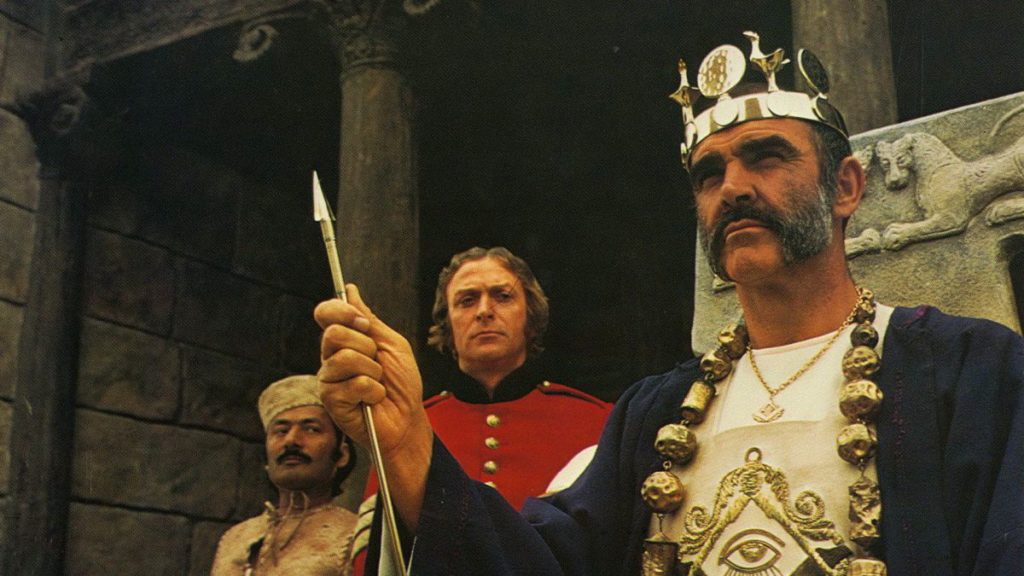
My favorite Connery performance (and the best movie he was in) is The Man Who Would Be King (1975). It’s a great Rudyard Kipling adventure yarn, gloriously brought to the screen by director John Huston.
Connery stars with Michael Caine as a pair of reprobates mustered out of the Queen’s army in colonial India. Rather than return to menial prospects in England, these cheeky and lovable scoundrels seek to make their fortune as mercenaries in the outskirts of the Raj. Fortune smiles, and they reach unforeseeable success – and then Connery’s character overreaches…
The Man Who Would Be King, which is widely available to stream, is unforgettable, and so is Sean Connery.
Sean Connery (right) with Saeed Jaffrey and Michael Caine in THE MAN WHO WOULD BE KING