“Pearl Harbor is a two-hour movie squeezed into three hours, about how on Dec. 7, 1941, the Japanese staged a surprise attack on an American love triangle.”
“Heaven’s Gate is the most scandalous cinematic waste I have ever seen, and remember, I’ve seen Paint Your Wagon.”
“I know full well I’m expected to Suspend My Disbelief. Unfortunately, my disbelief is very heavy, and during Ocean’s Thirteen, the suspension cable snapped.”
“Keanu Reeves is often low-key in his roles, but in this movie, his piano has no keys at all. He is so solemn, detached and uninvolved he makes Mr. Spock look like Hunter S. Thompson at closing time.” — The Day the Earth Stood Still
“She and Daredevil are powerfully attracted to each other, and even share some PG-13 sex, which is a relief, because when superheroes have sex at the R level, I am always afraid someone will get hurt.” — Daredevil
“I am informed that 5,000 cockroaches were used in the filming of Joe’s Apartment. That depresses me, but not as much as the news that none of them were harmed during the production.”
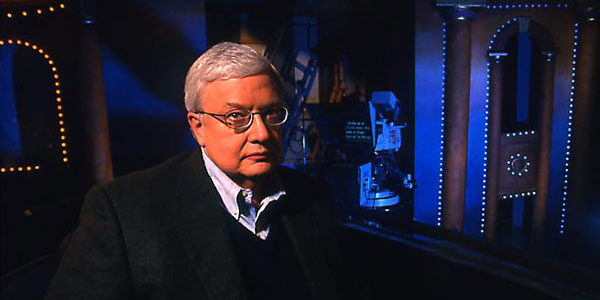
Roger Ebert has died. It’s a particularly somber moment for me because the Siskel & Ebert television show was one of the two essential triggers for my love of movies (along with my college History of Film class).
I first set up my massive 1982 VCR to record his and Siskel’s Sneak Previews. In the early 2000s, Ebert’s was the first blog that I checked every day. The reason that I signed up for Twitter was to follow Roger Ebert.
Roger Ebert was first a great film critic, period. He was also the most effective popularizer of movie criticism. Most importantly, especially for me starting in the late 1970s, he was the leading evangelist for independent and foreign cinema in the US. Without Siskel & Ebert, I wouldn’t have known to seek out a French film like La cage aux folles or the debut features of indie directors John Sayles (Return of the Secaucus Seven) and Spike Lee (She’s Gotta Have It).
In taking a “leave of presence” yesterday, Roger Ebert wrote, “On this day of reflection I say again, thank you for going on this journey with me. I’ll see you at the movies.”
Here are my top picks from San Jose’s Cinequest Film Festival so far. I’ve updated my CINEQUEST 2013 page, which includes comments on all nineteen films that I’ve seen to date at the fest.
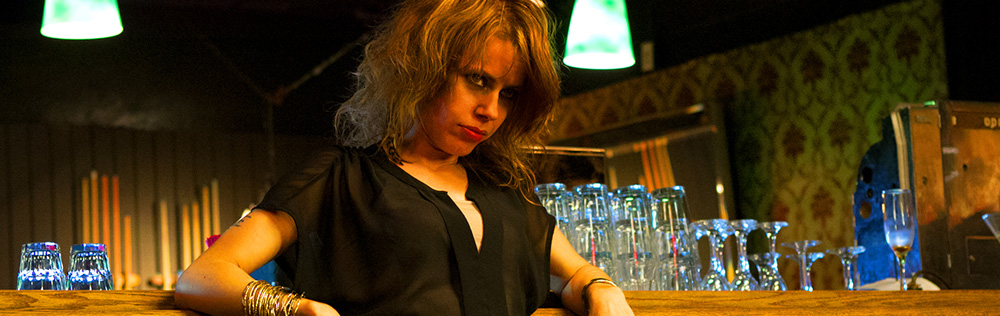
Topping my list so far is the inventively constructed French thriller Lead Us Into Temptation. A middle-aged married man does a good deed for a beautiful young woman and finds himself the pawn in a dangerous game. Lead Us Not Into Temptation plays again on March 1 and March 9.
The American thriller Dose of Reality packs wire-to-wire intensity and a surprise ending that no one will see coming. Dose of Reality is playing Cinequest again on March 5 and 9, and will release on DVD and VOD on March 26.
The deadpan American comedy Congratulations! sends up the police procedural and will screen at Cinequest again on March 5.
The very dark and suspenseful French Chaos is centered on a creepy character that you know is up to no good, but the audience has to wait to find out what he plans and why. You can see Chaos at Cinequest on March 7.
The compelling The Deep tells the fact-based survival story of a shipwrecked Icelandic fisherman’s ordeal in frigid waters.
In The Shadowis a Czech paranoid thriller that won Best Film at the Czech Film Critics’ Awards and was the Czech submission to the Academy Awards. It plays at Cinequest on February 28, March 6 and March 8.
In the Belgian drama Offline, we meet a character struggling to redeem himself. You can see Offline at Cinequest on March 5 and 7.
In the solid American drama Solace, three stories are interlinked. Solace plays Cinequest again on March 6.
In the documentary We Went to War, the filmmaker goes to small town Texas to revisit the Vietnam vets who were the subjects of his 1970 I Was a Soldier. It’s a poignant snapshot of a 40-year-old war that is still going on for the participants and their families. We Went to War is told successfully in a style that contrasts from other talking head docs. We Went to War will be screened again on March 5.
The documentary Plimpton! Starring George Plimpton as Himself shares the extraordinarily rich life of the Zelig-like George Plimpton. He was somehow able to marry the most highbrow literary world with cheesy TV celebrity. You can see Plimpton! at Cinequest on March 8.
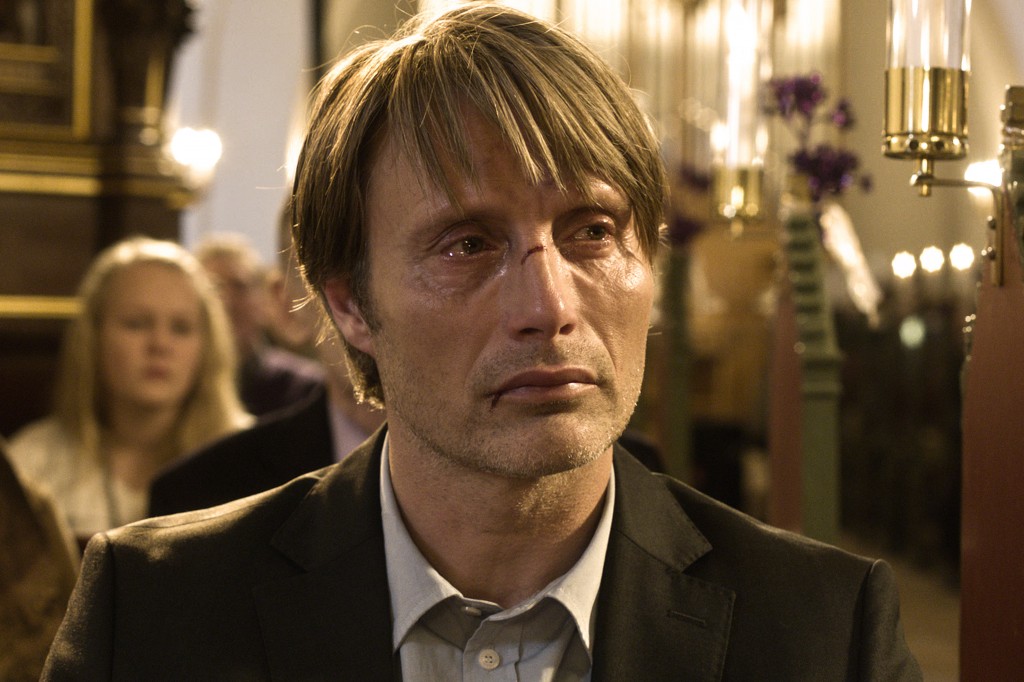
I haven’t yet seen it, but the Danish drama The Hunt (plays on March 6) has been univerally acclaimed at other festivals. Mads Mikkelsen (After the Wedding, Casino Royale, A Royal Affair) stars as a teacher wrongly accused of child molestation, spurring hysteria in his town. Mikkelsen won the Best Actor award at Cannes.
I’ve also heard credible good buzz on two other films that I haven’t seen: the Turkish comedy One Day or Another and the American comedy The Playback Singer.
After seeing Lawrence of Arabia digitally restored in the very impressive Sony 4K, I wanted to point out that, also recently restored in Sony 4K, Taxi Driver plays on March 6 and Dr. Strangelove plays on March 9.
And again, you can always check my CINEQUEST 2013 page, which also includes comments on Aftermath, The Almost Man, I Am a Director,The Sapphires, Panahida, Pretty Time Bomb, Welcome Home and White Lie.
San Jose’s Cinequest film festival begins this Tuesday. The lineup includes 85 World, North American and U.S. premieres from 48 countries. In past Cinequest festivals, I have discovered some very strong European films, especially from Eastern Europe and Scandinavia, and some delightful American indie comedies. This year, the lineup of thrillers looks unusually promising.
So far I have only seen one film from the festival lineup – tomorrow, I’ll be writing about In the Shadow, which won Best Film at the Czech Film Critics’ Awards and was the Czech submission to the Academy Awards.
The critical buzz from other festivals indicates that there are at least two movies not to miss. The Danish The Hunt plays on March 6. Mads Mikkelsen (After the Wedding, Casino Royale, A Royal Affair) stars as a teacher wrongly accused of child molestation, spurring hysteria in his town. Mikkelsen won the Best Actor award at Cannes.
The Sapphires plays on February 27. In this feel good movie set in the 60s, an Australian Aborigine girl group faces obstacles at home, but blossoms when the girls learn Motown hits to entertain US troops in Vietnam.
Here’s a curiosity: The last movie that actor Chris Penn made before his death in early 2006 is the thriller Aftermath. Aftermath has never been released, and its world premiere at Cinequest is this Friday (and it will also screen on March 3 and 5).
I’ll be seeing lots of films and writing about many of them. To avoid spamming my subscribers, you won’t be getting an automatic email for all of my Cinequest posts, so keep checking back here for my festival coverage. I’ll me summarizing my coverage on my one-stop CINEQUEST 2013 page (also linked off the header at the top of this page).
Cinequest runs from February 26 through March 10 in downtown San Jose. Check out the schedule and get tickets at Cinequest.
Every year, we watch the Oscars while enjoying a meal inspired by the Best Picture nominees. For example, we had sushi for Lost in Translation, cowboy campfire beans for Brokeback Mountain and Grandma Ethel’s Brisket for A Serious Man – you get the idea. You can see our past Oscar Dinners on this page (including our Severed Hands Ice Sculpture in 2011 for 127 Hours and Winter’s Bone).
This year The Wife did the heavy lifting in organizing our feast.
STARTERS
Hummus for Argo and Zero Dark Thirty – as you will see, it’s a big year for Middle Eastern food at the Oscar Diner.
Philly Cream Cheese Cocktail Sauce Dip for Silver Linings Playbook – a perfect accompaniment to an Eagles game.
Crackers from Life of Pi (not many food choices on that lifeboat).
Baguette from Amour and Les Miserables (I did NOT steal the bread, Javert).
The Wife vetoed the peach yogurt from Amour.
DINNER
Kabob Koubideh for Argo and Zero Dark Thirty.
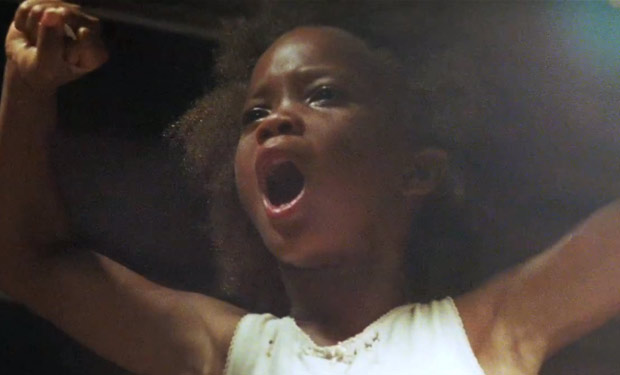
Roast Chicken from Beasts of the Southern Wild (we could have done crab, too, but Quvenzhané Wallis won’t be here to rip them up for us).
Khoresh Ghormeh (a Persian veggie stew) for Argo.
DESSERT
Mary Todd Lincoln’s Almond Cake for Lincoln. Understanding the political junkie that I am, my daughter gave me the Capitol Hill Cookbook and this is an authentic recipe from the Lincoln family.
BEVERAGES
Whiskey from Django Unchained (from the bar scene with Jamie Foxx and Franco Nero).
Vodka (Jennifer Lawrence ordered it at the bar) from Silver Linings Playbook.
Water from Life of Pi (again – not many choices in that lifeboat).
Here’s my list of Zombie Movies for People Who Don’t Like Zombie Movies. I’m generally not a fan of the genre because the primary elements of a zombie movie – gross looking zombies, gory human deaths and spectacular zombie slaughter – just aren’t enough to keep me coming back.
That’s why the best zombie movies are hybrids of another genre. I’ve highlighted five movies that use the framework of the zombie genre to create movies that can stand on their own as comedies or thrillers. Plus they ease off on the gore, which is just fine by me.
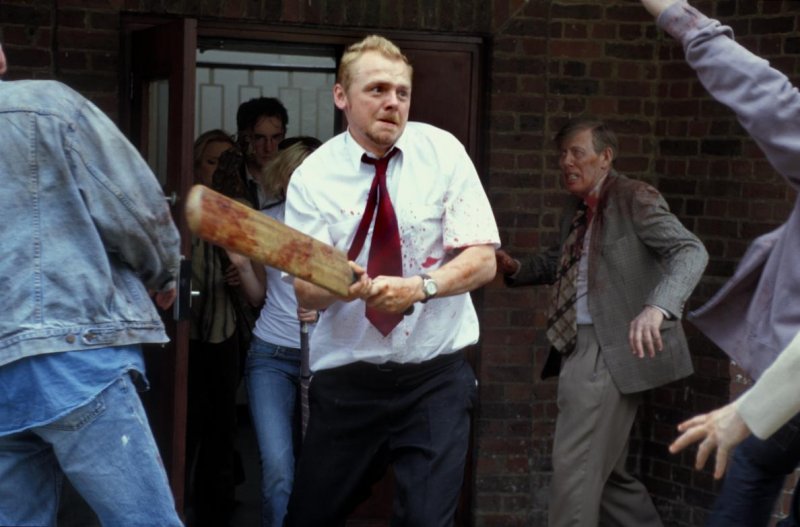
The very idea of reanimated dead who must eat live humans is, of course, absurd, and that absurdity can set up some fine film comedy, including Zombieland, Shaun of the Dead, Fido and Warm Bodies. And when you add a first rate filmmaker like Danny Boyle to the mix, you can get a top thriller – 28 Days Later.
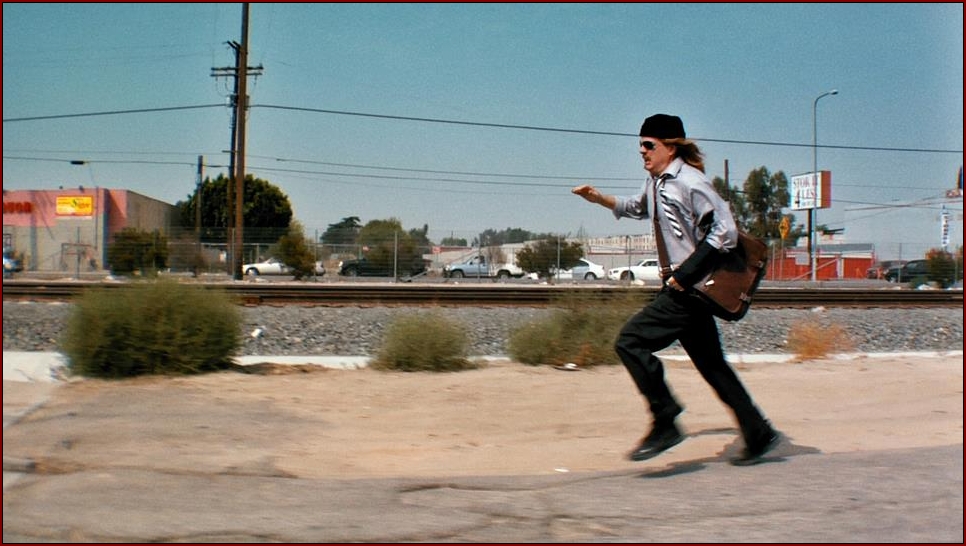
Here’s my interview with the writer-director of Fuzz Track City, Steve Hicks.
So many LA detective tales are set in art deco offices and Bel Air estates, but yours is set in the most ordinary neighborhoods and the seediest retail strips. Why did you choose to feature the LA that movie audiences and tourists rarely see?
STEVE HICKS: I live in the San Fernando Valley (area code 818) in Los Angeles County and I wanted to celebrate/exploit the valley’s locale. Personally, I find so much solace and inspiration in The Valley and I wanted to add my cinematic two bits into the mix. The Valley is a most wonderful place…come and see.
The movie’s MacGuffin is an obscure B-side track – which you wrote yourself. Tell me about writing the infectious lick for the rock song “Ricochet” and arranging it for the commercial jingles.
STEVE HICKS: I’m a devout guitar god enthusiast; Jimmy Page, Jimi Hendrix, Eric Clapton, Eddie Van Halen…etc. These artists transformed my life as an adolescent. Truly. I know riffs–I’ve researched and obsessed over guitar riffs note-for-note…However, as I discovered–I am not a natural guitar player. I studied piano for many years when I was a kid, but that is the extent of my musical prowess…I wrote ‘Ricochet’ out of necessity when I could not find a guitarist that was willing to write riff after riff after riff for no money. It should be noted, however, that I DID NOT perform the song, ‘Ricochet.’ I wrote what should be played, but it was performed with slick shredder excellence by NICK MAYBURY–a tried-and-true guitar master.
How did you select songs for the sound track? It’s a remarkable compendium of pretty good but not popular rock songs.
STEVE HICKS: I felt that the music in FUZZ TRACK CITY should be as a strong and prominent character as the protagonist…In the initial cuts of the film, I used tracks by Bob Seger, Led Zeppelin, Strawberry Alarm Clock–all the while knowing that one day I had to swap them out (for cost/licensing reasons–too much $$$). However, two music libraries that I can’t say enough good things about (APERTURE MUSIC and DeWOLFE MUSIC) helped me find legitimate music tracks from the actual eras from their vaults to redo the film’s song soundtrack. I was able to replace every ‘popular’ tune with songs from their libraries that–in almost every case–I liked better than my original choices. And they could not have been more helpful or more “indie” friendly when it came to negotiate rates. Thanks to APERTURE MUSIC and DeWOLFE MUSIC.
I think that people will note superficial similarities to THE BIG LEBOWSKI? Any thoughts?
STEVE HICKS: I love ‘The Big Lebowski.’ And it definitely influenced me on some level. When I was writing FUZZ TRACK CITY, I was drawn to a throwback and somewhat passive protagonist for whatever reason. I certainly wasn’t trying to compete with the Coen Brothers. Comparisons are inevitable, although I never intended to compete with The Dude. Certainly not. I just wanted to tell my own story in my own way. FUZZ TRACK CITY abides…indeed.
Who decided that Josh Adell would spend the entire movie as Ziggy in his tidy whities? (I think you missed a product placement opportunity from Fruit of the Loom.)
STEVE HICKS: The ‘undie concept’ was Josh’s…I’ve known Josh since we were 10 years old. We met in sixth grade and bonded over our love for “Caddyshack” and “Stripes” and became inseparable friends. We were roommates at NYU for all four years–he was a drama major, I was in film. I’ve made more projects with Josh than I can count. I wrote the part of Ziggy specifically for him and he just ran with it. He’s a very creative guy–kinda out there. In a good way. One night we went to discuss the role and he had only one thing to say: briefs. Inherently, I understood. And so it goes…
Is that you in the photo of the missing Mike Lockwood?
STEVE HICKS: That is me, yes. I was the cheapest and most accessible person to pose for the photo. In fact, I took the photo myself…of myself. And printed it, too. Myself. Low budget filmmaking at its most sincere.
What’s next for FUZZ TRACK CITY? Will there be a wider release after the festival circuit?
STEVE HICKS: We’ll know soon–working on all that. I’ll will let you know!
What’s next for you? Is there a new film project?
STEVE HICKS: My next project is an adaptation of a memoir by author Peter Conners called GROWING UP DEAD. It’s about a kid going through high school in the late 1980’s–coming of age by way of his love and passion for The Grateful Dead and their music/culture. Fun, trippy stuff. Further…
Good news. The indie comedy Here’s the Kicker, which I labeled the biggest surprise at San Jose’s Cinequest film festival last year, is now out on DVD.
Please go to the movie’s Netflix page and click SAVE – once it gets enough SAVES, it will become available on Netflix.
It’s hard to write comedy. Otherwise, we’d be seeing lots of good comedies. That’s why it’s worth tagging along on the uproarious road trip in Here’s the Kicker.
Mainly, I’m just so glad that Beasts of the Southern Wild was nominated for Best Picture and that its star Quvenzhane Wallis (now nine years old) was nominated for Best Actress. Both are very deserving of nominations, and it would have been easy for the Academy to overlook such a small indie film and its first-time director and actress.
For the most part, the Academy avoided leaving out the obviously deserving and rewarding the ridiculously underserving – very few big brainfarts this year. I am completely baffled that Ben Affleck of Argo and Kathryn Bigelow ofZero Dark Thirty did not receive Best Director nods; (I would have passed over David O. Russell and Michael Haneke). But that’s just about my only quibble.
Eight of the nine nominees for Best Picture are currently playing at your local theaters (although Amour is harder to find until next weekend). Beasts of the Southern Wild is available on DVD from Netflix and Redbox and streams from a host of VOD services.
You can also find Flight at the theaters and watch Oscar-nominated Denzel Washington. The Sessions, with Oscar favorite Helen Hunt, is still lurking in some second run houses. Among the nominated documentaries, Invisible War is available on Netflix Instant and some VOD services, while Searching for Sugar Man is available from several VOD services (although pricey).
After seeing Ruby Sparks and Celeste and Jesse Forever, I can hardly wait for the next screenplays by actress-writers Zoe Kazan and Rashida Jones. Those were two of the smartest and most inventive screenplays of the year, and revived the thought-to-be-brain dead romantic comedy genre.
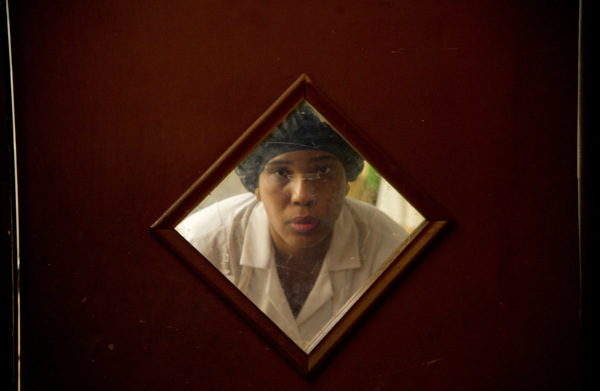
Popular singer Macy Gray turned in an astonishing performance in The Paperboy. Like Mariah Carey in Precious, Gray has proved that she can act.
Also in the The Paperboy and in Liberal Arts, Zac Efron proved that he is more than just the pretty boy of High School Musical. I am looking forward to his dramatic turn in Ramin Bahrani’s (Goodbye Solo, Chop Shop, Man Push Cart) At Any Price.
Mary Elizabeth Winstead turned in what should be a star-making performance inSmashed. Let’s see if she gets a chance in a big movie.